「Teach 過去分詞」全攻略:從 Teach - Taught - Taught 基礎到完成式用法,一次釐清
Teach 過去分詞怎麼寫?Teach 的過去式和過去分詞是什麼?這是台灣和香港英文學習者最常搜尋的文法問題之一。答案其實很明確:teach 過去分詞是 taught /tɔːt/,與過去式形式完全相同,完整變化為 Teach - Taught - Taught,這個不規則動詞在完成式(have taught)和被動語態(was taught)中扮演著關鍵角色。然而,正是因為過去式和過去分詞的拼寫相同,超過70%的英文學習者在實際應用時會混淆它們的文法功能,甚至有人會錯誤地使用「teached」這個根本不存在的形式。
更令人驚訝的是,即使是通過雅思或多益考試的學習者,也經常在寫作和口說中誤用 taught 的時態結構。這種混淆不僅影響考試成績,更會在職場英文溝通、學術論文寫作中造成嚴重的專業形象損害。許多人以為只要背下 teach-taught-taught 就足夠,卻不知道如何正確運用在現在完成式、過去完成式、被動語態等12種不同時態中。
本文由 PREPEDU 專業教學團隊精心整理,將為你完整解析 Teach - Taught - Taught 的所有用法,從基礎 Teach 三態變化、完整動詞變位表(涵蓋現在、過去、未來12種時態共72個實用例句),到完成式與被動語態的進階應用,再到常見錯誤修正與記憶技巧,幫助你徹底掌握這個重要動詞的正確使用方式,在英文學習和考試中更加自信準確。

I. Teach 過去分詞是什麼?Teach 動詞三態變位表完整解析(含 teach 過去形過去分詞 ing 形)
Teach 過去分詞是 taught,和 teach 過去式 一樣,是個不規則動詞變化(teach - taught - taught),常用於完成式(例如:She has taught English for ten years.(她已經教英文十年了。)或被動語態(例如:He was taught by a great teacher. 他被一位優秀的老師教導。)。
1. Teach 三態變化速查表
|
形式 |
動詞 |
中文釋義 |
例句 |
|
原形(Base Form) |
teach /tiːtʃ/ |
教、教導 |
I teach English every Monday.(我每個星期一教英文。) |
|
過去式(Past Simple) |
taught /tɔːt/ |
教了、教過 |
I taught English every Monday last year.(我去年每個星期一都教英文。) |
|
過去分詞(Past Participle) |
taught /tɔːt/ |
已教、被教 |
I have taught English for five years.(我已經教英文五年了。) |
|
現在分詞(Present Participle) |
teaching /ˈtiːtʃɪŋ/ |
正在教、教學中 |
I am teaching English right now.(我現在正在教英文。) |
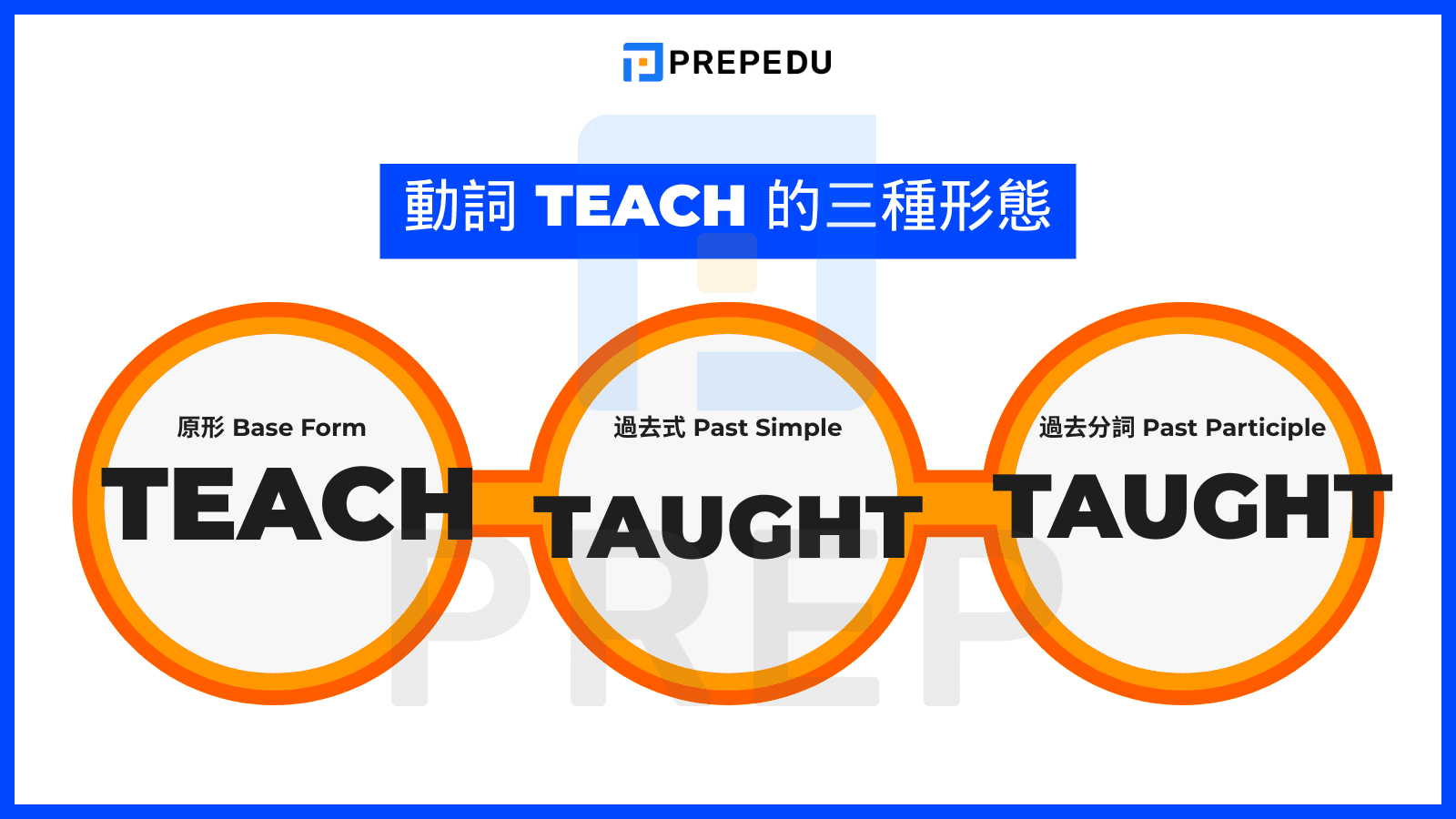
當我們談論 Teach 過去式英文 和 Teach 過去分詞時,必須理解其在不同時態和語態中的變化規律。Teach 屬於英文不規則動詞,其完整變化形式為 teach(原形)→ taught(過去式)→ taught(過去分詞)→ teaching(現在分詞),這種相同的 teach 過去形 和過去分詞形式常常成為學習者混淆的根源。
2. Teach 動詞完整變位表
為了幫助你全面掌握 teach 過去形過去分詞 ing 形 的所有變化,以下提供完整的動詞變位表,涵蓋現在式、過去式、未來式、進行式、完成式等所有重要時態:
基本形式
|
形式 |
動詞 |
|
動詞不定式 |
to teach |
|
過去分詞 |
taught |
|
現在分詞 |
teaching |
現在時態(Present Tenses)
|
現在簡單式(Present Simple) |
||
|
人稱 |
動詞變化 |
例句 |
|
I |
teach |
I teach mathematics at the university.(我在大學教數學。) |
|
You |
teach |
You teach very well.(你教得很好。) |
|
He/She/It |
teaches |
She teaches piano on weekends.(她週末教鋼琴。) |
|
We |
teach |
We teach together as a team.(我們作為團隊一起教學。) |
|
You(複數) |
teach |
You teach different subjects.(你們教不同的科目。) |
|
They |
teach |
They teach at the same school.(他們在同一所學校教書。) |
|
現在進行式(Present Continuous) |
||
|
人稱 |
動詞變化 |
例句 |
|
I |
am teaching |
I am teaching a class right now.(我現在正在上課。) |
|
You |
are teaching |
You are teaching very clearly today.(你今天教得很清楚。) |
|
He/She/It |
is teaching |
He is teaching his son to swim.(他正在教他的兒子游泳。) |
|
We |
are teaching |
We are teaching online this semester.(我們這學期在線上教學。) |
|
You(複數) |
are teaching |
You are teaching too fast.(你們教得太快了。) |
|
They |
are teaching |
They are teaching a new curriculum.(他們正在教授新課程。) |
|
現在完成式(Present Perfect) |
||
|
人稱 |
動詞變化 |
例句 |
|
I |
have taught |
I have taught English for ten years.(我已經教英文十年了。) |
|
You |
have taught |
You have taught me everything I know.(你教會了我所知道的一切。) |
|
He/She/It |
has taught |
She has taught thousands of students.(她已經教過數千名學生。) |
|
We |
have taught |
We have taught together since 2015.(我們從2015年開始一起教學。) |
|
You(複數) |
have taught |
You have taught this course before.(你們以前教過這門課。) |
|
They |
have taught |
They have taught at many schools.(他們在許多學校教過書。) |
|
現在完成進行式(Present Perfect Continuous) |
||
|
人稱 |
動詞變化 |
例句 |
|
I |
have been teaching |
I have been teaching since morning.(我從早上開始就一直在教學。) |
|
You |
have been teaching |
You have been teaching for five hours straight.(你已經連續教了五個小時。) |
|
He/She/It |
has been teaching |
She has been teaching without a break.(她一直在教學沒有休息。) |
|
We |
have been teaching |
We have been teaching this method for years.(我們多年來一直在教這種方法。) |
|
You(複數) |
have been teaching |
You have been teaching all day.(你們整天都在教學。) |
|
They |
have been teaching |
They have been teaching at this school for decades.(他們在這所學校教了幾十年。) |
過去時態(Past Tenses)
|
過去簡單式(Past Simple) |
||
|
人稱 |
動詞變化 |
例句 |
|
I |
taught |
I taught history last semester.(我上學期教歷史。) |
|
You |
taught |
You taught me a valuable lesson.(你教了我寶貴的一課。) |
|
He/She/It |
taught |
He taught at Harvard for twenty years.(他在哈佛教了二十年。) |
|
We |
taught |
We taught together at the same school.(我們在同一所學校一起教書。) |
|
You(複數) |
taught |
You taught us well.(你們教得很好。) |
|
They |
taught |
They taught English in Japan.(他們在日本教英文。) |
|
過去進行式(Past Continuous) |
||
|
人稱 |
動詞變化 |
例句 |
|
I |
was teaching |
I was teaching when the fire alarm went off.(火災警報響起時我正在教學。) |
|
You |
were teaching |
You were teaching a difficult concept.(你當時正在教一個困難的概念。) |
|
He/She/It |
was teaching |
She was teaching her first class.(她當時正在教她的第一堂課。) |
|
We |
were teaching |
We were teaching online during the pandemic.(疫情期間我們正在線上教學。) |
|
You(複數) |
were teaching |
You were teaching different groups.(你們當時正在教不同的小組。) |
|
They |
were teaching |
They were teaching at that time.(他們當時正在教學。) |
|
過去完成式(Past Perfect) |
||
|
人稱 |
動詞變化 |
例句 |
|
I |
had taught |
I had taught for years before I became a principal.(在成為校長之前,我已經教了很多年。) |
|
You |
had taught |
You had taught him everything before he left.(在他離開之前,你已經教會了他所有東西。) |
|
He/She/It |
had taught |
She had taught at three universities.(她曾在三所大學教過書。) |
|
We |
had taught |
We had taught together for a decade.(我們已經一起教了十年。) |
|
You(複數) |
had taught |
You had taught this course many times.(你們教過這門課很多次。) |
|
They |
had taught |
They had taught thousands of students.(他們已經教過數千名學生。) |
|
過去完成進行式(Past Perfect Continuous) |
||
|
人稱 |
動詞變化 |
例句 |
|
I |
had been teaching |
I had been teaching for two hours when the bell rang.(鈴響時我已經教了兩個小時。) |
|
You |
had been teaching |
You had been teaching all morning.(你整個上午都在教學。) |
|
He/She/It |
had been teaching |
He had been teaching since dawn.(他從黎明開始就一直在教學。) |
|
We |
had been teaching |
We had been teaching together for years.(我們已經一起教學很多年了。) |
|
You(複數) |
had been teaching |
You had been teaching non-stop.(你們一直在不停地教學。) |
|
They |
had been teaching |
They had been teaching at the college for decades.(他們在這所大學教了幾十年。) |
未來時態(Future Tenses)
|
未來簡單式(Future Simple) |
||
|
人稱 |
動詞變化 |
例句 |
|
I |
will teach |
I will teach English next semester.(我下學期將教英文。) |
|
You |
will teach |
You will teach the advanced class.(你將教授進階班。) |
|
He/She/It |
will teach |
She will teach at the new school.(她將在新學校教書。) |
|
We |
will teach |
We will teach together next year.(我們明年將一起教學。) |
|
You(複數) |
will teach |
You will teach different subjects.(你們將教不同的科目。) |
|
They |
will teach |
They will teach in the summer program.(他們將在暑期課程中教學。) |
|
未來進行式(Future Continuous) |
||
|
人稱 |
動詞變化 |
例句 |
|
I |
will be teaching |
I will be teaching at this time tomorrow.(明天這個時候我將正在教學。) |
|
You |
will be teaching |
You will be teaching when I arrive.(我到達時你將正在教學。) |
|
He/She/It |
will be teaching |
She will be teaching all afternoon.(她整個下午都將在教學。) |
|
We |
will be teaching |
We will be teaching online next month.(我們下個月將在線上教學。) |
|
You(複數) |
will be teaching |
You will be teaching simultaneously.(你們將同時教學。) |
|
They |
will be teaching |
They will be teaching new courses.(他們將教授新課程。) |
|
未來完成式(Future Perfect) |
||
|
人稱 |
動詞變化 |
例句 |
|
I |
will have taught |
I will have taught for 20 years by next June.(到明年六月,我將已經教了20年。) |
|
You |
will have taught |
You will have taught thousands of students by then.(到那時你將已經教過數千名學生。) |
|
He/She/It |
will have taught |
He will have taught this course ten times.(他將已經教過這門課十次。) |
|
We |
will have taught |
We will have taught together for a decade.(我們將已經一起教學十年。) |
|
You(複數) |
will have taught |
You will have taught all the required material.(你們將已經教完所有必修內容。) |
|
They |
will have taught |
They will have taught at this school for 30 years.(他們將已經在這所學校教了30年。) |
|
未來完成進行式(Future Perfect Continuous) |
||
|
人稱 |
動詞變化 |
例句 |
|
I |
will have been teaching |
I will have been teaching for 15 years by December.(到十二月,我將已經教了15年。) |
|
You |
will have been teaching |
You will have been teaching all day by the time I arrive.(我到達時,你將已經教了一整天。) |
|
He/She/It |
will have been teaching |
She will have been teaching for two decades soon.(她很快就將已經教了二十年。) |
|
We |
will have been teaching |
We will have been teaching together for five years.(我們將已經一起教學五年。) |
|
You(複數) |
will have been teaching |
You will have been teaching non-stop for hours.(你們將已經連續教學好幾個小時。) |
|
They |
will have been teaching |
They will have been teaching at this university for a quarter century.(他們將已經在這所大學教了四分之一個世紀。) |
II. 過去分詞 Taught 的兩大核心功能
理解 teach 過去分詞的實際應用是掌握英文時態和語態的重要基石,taught 在英文文法中承擔著兩個截然不同但同樣重要的功能角色。
1. 「完成式」(Perfect Tenses)
當 taught 與英文助動詞 have、has 或 had 結合時,它構成了各種完成式時態,用來表達教學經驗的累積或教育行為的完成狀態。
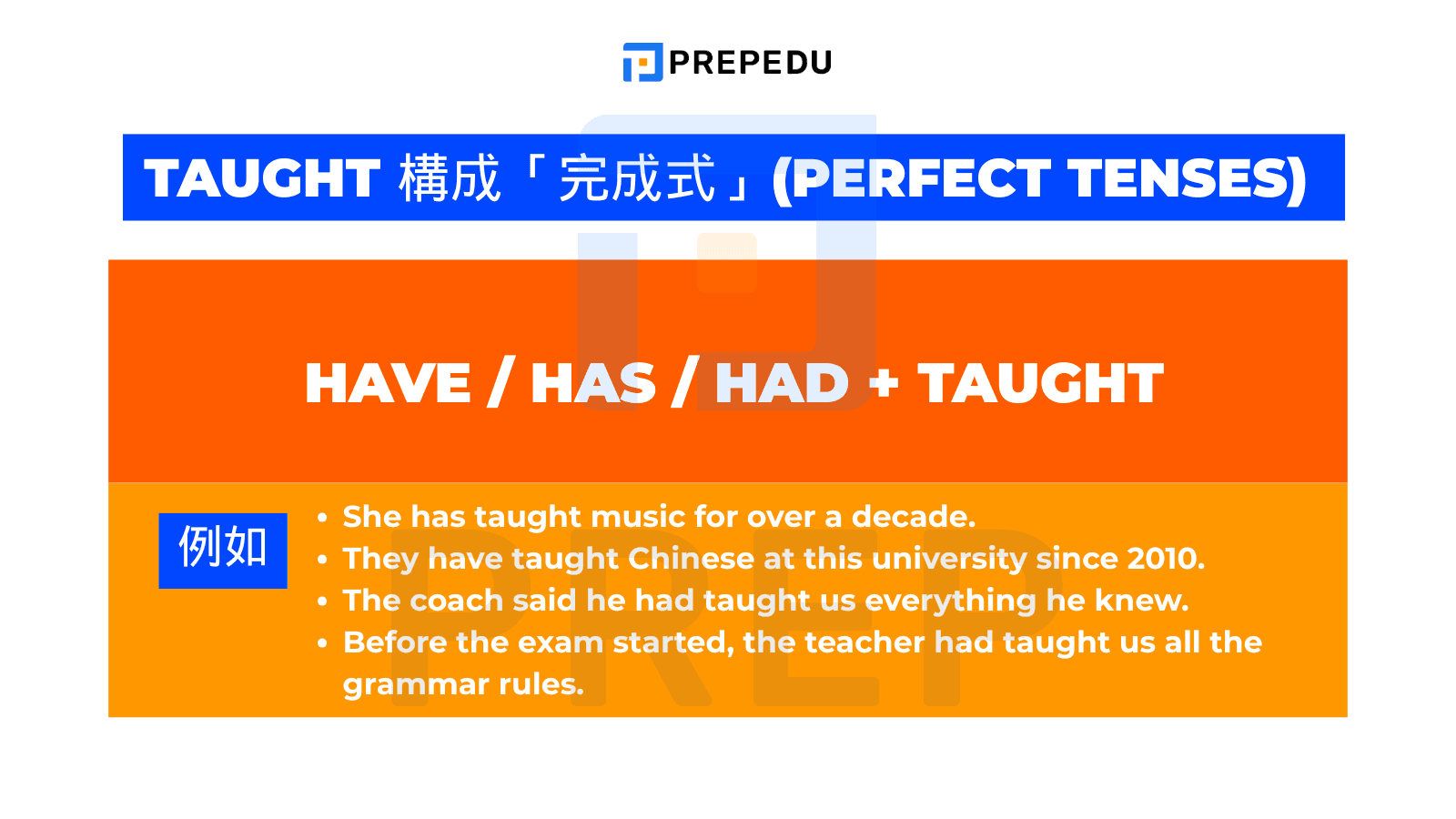
have / has / had + taught
在現在完成式的應用中,我們可以看到這樣的例句:
-
She has taught music for over a decade.(她已經教了十多年的音樂了。)→ 這個句型強調的是從過去某個時點開始持續到現在的教學經驗,突出了經驗的累積性和連續性。其中的關鍵在於 has taught 這個組合完美地傳達了「至今仍在進行」的教學狀態。
-
They have taught Chinese at this university since 2010.(他們自從2010年以來就在這所大學教中文。)→ 這個句型強調的是從2010年持續到現在的教學經驗,突出了經驗的延續性與累積性。其中的關鍵在於 have taught 這個動詞片語,準確地表達了「教學行為從過去一直持續到現在」的狀態,並暗示這個狀態可能仍在繼續。
過去完成式則呈現不同的時間層次,例如:
-
The coach said he had taught us everything he knew.(教練說他已經把他所知道的一切都教給我們了。)
-
Before the exam started, the teacher had taught us all the grammar rules.(考試開始之前,老師已經把所有的文法規則都教給我們了。)
2. 「被動語態」(Passive Voice)
當 taught 與各種 be 動詞(is、am、are、was、were)搭配時,它構成被動語態,將焦點從「教的人」轉移到「被教的對象」或「教學內容」上。
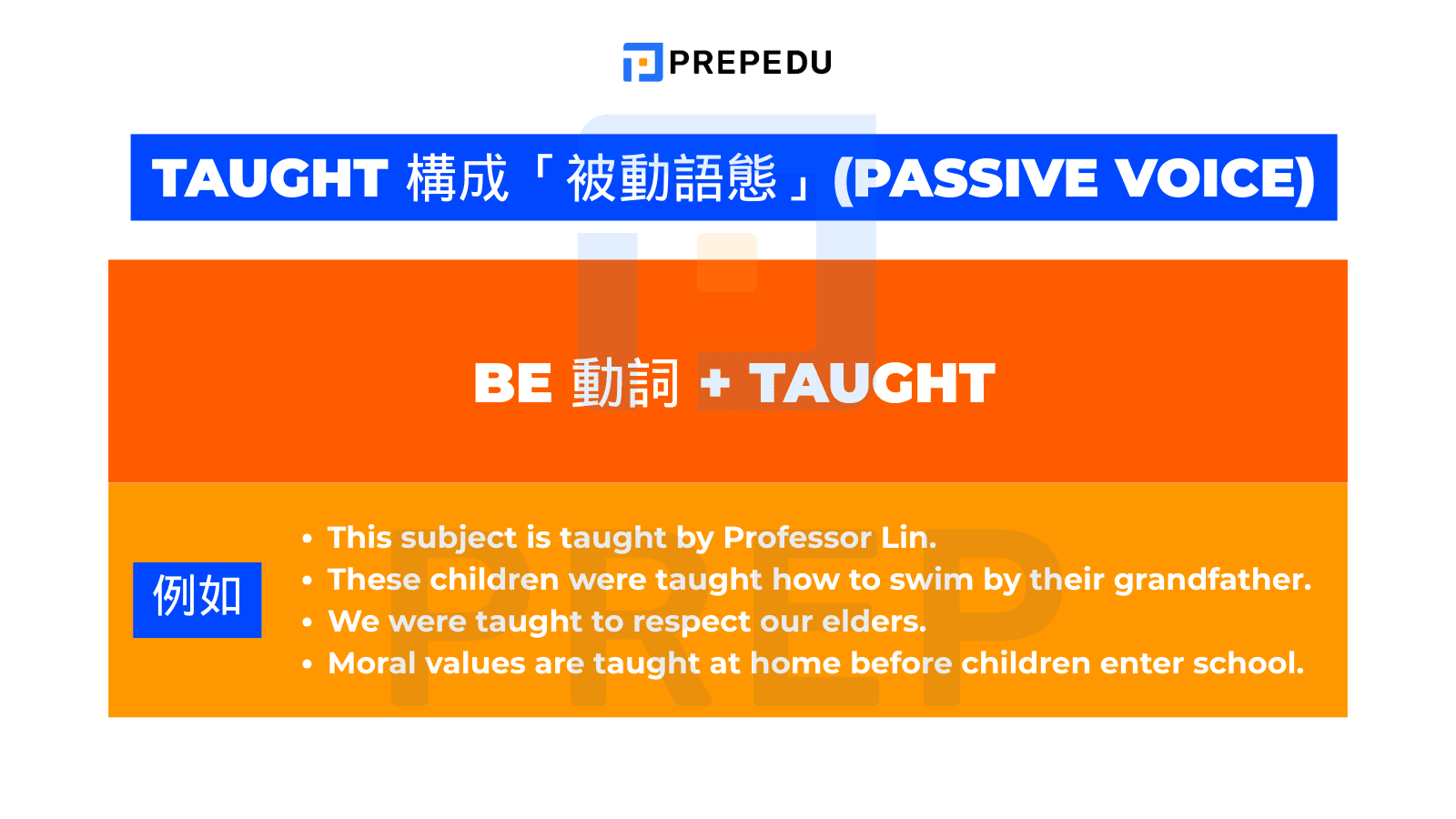
be 動詞 (is/am/are/was/were) + taught
現在被動式的典型例句為:
-
This subject is taught by Professor Lin.(這門課是由林教授教的。)→在這個句子中,主詞 This subject 成為關注的焦點,而教授的身份則通過 by 短語來說明,整個句子強調的是課程本身的教授狀態。
-
These children were taught how to swim by their grandfather.→(這些孩子是由他們的祖父教他們如何游泳的。)這句話使用過去被動語態,突出了教學行為已經在過去完成,而主詞 These children 是接受教學的對象。
過去被動式同樣具有重要價值,如:
-
We were taught to respect our elders.(我們被教導要尊敬長輩。)→ 這個例句展現了被動語態在描述過去教育經驗時的獨特價值,突出了接受教育的一方以及所學習的價值觀念。
-
Moral values are taught at home before children enter school.(孩子們在上學之前會在家中被教導道德觀念。)→ 這個句子強調了教育在家庭中作為早期價值觀傳遞工具的角色,並使用現在被動式來表達教育內容是被灌輸給孩子的。
III. 同樣拼寫為 Taught,如何區分「過去式」與「過去分詞」?
雖然 teach 過去式和 teach 過去分詞在拼寫上完全相同,但它們在句子中的功能和位置卻有著根本性的差異,掌握這種差異是避免文法錯誤的關鍵所在。
1. 作為「過去式」的 Taught:一個獨立的動詞,描述過去的動作
當 taught 作為過去式使用時,它獨立承擔句子中謂語的角色,無需任何助動詞的協助就能完整表達過去發生的教學動作。例如:
-
He taught the class yesterday.(他昨天教了這個班級。)→ 在這個句子中,taught 直接作為主要動詞,清楚地表明了在昨天這個特定時間點發生的教學行為,整個句子結構簡潔明了,時間概念明確。
-
She taught math at a local school for two years.(她曾在一所當地學校教了兩年數學。)→ 這個句子補充了教學動作的持續時間,也突顯了過去完成的教育經歷。
2. 作為「過去分詞」的 Taught:非獨立動詞,需與助動詞 (have/be) 搭配
相對地,當 taught 作為過去分詞使用時,它必須依附於助動詞才能發揮作用,無法單獨構成完整的謂語結構。例如:
-
He has taught the class many times.(他已經教過這個班級很多次了。)
-
The class was taught by an expert.(這個班級是由專家教授的。)
在這些例句中,taught 分別與 has 和 was 結合,共同構成完整的謂語,傳達不同的時態和語態概念。
理解這種區別不僅有助於正確使用 teach 過去分詞和 teach 過去式英文表達,更能幫助你在遇到其他不規則動詞時舉一反三,建立更完整的文法認知體系。無論是在口語表達還是書面寫作中,這種精確的區分能力都將大大提升你的英文表達準確度和專業度。
IV. 知識擴展與進階問答:深入解析 teach 過去分詞 的用法與時態結構
為了幫助你更全面地掌握 teach 的過去式和過去分詞用法,以下整理了幾個關鍵問題的深入解答。
1. 我該如何有效記憶 Taught 這類不規則動詞?
記憶不規則動詞確實需要一些策略性方法。首先,你可以運用關聯記憶法,將 taught 與其他相似變化的動詞歸類,例如 catch-caught-caught、bring-brought-brought,這些動詞都遵循相似的 -aught/-ought 變化模式。其次,情境造句法也極為有效,試著在日常生活中創造使用 teach 過去形的真實情境,比如描述你的學習經歷或教學體驗,重複的實際應用能夠強化記憶效果。
2. Taught 和 Learned 在「被教導」的語境下有何細微差別?
雖然兩者都涉及知識傳遞的過程,但焦點完全不同。Taught 強調的是「教的動作」,將注意力集中在知識的給予者和傳授過程上,例如:I was taught piano by my grandmother.(我被祖母教授鋼琴。)而 learned 則強調「學的結果」,關注的是學習者的收穫和成長,例如:I learned piano from my grandmother.(我向祖母學習鋼琴。)前者突出教授的過程,後者突出學習的成果。
3. Taught 這個字本身可以當作形容詞使用嗎?
是的,taught 作為過去分詞可以具有形容詞的功能,用來修飾名詞並描述其特質。例如:a well-taught lesson(一堂教得很好的課)中,taught 就是形容詞性的過去分詞,用來描述課程的教學品質。這種用法在描述教育成果或教學效果時特別常見和實用。
V. 結論
通過本文的深入探討,我們完成了一個完整的學習路徑:從最初對 teach 過去分詞的疑問開始,深入理解其核心用法和功能,釐清了過去式與過去分詞的關鍵差異,避開了常見的錯誤陷阱,並拓展了相關的進階知識。
這個學習過程不僅僅是掌握一個單字的變化形式,更重要的是培養了一種系統性的文法思維模式。當你面對其他不規則動詞時,同樣可以運用這種分析方法:理解基本變化→掌握核心功能→區分相似概念→避免常見錯誤→擴展相關知識。每一個看似簡單的動詞背後,都蘊含著豐富的語言規律和文化內涵,等待著你去發現和掌握。
記住,語言學習是一個持續累積的過程,每一個正確的用法都是通往流利表達的重要基石。繼續保持這種探索精神和學習熱忱,你的英文能力必將在不斷的實踐和反思中穩步提升。
面對龐大的考試準備內容和緊迫期限感到壓力? PREPEDU.COM 理解這種處境,提供專為優化時間效率設計的學習體驗。
別再進行隨機測驗練習。系統運用評估數據精準找出你的優勢和弱點,讓你專注於關鍵改善項目。這種科學方法可將學習時間縮短至傳統方式的一半。
雅思真題和多益練習題按照從易到難的順序設計,幫助你在進入更高難度挑戰前鞏固基礎知識。每分鐘都珍貴,每次測驗都助你進步。
別浪費時間卻進步緩慢。立即開始 PREPEDU Test Practice 的智能學習,以最高效率達成理想分數!

你好!我叫黃秋賢,現在在 prepedu.com 擔任內容企劃。我有超過5年的英語與韓語自學經歷,親身備考 IELTS、TOEIC 與 TOPIK,累積了大量第一手的學習者視角——包括哪些語法規則最讓台灣與香港學習者混淆,以及如何在有限的備考時間內最有效地修正這些錯誤。目前已在 prepedu.com 撰寫超過 1000 篇英語學習文章,內容涵蓋語法、詞彙與考試策略,累積協助數千位學習者解決自學過程中的語法疑問。
評論












統一企業編號:202227322W
地址:114 LAVENDER STREET, #11-83 CT HUB 2, SINGAPORE (338729)