未來完成進行式 (Future Perfect Continuous Tense) 完整攻略:從概念、公式到實戰應用全解析
未來完成進行式是什麼?如何正確使用這個看似複雜的英語時態?未來完成進行式 (Future Perfect Continuous Tense) 用於描述某動作將持續進行到未來某個時間點,並強調其持續性,句型結構為「主語 + will have been + V-ing」,例如 "Tomorrow, I will have been working for ten hours." (明天,我將已經工作十個小時了)。這個時態的核心在於強調動作的持續過程,與強調結果的未來完成式 (will have + P.P.) 形成明確對比。
未來完成進行式由兩個要素組成:Be 動詞的未來完成式 (will have been) 和主要動詞的現在分詞 (動詞原型 + ing)。它指的是「未來某個時間之前,某動作將會持續進行著」,例如 "I will have been training for a month tomorrow." (明天我訓練將滿一個月)。這個動作開始的時間點可能是過去或未來,但重點在於表達「截至未來某個時間點」該動作「持續進行多久了」,這使得它在描述長期計劃、持續努力或累積經驗時特別實用。
在 IELTS 寫作與口語測驗中,正確運用未來完成進行式能夠展現高階的時態掌握能力,讓表達更加精確專業。本文由 PREPEDU 教學團隊整理,將系統性地介紹未來完成進行式的定義、公式結構、核心用法、常見錯誤與實戰練習,幫助你全面掌握這個進階時態,提升英語表達的準確度與流暢度。

I. 未來完成進行式是什麼?
1. 定義與概念
未來完成進行式 (Future Perfect Continuous Tense) 用於描述某動作將持續進行到未來某個時間點,並強調其持續性。這個時態的核心在於表達「截至未來某個時間點,某動作已持續進行多久」,動作的起點可能在過去或現在。
核心特徵:
-
強調持續過程: 著重於動作進行的時間長度
-
未來時間參考點: 必須有明確的未來時間標記
-
可能延續: 動作在參考時間點後可能繼續進行
例如: "Tomorrow, I will have been working for ten hours." (明天,我將已經工作十個小時了。) 這句話強調的是工作過程的持續性,而非工作的完成結果。

2. 未來完成進行式結構與句型
未來完成進行式由兩個核心要素組成:
-
Be 動詞的未來完成式: will have been
-
主要動詞的現在分詞: 動詞原型 + ing
完整結構公式: 主語 + will have been + V-ing + 其他成分
3. 四大句型結構與例句對照表
|
否定疑問句 |
|||
|
I will have been living here for five years.(我將已經在這裡住了五年。) |
I won't have been living here for five years.(我不會已經在這裡住了五年。) |
Will I have been living here for five years?(我會已經在這裡住了五年嗎?) |
Won't I have been living here for five years?(我不會已經在這裡住了五年嗎?) |
|
You will have been studying English.(你將已經在學習英語。) |
You won't have been studying English.(你不會已經在學習英語。) |
Will you have been studying English?(你會已經在學習英語嗎?) |
Won't you have been studying English?(你不會已經在學習英語嗎?) |
|
He will have been working all day.(他將已經工作一整天。) |
He won't have been working all day.(他不會已經工作一整天。) |
Will he have been working all day?(他會已經工作一整天嗎?) |
Won't he have been working all day?(他不會已經工作一整天嗎?) |
|
She will have been teaching for years.(她將已經教書多年。) |
She won't have been teaching for years.(她不會已經教書多年。) |
Will she have been teaching for years?(她會已經教書多年嗎?) |
Won't she have been teaching for years?(她不會已經教書多年嗎?) |
|
We will have been training together.(我們將已經一起訓練。) |
We won't have been training together.(我們不會已經一起訓練。) |
Will we have been training together?(我們會已經一起訓練嗎?) |
Won't we have been training together?(我們不會已經一起訓練嗎?) |
|
They will have been building the bridge.(他們將已經在建造橋樑。) |
They won't have been building the bridge.(他們不會已經在建造橋樑。) |
Will they have been building the bridge?(他們會已經在建造橋樑嗎?) |
Won't they have been building the bridge?(他們不會已經在建造橋樑嗎?) |
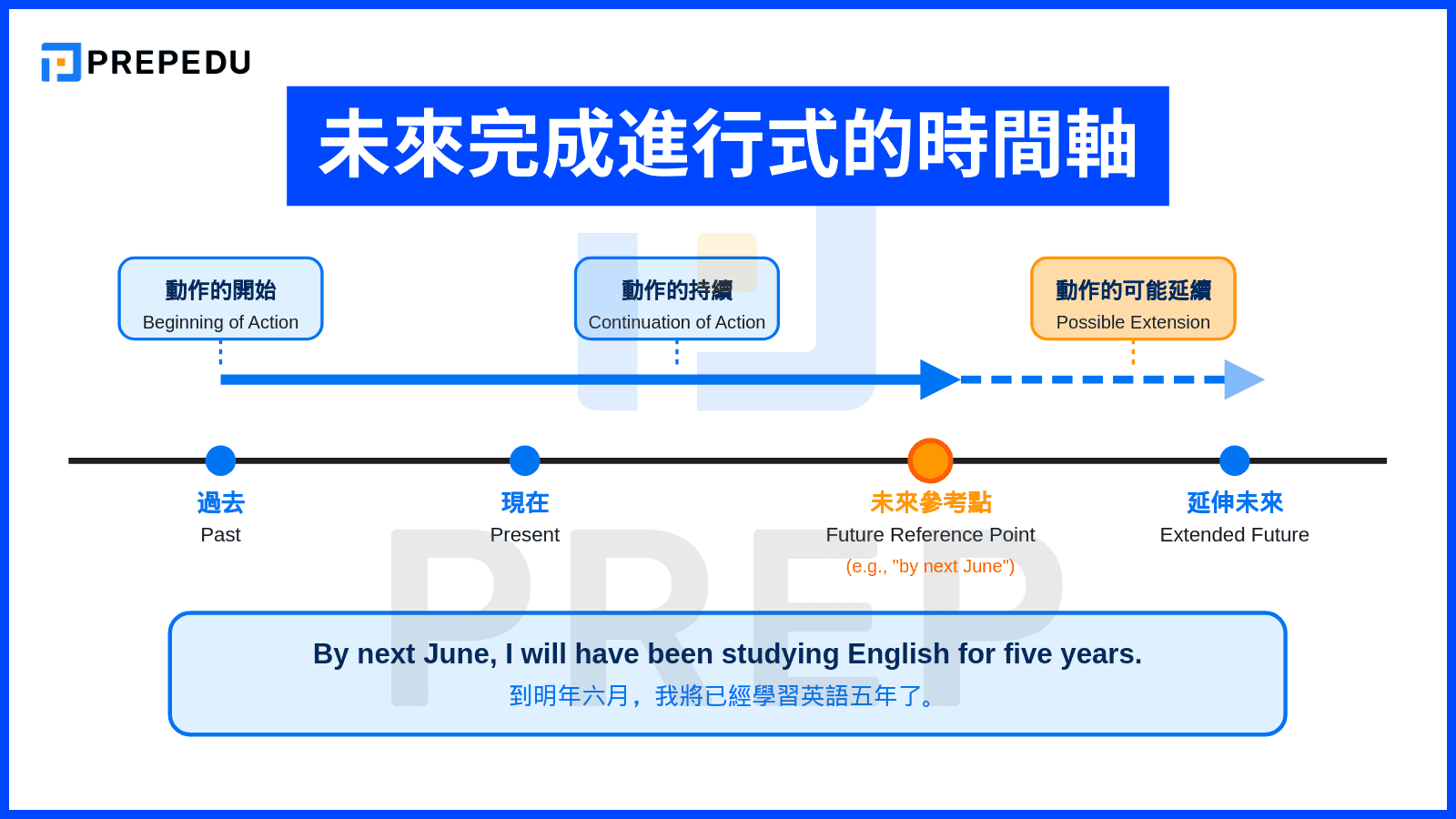
4. 未來完成進行式的時間軸
為了更好地理解未來完成進行式,我們可以通過時間軸來直觀呈現:
在這個時間軸上,動作開始於現在或過去某一時間點,持續進行到未來的參考時間點,並且可能在此之後繼續進行。這個未來的參考時間點通常透過特定的時間標記來表示,例如「到明年六月為止」、「到下週五為止」等。
未來完成進行式的獨特之處在於它同時表達了三個時間概念:
-
動作的開始(過去或現在)
-
動作的持續(到未來某一時間點)
-
動作的可能延續(超過參考時間點)
看更多文章:
II. 未來完成進行式公式
未來完成進行式的構成相對複雜,包含了助動詞和動詞的特定組合。掌握以下公式結構,能夠幫助你正確使用這一時態。

1. 肯定句公式
肯定句公式如下:
主語 + will have been + 動詞-ing + 其他成分
例句:
-
By May, I will have been reading this book for weeks.(到五月,我將已經閱讀這本書好幾週了。)
-
When you call, we will have been cooking dinner together.(當你打電話時,我們將正在一起做晚餐。)
-
Next week, Tom will have been driving cars for years.(下週,湯姆將已經開車好幾年了。)
2. 否定句公式
否定句是在助動詞will後加上not:
主語 + will not (won't) have been + 動詞-ing + 其他成分
例句:
-
By June, I won't have been running for ten months yet.(到六月,我跑步的時間還不到十個月。)
-
She won't have been sleeping for long when you arrive.(當你到達時,她睡覺的時間還不長。)
-
They won't have been fixing the car for two days.(他們修理這輛車的時間還不到兩天。)
3. 疑問句公式
一般疑問句是將will移到主語之前:
Will + 主語 + have been + 動詞-ing + 其他成分 + ?
例句:
-
Will you have been living here for four years soon?(你很快就會在這裡住滿四年了嗎?)
-
Will she have been playing soccer since early morning?(她從一大早就一直在踢足球嗎?)
-
Will they have been watching TV for three hours?(他們將會看電視三個小時嗎?)
4. 特殊疑問句公式
特殊疑問句是在一般疑問句前加上疑問詞:
疑問詞 + will + 主語 + have been + 動詞-ing + 其他成分 + ?
例句:
-
How long will you have been drawing when I return?(當我回來時,你畫畫已經多久了?)
-
Where will she have been working before moving here?(在搬到這裡之前,她會在哪裡工作?)
-
What will they have been eating for breakfast tomorrow?(明天他們會吃什麼當早餐?)
5. 未來完成進行式的被動語態
值得注意的是,由於未來完成進行式描述的是持續進行的動作,因此它通常不使用被動語態形式。被動語態主要用於描述動作的結果或狀態,而非動作的持續過程。
然而,在某些特殊情況下,可以使用以下結構來表達類似概念:
主語 + will have been being + 過去分詞 + 其他成分
-
例如:By July, the house will have been being built for months.(到七月,這房子將已經被建造好幾個月了。)
-
不過,這種結構在實際使用中較為罕見,通常會改用其他方式表達,如:By July, they will have been building the house for months.(到七月,他們將已經建造這房子好幾個月了。)
III. 未來完成進行式 Future Perfect Continuous Tense 用法
未來完成進行式有幾個主要用法,理解這些用法能幫助你在適當的語境中正確使用這一時態。

1. 表示在未來某一時間點之前已經持續的動作
未來完成進行式最基本的用法是表示在未來某一時間點之前已經持續進行並可能繼續下去的動作。這種用法強調動作的持續性和連續性。例句:
-
By Sunday, I will have been painting this room for days.(到星期日,我將已經粉刷這個房間好幾天了。)
-
When you arrive, I will have been walking for hours.(當你到達時,我將已經走路好幾個小時了。)
-
By noon, we will have been swimming for three hours.(到中午,我們將已經游泳三個小時了。)
2. 強調動作的持續性和對未來的影響
未來完成進行式能夠強調動作的持續性以及這種持續可能對未來造成的影響或結果。例句:
-
By test day, I will have been studying for weeks.(到考試日,我將已經學習好幾週了。)
-
She will have been dancing every day for months soon.(她很快就會已經每天跳舞好幾個月了。)
-
They will have been talking for hours when we arrive.(當我們到達時,他們將已經談話好幾個小時了。)
3. 表達未來可能的疲勞或壓力
未來完成進行式常用於表達因長時間進行某活動而在未來可能產生的疲勞或壓力。例句:
-
By midnight, I will have been typing for ten hours.(到午夜,我將已經打字十個小時了。)
-
After the race, she will have been running all day.(比賽結束後,她將已經跑了一整天。)
-
By Friday, we will have been working non-stop all week.(到星期五,我們將已經不停地工作了一整週。)
4. 解釋未來某一時間點的原因或結果
未來完成進行式可以用來解釋未來某一時間點可能出現的狀況的原因。例句:
-
I'll be tired because I will have been studying all night.(我會很累,因為我將整晚都在學習。)
-
She'll speak better after she will have been practicing daily.(她經過每天練習後,說得會更好。)
-
His arms will hurt since he will have been lifting weights.(他的手臂會痛,因為他一直在舉重。)
5. 表達對未來的預測或預期
未來完成進行式可用於表達對未來某一時間點之前持續發生事情的預測或預期。例句:
-
By next month, we will have been saving money all year.(到下個月,我們將已經存錢一整年了。)
-
By summer, John will have been growing plants for months.(到夏天,約翰將已經種植好幾個月了。)
-
When school ends, I will have been reading ten books.(當學校結束時,我將已經讀了十本書。)
IV. 未來完成進行式與未來完成式的關鍵區別
許多學習者容易混淆未來完成進行式 (Future Perfect Continuous) 與未來完成式 (Future Perfect),但兩者的使用重點截然不同。
核心差異對照
|
比較項目 |
未來完成進行式(Future Perfect Continuous) |
未來完成式(Future Perfect) |
|
強調重點 |
動作持續的長度與過程 |
動作在未來某時間點的完成結果 |
|
結構公式 |
will have been + V-ing |
will have + P.P. (過去分詞) |
|
時間焦點 |
持續時間 (for/since) |
完成時間 (by/before) |
|
使用情境 |
描述持續進行的動作 |
描述已完成的動作或狀態 |
實例對比分析
|
情境 |
時態 |
例句 |
說明 |
|
建造橋樑 |
未來完成進行式(Future Perfect Continuous) |
By next month, they will have been building the bridge for five years.(到下個月,他們建造這座橋將已經五年了。) |
強調建造過程持續五年的時間長度,著重於動作的持續性 |
|
未來完成式(Future Perfect) |
By next month, they will have built the bridge.(到下個月,他們將已經建好這座橋。) |
強調橋樑將會完工的結果,著重於完成狀態 |
|
|
閱讀書籍 |
未來完成進行式(Future Perfect Continuous) |
By midnight, I will have been reading for six hours.(到午夜時,我將已經閱讀六小時了。) |
強調閱讀活動持續的時間,著重於動作歷程 |
|
未來完成式(Future Perfect) |
By midnight, I will have read three chapters.(到午夜時,我將已經讀完三章。) |
強調閱讀完成的章節數量,著重於具體成果 |
選擇使用原則
|
使用未來完成進行式的時機 |
使用未來完成式的時機 |
|
|
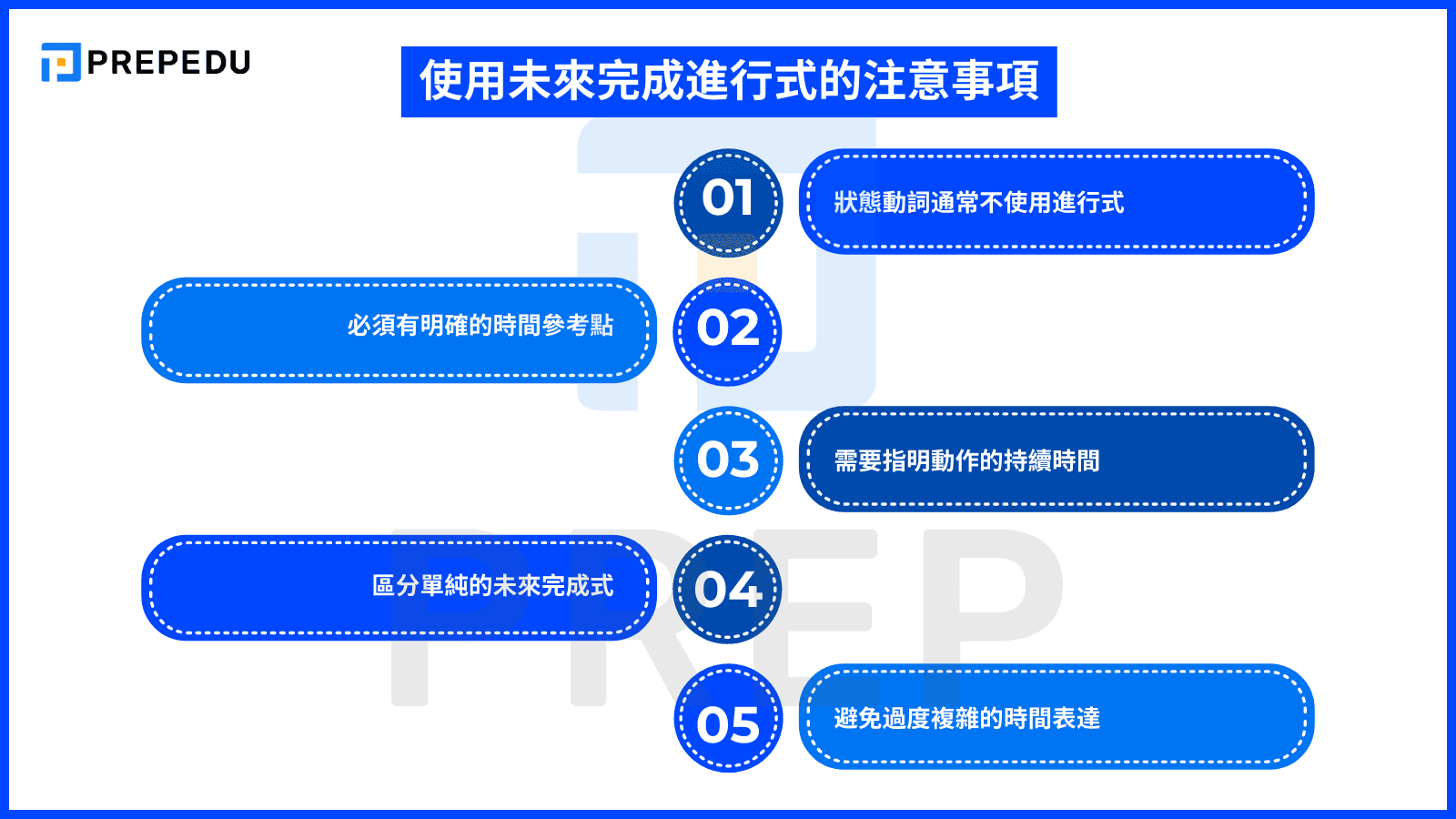
V. 使用未來完成進行式的注意事項
在使用未來完成進行式時,有幾個關鍵的注意事項需要掌握,以避免常見錯誤並確保正確表達。
1. 狀態動詞通常不使用進行式
狀態動詞(如know, believe, love, hate, belong, own等)表示狀態而非動作,因此通常不使用進行式形式,包括未來完成進行式。
-
錯誤例句:❌ By June, I will have been loving cats for years.
-
正確例句:✓ By June, I will have loved cats for years.(到六月,我喜歡貓將已經好幾年了。)
2. 必須有明確的時間參考點
使用未來完成進行式時,通常需要有一個明確的未來時間參考點,如"by next year"(到明年)、"by the time you arrive"(到你到達的時候)等。例句:
-
By tomorrow night, I will have been hiking for twelve hours.(到明晚,我將已經徒步旅行十二小時了。)
-
By project end, we will have been writing code together.(到項目結束時,我們將已經一起寫代碼了。)
3. 需要指明動作的持續時間
未來完成進行式通常需要指明動作的持續時間,如"for five years"(五年)、"since 2020"(自2020年以來)等。例句:
-
By August, they will have been teaching here for years.(到八月,他們將已經在這裡教書好幾年了。)
-
When school ends, I will have been writing for weeks.(當學校結束時,我將已經寫作好幾週了。)
4. 區分單純的未來完成式
有時候,如果強調的是動作的完成而非持續過程,應該使用未來完成式而非未來完成進行式。
-
未來完成進行式(強調過程):By June, I will have been painting this picture for weeks.(到六月,我將已經畫這幅畫好幾週了。)[強調繪畫的過程]
-
未來完成式(強調結果):By June, I will have painted this picture.(到六月,我將已經畫完這幅畫了。)[強調畫作將完成的結果]
5. 避免過度複雜的時間表達
雖然未來完成進行式能夠精確表達時間關係,但過度複雜的表達可能導致理解困難。在實際使用中,如果有更簡單的方式表達相同意思,可以考慮使用更簡單的時態。
-
複雜表達:When you return next week, I will have been fixing your bike for days.(當你下週回來時,我將已經修理你的自行車好幾天了。)
-
簡化表達:I started fixing your bike, and when you return next week, it will be days.(我開始修理你的自行車了,當你下週回來時,已經過了好幾天了。)
VI. 辨識英語未來完成進行式的標誌
在閱讀或聽力理解中,識別未來完成進行式的關鍵標誌能幫助我們更好地理解句子的時間關係和意義。
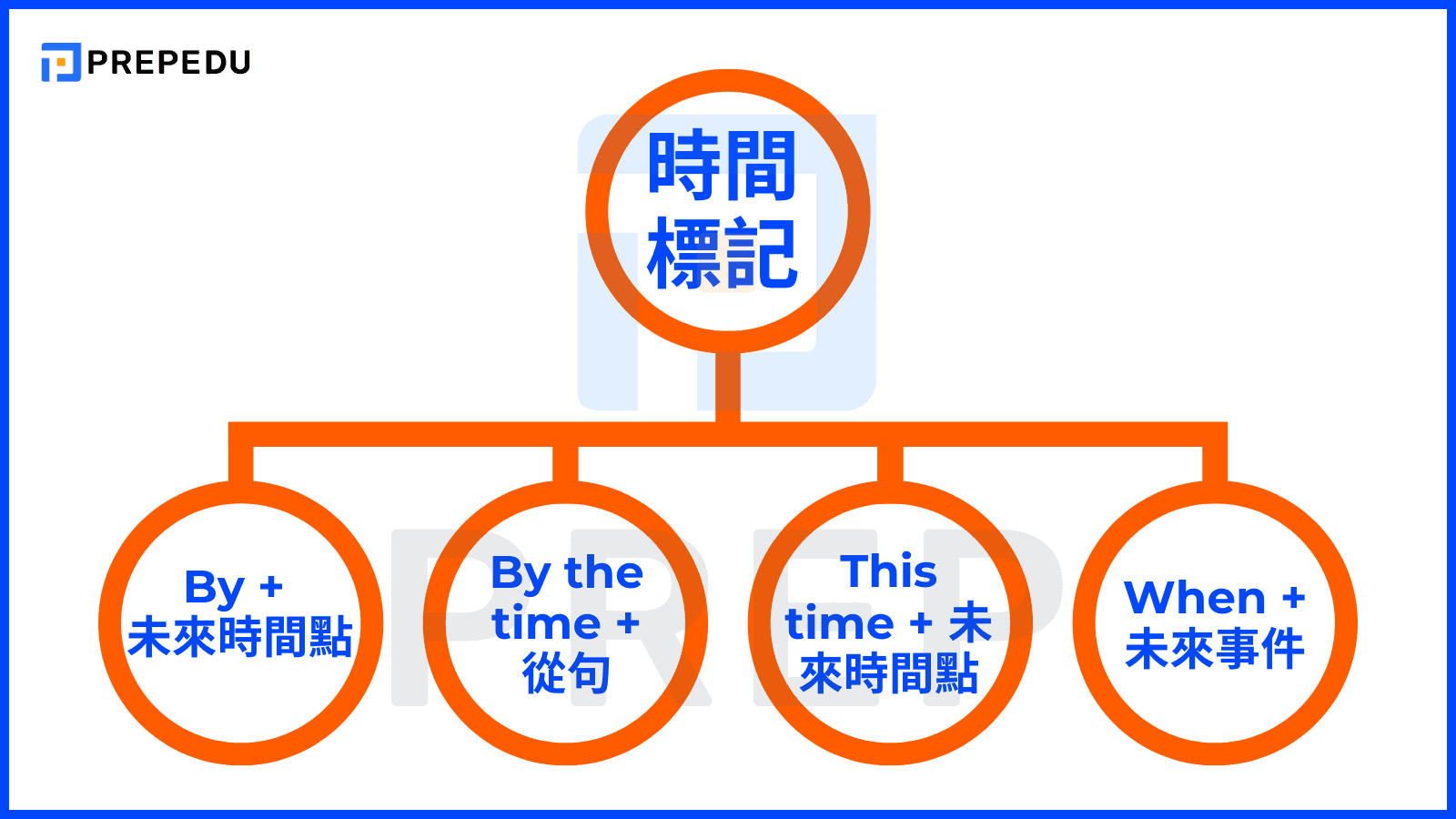
1. 時間標記
未來完成進行式通常與以下時間標記連用:
-
By + 未來時間點:By next month, by the end of the year, by 2030
-
By the time + 從句:By the time you graduate, by the time we finish
-
This time + 未來時間點:This time next year, this time tomorrow
-
When + 未來事件:When you return, when the project is completed
例句:
-
By next March, I will have been cooking for five years.(到明年三月,我將已經烹飪五年了。)
-
When you wake up, I will have been jogging for hours.(當你醒來時,我將已經慢跑好幾個小時了。)
2. 持續時間標記
未來完成進行式通常與表示持續時間的標記連用:
-
For + 時間長度:for five years, for a long time, for several hours。例句:By June, I will have been learning French for two years.(到六月,我將已經學習法語兩年了。)
-
Since + 開始時間點:since 2020, since last summer, since I started this job。例句:Next month, she will have been selling cakes since January.(下個月,她將已經自一月以來一直在賣蛋糕。)

3. 情境標記
某些情境也可能暗示使用未來完成進行式:
-
表達未來的疲憊或結果:tired, exhausted, accomplished
-
表達持續努力:hard work, persistence, dedication
-
表達長期計劃或過程:long-term project, ongoing process

例句:
-
After the race, I will be tired from having been swimming all day.(比賽後,我會因為游泳一整天而感到疲倦。)
-
His hands hurt because he will have been writing for hours.(他的手很痛,因為他將已經寫了好幾個小時。)
VII. 英語未來完成進行式習題
通過以下練習題,鞏固你對未來完成進行式的理解和應用能力。每個題目後附有答案和解析。
1. 填空題:使用括號中動詞的未來完成進行式形式
-
By the end of this month, I ________ (work) on this project for a year.
-
When you graduate, your parents ________ (support) you for over 20 years.
-
By the time we reach the destination, we ________ (travel) for more than 10 hours.
-
Next month, they ________ (renovate) their house for half a year.
-
By 2030, scientists ________ (research) this disease for three decades.
-
By summer, Lisa ________ (take) dance lessons for two years.
-
When the movie ends, we ________ (watch) films for six hours straight.
-
By next Sunday, my brother ________ (play) guitar for five years.
-
This time next week, they ________ (climb) the mountain for three days.
-
By your birthday, I ________ (plan) your surprise party for weeks.
2. 句型轉換:將句子改寫為未來完成進行式
-
I started learning Japanese two years ago and will continue until next year. →
-
She began working at this company in 2020 and will still be working here in 2025. →
-
They started building their house six months ago and will finish it next year. →
-
He has been preparing for the marathon since January and the race is in December. →
-
We began saving money for the trip last year and will go on the trip next summer. →
3. 答案
|
1. 填空題 |
2. 句型轉換 |
|
|
結論
未來完成進行式是英語時態體系中較為複雜但非常實用的一種時態,它能夠精確表達在未來某一時間點之前已經持續並可能繼續的動作或狀態。通過本文的學習,PREP 和你了解了未來完成進行式的基本概念、公式結構、核心用法以及與其他時態的區別。
掌握未來完成進行式需要注意以下幾點:首先,要正確使用公式結構"will have been + 動詞-ing";其次,要明確未來的時間參考點和動作的持續時間;最後,要區分狀態動詞和動作動詞的用法,避免使用狀態動詞的進行式形式。
透過充分的練習和實際應用,相信你已經能夠更加自信地使用未來完成進行式來表達複雜的時間關係和持續的動作。這不僅對於應對各類英語考試有所幫助,更能讓你的英語表達更加精確、流暢,達到更高的語言水平。
您是否曾懷疑自己能否達到目標分數?PREPEDU.COM 的 Test Practice 不僅協助您練習考題,更能根據目前成績精準預測達分可能性。
憑藉數千名成功學員的資料庫,系統分析分數趨勢並提供符合各項具體目標的個人化學習路徑。無論您的目標是雅思 6.5 分或多益 850 分,每個目標都有專屬策略。
視覺化進度追蹤功能顯示您目前的位置,以及達成目標還需多長時間。許多學員在持續練習 4-6 週後,雅思成績提升 0.5-1.0 分,多益成績增加 100-200 分。
成功並非來自運氣,而是源於周全的準備。讓 PREP Test Practice 成為連結現在與夢想的橋樑!

你好!我叫黃秋賢,現在在 prepedu.com 擔任內容企劃。我有超過5年的英語與韓語自學經歷,親身備考 IELTS、TOEIC 與 TOPIK,累積了大量第一手的學習者視角——包括哪些語法規則最讓台灣與香港學習者混淆,以及如何在有限的備考時間內最有效地修正這些錯誤。目前已在 prepedu.com 撰寫超過 1000 篇英語學習文章,內容涵蓋語法、詞彙與考試策略,累積協助數千位學習者解決自學過程中的語法疑問。
評論












統一企業編號:202227322W
地址:114 LAVENDER STREET, #11-83 CT HUB 2, SINGAPORE (338729)