If Clause Type 1 โครงสร้าง วิธีใช้ พร้อมตัวอย่างและแบบฝึกหัดเข้าใจง่าย
การสื่อสารภาษาอังกฤษในยุคปัจจุบันต้องการความชัดเจนในการแสดงเงื่อนไขและผลลัพธ์ หากคุณเคยสับสนเมื่อต้องพูดถึงสิ่งที่อาจเกิดขึ้นในอนาคต หรือต้องการให้คำแนะนำที่มีเงื่อนไข การเรียนรู้ if clause type 1 จะช่วยแก้ปัญหาเหล่านี้ได้อย่างมีประสิทธิภาพ
If clause type 1 หรือ first conditional เป็นโครงสร้างไวยากรณ์ที่จำเป็นสำหรับการสื่อสารในชีวิตประจำวัน ช่วยให้คุณสามารถแสดงความเป็นไปได้และผลลัพธ์ได้อย่างแม่นยำ
บทความนี้จะนำเสนอวิธีการเรียนรู้และใช้งาน first conditional ตัวอย่างประโยค ให้เข้าใจง่ายภายใน 5 นาที พร้อมตัวอย่างประโยคที่ใช้ได้จริงในชีวิตประจำวัน เทคนิคการหลีกเลี่ยงข้อผิดพลาดที่พบบ่อย และการประยุกต์ใช้ในสถานการณ์ต่างๆ มาเริ่มต้นเรียนรู้กันเลย
- I. If Clause Type 1 (First Conditional) คืออะไร?
- II. โครงสร้างประโยค If Clause Type 1
- III. ตัวอย่างประโยค if clause type 1 ที่ใช้บ่อยในชีวิตจริง
- IV. การใช้ Modal Verbs อื่นๆ แทน will
- V. เปรียบเทียบ if clause type 1 กับ Type 0, 2, 3
- VI. แบบฝึกหัด if clause type 1 พร้อมเฉลย
- VIII. FAQs เกี่ยวกับ if clause type 1
I. If Clause Type 1 (First Conditional) คืออะไร?
If clause type 1 หรือที่เรียกกันว่า conditional type 1 เป็นโครงสร้างประโยคที่ใช้แสดงเงื่อนไขและผลลัพธ์ที่มีความเป็นไปได้สูงในอนาคต เราใช้โครงสร้างนี้เมื่อต้องการพูดถึงสิ่งที่คาดว่าจะเกิดขึ้นจริงหากเงื่อนไขที่กำหนดเป็นจริง
โครงสร้างประโยคเงื่อนไขนี้เชื่อมโยงกับแนวคิดการคิดเชิงตรรกะ (logical thinking) และการวางแผนล่วงหน้า (future planning) ที่มนุษย์ใช้ในการตัดสินใจทุกวัน เมื่อเราพูดว่า "หากฝนตก เราจะอยู่บ้าน" เราใช้กระบวนการคิดแบบ cause and effect ที่เป็นพื้นฐานของการสื่อสาร
การใช้งาน first conditional ตัวอย่างประโยค มักพบในสถานการณ์ต่อไปนี้:
- การทำนายผลลัพธ์ในอนาคตที่ใกล้
- การให้คำเตือนหรือคำแนะนำ
- การวางแผนที่มีเงื่อนไข
- การแสดงความน่าจะเป็นที่สูง
II. โครงสร้างประโยค If Clause Type 1
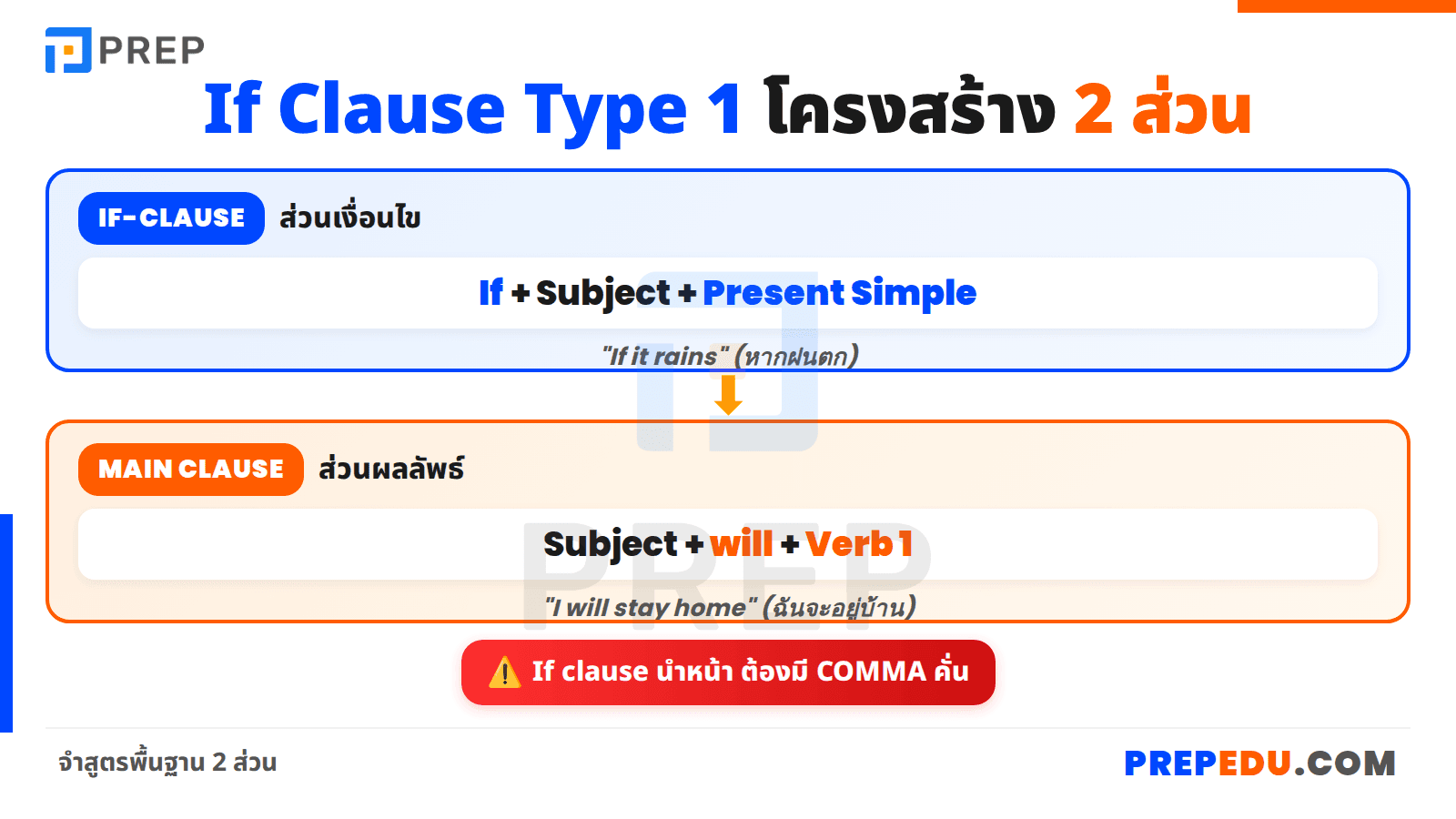
โครงสร้างพื้นฐานของ ตัวอย่างประโยค if clause type 1 แบ่งเป็น 2 ส่วนหลัก:
|
ส่วนของประโยค |
โครงสร้าง |
ตัวอย่าง |
|
If-Clause (เงื่อนไข) |
If + Present Simple |
If it rains |
|
Main Clause (ผลลัพธ์) |
Subject + will + Verb 1 |
I will stay home |
1. ส่วนของเงื่อนไข (If-Clause): If + Present Simple
ส่วนเงื่อนไขจะเริ่มต้นด้วยคำว่า "If" ตามด้วยประธานและกริยาในรูป Present Simple เงื่อนไขนี้แสดงถึงสิ่งที่อาจเกิดขึ้นในอนาคต แม้ว่าจะใช้ Present Simple แต่ความหมายยังคงเป็นอนาคต
ตัวอย่าง: If you study hard (หากคุณขยันเรียน) - เงื่อนไขที่ใช้ Present Simple แต่หมายถึงการกระทำในอนาคต
2. ส่วนของผลลัพธ์ (Main-Clause): Subject + will + Verb 1
ส่วนผลลัพธ์จะใช้โครงสร้าง Future Simple ด้วย "will" ตามด้วยกริยาช่องที่ 1 เพื่อแสดงผลที่จะเกิดขึ้นหากเงื่อนไขเป็นจริง
ตัวอย่าง: You will pass the exam (คุณจะสอบผ่าน) - ผลลัพธ์ในอนาคตที่จะเกิดขึ้นเมื่อเงื่อนไขเป็นจริง
3. การสลับตำแหน่งประโยค
คุณสามารถสลับตำแหน่งระหว่างส่วนเงื่อนไขและส่วนผลลัพธ์ได้โดยไม่ทำให้ความหมายเปลี่ยนแปลง หากเริ่มต้นด้วยส่วนผลลัพธ์ จะไม่ต้องใส่เครื่องหมายจุลภาคคั่น
|
รูปแบบปกติ |
รูปแบบสลับตำแหน่ง |
|
If you practice daily, you will improve quickly. |
You will improve quickly if you practice daily. |
|
หากคุณฝึกทุกวัน คุณจะพัฒนาเร็ว |
คุณจะพัฒนาเร็วหากฝึกทุกวัน |
III. ตัวอย่างประโยค if clause type 1 ที่ใช้บ่อยในชีวิตจริง
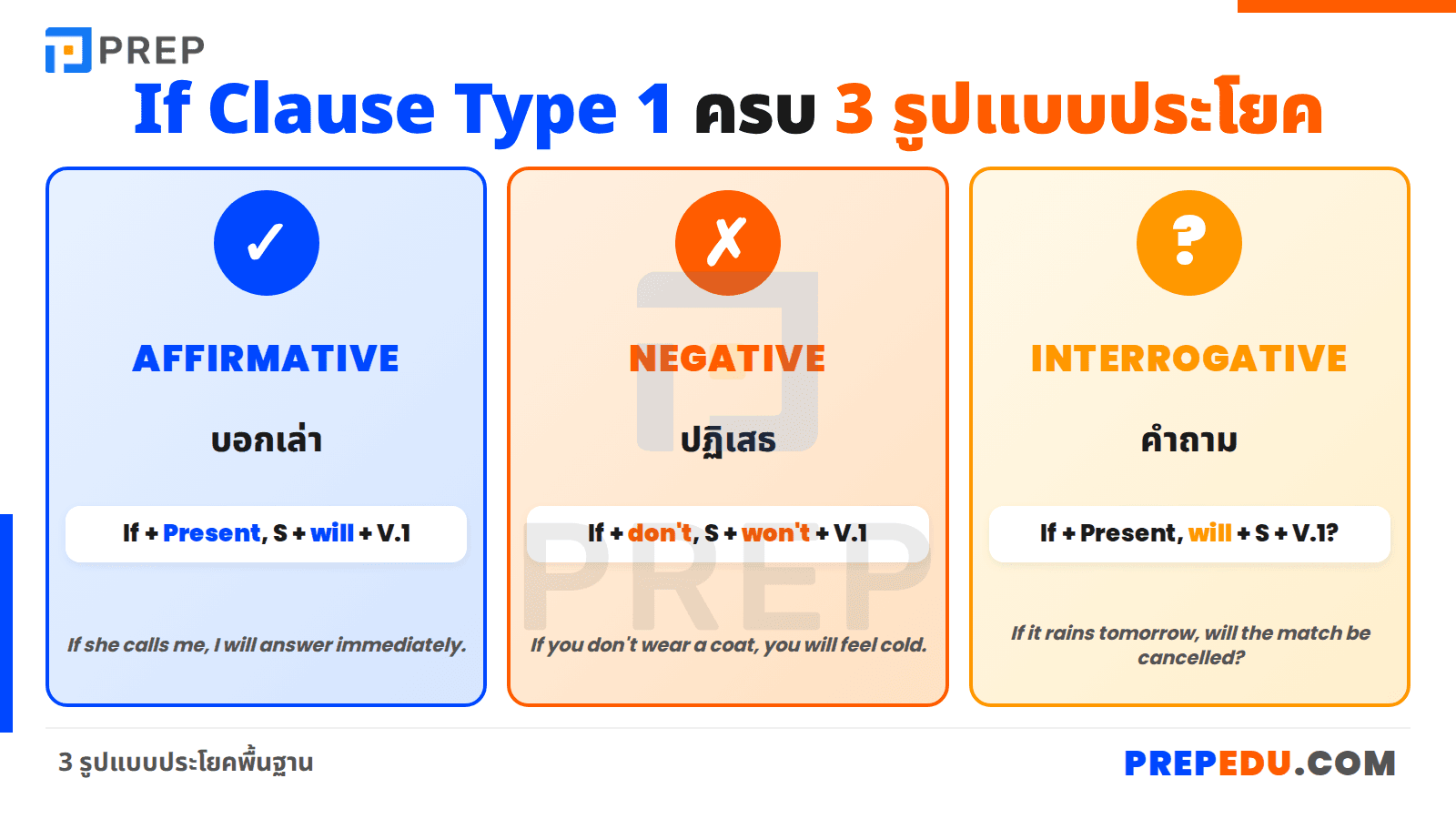
ตัวอย่างประโยค if clause type 1 ในชีวิตประจำวันแบ่งเป็น 3 รูปแบบหลัก คือประโยคบอกเล่า ปฏิเสธ และคำถาม แต่ละรูปแบบมีโครงสร้างเฉพาะที่ต้องเข้าใจเพื่อใช้ได้ถูกต้อง
1. ตัวอย่างประโยคบอกเล่า (Affirmative Sentences)
ประโยค if clause type 1 แบบประโยคบอกเล่ามีรูปแบบตรงไปตรงมาและใช้งานได้จริงในชีวิตประจำวัน:
|
ประโยคภาษาอังกฤษ |
ความหมายภาษาไทย |
|
If the weather is nice tomorrow, we will go to the beach. |
หากอากาศดีพรุ่งนี้ เราจะไปหาดทะเล |
|
If you finish your homework, you can watch TV. |
หากคุณทำการบ้านเสร็จ คุณสามารถดูทีวีได้ |
|
If she calls me, I will answer immediately. |
หากเธอโทรมา ฉันจะรับสายทันที |
2. ตัวอย่างประโยคปฏิเสธ (Negative Sentences)
ประโยคปฏิเสธใน if clause type 1 สามารถปฏิเสธได้ทั้งในส่วนเงื่อนไขและส่วนผลลัพธ์:
- If you don't wear a coat, you will feel cold. (หากคุณไม่ใส่เสื้อโค้ท คุณจะรู้สึกหนาว)
- If it doesn't rain, we won't cancel the picnic. (หากฝนไม่ตก เราจะไม่ยกเลิกการปิกนิก)
- If he doesn't study, he won't pass the exam. (หากเขาไม่เรียน เขาจะสอบไม่ผ่าน)
3. ตัวอย่างประโยคคำถาม (Interrogative Sentences)
การสร้างประโยคคำถามจะย้าย "will" มาไว้หน้าประธานในส่วนผลลัพธ์:
- If you save money every month, will you buy a car next year? (หากคุณออมเงินทุกเดือน คุณจะซื้อรถในปีหน้าหรือไม่?)
- If it rains tomorrow, will the match be cancelled? (หากพรุ่งนี้ฝนตก การแข่งขันจะถูกยกเลิกหรือไม่?)
IV. การใช้ Modal Verbs อื่นๆ แทน will
If clause type 1 ไม่จำเป็นต้องใช้ "will" เท่านั้น สามารถใช้ Modal Verbs อื่นๆ ได้ตามความหมายที่ต้องการ:
-
การใช้ 'can' เพื่อบอกความสามารถ If you learn these words, you can communicate better. (หากคุณเรียนคำศัพท์เหล่านี้ คุณสามารถสื่อสารได้ดีขึ้น)
-
การใช้ 'may/might' เพื่อบอกความเป็นไปได้ที่น้อยลง If the traffic is heavy, we might be late. (หากรถติดมาก เราอาจจะไปสาย)
-
การใช้ 'should' เพื่อให้คำแนะนำ If you feel sick, you should see a doctor. (หากคุณรู้สึกไม่สบาย คุณควรไปหาหมอ)
ข้อผิดพลาดที่พบบ่อยและวิธีแก้ไข
ข้อผิดพลาดที่นักเรียนมักพบในการใช้ if clause type 1:
|
ข้อผิดพลาด |
ประโยคผิด |
ประโยคถูก |
|
ใช้ will ในส่วนเงื่อนไข |
If you will come early |
If you come early |
|
ใช้ Present ในส่วนผลลัพธ์ |
If it rains, I stay home |
If it rains, I will stay home |
|
ลืมใส่ 's' กับประธานเอกพจน์ |
If he work hard |
If he works hard |
|
ใช้ Past Tense ผิด |
If you studied, you will pass |
If you study, you will pass |
V. เปรียบเทียบ if clause type 1 กับ Type 0, 2, 3
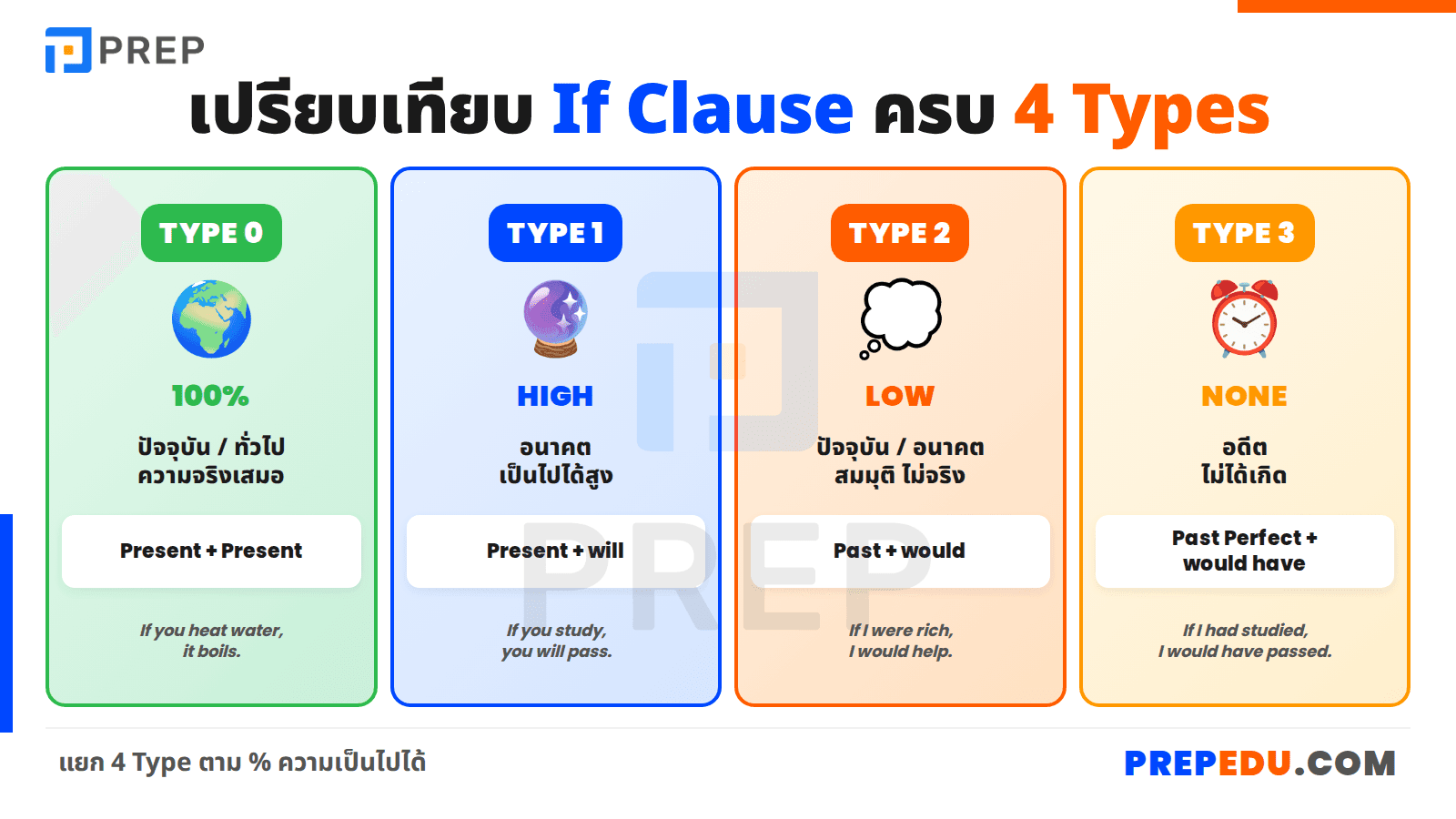
การเข้าใจ if clause type 1 vs Type อื่นๆ ช่วยให้ใช้ได้ถูกต้องตามบริบท แต่ละ Type มีระดับความเป็นไปได้และช่วงเวลาต่างกัน การจำ if clause type 1 พร้อม Type 0/2/3 ช่วยยกระดับ IELTS Band
|
หัวข้อเปรียบเทียบ |
Type 0 |
Type 1 |
Type 2 |
Type 3 |
|
ความเป็นไปได้ |
100% (จริงเสมอ) |
สูง (เป็นไปได้) |
ต่ำ (สมมติ) |
ไม่เกิด (ในอดีต) |
|
เวลา |
ปัจจุบัน/ทั่วไป |
อนาคต |
ปัจจุบัน/อนาคต |
อดีต |
|
โครงสร้าง |
Present + Present |
Present + will |
Past + would |
Past Perfect + would have |
|
ตัวอย่าง |
If you heat water, it boils |
If you study, you will pass |
If I were rich, I would help |
If I had studied, I would have passed |
บทความแนะนำอ่านเพิ่มเติม:
VI. แบบฝึกหัด if clause type 1 พร้อมเฉลย
มาวัดระดับความเข้าใจ if clause type 1 กันหน่อย แบบฝึกหัด 30 ข้อ 3 รูปแบบจะช่วยให้แม่นยำใน if clause type 1 มากขึ้น ครอบคลุม Multiple Choice ไปจนถึง Error Identification ของ if clause type 1 พร้อมเฉลย
1. Exercise 1: Multiple Choice Questions
คำชี้แจง: จงเลือกคำตอบที่ถูกต้องที่สุดเพียงข้อเดียว (ข้อ 1-10)
-
If it _____ tomorrow, we will cancel the picnic. (a) rains (b) will rain (c) rained (d) rain
-
If you study hard, you _____ pass the IELTS exam. (a) would (b) will (c) had (d) have
-
She will be late if she _____ the bus. (a) misses (b) will miss (c) missed (d) miss
-
If he _____ harder, he will get a promotion. (a) work (b) works (c) will work (d) worked
-
If I have time tomorrow, I _____ visit my grandmother. (a) am (b) was (c) will (d) would
-
They will go to the beach if the weather _____ nice. (a) is (b) will be (c) was (d) be
-
If you _____ exercise regularly, you will stay healthy. (a) don't (b) won't (c) didn't (d) doesn't
-
If you _____ the door, the dog will run out. (a) open (b) opens (c) opened (d) will open
-
If she sees him at the party, she _____ angry. (a) is (b) will be (c) was (d) be
-
You will fail the exam if you _____ for it. (a) don't prepare (b) won't prepare (c) didn't prepare (d) not prepare
เฉลย Exercise 1:
[prep_collapse_expand open_text="View more" close_text="Show less"]
-
(a) rains (If + Present Simple)
-
(b) will pass (Subject + will + Verb 1)
-
(a) misses (If + Present Simple, ประธาน she ต้องเติม s)
-
(b) works (he เอกพจน์ต้องเติม s)
-
(c) will (Subject + will + Verb 1)
-
(a) is (If + Present Simple)
-
(a) don't (ปฏิเสธใน If clause ใช้ don't)
-
(a) open (If + Present Simple, you = base form)
-
(b) will be (ผลลัพธ์ใช้ will + Verb 1)
-
(a) don't prepare (ปฏิเสธใน If clause)
[/prep_collapse_expand]
2. Exercise 2: Fill in the Blanks
คำชี้แจง: จงเติมคำในช่องว่างโดยผันกริยาในวงเล็บให้ถูกต้องตามโครงสร้าง if clause type 1 (ข้อ 1-10)
1. If you _______________ (call) me tonight, I will help you with the homework.
2. She _______________ (be) happy if she passes the exam.
3. If they _______________ (not/come) on time, we will leave without them.
4. I _______________ (buy) a new car if I save enough money this year.
5. If the bus _______________ (be) late, we will be in trouble.
6. He will be tired tomorrow if he _______________ (stay) up too late tonight.
7. If you _______________ (eat) too much, you will get sick.
8. We _______________ (visit) Bangkok next month if our parents agree.
9. If she _______________ (work) hard, she will become successful.
10. If it _______________ (snow) tomorrow, the school will be closed.
เฉลย Exercise 2:
[prep_collapse_expand open_text="View more" close_text="Show less"]
1. call (If + Present Simple)
2. will be (ผลลัพธ์ใช้ will + Verb 1)
3. don't come (ปฏิเสธใน If clause)
4. will buy (will + Verb 1)
5. is (ประธาน the bus เอกพจน์)
6. stays (he เอกพจน์ต้องเติม s)
7. eat (If + Present Simple, you = base form)
8. will visit (will + Verb 1)
9. works (she เอกพจน์ต้องเติม s)
10. snows (it เอกพจน์ต้องเติม s)
[/prep_collapse_expand]
3. Exercise 3: Error Identification
คำชี้แจง: จงหาจุดที่ใช้ไวยากรณ์ผิด (1 จุดต่อข้อ) และแก้ไขให้ถูกต้อง (ข้อ 1-10)
1. If you will study hard, you will pass the exam.
2. If it rains tomorrow, I stay at home.
3. If he work hard, he will succeed.
4. If she will come early, we will start the meeting.
5. If the weather is nice, we go to the beach.
6. I will help you if you would ask me.
7. If they don't studies, they won't pass.
8. If you saved money, you will buy a house.
9. She will calls me if she has time.
10. If it rains, the picnic was cancelled.
เฉลย Exercise 3:
[prep_collapse_expand open_text="View more" close_text="Show less"]
1. ผิดที่ will study → แก้เป็น study (If clause ห้ามมี will)
2. ผิดที่ stay → แก้เป็น will stay (Main clause ต้องมี will + Verb 1)
3. ผิดที่ work → แก้เป็น works (he เอกพจน์ต้องเติม s)
4. ผิดที่ will come → แก้เป็น comes (If clause ห้ามมี will, ประธาน she เอกพจน์)
5. ผิดที่ go → แก้เป็น will go (Main clause ต้องมี will)
6. ผิดที่ would ask → แก้เป็น ask (Type 1 ใช้ If + Present Simple ไม่ใช่ would)
7. ผิดที่ don't studies → แก้เป็น don't study (หลัง don't ต้องเป็น base form)
8. ผิดที่ saved → แก้เป็น save (Type 1 ใช้ Present Simple ไม่ใช่ Past)
9. ผิดที่ will calls → แก้เป็น will call (หลัง will ต้องเป็น Verb 1 ไม่มี s)
10. ผิดที่ was → แก้เป็น will be (Main clause ใช้ will + Verb 1)
[/prep_collapse_expand]
VIII. FAQs เกี่ยวกับ if clause type 1
รวบรวมคำถามที่ผู้เรียน if clause type 1 มักสงสัย พร้อมคำตอบจากประสบการณ์สอน Prep ครอบคลุมความสับสนระหว่าง if clause type 1 กับ Type อื่น การใช้ Modal Verbs และ Unless
1. If Clause Type 0 vs Type 1 ต่างกันอย่างไร?
Type 0 ใช้บอกความจริงทั่วไป (general truth) ที่เป็นจริง 100% เสมอ ใช้ Present + Present เช่น "If you heat water, it boils" (น้ำเดือดที่ 100°C เป็นจริงเสมอ) ส่วน if clause type 1 ใช้บอกเหตุการณ์ในอนาคตที่เป็นไปได้สูง ใช้ Present + will + Verb 1 เช่น "If it rains tomorrow, I will stay home" (พรุ่งนี้อาจจะฝนตกหรือไม่ก็ได้ แต่ถ้าฝนตกฉันจะอยู่บ้าน)
2. Modal Verbs (can/may/should) ใช้แทน will เมื่อไหร่?
ใช้ตามความหมายที่ต้องการสื่อ Can ใช้บอกความสามารถ เช่น "If you study hard, you can speak English well" May/Might ใช้บอกความเป็นไปได้ต่ำ เช่น "If it rains, we might cancel the trip" Should ใช้ให้คำแนะนำ เช่น "If you feel sick, you should see a doctor" การใช้ Modal Verbs หลากหลายช่วยเพิ่มคะแนน Grammatical Range ใน IELTS
3. Unless ใช้แทน If ได้ไหม?
Unless แปลว่า "ถ้าไม่" หรือ "เว้นแต่ว่า" ใช้แทน "If...not" ได้ ไม่ต้องเติม not ซ้ำ เช่น "Unless you study, you will fail" = "If you don't study, you will fail" (ถ้าคุณไม่เรียน คุณจะสอบตก) การใช้ Unless ใน if clause type 1 ช่วยให้ประโยคกระชับและเป็นทางการมากขึ้น เหมาะใช้ใน Writing Task 2
4. ใช้ Comma คั่นเมื่อไหร่?
กฎ Comma ใน if clause type 1 ง่ายมาก: ถ้า If clause นำหน้าประโยค ต้องมี comma คั่นเสมอ เช่น "If it rains, I will stay home" แต่ถ้า Main clause นำหน้า ไม่ต้องใช้ comma เช่น "I will stay home if it rains" การใส่ comma ผิดที่เป็นข้อผิดพลาดที่หักคะแนนใน IELTS Writing บ่อย ต้องระวัง
If clause type 1 เป็นพื้นฐานสำคัญสำหรับ IELTS Band 5.0+ จำสูตร If + Present Simple, Subject + will + Verb 1 เริ่มฝึก if clause type 1 ทุกวันกับคอร์ส Prep Edu พร้อม AI วิเคราะห์ Writing/Speaking แม่นยำ เพื่อพิชิต Band เป้าหมาย
หากคุณต้องการพัฒนาทักษะไวยากรณ์ภาษาอังกฤษอย่างเป็นระบบ รวมถึงการใช้ประโยคเงื่อนไขและโครงสร้างไวยากรณ์อื่นๆ ให้ถูกต้องเพื่อเตรียมพร้อมสำหรับการสอบ IELTS เรียน IELTS ออนไลน์ กับ PREP Education จะช่วยให้คุณเข้าใจไวยากรณ์ภาษาอังกฤษอย่างลึกซึ้งและใช้งานได้อย่างแม่นยำ หลักสูตรของเรามุ่งเน้นการสอนไวยากรณ์แบบ step-by-step พร้อมแบบฝึกหัดที่หลากหลายและการประยุกต์ใช้ในข้อสอบจริง เพื่อให้คุณมั่นใจในการใช้ภาษาอังกฤษและบรรลุเป้าหมายคะแนน IELTS ที่ต้องการ ทีมครูผู้เชี่ยวชาญจะคอยให้คำแนะนำการใช้ไวยากรณ์ที่ถูกต้องและเป็นธรรมชาติ ช่วยให้คุณหลีกเลี่ยงข้อผิดพลาดทั่วไปและใช้ภาษาอังกฤษได้อย่างมืออาชีพ

สวัสดีค่ะ ฉันชื่อมุก ปัจจุบันดูแลด้านเนื้อหาผลิตภัณฑ์ของ Prep Education ค่ะ
ด้วยประสบการณ์มากกว่า 5 ปีในการเรียน IELTS ออนไลน์ด้วยตนเอง ฉันเข้าใจดีถึงความท้าทายที่ผู้เรียนต้องเผชิญ แล้วก็รู้ว่าอะไรที่มันเวิร์ก
มุกอยากเอาประสบการณ์ตรงนี้มาช่วยแชร์ แล้วก็ซัพพอร์ตเพื่อน ๆ ให้ได้คะแนนที่ดีที่สุดค่ะ
ความคิดเห็น
เนื้อหาแบบพรีเมียม
ดูทั้งหมด

แผนการเรียนรู้ส่วนบุคคล
อ่านมากที่สุด



ติดต่อ Prep ผ่านโซเชียล





Address: ตึก C.P. Tower 2 (ฟอร์จูนทาวน์) ชั้น 21 ถนนรัชดาภิเษก แขวงดินแดง เขตดินแดง กรุงเทพฯ 10400
Hotline: +66 25 44 0068
Email: sawatdee@prepedu.com