If Clause Type 3 โครงสร้างและตัวอย่างเข้าใจง่าย
"รู้งี้ตั้งใจอ่านหนังสือตั้งแต่แรกก็คงสอบผ่านไปแล้ว..." หรือ "ถ้าวันนั้นไม่ลืมร่ม รถก็คงไม่ติดจนมาสายขนาดนี้" ประโยคตัดพ้อและเสียดายเรื่องราวในอดีตแบบนี้ ภาษาอังกฤษเรียกว่า if clause type 3 หรือ third conditional sentences เป็นโครงสร้างไวยากรณ์สำคัญสำหรับ IELTS Band 6.5+ ที่ใช้สมมุติเหตุการณ์ในอดีตที่ไม่เป็นจริง บทความนี้พาคุณเจาะลึกโครงสร้าง 2 แบบ การใช้งาน 3 สถานการณ์หลัก Modal Verbs ทางเลือก รูปแบบขั้นสูง (Inversion, Mixed Conditional) FAQs และแบบฝึกหัด 30 ข้อพร้อมเฉลย
Key Takeaways
- if clause type 3 (third conditional) คือประโยคเงื่อนไขในอดีตที่ไม่เป็นจริง ใช้แสดงความเสียดาย การวิพากษ์วิจารณ์ หรือจินตนาการถึงผลลัพธ์ตรงข้ามกับความจริง
- โครงสร้าง: If + Subject + had + V.3, Subject + would/could/might + have + V.3 สลับตำแหน่งได้ (ถ้า If clause นำหน้า ต้องมี comma คั่น)
- ใช้ would have แสดงผลลัพธ์ที่แน่ชัด, could have แสดงความสามารถ, might have แสดงความเป็นไปได้
- รูปแบบขั้นสูง: ปฏิเสธ (hadn't + V.3), Inversion (Had I known...), Mixed Conditional (Past condition → Present result)
I. If Clause Type 3 คืออะไร?
if clause type 3 หรือ third conditional คือประโยคเงื่อนไขในอดีตที่ไม่เป็นจริง ใช้แสดงความเสียดายหรือสมมุติสิ่งที่ไม่เกิดขึ้น ใช้ Past Perfect ใน If clause และ would + have + V.3 ใน Main clause เหมาะสำหรับ IELTS Band 6.0+
การใช้งานหลัก:
- สมมุติสถานการณ์ในอดีตที่ไม่เป็นจริง
- แสดงความเสียใจเกี่ยวกับสิ่งที่เกิดขึ้นในอดีต
- จินตนาการผลลัพธ์ที่แตกต่างในอดีต
- พูดถึงสิ่งที่ไม่สามารถเปลี่ยนแปลงได้แล้ว
ลักษณะสำคัญของ conditional type 3:
- เป็นสมมุติฐานที่ไม่เป็นจริงในอดีต
- ใช้ Past Perfect (had + V.3) ในส่วนเงื่อนไข
- ใช้ would have + V.3 ในส่วนผลลัพธ์
- แสดงถึงสิ่งที่เกิดขึ้นตรงข้ามกับความจริง
II. โครงสร้างประโยค If Clause Type 3
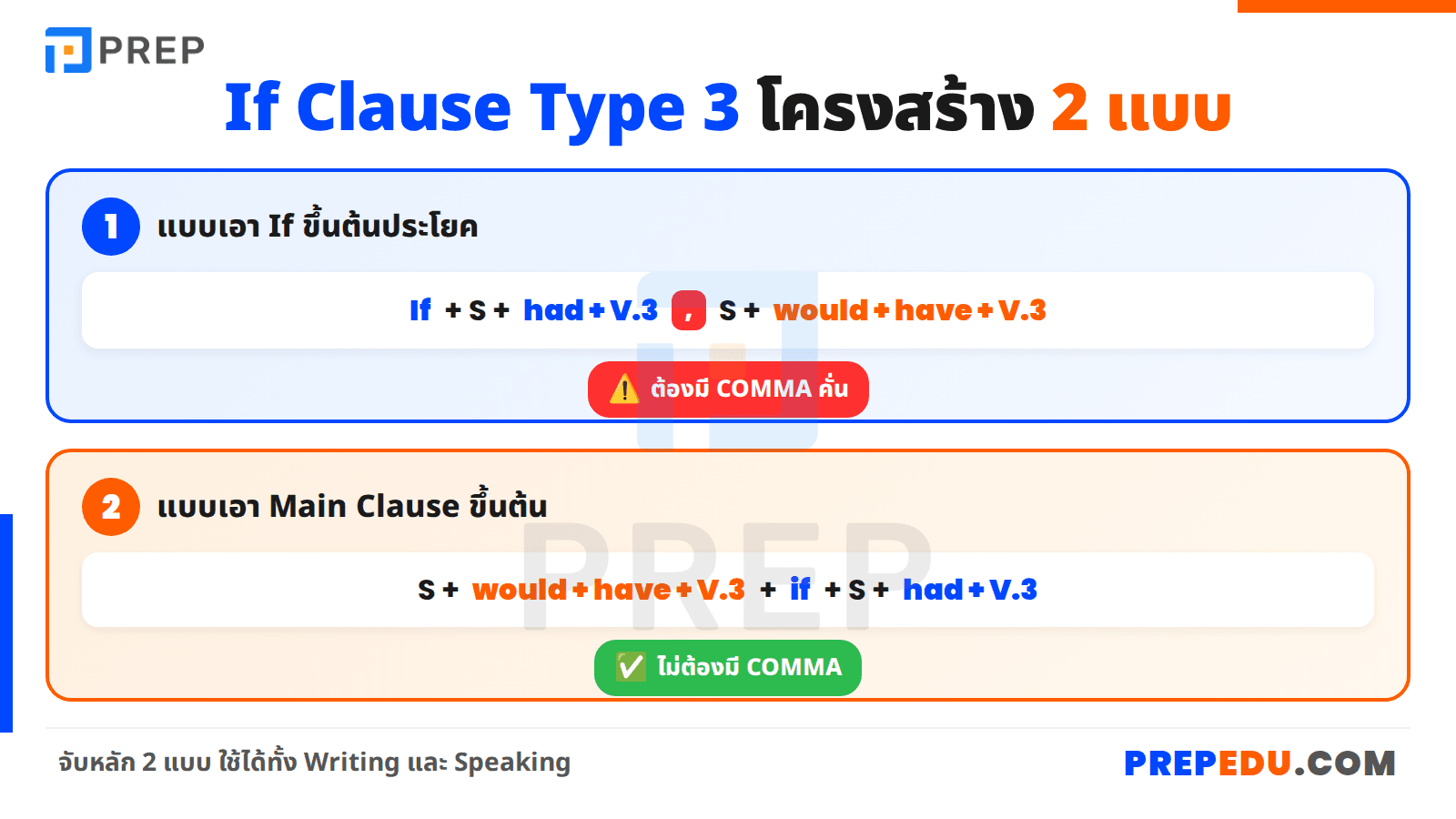
สำหรับการแต่ง ประโยค if clause type 3 นั้น มีสูตรโครงสร้างที่ตายตัว แม้จะดูยาวแต่ถ้าจับหลักการทำงานของ Verb ได้ก็ไม่ยากเลยครับ โดยสามารถแบ่งโครงสร้างออกเป็น 2 แบบตามการวางตำแหน่ง ดังนี้ครับ
1. แบบเอา If ขึ้นต้นประโยค (ต้องมีเครื่องหมาย Comma คั่น)
If + Subject + had + V.3 , Subject + would/could/might + have + V.3
ตัวอย่าง: If I had studied harder, I would have passed the exam.
ความเป็นจริงในอดีต: ฉันไม่ได้ตั้งใจเรียน (I didn't study hard) และผลคือฉันสอบตก (I failed the exam)
2. แบบเอา Main Clause ขึ้นต้น (ไม่ต้องมีเครื่องหมาย Comma)
Subject + would/could/might + have + V.3 + If + Subject + had + V.3
ตัวอย่าง: I would have passed the exam if I had studied harder.
(ความหมายเหมือนกันกับประโยคด้านบนทุกประการ เพียงแต่สลับตำแหน่งเท่านั้นครับ)
บทความแนะนำอ่านต่อ:
III. การใช้งานหลักของ If Clause Type 3
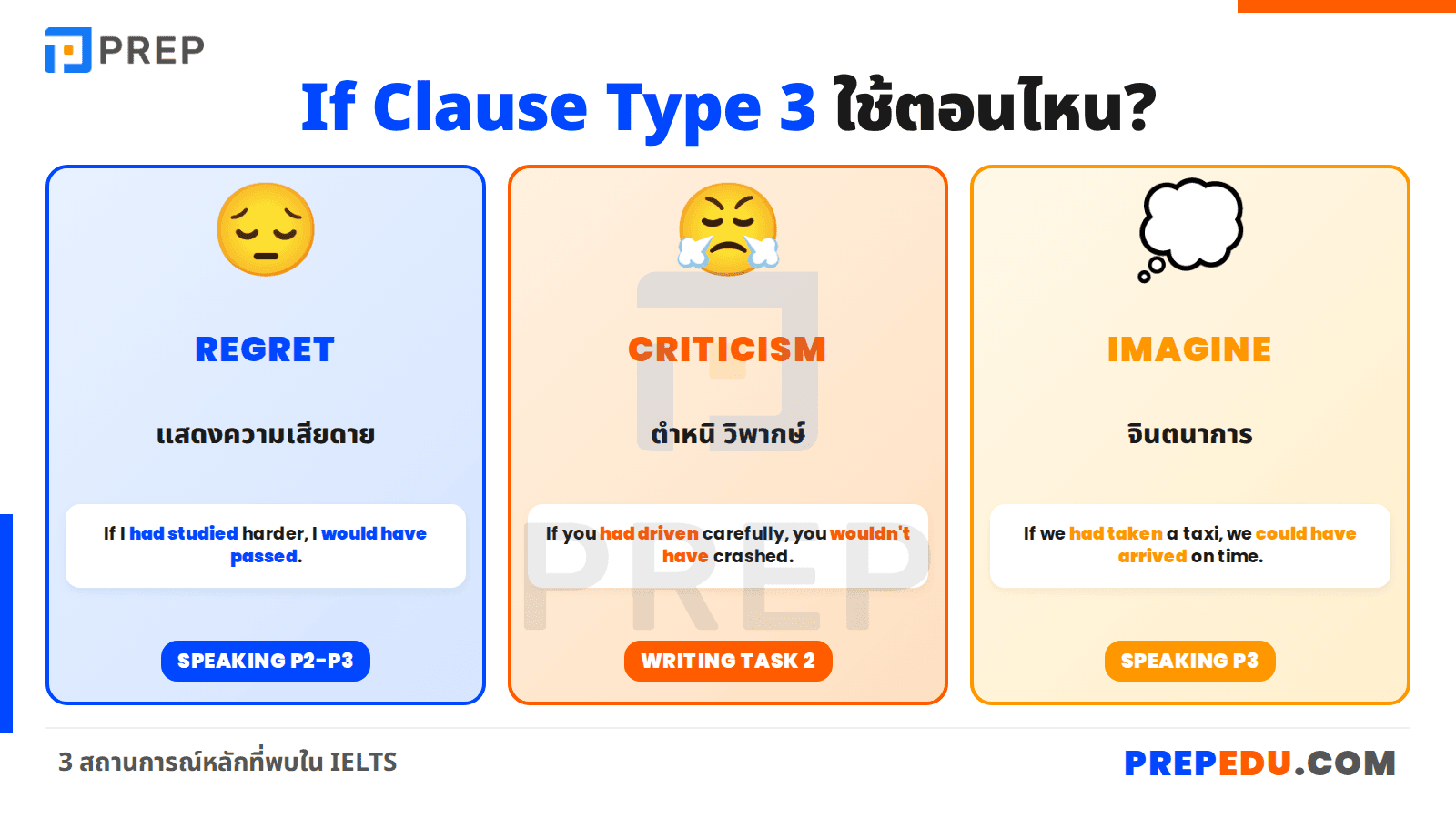
if clause type 3 มีการใช้งานหลัก 3 สถานการณ์ที่พบบ่อยใน IELTS ได้แก่ การแสดงความเสียดาย การตำหนิ และการจินตนาการ การใช้ if clause type 3 ทั้ง 3 กรณีพบใน Speaking Part 3 และ Writing Task 2
1. ใช้แสดงความเสียดาย (Regret)
ใช้ if clause type 3 เมื่อมองย้อนกลับไปในอดีต แล้วรู้สึกเสียดายที่ไม่ได้ทำบางสิ่ง หรือเสียดายที่ผลลัพธ์ไม่เป็นไปตามที่หวัง เป็นการใช้ third conditional sentences ที่พบบ่อยที่สุด
ตัวอย่าง: If I had known about your birthday, I would have bought you a gift. (ถ้าฉันรู้ว่าเป็นวันเกิดเธอ [ในอดีต] ฉันก็คงซื้อของขวัญให้ไปแล้ว ความจริงคือไม่รู้และไม่ได้ซื้อ)
2. ใช้เพื่อตำหนิหรือวิพากษ์วิจารณ์ (Criticism)
ใช้ if clause type 3 เมื่อต้องการบอกว่า ถ้าในอดีตใครบางคนทำตัวอีกแบบ ผลลัพธ์ก็คงจะดีกว่านี้ เป็นการบ่นหรือติงเรื่องในอดีตที่เหมาะกับ Writing Task 2
ตัวอย่าง: If you had driven more carefully, you would not have had an accident. (ถ้าเธอขับรถระวังกว่านี้ [ในอดีต] เธอก็คงไม่ประสบอุบัติเหตุ ความจริงคือขับไม่ระวังและเกิดอุบัติเหตุไปแล้ว)
3. ใช้จินตนาการถึงผลลัพธ์ที่ตรงข้าม (Imagination)
ใช้ if clause type 3 ในเชิงสมมติเล่นๆ ถึงเหตุการณ์ในอดีต ว่าถ้ามันไม่เกิดแบบนั้น โลกหรือชีวิตเราตอนนี้จะเป็นอย่างไร นิยมใช้ใน Speaking Part 3 เรื่อง Hypothetical Situations
ตัวอย่าง: If we had taken a taxi instead of the bus, we could have arrived on time. (ถ้าตอนนั้นเรานั่งแท็กซี่แทนรถเมล์ พวกเราก็คงมาถึงตรงเวลาแล้ว ความจริงคือนั่งรถเมล์และมาสาย)
IV. การใช้ Modal Verbs อื่นๆ แทน would have
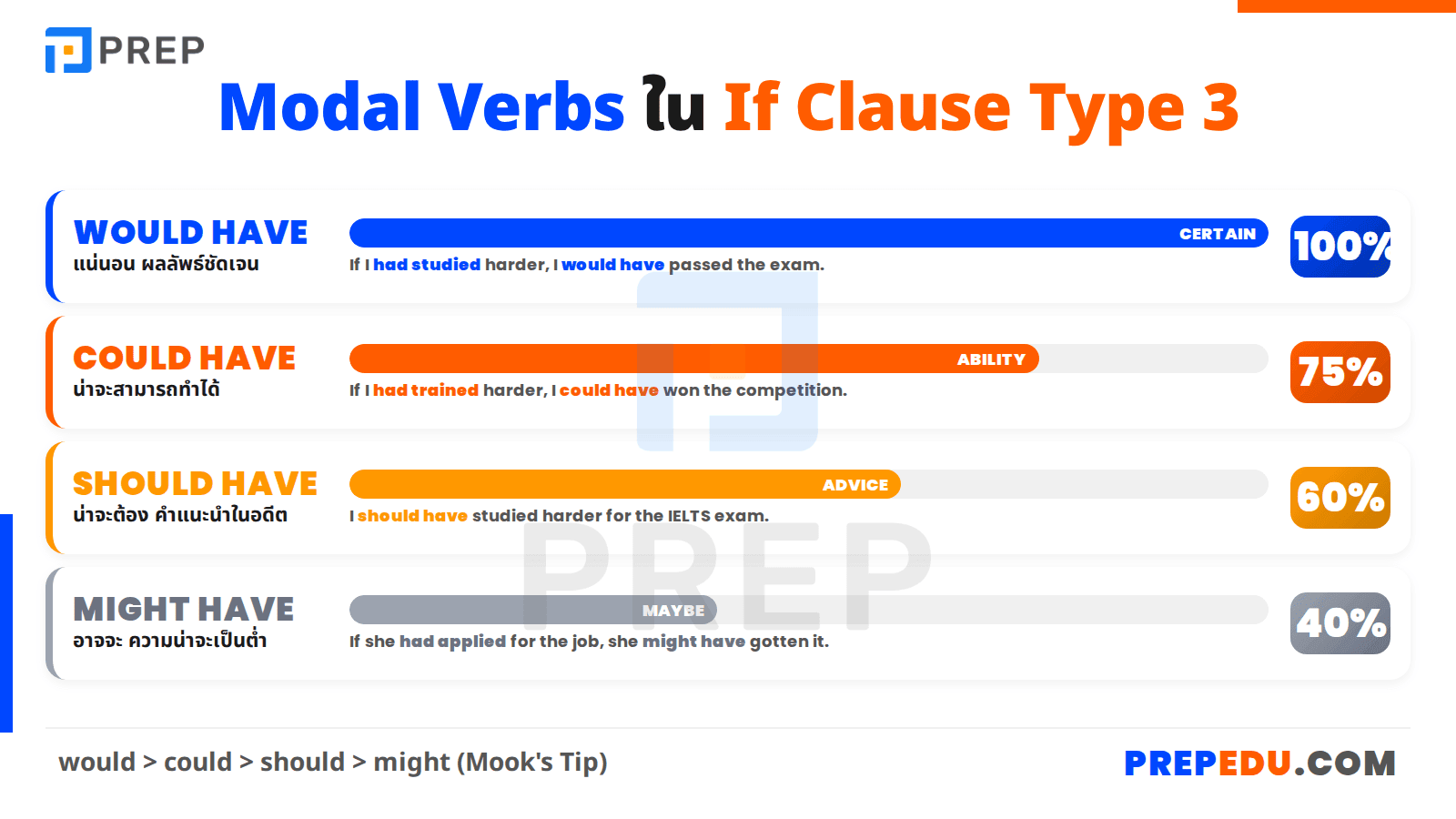
การเรียนรู้การใช้ modal verbs อื่นๆ นอกเหนือจาก would จะช่วยให้การสื่อสารมีความหลากหลายและแม่นยำมากขึ้น
1. Could have + V.3 (น่าจะสามารถทำได้)
|
Modal Verb |
ตัวอย่างประโยค |
ความหมาย |
|
Could have |
If I had trained harder, I could have won the competition. |
หากฉันฝึกหนักกว่านี้ ฉันอาจชนะการแข่งขันได้ |
|
Could have |
If we had left earlier, we could have avoided the traffic. |
หากเราออกเดินทางเร็วกว่านี้ เราอาจหลีกเลี่ยงรถติดได้ |
2. Might have + V.3 (อาจจะ ความน่าจะเป็นต่ำ)
การใช้ might แสดงถึงความเป็นไปได้ที่น้อยกว่า could:
- If she had applied for the job, she might have gotten it. (หากเธอสมัครงานนั้น เธออาจได้งาน)
- If they had invested in that company, they might have made a fortune. (หากพวกเขาลงทุนในบริษัทนั้น พวกเขาอาจร่ำรวยได้)
3. Should have + V.3 (น่าจะต้อง คำแนะนำในอดีต)
ใช้แสดงคำแนะนำหรือการกระทำที่ควรทำในอดีต มักใช้แสดงความรู้สึก "เสียดาย" ที่ไม่ได้ทำสิ่งที่ควร เป็นการตำหนิตนเองหรือผู้อื่นอย่างสุภาพ
ตัวอย่าง:
- I should have studied harder for the IELTS exam. (ฉันควรจะตั้งใจเรียน IELTS มากกว่านี้)
- She should have told me earlier about the meeting. (เธอควรจะบอกฉันเรื่องการประชุมเร็วกว่านี้)
V. รูปแบบต่างๆ ของ If Clause Type 3
นอกจากรูปแบบมาตรฐาน if clause type 3 ยังมีรูปแบบขั้นสูง 4 แบบที่ใช้ใน IELTS Band 7.0+ ได้แก่ การสลับตำแหน่ง การใช้แบบปฏิเสธ Mixed Conditional และ Inversion การเข้าใจครบช่วยยกระดับ Writing/Speaking
1. การสลับตำแหน่ง If Clause
If clause type 3 สามารถสลับตำแหน่งประโยคได้
|
รูปแบบ |
ตัวอย่าง |
|
If clause ข้างหน้า |
If I had known, I would have come. (ถ้าฉันรู้ ฉันคงมา) |
|
Main clause ข้างหน้า |
I would have come if I had known. (ฉันคงมา ถ้าฉันรู้) |
หมายเหตุ: เมื่อ if clause อยู่หน้า ต้องมี comma (,) คั่น แต่ถ้า main clause อยู่หน้า ไม่ต้องใช้ comma
2. การใช้แบบปฏิเสธ
Third conditional ในรูปแบบปฏิเสธ:
|
รูปแบบ |
ตัวอย่าง |
|
ปฏิเสธใน If clause |
If I hadn't been sick, I would have gone to the party. (ถ้าฉันไม่ป่วย ฉันคงไปงานเลี้ยง) |
|
ปฏิเสธใน Main clause |
If she had told me, I wouldn't have been angry. (ถ้าเธอบอกฉัน ฉันคงไม่โกรธ) |
|
ปฏิเสธทั้งสองส่วน |
If we hadn't forgotten, we wouldn't have missed it. (ถ้าเราไม่ลืม เราคงไม่พลาด) |
3. Mixed Conditional กับ Type 3
การผสม if clause type 3 กับ Type 2 (Mixed Conditional):
Past condition → Present result:
-
If I had studied harder at school, I would have a better job now. (ถ้าฉันเรียนหนักตอนเรียน ตอนนี้ฉันคงมีงานดีกว่านี้)
-
If she had saved money, she wouldn't be poor now. (ถ้าเธอเก็บเงิน ตอนนี้เธอคงไม่จน)
4. Inversion กับ Had (รูปแบบทางการ)
รูปแบบ Inversion ละ If และใช้ Had ขึ้นต้นประโยคแทน พบบ่อยในการเขียนภาษาทางการ บทกวี และ Academic Writing เป็นเทคนิคเพิ่มคะแนน Grammatical Range ใน IELTS Band 7.0+
สูตร: Had + Subject + V.3 , Subject + would/could/might + have + V.3
ตัวอย่าง:
- Had I known about the storm, I would have stayed home. = If I had known about the storm, I would have stayed home.
- Had she studied harder, she would have passed the IELTS exam. = If she had studied harder, she would have passed the IELTS exam.
บทความที่แนะนำ:
- ไขทุกข้อสงสัยการใช้ If Only พร้อมตัวอย่าง
- สรุป Relative Clauses เชื่อมประโยคให้โปร
- ทำความเข้าใจการลดรูป Adverb Clause
VI. แบบฝึกหัด if clause type 3 พร้อมเฉลย
มาลองวัดระดับความเข้าใจกันหน่อยดีกว่า! ด้านล่างนี้คือแบบฝึกหัด 3 สไตล์ที่จะช่วยให้คุณแม่นยำเรื่อง if clause type 3 มากยิ่งขึ้นครับ
Exercise 1: Multiple Choice Questions
คำชี้แจง: จงเลือกคำตอบที่ถูกต้องที่สุดเพียงข้อเดียว (ข้อ 1-10)
-
If I __________ his number, I would have called him. a) have known b) had known c) knew d) know
-
She would have passed the exam if she __________ harder. a) studied b) had studied c) has studied d) would study
-
If we __________ the map, we wouldn't have gotten lost. a) didn't forget b) hadn't forgotten c) haven't forgotten d) don't forget
-
They __________ the flight if they had left for the airport earlier. a) wouldn't miss b) hadn't missed c) wouldn't have missed d) didn't miss
-
If it had rained yesterday, we __________ at home. a) would stay b) would have stayed c) stayed d) had stayed
-
I would have bought that jacket if it __________ so expensive. a) hadn't been b) wasn't c) hasn't been d) wouldn't be
-
If you __________ me, I would have helped you immediately. a) asked b) had asked c) have asked d) ask
-
If the company had invested in better technology, they __________ bankrupt. a) wouldn't go b) hadn't gone c) wouldn't have gone d) didn't go
-
She __________ the job if she had prepared better for the interview. a) might have gotten b) might get c) had gotten d) got
- If I had known it was a formal party, I __________ jeans. a) wouldn't wear b) wouldn't have worn c) hadn't worn d) didn't wear
เฉลย:
[prep_collapse_expand open_text="View more" close_text="Show less"]
-
b) had known
-
b) had studied
-
b) hadn't forgotten
-
c) wouldn't have missed
-
b) would have stayed
-
a) hadn't been
-
b) had asked
-
c) wouldn't have gone
-
a) might have gotten (ใช้ might แทน would เพื่อบอกความน่าจะเป็น)
-
b) wouldn't have worn
[/prep_collapse_expand]
Exercise 2: Fill in the Blanks
คำชี้แจง: จงเติมคำในช่องว่างโดยผันคำกริยาในวงเล็บให้ถูกต้องตามโครงสร้าง If Clause Type 3 (ข้อ 1-10)
-
If you _______________ (tell) me the truth, I wouldn't have been so angry.
-
We _______________ (arrive) on time if the traffic hadn't been so bad.
-
If they _______________ (not/miss) the train, they would be here by now.
-
I _______________ (lend) you the money if you had asked me.
-
If he _______________ (drive) more carefully, the accident wouldn't have happened.
-
If the doctor _______________ (not/operate) immediately, the patient would have died.
-
They _______________ (win) the match if their star player hadn't been injured.
-
If I _______________ (have) enough money last year, I would have bought that house.
-
She _______________ (could/finish) the project if she had had more time.
-
If we _______________ (listen) to your advice, we wouldn't have made this mistake.
เฉลย:
[prep_collapse_expand open_text="View more" close_text="Show less"]
-
had told (If + had + V.3)
-
would have arrived (ประโยคหลักใช้ would + have + V.3)
-
hadn't missed (รูปปฏิเสธของ Past Perfect คือ hadn't + V.3)
-
would have lent (Lend ผันเป็น V.3 คือ lent)
-
had driven (Drive ผันเป็น V.3 คือ driven)
-
hadn't operated (รูปปฏิเสธในส่วนเงื่อนไข)
-
would have won (Win ผันเป็น V.3 คือ won)
-
had had (Had ตัวแรกคือ Verb ช่วยของ Past Perfect ส่วน had ตัวที่สองคือ V.3 ของคำว่า have ที่แปลว่า 'มี')
-
could have finished (ใช้ could แทน would เพื่อบอกว่า 'น่าจะสามารถทำได้')
-
had listened (If + had + V.3)
[/prep_collapse_expand]
Exercise 3: Error Identification and Sentence Correction
คำชี้แจง: จงหาจุดที่ใช้ไวยากรณ์ผิดในประโยค (มี 1 จุดต่อข้อ) และแก้ไขให้ถูกต้อง (ข้อ 1-10)
-
If I would have known you were coming, I would have baked a cake.
-
She would have gone to the party if she has free time yesterday.
-
If they had took the earlier bus, they wouldn't have been late.
-
I would had bought that car if I had saved enough money.
-
If you hadn't help me, I would have failed the project.
-
Had I have more money, I would have traveled the world.
-
If he didn't forget his passport, he would have boarded the plane.
-
She would have been a doctor today if she had passed the exam last year. (Hint: Mixed Conditional)
-
If the government had acted sooner, the crisis would not be so bad right now. (Hint: Mixed Conditional)
-
I would have can help you if you had told me earlier.
เฉลย:
[prep_collapse_expand open_text="View more" close_text="Show less"]
-
ผิดที่ would have known ➔ แก้เป็น had known (หลัง If ต้องใช้ Past Perfect ไม่ใช่ would have)
-
ผิดที่ has ➔ แก้เป็น had had (เหตุการณ์ในอดีตต้องใช้ Past Perfect)
-
ผิดที่ had took ➔ แก้เป็น had taken (หลัง had ต้องเป็น V.3 ซึ่ง Take ➔ Took ➔ Taken)
-
ผิดที่ had bought ➔ แก้เป็น have bought (ตามหลัง would ต้องเป็น V.inf ซึ่งในที่นี้คือ have เสมอ)
-
ผิดที่ hadn't help ➔ แก้เป็น hadn't helped (หลัง hadn't ต้องผันกริยาเป็น V.3)
-
ผิดที่ Had I have ➔ แก้เป็น Had I had (การละ If แบบ Inversion ต้องใช้ Had + Subject + V.3)
-
ผิดที่ didn't forget ➔ แก้เป็น hadn't forgotten (เงื่อนไขในอดีตที่ไม่ได้เกิดขึ้นจริงต้องใช้ Past Perfect)
-
ผิดที่ would have been ➔ แก้เป็น would be (ประโยคนี้เป็น Mixed Conditional เหตุการณ์ส่งผลถึงปัจจุบันที่มีคำว่า 'today' จึงต้องใช้ would + V.1)
-
ประโยคนี้ ถูกต้องแล้ว (เป็น Mixed Conditional ที่สมบูรณ์แบบ: อดีตส่งผลถึงปัจจุบันที่มีคำว่า 'right now')
-
ผิดที่ would have can ➔ แก้เป็น could have (ภาษาอังกฤษไม่มีการใช้ would have can ต้องยุบรวมเป็น could have + V.3 เพื่อสื่อความหมายว่า 'น่าจะสามารถทำได้')
[/prep_collapse_expand]
VII. FAQs เกี่ยวกับ if clause type 3
รวบรวมคำถามที่ผู้เรียน if clause type 3 มักสงสัย พร้อมคำตอบจากประสบการณ์สอน IELTS Grammar ของ Prep ครอบคลุมความสับสนระหว่าง Type 1/2/3, การใช้ Wish, Inversion ใน if clause type 3
1. If Clause Type 1, Type 2 และ Type 3 ต่างกันอย่างไร?
ทั้ง 3 แบบใช้สมมุติสถานการณ์แต่ความเป็นไปได้และช่วงเวลาต่างกัน Type 1 (Real Conditional) ใช้สมมุติเหตุการณ์ในอนาคตที่เป็นไปได้จริง เช่น "If it rains, I will stay home" Type 2 (Unreal Present) สมมุติเหตุการณ์ในปัจจุบันที่ไม่เป็นจริง เช่น "If I were rich, I would travel" ส่วน if clause type 3 (Unreal Past) สมมุติเหตุการณ์ในอดีตที่ไม่ได้เกิด เช่น "If I had studied, I would have passed"
2. Wish + had + V.3 ต่างจาก if clause type 3 อย่างไร?
ทั้งคู่ใช้แสดงความเสียดายในอดีต แต่ความเข้มข้นต่างกัน Wish + had + V.3 แสดงความเสียดายเฉยๆ ไม่ได้บอกผลลัพธ์ เช่น "I wish I had studied harder" ส่วน if clause type 3 บอกทั้งเงื่อนไขและผลลัพธ์ที่ตรงข้ามกับความจริง เช่น "If I had studied harder, I would have passed" ใน Writing IELTS การใช้ if clause type 3 และ Wish ทั้งคู่จะแสดง Grammatical Range หลากหลายขึ้น
3. Inversion กับ Had I... ใช้เมื่อไหร่?
Inversion (Had + Subject + V.3) เป็นรูปแบบทางการของ if clause type 3 ใช้ใน Academic Writing, formal letters, และวรรณกรรม ใน IELTS Writing Task 2 การใช้ Inversion ของ if clause type 3 อย่างถูกต้องช่วยเพิ่มคะแนน Grammatical Range จาก Band 6.0 ไป 7.0+ ตัวอย่าง: "Had governments invested in education earlier, the country would have developed faster"
4. Should have, Would have, Could have, Might have ต่างกันยังไง?
ทั้ง 4 ตัวใช้ในผลลัพธ์ของ if clause type 3 แต่แสดงระดับความแน่นอนต่างกัน Would have แสดงผลลัพธ์ที่แน่ชัด (เกิดแน่นอนถ้าเงื่อนไขเป็นจริง) Could have แสดงความสามารถ (น่าจะทำได้) Should have แสดงคำแนะนำหรือสิ่งที่ควรทำ Might have แสดงความเป็นไปได้ต่ำสุด (อาจจะเกิดก็ได้)
การเรียนรู้ if clause type 3 เป็นทักษะสำคัญที่ช่วยให้คุณสามารถแสดงความรู้สึกเสียใจและจินตนาการเกี่ยวกับอดีตได้อย่างถูกต้อง การเข้าใจโครงสร้างและการใช้งานจะทำให้การสื่อสารภาษาอังกฤษของคุณมีความหลากหลายและแม่นยำมากขึ้น การฝึกฝนอย่างสม่ำเสมอจะช่วยให้คุณเชี่ยวชาญโครงสร้างนี้และใช้งานได้อย่างเป็นธรรมชาติในทุกสถานการณ์
PREP Education เป็นสถาบันชั้นนำที่มีความเชี่ยวชาญในการสอนไวยากรณ์ภาษาอังกฤษอย่างเป็นระบบ รวมถึงการสอนประโยคเงื่อนไขต่างๆ อย่าง If Clause Type 3 ที่เป็นทักษะสำคัญสำหรับการสอบ IELTS หลักสูตร ทบทวนสอบ IELTS ออนไลน์ ของเราครอบคลุมทุกหัวข้อไวยากรณ์ที่จำเป็น โดยเฉพาะการใช้ Conditional Sentences ที่จะช่วยยกระดับคะแนน Writing และ Speaking ของคุณอย่างเห็นได้ชัด ด้วยเทคโนโลยี AI ที่ทันสมัยและผู้สอนมืออาชีพ เราช่วยวิเคราะห์จุดอ่อนของผู้เรียนและให้คำแนะนำเฉพาะเจาะจงที่ตรงจุด ระบบการเรียนออนไลน์ที่ยืดหยุ่นช่วยให้ผู้เรียนสามารถศึกษาไวยากรณ์และฝึกทักษะต่างๆ ได้ทุกที่ทุกเวลา PREP มุ่งมั่นช่วยให้นักเรียนทุกคนเข้าใจโครงสร้างประโยคอย่างลึกซึ้งและสามารถนำไปใช้ได้อย่างถูกต้องในการสอบ IELTS ด้วยประสบการณ์และหลักสูตรที่ได้รับการพัฒนาอย่างต่อเนื่อง เราพร้อมเป็นพาร์ทเนอร์ในการยกระดับทักษะภาษาอังกฤษและการเตรียมสอบ IELTS ของคุณสู่ความสำเร็จอย่างแท้จริง

สวัสดีค่ะ ฉันชื่อมุก ปัจจุบันดูแลด้านเนื้อหาผลิตภัณฑ์ของ Prep Education ค่ะ
ด้วยประสบการณ์มากกว่า 5 ปีในการเรียน IELTS ออนไลน์ด้วยตนเอง ฉันเข้าใจดีถึงความท้าทายที่ผู้เรียนต้องเผชิญ แล้วก็รู้ว่าอะไรที่มันเวิร์ก
มุกอยากเอาประสบการณ์ตรงนี้มาช่วยแชร์ แล้วก็ซัพพอร์ตเพื่อน ๆ ให้ได้คะแนนที่ดีที่สุดค่ะ
ความคิดเห็น
เนื้อหาแบบพรีเมียม
ดูทั้งหมด



แผนการเรียนรู้ส่วนบุคคล


อ่านมากที่สุด




ติดต่อ Prep ผ่านโซเชียล





Address: ตึก C.P. Tower 2 (ฟอร์จูนทาวน์) ชั้น 21 ถนนรัชดาภิเษก แขวงดินแดง เขตดินแดง กรุงเทพฯ 10400
Hotline: +66 25 44 0068
Email: sawatdee@prepedu.com