If Clause Type 2 Second Conditional: โครงสร้าง วิธีใช้ พร้อมตัวอย่าง
คุณเคยอยากพูด "ถ้าฉันเป็นเศรษฐี" หรือ "ถ้าฉันเป็นคุณ" เป็นภาษาอังกฤษ แต่จับโครงสร้างไม่ได้? นั่นคือจุดที่ if clause type 2 เข้ามามีบทบาท
บทความนี้ Prep รวม if clause type 2 ครบ 10 หมวด → โครงสร้างพื้นฐาน, Modal Verbs (would/could/might), Subjunctive "were", 6 Use Cases (Hypothetical/Advice/Polite Requests/Wishes/Alternatives/IELTS), Wishes & Regrets, Mixed Conditionals, Inversion Form, Common Mistakes 6 ข้อ และ IELTS Speaking Part 2-3 sample answers พร้อมแบบฝึกหัด 3 sets + เฉลย
Key Takeaways
ก่อนเข้าสู่เนื้อหา สรุปประเด็นสำคัญที่คุณจะได้เรียนรู้:
- if clause type 2 หรือ second conditional sentences ใช้พูดสถานการณ์สมมติตรงข้ามความจริงในปัจจุบัน → If I were rich (จริงๆ ไม่ใช่)
- โครงสร้างหลัก → If + Subject + Past Simple, Subject + would/could/might + Verb (infinitive) → สลับ Main clause ก่อนก็ได้
- ใช้ Past Simple แต่ไม่ใช่อดีต → เป็น hypothetical present/future → "If it rained tomorrow" = ฝนตกพรุ่งนี้ (สมมติ)
- Subjunctive "were" → ใน formal writing ใช้ "were" กับทุก subject (I/he/she/it) → "If I were you" (ไม่ใช่ was)
- Modal Verbs → would (แน่ใจ) / could (สามารถ) / might (อาจ) → เลือกตามความน่าจะเป็น
- Unless = If not → "Unless I were rich, I couldn't afford it" = "If I weren't rich, I couldn't afford it"

I. If Clause Type 2 คืออะไร
If clause type 2 คือโครงสร้างไวยากรณ์ที่ใช้พูดสถานการณ์สมมติตรงข้ามกับความเป็นจริง หรือเหตุการณ์ไม่น่าจะเกิดขึ้นในปัจจุบัน/อนาคต
1. ความหมายและการใช้งานหลัก
Second conditional sentences ใช้พูดถึง 3 บริบทหลัก → (a) สถานการณ์สมมติตรงข้ามความจริง, (b) เหตุการณ์ไม่น่าเกิดในอนาคต, (c) ความฝัน/ความปรารถนา
(a) ตรงข้ามความจริง: I don't have a car (ความจริง) → If I had a car, I would drive to work.
(ถ้าฉันมีรถ ฉันจะขับไปทำงาน)
(b) ไม่น่าเกิด: If I won the lottery, I would travel the world.
(ถ้าฉันถูกหวย ฉันจะเดินทางรอบโลก)
(c) ความฝัน: If I were taller, I could play basketball.
(ถ้าฉันสูงกว่านี้ ฉันจะเล่นบาสได้)
2. ความแตกต่างระหว่าง Type 1, Type 2 และ Type 3
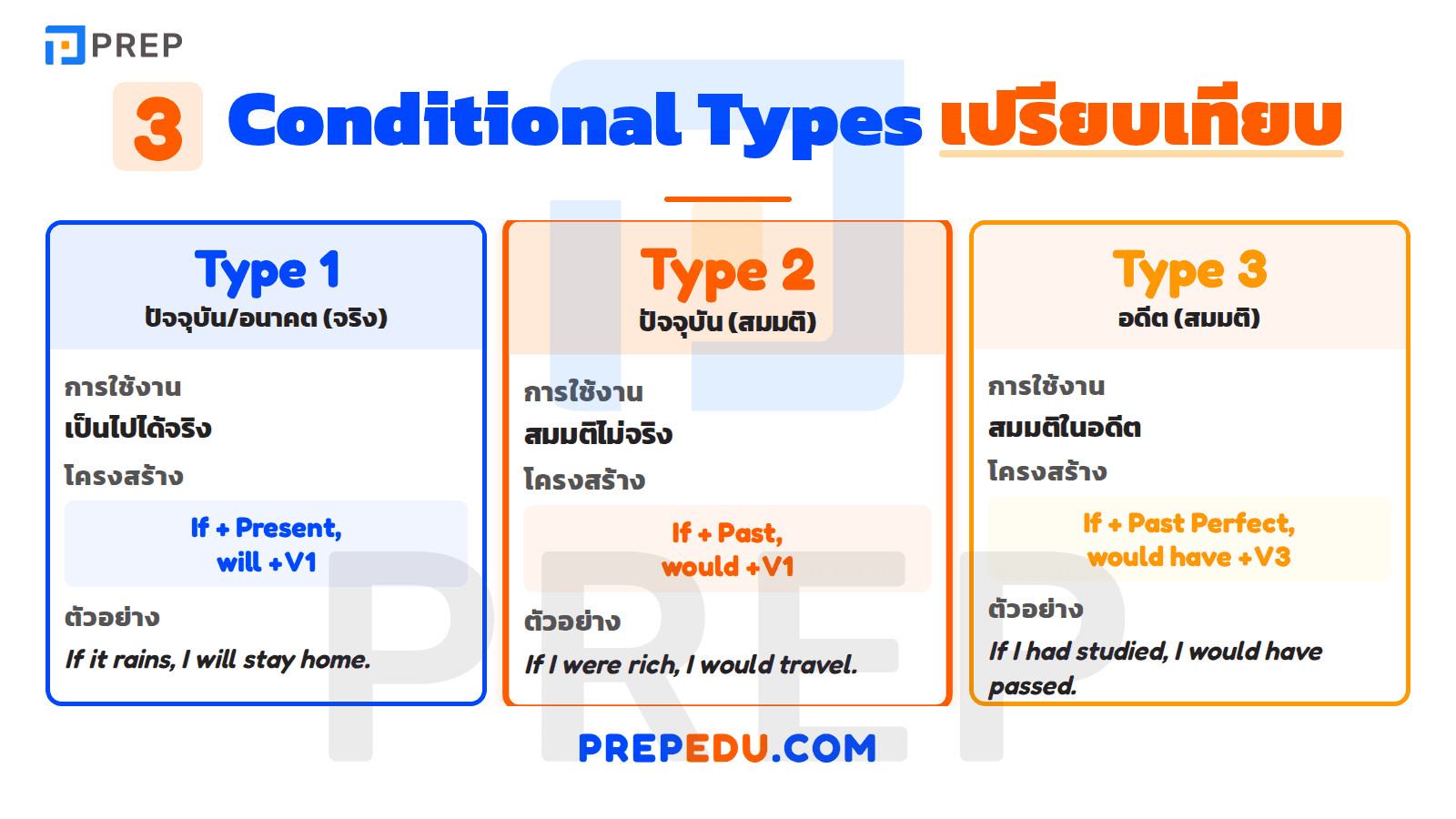
3 conditional types ที่ Preppies ต้องแยกออก → if clause type 2 อยู่ตรงกลาง: Type 1 (real present/future), Type 2 (hypothetical present), Type 3 (hypothetical past) ตามตารางเปรียบเทียบด้านล่าง
|
ประเภท |
เวลา |
โครงสร้าง |
การใช้งาน |
ตัวอย่าง |
|
Type 1 |
ปัจจุบัน/อนาคต (จริง) |
If + Present Simple, will + V1 |
เหตุการณ์เป็นไปได้จริง |
If it rains, I will stay home. (ถ้าฝนตก ฉันจะอยู่บ้าน) |
|
Type 2 |
ปัจจุบัน (สมมติ) |
If + Past Simple, would + V1 |
เหตุการณ์สมมติในปัจจุบัน |
If I were rich, I would travel. (ถ้าฉันรวย ฉันจะเที่ยว) |
|
Type 3 |
อดีต (สมมติ) |
If + Past Perfect, would have + V3 |
เหตุการณ์สมมติในอดีต |
If I had studied, I would have passed. (ถ้าฉันเรียน ฉันจะสอบผ่าน) |
3. ทำไมใช้ Past Simple แต่ไม่ใช่อดีต?
ใน if clause type 2 Past Simple ถูกใช้เป็น "distance form" → สื่อว่าเหตุการณ์ห่างไกลจากความจริง ไม่ใช่ห่างไกลทางเวลา ตาม Oxford Practice Grammar เรียกหลักนี้ว่า "hypothetical past"
II. โครงสร้าง ประโยค if clause type 2 ที่ต้องรู้
โครงสร้าง if clause type 2 มี 3 ส่วนสำคัญ → Basic structure, Modal Verbs (would/could/might + extension), Subjunctive "were" rule → ทั้ง 3 ส่วนต้องเข้าใจให้ครบ
1. โครงสร้างพื้นฐาน 2 รูปแบบ
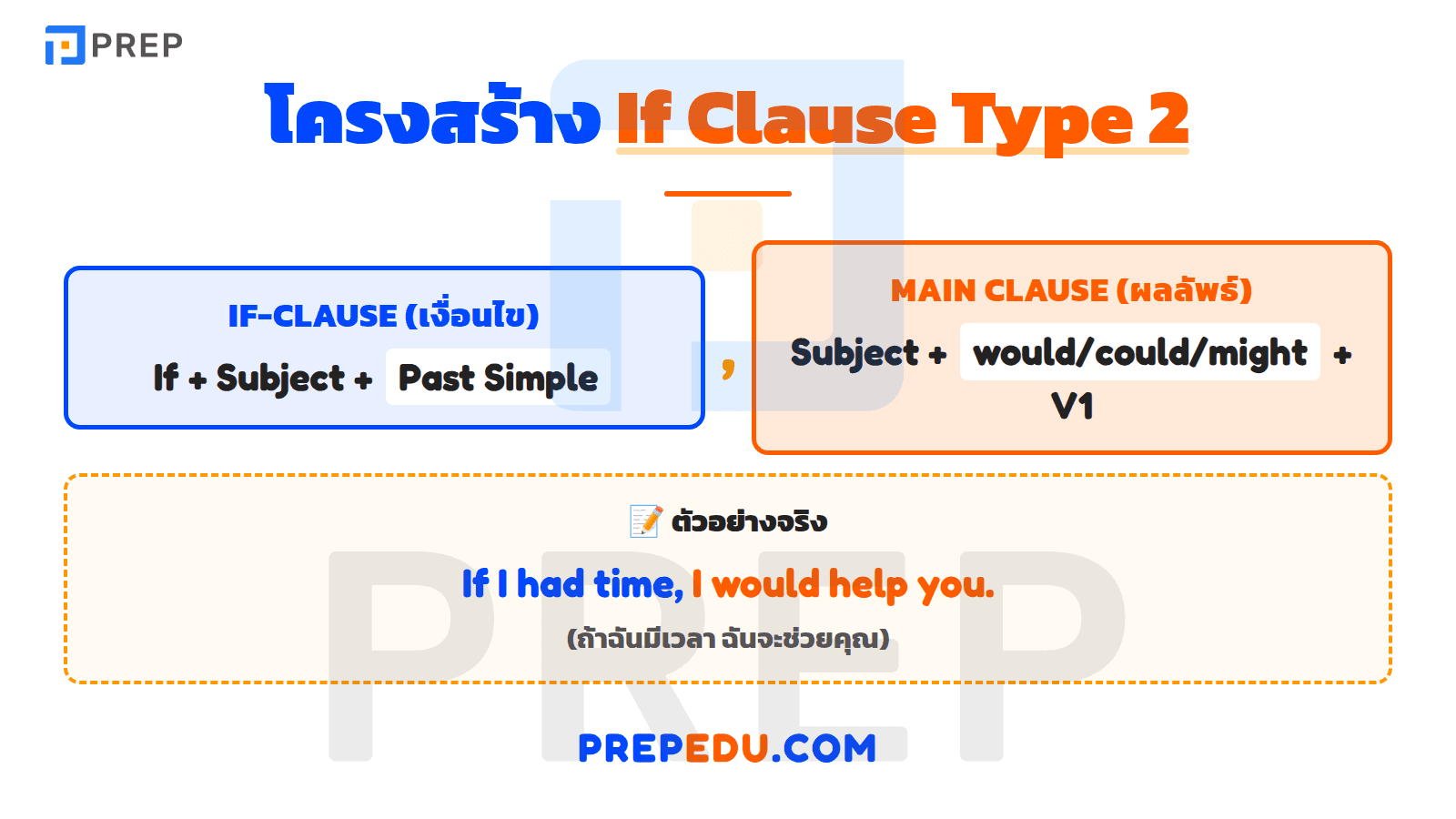
รูปแบบ 1:
If + Subject + Past Simple, Subject + would/could/might + Verb (infinitive)
ตัวอย่าง
- If I had time, I would help you. (ถ้าฉันมีเวลา ฉันจะช่วยคุณ)
รูปแบบ 2 (สลับประโยค):
Subject + would/could/might + Verb (infinitive) + if + Subject + Past Simple
ตัวอย่าง
- I would help you if I had time. (ฉันจะช่วยคุณถ้าฉันมีเวลา)
หมายเหตุ: เมื่อสลับประโยค ไม่ต้องใช้เครื่องหมายจุลภาค (comma)
บทความแนะนำอ่านต่อ:
2. การใช้ Modal Verbs ใน Main Clause
Modal verbs ใน if clause type 2 บอก speaker's attitude → would (certainty), could (ability), might (possibility) มี ought to / should ใช้ได้ในบาง context
|
Modal |
ความหมาย |
ตัวอย่าง |
|
Would |
แน่ใจ (high certainty) |
If I had time, I would help you. (ถ้าฉันมีเวลา ฉันจะช่วยคุณ) |
|
Could |
สามารถ (ability/opportunity) |
If I spoke Chinese, I could work in Beijing. (ถ้าฉันพูดจีนได้ ฉันจะทำงานที่ปักกิ่งได้) |
|
Might |
อาจ (low certainty) |
If it rained, we might cancel the trip. (ถ้าฝนตก เราอาจยกเลิกทริป) |
|
Should |
ควร (advisable) |
If you saw it, you should report it. (ถ้าคุณเห็น คุณควรแจ้ง) |
|
Ought to |
ควร (moral duty) |
If he knew, he ought to tell us. (ถ้าเขารู้ เขาควรบอกเรา) |
3. การใช้ "Were" กับทุก Subject (Subjunctive)
ใน formal writing if clause type 2 ใช้ "were" กับทุก subject (I/he/she/it) → เรียก subjunctive mood ตาม Cambridge Grammar ใน informal speech ใช้ was/were ได้
ถูกต้อง (Formal):
-
If I were rich, I would buy a yacht. ✅
-
If he were here, he would help us. ✅
-
If she were the CEO, things would be different. ✅
ใช้ได้ (Informal - การพูดทั่วไป):
-
If I was rich, I would buy a yacht. (ใช้ได้ในการพูด)
-
If he was here, he would help us. (ใช้ได้ในการพูด)
สำหรับการสอบและการเขียนเป็นทางการ ควรใช้ "were" เสมอ
บทความแนะนำ:
III. 6 สถานการณ์ใช้ if clause type 2 ในชีวิตจริง
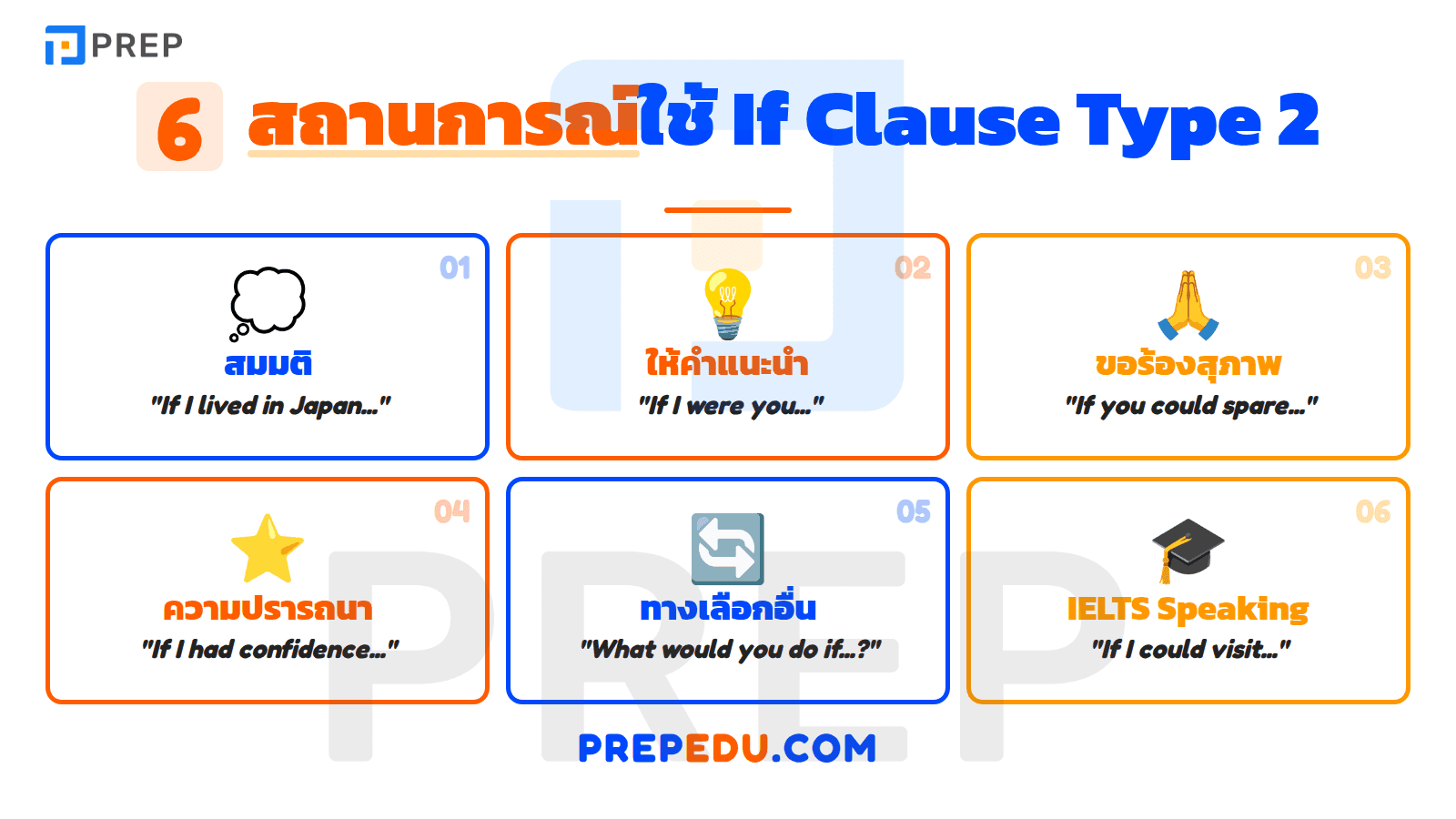
6 use cases ครบครันของ if clause type 2 ในชีวิตจริง → จาก Hypothetical ถึง IELTS Speaking application
1. Hypothetical / Imagination → สถานการณ์สมมติ
Condition type 2 เป็นเครื่องมือทรงพลังสำหรับ imagine สิ่งที่แตกต่างจากความจริงปัจจุบัน → ใช้บ่อยใน creative writing และ daydreaming
ตัวอย่าง: If I lived in Japan, I would learn Japanese fluently.
(ถ้าฉันอยู่ญี่ปุ่น ฉันจะพูดญี่ปุ่นคล่อง)
ตัวอย่าง: If she had more time, she would start her own business.
(ถ้าเธอมีเวลามากกว่านี้ เธอจะเริ่มธุรกิจของตัวเอง)
2. Giving Advice → ให้คำแนะนำด้วย "If I were you"
Pattern "If I were you, I would..." ใน if clause type 2 เป็น native-level technique สำหรับแสดงความเห็นแบบสุภาพ → ผู้ฟังรู้สึกเป็น suggestion ไม่ใช่คำสั่ง
ตัวอย่าง: If I were you, I would accept that offer.
(ถ้าฉันเป็นคุณ ฉันจะรับข้อเสนอนั้น)
ตัวอย่าง: If I were in your position, I would talk to HR first.
(ถ้าฉันอยู่ในสถานะคุณ ฉันจะคุยกับ HR ก่อน)
3. Polite Requests → ขอร้องอย่างสุภาพ
ใช้ if clause type 2 เพื่อ soften request → ฟังนุ่มนวลกว่า direct question โดยเฉพาะกับ senior หรือ stranger
ตัวอย่าง: If you could spare a moment, I would appreciate it.
(ถ้าคุณมีเวลาสักครู่ ฉันจะซาบซึ้ง)
ตัวอย่าง: If it weren't too much trouble, could you help me?
(ถ้าไม่เป็นการรบกวน ขอความช่วยเหลือได้ไหม)
4. Wishes & Desires → แสดงความปรารถนา
ตัวอย่างประโยค if clause type 2 เพื่อแสดงความปรารถนาที่ตรงข้ามความจริง → connects with "I wish" structure (Section V)
ตัวอย่าง: If I had more confidence, I would speak up more often.
(ถ้าฉันมีความมั่นใจมากกว่านี้ ฉันจะพูดบ่อยขึ้น)
ตัวอย่าง: If she could choose any job, she would be a writer.
(ถ้าเธอเลือกงานได้ทุกอย่าง เธอจะเป็นนักเขียน)
5. Imagining Alternatives → จินตนาการทางเลือกอื่น
คำถาม "What would you do if...?" เป็น classic if clause type 2 pattern → ใช้ exploring alternative scenarios
ตัวอย่าง: What would you do if you won a million dollars?
(คุณจะทำอะไรถ้าได้เงินล้าน)
ตัวอย่าง: How would you react if your boss gave you a promotion?
(คุณจะ react ยังไงถ้า boss ให้เลื่อนตำแหน่ง)
6. IELTS Speaking Topics → เนื้อหา IELTS โดยตรง
if clause type 2 ปรากฏใน IELTS Speaking Part 2-3 ประจำ → "Describe an imaginary place", "What would you change about your country?" ใช้ structure นี้ยกระดับ Band 6 → 7+
ตัวอย่าง: If I could visit any country, I would go to Iceland.
(ถ้าฉันไปประเทศไหนก็ได้ ฉันจะไปไอซ์แลนด์)
ตัวอย่าง: If I could change one thing about Bangkok, I would improve public transport.
(ถ้าฉันเปลี่ยนหนึ่งอย่างใน Bangkok ฉันจะปรับปรุงขนส่งสาธารณะ)
IV. If Clause Type 2 ในสถานการณ์พิเศษ
3 รูปแบบพิเศษของ if clause type 2 ที่ Preppies ต้องรู้ → Negative sentences, Questions, Unless = If not
1. ประโยคปฏิเสธ Negative Sentences
ประโยคปฏิเสธใน If-clause: ใช้ didn't + V1 หรือ weren't + ...
-
If I didn't have to work, I would go to the beach. (ถ้าฉันไม่ต้องทำงาน ฉันจะไปชายหาด)
-
If she weren't so busy, she could join us. (ถ้าเธอไม่ยุ่งขนาดนั้น เธอจะมาร่วมได้)
ประโยคปฏิเสธใน Main clause: ใช้ wouldn't / couldn't / might not + V1
-
If I had wings, I wouldn't need an airplane. (ถ้าฉันมีปีก ฉันจะไม่ต้องการเครื่องบิน)
2. ประโยคคำถาม Questions
สร้าง question ใน Main clause → ขึ้นต้นด้วย question word (What/Where/How) หรือ auxiliary (Would/Could/Might) ใน if clause type 2 pattern
-
If you won a million dollars, what would you do? (ถ้าคุณได้เงินล้าน คุณจะทำอะไร)
-
If you were the president, how would you solve this problem? (ถ้าคุณเป็นประธานาธิบดี คุณจะแก้ปัญหานี้ยังไง)
3. Unless (= If not)
Unless มีความหมายเท่ากับ "if not" ใน if clause type 2 → ใช้ลด wordiness แต่ระวัง: เป็น negative connotation
|
Unless statement |
Equivalent If not |
|
Unless I had a car, I would take the bus. |
= If I didn't have a car, I would take the bus. |
|
Unless he were rich, he couldn't afford it. |
= If he weren't rich, he couldn't afford it. |
บทความที่แนะนำ:
- If Clause Type 1 ภาษาอังกฤษ
- เข้าใจ If Clause Type 0 ใน 2 นาที
- เข้าใจ If Clause Type 3 ง่ายกว่าที่คิด
V. Mixed Conditionals: Type 2 + Type 3
Advanced structure → mix Past condition (Type 3) + Present result (Type 2) หรือกลับกัน → ใช้ในสถานการณ์ที่อดีตส่งผลถึงปัจจุบัน Cambridge Advanced Grammar เรียกว่า "Mixed Conditionals"
1. Past Condition → Present Result
Structure: If + Past Perfect (Type 3 condition), would + V1 (Type 2 result)
-
If I had studied medicine, I would be a doctor now. (ถ้าฉันเรียนแพทย์ ฉันคงเป็นหมอตอนนี้)
-
If she had married him, she would be unhappy today. (ถ้าเธอแต่งงานกับเขา เธอคงไม่มีความสุขในวันนี้)
2. Present Condition → Past Result
Structure: If + Past Simple (Type 2 condition), would have + V3 (Type 3 result)
-
If I were taller, I would have made the basketball team. (ถ้าฉันสูงกว่านี้ ฉันคงได้เข้าทีมบาส)
-
If he weren't so shy, he would have asked her out years ago. (ถ้าเขาไม่ขี้อาย เขาคงชวนเธอเดทไปนานแล้ว)
VI. Inversion Form
Inversion form ของ if clause type 2 ใช้ใน formal writing → ละ "if" และ invert subject + were → ยกระดับ IELTS Writing Band 8+
|
Normal Form |
Inversion Form (Formal) |
|
If I were rich, I would buy a yacht. |
Were I rich, I would buy a yacht. |
|
If she were here, she would help. |
Were she here, she would help. |
|
If we were to lose the contract, we'd be bankrupt. |
Were we to lose the contract, we'd be bankrupt. |
Note: Inversion form ใช้ได้กับ "were" เท่านั้น (ไม่ใช้กับ Past Simple verbs อื่น) → ตัวอย่างประโยค if clause type 2 ในรูป inversion เหมาะกับ academic essays และ business letters
VII. แบบฝึกหัด If Clause Type 2
บแบบฝึกหัดที่ 1: เติมคำในช่องว่าง
คำแนะนำ: เติม if clause type 2 ตัวอย่าง ที่เหมาะสมในช่องว่าง โดยใช้รูปแบบ If + Past Simple, Subject + would + Verb
-
If I _________ (have) more money, I _________ (buy) a new laptop.
-
She _________ (travel) around Europe if she _________ (speak) French fluently.
-
If we _________ (live) in Thailand, we _________ (eat) delicious street food every day.
-
They _________ (be) happier if they _________ (move) to a bigger house.
-
If you _________ (study) medicine, you _________ (help) many people.
บแบบฝึกหัดที่ 2: แปลงประโยคจากปัจจุบันเป็น If Clause Type 2
คำแนะนำ: แปลงประโยคต่อไปนี้ให้เป็นรูปแบบสมมติด้วย if clause type 2
-
I don't have a car, so I take the bus to work.
-
She doesn't know Japanese, so she can't work in Tokyo.
-
We don't live near the beach, so we don't go surfing often.
-
He isn't tall enough, so he can't play basketball professionally.
-
They don't have enough time, so they can't learn a new language.
บแบบฝึกหัดที่ 3: เลือกคำตอบที่ถูกต้อง
คำแนะนำ: เลือกคำตอบที่ถูกต้องสำหรับ ประโยค if clause type 2 แต่ละข้อ
-
If I _______ you, I would accept that job offer. a) am b) was c) were d) will be
-
She _______ more confident if she practiced speaking English daily. a) will be b) would be c) is d) was
-
If they _______ harder, they _______ better grades. a) study / will get b) studied / would get c) studies / gets d) study / get
-
We _______ to the concert if tickets _______ so expensive. a) go / aren't b) went / weren't c) would go / weren't d) will go / won't be
-
If the weather _______ better, we _______ have a picnic in the park. a) was / would b) were / will c) is / would d) were / would
เฉลยแบบฝึกหัด
เฉลยแบบฝึกหัดที่ 1:
-
If I had more money, I would buy a new laptop. (ถ้าฉันมีเงินมากกว่านี้ ฉันก็คงจะซื้อแล็ปท็อปใหม่)
-
She would travel around Europe if she spoke French fluently. (เธอก็คงจะเที่ยวยุโรปถ้าเธอพูดฝรั่งเศสได้คล่อง)
-
If we lived in Thailand, we would eat delicious street food every day. (ถ้าเราอยู่ในไทย เราก็คงจะกินอาหารริมทางที่อร่อยทุกวัน)
-
They would be happier if they moved to a bigger house. (พวกเขาก็คงจะมีความสุขมากกว่านี้ถ้าพวกเขาย้ายไปอยู่บ้านที่ใหญ่กว่า)
-
If you studied medicine, you would help many people. (ถ้าเธอเรียนแพทย์ เธอก็คงจะช่วยคนได้เยอะ)
เฉลยแบบฝึกหัดที่ 2:
-
If I had a car, I wouldn't take the bus to work. (ถ้าฉันมีรถ ฉันก็คงจะไม่นั่งรถเมล์ไปทำงาน)
-
If she knew Japanese, she could work in Tokyo. (ถ้าเธอรู้ภาษาญี่ปุ่น เธอก็คงจะทำงานในโตเกียวได้)
-
If we lived near the beach, we would go surfing often. (ถ้าเราอยู่ใกล้ชายหาด เราก็คงจะไปเล่นเซิร์ฟบ่อยๆ)
-
If he were tall enough, he could play basketball professionally. (ถ้าเขาสูงพอ เขาก็คงจะเล่นบาสเกตบอลอาชีพได้)
-
If they had enough time, they would learn a new language. (ถ้าพวกเขามีเวลาพอ พวกเขาก็คงจะเรียนภาษาใหม่)
เฉลยแบบฝึกหัดที่ 3:
-
c) were - ใช้ 'were' กับประธานทุกตัวใน Subjunctive Mood
-
b) would be - ใช้ would + กริยาช่องที่ 1 ในส่วนผลลัพธ์
-
b) studied / would get - Past Simple ในเงื่อนไข, would + V1 ในผลลัพธ์
-
c) would go / weren't - โครงสร้างสมบูรณ์ของ If Clause Type 2
-
d) were / would - ใช้ 'were' และ would ตามโครงสร้าง Type 2
VI. คำถามที่พบบ่อย (FAQs)
1. เราใช้ If Clause Type 2 พูดถึงเรื่องในอดีตได้ใช่หรือไม่?
คำตอบคือ ไม่ได้ If clause type 2 ใช้สำหรับสถานการณ์สมมติในปัจจุบันเท่านั้น หากต้องการพูดถึงเรื่องสมมติในอดีต เราต้องใช้ If Clause Type 3 แทน แม้ว่าจะใช้รูปแบบ Past Simple ในส่วนเงื่อนไข แต่ความหมายหมายถึงปัจจุบันที่ตรงข้ามกับความจริง
2. "Second Conditional Sentences" กับ "If Clause Type 2" คือสิ่งเดียวกันหรือไม่?
ใช่ Second conditional sentences และ if clause type 2 เป็นคำที่ใช้เรียกโครงสร้างเดียวกัน แค่เป็นการเรียกชื่อที่แตกต่างกันตามแหล่งการเรียนรู้และตำราที่ใช้ ทั้งสองคำหมายถึงประโยคเงื่อนไขแบบที่ 2 ที่ใช้พูดถึงสถานการณ์สมมติในปัจจุบัน
3. นอกจาก 'would', 'could', 'might' แล้ว มี Modal Verb อื่นที่ใช้ใน Main Clause ได้อีกไหม?
มี Modal verbs อื่นที่สามารถใช้ได้ เช่น 'should' (ควรจะ) และ 'ought to' (ควรจะ) แต่ใช้ได้ในบริบทเฉพาะเท่านั้น ส่วนใหญ่แล้ว would, could, และ might เป็น modal verbs หลักที่ใช้กับ if clause type 2 เพราะให้ความหมายที่ชัดเจนและเหมาะสมกับการแสดงสถานการณ์สมมติ
4. If Clause Type 2 แตกต่างจาก Type 1 และ Type 3 อย่างไร (สรุปในตาราง)
|
ประเภท |
เวลา |
โครงสร้าง |
การใช้งาน |
ตัวอย่าง |
|
Type 1 |
ปัจจุบัน/อนาคต |
If + Present, will + V1 |
เหตุการณ์ที่เป็นไปได้จริง |
If it rains, I will stay home. |
|
Type 2 |
ปัจจุบัน (สมมติ) |
If + Past, would + V1 |
เหตุการณ์สมมติในปัจจุบัน |
If I were rich, I would travel. |
|
Type 3 |
อดีต (สมมติ) |
If + Past Perfect, would have + V3 |
เหตุการณ์สมมติในอดีต |
If I had studied, I would have passed. |
If clause type 2 เป็นโครงสร้างไวยากรณ์สำคัญที่ใช้พูดถึงสถานการณ์สมมติที่ตรงข้ามกับความเป็นจริงในปัจจุบัน หรือเหตุการณ์ที่ไม่น่าจะเกิดขึ้น โครงสร้างพื้นฐานคือ If + Past Simple, would/could/might + Verb (infinitive) แม้จะใช้ Past Simple แต่ไม่ได้พูดถึงอดีต แต่พูดถึงสถานการณ์สมมติในปัจจุบันหรืออนาคต
สำหรับผู้ที่กำลังเตรียมสอบ IELTS และมองหาคอร์สที่ครอบคลุมทุกด้าน PREP Edu มีคอร์ส ielts ออนไลน์ ที่ออกแบบมาโดยผู้เชี่ยวชาญ ครบทั้งไวยากรณ์ คำศัพท์ และเทคนิคในการทำข้อสอบจริง PREP มอบแผนตารางเรียน IELTS ที่เหมาะกับเป้าหมายของแต่ละคน เปิดโอกาสให้คุณเรียน IELTS ออนไลน์ ได้อย่างยืดหยุ่น ไม่ว่าจะอยู่ที่ไหน พร้อมช่วยให้คุณเตรียมตัวสอบ IELTS อย่างมั่นใจและพร้อมที่สุด

สวัสดีค่ะ ฉันชื่อมุก ปัจจุบันดูแลด้านเนื้อหาผลิตภัณฑ์ของ Prep Education ค่ะ
ด้วยประสบการณ์มากกว่า 5 ปีในการเรียน IELTS ออนไลน์ด้วยตนเอง ฉันเข้าใจดีถึงความท้าทายที่ผู้เรียนต้องเผชิญ แล้วก็รู้ว่าอะไรที่มันเวิร์ก
มุกอยากเอาประสบการณ์ตรงนี้มาช่วยแชร์ แล้วก็ซัพพอร์ตเพื่อน ๆ ให้ได้คะแนนที่ดีที่สุดค่ะ
ความคิดเห็น
เนื้อหาแบบพรีเมียม
ดูทั้งหมด


แผนการเรียนรู้ส่วนบุคคล


อ่านมากที่สุด



ติดต่อ Prep ผ่านโซเชียล





Address: ตึก C.P. Tower 2 (ฟอร์จูนทาวน์) ชั้น 21 ถนนรัชดาภิเษก แขวงดินแดง เขตดินแดง กรุงเทพฯ 10400
Hotline: +66 25 44 0068
Email: sawatdee@prepedu.com