無聊英文怎麼說?bored 和 boring 差別、感到無聊、你很無聊到 boredom 名詞完整教學
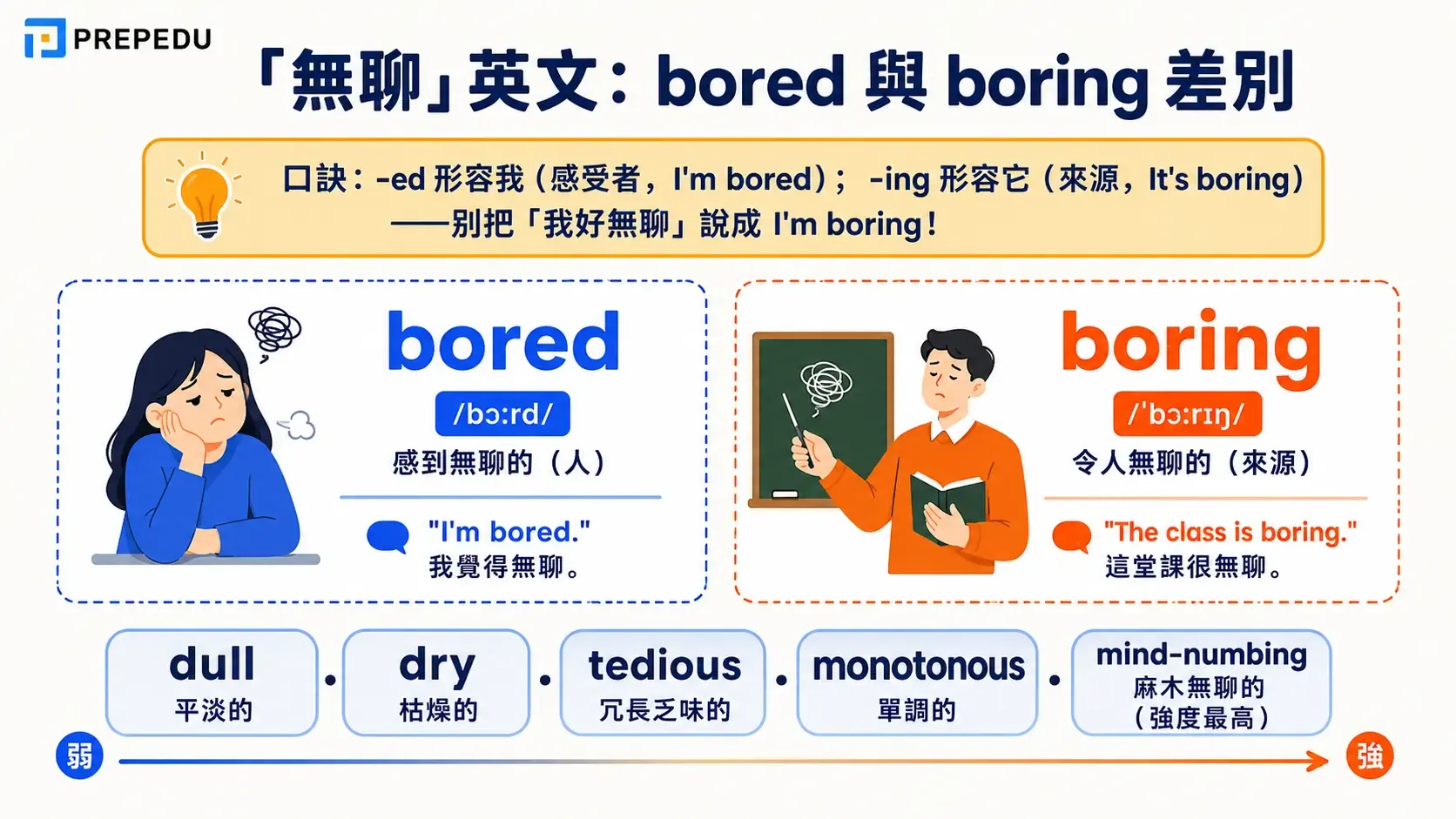
「無聊」的英文,最核心的其實是兩個長得很像、卻常常被用錯的字:bored 與 boring。bored 是「感到無聊的」,用來形容感受到情緒的人;boring 是「令人無聊的」,用來形容造成情緒的人事物。 所以「我覺得無聊」是 I'm bored,而 I'm boring 的意思其實是「我是個無趣的人」——這正是台灣學習者最常見的一個錯誤。你是不是也曾把「我好無聊」說成 I'm boring 呢?
除了 bored 與 boring,英文形容「無聊」還有 dull、tedious、mind-numbing 等單字,以及 bored to death、out of boredom 等片語,名詞則是 boredom。這篇文章會先帶你把形容「無聊」的單字一次認齊,再進到「感到無聊」、「你很無聊」的實戰說法,最後用 20 題練習與常見問答,幫你確認自己是不是真的用對了。

I. 「無聊」英文怎麼說?
形容「無聊」的英文不是只有 boring 一個字。關鍵是先分清楚「感受無聊的人」用 -ed、「令人無聊的來源」用 -ing,再沿著語感光譜挑字:一般乏味用 dull、又長又煩用 tedious、內容枯燥用 dry、一成不變用 monotonous、單調到麻木用 mind-numbing。下面把 12 個常用單字逐字拆解,每個字都附 KK 音標、語感差異與雙語例句。
1. bored
bored /bɔːrd/ 是英文形容詞(-ed 情緒形容詞),意思是「(人)感到無聊的」,英文主詞永遠是「感受到這股情緒的人」。當你想說自己或別人「覺得很悶、提不起勁」時,用的就是 bored。
記憶法很單純:-ed 形容「我自己的感受」,主詞通常是人,例如 I、學生或小華。常見搭配有 get bored(變得無聊)、feel bored(感到無聊)、look bored(看起來很無聊)。這裡先埋一個台式英文陷阱:想說「我很無聊」時要用 bored,絕對不是 boring(差別留到 I.2 深講)。發音上也要注意,bored 只有一個音節 /bɔːrd/,別讀成兩個音節。更多例句:
-
Xiaohua got bored halfway through the online lecture.(小華線上課上到一半就覺得無聊了。)
-
We were so bored at home that we ended up reorganizing the fridge.(我們在家無聊到最後跑去重新整理冰箱。)
2. boring
boring /ˈbɔːrɪŋ/ 是形容詞(-ing 情緒形容詞),意思是「(人事物)令人無聊的」,主詞是「造成這股情緒的來源」。一部電影、一堂課、一個人,只要會讓別人覺得悶,就是 boring。
記憶法對照 bored 剛好相反:-ing 形容「讓別人無聊的東西」,主詞常是事物或人,例如 the movie、the lecture、that guy。常見搭配像 a boring meeting(無聊的會議)、so boring(有夠無聊)。要特別提醒的是,boring 拿來修飾人時,等於說對方「很無趣」,語氣相當直接,容易傷人(婉轉的替代說法留到 III 深講)。更多例句:
-
Mingzhi thinks that history textbook is incredibly boring.(明志覺得那本歷史課本無聊透頂。)
-
The three-hour meeting was so boring that half the team dozed off.(那場三小時的會議無聊到一半的人都打瞌睡。)
bored 和 boring 差在哪裡?(-ed 與 -ing 一次搞懂)→ 一句話講清楚:bored 形容「感受無聊的人」(I'm bored=我覺得無聊),boring 形容「令人無聊的來源」(It's boring=這很無聊)。 主詞是人、想表達他自己的感受,就用 -ed;主詞是造成無聊的人事物,就用 -ing。這個判斷是整篇文章的地基。
|
項目 |
bored |
boring |
|
詞性 |
形容詞(-ed 情緒形容詞) |
形容詞(-ing 情緒形容詞) |
|
意思 |
感到無聊的 |
令人無聊的 |
|
修飾對象 |
感受情緒的人 |
造成情緒的人事物 |
|
例句 |
I'm bored.(我覺得無聊。) |
The class is boring.(這堂課很無聊。) |
口訣就記這一句:「-ed 形容我(感受者),-ing 形容它(來源)」。
台式英文陷阱: 想說「我覺得無聊」卻說成 I'm boring,母語者會理解成「我是個無趣的人」。在教學現場,這是台灣學生最常出包的一個錯誤。診斷方式很簡單:主詞是人、而且想表達「他自己的感受」,就一定用 -ed,也就是 I'm bored。
順帶一提: 同一條 -ed/-ing 規則也適用其他情緒形容詞,像 interested/interesting、excited/exciting、confused/confusing,原理完全一樣,而這些形容詞多半是從「情緒動詞」變化而來——想一次掌握 bore、interest、excite 這類動詞的用法,可以參考這篇情緒動詞全攻略。這裡只是點名,本文聚焦在「無聊」不展開(延伸說明見 FAQ V.6)。
3. mind-numbind
mind-numbing /ˈmaɪndˌnʌmɪŋ/ 是形容詞(口語誇飾用法),意思是「單調到讓腦袋放空、麻木的」,強度比 boring 更高。
這個字拆開來看就是 numb the mind(使心智麻木),畫面感十足。它口語感很重,常用來抱怨機械式、重複性高的工作或內容,例如 mind-numbing paperwork(麻木到不行的文書工作)、a mind-numbing routine(無聊到放空的例行公事)。說真的,當你想強調「不只是無聊,而是整個人都被榨乾」時,這個字最傳神。更多例句:
-
Copying the same data all afternoon was absolutely mind-numbing for Peiyu.(整個下午抄一樣的資料,對佩瑜來說真的無聊到腦袋放空。)
-
Sitting in traffic on the way to work every day is just mind-numbing.(每天上班塞在車陣裡,真的無聊到令人麻木。)
4. boredom
boredom /ˈbɔːrdəm/ 是英文不可數名詞,意思就是「無聊(這種狀態或情緒)」。它是英文名詞,不加 s。
從形容詞轉成名詞的邏輯是:I'm bored(我覺得無聊)換個角度,就是 a feeling of boredom(一種無聊的感覺)。boredom 的招牌搭配包括 out of boredom(出於無聊)、relieve/ease boredom(排解無聊)、die of boredom(無聊到死),這些片語會在 Section II 深講。發音是三個音節 /ˈbɔːrdəm/,英文重音在最前面。更多例句:
-
Yiting opened the fridge out of boredom, not because she was hungry.(怡婷出於無聊打開冰箱,不是因為餓。)
-
Listening to a podcast is Xiaoming's go-to way to relieve boredom on the MRT.(聽 podcast 是小明在捷運上排解無聊的首選。)
5. dull
dull /dʌl/ 是形容詞,意思是「乏味、沉悶、不精彩的」,可以形容內容、人,也可以形容天氣。
它和 boring 的語感差在重點:boring 強調「讓人感到無聊」,dull 強調「本身平淡、不鮮明、沒有亮點」。一場演講平淡無味是 a dull speech,一本書乏善可陳是 a dull book;有趣的是,dull 也能形容天氣陰沉,a dull day 就是「陰陰的、灰灰的一天」。語氣中性、略偏書面。
更多例句:
Zhiqiang's presentation was so dull that nobody asked a single question.(志強的簡報平淡到沒有人問任何問題。)
It was a grey, dull afternoon, perfect for staying in and napping.(那是個灰濛濛、沉悶的下午,最適合待在家補眠。)
6. dry
dry /draɪ/ 是形容詞(引申義),意思是「(內容)枯燥、乾巴巴、不生動的」,多半用來形容演講、書、課程或報告。
由「乾」引申到「乾癟無味」的畫面很好記:資訊量可能很大,但呈現方式無聊,就是 a dry lecture(枯燥的課)、a dry textbook(乾巴巴的課本)。要注意 dry 還有另一個意思 dry humour(冷面笑匠式的幽默),語感完全不同,這裡只點名提醒你別混淆。更多例句:
-
The textbook is packed with facts but reads incredibly dry.(那本課本塞滿了知識,讀起來卻枯燥得要命。)
-
Yiting's report was accurate but a bit dry, so she added a few real examples.(怡婷的報告正確但有點枯燥,於是她加了幾個真實例子。)
7. tedious
tedious /ˈtiːdiəs/ 是形容詞,意思是「又長又煩、冗長而令人厭倦的」,重點在「過程拖得太久」。
它和 boring 的差別在於:boring 泛指無聊,tedious 特別強調「耗時、繁瑣、需要耐心」。常用來形容流程、手續、細節工作,例如 a tedious process(冗長的流程)、a tedious task(繁瑣的工作)、a tedious journey(漫長的旅程)。語氣略正式。更多例句:
-
Filling out all the visa forms was a tedious process that took Jiahui a whole morning.(填完所有簽證表格是個冗長的流程,家慧花了一整個早上。)
-
The daily commute from Taoyuan to Taipei can feel tedious after a while.(從桃園到台北的每日通勤,久了會覺得又長又煩。)
8. tedium
tedium /ˈtiːdiəm/ 是不可數名詞,意思是「冗長乏味(的狀態)」,也就是 tedious 的名詞形。
它和 boredom 的差別要記清楚:boredom 是一般的「無聊」,tedium 特指「因為冗長、重複而生的厭倦感」,語感偏書面。招牌搭配是 the tedium of...(……的冗長乏味),例如 the tedium of daily commuting(每日通勤的冗長乏味),還有 break the tedium(打破單調)。更多例句:
-
To break the tedium of routine, Xiaoming started learning the guitar after work.(為了打破日常的冗長乏味,小明下班後開始學吉他。)
-
The tedium of copying files all day finally got to her.(整天複製檔案的枯燥厭倦感,終於讓她受不了。)
9. monotonous
monotonous /məˈnɑːtənəs/ 是形容詞,意思是「單調、一成不變、缺乏變化的」,重點在「重複、沒有起伏」。
字源是 mono(單一)加上 tone(音調),原本指聲音單調,後來引申到生活、工作、聲音都能用,例如 a monotonous voice(單調的語氣)、a monotonous routine(一成不變的作息)。它和 tedious 的差別在於:tedious 強調「煩」,monotonous 強調「沒變化」。更多例句:
-
Yawen felt her daily routine had become too monotonous, so she signed up for a pottery class.(雅文覺得日常作息太單調了,於是報名了陶藝課。)
-
The lecturer's monotonous tone made it hard to stay awake.(講者單調的語氣讓人很難保持清醒。)
10. monotony
monotony /məˈnɑːtəni/ 是不可數名詞,意思是「單調(的狀態)」,也就是 monotonous 的名詞形。
這個字最該記的搭配是 break the monotony(打破單調、換換口味),幾乎是固定用法;另外還有 the monotony of...(……的單調)。把它和 tedium、boredom 放在一起看,就是一組名詞光譜:monotony 是單調、tedium 是冗長、boredom 是無聊,各有側重。更多例句:
-
Mingzhi took a short trip to Kenting just to break the monotony of city life.(明志跑去墾丁小旅行,只為了打破城市生活的單調。)
-
The monotony of studying for the exam every night started to wear him down.(每晚為考試念書的單調,開始把他磨得沒力。)
11. humdrum
humdrum /ˈhʌmdrʌm/ 是形容詞(書面與口語皆可),意思是「平淡無奇、了無新意的」,用來形容一成不變的日常。
它是個疊音詞,唸起來就帶點生動的味道,多半形容 humdrum life(平淡的生活)、a humdrum routine(一成不變的作息)、a humdrum job(乏味的工作)。它和 monotonous 很近義,但更帶一點「平凡瑣碎」的味道,語氣中性偏文學。更多例句:
-
Peiyu wanted to escape her humdrum routine, so she planned a trip to Japan.(佩瑜想逃離平淡無奇的日常,於是計畫了一趟日本旅行。)
-
He quit his humdrum office job to open a small coffee shop.(他辭掉了乏味的辦公室工作,去開了一間小咖啡店。)
形容「感受」時用 bored,形容「來源」時用 boring;想更精確,就依語感選 dull(平淡)、dry(枯燥)、tedious(冗長)、monotonous(單調)、mind-numbing(麻木);名詞則有 boredom、tedium、monotony。認齊了單字,下一節就把「我覺得無聊」的實際說法,從最基本到最誇張一次講透。
II. 「感到無聊」英文怎麼說?
「感到無聊」不只有 I'm bored 一種。道地的說法其實是一條強度光譜:想中性就 I'm bored/I feel bored,要加強就 I'm so/really bored,要誇張就 bored stiff/to death/to tears,而 boredom 名詞則用在 out of/sheer/relieve boredom 這類搭配裡。先看下面這張程度分級表,抓好強度感,再逐句往下學。
|
程度 |
無聊英文說法 |
中文 |
|
輕微 |
a bit bored |
有點無聊 |
|
一般 |
I'm bored |
我覺得無聊 |
|
加強 |
I'm so/really bored |
我好無聊、真的很無聊 |
|
誇飾 |
bored stiff |
無聊到僵掉 |
|
極誇飾 |
bored to death/to tears |
無聊死了、無聊到想哭 |
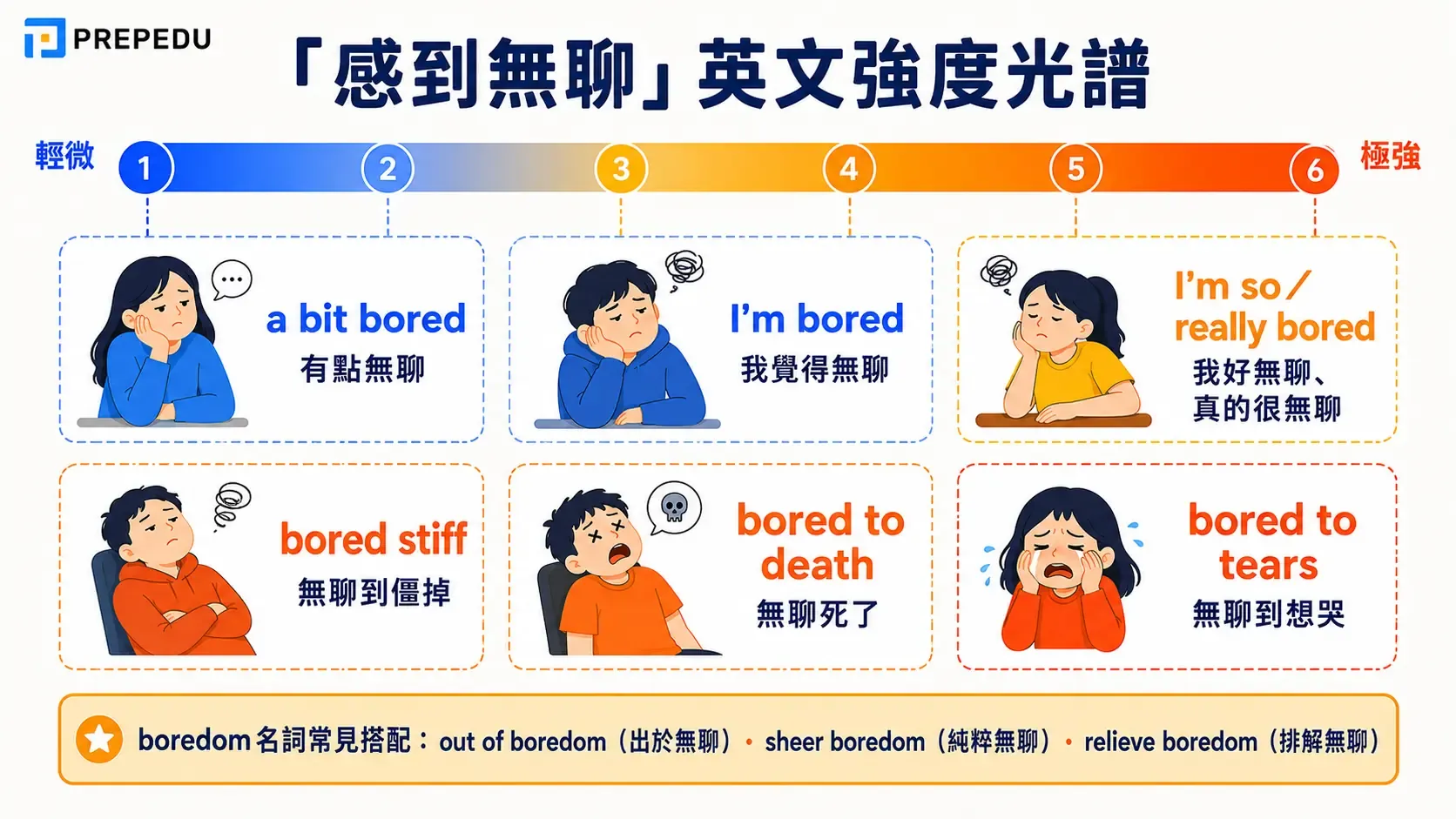
1. I'm bored
I'm bored 是「我覺得無聊」最基本、最安全的說法,任何場合都適用。不管是等車、開會還是週末在家發呆,這句話都能直接派上用場。要再三提醒的是,別把它說成 I'm boring——那意思會變成「我是個無趣的人」(呼應 I.2 與 FAQ V.2)。這句語氣中性,口語常縮寫成 I'm,也可以直接接原因,例如 I'm bored because there's nothing to do。更多例句:
-
I'm bored. Is there anything fun to do around here?(我覺得無聊。這附近有什麼好玩的嗎?)
-
I'm bored because the movie is way too long.(我覺得無聊,因為這部電影實在太長了。)
2. I feel bored
I feel bored 強調「我感受到無聊這股情緒」,和 I'm bored 意思相近,但更聚焦在「感覺」本身。結構是 feel 加形容詞,描述心情時特別自然,語氣也略正式一點;如果想擴充更多描述情緒與心情的字彙,可以延伸閱讀這篇心情英文詞彙。它還能延伸成 feel bored with 或 feel bored of,表示「對某件事感到膩了」,例如 feel bored with the same old routine。更多例句:
-
Yawen started to feel bored with scrolling social media all day.(雅文開始對整天滑社群感到膩了。)
-
Whenever I feel bored on the train, I open an e-book.(每次在火車上感到無聊,我就打開電子書。)
3. I'm so bored
I'm so bored 是「我好無聊喔」的加強語氣說法,口語裡超級常用。想表達「無聊到受不了」的時候,加個 so 就對了。so 用來加強程度,語氣重、常帶點抱怨或撒嬌的味道,還可以疊上時間副詞,例如 I'm so bored right now(我現在有夠無聊)。朋友之間喊這句,通常就是在暗示「快來陪我做點什麼」。更多例句:
-
Xiaoming texted his friend: "I'm so bored, let's grab bubble tea!"(小明傳訊息給朋友:「我好無聊,我們去喝手搖吧!」)
-
I'm so bored waiting in this line; it hasn't moved in ten minutes.(排這條隊我好無聊,十分鐘都沒動了。)
4. I'm really bored
I'm really bored 和 I'm so bored 語氣相近,差別在於用 really 來強調「真的、確實很無聊」。really 和 so 有個細微差異:really 偏「真的、的確」,強調事實;so 偏「程度好高」,強調誇張。兩者在口語裡常常可以互換,語域都是中性偏口語。更多例句:
-
I'm really bored today; even my phone can't save me.(我今天真的很無聊,連手機都救不了我。)
-
Zhiqiang was really bored during the long orientation.(志強在冗長的新生訓練裡真的很無聊。)
5. bored stiff
bored stiff /bɔːrd stɪf/ 是「無聊到全身僵掉、動彈不得」的誇飾說法,強度比 so bored 又更高。stiff(僵硬)帶出「無聊到整個人卡住」的畫面,是口語慣用語,常用來形容漫長無趣的場合,例如冗長的會議或無止盡的等待。同類結構還有 scared stiff(嚇到僵住),可以一起記。更多例句:
-
Zhiqiang was bored stiff during the two-hour safety briefing.(志強在兩小時的安全宣導裡無聊到僵掉。)
-
We were bored stiff waiting for the delayed flight to board.(我們等延誤的班機登機,等到無聊僵掉。)
6. bored to death
bored to death 是「無聊死了、無聊到爆」最常見的誇飾說法,口語出現頻率極高。to death(到死的程度)是英文常見的誇飾結構,同樣邏輯還有 sick to death of(煩到不行)。當無聊累積到「我真的受夠了」的地步時,英文會換成 fed up 這類說法,想學這種語氣可以參考這篇我受夠了英文。它可以接對象,寫成 be bored to death of/with something,表示「被某件事無聊死」。想抱怨「無聊到爆」,這句幾乎是首選。更多例句:
-
I was bored to death at the reunion because I didn't know anyone.(那場聚會我無聊死了,因為我一個人都不認識。)
-
Xiaohua is bored to death of doing the same drills every day.(小華每天做一樣的題目,已經無聊到爆了。)
7. bored to tears
bored to tears 是「無聊到快哭出來」的誇飾說法,強度接近 bored to death。to tears(到流淚)把無聊誇張到極致,語氣生動、略帶戲劇感,特別適合形容被迫參加冗長的活動。它和 bored to death 常常可以換用,只是 tears 更帶一點「委屈、快撐不住」的味道。更多例句:
-
Peiyu was bored to tears sitting through the three-hour ceremony.(佩瑜坐完三小時的典禮,無聊到想哭。)
-
The kids were bored to tears on the rainy afternoon indoors.(那個下雨的下午關在室內,孩子們無聊到想哭。)
8. dying of boredom
dying of boredom 是「快要無聊死了」的進行式誇飾,這裡用的是 boredom 這個名詞。die of 加名詞原本指「死於某種病」,這裡拿來誇飾。進行式 be dying of boredom 特別強調「此刻正無聊到不行」,是 boredom 名詞最高頻的用法之一。更多例句:
-
Jiahui was dying of boredom during the endless video call.(家慧在沒完沒了的視訊會議裡快無聊死了。)
-
I'm dying of boredom—can we please leave early?(我快無聊死了,我們可以早點走嗎?)
9. out of boredom
out of boredom 是「出於無聊、因為無聊而(做某事)」,是 boredom 名詞的核心搭配。out of 加名詞用來表示動機,同結構還有 out of curiosity(出於好奇)。它後面常接一個動作,例如 scroll the phone out of boredom(無聊到滑手機)、eat snacks out of boredom(無聊到嗑零食),書面口語都能用。更多例句:
-
Xiaohua reorganized her whole desk out of boredom.(小華出於無聊把整張書桌重新整理了一遍。)
-
I downloaded three new apps out of boredom last night.(我昨晚出於無聊下載了三個新 app。)
10. sheer boredom
sheer boredom 是「純粹、單純出於無聊」,sheer 強調「完全就是因為無聊,沒別的原因」。sheer(純粹的、十足的)用來加強後面的名詞,最常見的組合是 out of sheer boredom(純粹因為太無聊),語氣帶點強調,書面感稍重一些。更多例句:
-
Mingzhi memorized the entire train timetable out of sheer boredom.(明志純粹因為太無聊,把整張火車時刻表都背下來了。)
-
Out of sheer boredom, she counted every tile on the ceiling.(純粹出於無聊,她把天花板上的每一塊磁磚都數過一遍。)
11. relieve boredom
relieve boredom 是「排解、緩解無聊」,其中 relieve、ease、kill 三個英文動詞常可以互換。relieve(緩解)加上 boredom,同義說法還有 ease boredom、kill time(打發時間)。它後面常接方法,寫成 relieve boredom by doing something。這是一個正向的收尾——無聊不是只能抱怨,你其實也能主動排解它。更多例句:
-
Yiting listens to podcasts to relieve boredom on her long commute.(怡婷靠聽 podcast 來排解漫長通勤的無聊。)
-
Doing quick sketches is a great way to relieve boredom while you wait.(等待時隨手畫幾筆速寫,是排解無聊的好方法。)
依強度選就對了:中性用 I'm bored/I feel bored,加強用 I'm so/really bored,誇飾用 bored stiff/to death/to tears,名詞片語則有 out of/sheer/relieve boredom。會說自己無聊了,那要形容「你很無聊」、「這件事很無聊」又該怎麼講得不失禮?下一節接著談。
III. 「你很無聊」英文怎麼講?
形容「你/這件事很無聊」,文法上都用 boring(You're boring/It's boring),這點沒有問題。但當面對一個人說 You're boring 其實非常直接、很容易傷人——更得體的做法,是把評價「主觀化」(I find it boring),或是「軟化」(It's not really my thing)。下面六種說法,從直白到委婉排給你看。
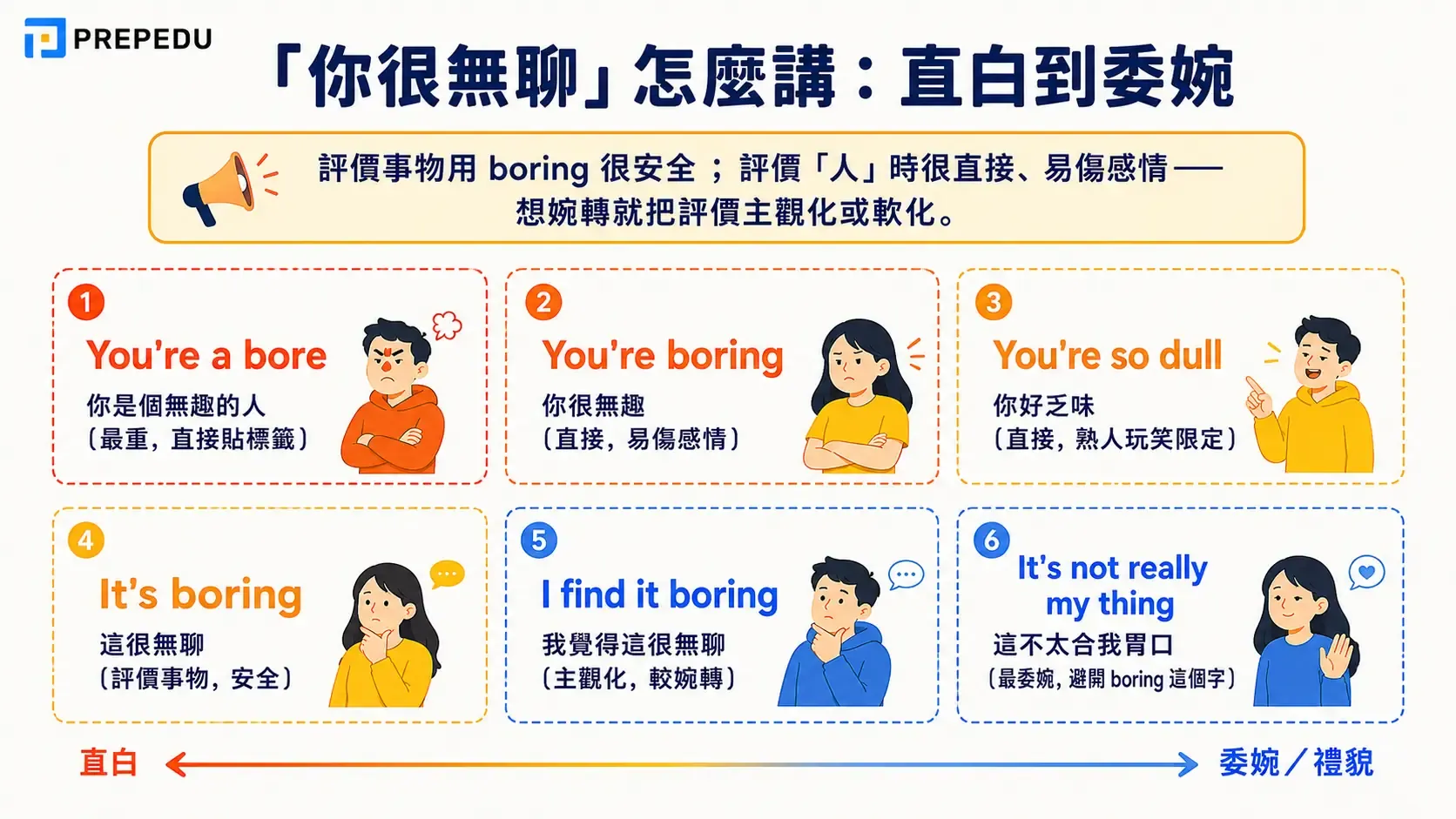
1. You're boring
You're boring 意思是「你很無趣、很無聊」,形容這個人讓別人覺得無聊,而不是「你感到無聊」。這裡再次用到 -ing:boring 形容「造成別人無聊的來源」,而這個來源就是「你」。要注意它語氣直接,當面說很容易傷感情,也和 You're bored(你覺得無聊)意思天差地遠——一個是說對方無趣,一個是關心對方是不是覺得悶(呼應 I.2)。更多例句:
-
You're boring when all you talk about is work.(你只聊工作的時候真的很無趣。)
-
Don't say "You're boring" to your date; say "You're bored?" if you mean to ask how they feel.(別對約會對象說「你很無趣」;如果想問對方的感受,要說「你覺得無聊嗎?」)
2. It's boring
It's boring 是「這(件事/東西)很無聊」,形容事物時最常用,也最安全。主詞可以換成 This movie、The game、The class 等等,例如 The game is boring(這款遊戲很無聊)。比起評價一個人,評價事物幾乎不會得罪誰;想加強語氣就補個 so,說 It's so boring,口語裡非常常見。更多例句:
-
Xiaoming thinks that mobile game is boring after the first week.(小明覺得那款手遊玩過第一週後就很無聊。)
-
The documentary is well made, but the middle part is a bit boring.(那部紀錄片拍得很好,但中段有點無聊。)
3. I find it boring
I find it boring 是「我覺得這很無聊」,把評價主觀化,比直接說 It's boring 更婉轉。結構是 find 加受詞再加形容詞,語用效果是「這只是我的感覺,不是客觀事實」,因此比較不冒犯。當你要在別人面前表達不同意見、又不想顯得太武斷時,這句特別好用。更多例句:
-
I find it boring, but my friends seem to love this show.(我覺得這部劇很無聊,但我朋友們好像很愛。)
-
Yawen politely said she found the exhibition a little boring.(雅文很客氣地說,她覺得那個展覽有點無聊。)
4. It's not really my thing
It's not really my thing 是「這不太合我胃口、不是我的菜」的委婉說法,用來避免直接講出 boring。my thing 指「我喜歡的事物」,用「這不合我」而不是「它很爛」來軟化語氣,社交場合、婉拒邀約時超級好用。同類說法還有 not my cup of tea(不是我的菜)。更多例句:
-
Thanks for the invite, but board games aren't really my thing.(謝謝你邀我,不過桌遊不太是我的菜。)
-
Peiyu said hiking wasn't really her thing and suggested a café instead.(佩瑜說爬山不太合她胃口,改提議去咖啡廳。)
5. You're so dull
You're so dull 是「你好乏味、好沉悶」,用 dull 形容一個人缺乏活力、趣味。它和 You're boring 近義,但 dull 更帶「死氣沉沉、不風趣」的味道。語氣一樣直接,要慎用,通常只在熟到可以開玩笑的朋友之間,或真的要給負評時才會出口。更多例句:
-
Come on, don't be so dull—come out with us tonight!(拜託,別那麼沉悶,今晚跟我們出去嘛!)
-
He can be a bit dull at parties until he warms up.(他在派對上有點乏味,要熱身一下才會放開。)
6. You're a bore
You're a bore 用的是名詞 bore /bɔːr/,意思是「無趣的人」,整句就是「你是個令人厭煩的人」。bore 當名詞等於 a boring person,語氣比 You're boring 更定性、更重,等於直接幫對方貼標籤。加強版是 a crashing bore(超級無趣的人)。這句是在評價人、而且語氣很強,請務必慎用。更多例句:
-
Everyone avoids him at meetings because he's such a bore.(開會時大家都躲他,因為他實在太無趣了。)
-
Don't be a bore—loosen up and enjoy the trip!(別當個掃興的無趣鬼,放鬆一下好好玩吧!)
形容事物用 It's boring/dull 最安全;要評價一個人時,You're boring/dull/a bore 都很直接,想不失禮就改用 I find it boring 或 It's not really my thing。單字與說法都學了,接下來就用 20 題自我檢測,確認 bored/boring 真的用對了。
IV. 練習:測驗你的「無聊」英文
這一節用兩種題型交叉檢測:選擇題查你分不分得清 -ed/-ing 與選字,中譯英查你能不能主動產出道地說法。建議先讀完 I 到 III 再作答,寫完再對照後面的詳解,就知道自己哪裡還沒穩。
1. 練習一:-ed 與 -ing 選擇題
讀完題目直接選最合適的字,重點在判斷主詞是「感受者」還是「來源」。
-
On the long bus ride home, Xiaohua got so ___ that she started counting streetlights.(在漫長的公車回家路上,小華無聊到開始數路燈。)(A) bored (B) boring
-
Mingzhi thinks the new history textbook is really ___.(明志覺得那本新歷史課本很無聊。)(A) bored (B) boring
-
"I'm ___ to death in this waiting room," Yawen whispered.(「我在這間候診室無聊死了,」雅文小聲說。)(A) bored (B) boring
-
Filling out all the insurance forms was a ___ task.(填完所有保險表格是件冗長乏味的工作。)(A) tedious (B) tedium
-
Peiyu does the exact same thing every shift; the work is so ___.(佩瑜每個班都做一模一樣的事,工作單調到不行。)(A) monotonous (B) monotony
-
Copying numbers by hand all afternoon is absolutely ___.(整個下午手動抄數字,真的無聊到腦袋放空。)(A) mind-numbing (B) boredom
-
Yiting opened the fridge out of ___, not because she was hungry.(怡婷出於無聊打開冰箱,不是因為餓。)(A) bored (B) boredom
-
The professor's ___ tone put half the class to sleep.(教授單調的語氣讓半數同學睡著。)(A) monotonous (B) monotony
-
Zhiqiang found the three-hour seminar incredibly ___.(志強覺得那場三小時的研討會超級無聊。)(A) boring (B) bored
-
After hours of delay, Jiahui was completely ___ at the airport.(延誤好幾小時後,家慧在機場整個無聊透了。)(A) bored (B) boring
2. 練習二:中譯英翻譯
試著用本文學到的道地說法翻譯,不只求對,也求自然。
-
我覺得無聊。
-
這部電影很無聊。
-
我好無聊喔!
-
我快無聊死了。
-
我出於無聊而滑手機。
-
這場會議又長又乏味。
-
小華覺得那本書很無聊。
-
這個展覽不太合我胃口。
-
志強無聊到僵掉。
-
怡婷聽 podcast 排解無聊。
3. 解答與詳解
對照詳解時,重點看「錯的那幾題,錯在感受者/來源判斷,還是選字」。
|
練習一:-ed 與 -ing 選擇題 |
練習二:中譯英翻譯 |
|
|
V. 無聊英文的常見問題 FAQ
以下是讀完前面內容後,仍最常被追問的幾個點,每題先給一句直接答案,再補充說明。
1. bored 和 boring 可以互換使用嗎?
不行。 bored 形容「感受無聊的人」,boring 形容「令人無聊的來源」,兩者不能互換。舉例來說,I'm bored 是「我覺得無聊」,I'm boring 卻是「我是個無趣的人」,意思完全不同。判斷關鍵永遠是:主詞是感受者,就用 -ed;主詞是來源,就用 -ing。
2. 為什麼不能說「I'm boring」?
可以說,但意思是「我是個無趣的人」。 而不是「我覺得無聊」。這是台灣學習者最典型的一個錯誤:想抱怨自己很悶,結果卻在對母語者自我介紹「我很無趣」。想表達「我覺得無聊」,正確說法是 I'm bored。記住主詞是人、表達自身感受時,一律用 -ed。
3. 「無聊到爆」除了 bored to death 還有別的說法嗎?
有。 bored stiff、bored to tears、dying of boredom 都能表達「無聊到爆」,語氣強度略有差異。bored stiff 帶「僵住」的畫面,bored to tears 帶一點委屈感,dying of boredom 則用進行式強調「此刻正無聊到不行」(呼應 II 的程度分級)。
4. boredom 和 bored 有什麼不同?
boredom 是名詞,bored 是形容詞。 boredom 指「無聊這種狀態」,bored 指「感到無聊的」。例如 out of boredom(出於無聊)用的是名詞 boredom,而 I'm bored(我覺得無聊)用的是形容詞 bored。想確認詞性時,也可以查劍橋詞典(Cambridge Dictionary)的 boredom 條目,上面清楚標示為 noun(名詞)。
5. 「這部電影很無聊」英文怎麼說?
The movie is boring. 形容事物很無聊,用 boring 最直接;依語感也可換成 dull(平淡)或 tedious(冗長)。想加強語氣就說 It's so boring(有夠無聊),或用 I find it boring 把評價說得婉轉一點。
6. -ed 和 -ing 形容詞只用在情緒詞嗎?
不只。 情緒形容詞(bored/boring、interested/interesting、excited/exciting)是最典型的例子,但 -ed/-ing 分詞形容詞「受影響者用 -ed、來源用 -ing」的規則適用範圍更廣。本文聚焦在「無聊」這組情緒詞,其他情緒詞你只要套用同一條規則就能舉一反三。
總結
掌握「無聊」的英文,關鍵是先分清 -ed(感受無聊的人)與 -ing(令人無聊的來源),再依場合與強度選字選片語。單字上,感受用 bored、來源用 boring,想更精準就用 dull、dry、tedious、monotonous、mind-numbing,名詞則有 boredom、tedium、monotony;片語上,中性到誇飾一路排開,就是 I'm bored、I'm so bored、bored stiff、bored to death;評價人時記得把話說得體,用 I find it boring 或 It's not really my thing 取代當面的 You're boring。
你也可以拿幾個小問題自我檢測:「我覺得無聊」要用 bored 還是 boring?「無聊死了」有哪三種誇飾說法?boredom 是名詞還是形容詞?答案分別是:用 bored;bored stiff、bored to death、bored to tears(或 dying of boredom);boredom 是名詞。其實只要抓穩「感受者 vs 來源」這條主線,這些說法就能一次串起來。想把 -ed/-ing 這類易混淆用法練到不再出錯,或準備多益,也可以善用 PREPEDU 的英文學習內容與 AI 發音評分等資源,讓正確用法真正變成你的反射動作。

你好!我叫黃秋賢,現在在 prepedu.com 擔任內容企劃。我有超過5年的英語與韓語自學經歷,親身備考 IELTS、TOEIC 與 TOPIK,累積了大量第一手的學習者視角——包括哪些語法規則最讓台灣與香港學習者混淆,以及如何在有限的備考時間內最有效地修正這些錯誤。目前已在 prepedu.com 撰寫超過 1000 篇英語學習文章,內容涵蓋語法、詞彙與考試策略,累積協助數千位學習者解決自學過程中的語法疑問。
評論












統一企業編號:202227322W
地址:114 LAVENDER STREET, #11-83 CT HUB 2, SINGAPORE (338729)