別放在心上英文怎麼講?請別放在心上英文的自然說法整理
「別放在心上英文怎麼講?」這個問題的答案,不是一句話,而是 14 句話——每一句都對應不同的情緒溫度與關係距離。最常見的三種是 Don't take it personally(強調事情非針對個人)、Don't take it to heart(安撫對方別留下情緒陰影)、以及 No worries(輕鬆化解尷尬的萬用回應)。選錯說法,原本的關心可能會變成無意的冒犯。
這 14 種說法可以從兩個維度來理解:語域(從 A1 的 No worries 到 C1 的 Let bygones be bygones)和情緒強度(從輕描淡寫的 It's not that serious,到情感深沉的 Let it go)。TOEIC Listening Part 3 的辦公室對話情境中,Don't take it to heart 和 No hard feelings 是高頻出現的聽力考點。
本文由 PREPEDU 整理這 14 種說法的語域差異、核心語意與適用時機,配合總覽表格、情境例句與真實對話,讓你在安慰朋友、回應批評或化解職場尷尬時,能選出最準確的那一句。

- I. 別放在心上英文怎麼說?最常見的基本說法
- 1. Don't take it personally
- 2. Don't take it to heart
- 3. It's not that serious
- 4. Don't let it get to you
- 5. Forget about it
- 6. No worries
- 7. Don't worry about it
- 8. Never mind
- 9. It's all good/ It's fine
- 10. Let bygones be bygones
- 11. Don't give it a second thought
- 12. No hard feelings
- 13. Don't overthink it
- 14. Let it go
- II. 別放在心上英文對話
- III. 別放在心上英文常見問題 FAQ
- 結論
I. 別放在心上英文怎麼說?最常見的基本說法
在學習這 14 種說法之前,先看這張全覽表。語域與情緒強度的差異,決定了哪句話在哪個場合最有效。
|
說法 |
語域 |
語氣強度 |
核心含義 |
最佳使用時機 |
CEFR |
|
Don't take it personally |
口語~半正式 |
中 |
非針對你個人 |
批評或否定後安慰 |
B1 |
|
Don't take it to heart |
口語 |
溫和 |
別留下心理陰影 |
情感明顯受傷時 |
B1 |
|
It's not that serious |
口語 |
輕鬆 |
沒你想的那麼嚴重 |
對方反應過度時 |
A2 |
|
Don't let it get to you |
口語 |
堅定鼓勵 |
別讓外在影響你 |
持續壓力或刁難下 |
B1 |
|
Forget about it |
口語 |
直接 |
算了,不值得花時間 |
輕微失誤後 |
A2 |
|
No worries |
口語 |
輕鬆友善 |
沒關係 |
回應對方道歉 |
A1 |
|
Don't worry about it |
口語~半正式 |
平穩 |
不用擔心 |
接受道歉的正式版 |
A2 |
|
Never mind |
口語 |
中性 |
算了∕不用費心 |
安慰或快速轉移話題 |
A2 |
|
It's all good / It's fine |
口語 |
積極∕中性 |
一切都好 |
小失誤或誤會後 |
A2 |
|
Let bygones be bygones |
正式∕書面 |
鄭重 |
既往不咎 |
長期嫌隙或嚴重衝突後 |
C1 |
|
Don't give it a second thought |
口語 |
堅定 |
連多想都不需要 |
對方過度愧疚時 |
B2 |
|
No hard feelings |
口語 |
平和 |
不計前嫌 |
競爭或衝突結束後 |
B1 |
|
Don't overthink it |
口語 |
溫和指引 |
別鑽牛角尖 |
對方反覆思考同一件事 |
B1 |
|
Let it go |
口語 |
情感深沉 |
放下,別再糾結 |
對方長期困擾難以釋懷 |
B1 |
1. Don't take it personally
「Don't take it personally」是「別放在心上英文」說法中使用範圍最廣的一句,核心含義是:這件事不是針對你個人,請不要往心裡去。它的強調重點在身份認同——提醒對方,批評的對象是行為或結果,而非這個人本身。
這裡有一個語氣陷阱:許多學習者在 TOEIC 情境題中,常把「Don't take it personally」和「Don't take it to heart」當成同一句話,但兩者強調的維度不同。personally 指向「自我認同」;to heart 指向「情緒餘波」。在績效回饋或客觀評估的場合,personally 更精確;在對方明顯難過、情緒低落時,to heart 更有溫度。
-
My manager said my report needed a lot of revision. I tried not to take it personally, but it still stung.(我的主管說報告需要大幅修改。我努力不放在心上,但心裡還是有點難受。)
-
Don't take it personally — the client rejects most first drafts.(別放在心上,這位客戶幾乎都會退回第一版草稿。)
-
She didn't mean to offend you. Please don't take it personally.(她不是故意冒犯你的,請別放在心上。)
-
I know the feedback was blunt, but don't take it personally — that's just how he communicates.(我知道那個回饋說得很直,但別放在心上,他一向說話就是這樣。)
2. Don't take it to heart
「Don't take it to heart」與「Don't take it personally」語意相近,但語氣更溫柔,強調:不要讓這件事在你心中留下陰影。這個英文句型的核心是情感安撫,適合在對方明顯情緒受傷的時候使用。
-
You shouldn't take their comments to heart — they don't know the full story.(你不應該把他們的話放在心上,他們並不了解事情的全貌。)
-
Don't take it to heart. Everyone struggles when they first start.(別放在心上,每個人剛開始的時候都會遇到困難。)
-
She tends to take criticism to heart too easily.(她太容易把批評放在心上了。)
-
Don't take it to heart — he was just having a rough day and took it out on everyone.(別放在心上,他那天只是心情很差,把情緒發在大家身上。)
3. It's not that serious
「It's not that serious」是一句輕鬆口語的安慰語,意思是「這沒有你想的那麼嚴重」。說話者用它幫對方調整視角,降低事件在對方心中的份量,語氣帶有一絲幽默與輕描淡寫。這句話適合對方將小事放大的情況;如果事件本身確實嚴重,使用這句話反而會讓對方感到被輕視。
-
You forgot to reply to one email. It's not that serious — just send it now.(你忘了回一封信,沒那麼嚴重,現在寄過去就好。)
-
Relax. It's not that serious. Nobody even noticed.(放鬆,沒那麼嚴重,根本沒人發現。)
-
I know it feels big right now, but it's not that serious in the long run.(我知道現在感覺很嚴重,但長遠來看並沒有那麼糟。)
-
You tripped on the stage? It's not that serious — everyone laughed with you, not at you.(你在台上跌倒了?沒那麼嚴重,大家是跟著你笑,不是嘲笑你。)
4. Don't let it get to you
「Don't let it get to you」意思是「不要讓這件事影響你的情緒或狀態」,強調主動性——不讓外在事件侵蝕你的心理。它常用在對方受到壓力、被人刁難,或面臨持續性困境的時候,語氣堅定,帶有鼓勵的力量。
-
I know the feedback was harsh, but don't let it get to you.(我知道那個回饋很刺耳,但別讓它影響你。)
-
Some customers are just rude. Don't let it get to you.(有些客人就是很無禮,別放在心上。)
-
Don't let one bad day get to you — tomorrow is a fresh start.(別讓糟糕的一天影響你,明天又是新的開始。)
-
I've seen good people quit because they let the pressure get to them. Don't be one of them.(我見過優秀的人因為讓壓力壓垮自己而離開,別讓自己成為那樣的人。)
5. Forget about it
「Forget about it」的字面意思是「把它忘掉」,實際語意等同於「算了吧」或「別放在心上」。這是美式英語中使用頻率極高的口語說法,語氣直接,帶有「不值得花時間在這件事上」的意味。
這裡有一個語調陷阱:「Forget about it」的意思,完全取決於語調。以平穩的語調說,是「沒關係,算了」;但若語調拉長加重,例如「Forget ABOUT it」,在紐約腔口語中反而表示「絕對不可能」或「門都沒有」。這個雙重語意在 TOEIC Listening 的語氣辨識題中是常見的干擾設計。
-
He said something mean? Forget about it — he's always like that.(他說了什麼難聽的話?算了,他一向這樣。)
-
It was just a small mistake. Forget about it and move on.(只是個小錯誤,別放在心上,繼續往前走。)
-
Forget about it. What matters is that you did your best.(算了吧,重要的是你已經盡力了。)
-
Did you miss the first question? Forget about it — focus on the rest of the exam.(你第一題答錯了嗎?算了,專注在剩下的考題上。)

6. No worries
「No worries」是一句簡短有力的回應,意思是「沒關係」或「不用擔心」,源於澳洲英語,現已廣泛流行於全球英語使用者之間。它通常作為對道歉的回應,語氣輕鬆友善,能有效化解尷尬。
-
"I'm so sorry I'm late." — "No worries! We just started."(「很抱歉我遲到了。」——「沒關係!我們剛開始。」)
-
No worries at all — mistakes happen to everyone.(完全沒關係,每個人都會犯錯。)
-
Thanks for letting me know. No worries about the delay.(謝謝你告訴我,延誤的事別放在心上。)
-
No worries — take your time. There's no rush.(沒關係,慢慢來,不用急。)
7. Don't worry about it
「Don't worry about it」是「No worries」的完整版,語意相同但語氣稍為正式,適合在半正式場合使用。它傳達的是「這件事不值得你擔心,我沒有放在心上」,常作為接受道歉後的安撫語。在電子郵件或職場溝通中,「Don't worry about it」比「No worries」更適合出現在書面回覆中。
-
"I forgot to send you the file." — "Don't worry about it, I found another copy."(「我忘了傳檔案給你。」——「別擔心,我找到另一份了。」)
-
Don't worry about it — these things happen.(別放在心上,這種事難免發生。)
-
You didn't know. Don't worry about it.(你不知道情況,不用放在心上。)
-
Don't worry about it — just let me know if you need anything else.(別擔心,有需要再跟我說。)
8. Never mind
「Never mind」是一句用途廣泛的口語表達,意思涵蓋「算了」、「別介意」,以及「沒關係」。它可以安慰對方,也可以快速轉移話題、表示某件事不再重要。「Never mind」和「Forget about it」的核心差異在於方向:Forget about it 是叫對方「忘掉那件事」;Never mind 則更常用於「不用費心了,這件事不重要」,轉移的是注意力,而非情緒。
-
Never mind what they said — their opinion doesn't define you.(別在意他們說的話,他們的看法不代表你這個人。)
-
"I made a mess of the presentation." — "Never mind — the client still liked the proposal."(「我搞砸了簡報。」——「算了,客戶還是喜歡這個提案。」)
-
Never mind the past. Focus on what you can do now.(別再想過去的事,專注在你現在能做的事。)
-
Never mind — let's just move on and figure out the next steps.(算了,我們繼續往前,想想下一步怎麼做。)
9. It's all good/ It's fine
「It's all good」與「It's fine」都用來表達「沒問題,一切都好」。兩者語氣有別:「It's all good」更積極,帶有「一切都很好,不用擔心」的意味;「It's fine」則相對中性,有時帶有輕微保留。在英語溝通中,「It's fine」有時其實是「我不太高興但不想說」的婉轉表達,語氣和肢體語言至關重要。
-
"I accidentally deleted your email." — "It's all good — I have a backup."(「我不小心把你的信刪掉了。」——「沒關係,我有備份。」)
-
Don't apologize so much. It's fine, really.(不用一直道歉,真的沒事。)
-
We had a misunderstanding, but it's all good now.(我們有過誤會,但現在一切都好了。)
-
I know the timing wasn't perfect, but it's all good — we still made it work.(我知道時間點不太對,但沒關係,我們還是搞定了。)
10. Let bygones be bygones
「Let bygones be bygones」是英語諺語,意思是「讓過去的事成為過去」,相當於中文的「既往不咎」。這個說法語氣鄭重,帶有化解長期嫌隙或主動翻篇的意味,適合用在舊友和解、家庭矛盾,或職場上的長期誤會。
這是 14 種說法中語域最正式的一句。把它用在「你忘了回我訊息」這種小事上,語氣會重得讓對方困惑;它應該保留給確實有過衝突、雙方都需要一個明確翻頁時刻的情境。
-
After the argument, they decided to let bygones be bygones and move forward.(爭吵之後,他們決定既往不咎,向前看。)
-
I know we've had our differences. Can we just let bygones be bygones?(我知道我們之間有過嫌隙,我們可以就此翻篇嗎?)
-
Let bygones be bygones — holding onto grudges only hurts you.(讓過去的事過去吧,一直懷恨只是傷害自己。)
-
After years of silence, the two colleagues finally decided to let bygones be bygones over coffee.(在多年的沉默之後,兩位同事終於在咖啡廳坐下來,決定既往不咎。)
11. Don't give it a second thought
「Don't give it a second thought」的意思是「連多想一秒都不需要」,語氣強調事情根本不值得放在心上。這個說法帶有堅定與鼓勵,說話者以此傳達:你完全沒有理由為這件事感到困擾。
-
You helped me so much. Don't give it a second thought about the inconvenience.(你幫了我很多,那點不方便你根本不用放在心上。)
-
Give the report your best shot and don't give it a second thought.(盡全力交出報告,其他的就不用多想了。)
-
She told him not to give it a second thought and move on with his day.(她叫他別再多想,繼續過好自己的一天。)
-
You apologized and meant it. Don't give it a second thought — that's all anyone can do.(你道了歉,而且是真心的,不用再多想,任何人能做的也就是這樣了。)
12. No hard feelings
「No hard feelings」直譯是「沒有不好的感覺」,意思接近「不計前嫌」或「別放在心上,我不介意」。這個說法通常出現在雙方曾有衝突、競爭或誤解之後,一方用它來表示自己選擇不記恨,期望關係回到平和。在 TOEIC Listening Part 3 的商業情境中,這句話常出現在合約談判或競爭結果揭曉後的對話,是考試聽力的高頻表達。
-
I know you chose the other candidate. No hard feelings.(我知道你選了另一位候選人,我不介意。)
-
No hard feelings, okay? I know you didn't mean it.(沒關係,好嗎?我知道你不是故意的。)
-
They lost the contract but said no hard feelings to the winning team.(他們失去了合約,但還是對得標的團隊說不計前嫌。)
-
It was a tough call, but no hard feelings — you had to do what was best for the company.(這個決定很難做,但我不介意,你必須做對公司最好的事。)
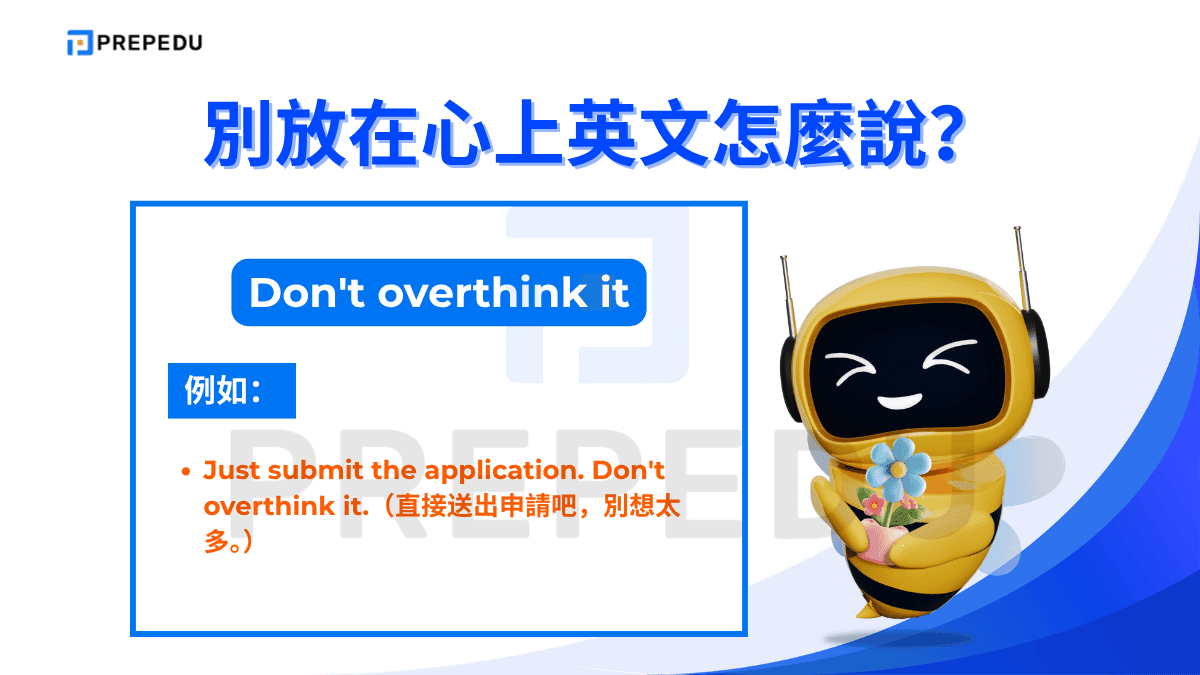
13. Don't overthink it
「Don't overthink it」意思是「不要想太多」,適合用在對方鑽牛角尖、反覆思考同一件事的情況。這個說法不只安慰,更帶有指引的意味——提醒對方過度思考只會放大問題,不如讓事情回歸本來的簡單。
-
You said something awkward at the party. Don't overthink it — everyone does sometimes.(你在派對上說了一句尷尬的話,別想太多,每個人偶爾都會這樣。)
-
Just submit the application. Don't overthink it.(直接送出申請吧,別想太多。)
-
It's a simple question. Don't overthink it — go with your first answer.(這是個簡單的問題,別過度分析,就選你第一個想到的答案。)
-
I know you want it to be perfect, but at some point you just have to send it. Don't overthink it.(我知道你想讓它完美,但到了某個時候就是要送出去,別想太多。)
14. Let it go
「Let it go」意思是「放手」、「放下」,是 14 種說法中情感重量最深的一句。它不只是安慰語,更是一種邀請——邀請對方主動選擇放下情緒、不再糾結。這個說法適合在對方長期困擾於某件事、難以釋懷的時候使用。
-
You've been upset about this for weeks. It's time to let it go.(你為這件事難過好幾個星期了,是時候放下了。)
-
She couldn't let it go, even after he apologized.(即使他道了歉,她還是無法放下。)
-
Let it go — carrying that anger will only weigh you down.(放下吧,帶著那股怒氣只會讓你更沉重。)
-
Some things don't have a resolution. The only option left is to let it go and move forward.(有些事沒有解決辦法,唯一剩下的選擇就是放下,繼續前進。)
II. 別放在心上英文對話
以下提供三段自然情境下的英文對話,涵蓋職場、朋友之間,以及家庭情境,幫助你掌握別放在心上英文在真實語境中的使用方式。
1. 對話一:朋友之間
|
說話者 |
別放在心上英文對話 |
中文 |
|
Xiaoming |
I'm really sorry I forgot your birthday last week. I feel terrible about it. |
我真的很抱歉上週忘了你的生日,我覺得很過意不去。 |
|
Jiajia |
Don't worry about it — you've had a lot on your plate lately. |
別放在心上,你最近事情很多。 |
|
Xiaoming |
Still, I should have remembered. It won't happen again. |
還是說,我應該要記得的,下次不會了。 |
|
Jiajia |
No hard feelings at all. Let's just celebrate this weekend instead. |
我完全不介意,我們這個週末補慶祝就好。 |
2. 對話二:職場
|
說話者 |
別放在心上英文對話 |
中文 |
|
Manager (David) |
Your presentation had a few weak spots today. The data section needed more depth. |
你今天的簡報有幾個地方不夠強,數據那一段需要更有深度。 |
|
Yating |
I know. I'm disappointed in myself. |
我知道,我對自己很失望。 |
|
David |
Don't take it to heart. You handled the Q&A section really well. Use this as a learning point. |
別放在心上,你處理問答環節的部分表現很好,把這次當作學習機會。 |
|
Yating |
Thank you. I'll work on the data analysis before the next one. |
謝謝你,我會在下次之前加強數據分析的部分。 |
3. 對話三:家庭
|
說話者 |
別放在心上英文對話 |
中文 |
|
Brother (Wei) |
I shouldn't have said what I said at dinner. I was out of line. |
我不應該在吃飯的時候說那些話,我太過分了。 |
|
Sister (Xinyi) |
Let bygones be bygones. I know you didn't mean it. |
既往不咎,我知道你不是故意的。 |
|
Wei |
I still feel bad. You seemed really hurt. |
我還是覺得很內疚,你當時看起來很受傷。 |
|
Xinyi |
Don't give it a second thought. We're family — it takes more than that to break us. |
不用再多想了,我們是家人,這點事傷不了我們。 |
III. 別放在心上英文常見問題 FAQ
1. Don't take it personally 和 Don't take it to heart 有什麼不同?
兩者的差異在於強調的維度,而非語意的強弱。「Don't take it personally」強調的是身份認同:批評的對象是行為,不是你這個人,適合用在績效回饋、客觀評估等職場情境。「Don't take it to heart」強調的是情緒餘波:不要讓這件事在心裡留下陰影,適合用在對方情緒明顯受傷、需要安撫的時候。簡單記憶:personally 對應「我這個人」;to heart 對應「我的感受」。在 TOEIC Listening Part 3 的對話題中,這兩句是最常出現的干擾配對,需要特別留意語境。
2.「No worries」和「Don't worry about it」可以在正式場合使用嗎?
「No worries」語域偏口語,適合朋友對話、日常服務業互動,在電子郵件或正式會議中顯得過於隨意。「Don't worry about it」語氣稍正式,可以出現在半正式的職場書面回覆中,例如回應同事的道歉郵件。若場合更正式,建議改用「Please don't worry about it」或「There's no need to apologize」,這兩句在 TOEIC 商業書信情境中更為常見,也是 IELTS Writing Task 1 正式信件的標準語域。
3.「Let it go」和「Forget about it」的語氣有什麼差別?
「Forget about it」語氣輕快,暗示事情本身不嚴重、不值得花時間,適合用在小失誤或日常尷尬之後。「Let it go」語氣深沉,暗示對方已經在這件事上糾纏了一段時間,需要做出主動選擇,真正放下。如果對方只是剛犯了一個小錯,說「Let it go」會顯得小題大作;如果對方已經為某件事難過了好幾天,說「Forget about it」則會顯得輕描淡寫、缺乏同理。選哪一句,取決於你對對方情緒狀態的判斷。
結論
「別放在心上」這四個字,在中文裡聽起來溫柔而自然。但翻成英文,每一種說法都在語氣溫度和關係距離上做出了不同的選擇:輕鬆化解尷尬用「No worries」;安撫情緒受傷的朋友選「Don't take it to heart」;在競爭結束後表達大度說「No hard feelings」。同一個「別放在心上」,選對了說法,才有安慰的效果。
本文整理的 14 種說法,可以用 CEFR 維度來記憶:A1-A2 的說法(No worries、It's fine、Never mind)適合隨口應對;B1-B2 的說法(Don't take it personally、Don't let it get to you、No hard feelings)適合職場或半正式場合;C1 的 Let bygones be bygones 則應保留給真正需要「翻頁」的時刻。TOEIC Listening Part 3 的辦公室情境中,B1 等級的說法是出題重點,值得優先掌握。
下一步,建議你挑出三句最符合自己日常情境的說法,在這週的真實對話中各用一次。捷運上安慰焦慮的同學,用「Don't overthink it」;收到同事的道歉訊息,回「No worries」而不是「OK」;和解一段沉默了太久的關係,說「Let bygones be bygones」。真實語境中的一次使用,比閱讀十遍更有效。

你好!我叫黃秋賢,現在在 prepedu.com 擔任內容企劃。我有超過5年的英語與韓語自學經歷,親身備考 IELTS、TOEIC 與 TOPIK,累積了大量第一手的學習者視角——包括哪些語法規則最讓台灣與香港學習者混淆,以及如何在有限的備考時間內最有效地修正這些錯誤。目前已在 prepedu.com 撰寫超過 1000 篇英語學習文章,內容涵蓋語法、詞彙與考試策略,累積協助數千位學習者解決自學過程中的語法疑問。
評論











統一企業編號:202227322W
地址:114 LAVENDER STREET, #11-83 CT HUB 2, SINGAPORE (338729)