Giải chi tiết đề Cambridge IELTS 15 Test 1 Reading Passage 3 What is exploration
Bài đọc what is exploration trong Cambridge IELTS 15 là một chủ đề khá hay. Bài viết sau, Prep sẽ giúp bạn giải chi tiết đề bài đọc What is exploration và take note một số từ vựng, cấu trúc câu quan trọng cần nhớ trong bài đọc này. Cùng luyện tập Reading với Prep nhé!
I. Đề bài Cambridge IELTS 15 Reading Test 1 Passage 3: What is Exploration?
Part 1: Passage Overview
The passage discusses the concept of exploration, its evolution over time, and how it is viewed in contemporary society. It explores the idea that exploration is not just about discovering new geographical territories, but also about pushing boundaries in terms of science, art, and even personal development. The passage features insights from various explorers and thinkers, each offering their unique definition of what it means to explore.
Part 2: Question Types and Structure
This section of the test includes different types of questions designed to assess a variety of skills:
Multiple Choice Questions (Q27–32)
These questions test the ability to understand main ideas and specific details in the passage.
Matching Statements with Explorers (Q33–37)
In these questions, you are asked to match specific explorers or thinkers to statements that best reflect their views on exploration.
Summary Completion (Q38–40)
Here, you need to fill in the blanks in a summary of the passage using no more than two words from the text.
Part 3: Sample Questions
Questions 27–32: Choose the correct letter, A, B, C, or D.
-
What is the main point of the passage?
A. Exploration is a key element of human nature.
B. Exploration is only relevant in the modern world.
C. Exploration is unnecessary in today’s world.
D. Exploration is limited to physical territories. -
What does the passage suggest about explorers?
A. They are often motivated by personal fame.
B. They are driven by a common urge to explore.
C. They are always professional scientists.
D. They are primarily motivated by financial rewards. -
What does Thomas Hardy’s work aim to reveal?
A. The psychological effects of exploring unknown places.
B. The social and political impact of exploration.
C. The emotional states of human beings.
D. The physical dangers of exploration. -
According to the passage, what is the misconception about exploration?
A. It is only about geographical discoveries.
B. It has already reached its peak in the 19th century.
C. It is no longer necessary in the modern world.
D. It is only for scientific purposes. -
What does the passage suggest about different definitions of exploration?
A. They are mostly consistent across all cultures.
B. They reflect the personal interests of each explorer.
C. They are universally accepted by all explorers.
D. They tend to focus only on physical exploration. -
Which of the following is true according to the passage?
A. Exploration is about discovering new places that have never been seen before.
B. Exploration can also involve finding new ways to look at familiar places.
C. Exploration is solely about physical challenges.
D. Exploration is limited to exploring the earth’s surface.
Questions 33–37: Do the following statements agree with the information given in the passage?
Write TRUE if the statement agrees with the information.
Write FALSE if the statement contradicts the information.
Write NOT GIVEN if there is no information about this in the passage.
-
Wilfred Thesiger believed that using modern equipment in exploration detracts from its value.
-
Peter Fleming described the emotions he felt when he returned home after an expedition.
-
Robin Hanbury-Tenison believes that modern explorers should focus on helping people as much as they focus on discovering new lands.
-
Wilfred Thesiger argued that exploration should primarily be a personal experience.
-
Ran Fiennes thinks that exploration has a scientific and practical purpose.
Questions 38–40: Complete the summary below.
Choose NO MORE THAN TWO WORDS from the passage for each answer.
-
The writer’s personal experience of exploration is based on several ________.
-
There are still ________ tribes that have not been contacted by the outside world.
-
Most of the earth’s ________ remains unexplored.
Part 4: Key Vocabulary from the Passage
-
Intrinsic: Essential and natural to something.
-
Urge: A strong desire or impulse to do something.
-
Stunt: A daring or dangerous action intended to attract attention.
-
Vivid: Clear, detailed, and strong in appearance.
-
Introspection: The examination of one’s own thoughts and feelings.
-
Uncontacted: People who have had no contact with the outside world.
-
Expedition: A journey or voyage undertaken for a specific purpose, especially for exploration.
-
Landscape: A portion of land that is visible from a particular viewpoint.
-
Tangible: Perceptible by touch; clear and definite.
-
Preconceived: Formed before having adequate evidence or experience.
-
Barrier: An obstacle that prevents progress.
-
Revelation: The act of revealing or making something known.
-
Mystique: A fascinating aura of mystery, awe, and power surrounding something.
-
Daring: Adventurous, courageous, or bold.
-
Pioneering: The first to develop or use a particular activity or idea.
II. Đáp án
Questions 27–32 (Multiple Choice Questions):
-
A
-
B
-
C
-
A
-
B
-
B
Questions 33–37 (True/False/Not Given):
-
TRUE
-
NOT GIVEN
-
TRUE
-
FALSE
-
TRUE
Questions 38–40 (Summary Completion):
-
expeditions
-
uncontacted
-
surface
III. Giải thích đáp án chi tiết
Questions 27–32 (Multiple Choice Questions)
|
Câu hỏi |
Đáp án |
Giải thích chi tiết |
|
27 |
A – Exploration is a key element of human nature |
Phần đầu bài đọc nhấn mạnh rằng khám phá là một phần bản chất con người. Từ xưa tổ tiên đã luôn tìm kiếm và khám phá thế giới xung quanh. |
|
28 |
B – They are driven by a common urge to explore |
Các nhà thám hiểm không chủ yếu bị thúc đẩy bởi danh tiếng hay tiền bạc, mà bởi ham muốn khám phá chung. |
|
29 |
C – The emotional states of human beings |
Thomas Hardy tập trung vào trạng thái cảm xúc trong hành trình khám phá, như sự cô đơn, cảm giác tách biệt. |
|
30 |
A – It is only about geographical discoveries |
Bài chỉ ra hiểu lầm phổ biến là khám phá chỉ giới hạn ở khám phá địa lý, trong khi thực sự có ý nghĩa rộng hơn. |
|
31 |
B – They reflect the personal interests of each explorer |
Các định nghĩa về khám phá thay đổi tùy theo kinh nghiệm và sở thích cá nhân của từng nhà thám hiểm. |
|
32 |
B – Exploration can also involve finding new ways to look at familiar places |
Bài viết nói rõ rằng khám phá không chỉ là tìm vùng đất mới, mà còn là nhìn nhận lại những điều quen thuộc theo cách mới. |
Questions 33–37 (True/False/Not Given)
|
Câu hỏi |
Đáp án |
Giải thích chi tiết |
|
33 |
TRUE |
Wilfred Thesiger tin rằng việc sử dụng thiết bị hiện đại làm giảm giá trị của việc khám phá vì nó làm mất đi cảm giác thử thách và tự lực trong hành trình. |
|
34 |
NOT GIVEN |
Không có thông tin rõ ràng về việc Peter Fleming mô tả cảm xúc của mình sau khi trở về từ chuyến thám hiểm trong bài đọc → không đủ dữ kiện để kết luận. |
|
35 |
TRUE |
Robin Hanbury-Tenison cho rằng khám phá thời hiện đại nên mang lại lợi ích thực sự cho cộng đồng địa phương, ngoài việc khám phá vùng đất mới. |
|
36 |
FALSE |
Wilfred Thesiger không cho rằng khám phá chỉ là trải nghiệm cá nhân. Ông coi nó là một phần trong hành trình rộng lớn hơn, giúp học hỏi sâu sắc về cuộc sống, văn hóa và con người. |
|
37 |
TRUE |
Ran Fiennes tin rằng khám phá mang mục đích khoa học và thực tiễn, như nghiên cứu thiên nhiên, môi trường, hoặc hiểu thêm về thế giới tự nhiên. |
Questions 38–40 (Summary Completion)
|
Câu hỏi |
Đáp án |
Giải thích chi tiết |
|
38 |
expeditions |
Bài viết đề cập đến các cuộc thám hiểm (expeditions) khác nhau của các nhà thám hiểm nổi tiếng và tác động của chúng đến con người và xã hội. |
|
39 |
uncontacted |
Bài viết nhắc đến những bộ tộc chưa từng tiếp xúc với thế giới bên ngoài (uncontacted tribes), cho thấy rằng thế giới vẫn còn nhiều điều chưa được khám phá. |
|
40 |
surface |
Bài chỉ ra rằng phần lớn Trái Đất vẫn chưa được khám phá hết, đặc biệt là nằm bên dưới bề mặt (surface) của hành tinh. |
Xem thêm: Đáp án chi tiết đề Cambridge IELTS 15 Test 3 Listening Part 4: Early history of keeping clean
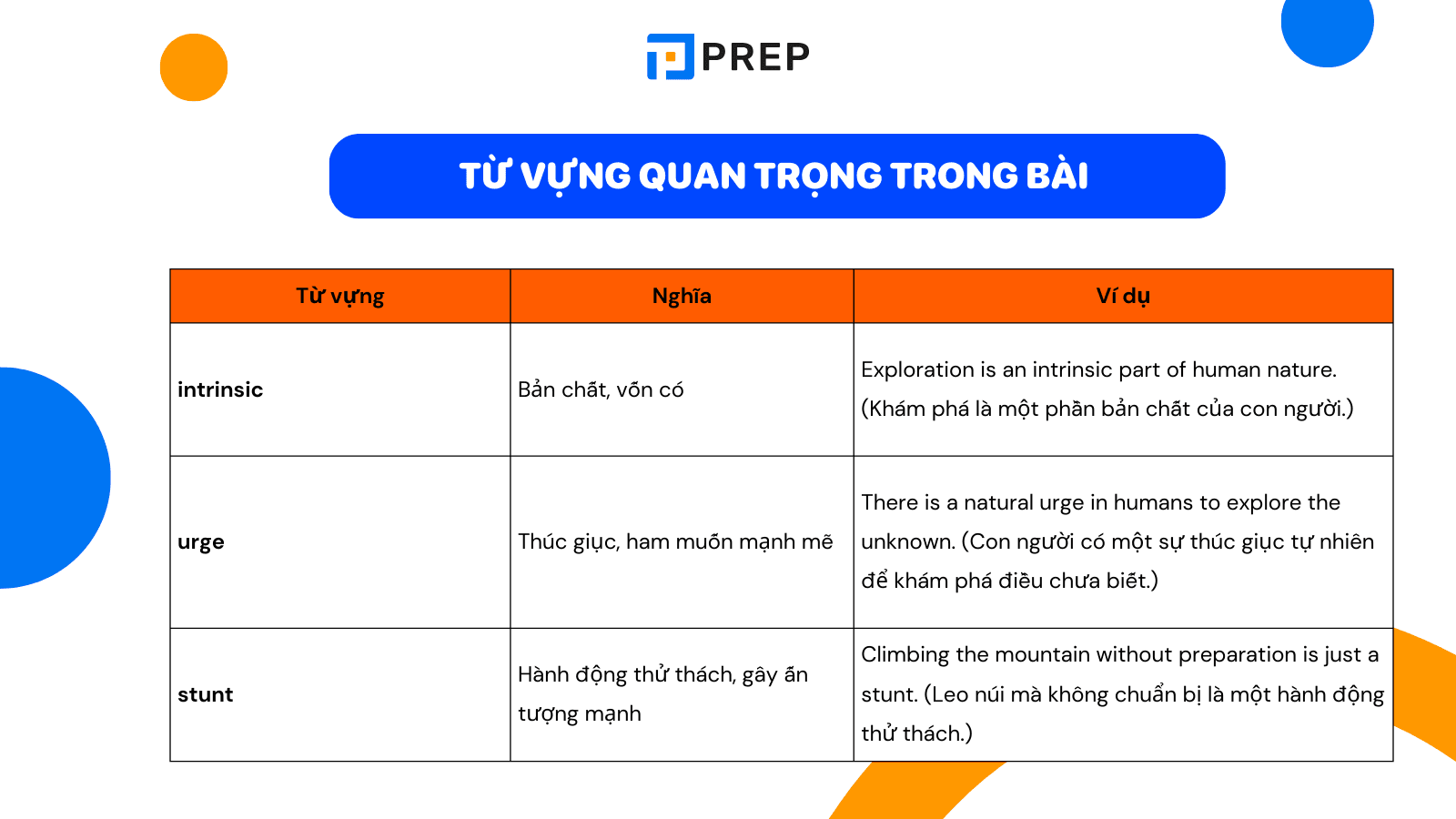
IV. Một số từ vựng hay cần nhớ trong bài đọc
Một số từ vựng hay trong bài đọc What is exploration bạn cần ghi nhớ!
|
Từ vựng |
Nghĩa |
Ví dụ |
|
intrinsic |
Bản chất, vốn có |
Exploration is an intrinsic part of human nature. (Khám phá là một phần bản chất của con người.) |
|
urge |
Thúc giục, ham muốn mạnh mẽ |
There is a natural urge in humans to explore the unknown. (Con người có một sự thúc giục tự nhiên để khám phá điều chưa biết.) |
|
stunt |
Hành động thử thách, gây ấn tượng mạnh |
Climbing the mountain without preparation is just a stunt. (Leo núi mà không chuẩn bị là một hành động thử thách.) |
|
vivid |
Sống động, rõ ràng |
The vivid descriptions in the book made the exploration seem real. (Những mô tả sống động trong cuốn sách làm cho cuộc thám hiểm trở nên thật.) |
|
introspection |
Sự tự suy ngẫm, tự kiểm tra bản thân |
His journey was not just physical but also an introspective one. (Chuyến đi của anh ấy không chỉ là cuộc hành trình thể chất mà còn là một sự tự suy ngẫm.) |
|
uncontacted |
Chưa được tiếp xúc, chưa được khám phá |
There are still uncontacted tribes deep in the Amazon rainforest. (Vẫn còn những bộ tộc chưa được tiếp xúc sâu trong rừng mưa Amazon.) |
|
expedition |
Chuyến thám hiểm, cuộc hành trình |
The expedition to the Arctic was challenging but successful. (Chuyến thám hiểm tới Bắc Cực rất thử thách nhưng thành công.) |
|
landscape |
Phong cảnh, cảnh quan |
The artist captured the dramatic landscape of the desert in his painting. (Nhà nghệ sĩ đã vẽ cảnh quan ấn tượng của sa mạc trong bức tranh của mình.) |
|
tangible |
Có thể sờ thấy, cụ thể |
The evidence of their exploration is tangible in the photos they took. (Chứng cứ của cuộc thám hiểm của họ có thể nhìn thấy được trong những bức ảnh mà họ chụp.) |
|
preconceived |
Có sẵn, hình thành trước đó |
The explorer discarded his preconceived notions about the place. (Nhà thám hiểm đã vứt bỏ những quan niệm có sẵn về nơi đó.) |
|
barrier |
Rào cản, vật cản trở |
The thick jungle acted as a barrier to their exploration. (Rừng rậm dày đặc đã trở thành một rào cản đối với cuộc thám hiểm của họ.) |
|
revelation |
Sự phát hiện, sự tiết lộ |
The expedition led to the revelation of ancient ruins. (Chuyến thám hiểm đã dẫn đến sự phát hiện những tàn tích cổ xưa.) |
|
mystique |
Sự huyền bí, ma mị |
The mystique of the jungle has always attracted explorers. (Sự huyền bí của khu rừng luôn thu hút các nhà thám hiểm.) |
|
daring |
Dũng cảm, táo bạo |
The daring explorer crossed the desert on foot. (Nhà thám hiểm dũng cảm đã vượt qua sa mạc bằng chân.) |
|
pioneering |
Tiên phong, đi đầu |
He made pioneering contributions to the field of exploration. (Anh ấy đã có những đóng góp tiên phong trong lĩnh vực thám hiểm.) |
Trên đây là phần đáp án và giải thích chi tiết đáp án bài đọc What is exploration của Cambridge 15. Hy vọng tài liệu trên sẽ hữu ích cho quá trình luyện thi và chinh phục band điểm IELTS của bạn.
Học tiếng Anh online dễ dàng hơn với PREP - Nền tảng Học & Luyện thi thông minh cùng AI. Nhờ công nghệ AI độc quyền, bạn có thể tự học trực tuyến ngay tại nhà, chinh phục lộ trình học IELTS, TOEIC, tiếng Anh giao tiếp hiệu quả. Bên cạnh đó, học viên còn có sự hỗ trợ tuyệt vời từ Teacher Bee AI, trợ lý ảo giúp bạn giải đáp thắc mắc và đồng hành 1-1 trong suốt quá trình học tập.
Hãy click TẠI ĐÂY hoặc liên hệ HOTLINE 0931428899 để nhận tư vấn chi tiết về các khóa học tiếng Anh chất lượng nhất thị trường!
Tải ngay app PREP để bắt đầu hành trình học tiếng Anh tại nhà với chương trình học luyện thi online chất lượng cao.

Chào bạn! Mình là Hiền Hoàng, hiện đang đảm nhận vai trò quản trị nội dung sản phẩm tại Blog của website prepedu.com.
Với hơn 5 năm tự học các ngoại ngữ như tiếng Anh, tiếng Trung và ôn luyện một số kỳ thi IELTS, TOEIC, HSK, mình đã tự đúc rút được nhiều kinh nghiệm để hỗ trợ hàng nghìn người đang gặp khó khăn trong việc học ngoại ngữ. Hy vọng rằng những chia sẻ phía trên sẽ giúp ích cho bạn trong quá trình tự ôn luyện thi hiệu quả tại nhà!
Bình luận
Nội dung premium
Xem tất cả



Lộ trình cá nhân hoá












Có thể bạn quan tâm


Kết nối với Prep





MSDN: 0109817671.
Địa chỉ liên hệ: Tòa nhà Vinaconex, 34 Láng Hạ, phường Láng, TP Hà Nội.
Trung tâm CSKH tại HN: Lô 21 C2 Khu đô thị Nam Trung Yên, phường Yên Hòa, TP Hà Nội.
Trung tâm CSKH tại HCM: 288 Pasteur, Phường Xuân Hòa, TP Hồ Chí Minh
Trụ sở Công ty: Số nhà 20, ngách 234/35 đường Hoàng Quốc Việt, phường Nghĩa Đô, TP Hà Nội.
Phòng luyện ảo - Trải nghiệm thực tế - Công nghệ hàng đầu.
Hotline: 0931 42 8899.
Trụ sở Công ty: Số nhà 20, ngách 234/35 đường Hoàng Quốc Việt, phường Nghĩa Đô, TP Hà Nội.
Giấy chứng nhận hoạt động đào tạo, bồi dưỡng số 1309/QĐ-SGDĐT ngày 31 tháng 07 năm 2023 do Sở Giáo dục và Đào tạo Hà Nội cấp.