Adjective Clause โครงสร้าง และตัวอย่างประโยค
คุณเคยสงสัยไหมว่าทำไมประโยคบางประโยคดูซับซ้อนและมีน้ำหนักมากกว่าประโยคง่ายๆ? คำตอบอยู่ที่ adjective clause! การเชี่ยวชาญ adjective clause จะช่วยให้คุณเขียนและพูดภาษาอังกฤษได้อย่างมีระดับ เหมือนเจ้าของภาษา และที่สำคัญคือช่วยเพิ่มคะแนน IELTS Writing ได้อย่างมาก
Adjective clause เป็นเครื่องมือสำคัญที่ช่วยให้คุณสามารถรวมประโยคสั้นๆ หลายประโยคเข้าด้วยกันอย่างลงตัว แทนที่จะพูดว่า "I met a woman. She is a doctor. She works at the hospital." คุณสามารถพูดได้กระชับขึ้นว่า "I met a woman who is a doctor and works at the hospital." การใช้โครงสร้างนี้ไม่เพียงทำให้ภาษามีความไหลลื่น แต่ยังแสดงถึงความสามารถทางภาษาอังกฤษในระดับสูง
บทความนี้จะพาคุณเข้าใจ adjective clause อย่างละเอียด ตั้งแต่โครงสร้างพื้นฐาน การใช้ relative pronouns ต่างๆ ไปจนถึง adjective clause ตัวอย่างประโยค ที่นำไปใช้ได้จริง พร้อม adjective clause แบบฝึกหัด พร้อม เฉลย ให้คุณฝึกทักษะ มาเริ่มต้นเรียนรู้กันเลย
Key Takeaways
Adjective clause คืออนุประโยคที่ทำหน้าที่ขยายคำนาม ให้รายละเอียดเพิ่มเติมเกี่ยวกับคน สิ่งของ สถานที่ หรือเวลา
Adjective clause เริ่มต้นด้วย Relative Pronouns (who, whom, whose, which, that) หรือ Relative Adverbs (where, when, why)
แบ่งเป็น 2 ประเภทหลัก: Defining Adjective Clause (ขาดไม่ได้) และ Non-defining Adjective Clause (ให้ข้อมูลเพิ่มเติม)
Reduced adjective clause คือการลดรูป adjective clause โดยตัด relative pronoun และปรับกริยาเป็น V-ing, V3 หรือ to-infinitive
การใช้ adjective clause ช่วยให้ประโยคกระชับ หลีกเลี่ยงการใช้ประโยคสั้นๆ ซ้ำซาก และทำให้การเขียนมีความซับซ้อนมากขึ้น
การเลือกใช้ relative pronouns ขึ้นอยู่กับคำนามที่ขยาย: who/whom (คน), which (สิ่งของ/สัตว์), whose (ความเป็นเจ้าของ), where (สถานที่), when (เวลา)
I. Adjective Clause คืออะไร
1. ความหมายและหน้าที่
Adjective clause (หรือเรียกอีกชื่อว่า Relative Clause) คืออนุประโยค (dependent clause) ที่ทำหน้าที่เหมือนคำคุณศัพท์ คือ ขยายหรือให้ข้อมูลเพิ่มเติมเกี่ยวกับคำนาม (noun) หรือสรรพนาม (pronoun) ที่อยู่ข้างหน้า
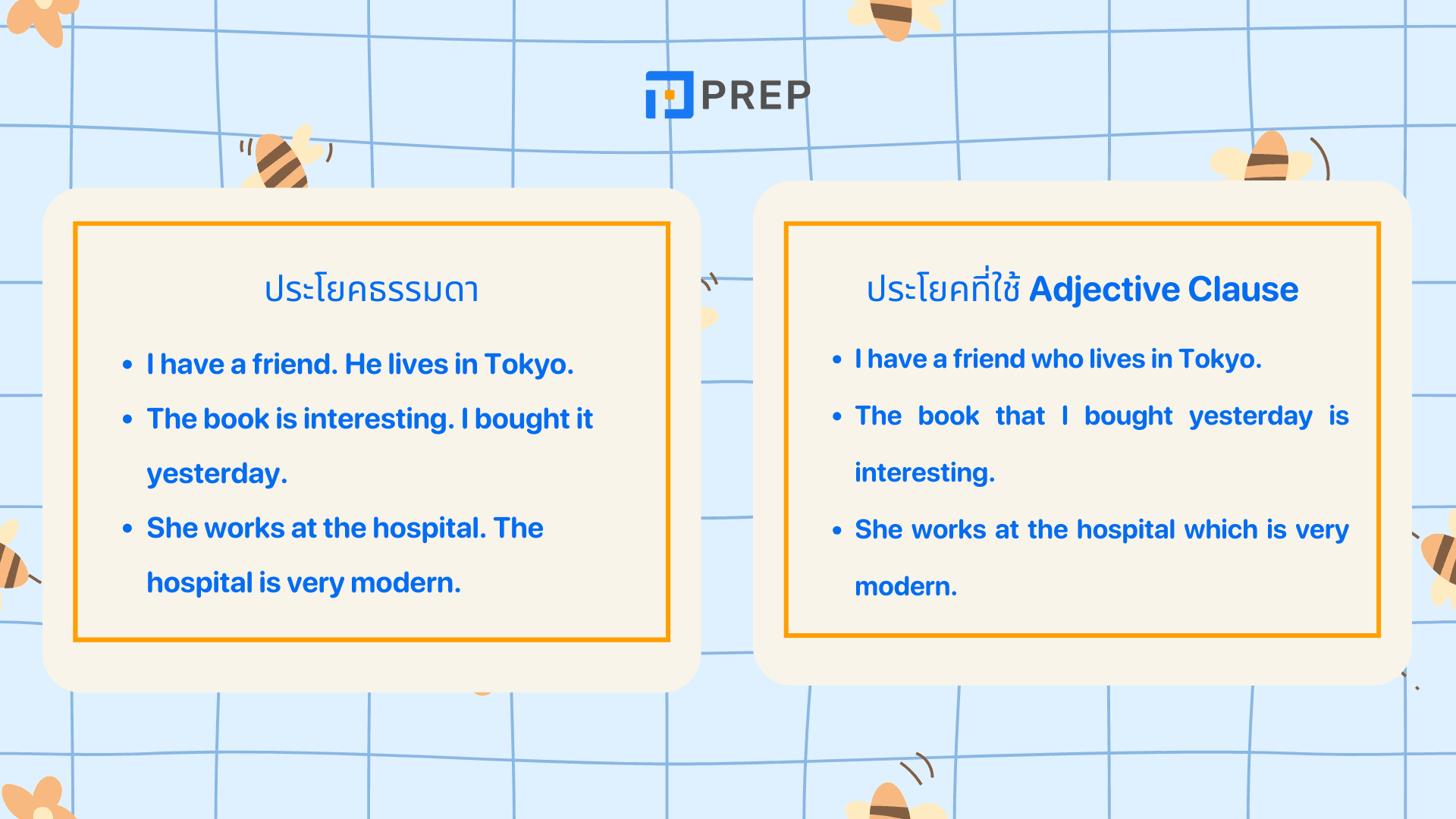
ตัวอย่างการเปรียบเทียบ:
|
ประโยคธรรมดา |
ประโยคที่ใช้ Adjective Clause |
|
I have a friend. He lives in Tokyo. |
I have a friend who lives in Tokyo. (ฉันมีเพื่อนที่อยู่โตเกียว) |
|
The book is interesting. I bought it yesterday. |
The book that I bought yesterday is interesting. (หนังสือที่ฉันซื้อเมื่อวานน่าสนใจ) |
|
She works at the hospital. The hospital is very modern. |
She works at the hospital which is very modern. (เธอทำงานที่โรงพยาบาลซึ่งทันสมัยมาก) |
2. ส่วนประกอบของ Adjective Clause
Adjective clause ประกอบด้วย 3 ส่วนหลัก:
-
Relative Pronoun หรือ Relative Adverb (who, whom, whose, which, that, where, when, why)
-
Subject (ประธาน - อาจซ่อนอยู่ใน relative pronoun)
-
Verb (กริยา)
ตัวอย่าง:
-
The man who called you is my brother.
-
Relative Pronoun: who
-
Subject: who (= the man)
-
Verb: called
-
II. Relative Pronouns และการใช้งาน
1. Relative Pronouns
Adjective clause ใช้ Relative Pronouns เพื่อเชื่อมกับคำนามที่ขยาย
|
Relative Pronoun |
ใช้กับ |
หน้าที่ |
ตัวอย่าง |
|
who |
คน |
ประธาน |
The man who lives next door is a teacher. (ผู้ชายที่อยู่บ้านข้างๆ เป็นครู) |
|
whom |
คน |
กรรม |
The woman whom I met was friendly. (ผู้หญิงที่ฉันเจอเป็นมิตร) |
|
whose |
คน/สิ่งของ |
แสดงความเป็นเจ้าของ |
The student whose book was lost looked worried. (นักเรียนที่หนังสือหายดูกังวล) |
|
which |
สิ่งของ/สัตว์ |
ประธาน/กรรม |
The car which is parked outside is mine. (รถที่จอดอยู่ข้างนอกเป็นของฉัน) |
|
that |
คน/สิ่งของ |
ประธาน/กรรม |
The movie that we watched was exciting. (หนังที่เราดูตื่นเต้น) |
Who - ใช้กับคน (ทำหน้าที่เป็นประธาน)
Who ใช้แทนคนที่ทำหน้าที่เป็นประธานในอนุประโยค
โครงสร้าง:
Noun (person) + who + Verb + ...
Adjective clause ตัวอย่าง:
-
The woman who is standing over there is my teacher. (ผู้หญิงที่ยืนอยู่โน่นคือครูของฉัน)
-
People who exercise regularly are healthier. (คนที่ออกกำลังกายสม่ำเสมอมีสุขภาพดีกว่า)
-
Students who study hard get good grades. (นักเรียนที่ขยันเรียนได้เกรดดี)
Whom - ใช้กับคน (ทำหน้าที่เป็นกรรม)
Whom ใช้แทนคนที่ทำหน้าที่เป็นกรรมในอนุประโยค (ในภาษาพูดมักใช้ who แทน whom)
โครงสร้าง:
Noun (person) + whom + Subject + Verb + ...
ตัวอย่าง:
-
The man whom I met yesterday is a doctor. (ผู้ชายที่ฉันพบเมื่อวานเป็นหมอ)
-
The girl whom you called is my sister. (ผู้หญิงที่คุณโทรหาคือน้องสาวฉัน)
หมายเหตุ: ในภาษาพูด มักใช้ "who" แทน "whom"
-
The man who I met yesterday is a doctor. (ใช้ได้ในภาษาพูด)
Whose - แสดงความเป็นเจ้าของ
Whose ใช้แสดงความเป็นเจ้าของ สามารถใช้กับทั้งคนและสิ่งของ
โครงสร้าง:
Noun + whose + Noun + Verb + ...
ตัวอย่าง:
-
The man whose car was stolen called the police. (ผู้ชายที่รถถูกขโมยโทรเรียกตำรวจ)
-
I know a girl whose brother is a famous actor. (ฉันรู้จักผู้หญิงที่พี่ชายเป็นดาราดัง)
-
The company whose products are high quality is successful. (บริษัทที่ผลิตภัณฑ์มีคุณภาพสูงประสบความสำเร็จ)
Which - ใช้กับสิ่งของและสัตว์
Which ใช้แทนสิ่งของหรือสัตว์
โครงสร้าง:
Noun (thing/animal) + which + Verb/Subject + Verb + ...
ตัวอย่าง:
-
The book which is on the table is mine. (หนังสือที่อยู่บนโต๊ะเป็นของฉัน)
-
I bought a phone which has a good camera. (ฉันซื้อโทรศัพท์ที่มีกล้องดี)
-
The movie which we watched last night was boring. (หนังที่เราดูเมื่อคืนน่าเบื่อ)
That - ใช้ได้ทั้งคนและสิ่งของ
That เป็น relative pronoun ที่ใช้ได้หลากหลาย แทนได้ทั้ง who, whom, which
ตัวอย่าง:
-
The man that called you is my boss. (= who called)
-
The book that I bought is interesting. (= which I bought)
-
This is the best movie that I have ever seen. (นี่คือหนังที่ดีที่สุดที่ฉันเคยดู)
เมื่อไหร่ต้องใช้ "that" เท่านั้น:
-
หลังคำขั้นสูงสุด: This is the best restaurant that I know.
-
หลัง all, everything, nothing, anything: Everything that he said was true.
-
หลัง the only, the same, the first, the last: She is the only person that understands me.
2. Relative Adverbs
|
Relative Adverb |
ใช้กับ |
ตัวอย่าง |
|
where |
สถานที่ |
This is the house where I was born. (นี่คือบ้านที่ฉันเกิด) |
|
when |
เวลา |
I remember the day when we first met. (ฉันจำวันที่เราพบกันครั้งแรก) |
|
why |
เหตุผล |
That's the reason why I left. (นั่นคือเหตุผลที่ฉันออกไป) |
Where - ใช้กับสถานที่
- The city where I was born is beautiful. (เมืองที่ฉันเกิดสวยงาม)
- This is the hotel where we stayed last year. (นี่คือโรงแรมที่เราพักเมื่อปีที่แล้ว)
When - ใช้กับเวลา
- I remember the day when we first met. (ฉันจำวันที่เราพบกันครั้งแรกได้)
- Summer is the time when people go to the beach. (ฤดูร้อนคือช่วงเวลาที่คนไปชายหาด)
Why - ใช้กับเหตุผล (มักใช้หลัง "the reason")
- That's the reason why I left early. (นั่นคือเหตุผลที่ฉันกลับก่อน)
- I don't know the reason why she didn't come. (ฉันไม่รู้เหตุผลที่เธอไม่มา)
III. ประเภทของ Adjective Clause
1. Defining (Restrictive) Adjective Clause
Defining Adjective Clause ให้ข้อมูลที่จำเป็นในการระบุคำนาม ไม่สามารถตัดออกได้
ลักษณะสำคัญ:
-
ไม่มีเครื่องหมาย comma (,)
-
ข้อมูลจำเป็นต่อความหมาย
-
มักใช้ that แทน who/which
Adjective clause examples:
-
The students who study hard will pass the exam. (นักเรียนที่เรียนหนักจะสอบผ่าน)
-
The book that is on the table is mine. (หนังสือที่อยู่บนโต๊ะเป็นของฉัน)
-
The restaurant where we had dinner was excellent. (ร้านอาหารที่เราทานข้าวเย็นยอดเยี่ยม)
2. Non-defining (Non-restrictive) Adjective Clause
Non-defining Adjective Clause ให้ข้อมูลเพิ่มเติม สามารถตัดออกได้โดยไม่เปลี่ยนความหมายหลัก
ลักษณะสำคัญ:
-
มีเครื่องหมาย comma (,) คั่น
-
ข้อมูลเป็นการเสริม ไม่จำเป็น
-
ไม่ใช้ that ต้องใช้ who/which
ตัวอย่าง:
-
My brother, who lives in London, is a doctor. (พี่ชายฉัน ซึ่งอยู่ในลอนดอน เป็นหมอ)
-
The Eiffel Tower, which is in Paris, is famous. (หอไอเฟล ซึ่งอยู่ในปารีส มีชื่อเสียง)
-
Shakespeare, whose plays are world-famous, was born in 1564. (เช็คสเปียร์ ซึ่งบทละครของเขามีชื่อเสียงทั่วโลก เกิดในปี 1564)
3. ตารางเปรียบเทียบ
|
ลักษณะ |
Defining |
Non-defining |
|
Comma |
ไม่มี |
มี |
|
ความจำเป็น |
จำเป็น |
ไม่จำเป็น |
|
That |
ใช้ได้ |
ใช้ไม่ได้ |
|
ตัวอย่าง |
The car that I bought is red. (รถที่ฉันซื้อสีแดง) |
My car, which I bought last year, is red. (รถของฉัน ซึ่งฉันซื้อปีที่แล้ว สีแดง) |
IV. Reduced Adjective Clause (การลดรูป)
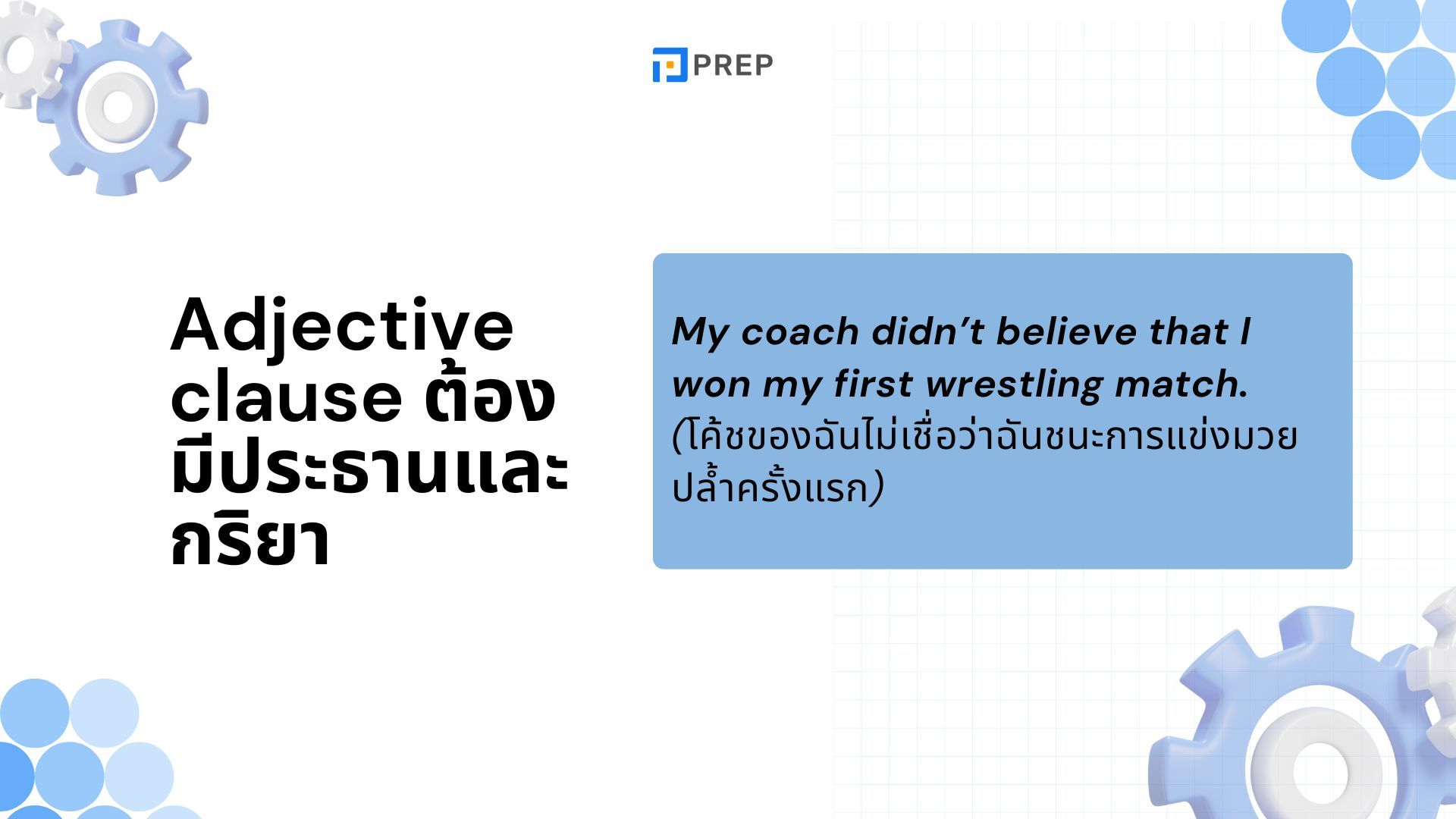
Reduced adjective clause เกิดจากการตัด relative pronoun (who, which, that) และปรับรูปกริยา เพื่อให้ประโยคกระชับขึ้น
เงื่อนไข: สามารถลดรูปได้เมื่อ relative pronoun ทำหน้าที่เป็นประธานในอนุประโยค
1. การลดรูปเป็น V-ing (Present Participle)
ใช้เมื่อกริยาอยู่ในรูป Active Voice
ก่อนลดรูป:
- The man who is sitting over there is my uncle. หลังลดรูป:
- The man sitting over there is my uncle. (ผู้ชายที่นั่งอยู่โน่นคือลุงของฉัน)
ตัวอย่างเพิ่มเติม:
- The girl who is wearing a red dress is beautiful. → The girl wearing a red dress is beautiful.
- Students who study at this university are lucky. → Students studying at this university are lucky.
2. การลดรูปเป็น V3 (Past Participle)
ใช้เมื่อกริยาอยู่ในรูป Passive Voice
ก่อนลดรูป:
- The book which was written by Mark Twain is famous. หลังลดรูป:
- The book written by Mark Twain is famous. (หนังสือที่เขียนโดยมาร์ก ทเวนมีชื่อเสียง)
ตัวอย่างเพิ่มเติม:
- The house which was built in 1990 is old. → The house built in 1990 is old.
- Products which are made in Japan are high quality. → Products made in Japan are high quality.
3. การลดรูปเป็น to-infinitive
ใช้เมื่อมี modal verbs หรือแสดงความหมายเกี่ยวกับจุดประสงค์
ตัวอย่าง:
- She is the first person who arrived at the party. → She is the first person to arrive at the party.
- I have a lot of homework which I must do. → I have a lot of homework to do.
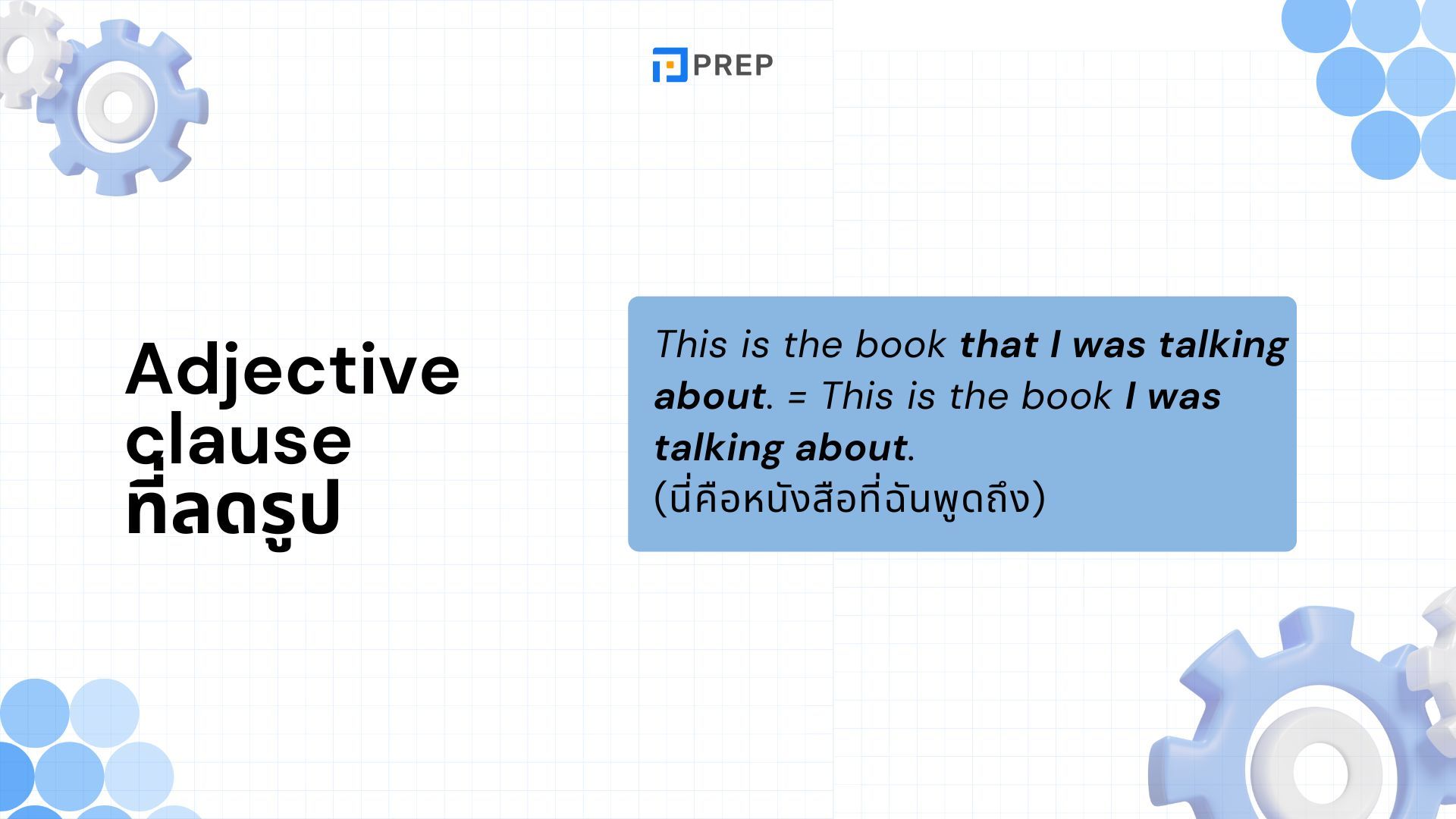
เคล็ดลับที่จะจำเมื่อคุณสามารถละคำสรรพนามสัมพันธ์ใน Adjective clause ได้คือ:
- ถ้าคำสรรพนามสัมพัทธ์ตามด้วยคำกริยา ➞ เราไม่สามารถละคำสรรพนามสัมพัทธ์ได้
- ถ้าคำที่ตามหลังคำสรรพนามสัมพัทธ์เป็นคำนาม ➞ เราสามารถละคำสรรพนามสัมพัทธ์ได้
บทความแนะนำอ่านเพิ่มเติม:
สรุป If Clause เข้าใจง่าย พร้อมตัวอย่างชัดเจน
V. Adjective Clause Exercise และแบบฝึกหัด
Adjective clause แบบฝึกหัด เบื้องต้น
1. แบบฝึกหัด
แบบฝึกหัดที่ 1: ใช้ความเข้าใจเกี่ยวกับ Adjective clause และเขียนประโยคใหม่:
- The man was sick. He looked very pale.
- He was sitting in the emergency room. It was very crowded.
- A nurse was nearby. He called her.
- The nurse called a doctor. She came quickly.
- The doctor asked him to lie down. She looked very worried.
แบบฝึกหัดที่ 2: เลือกคำตอบที่ถูกต้อง:
- The cougar, ______ grows to around 8 feet in length, is a member of the cat family.
- whom
- who
- which
- that
- Cougars sometimes prey on sheep and goats, so they may be killed by the farmers ________ animals they attack.
- which
- whom
- who
- whose
- The cougar has powerful legs, ________ it uses to climb and to jump into trees.
- which
- whom
- who
- whose
- The cougar lives in deserts, forests, plains and mountains, but according to scientists ________ have studied the animal, it is becoming endangered in some areas.
- whom
- which
- who
- whose
- However, cougars very rarely attack humans, of ________ they are usually afraid.
- who
- whom
- which
- that
2. เฉลย
แบบฝึกหัดที่ 1:
- The man, who was sick, looked very pale.
- He was sitting in the emergency room, which was very crowded.
- He called a nurse, who was nearby.
- The nurse called a doctor, who came quickly.
- The doctor, who looked very worried, asked him to lie down.
แบบฝึกหัดที่ 2:
|
1 - C |
2 - D |
3 - A |
4 - C |
5 -B |
Adjective clause เป็นโครงสร้างไวยากรณ์ที่สำคัญในภาษาอังกฤษ ช่วยให้คุณสามารถขยายคำนามและให้ข้อมูลเพิ่มเติมได้อย่างละเอียด โดยใช้ relative pronouns (who, whom, whose, which, that) และ relative adverbs (where, when, why) การเข้าใจความแตกต่างระหว่าง defining และ non-defining adjective clause รวมถึงการลดรูปเป็น reduced adjective clause จะช่วยให้คุณใช้ภาษาอังกฤษได้อย่างคล่องแคล่วและมีประสิทธิภาพ
การฝึกฝนผ่าน adjective clause exercise และการนำไปใช้ในชีวิตประจำวัน โดยเฉพาะในการเขียนและการพูด จะช่วยเสริมสร้างความเชี่ยวชาญ นอกจากนี้ adjective clause ยังเป็นโครงสร้างสำคัญที่ช่วยเพิ่มคะแนน IELTS Writing และ Speaking โดยแสดงให้เห็นถึงความสามารถในการใช้ไวยากรณ์ที่ซับซ้อนได้อย่างถูกต้อง จำไว้ว่าการเรียนรู้ต้องอาศัยการฝึกฝนอย่างสม่ำเสมอ เริ่มจากประโยคง่ายๆ แล้วค่อยๆ พัฒนาไปสู่ประโยคที่ซับซ้อนมากขึ้น
ยังไม่คุ้นเคยกับโครงสร้างของการสอบ IELTS หรือ TOEIC ใช่ไหม? ความไม่มั่นใจอาจส่งผลต่อคะแนนของคุณได้ แบบ ทดสอบ IELTS และ แบบ ทดสอบ TOEIC ของ PREPEDU จะสร้างสภาพแวดล้อมจำลองที่เหมือนจริง ช่วยให้คุณได้ปรับตัวกับรูปแบบคำถามและการบริหารเวลาก่อนวันสอบจริง
ระบบของเรามีข้อสอบ IELTS และข้อสอบ TOEIC มากกว่า 1,000 ข้อ พร้อมอัปเดตตามเทรนด์ล่าสุด ระบบ AI จะวิเคราะห์จุดผิดพลาดของคุณและเสนอแผนปรับปรุงที่ตรงจุด พร้อมระบบติดตามความก้าวหน้าที่แปลงข้อมูลเป็นตัวเลข ทำให้คุณเห็นพัฒนาการของตัวเองได้ชัดเจน
เริ่มฝึกเลยวันนี้แล้วโชว์ความสามารถของคุณในวันสอบจริง มาสัมผัสประสบการณ์ IELTS practice คำถามฝึก TOEIC จาก PREP Edu กันเลย

สวัสดีค่ะ ฉันชื่อมุก ปัจจุบันดูแลด้านเนื้อหาผลิตภัณฑ์ของ Prep Education ค่ะ
ด้วยประสบการณ์มากกว่า 5 ปีในการเรียน IELTS ออนไลน์ด้วยตนเอง ฉันเข้าใจดีถึงความท้าทายที่ผู้เรียนต้องเผชิญ แล้วก็รู้ว่าอะไรที่มันเวิร์ก
มุกอยากเอาประสบการณ์ตรงนี้มาช่วยแชร์ แล้วก็ซัพพอร์ตเพื่อน ๆ ให้ได้คะแนนที่ดีที่สุดค่ะ
ความคิดเห็น
เนื้อหาแบบพรีเมียม
ดูทั้งหมด


แผนการเรียนรู้ส่วนบุคคล


อ่านมากที่สุด



ติดต่อ Prep ผ่านโซเชียล





Address: ตึก C.P. Tower 2 (ฟอร์จูนทาวน์) ชั้น 21 ถนนรัชดาภิเษก แขวงดินแดง เขตดินแดง กรุงเทพฯ 10400
Hotline: +66 25 44 0068
Email: sawatdee@prepedu.com