24節氣英文怎麼說?附完整中英對照表、發音指南與台灣在地例句
你可能在社群媒體上看過外國友人問:「What's today?」——你想回答「今天是小雪」,卻不知道英文怎麼說。也許你在工作上需要向國際同事介紹台灣的二十四節氣傳統,但發現「節氣」根本沒有標準英文譯法。
實際上,節氣英文是 solar term,二十四節氣是 The 24 Solar Terms。這篇文章會給你完整的節氣英文對照表、翻譯邏輯、發音指南,還有在台灣文化中最常用的例句。讀完這篇,你就能用英文自信地介紹任何一個節氣。
本文涵蓋:solar term 的定義與由來、24個節氣完整中英對照表、Minor 與 Slight 翻譯版本爭議、5個發音陷阱、小雪英文的習俗說法、3個實用句型模板,以及節氣與農曆的英文概念釐清。

I. 節氣英文怎麼說?「solar term」的定義與由來
節氣的英文為什麼叫 solar term 而不是其他詞?答案在字義本身。Solar 意思是「太陽的」,term 意思是「時期」——合起來就是「依太陽運行劃分的時段」。 這個定義精準地抓住了節氣的核心:中華文明依據太陽公轉軌道每運行15度就劃分出一個節氣,一年共24個、每個約15天。正是這個與太陽直接關聯的特性,使得節氣英文被稱為 solar term,而不是 climate term 或 season(季節)。例如:
-
The Dragon Boat Festival often falls near the solar term known as Grain in Ear, marking the peak of summer heat in Taiwan. (端午節通常恰逢「芒種」節氣前後,標誌著台灣夏季最炎熱的時期。)
-
In traditional Chinese culture, each solar term signals a shift in farming, diet, and daily routine. (在中華傳統文化中,每個節氣都預示著農事、飲食與日常作息的轉變。)
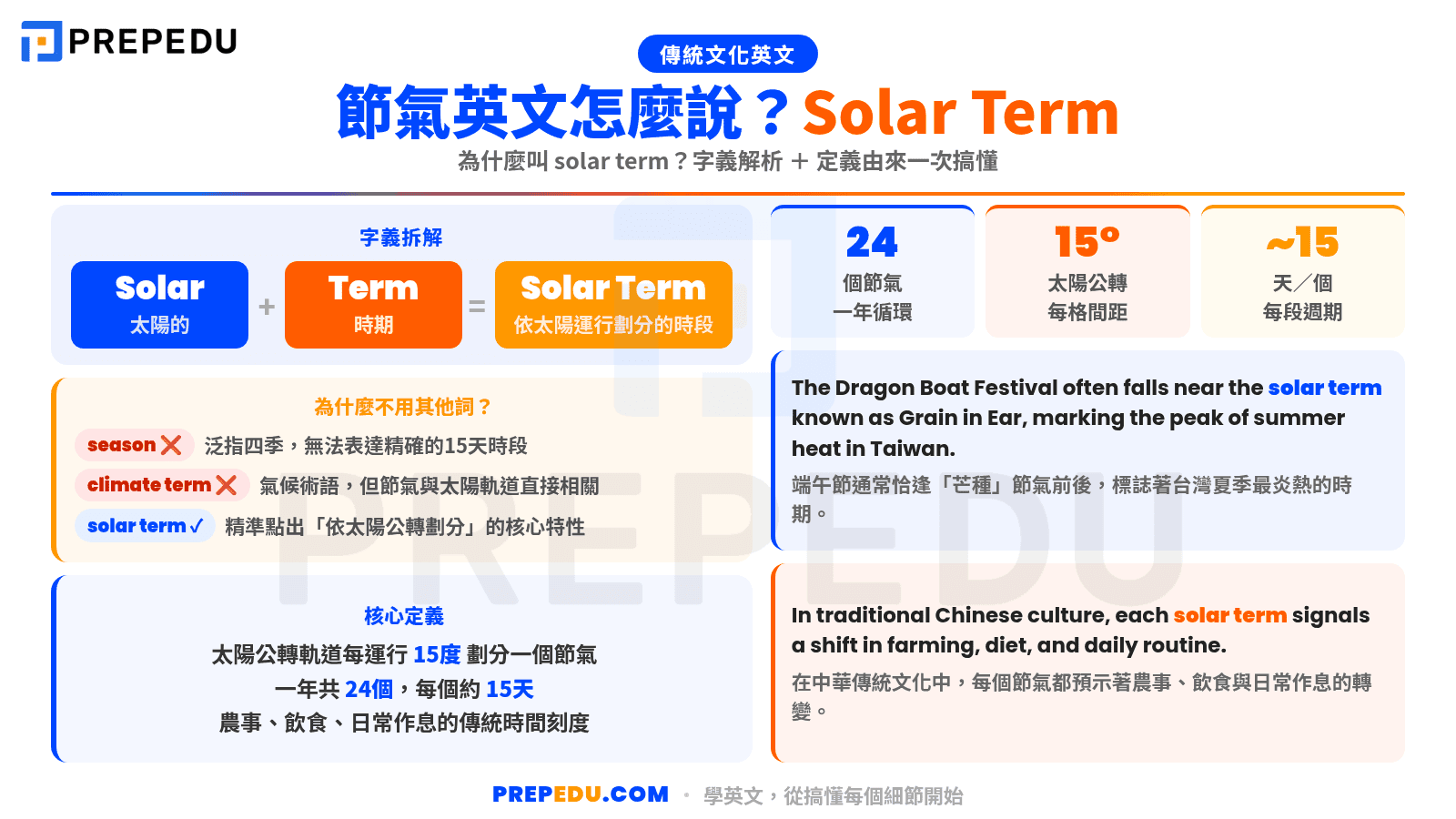
Solar term 和 season 是截然不同的概念。Season 只有4個(春夏秋冬),而 solar term 有24個,精細度相差6倍。如果你只說 It's spring.(春天到了。),外國人不會知道是春季的哪個階段;但說 It's the Awakening of Insects solar term. (現在是驚蟄節氣。),對方就能理解這是春天中期、萬物蘇醒的時候。
2016年,聯合國教科文組織正式將二十四節氣列入人類非物質文化遺產代表作名錄——官方英文名稱就是 The 24 Solar Terms。這個認證不僅承認了節氣的文化價值,也確立了英文標準用語。理解 solar 和 term 各自的構詞邏輯,比死背單字更能幫助你在對話中靈活運用這個詞彙。
II. 二十四節氣英文完整對照表(四季分類,附日期)
以下為依2022北京冬奧官方翻譯整理的完整對照表,採用 Minor/Major 版本,這是目前最通用的現代標準。每年日期因天文計算可能有±1天差異。
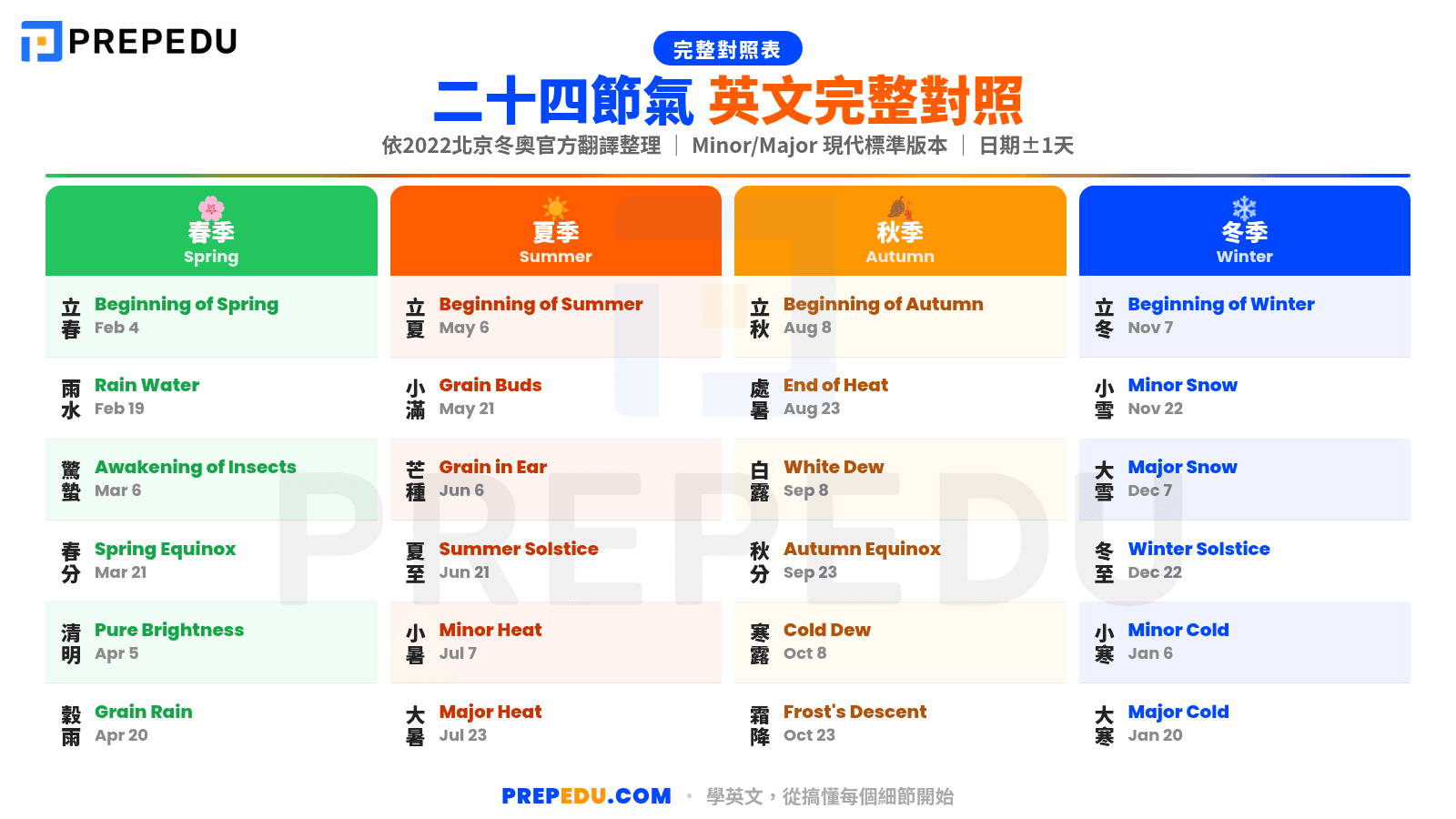
1. 春季六節氣英文(立春~穀雨)
|
節氣 |
節氣英文名稱 |
大約日期 |
例句 |
|
立春 |
Beginning of Spring /bɪˈɡɪnɪŋ əv sprɪŋ/ |
2月4日(±1) |
The Beginning of Spring marks the first day of spring in the traditional Chinese calendar. (立春標誌著農曆春季的第一天。) |
|
雨水 |
Rain Water /reɪn ˈwɔːtər/ |
2月19日(±1) |
During Rain Water, farmers in Taiwan begin preparing their fields for the new planting season. (雨水節氣期間,台灣農民開始為新的播種季節整地備耕。) |
|
驚蟄 |
Awakening of Insects /əˈweɪkənɪŋ əv ˈɪnsekts/ |
3月6日(±1) |
The Awakening of Insects signals that hibernating creatures are stirring as the soil warms. (驚蟄預示著隨著土地回暖,冬眠的生物開始甦醒活動。) |
|
春分 |
Spring Equinox /sprɪŋ ˈiːkwɪnɒks/ |
3月21日(±1) |
On the Spring Equinox, day and night are of equal length across the entire globe. (春分當天,全球各地晝夜等長。) |
|
清明 |
Pure Brightness /pjʊər ˈbraɪtnəs/ |
4月5日(±1) |
Pure Brightness is a time for families in Taiwan to sweep ancestral tombs and pay their respects. (清明節是台灣家庭掃墓祭祖、緬懷先人的重要時節。) |
|
穀雨 |
Grain Rain /ɡreɪn reɪn/ |
4月20日(±1) |
Grain Rain brings the last spring showers, nourishing crops before the summer heat arrives. (穀雨帶來春季最後的降雨,在夏日炎熱來臨前滋養農作物。) |
2. 夏季六節氣英文(立夏~大暑)
|
節氣 |
節氣英文名稱 |
大約日期 |
例句 |
|
立夏 |
Beginning of Summer /bɪˈɡɪnɪŋ əv ˈsʌmər/ |
5月6日(±1) |
The Beginning of Summer officially opens the hottest chapter of the year in East Asia. (立夏正式揭開東亞一年中最炎熱篇章的序幕。) |
|
小滿 |
Grain Buds /ɡreɪn bʌdz/ |
5月21日(±1) |
During Grain Buds, wheat and other grains begin to fill out but have not yet fully ripened. (小滿期間,小麥等穀物開始灌漿飽滿,但尚未完全成熟。) |
|
芒種 |
Grain in Ear /ɡreɪn ɪn ɪər/ |
6月6日(±1) |
Grain in Ear is the busiest solar term for rice farmers across Taiwan and southern China. (芒種是台灣及華南地區稻農一年中最繁忙的節氣。) |
|
夏至 |
Summer Solstice /ˈsʌmər ˈsoʊlstɪs/ |
6月21日(±1) |
The Summer Solstice is the longest day of the year, with the sun reaching its highest point in the sky. (夏至是一年中白晝最長的一天,太陽此時達到最高點。) |
|
小暑 |
Minor Heat /ˈmaɪnər hiːt/ |
7月7日(±1) |
Minor Heat marks the beginning of the sweltering season, when temperatures climb sharply across Taiwan. (小暑標誌著酷暑季節的開始,台灣各地氣溫急速攀升。) |
|
大暑 |
Major Heat /ˈmeɪdʒər hiːt/ |
7月23日(±1) |
Major Heat is the hottest solar term of the year, often pushing temperatures above 38°C in Taipei. (大暑是一年中最炎熱的節氣,台北氣溫往往飆破攝氏38度。) |
3. 秋季六節氣英文(立秋~霜降)
|
節氣 |
節氣英文名稱 |
大約日期 |
例句 |
|
立秋 |
Beginning of Autumn /bɪˈɡɪnɪŋ əv ˈɔːtəm/ |
8月8日(±1) |
The Beginning of Autumn arrives quietly, bringing the first hints of cooler air after months of intense heat. (立秋悄然而至,在數月酷暑之後帶來初秋涼意的第一絲氣息。) |
|
處暑 |
End of Heat /end əv hiːt/ |
8月23日(±1) |
The End of Heat signals that the most oppressive summer temperatures are finally beginning to ease. (處暑預示著令人難耐的夏日高溫終於開始逐漸消退。) |
|
白露 |
White Dew /waɪt djuː/ |
9月8日(±1) |
White Dew is named for the glistening droplets that form on leaves and grass in the cool morning air. (白露因清晨涼空氣中凝結於葉片與草尖的晶瑩露珠而得名。) |
|
秋分 |
Autumn Equinox /ˈɔːtəm ˈiːkwɪnɒks/ |
9月23日(±1) |
On the Autumn Equinox, day and night reach perfect balance before the nights grow longer. (秋分當天,晝夜達到完美均衡,此後夜晚將逐漸拉長。) |
|
寒露 |
Cold Dew /koʊld djuː/ |
10月8日(±1) |
During Cold Dew, the morning chill deepens and migratory birds begin their journey southward. (寒露期間,清晨寒意漸濃,候鳥開始啟程南遷。) |
|
霜降 |
Frost's Descent /frɒsts dɪˈsent/ |
10月23日(±1) |
Frost's Descent is the last solar term of autumn, reminding farmers to harvest before the cold sets in. (霜降是秋季最後一個節氣,提醒農民在寒冬來臨前完成收割。) |
4. 冬季六節氣英文(立冬~大寒)
|
節氣 |
節氣英文名稱 |
大約日期 |
例句 |
|
立冬 |
Beginning of Winter /bɪˈɡɪnɪŋ əv ˈwɪntər/ |
11月7日(±1) |
The Beginning of Winter is a traditional occasion in Taiwan to eat warming foods such as hot pot and ginger duck. (立冬是台灣的傳統節令,家家戶戶習慣享用火鍋、薑母鴨等暖身食補。) |
|
小雪 |
Minor Snow /ˈmaɪnər snoʊ/ |
11月22日(±1) |
Minor Snow brings the first light snowfall to northern China, while Taiwan sees its temperatures drop sharply. (小雪為中國北方帶來初雪,台灣氣溫則明顯驟降。) |
|
大雪 |
Major Snow /ˈmeɪdʒər snoʊ/ |
12月7日(±1) |
During Major Snow, heavy snowfall blankets much of northern Asia, and mountain roads in Taiwan may ice over. (大雪期間,亞洲北方大部分地區積雪覆蓋,台灣山區道路亦可能結冰。) |
|
冬至 |
Winter Solstice /ˈwɪntər ˈsoʊlstɪs/ |
12月22日(±1) |
The Winter Solstice is the shortest day of the year and a major family occasion celebrated with tangyuan (湯圓). (冬至是一年中白晝最短的一天,也是闔家團聚共享湯圓的重要節日。) |
|
小寒 |
Minor Cold /ˈmaɪnər koʊld/ |
1月6日(±1) |
Minor Cold marks the beginning of the coldest stretch of the year across East Asia. (小寒標誌著東亞一年中最寒冷時段的開始。) |
|
大寒 |
Major Cold /ˈmeɪdʒər koʊld/ |
1月20日(±1) |
Major Cold is the final solar term of the year, closing the traditional Chinese calendar cycle with bitter winter winds. (大寒是一年中最後一個節氣,伴隨凜冽寒風為傳統農曆年畫下句點。) |
III. 節氣英文翻譯邏輯:Minor 還是 Slight?Major 還是 Great?
很多台灣人接觸過節氣英文時會發現一個問題:教材上說「小暑是 Slight Heat」,但現在有人說是「Minor Heat」。哪個對?答案是:兩個都對過,但現在應該用 Minor/Major。節氣英文其實有三個版本在流通:
|
版本 |
小暑 |
大暑 |
小雪 |
大寒 |
來源 |
|
Olympic 2022(推薦) |
Minor Heat |
Major Heat |
Minor Snow |
Major Cold |
2022北京冬奧官方 |
|
傳統版 |
Slight Heat |
Great Heat |
Slight Snow |
Great Cold |
傳統英文教材 |
|
UNESCO |
Minor Heat |
Major Heat |
Minor Snow |
Greater Cold |
UNESCO非遺登錄 |
為什麼要換版本?因為 minor 和 major 比 slight 和 great 更精準。語言學角度,minor/major 是詞頻高且中立的反義詞,用來表示「相對程度」——小雪代表初雪開始(相對小),大雪代表雪量增多(相對大)。相比之下,slight 和 great 帶有較強的情感色彩,在現代英文中使用率較低。
東吳大學英文系前系主任曾泰元教授在《英語島》雜誌撰文分析過三個版本,結論是:2022北京冬奧官方版(Minor/Major)最適合現代學習者使用,因為這是近年來最大規模的國際傳播所採用的標準。Minor/Major 反映的是「相對量級」,而不是主觀的「好壞」判斷,用詞越精準,你的英文就越專業,外國人也越容易理解台灣文化。如果你要寫報告、發社群媒體、或跟國際友人介紹,就用 Minor/Major——這是當下的國際標準。
IV. 如何用英文介紹台灣節氣習俗?3個實用句型模板
從「知道英文」進階到「能說出完整句子」,只差一個句型。以下3個模板直接套用,就能在外國朋友面前自信地聊台灣的節氣文化。「」
1. 模板1:描述節氣是什麼
Today /「Date」marks「Solar Term name」, the Nth solar term, which falls around「Month Day」.
例如:
-
Today marks Winter Solstice, the 22nd solar term, which falls around December 22nd. (今天是冬至,第22個節氣,約在12月22日前後。)
-
Today marks Grain in Ear, the 9th solar term, which falls around June 6th. (今天是芒種,第9個節氣,約在6月6日前後。)
-
Today marks Pure Brightness, the 5th solar term, which falls around April 5th. (今天是清明,第5個節氣,約在4月5日前後。)
這個模板最通用,適合開啟任何節氣的介紹。「marks」表示「標誌著」,加上序號和日期,讓對方有完整的時間和位置概念。
2. 模板2:說明台灣習俗
In Taiwan,「Solar Term」is traditionally associated with「custom]. It is customary to eat/do「activity」.
例如:
-
In Taiwan, Winter Solstice is traditionally associated with family reunion. It is customary to eat glutinous rice balls. (在台灣,冬至與家人團聚的傳統密切相關,習慣上會吃湯圓。)
-
In Taiwan, Qingming is traditionally associated with tomb sweeping. Families visit ancestors' graves and eat spring rolls. (在台灣,清明與掃墓傳統密切相關,家人會去掃墓並吃潤餅。)
-
In Taiwan, Beginning of Winter is traditionally associated with nourishing the body against the coming cold. It is customary to eat ginger duck hot pot and sesame oil chicken. (在台灣,立冬與禦寒補身的傳統密切相關,習慣上會享用薑母鴨火鍋與麻油雞。)
注意 traditionally 這個英文副詞很重要,它告訴對方這是傳統做法,不是現代要求,讓介紹更有文化底蘊。
3. 模板3:與西方節日比較
Unlike「Western holiday」, which is based on「lunar/solar」,「Solar Term」 is determined by「the sun's position in the ecliptic」.
例如:
-
Unlike Christmas, which falls on a fixed calendar date, Winter Solstice is an astronomical event determined by the sun's position. (和聖誕節固定在日曆上不同,冬至是由太陽位置決定的天文事件。)
-
Unlike Easter, which is based on the lunar calendar, the Spring Equinox is determined by the sun's exact position along the ecliptic. (和以農曆為基準的復活節不同,春分是由太陽在黃道上的精確位置所決定的。)
當外國人問:Are the solar terms your holidays?(節氣是不是你們的假日?),這個模板就能澄清差異。一個補充提醒:節氣名稱在正常句子中需要定冠詞英文 the(如:the Winter Solstice),但在標題、列表或標示語中可以省略。
V. 24節氣英文實境對話:3個日常場景
以下三段對話示範了24節氣英文表達在真實溝通中的自然節奏,涵蓋與外籍同事、外國朋友,以及社群媒體互動三種最常見的場景。
1. 情境一:與外籍同事介紹節氣
|
24 節氣英文對話 |
中文翻譯 |
|
小美:Hey, do you know what today is? It's the Winter Solstice, the 22nd solar term. |
小美:嘿,你知道今天是什麼日子嗎?今天是冬至,第22個節氣。 |
|
David:Solar term? What's that exactly? |
大衛:節氣?那是什麼? |
|
小美:It's one of 24 divisions of the year based on the sun's position. Think of it as a more precise version of seasons. |
小美:這是根據太陽位置把一年分成24個時段的系統,可以把它想成比四季更精細的劃分方式。 |
|
David:That's fascinating. Does it come with any traditions? |
大衛:真有趣。有什麼相關的傳統嗎? |
|
小美:Absolutely. In Taiwan, Winter Solstice is traditionally associated with family reunion. It's customary to eat glutinous rice balls together. |
小美:當然有。在台灣,冬至與家人團聚的傳統密切相關,習慣上大家會一起吃湯圓。 |
|
David:That sounds really meaningful. Kind of like Thanksgiving for us. |
大衛:聽起來很有意義,有點像我們的感恩節。 |
2. 情境二:外國朋友問起小雪
|
24 節氣英文對話 |
中文翻譯 |
|
小王:Did you see my post? Today is Minor Snow! |
小王:你看到我發的文了嗎?今天是小雪! |
|
Sarah:Minor Snow? Is it snowing in Taiwan right now? |
莎拉:小雪?台灣現在在下雪嗎? |
|
小王:Not in the city — Minor Snow is the 20th solar term, around November 22nd. It signals the start of winter cold, not heavy snowfall. |
小王:市區不會——小雪是第20個節氣,約在11月22日前後,代表冬天開始變冷,不是真的大量降雪。 |
|
Sarah:Oh, so it's different from actual snow? |
莎拉:原來和真正的降雪不一樣? |
|
小王:Exactly. In Taiwan, Minor Snow is traditionally associated with winter nourishment. It's customary to eat ginger duck stew to keep warm. |
小王:對。在台灣,小雪與冬令進補的傳統密切相關,習慣上會吃薑母鴨來保暖。 |
|
Sarah:Ginger duck stew sounds amazing. I need to try that. |
莎拉:薑母鴨聽起來超棒,我一定要試試。 |
3. 情境三:解釋節氣與農曆的差別
|
24 節氣英文對話 |
中文翻譯 |
|
小蘭:My foreign colleague keeps confusing solar terms with the lunar calendar. How do I explain it? |
小蘭:我的外籍同事一直把節氣和農曆搞混,我要怎麼解釋? |
|
小美:Tell them solar terms follow the sun, not the moon. That's why the dates are almost fixed every year — Winter Solstice is always around December 22nd. |
小美:告訴他們節氣是跟著太陽走,不是月亮。所以日期每年幾乎固定——冬至永遠在12月22日前後。 |
|
小蘭:And how about festivals like Mid-Autumn? |
小蘭:那像中秋節這類節日呢? |
|
小美:Those follow the lunar calendar, so the date shifts every year. Mid-Autumn Festival is always the 15th day of the 8th lunar month — but that can land anywhere in September or October on the solar calendar. |
小美:那些跟農曆走,所以日期每年會變。中秋節是農曆8月15日,但換算成陽曆可能落在9月或10月的任何一天。 |
|
小蘭:So: solar term = fixed dates, lunar festival = shifting dates. |
小蘭:所以:節氣=日期固定,農曆節日=日期變動。 |
|
小美:Exactly. That's the clearest way to say it. |
小美:對,這是最清楚的說法。 |
VI. 關於24節氣英文的常見問題 FAQ
1. 節氣的英文和季節(season)一樣嗎?
完全不一樣。Season 指春夏秋冬4個季節,而 solar term 是更細的24段劃分。每個季節包含6個 solar terms,所以24除以4等於6。如果只說 It's spring,對方不知道是春初、春中還是春末;但說 It's the Awakening of Insects 就很清楚了。另請參閱這篇文章:
2. 清明節英文有幾種說法?
清明是節氣名稱。清明節(節日)有兩種常見英文說法:Qingming Festival(正式學術用語)和 Tomb Sweeping Day(描述性說法,許多國外媒體慣用)。兩個都對,但正式文件用 Qingming Festival,普通對話用 Tomb Sweeping Day 更容易讓人理解。若想深入了解這個節日,歡迎參考 PREPEDU 的文章:清明節英文是什麼?常用英文詞彙和句型總整理!
3. 冬至(Winter Solstice)和聖誕節(Christmas)的英文容易混淆嗎?
不容易混淆名字,但容易混淆日期——冬至約在12月22日,聖誕節是12月25日,差不多時間。英文上,Winter Solstice 是天文事件,Christmas 是宗教節日,概念完全不同,所以不會真的搞混。另請參閱這篇文章:
4. 二十四節氣是中國文化還是整個東亞文化?
節氣起源於中國,但在台灣、日本、韓國、越南等東亞地區也深入生活。聯合國教科文組織2016年登錄時是以中國為提交國,官方英文說法是「Chinese traditional calendar」。不過在台灣文化中,節氣同樣有深遠的農業和生活傳統,是整個東亞共有的文化資產。
5. 二十四節氣與農曆有什麼不同?
很多人以為二十四節氣是農曆,這是最大的誤解。其實節氣和農曆完全是兩套系統,需要用英文澄清時特別容易出錯。
節氣依據陽曆,不是農曆。因為節氣是以太陽公轉軌道為基準,每15度劃分一個,所以節氣日期相對固定——每年11月22日前後總是小雪、12月22日前後總是冬至,只差±1天。反觀農曆日期每年大幅變動,同樣的農曆初一在陽曆上可能是1月,也可能是2月。
中秋節、端午節是農曆節日,不是節氣。中秋節是農曆8月15日,端午節是農曆5月5日——兩者都以農曆日期為準,不是太陽運行。它們是節日,而節氣是天文現象,雖然名字都叫「節」,概念卻完全不同。簡單的記法:
-
Solar term = 陽曆+天文+日期固定;
-
Lunar festival = 農曆+傳統+日期變動。
結論
「24節氣英文」的核心說法只有一個:solar term。但真正讓你的英文表達脫穎而出的,是能依據語境精準運用——用 Minor/Major 版本對應當代國際標準,用三個句型模板自然介紹台灣習俗,用正確的 the 定冠詞避免文法錯誤,用準確的 SOL-stis 發音讓對方真正聽懂。
本文涵蓋了24節氣完整中英對照表、Minor vs Slight 翻譯版本邏輯、5個發音陷阱、小雪英文的習俗應用、3個句型模板,以及節氣與農曆的英文概念釐清。這些知識背後有一個共同邏輯:理解「為什麼這樣叫」,比死背單字更能幫助你在真實對話中靈活表達。
PREPEDU 提供完整的英語學習資源,從台灣文化英文到 IELTS 與 TOEIC 考試技巧,幫助你建立真正的語感與表達自信。下一次有人問「What's today?」,你就能自信回答:「Today marks Minor Snow, the 20th solar term — in Taiwan, we celebrate with warming winter foods.」——這樣的表達,才能讓對方真正感受到你的文化。

你好!我叫黃秋賢,現在在 prepedu.com 擔任內容企劃。我有超過5年的英語與韓語自學經歷,親身備考 IELTS、TOEIC 與 TOPIK,累積了大量第一手的學習者視角——包括哪些語法規則最讓台灣與香港學習者混淆,以及如何在有限的備考時間內最有效地修正這些錯誤。目前已在 prepedu.com 撰寫超過 1000 篇英語學習文章,內容涵蓋語法、詞彙與考試策略,累積協助數千位學習者解決自學過程中的語法疑問。
評論


個人化路線圖










統一企業編號:202227322W
地址:114 LAVENDER STREET, #11-83 CT HUB 2, SINGAPORE (338729)