Infinitive without to: 5 กรณีหลัก และแบบฝึกหัด
"I can go to Bangkok." ถูก แต่ "I can to go to Bangkok." โดนครูกาผิด — รู้ไหมว่าทำไม? คำถามเล็ก ๆ นี้คือกับดักที่ทำให้นักเรียนไทยเสียคะแนนใน ONET, GAT และ TOEIC ทุกปี การเลือกใส่หรือไม่ใส่ "to" หน้ากริยา ไม่ได้เกิดจากความรู้สึก แต่มาจากกฎไวยากรณ์ที่ชัดเจนและจำได้
Infinitive without to หรือชื่ออีกอย่างว่า bare infinitive คือกริยาช่อง 1 ที่ใช้โดยไม่มี to นำหน้า เช่น go, run, speak โดยปรากฏใน 5 บริบทเฉพาะ ได้แก่ หลัง modal verbs (can, must, will), หลัง make/let, หลัง perception verbs (see, hear, watch), หลัง had better/would rather และหลัง conjunctions บางตัว บทความนี้จะอธิบายทั้ง 5 กรณีอย่างละเอียดพร้อมเหตุผลเชิงโครงสร้าง เปรียบเทียบกับ infinitive with to ด้วยตารางชัด ๆ พร้อมแบบฝึกหัด 15 ข้อและเฉลยเต็มรูปแบบ เริ่มต้นกันที่คำถามพื้นฐานก่อน infinitive without to คืออะไรกันแน่?
- I. Infinitive without to คืออะไร และโครงสร้างของมัน
- II. Infinitive without to vs Infinitive with to: ต่างกันอย่างไร?
- III. 5 กรณีหลักที่ต้องใช้ Infinitive without to (พร้อมตัวอย่าง)
- IV. Passive Voice กับ Infinitive without to
- V. แบบฝึกหัด Infinitive without to 15 ข้อ พร้อมเฉลยและคำอธิบาย
- VI. คำถามที่พบบ่อยเกี่ยวกับ Infinitive without to (FAQ)
I. Infinitive without to คืออะไร และโครงสร้างของมัน
Infinitive without to คือกริยาช่อง 1 (V1) ที่ใช้โดยไม่มี to นำหน้า หรือเรียกอีกชื่อว่า bare infinitive เช่น go, run, speak, study แทนที่จะเป็น to go, to run, to speak, to study คำว่า "bare" ในชื่อภาษาอังกฤษแปลตรงตัวว่า "เปลือย" หรือ "ไม่มีเครื่องประดับ" ซึ่งสะท้อนความจริงทางไวยากรณ์ว่ามันคือกริยารูปพื้นฐานที่ถูกถอด to ออก ไม่ใช่กริยารูปอื่นแต่อย่างใด
แล้วทำไม to ถึงไม่จำเป็นในบางบริบท? คำตอบอยู่ที่หน้าที่ของ to เอง ในไวยากรณ์ภาษาอังกฤษ to ทำหน้าที่เป็น purpose marker คือบ่งบอกจุดประสงค์หรือทิศทางของการกระทำ เมื่อกริยานำหน้ามี grammatical force ในตัวเองอยู่แล้ว เช่น modal verbs ที่บอก possibility/obligation หรือ causative verbs ที่บอกการบังคับ/อนุญาต ภาษาก็ไม่ต้องการ to มาซ้ำเติมจุดประสงค์อีก
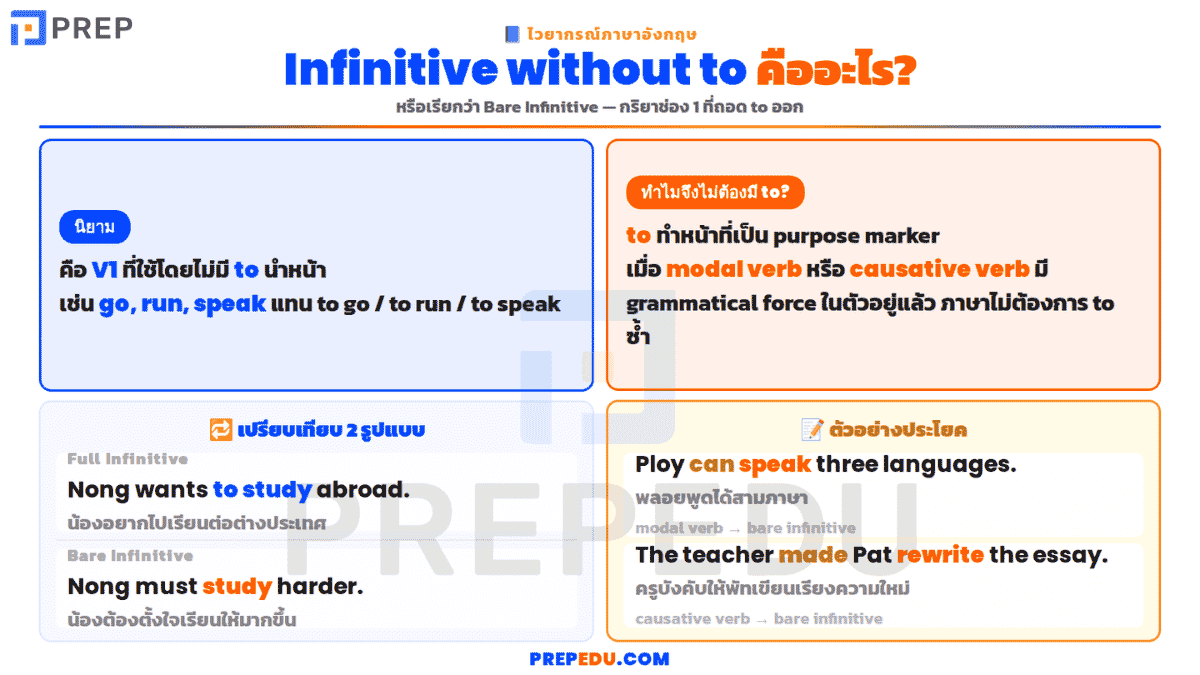
โครงสร้างเปรียบเทียบ 2 รูปแบบ:
-
Full infinitive: to + V1 - "Nong wants to study abroad." (น้องอยากไปเรียนต่อต่างประเทศ)
-
Bare infinitive: V1 (ไม่มี to) - "Nong must study harder." (น้องต้องตั้งใจเรียนให้มากขึ้น)
ตัวอย่างเพิ่มเติม 2 ประโยค:
-
"Ploy can speak three languages." - พลอยพูดได้สามภาษา
-
"The teacher made Pat rewrite the essay." - ครูบังคับให้พัทเขียนเรียงความใหม่
ข้อควรระวัง: bare infinitive ใกล้เคียงกับ base form แต่ไม่เหมือนกันทุกกรณี base form ใช้กับ imperatives ด้วย เช่น "Sit down." ส่วน bare infinitive ปรากฏเฉพาะหลังกลุ่มกริยา/โครงสร้างที่กำหนดเท่านั้น เพื่อให้เห็นความแตกต่างชัดขึ้น มาดูกันว่า infinitive without to กับ infinitive with to ใช้ต่างกันอย่างไรในเชิงการใช้งานจริง
II. Infinitive without to vs Infinitive with to: ต่างกันอย่างไร?
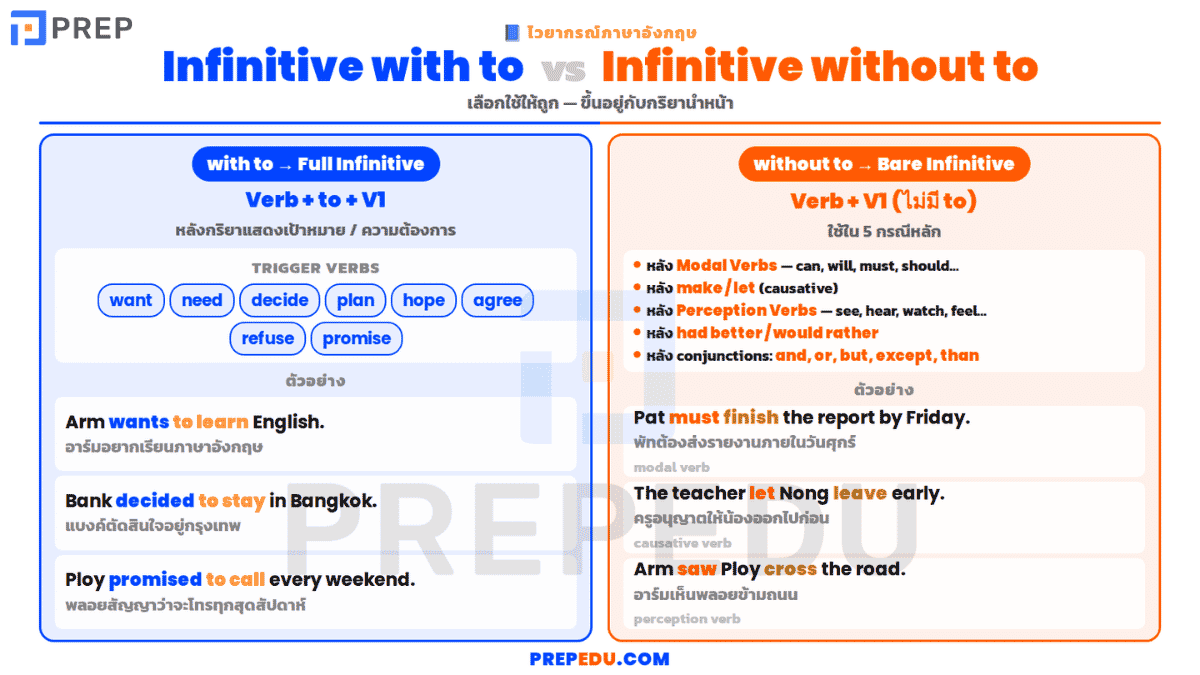
ความแตกต่างหลักอยู่ที่กลุ่มกริยานำหน้า infinitive with to ใช้หลังกริยาแสดงความต้องการ ความตั้งใจ หรือการตัดสินใจ ส่วน infinitive without to ใช้หลังกริยาที่มี grammatical force ครบในตัวเองอยู่แล้ว เช่น modal verbs และ causative verbs การเลือกรูปจึงไม่ใช่เรื่องของความรู้สึก แต่ขึ้นอยู่กับว่ากริยานำหน้าอยู่ในกลุ่มไหน
1. โครงสร้างของ Infinitive with to
Infinitive with to หรือ full infinitive ใช้รูป to + V1 ตามหลังกริยาที่แสดงเป้าหมาย ความต้องการ หรือการตัดสินใจ กริยากลุ่มนี้เรียกว่า "verb + to-infinitive" ซึ่งรวมถึง:
-
want, need, decide, choose, plan, hope, agree, refuse, promise, manage
-
ตัวอย่างประโยค:
-
"Arm wants to learn English with a tutor." - อาร์มอยากเรียนภาษาอังกฤษกับติวเตอร์
-
"Bank decided to stay in Bangkok this summer." - แบงค์ตัดสินใจอยู่กรุงเทพช่วงหน้าร้อนนี้
-
"Ploy promised to call her mother every weekend." - พลอยสัญญาว่าจะโทรหาแม่ทุกสุดสัปดาห์
ถามตรง ๆ ว่า กริยา want, need, decide ตามด้วย to ทุกครั้งใช่ไหม? คำตอบคือใช่ กลุ่ม "verb + to-infinitive" เป็นกฎคงที่ ไม่มีการละ to ในรูปประโยคบอกเล่าทั่วไป
2. โครงสร้างของ Infinitive without to (Bare Infinitive)
Infinitive without to ใช้รูป V1 เปล่า ปรากฏใน 5 กรณีหลัก:
-
หลัง modal verbs (can, could, will, would, shall, should, may, might, must)
-
หลัง make, let (causative verbs)
-
หลัง perception verbs (see, watch, hear, feel, notice, observe)
-
หลัง had better, would rather, rather than
-
หลัง conjunctions บางตัว (and, or, but, except, than) เมื่อเชื่อม infinitive
ตัวอย่างแต่ละกรณี:
-
"Pat must finish the report by Friday." (modal)
-
"The teacher let Nong leave the classroom early." (causative)
-
"Arm saw Ploy cross the road." (perception)
3. ตารางเปรียบเทียบ Infinitive with to vs without to
ตารางต่อไปนี้เปรียบเทียบสองรูปแบบ side-by-side พร้อมตัวอย่างถูกและผิดเพื่อให้เห็นจุดที่นักเรียนไทยมักพลาด
|
รูปแบบ |
กลุ่มกริยานำหน้า |
ตัวอย่าง ✅ |
ตัวอย่าง ❌ |
|
to + V1 (with to) |
want, need, decide, hope, agree, plan |
I want to go home. |
I want go home. |
|
to + V1 (with to) |
promise, refuse, manage, choose |
She promised to call me. |
She promised call me. |
|
V1 เปล่า (without to) |
can, must, will, should, may, might |
You must finish it. |
You must to finish it. |
|
V1 เปล่า (without to) |
make, let |
Let him speak first. |
Let him to speak first. |
|
V1 เปล่า (without to) |
see, hear, watch, feel |
I saw him run. |
I saw him to run. |
|
V1 เปล่า (without to) |
had better, would rather |
You had better stop. |
You had better to stop. |
กฎจำง่ายจากตารางนี้ ถ้ากริยานำหน้าเป็น modal verb ทุกตัว หรือ make/let/see/hear/feel ให้ใช้ bare infinitive เสมอ ถ้าเป็นกริยาแสดงความต้องการ การตัดสินใจ หรือคำสัญญา ให้ใช้ to-infinitive เพื่อให้คุณเข้าใจลึกขึ้นว่าทำไมแต่ละกลุ่มถึงทำงานแบบนั้น มาดูรายละเอียดทั้ง 5 กรณีอย่างละเอียด
III. 5 กรณีหลักที่ต้องใช้ Infinitive without to (พร้อมตัวอย่าง)
Infinitive without to ใช้ใน 5 กรณีหลัก ได้แก่ หลัง modal verbs, หลัง make/let, หลัง perception verbs, หลัง had better/would rather และหลัง conjunctions บางตัว กรณีทั้งห้านี้ครอบคลุมเกือบทุกข้อสอบไวยากรณ์ในระดับ THPT และ TOEIC การจำกลุ่มกริยาในแต่ละกรณีพร้อมเหตุผลเชิงโครงสร้าง จะช่วยให้ผู้เรียนไม่ต้องเดาเวลาทำข้อสอบ
1. หลัง Modal Verbs (กริยาช่วย)
หลัง modal Verbs ทุกตัวต้องตามด้วย bare infinitive เสมอ ไม่มีข้อยกเว้น เพราะ modal verbs มี grammatical force ในตัวเองอยู่แล้ว ทำหน้าที่แสดง modality เช่น ความเป็นไปได้ (can, may, might), ภาระผูกพัน (must, should), หรือการคาดการณ์อนาคต (will, would) เมื่อแสดงความหมายเหล่านี้ได้ครบในตัวเอง ภาษาจึงไม่ต้องการ to มาเป็น purpose marker เพิ่มอีก
รายชื่อ modal verbs ที่ต้องจำ: can, could, will, would, shall, should, may, might, must, do (รูป emphatic เช่น "I do believe you.")
ตัวอย่าง ✅❌:
-
✅ Nong can speak Thai and English fluently. / ❌ Nong can to speak Thai and English fluently.
-
✅ Pat must finish the report by Friday. / ❌ Pat must to finish the report by Friday.
-
✅ Ploy will call you later tonight. / ❌ Ploy will to call you later tonight.
Passive Note: เมื่อเปลี่ยน modal + bare infinitive เป็น passive จะกลายเป็น modal + be + past participle ซึ่งเป็น passive infinitive (มี to ในแง่โครงสร้างคือ "be done") ไม่ใช่ bare infinitive แบบ active แล้ว
-
Active: "You must complete the report."
-
Passive: "The report must be completed."
2. หลัง Make และ Let (Causative Verbs)
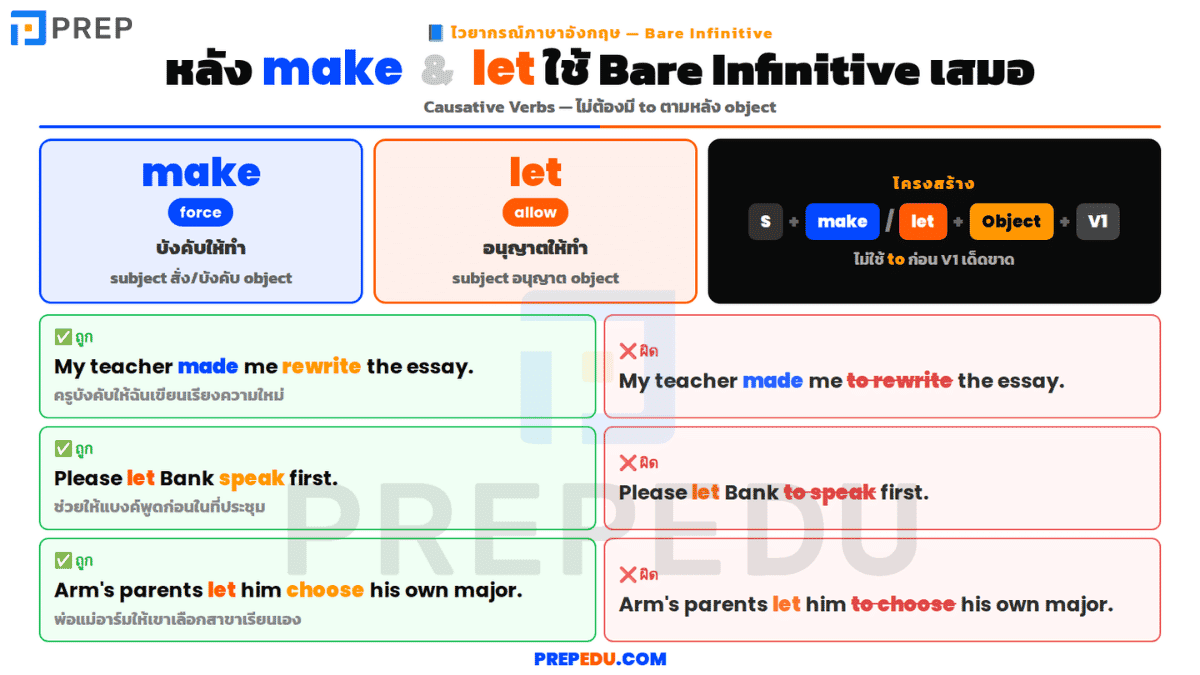
หลัง make และ let ตามด้วย object แล้วใช้ bare infinitive เสมอ โดย make หมายถึงการบังคับ (force) ส่วน let หมายถึงการอนุญาต (allow) เหตุผลที่ไม่ต้องใช้ to เพราะ make และ let แสดง causative force โดยตรงอยู่แล้ว subject กระทำให้ object ทำสิ่งนั้น โครงสร้างมี grammatical completeness ในตัวเองโดยไม่ต้องอาศัย to เป็นตัวเชื่อมจุดประสงค์
โครงสร้าง: S + make/let + Object + bare infinitive
ตัวอย่าง ✅❌:
-
✅ My teacher made me rewrite the essay three times. / ❌ My teacher made me to rewrite the essay three times.
-
✅ Please let Bank speak first in the meeting. / ❌ Please let Bank to speak first in the meeting.
-
✅ Arm's parents let him choose his own major. / ❌ Arm's parents let him to choose his own major.
ข้อสับสนที่พบบ่อย make vs have vs help:
-
make + obj + bare infinitive (บังคับ): "She made him apologize."
-
have + obj + bare infinitive (จัดการ/มอบหมาย): "She had him fix the computer."
-
help + obj + bare infinitive หรือ to-infinitive (ใช้ได้ทั้งสอง):
-
"Can you help me carry this?"
-
"Can you help me to carry this?"
-
Passive Note — จุดที่ออกใน ONET บ่อยมาก: เมื่อเปลี่ยน make + bare infinitive เป็น passive ต้องใส่ to กลับเข้าไป
-
Active: "They made Pat wait for an hour." - Passive: "Pat was made to wait for an hour."
ส่วน let ใน passive ไม่นิยมใช้ "was let to" ภาษาอังกฤษปัจจุบันเปลี่ยนเป็น "was allowed to" แทน
-
Active: "She let him go." - Passive: "He was allowed to go." (ไม่ใช่ He was let to go.)
3. หลัง Perception Verbs (กริยาแสดงการรับรู้)
หลัง perception verbs ใช้ได้ทั้ง bare infinitive และ -ing แต่ความหมายต่างกัน กลุ่ม perception verbs ได้แก่ see, watch, hear, feel, notice, observe โดยใช้ bare infinitive เมื่อรับรู้ action ที่เกิดขึ้นครบทั้งกระบวนการ (complete action) และใช้ -ing เมื่อรับรู้ action ขณะที่กำลังดำเนินอยู่ (ongoing action)
โครงสร้าง: S + perception verb + Object + bare infinitive / -ing
ตารางเปรียบเทียบ nuance:
|
รูปแบบ |
ความหมาย |
ตัวอย่าง |
|
see + obj + bare infinitive |
เห็น action ครบสมบูรณ์ตั้งแต่ต้นจนจบ |
"I saw him run across the road." (เห็นวิ่งครบทั้งช่วง) |
|
see + obj + -ing |
เห็นขณะที่ action กำลังเกิดขึ้น |
"I saw him running across the road." (เห็นช่วงที่กำลังวิ่ง) |
|
hear + obj + bare infinitive |
ได้ยิน action ครบทั้งหมด |
"I heard her sing the whole song." (ฟังครบทั้งเพลง) |
|
hear + obj + -ing |
ได้ยินขณะที่ action กำลังเกิดขึ้น |
"I heard her singing when I walked in." (ได้ยินตอนเดินเข้าไป) |
|
feel + obj + bare infinitive |
รู้สึกถึง action ครบ |
"She felt the floor shake." (รู้สึกครบทั้งการสั่น) |
Passive Note: เช่นเดียวกับ make เมื่อเปลี่ยน perception verb + bare infinitive เป็น passive ต้องใส่ to กลับเข้าไป
-
Active: "Bank saw Ploy enter the building." - Passive: "Ploy was seen to enter the building."
-
Active: "We heard them argue in the next room." - Passive: "They were heard to argue in the next room."
4. หลัง Had Better, Would Rather, Rather Than
สำนวน had better, would rather และ rather than ทุกตัวตามด้วย bare infinitive ไม่ใส่ to เด็ดขาด นี่เป็นกฎ fixed expression ที่ยึดถือมาตั้งแต่ Modern English ตอนต้น ห้ามจำเป็น "had better to" หรือ "would rather to" เพราะผิดทั้งคู่
โครงสร้าง:
-
had better + bare infinitive - แนะนำอย่างหนักแน่น (ควรทำมาก ๆ)
-
would rather + bare infinitive - ชอบ/ต้องการมากกว่า
-
rather than + bare infinitive - แทนที่จะ
ตัวอย่าง ✅❌:
-
✅ You had better study tonight before the exam. / ❌ You had better to study tonight before the exam.
-
✅ Nong would rather stay home than go to the party. / ❌ Nong would rather to stay home than go to the party.
-
✅ Pat called rather than send an email. / ❌ Pat called rather than to send an email.
Negation:
-
had better not + bare infinitive: "You had better not be late for the interview."
-
would rather not + bare infinitive: "Arm would rather not discuss this topic now."
จุดที่นักเรียนไทยพลาดบ่อยคือ การเติม to หลัง had better not หรือ would rather not เช่น "I would rather not to go." ซึ่งผิด ที่ถูกคือ "I would rather not go."
5. หลัง Conjunctions (and, or, but, except, than)
เมื่อ conjunction เชื่อม infinitive สองตัว infinitive ตัวที่สองมักละ to ออก นี่คือกฎ economy ของภาษา เมื่อบริบทชัดแล้วว่ารูปแรกใช้ to-infinitive รูปที่สองหลัง and, or, but ไม่จำเป็นต้องซ้ำ to อีก
ตัวอย่าง:
-
"Ploy likes to sing and dance on weekends." (= to sing and to dance - ละ to ใน dance)
-
"You can either stay or leave." (ทั้งสองตัวเป็น bare infinitive เพราะอยู่หลัง modal verb can)
-
"Nong would rather eat at home than go to a restaurant." (than เชื่อม bare infinitives หลัง would rather)
กรณี except และ but (= except):
-
"Pat did nothing but complain all day." (but = except - bare infinitive หลัง do/did + nothing)
-
"Bank had no choice but to accept the offer." (เมื่อนำหน้าด้วย no choice/nothing else - ใช้ to-infinitive)
ความต่างของสองประโยคนี้คือ ประโยคแรกใช้ "did nothing but" ซึ่ง pattern นี้ใช้ bare infinitive ส่วนประโยคที่สองใช้ "no choice but" ซึ่ง pattern นี้ใช้ to-infinitive จุดเล็กแต่ต่างกันมาก และเป็นกับดักในข้อสอบ error identification
IV. Passive Voice กับ Infinitive without to
เมื่อเปลี่ยนประโยคที่มี bare infinitive เป็น passive voice กริยาหลักต้องเปลี่ยนเป็น to-infinitive เสมอ กฎนี้ใช้ครอบคลุมทุกกรณีที่เกี่ยวกับ causative verbs (make, let) และ perception verbs (see, hear, feel, watch) ซึ่งเป็นจุดที่บทความ Thai SERP จำนวนมากข้ามไป แต่ออกในการทดสอบประจำในระดับ ม.ปลายและ TOEIC
ทำไมต้องใส่ to กลับ? เพราะในรูป passive การเชื่อมระหว่างประธาน (ที่เคยเป็น object) กับกริยาในรูป infinitive ต้องอาศัย to เป็น marker เพื่อระบุความสัมพันธ์ทางไวยากรณ์ใหม่
ตารางการเปลี่ยน Active - Passive ครบ 5 คู่:
|
รูป Active (bare infinitive) |
รูป Passive (to-infinitive) |
|
They made Pat wait outside. |
Pat was made to wait outside. |
|
Arm saw Ploy cross the street. |
Ploy was seen to cross the street. |
|
We heard them argue loudly. |
They were heard to argue loudly. |
|
She let Nong leave early. |
Nong was allowed to leave early. (ใช้ allow แทน let ใน passive) |
|
He felt the ground shake. |
The ground was felt to shake. |
V. แบบฝึกหัด Infinitive without to 15 ข้อ พร้อมเฉลยและคำอธิบาย
แบบฝึกหัดต่อไปนี้แบ่งเป็น 3 ชุด รวม 15 ข้อ ครอบคลุม 5 กรณีหลักและ passive transformation ทำให้เสร็จก่อนแล้วค่อยดูเฉลยด้านล่าง
1. แบบฝึกหัดที่ 1: Fill in the blank (5 ข้อ) - เติมกริยาในรูปที่ถูกต้อง
1. The teacher made Nong ______ (clean) the whiteboard.
2. You had better ______ (start) revising for ONET now.
3. Ploy heard someone ______ (knock) on the door at midnight.
4. Pat would rather ______ (stay) home than join the trip.
5. Can you ______ (help) Arm with this math problem?
เฉลยพร้อมคำอธิบาย:
[prep_collapse_expand open_text="View more" close_text="Show less"]
1. clean
กฎที่ใช้: make + obj + bare infinitive
2. start
กฎที่ใช้: had better + bare infinitive
3. knock
กฎที่ใช้: perception verb hear + bare infinitive (ได้ยินครบ action)
4. stay
กฎที่ใช้: would rather + bare infinitive
5. help
กฎที่ใช้: help + bare infinitive (หรือ to help ก็ถูกต้องเช่นกัน)
[/prep_collapse_expand]
2. แบบฝึกหัดที่ 2: Multiple Choice (5 ข้อ) - เลือกคำตอบที่ถูก
1. The principal didn't let her ______ the meeting early.
A. to attend
B. attend
C. attending
2. My boss made me ______ the report twice.
A. to rewrite
B. rewrite
C. rewrote
3. She was seen ______ the building in a hurry.
A. leave
B. leaving
C. to leave
4. Bank would rather ______ coffee than tea in the morning.
A. drink
B. to drink
C. drinking
5. Pat did nothing but ______ all afternoon.
A. to complain
B. complain
C. complained
เฉลยพร้อมคำอธิบาย:
[prep_collapse_expand open_text="View more" close_text="Show less"]
1. B
2. B
3. C
4. A
5. B
[/prep_collapse_expand]
3. แบบฝึกหัดที่ 3: Error Correction (5 ข้อ) - หาข้อผิดและแก้ไข
1. You must to finish your homework before playing games.
2. The librarian let him to borrow three books at once.
3. They were made leave the building during the fire drill.
4. Arm saw Ploy to cross the street without looking.
5. Would you rather to have tea or coffee with breakfast?
[prep_collapse_expand open_text="View more" close_text="Show less"]
1. must finish
2. let him borrow
3. were made to leave
5. saw him cross
5. would rather have
[/prep_collapse_expand]
VI. คำถามที่พบบ่อยเกี่ยวกับ Infinitive without to (FAQ)
1. Help ตามด้วย to หรือ bare infinitive?
ใช้ได้ทั้งสองรูป - "help me carry" และ "help me to carry" ถูกทั้งคู่ในภาษาอังกฤษมาตรฐาน British English นิยมใส่ to เล็กน้อย ส่วน American English นิยม bare infinitive มากกว่า ในข้อสอบ TOEIC หากเจอตัวเลือกทั้งสองรูป โดยทั่วไปจะถือว่าถูกทั้งคู่
2. Dare ใช้เป็น modal verb ได้ไหม?
Dare เป็น semi-modal verb คือใช้ได้สองแบบ:
-
เป็น modal verb - ตามด้วย bare infinitive: "Dare she do it alone?"
-
เป็น ordinary verb - ตามด้วย to-infinitive: "She doesn't dare to do it alone."
ในภาษาเขียนทางการ นิยมใช้แบบ ordinary verb (to-infinitive) มากกว่า ส่วนรูป modal มักเจอใน fixed expressions เช่น "How dare you speak to me like that!"
3. Bare infinitive กับ gerund (-ing) ต่างกันอย่างไร?
Bare infinitive คือ V1 เปล่า ใช้ในบริบทเฉพาะ (หลัง modal, make, let, perception verbs) ส่วน gerund คือ verb + -ing ที่ทำหน้าที่เป็น noun เช่น "Swimming is good exercise." หรือเป็น object ของกริยา/preposition เช่น "She enjoys reading." ทั้งสองรูปทำหน้าที่ทางไวยากรณ์ต่างกันโดยสิ้นเชิง - อ่านรายละเอียดเพิ่มเติมที่
4. Bare infinitive กับ base form คือสิ่งเดียวกันไหม?
เกือบใช่แต่ไม่ทุกกรณี - base form คือกริยารูปพื้นฐาน V1 ใช้ทั้งใน imperative ("Sit down."), หลัง modal verbs ("must go"), และในรูปประธานพหูพจน์ ("They work hard.") ส่วน bare infinitive เป็นชื่อเรียกเฉพาะเมื่อ V1 ปรากฏหลังกริยา/โครงสร้างที่ถูกกำหนด เช่น modal verbs, causative verbs, perception verbs ดังนั้น bare infinitive เป็น subset หนึ่งของ base form ในบริบทไวยากรณ์เฉพาะ
Infinitive without to คือ bare infinitive ที่ใช้ใน 4 บริบทหลัก ได้แก่ Modal Verbs, Perception Verbs, Make/Let และ Had better/Would rather การจำเป็นกลุ่มช่วยให้ใช้ได้แม่นยำกว่าการท่องกฎทีละข้อ และเมื่อเข้าใจความต่างระหว่าง infinitive with to กับ infinitive without to แล้ว การเขียนและพูดภาษาอังกฤษจะคล่องและถูกต้องขึ้นอย่างเห็นได้ชัด
ถ้าต้องการพัฒนา Grammar เพื่อ เตรียมสอบ IELTS อย่างเป็นระบบ PREP Edu มีคอร์สเรียน IELTS ออนไลน์ที่ครอบคลุมทั้ง Grammar, Writing, Speaking และ Listening ตั้งแต่ระดับ Foundation จนถึง Advanced เนื้อหาออกแบบให้เรียนรู้ผ่าน context จริง ไม่ใช่แค่ท่องกฎ นอกจากนี้ยังมี Virtual Writing Room และ Virtual Speaking Room ที่ให้ Feedback แบบ AI real-time ช่วยให้พัฒนาได้เร็วขึ้น ดูรายละเอียดได้ที่ PREP

สวัสดีค่ะ ฉันชื่อมุก ปัจจุบันดูแลด้านเนื้อหาผลิตภัณฑ์ของ Prep Education ค่ะ
ด้วยประสบการณ์มากกว่า 5 ปีในการเรียน IELTS ออนไลน์ด้วยตนเอง ฉันเข้าใจดีถึงความท้าทายที่ผู้เรียนต้องเผชิญ แล้วก็รู้ว่าอะไรที่มันเวิร์ก
มุกอยากเอาประสบการณ์ตรงนี้มาช่วยแชร์ แล้วก็ซัพพอร์ตเพื่อน ๆ ให้ได้คะแนนที่ดีที่สุดค่ะ
ความคิดเห็น
เนื้อหาแบบพรีเมียม
ดูทั้งหมด



แผนการเรียนรู้ส่วนบุคคล


อ่านมากที่สุด




ติดต่อ Prep ผ่านโซเชียล





Address: ตึก C.P. Tower 2 (ฟอร์จูนทาวน์) ชั้น 21 ถนนรัชดาภิเษก แขวงดินแดง เขตดินแดง กรุงเทพฯ 10400
Hotline: +66 25 44 0068
Email: sawatdee@prepedu.com