Causative Verbs คืออะไร? สรุปโครงสร้าง วิธีใช้ และแบบฝึกหัด
เคยสงสัยไหมว่าทำไมฝรั่งพูด "I had my hair cut" ทั้งที่ไม่ได้ตัดผมเอง? นั่นคือการใช้ causative verbs ที่ทำให้ประโยคกระชับและเป็นธรรมชาติ causative verbs คือ กลุ่มคำกริยาที่บอกว่าเราทำให้คนอื่นทำสิ่งใดสิ่งหนึ่งแทน หลักๆ มี 5 ตัวคือ make, have, let, get และ help บทความนี้ Prep สรุปโครงสร้างของทั้ง 5 ตัว พร้อมตารางเปรียบเทียบ ข้อผิดพลาดที่พบบ่อย และ causative verbs exercises พร้อมเฉลย เพื่อให้คุณใช้ได้จริงและมั่นใจในการสอบ
- I. Causative Verbs คืออะไร?
- II. เจาะลึก 5 Causative Verbs: Make, Have, Let, Get, Help
- III. ตารางเปรียบเทียบ Causative Verbs
- IV. Causative Form อื่นๆ และการใช้กับ Tenses
- V. Active Causative กับ Passive Causative
- VI. ข้อผิดพลาดที่พบบ่อยในการใช้ Causative Verbs
- VII. คำถามที่พบบ่อยเกี่ยวกับ Causative Verbs
- VIII. แบบฝึกหัด Causative Verbs
I. Causative Verbs คืออะไร?
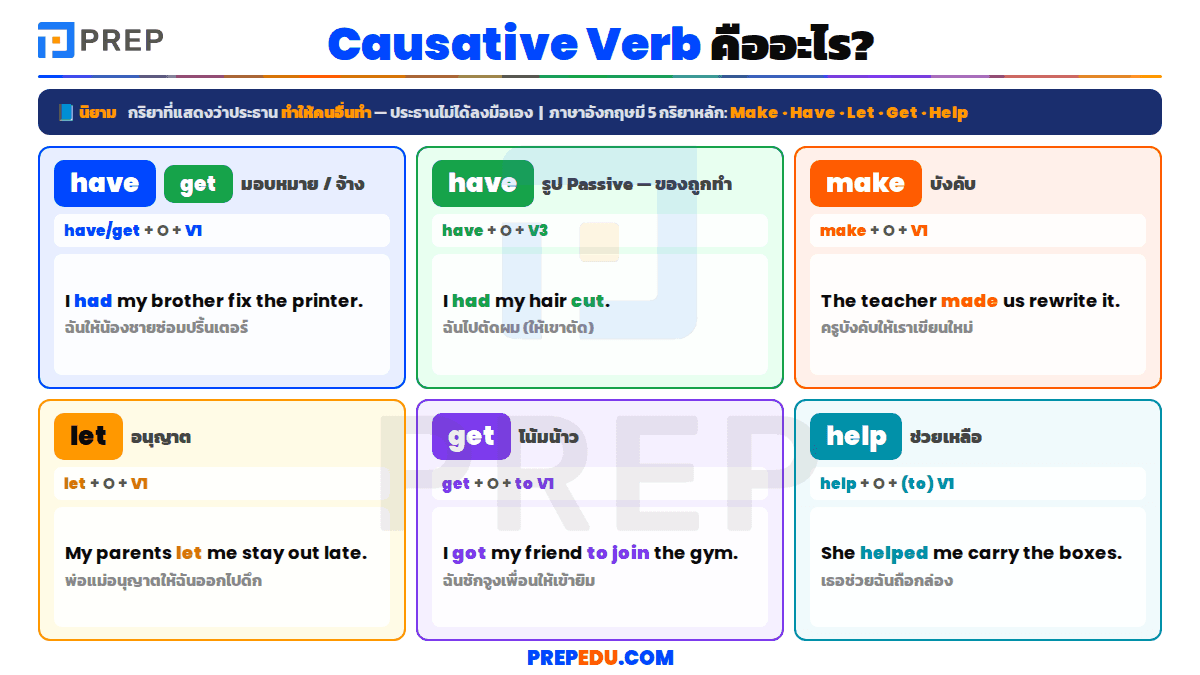
Causative verbs คือ กลุ่มคำกริยาที่แสดงว่าประธานเป็นเหตุให้เกิดการกระทำ โดยไม่ได้ลงมือทำเอง เช่น เมื่อคุณจ้างช่างซ่อมรถ คุณไม่ได้ซ่อมเอง แต่เป็นเหตุให้รถได้รับการซ่อม จึงใช้ causative verb เพื่อสื่อความสัมพันธ์นี้อย่างกระชับ
พูดง่ายๆ causative verbs คือ ตัวช่วยเล่าเหตุการณ์ที่เราไม่ได้ลงมือทำเอง ลองนึกภาพว่าคุณเล่าให้เพื่อนฟังว่า "ฉันไปตัดผมมา" ทั้งที่ช่างเป็นคนตัด ภาษาอังกฤษใช้ "I had my hair cut" เพื่อแสดงบทบาทที่แท้จริงของคุณในสถานการณ์นั้น
II. เจาะลึก 5 Causative Verbs: Make, Have, Let, Get, Help
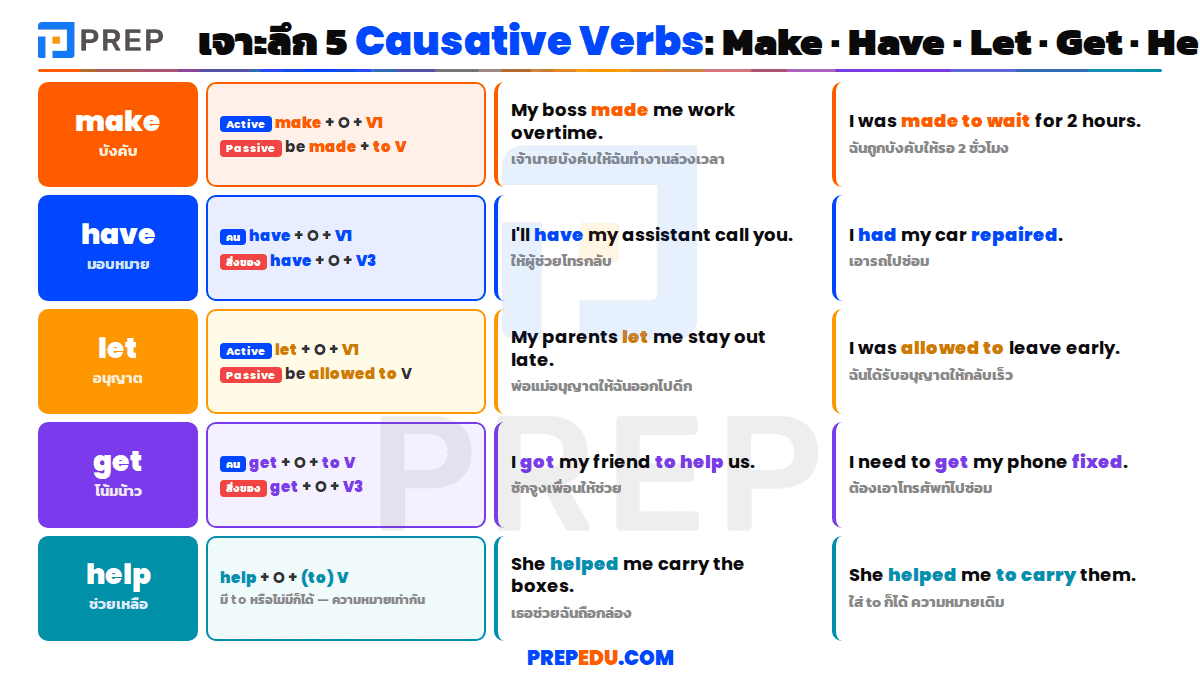
Causative verbs คือ กลุ่มที่มี 5 ตัวหลัก ได้แก่ make, have, let, get และ help ซึ่งสื่อความหมายต่างกันเล็กน้อย make เน้นบังคับ, have เน้นมอบหมาย, let เน้นอนุญาต, get เน้นโน้มน้าว และ help เน้นช่วยเหลือ ต่อไปนี้คือโครงสร้างและตัวอย่างของแต่ละตัว
1. Make (บังคับ / ทำให้เกิดผล)
โครงสร้าง: Make + Object + Verb 1 (ไม่มี to). ใช้แสดงการบังคับหรือทำให้คนอื่นต้องทำ โดยผู้ถูกกระทำอาจไม่เต็มใจ
- The rain made me stay at home. (ฝนทำให้ฉันต้องอยู่บ้าน)
- My boss made me work overtime. (เจ้านายบังคับให้ฉันทำงานล่วงเวลา)
บทความแนะนำอ่านเพิ่มเติม:
2. Have (มอบหมาย / จ้างวาน)
โครงสร้าง Active: Have + Object (คน) + Verb 1. โครงสร้าง Passive: Have + Object (สิ่งของ) + Verb 3. ใช้เมื่อมอบหมายหรือจ้างให้ทำ
- The teacher had the students write an essay. (ครูให้นักเรียนเขียนเรียงความ)
- I had my car repaired yesterday. (ฉันเอารถไปซ่อมเมื่อวาน)
3. Let (อนุญาต / ปล่อยให้)
let เป็นหนึ่งใน causative verbs ที่สื่อการอนุญาตชัดเจนที่สุด โครงสร้างคือ Let + Object + Verb 1 (ไม่มี to) ใช้เมื่ออนุญาตหรือปล่อยให้ผู้อื่นทำสิ่งใดสิ่งหนึ่งอย่างมีอิสระ
- My parents let me stay out until midnight. (พ่อแม่อนุญาตให้ฉันอยู่ข้างนอกจนเที่ยงคืน)
- The teacher let the students leave early. (ครูปล่อยให้นักเรียนกลับก่อน)
บทความแนะนำอ่านเพิ่มเติม:
4. Get (โน้มน้าว / ทำให้สำเร็จ)
สำหรับ get ในกลุ่ม causative verbs มีสองรูปแบบ โครงสร้าง Active: Get + Object (คน) + to + Verb 1 และ Passive: Get + Object (สิ่งของ) + Verb 3 โดยเน้นการโน้มน้าวหรือความพยายามให้เกิดผล
- I finally got my brother to clean his room. (ในที่สุดฉันก็โน้มน้าวให้น้องทำความสะอาดห้องได้)
- I need to get my wallet fixed. (ฉันต้องเอากระเป๋าสตางค์ไปซ่อม)
5. Help (ช่วยเหลือ)
help เป็น causative verb ที่ยืดหยุ่นที่สุด โครงสร้างคือ Help + Object + (to) + Verb 1 ใช้ได้ทั้งแบบมีและไม่มี to โดยความหมายไม่ต่างกันเลย
- She helped me (to) carry the heavy boxes. (เธอช่วยฉันถือกล่องหนักๆ)
- The tutor helped the student (to) solve the problem. (ติวเตอร์ช่วยนักเรียนแก้โจทย์)
III. ตารางเปรียบเทียบ Causative Verbs
ตารางนี้สรุปว่า causative verbs คือ อะไรในแง่ความหมายและโครงสร้าง โดยรวมทั้ง 5 ตัวไว้ในที่เดียว ช่วยให้คุณเปรียบเทียบและเลือกใช้ได้เร็วขึ้น โดยเฉพาะความต่างระหว่างรูป active (คน) และ passive (สิ่งของ)
|
Causative Verb |
ความหมาย |
โครงสร้าง |
ตัวอย่าง |
|
Make |
บังคับ / ทำให้ |
Make + O + V1 |
She made him apologize. |
|
Have (active) |
มอบหมาย |
Have + O + V1 |
I had my sister wash the dishes. |
|
Have (passive) |
จ้างวาน (สิ่งของ) |
Have + O + V3 |
I had my shoes repaired. |
|
Let |
อนุญาต |
Let + O + V1 |
My mom let me use her car. |
|
Get (active) |
โน้มน้าว |
Get + O + to + V1 |
I got my friend to help me. |
|
Get (passive) |
ทำให้สำเร็จ (สิ่งของ) |
Get + O + V3 |
I got my watch fixed. |
|
Help |
ช่วยเหลือ |
Help + O + (to) + V1 |
She helped me (to) study. |
ข้อสังเกตสำคัญในการเลือกใช้:
- Make เน้นบังคับ ผู้ถูกกระทำอาจไม่เต็มใจ
- Have เน้นมอบหมายด้วยอำนาจหรือการจ้างวาน
- Let เน้นอนุญาตหรือให้อิสระ
- Get เน้นความพยายามในการโน้มน้าว
- Help เน้นการช่วยให้อีกฝ่ายทำได้ง่ายขึ้น
IV. Causative Form อื่นๆ และการใช้กับ Tenses
นอกจาก 5 ตัวหลักแล้ว causative verbs คือ ระบบที่ยืดหยุ่น ยังมี causative form อื่นและการปรับตาม tense ที่ควรรู้ การเข้าใจส่วนนี้ช่วยให้คุณใช้ causative verbs ได้ยืดหยุ่นขึ้นในบริบทจริงและในการสอบ
1. Causative Form อื่นๆ ที่น่าสนใจ
นอกจาก 5 ตัวหลักแล้ว ยังมี causative form อื่นที่ทำหน้าที่คล้ายกัน แต่โครงสร้างการใช้อาจต่างออกไปเล็กน้อย จึงควรจำแยกเป็นรายตัว
- Force: He forced me to sign the contract. (เขาบังคับให้ฉันเซ็นสัญญา)
- Allow: She allowed the children to play outside. (เธอยอมให้เด็กเล่นข้างนอก)
- Permit: The rules don't permit us to smoke here. (กฎไม่อนุญาตให้สูบบุหรี่ที่นี่)
2. การใช้ Causative Verbs กับ Tenses ต่างๆ
ปรับที่ตัว causative verb หลักตาม tense ส่วนกริยาที่ตามมายังคงรูปเดิม (V1 หรือ V3 ตามโครงสร้าง)
- Past: I made him study last night.
- Present: I make him study every day.
- Future: I will make him study tomorrow.
V. Active Causative กับ Passive Causative
สรุปได้ว่า causative verbs คือ เครื่องมือเลือกจุดเน้น โดย active เน้น 'คน' ที่ทำให้เรา ส่วน passive เน้น 'สิ่งของ' ที่ถูกกระทำ ตารางด้านล่างเปรียบเทียบโครงสร้างและตัวอย่างของทั้งสองแบบให้เห็นชัด

|
ประเภท |
โครงสร้าง |
จุดเน้น |
ตัวอย่าง |
|
Active Causative |
S + have/get + คน + V1 |
เน้นคนที่ทำให้เรา |
I had my brother wash my car. |
|
Active (make) |
make + คน + V1 |
บังคับ |
She made her kids clean their rooms. |
|
Active (let) |
let + คน + V1 |
อนุญาต |
My parents let me stay out late. |
|
Passive Causative |
S + have/get + สิ่งของ + V3 |
เน้นสิ่งที่ถูกกระทำ |
I had my car washed. |
|
Passive (get) |
S + get + สิ่งของ + V3 |
เน้นความพยายาม |
She got her hair cut. |
-
Active Causative ใช้เมื่อต้องการเน้นว่าใครเป็นคนทำงานนั้นให้เรา
-
Passive Causative ใช้เมื่อเน้นสิ่งของที่ถูกกระทำ ไม่จำเป็นต้องระบุผู้ทำ
-
have กับ get ในรูป passive ใช้แทนกันได้ แต่ get มักสื่อถึงความพยายามมากกว่า
VI. ข้อผิดพลาดที่พบบ่อยในการใช้ Causative Verbs
การรู้ว่า causative verbs คือ อะไรยังไม่พอ เพราะข้อผิดพลาดที่พบบ่อยที่สุดเกิดจากการใส่หรือลืม to และการเลือกช่องของกริยาผิด การจำจุดเหล่านี้ช่วยให้คุณใช้ causative verbs ได้ถูกต้องและหลีกเลี่ยงจุดที่มักถูกหักคะแนนในการสอบ
- เติม to หลัง make/let/have: ผิด My boss made me to work → ถูก made me work (V1 ไม่มี to)
- ลืม to หลัง get: ถูกต้องคือ get + คน + to + V1 เช่น I got him to help
- ใช้ V1 แทน V3 ในรูป passive: ผิด I had my car repair → ถูก repaired (have/get + สิ่งของ + V3)
- สับสนกับ verbs of perception: see/hear/watch (I saw him leave) ไม่ใช่ causative เพราะไม่ได้ทำให้เกิดการกระทำ
VII. คำถามที่พบบ่อยเกี่ยวกับ Causative Verbs
รวมคำถามยอดฮิตว่า causative verbs คือ อะไรและใช้อย่างไร พร้อมคำตอบสั้น กระชับ นำไปใช้ได้ทันทีทั้งในการสื่อสารและการสอบ
1. นอกจาก 5 ตัวหลัก มี verb อื่นเป็น causative ได้อีกไหม?
นอกจาก 5 causative verbs คือ make, have, let, get, help แล้ว ยังมีคำอื่น เช่น cause, enable, require, persuade, encourage, forbid แต่โครงสร้างอาจต่างออกไป ตัวอย่างเช่น He persuaded me to join the team. (เขาชักชวนให้ฉันเข้าร่วมทีม)
2. "Make someone do" กับ "Get someone to do" ต่างกันอย่างไร?
ต่างกันที่ความเต็มใจ make เน้นบังคับหรือไม่มีทางเลือก ส่วน get เน้นการโน้มน้าว ซึ่งผู้ถูกกระทำมักเต็มใจมากกว่า และอย่าลืมว่า get ต้องมี to ส่วน make ไม่มี
3. Verb กลุ่มไหนที่มักสับสนกับ Causative Verbs?
กลุ่ม verbs of perception เช่น see, hear, watch มีโครงสร้างคล้ายกัน (I saw him leave) แต่สื่อการรับรู้การกระทำ ไม่ใช่การทำให้เกิดการกระทำ จึงไม่ใช่ causative
4. "Help + to + Verb" กับ "Help + Verb" ต่างกันไหม?
ไม่ต่างกันในความหมาย ทั้งสองแบบถูกต้องและใช้แทนกันได้ เช่น She helped me to write และ She helped me write มีความหมายเหมือนกันคือช่วยเขียนจดหมาย
5. โครงสร้าง "Have + Object + V.ing" เป็น Causative ไหม?
เป็นรูปพิเศษของ causative have ที่ใช้แสดงความไม่พอใจหรือไม่อนุญาต เช่น I won't have you speaking to me like that! แปลว่าจะไม่ยอมให้พูดแบบนั้น
VIII. แบบฝึกหัด Causative Verbs
ลองทำ causative verbs exercises ต่อไปนี้เพื่อทบทวนว่า causative verbs คือ อะไรและใช้อย่างไร มีทั้งแบบปรนัยและเติมคำ พร้อมเฉลยด้านล่าง แนะนำให้ลองทำเองก่อนแล้วค่อยตรวจคำตอบ
ส่วนที่ 1: แบบฝึกหัดปรนัย (Multiple Choice)
1. The teacher ______ us ______ a 1,000-word essay.
A. made / write
B. made / to write
C. had / to write
D. let / to write
2. My mother ______ me ______ out late on weekends.
A. makes / stay
B. gets / staying
C. lets / stay
D. helps / to stay
3. I need to ______ my phone ______.
A. have / fixed
B. make / fix
C. get / fixing
D. let / to fix
ส่วนที่ 2: เติมคำในช่องว่าง (Sentence Completion)
-
I ______ my friend ______ me with my homework. (help)
-
She ______ her son ______ his room before going out. (clean)
-
The manager ______ the report ______ by Friday. (complete)
-
They ______ their house ______ last month. (paint)
เฉลยปรนัย:
ส่วนที่ 1:
1. A) made / write (make + V1 ไม่มี to)
2. C) lets / stay (let + V1 ไม่มี to)
3. A) have / fixed (have + สิ่งของ + V3)
ส่วนที่ 2:
1. helped my friend (to) help → got/had my friend to help (get/have + คน + to + V1)
2. made her son clean (make + คน + V1)
3. had/got the report completed (have/get + สิ่งของ + V3)
4. had/got their house painted (have/get + สิ่งของ + V3)
Causative verbs สรุป ได้ว่าคือกลุ่มคำกริยาที่ทำให้คนอื่นทำการกระทำแทน โดย 5 ตัวหลักของ causative verbs คือ make, have, let, get, help เพียงจำว่า make/let/have ตามด้วย V1, get ต้องมี to และรูป passive ลงท้ายด้วย V3 คุณก็ใช้ได้อย่างมั่นใจ เพราะ causative verbs คือ ตัวช่วยให้ประโยคเป็นธรรมชาติ เริ่มฝึกจากแบบฝึกหัดด้านบน แล้วพัฒนาไวยากรณ์ของคุณให้ไกลกว่าเดิมไปกับบทเรียนบน Prep วันนี้
การเรียน IELTS ออนไลน์ไม่เคยง่ายขนาดนี้มาก่อนกับ PREP English - แพลตฟอร์มการเรียนและฝึกสอบอัจฉริยะด้วย AI ด้วยเทคโนโลยี AI พิเศษจาก PREP คุณสามารถเรียนออนไลน์ที่บ้านได้อย่างมีประสิทธิภาพ พร้อมผ่านการฝึกอบรมที่เหมาะสมในการเรียน IELTS อย่างเต็มที่ นอกจากนี้ นักเรียนยังได้รับการช่วยเหลือจาก Teacher Bee AI ผู้ช่วยเสมือนที่จะช่วยตอบคำถามและร่วมเดินทางไปกับคุณตลอดกระบวนการเรียนรู้แบบตัวต่อตัว เรียน IELTS ที่บ้านด้วยโปรแกรมการฝึกสอบออนไลน์คุณภาพสูง

สวัสดีค่ะ ฉันชื่อมุก ปัจจุบันดูแลด้านเนื้อหาผลิตภัณฑ์ของ Prep Education ค่ะ
ด้วยประสบการณ์มากกว่า 5 ปีในการเรียน IELTS ออนไลน์ด้วยตนเอง ฉันเข้าใจดีถึงความท้าทายที่ผู้เรียนต้องเผชิญ แล้วก็รู้ว่าอะไรที่มันเวิร์ก
มุกอยากเอาประสบการณ์ตรงนี้มาช่วยแชร์ แล้วก็ซัพพอร์ตเพื่อน ๆ ให้ได้คะแนนที่ดีที่สุดค่ะ
ความคิดเห็น
เนื้อหาแบบพรีเมียม
ดูทั้งหมด


แผนการเรียนรู้ส่วนบุคคล


อ่านมากที่สุด




ติดต่อ Prep ผ่านโซเชียล





Address: ตึก C.P. Tower 2 (ฟอร์จูนทาวน์) ชั้น 21 ถนนรัชดาภิเษก แขวงดินแดง เขตดินแดง กรุงเทพฯ 10400
Hotline: +66 25 44 0068
Email: sawatdee@prepedu.com