คําศัพท์ครอบครัว ภาษาอังกฤษ 110+ คำ จาก Immediate Family ถึง In-law พร้อม IPA และ Family Tree
คุณเคยพูด "I have three brother" แทน "brothers" ในห้องสอบ IELTS Speaking Part 1 ไหม? หรือสับสนว่า "หลาน" คือ grandchild หรือ nephew/niece? เพราะ ครอบครัวอังกฤษ มีระบบเครือญาติต่างจากไทย → ไม่แยก ลุง/อา/น้า, ไม่แยก ปู่/ตา ทำให้การเรียน คําศัพท์ครอบครัว ภาษาอังกฤษ ของคนไทยต้อง re-frame mindset ใหม่
บทความนี้ รวม คําศัพท์ครอบครัว ภาษาอังกฤษ หรือ family vocabulary 110+ คำ ครบ 7 หมวด พร้อม IPA + Family Tree Diagram + Sample IELTS Speaking Part 2 Band 8 ใช้ตอบหัวข้อ "Describe a family member" ได้ทันที พร้อมเทคนิคหลีกเลี่ยง เรียน คําศัพท์ครอบครัว ภาษาอังกฤษ อย่างเป็นระบบ
Key Takeaways
ก่อนเข้าสู่เนื้อหา สรุปประเด็นสำคัญที่คุณจะได้เรียนรู้:
- คําศัพท์ครอบครัว ภาษาอังกฤษ แบ่งเป็น 4 ระดับ → Immediate Family (พ่อแม่พี่น้อง) / Extended Family (เครือญาติ) / In-law (จากการแต่งงาน) / Step-Adoptive-Foster-God (รูปแบบอื่น)
- "-in-law" suffix มาจาก "by law" (ตามกฎหมาย) → ใช้กับ ญาติ ภาษาอังกฤษ จากการแต่งงาน เช่น mother-in-law, brother-in-law
- Family Verbs สำคัญ → Take after (เหมือนหน้าตา/นิสัย), Bring up = Raise (เลี้ยงดู), Look after (ดูแล), Tie the knot (แต่งงาน)
- IELTS Speaking Part 1 หัวข้อ Family พบในข้อสอบกว่า 80% ของ test slots → ฝึก 5 คำถามมาตรฐานล่วงหน้า
- เรียน คําศัพท์ครอบครัว ภาษาอังกฤษ ครบทุกหมวดช่วยพิชิต IELTS Speaking Band 7+ และตอบ my family ครอบครัวของฉัน ได้ลื่นไหล คําศัพท์ครอบครัว ภาษาอังกฤษ เป็น foundation สำคัญสำหรับทุก IELTS section
I. โครงสร้าง สมาชิกในครอบครัว ภาษาอังกฤษ และระบบเครือญาติ
ก่อนจำ คําศัพท์ครอบครัว ภาษาอังกฤษ ต้องเข้าใจว่า ครอบครัวอังกฤษ ใช้ระบบ kinship neutral → ไม่แยก paternal vs maternal ต่างจากไทยที่แยก ลุง/อา/น้า ตาม Cambridge Dictionary แบ่ง family เป็น 4 ระดับ → Nuclear (พ่อแม่ลูก), Extended (เครือญาติ), In-law (จากการแต่งงาน), Blended (ผสม) การจัดกลุ่ม คําศัพท์ครอบครัว ภาษาอังกฤษ แบบนี้ช่วยให้จำง่ายขึ้น
1. Family Tree: Visualizing สมาชิกในครอบครัว ภาษาอังกฤษ
Family Tree เป็นภาพสรุปครอบครัวแบบ visual → ช่วยจำ คําศัพท์ครอบครัว ภาษาอังกฤษ ง่ายขึ้นเพราะเห็น relationship แบบ spatial มี 4 generation มาตรฐาน → Great-grandparents → Grandparents → Parents → Children
|
ระดับ Generation |
Term ภาษาอังกฤษ |
คำอ่าน |
ความหมายไทย |
|
Gen 1 |
Great-grandparents |
เกรท-แกรนด์-เพ-เริ่นทส์ |
ทวด |
|
Gen 2 |
Grandparents |
แกรนด์-เพ-เริ่นทส์ |
ปู่ย่าตายาย |
|
Gen 3 |
Parents |
เพ-เริ่นทส์ |
พ่อแม่ |
|
Gen 4 |
Children |
ชิล-เดริน |
ลูก |
|
Gen 5 |
Grandchildren |
แกรนด์-ชิล-เดริน |
หลาน |
2. ความแตกต่างระบบเครือญาติ: ไทย vs English
ในการใช้ ญาติ ภาษาอังกฤษ Preppies ต้องเข้าใจว่า English merge หลาย Thai terms เข้าด้วยกัน เพราะวัฒนธรรม Western เน้น nuclear family ไม่ได้แยกระดับลำดับชาติพันธุ์เหมือนไทย ตาม Oxford English Dictionary
|
Thai term |
English term |
Note |
|
ปู่ (พ่อของพ่อ) |
Grandfather (paternal) |
English ไม่แยกโดย default → ระบุ "paternal grandfather" ถ้าจำเป็น |
|
ตา (พ่อของแม่) |
Grandfather (maternal) |
เหมือนกัน |
|
ลุง/อา (ฝ่ายพ่อ) |
Uncle |
English merge ลุง+อา |
|
น้า (ฝ่ายแม่) |
Uncle |
เหมือนกัน → ใช้ "Uncle on my mother's side" ถ้าจำเป็น |
|
หลาน (ลูกของลูก) |
Grandchild |
กรณีหลานสายตรง |
|
หลาน (ลูกของพี่/น้อง) |
Nephew/Niece |
กรณีหลานข้างเคียง → English แยกอย่างนี้ |
II. คําศัพท์ครอบครัว ภาษาอังกฤษ ครบ 4 หมวด
หมวด คําศัพท์ครอบครัว ภาษาอังกฤษ หลักที่ใช้บ่อยที่สุดใน IELTS Speaking และชีวิตประจำวัน แบ่งเป็น 4 ระดับ → Immediate (15), Extended (18), In-law (10), Step/Adoptive/Foster/God (18) ทุกคำมี IPA + ประโยคตัวอย่าง คําศัพท์ครอบครัว ภาษาอังกฤษ ทุกหมวดควรท่องให้ครบ
1. ครอบครัวใกล้ชิด Immediate Family
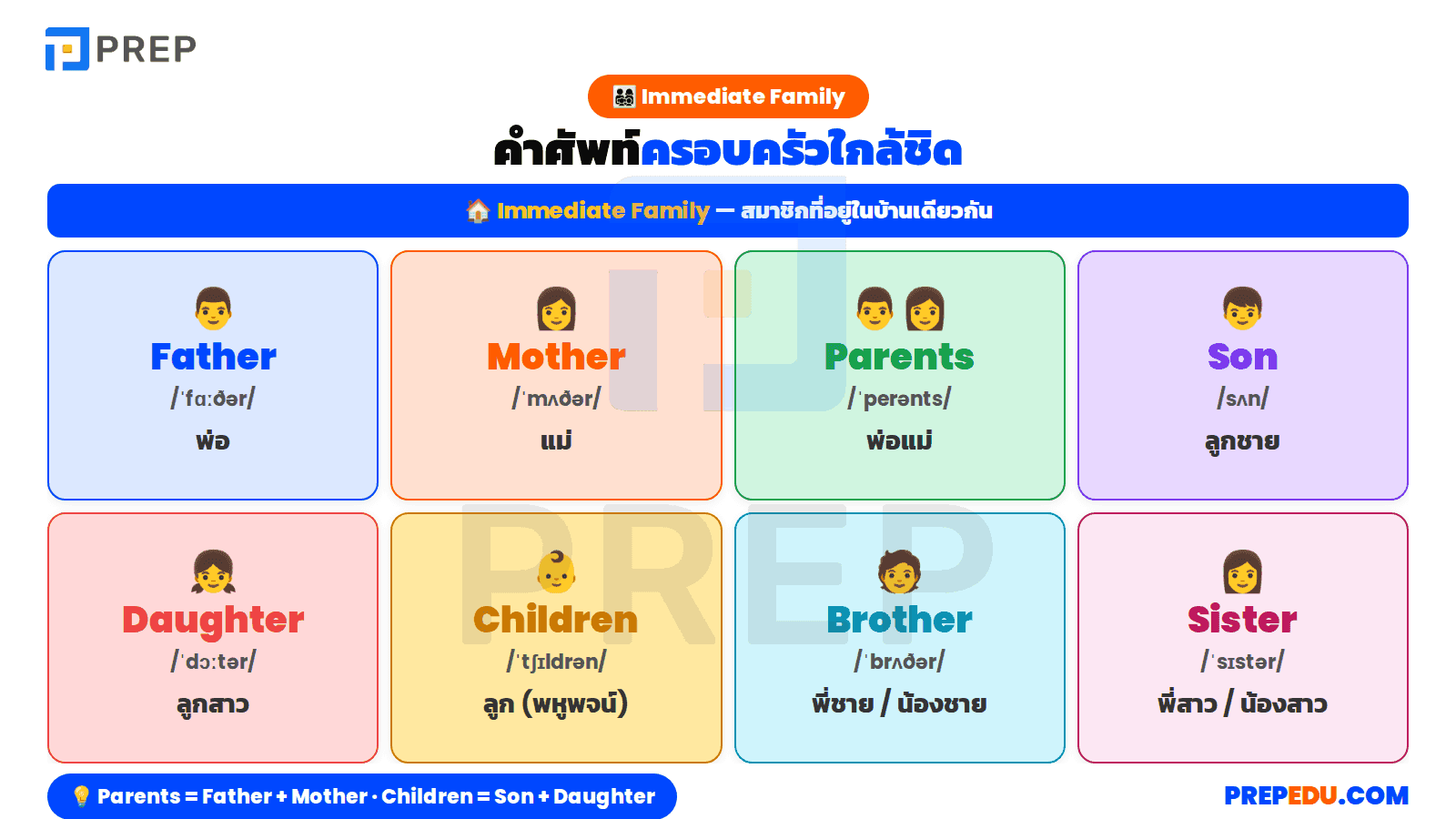
Immediate Family คือ สมาชิกในครอบครัว ภาษาอังกฤษ ระดับใกล้ที่สุด → สายเลือดตรงและคู่สมรส มี 15 คำหลักของ คําศัพท์ครอบครัว ภาษาอังกฤษ ที่ Preppies ต้องท่องให้คล่อง เพิ่ม twin, only child, half-brother
|
คำศัพท์ |
IPA |
ความหมาย |
ตัวอย่างประโยค |
|
Father |
/ˈfɑːðər/ |
พ่อ |
My father works as an engineer. (พ่อของฉันทำงานเป็นวิศวกร) |
|
Mother |
/ˈmʌðər/ |
แม่ |
My mother loves cooking Thai food. (แม่ของฉันชอบทำอาหารไทย) |
|
Parents |
/ˈperənts/ |
พ่อแม่ |
My parents have been married for 30 years. (พ่อแม่ของฉันแต่งงานกัน 30 ปี) |
|
Son |
/sʌn/ |
ลูกชาย |
Their son is studying abroad. (ลูกชายเรียนต่างประเทศ) |
|
Daughter |
/ˈdɔːtər/ |
ลูกสาว |
My daughter loves playing piano. (ลูกสาวชอบเล่นเปียโน) |
|
Children |
/ˈtʃɪldrən/ |
ลูก (พหูพจน์) |
They have three children. (พวกเขามีลูกสามคน) |
|
Brother |
/ˈbrʌðər/ |
พี่ชาย/น้องชาย |
My brother is two years older than me. (พี่ชายอายุมากกว่าฉัน 2 ปี) |
|
Sister |
/ˈsɪstər/ |
พี่สาว/น้องสาว |
My sister works as a doctor. (พี่สาวเป็นหมอ) |
|
Sibling |
/ˈsɪblɪŋ/ |
พี่น้อง (gender-neutral) |
I have three siblings. (ฉันมีพี่น้องสามคน) → FIX keyword leak |
|
Husband |
/ˈhʌzbənd/ |
สามี |
Her husband is very supportive. (สามีของเธอช่วยเหลือมาก) |
|
Wife |
/waɪf/ |
ภรรยา |
John's wife is Thai. (ภรรยาของจอห์นเป็นคนไทย) |
|
Spouse |
/spaʊs/ |
คู่สมรส (formal/legal) |
Your spouse is welcome to join. (คู่สมรสของคุณมาร่วมได้) |
|
Twin |
/twɪn/ |
ฝาแฝด |
My twin sister and I share everything. (ฝาแฝดของฉันและฉันแบ่งปันทุกอย่าง) |
|
Only child |
/ˈoʊnli tʃaɪld/ |
ลูกคนเดียว |
Being an only child can feel lonely. (เป็นลูกคนเดียวอาจรู้สึกเหงา) |
|
Half-brother |
/hɑːf ˈbrʌðər/ |
พี่/น้องชายต่างพ่อหรือแม่ |
My half-brother lives with his mother. (พี่ชายต่างแม่ของฉันอยู่กับแม่) |
Note: Sibling เป็นคำที่ใช้เรียกรวมๆ ว่า "พี่น้อง" โดยไม่ระบุเพศ ใช้แทน Brother/Sister ในบริบทที่ไม่จำเป็นต้องระบุว่าเป็นชายหรือหญิง → IELTS Examiners ชอบเมื่อ Preppies ใช้ "siblings" แทน "brothers and sisters"
2. เครือญาติ Extended Family
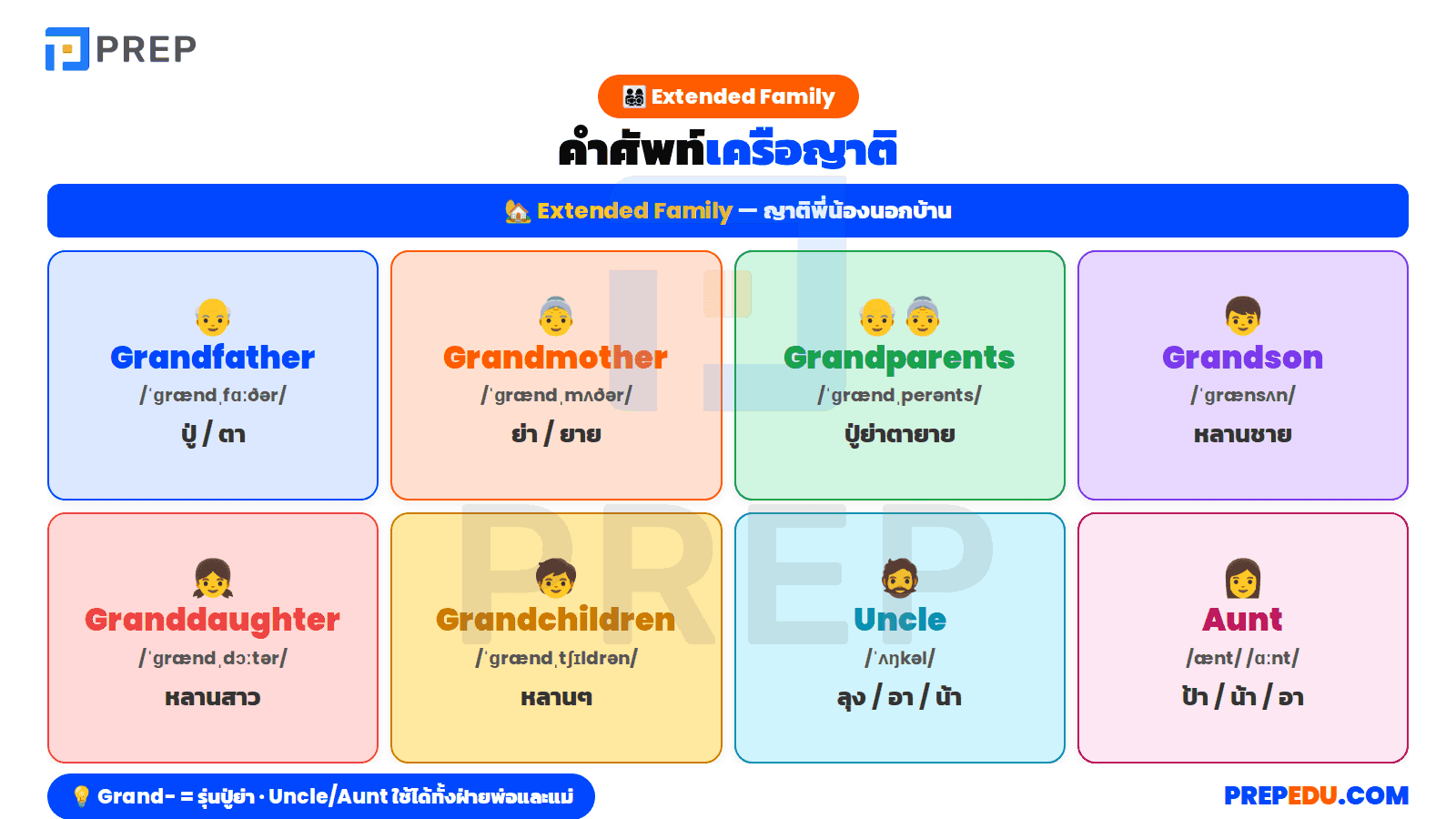
Extended Family คือ ญาติ ภาษาอังกฤษ ที่อยู่นอก nuclear family แต่ยังคงสายเลือด เพิ่ม great-grandparents, great-uncle, great-aunt, second cousin, distant relative ตามคู่มือ Cambridge Dictionary หมวดนี้ของ คําศัพท์ครอบครัว ภาษาอังกฤษ ขยายขอบเขตเครือญาติ
|
คำศัพท์ |
IPA |
ความหมาย |
ตัวอย่างประโยค |
|
Grandfather |
/ˈɡrændˌfɑːðər/ |
ปู่/ตา |
My grandfather tells fascinating stories. (ปู่/ตาเล่าเรื่องน่าสนใจ) |
|
Grandmother |
/ˈɡrændˌmʌðər/ |
ย่า/ยาย |
My grandmother taught me how to cook. (ย่า/ยายสอนฉันทำอาหาร) |
|
Grandparents |
/ˈɡrændˌperənts/ |
ปู่ย่าตายาย |
My grandparents live in the countryside. (ปู่ย่าตายายอยู่ชนบท) |
|
Grandson |
/ˈɡrænsʌn/ |
หลานชาย (ลูกของลูก) |
Their grandson visits every weekend. (หลานชายมาเยี่ยมทุกสุดสัปดาห์) |
|
Granddaughter |
/ˈɡrændˌdɔːtər/ |
หลานสาว (ลูกของลูก) |
My granddaughter is learning violin. (หลานสาวเรียนไวโอลิน) |
|
Grandchildren |
/ˈɡrændˌtʃɪldrən/ |
หลานๆ |
They have five grandchildren. (มีหลานห้าคน) |
|
Uncle |
/ˈʌŋkəl/ |
ลุง/อา/น้า (รวม) |
My uncle lives in Australia. (ลุงอยู่ออสเตรเลีย) |
|
Aunt |
/ænt/ /ɑːnt/ |
ป้า/น้า/อา (รวม) |
My aunt bakes delicious cookies. (ป้าอบคุกกี้อร่อย) |
|
Cousin |
/ˈkʌzən/ |
ลูกพี่ลูกน้อง |
My cousin and I grew up together. (ลูกพี่ลูกน้องและฉันโตด้วยกัน) |
|
Nephew |
/ˈnefjuː/ |
หลานชาย (ลูกของพี่/น้อง) |
My nephew is only three years old. (หลานชายอายุ 3 ขวบ) |
|
Niece |
/niːs/ |
หลานสาว (ลูกของพี่/น้อง) |
I bought a doll for my niece. (ฉันซื้อตุ๊กตาให้หลานสาว) |
|
Great-grandfather |
/ɡreɪt ˈɡrændˌfɑːðər/ |
ทวด (ผู้ชาย) |
My great-grandfather lived to be 95. (ทวดอายุถึง 95) |
|
Great-grandmother |
/ɡreɪt ˈɡrændˌmʌðər/ |
ทวด (ผู้หญิง) |
Her great-grandmother was a teacher. (ทวดของเธอเป็นครู) |
|
Great-uncle |
/ɡreɪt ˈʌŋkəl/ |
พี่/น้องของปู่ย่า/ตายาย (ชาย) |
My great-uncle fought in WWII. (ผู้พี่ของปู่ฉันรบใน WWII) |
|
Great-aunt |
/ɡreɪt ænt/ |
พี่/น้องของปู่ย่า/ตายาย (หญิง) |
Great-aunt Sue is 80 but still active. (ป้าของย่าซู อายุ 80 ยังคล่อง) |
|
Second cousin |
/ˈsekənd ˈkʌzən/ |
ลูกของลูกพี่ลูกน้อง |
I met my second cousin at the reunion. (เจอลูกพี่ลูกน้องชั้น 2 ที่งานพบปะ) |
|
First cousin once removed |
/fɜːrst ˈkʌzən wʌns rɪˈmuːvd/ |
ลูกพี่ลูกน้องคนละ generation |
Linguists love this term's complexity. (นักภาษาศาสตร์ชอบความซับซ้อนของศัพท์นี้) |
|
Distant relative |
/ˈdɪstənt ˈrelətɪv/ |
ญาติห่างๆ |
We invited some distant relatives. (เราเชิญญาติห่างๆ มา) |
Note: ในภาษาอังกฤษ Uncle และ Aunt ใช้เรียกทั้งฝ่ายพ่อและฝ่ายแม่ ไม่แยกเหมือนภาษาไทย → ถ้าต้องระบุ ใช้ "uncle on my mother's side" หรือ "paternal uncle" → ภาษา ครอบครัวอังกฤษ เน้น nuclear family system
3. ครอบครัวจากการแต่งงาน In-law
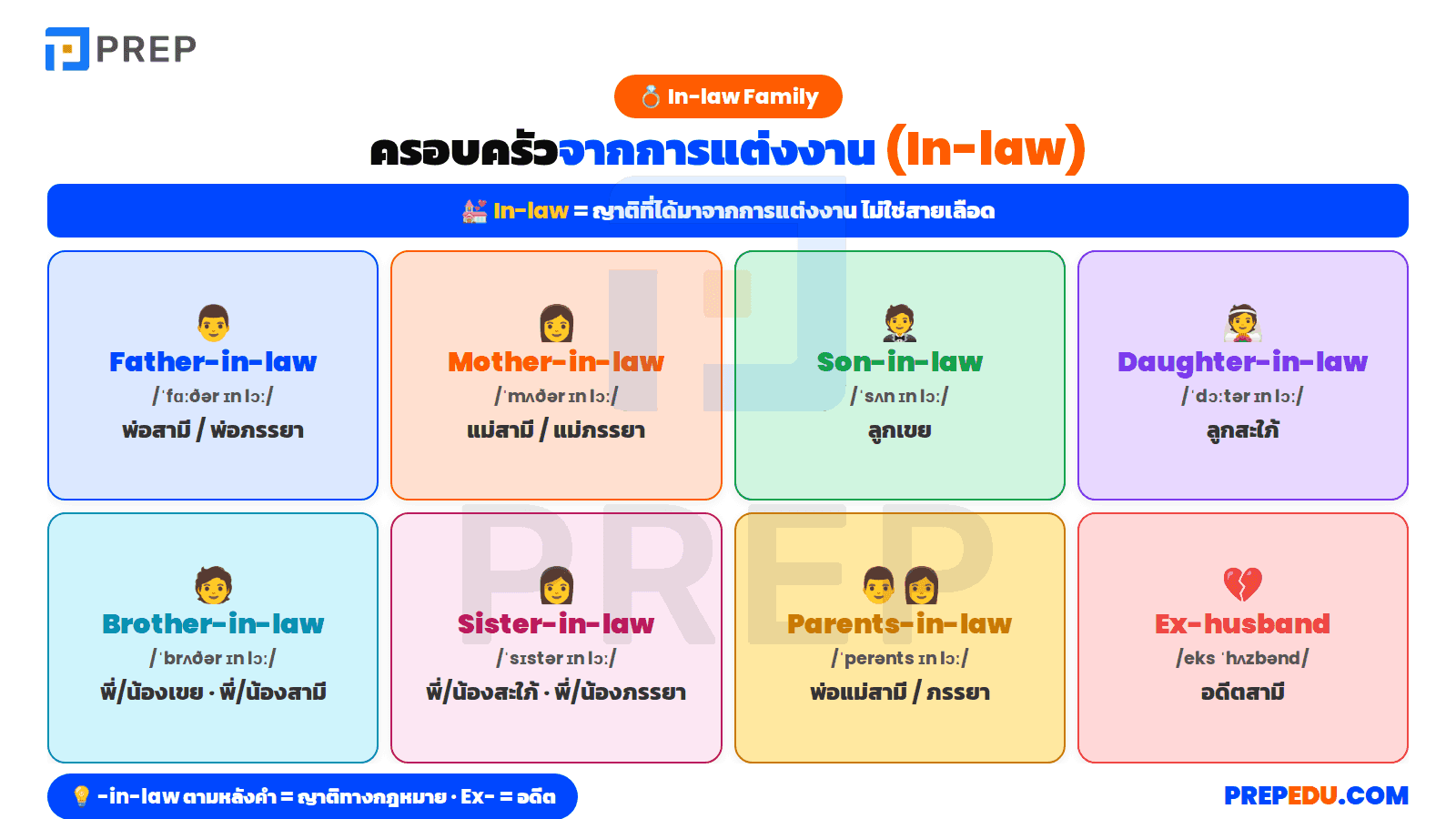
คำต่อท้าย "-in-law" มาจาก "by law" ตาม Oxford English Dictionary → ใช้กับ ญาติ ภาษาอังกฤษ จากการแต่งงาน ไม่ใช่สายเลือด เพิ่ม parents-in-law, siblings-in-law, ex-husband, ex-wife ใน คําศัพท์ครอบครัว ภาษาอังกฤษ หมวดนี้
|
คำศัพท์ |
IPA |
ความหมาย |
ตัวอย่างประโยค |
|
Father-in-law |
/ˈfɑːðər ɪn lɔː/ |
พ่อสามี/พ่อภรรยา |
My father-in-law taught me how to fish. (พ่อสามีสอนตกปลา) |
|
Mother-in-law |
/ˈmʌðər ɪn lɔː/ |
แม่สามี/แม่ภรรยา |
I get along well with my mother-in-law. (เข้ากับแม่สามีได้ดี) |
|
Son-in-law |
/ˈsʌn ɪn lɔː/ |
ลูกเขย |
Their son-in-law is a police officer. (ลูกเขยเป็นตำรวจ) |
|
Daughter-in-law |
/ˈdɔːtər ɪn lɔː/ |
ลูกสะใภ้ |
Her daughter-in-law helps with the family business. (ลูกสะใภ้ช่วยธุรกิจครอบครัว) |
|
Brother-in-law |
/ˈbrʌðər ɪn lɔː/ |
พี่/น้องเขย หรือ พี่/น้องสามี |
My brother-in-law invited us to dinner. (พี่เขยเชิญไปทานข้าว) |
|
Sister-in-law |
/ˈsɪstər ɪn lɔː/ |
พี่/น้องสะใภ้ หรือ พี่/น้องภรรยา |
I went shopping with my sister-in-law. (ไปช็อปกับพี่สะใภ้) |
|
Parents-in-law |
/ˈperənts ɪn lɔː/ |
พ่อแม่สามี/ภรรยา |
We visit my parents-in-law every Sunday. (เยี่ยมพ่อแม่สามีทุกวันอาทิตย์) |
|
Ex-husband |
/eks ˈhʌzbənd/ |
อดีตสามี |
Her ex-husband still pays alimony. (อดีตสามียังจ่ายค่าเลี้ยงดู) |
|
Ex-wife |
/eks waɪf/ |
อดีตภรรยา |
His ex-wife remarried last year. (อดีตภรรยาแต่งใหม่ปีที่แล้ว) |
|
Widow / Widower |
/ˈwɪdoʊ/ /ˈwɪdoʊər/ วิ-โดว์/ |
แม่ม่าย/พ่อม่าย |
She became a widow after her husband passed away. (เธอเป็นแม่ม่ายหลังสามีจากไป) |
4. ครอบครัวรูปแบบอื่น Step/Adoptive/Foster/God
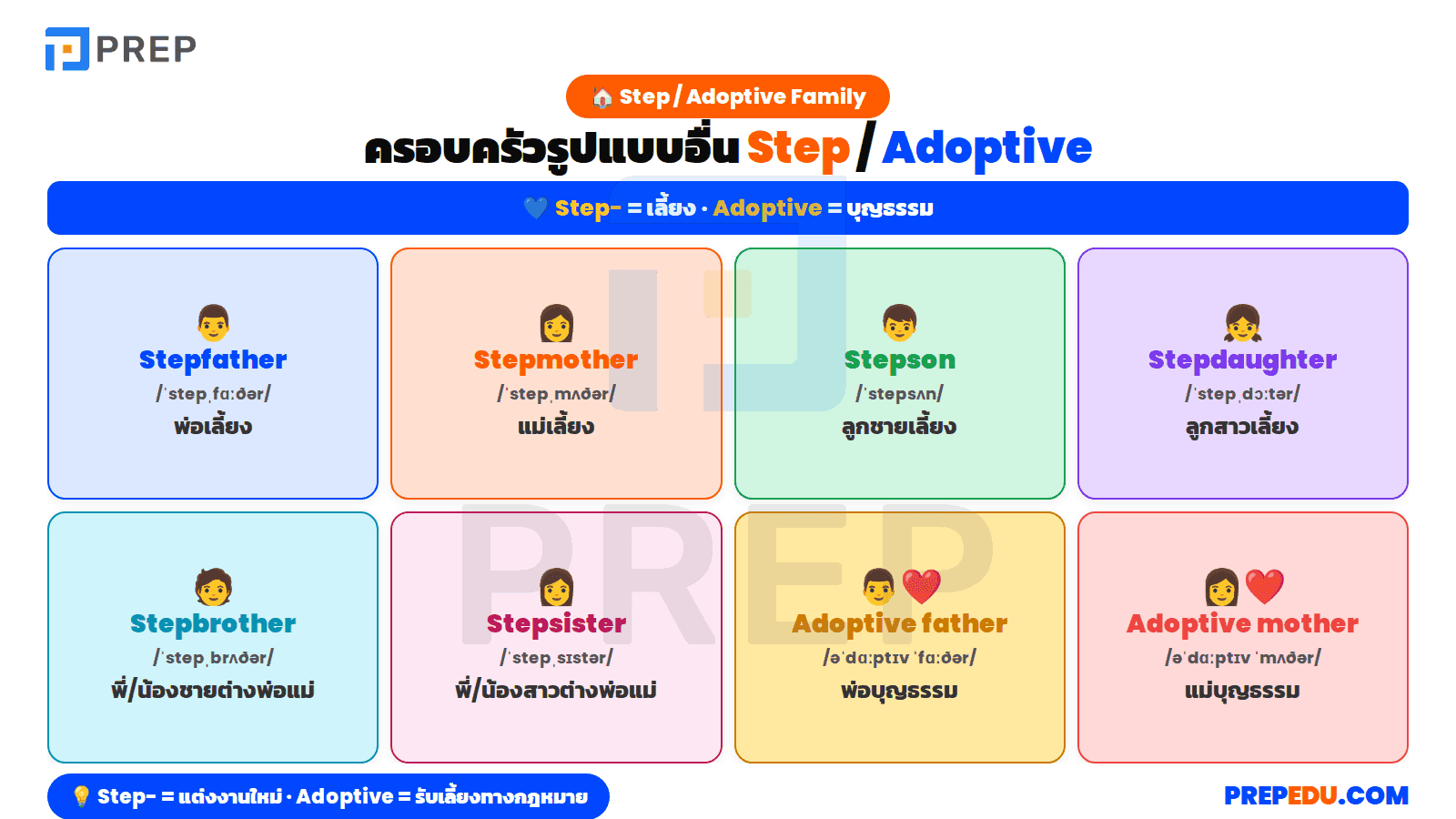
สังคมปัจจุบันมีรูปแบบ ครอบครัวอังกฤษ ที่หลากหลาย → blended families, adoption, fostering, godparenting เพิ่ม foster parents, biological parents, birth parents ใน คําศัพท์ครอบครัว ภาษาอังกฤษ หมวดสุดท้ายนี้
|
คำศัพท์ |
IPA |
ความหมาย |
ตัวอย่างประโยค |
|
Stepfather |
/ˈstepˌfɑːðər/ |
พ่อเลี้ยง |
My stepfather has raised me since I was five. (พ่อเลี้ยงเลี้ยงฉันตั้งแต่ 5 ขวบ) |
|
Stepmother |
/ˈstepˌmʌðər/ |
แม่เลี้ยง |
His stepmother is very kind to him. (แม่เลี้ยงใจดีกับเขา) |
|
Stepson |
/ˈstepsʌn/ |
ลูกชายเลี้ยง |
She treats her stepson like her own child. (เธอปฏิบัติต่อลูกชายเลี้ยงเหมือนลูกแท้) |
|
Stepdaughter |
/ˈstepˌdɔːtər/ |
ลูกสาวเลี้ยง |
Her stepdaughter is graduating next month. (ลูกสาวเลี้ยงจะจบเดือนหน้า) |
|
Stepbrother |
/ˈstepˌbrʌðər/ |
พี่/น้องชายต่างพ่อหรือแม่ |
My stepbrother and I share hobbies. (พี่ชายต่างแม่และฉันมีงานอดิเรกเหมือนกัน) |
|
Stepsister |
/ˈstepˌsɪstər/ |
พี่/น้องสาวต่างพ่อหรือแม่ |
My stepsister lives in another city. (พี่สาวต่างแม่อยู่อีกเมือง) |
|
Adoptive father |
/əˈdɑːptɪv ˈfɑːðər/ |
พ่อบุญธรรม |
Her adoptive father is a professor. (พ่อบุญธรรมเป็นศาสตราจารย์) |
|
Adoptive mother |
/əˈdɑːptɪv ˈmʌðər/ |
แม่บุญธรรม |
The adoptive mother loves her child deeply. (แม่บุญธรรมรักลูกลึกซึ้ง) |
|
Adopted son |
/əˈdɑːptɪd sʌn/ |
ลูกชายบุญธรรม |
Their adopted son is a successful lawyer. (ลูกชายบุญธรรมเป็นทนายความที่ประสบความสำเร็จ) |
|
Adopted daughter |
/əˈdɑːptɪd ˈdɔːtər/ |
ลูกสาวบุญธรรม |
They told her about her birth parents. (พวกเขาเล่าเรื่องพ่อแม่ที่ให้กำเนิด) |
|
Godfather |
/ˈɡɑːdˌfɑːðər/ |
พ่อทูนหัว |
His godfather gave him a watch. (พ่อทูนหัวให้นาฬิกาเป็นของขวัญ) |
|
Godmother |
/ˈɡɑːdˌmʌðər/ |
แม่ทูนหัว |
My godmother visits every Christmas. (แม่ทูนหัวมาเยี่ยมทุกคริสต์มาส) |
|
Godson |
/ˈɡɑːdsʌn/ |
ลูกทูนหัวชาย |
They take their godson to the zoo. (พาลูกทูนหัวไปสวนสัตว์) |
|
Goddaughter |
/ˈɡɑːdˌdɔːtər/ |
ลูกทูนหัวหญิง |
Her goddaughter learns piano. (ลูกทูนหัวหญิงเรียนเปียโน) |
|
Foster father / mother |
/ˈfɒstər/ |
พ่อ/แม่อุปถัมภ์ |
Foster parents provide temporary care. (พ่อแม่อุปถัมภ์ดูแลชั่วคราว) |
|
Foster child |
/ˈfɒstər tʃaɪld/ |
ลูกอุปถัมภ์ |
The foster child finally found a forever home. (ลูกอุปถัมภ์ได้บ้านถาวรในที่สุด) |
|
Biological parents |
/ˌbaɪəˈlɒdʒɪkəl/ |
พ่อแม่ทางสายเลือด |
She met her biological parents at age 25. (เธอเจอพ่อแม่สายเลือดตอนอายุ 25) |
|
Birth parents |
/bɜːrθ ˈperənts/ |
พ่อแม่ที่ให้กำเนิด (synonym) |
The adopted child searched for his birth parents. (ลูกบุญธรรมตามหาพ่อแม่ที่ให้กำเนิด) |
III. คำกริยา Family Verbs
นอกจาก noun สมาชิกในครอบครัว ภาษาอังกฤษ ยังต้องรู้ verbs ที่ใช้บรรยายการกระทำใน my family ครอบครัวของฉัน เช่น raise, bring up, take after, look after เพื่อตอบ IELTS Speaking Part 2/3 ได้ลื่นไหล หมวดนี้เสริม คําศัพท์ครอบครัว ภาษาอังกฤษ ให้สมบูรณ์
|
คำศัพท์ |
IPA |
ความหมาย |
ตัวอย่างประโยค |
|
Raise |
/reɪz/ |
เลี้ยงดูจนโต |
My grandparents raised me when my parents worked abroad. (ปู่ย่าเลี้ยงฉันตอนพ่อแม่ทำงานต่างประเทศ) |
|
Bring up |
/brɪŋ ʌp/ |
เลี้ยงดู (synonym) |
I was brought up in a traditional family. (ฉันถูกเลี้ยงในครอบครัวดั้งเดิม) |
|
Adopt |
/əˈdɒpt/ |
รับเลี้ยง |
They adopted a child from Vietnam. (พวกเขารับเลี้ยงเด็กจากเวียดนาม) |
|
Foster |
/ˈfɒstər/ |
อุปถัมภ์ชั่วคราว |
The couple fostered three children. (คู่สามีภรรยาอุปถัมภ์เด็ก 3 คน) |
|
Marry |
/ˈmæri/ |
แต่งงาน |
They married in 2010. (แต่งงานปี 2010) |
|
Get married |
/ɡet ˈmærid/ |
แต่งงาน (passive form) |
We got married last summer. (เราแต่งงานหน้าร้อนที่ผ่านมา) |
|
Tie the knot |
/taɪ ðə nɒt/ |
แต่งงาน (idiom) |
They're tying the knot next Saturday. (พวกเขาจะแต่งงานเสาร์หน้า) |
|
Divorce |
/dɪˈvɔːrs/ |
หย่า |
His parents divorced when he was 10. (พ่อแม่หย่าตอนเขา 10 ขวบ) |
|
Separate |
/ˈseprət/ |
แยกกันอยู่ |
They separated but didn't divorce. (แยกกันอยู่แต่ยังไม่หย่า) |
|
Take after |
/teɪk ˈɑːftər/ |
เหมือน (พ่อแม่) |
She takes after her mother in personality. (เธอเหมือนแม่ในเรื่องนิสัย) |
|
Look after |
/lʊk ˈɑːftər/ |
ดูแล |
I look after my younger brother. (ฉันดูแลน้องชาย) |
|
Pass away |
/pɑːs əˈweɪ/ |
จากไป (สุภาพ) |
My grandmother passed away last year. (ย่าจากไปปีที่แล้ว) |
|
Give birth |
/ɡɪv bɜːrθ/ |
คลอด |
She gave birth to twins. (เธอคลอดฝาแฝด) |
|
Resemble |
/rɪˈzembl/ |
คล้าย |
He resembles his father strongly. (เขาคล้ายพ่อมาก) |
|
Run in the family |
/rʌn ɪn ðə ˈfæmɪli/ |
เป็นในตระกูล |
Musical talent runs in our family. (พรสวรรค์ดนตรีเป็นในครอบครัวเรา) |
IV. คำคุณศัพท์ Family Adjectives
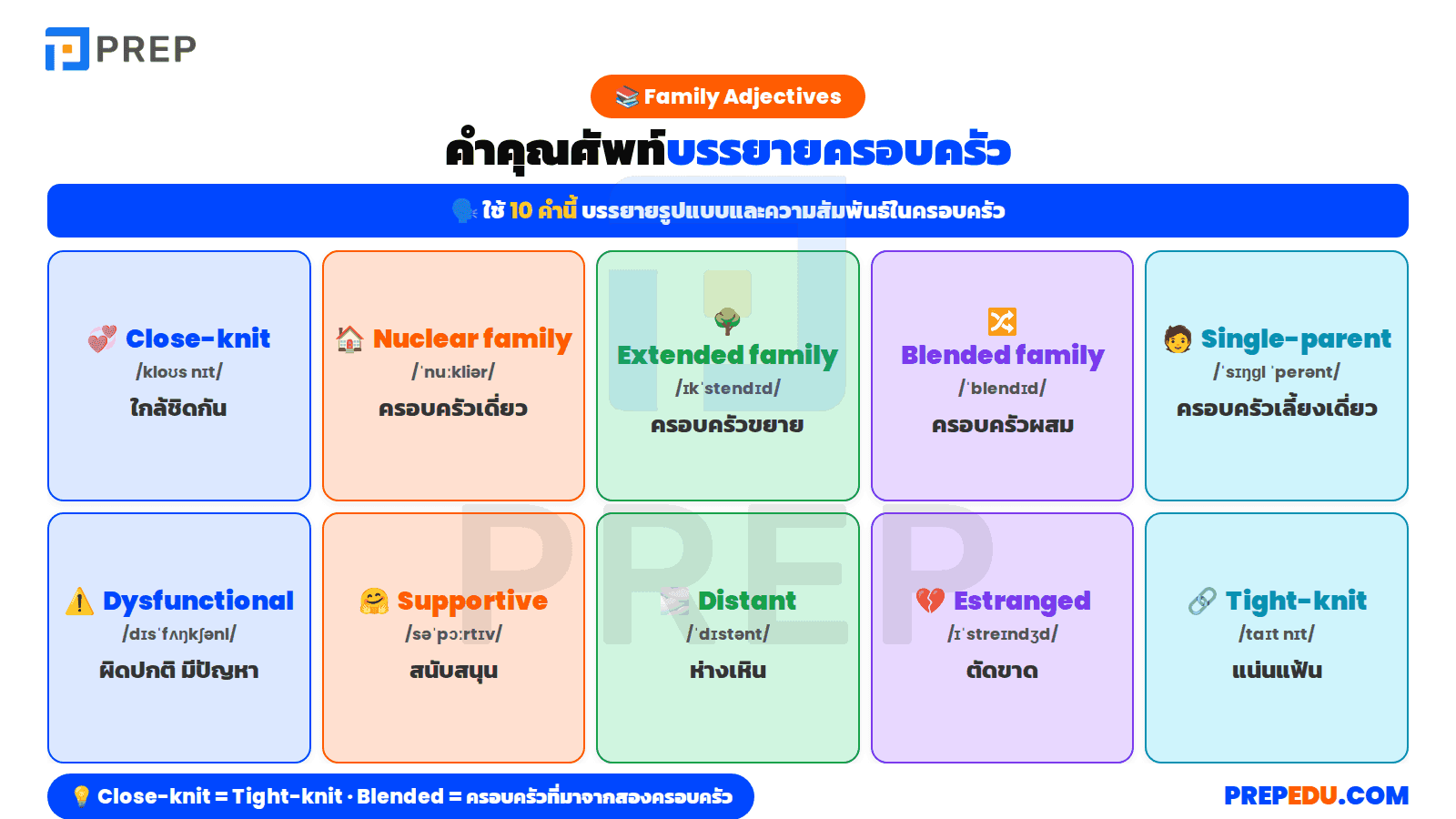
Adjectives บรรยาย ครอบครัวอังกฤษ ในบริบทต่างๆ ใช้ตอบ IELTS Speaking Part 1 "What's your family like?" คำสำคัญ → close-knit, nuclear, extended, blended, supportive ในการใช้ คําศัพท์ครอบครัว ภาษาอังกฤษ ระดับ advanced
|
คำศัพท์ |
IPA |
ความหมาย |
ตัวอย่างประโยค |
|
Close-knit |
/kloʊs nɪt/ |
ใกล้ชิดกัน |
We're a close-knit family. (เราเป็นครอบครัวที่ใกล้ชิด) |
|
Nuclear family |
/ˈnuːkliər/ |
ครอบครัวเดี่ยว |
Most Western households are nuclear families. (ครอบครัวตะวันตกส่วนใหญ่เป็นแบบเดี่ยว) |
|
Extended family |
/ɪkˈstendɪd/ |
ครอบครัวขยาย |
Thai households often include extended family. (ครอบครัวไทยมักเป็นครอบครัวขยาย) |
|
Blended family |
/ˈblendɪd/ |
ครอบครัวผสม (แต่งใหม่) |
Blended families are increasingly common. (ครอบครัวผสมเพิ่มขึ้นเรื่อย ๆ) |
|
Single-parent family |
/ˈsɪŋɡl ˈperənt/ |
ครอบครัวเลี้ยงเดี่ยว |
Single-parent families face unique challenges. (ครอบครัวเลี้ยงเดี่ยวเผชิญความท้าทายเฉพาะ) |
|
Dysfunctional |
/dɪsˈfʌŋkʃənl/ |
ผิดปกติ มีปัญหา |
Therapists help dysfunctional families heal. (นักบำบัดช่วยครอบครัวที่มีปัญหา) |
|
Supportive |
/səˈpɔːrtɪv/ |
สนับสนุน |
I'm lucky to have a supportive family. (ฉันโชคดีที่มีครอบครัวสนับสนุน) |
|
Distant |
/ˈdɪstənt/ |
ห่างเหิน (ความสัมพันธ์) |
We have a distant relationship now. (เรามีความสัมพันธ์ห่างเหินตอนนี้) |
|
Estranged |
/ɪˈstreɪndʒd/ |
ตัดขาด |
He's estranged from his father. (เขาตัดขาดกับพ่อ) |
|
Tight-knit |
/taɪt nɪt/ |
แน่นแฟ้น (synonym close-knit) |
Tight-knit families support each other. (ครอบครัวแน่นแฟ้นช่วยเหลือกัน) |
|
Patriarchal |
/ˌpeɪtriˈɑːrkl/ |
ระบบชายเป็นใหญ่ |
Traditional societies are often patriarchal. (สังคมดั้งเดิมมักเป็นชายเป็นใหญ่) |
|
Matriarchal |
/ˌmeɪtriˈɑːrkl/ |
ระบบหญิงเป็นใหญ่ |
Some cultures follow matriarchal traditions. (บางวัฒนธรรมเป็นหญิงเป็นใหญ่) |
V. สำนวน Family Idioms
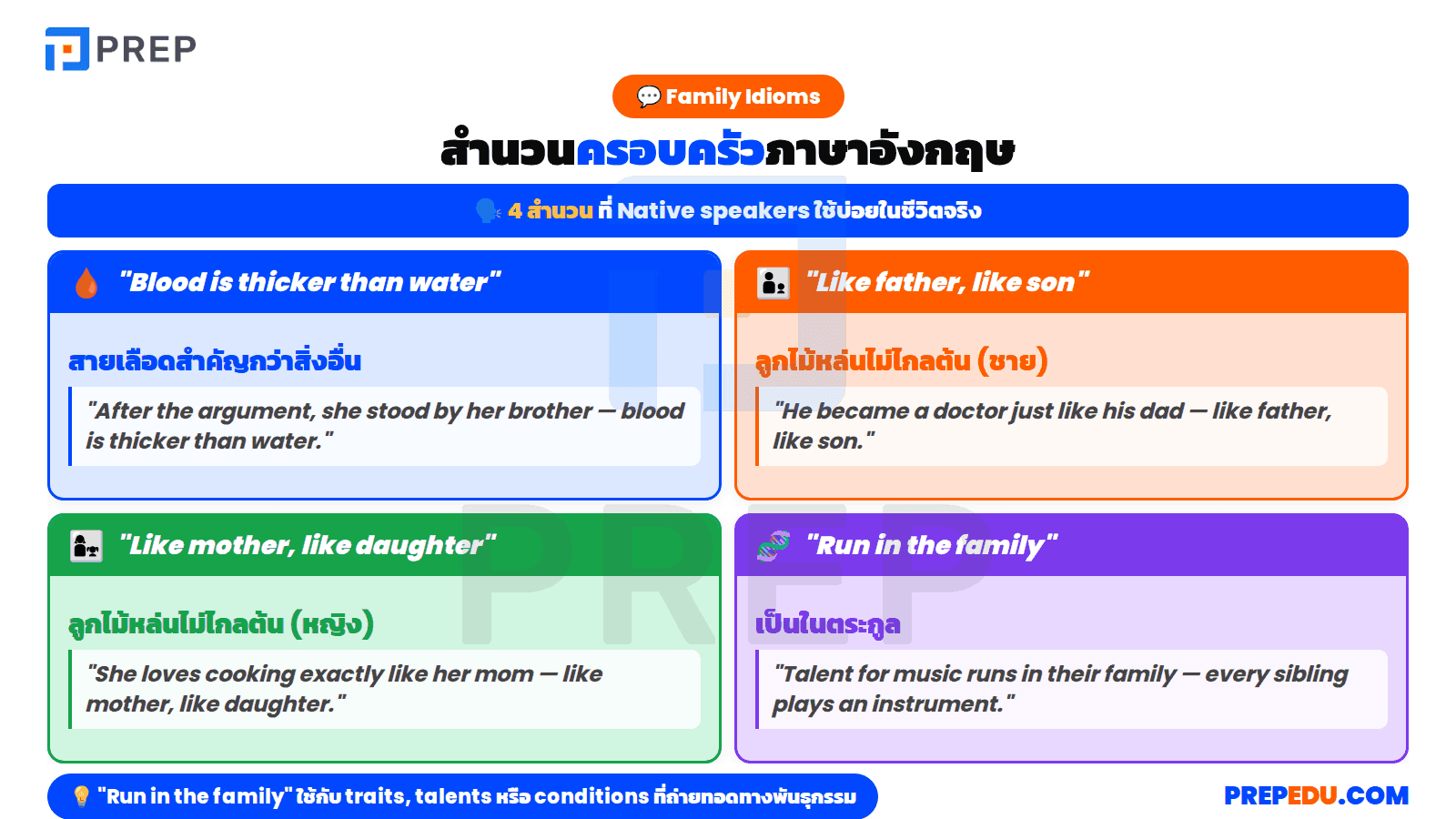
Idioms ทำให้คำตอบเรื่อง my family ครอบครัวของฉัน ใน IELTS Speaking ได้ Band 7+ ทันที เพิ่มจาก 5 → 12 idioms ตาม Cambridge Idioms Dictionary หมวดนี้เพิ่ม sophistication ให้ คําศัพท์ครอบครัว ภาษาอังกฤษ
|
สำนวน |
ความหมาย |
ตัวอย่างการใช้ |
|
Blood is thicker than water |
สายเลือดสำคัญกว่าสิ่งอื่น |
When I had problems, blood is thicker than water → my family supported me. |
|
Like father, like son |
ลูกไม้หล่นไม่ไกลต้น (ชาย) |
He's good at math → like father, like son! |
|
Like mother, like daughter |
ลูกไม้หล่นไม่ไกลต้น (หญิง) |
She loves baking → like mother, like daughter! |
|
Run in the family |
เป็นในตระกูล |
Musical talent runs in her family. |
|
The apple doesn't fall far from the tree |
ลูกไม้หล่นไม่ไกลต้น |
She's stubborn like her mother → the apple doesn't fall far from the tree. |
|
Black sheep of the family |
คนแตกต่างจากคนอื่น (เชิงลบ) |
He's the black sheep → everyone else is a doctor, but he's an artist. |
|
Tie the knot |
แต่งงาน |
They tied the knot last weekend. |
|
Pop the question |
ขอแต่งงาน |
He popped the question on her birthday. |
|
Bring up |
เลี้ยงดู |
She was brought up by her grandparents. |
|
Take after (someone) |
เหมือน (พ่อแม่) |
He takes after his father in looks. |
|
Spitting image of |
เหมือนเปี๊ยบ |
She's the spitting image of her grandmother. |
|
Mama's boy / Daddy's girl |
ลูกชาย/ลูกสาวติดแม่/พ่อ |
He's such a mama's boy, calling her every day. |
บทความแนะนำอ่านต่อ:
VI. การใช้ คําศัพท์ครอบครัว ภาษาอังกฤษ ใน IELTS Speaking
หัวข้อ Family ปรากฏใน IELTS Speaking Part 1 อย่างน้อย 80% ของ test slots และ Part 2 มี cue card "Describe a family member" ตามการวิเคราะห์ของ IELTS.org sample tests Preppies ต้องเตรียม คําศัพท์ครอบครัว ภาษาอังกฤษ ล่วงหน้าก่อนวันสอบ
1. IELTS Speaking Part 1: คำถามที่พบบ่อย
Part 1 ถาม 4-6 คำถามสั้น ๆ เกี่ยวกับ my family ครอบครัวของฉัน → ตอบ 30-45 วินาที/คำถาม ใช้ vocab Immediate + 1-2 idioms
|
คำถาม |
ตัวอย่างคำตอบ |
|
Do you have a large family? |
I come from a fairly large family. I have two siblings and we live with our parents. My grandparents also live nearby, so we see them regularly. |
|
Who are you closest to in your family? |
I'm particularly close to my mother. She's been my biggest supporter and we share similar interests. We often spend time cooking and discussing daily life. |
|
Do you spend much time with your family? |
Yes, family time is important to us. We have dinner together almost every evening and usually do something special on weekends. |
|
Are you similar to anyone in your family? |
I take after my father in personality → we're both easygoing. People say I'm the spitting image of my mother, though. |
|
Has your family changed in recent years? |
Yes, our family has become more close-knit since the pandemic. We video-call my extended family abroad every weekend. |
2. IELTS Speaking Part 2: Describe a Family Member
Part 2 ใช้ vocab + idioms + verbs จากบทความนี้รวมกัน ตอบ 1-2 นาที Cue card มี 4 sub-questions → ตอบให้ครบ + ใช้ specific vocab
Cue card sample:
-
Who this person is
-
Your relationship with them
-
What they look like or what they do
-
Why this person is important to you
Sample Band 8 answer (key phrases ขีดเส้น):
"I'd like to talk about my grandfather, who I'm particularly close-knit with. He's in his late seventies now → a retired teacher with salt-and-pepper hair and piercing dark eyes that come across as both wise and kind. People say I take after him in personality → we're both easygoing and curious. What I admire most is how he brought up four children single-handedly after my grandmother passed away. Stubbornness, intelligence, and humor → all these traits run in our family, but my grandfather is the spitting image of resilience. Blood is thicker than water, and being with him reminds me that family is everything."
ทำไม Band 8? → ใช้ 4 idioms (close-knit, run in our family, spitting image, blood is thicker than water) + 4 advanced verbs (take after, brought up, passed away, come across as) + specific descriptors (salt-and-pepper, piercing) + emotional depth
3. IELTS Speaking Part 3: Follow-up Questions
Part 3 ถาม abstract → ครอบครัวในสังคม role of family, generation gap, family values ต้องใช้ adjectives + verbs ครบ + คิด analytical
|
คำถาม |
Sample answer (key vocab) |
|
How has family structure changed? |
"Modern families are increasingly nuclear or blended → unlike traditional extended families. Single-parent families and same-sex households are also more accepted now." |
|
Are family values declining? |
"Not necessarily. Although families are more dispersed, technology lets us stay close-knit. Many still strongly value supportive relationships." |
|
Should grandparents help raise children? |
"Absolutely → it benefits all generations. Grandparents share wisdom while children learn about heritage. It's how traits run in the family across generations." |
VIII. คำถามที่พบบ่อย (FAQ)
1. คําศัพท์ครอบครัว ภาษาอังกฤษ มีกี่หมวด?
คําศัพท์ครอบครัว ภาษาอังกฤษ แบ่งเป็น 4 หมวดหลัก → Immediate Family (พ่อแม่พี่น้องคู่สมรส), Extended Family (เครือญาติ), In-law (จากการแต่งงาน), Step/Adoptive/Foster/God (รูปแบบอื่น) บวก verbs + adjectives + idioms ทำให้ครบ 7 หมวด vocab สำหรับ IELTS Speaking
2. ภรรยาภาษาอังกฤษ มีกี่คำ?
ภรรยาภาษาอังกฤษ มี 3 คำหลัก → Wife (ทั่วไป, common), Spouse (formal/legal, gender-neutral), Better half (informal/affectionate) ในการใช้ IELTS Speaking → Wife = safest choice; Spouse = ในบริบท legal/professional
3. ทำไม English ไม่แยก Uncle/Aunt ฝ่ายพ่อ/แม่?
ครอบครัวอังกฤษ ใช้ระบบ kinship neutral → เน้น nuclear family ลำดับชาติพันธุ์ไม่สำคัญเท่าไทย ถ้าต้องระบุใช้ "uncle on my mother's side" หรือ "paternal uncle" → จุดนี้เป็น nuance ใน คําศัพท์ครอบครัว ภาษาอังกฤษ ที่คนไทยต้อง adapt
4. "Sibling" ต่างจาก "Brother/Sister" อย่างไร?
Sibling = gender-neutral term รวมทั้งพี่ชาย น้องชาย พี่สาว น้องสาว → ใช้ในบริบทที่ไม่จำเป็นต้องระบุเพศ Examiner IELTS ชอบ "I have three siblings" มากกว่า "I have two brothers and one sister" เพราะ economy of words → คำนี้คือ upgrade ของ คําศัพท์ครอบครัว ภาษาอังกฤษ ระดับ Band 7+
5. "Cousin" มี gender ต่างกันไหม?
ไม่ → Cousin ใช้ทั้งชายและหญิง ถ้าต้องระบุใช้ "my male cousin" / "my female cousin" หรือเรียกชื่อจริงเลย → จุดนี้คนไทยมักสับสนเพราะ คําศัพท์ครอบครัว ภาษาอังกฤษ ของไทยแยก gender ชัด
6. "-in-law" suffix หมายความว่าอย่างไร?
มาจาก "by law" (ตามกฎหมาย) → ใช้กับ ญาติ ภาษาอังกฤษ จากการแต่งงาน ไม่ใช่สายเลือดโดยตรง เช่น mother-in-law = แม่ผ่านการแต่งงาน เกิดจากการเป็นภรรยา/สามีของลูกชาย/ลูกสาวเขา → กลุ่ม -in-law เป็นหมวดสำคัญใน คําศัพท์ครอบครัว ภาษาอังกฤษ
การเรียนรู้คําศัพท์ครอบครัว ภาษาอังกฤษ จะช่วยให้คุณสามารถพูดคุยเรื่องครอบครัวได้อย่างมั่นใจและเป็นธรรมชาติ ไม่ว่าจะเป็นในชีวิตประจำวันหรือการสอบ IELTS ฝึกฝนการใช้คำศัพท์เหล่านี้บ่อยๆ เพื่อให้คุ้นเคยและนำไปใช้ได้อย่างคล่องแคล่ว
พร้อมพิชิต IELTS Speaking หัวข้อ Family ด้วย vocab ที่แข็งแกร่งไหม? เรียน IELTS ออนไลน์ที่ PREP วันนี้ ฝึก Speaking 24 ชั่วโมงกับ Teacher Bee AI ใน Virtual Speaking Room

สวัสดีค่ะ ฉันชื่อมุก ปัจจุบันดูแลด้านเนื้อหาผลิตภัณฑ์ของ Prep Education ค่ะ
ด้วยประสบการณ์มากกว่า 5 ปีในการเรียน IELTS ออนไลน์ด้วยตนเอง ฉันเข้าใจดีถึงความท้าทายที่ผู้เรียนต้องเผชิญ แล้วก็รู้ว่าอะไรที่มันเวิร์ก
มุกอยากเอาประสบการณ์ตรงนี้มาช่วยแชร์ แล้วก็ซัพพอร์ตเพื่อน ๆ ให้ได้คะแนนที่ดีที่สุดค่ะ
ความคิดเห็น
เนื้อหาแบบพรีเมียม
ดูทั้งหมด


แผนการเรียนรู้ส่วนบุคคล
อ่านมากที่สุด




ติดต่อ Prep ผ่านโซเชียล





Address: ตึก C.P. Tower 2 (ฟอร์จูนทาวน์) ชั้น 21 ถนนรัชดาภิเษก แขวงดินแดง เขตดินแดง กรุงเทพฯ 10400
Hotline: +66 25 44 0068
Email: sawatdee@prepedu.com