รวม 150+ คำตรงข้ามภาษาอังกฤษ (Antonym) พร้อมคำอ่าน คำแปล Prefix
Antonym คือคำในภาษาอังกฤษที่มีความหมายตรงข้ามกัน เช่น hot-cold, big-small, happy-sad คำว่า Antonym มาจากภาษากรีก anti (ตรงข้าม) + onoma (ชื่อ) การท่องคำศัพท์แบบเดี่ยวมักทำให้ผู้เรียนลืมเร็ว ในขณะที่การจับคู่คำตรงข้ามช่วยเพิ่มอัตราการจดจำได้ 30-40% บทความนี้สรุปนิยามและความสำคัญของ Antonym, 3 ประเภทหลัก, กฎสร้างคำตรงข้ามด้วย 5 Prefix, รวม 155 คู่คำใช้บ่อยพร้อม IPA และคำแปลไทย, ความต่างระหว่าง Antonym กับ Synonym, ตามด้วยเทคนิคทำข้อสอบ TGAT, A-Level, IELTS Reading และ TOEIC แบบทีละขั้น

I. Antonym คืออะไร? ความหมายและความสำคัญ
Antonym (อ่านว่า /ˈæntəˌnɪm/) แปลว่า "คำตรงข้าม" หมายถึงคำในภาษาอังกฤษที่มีความหมายตรงข้ามหรือสวนทางกับอีกคำหนึ่ง เช่น hot-cold, big-small, happy-sad คำว่า Antonym มาจากภาษากรีก anti ("ตรงข้าม") + onoma ("ชื่อ") และถูกบันทึกครั้งแรกในพจนานุกรมในศตวรรษที่ 19 การเรียนคำตรงข้ามแบบจับคู่ช่วยเพิ่ม retention rate ของคำศัพท์ได้ 30-40% เมื่อเทียบกับการท่องคำเดี่ยว
1. ความหมายและที่มาของคำว่า Antonym
Oxford ให้นิยาม Antonym ว่า "a word opposite in meaning to another" Cambridge กระชับกว่า: "a word that means the opposite of another word" รากศัพท์ Greek แยกเป็น 2 ส่วน คือ anti- (ตรงข้าม, ต่อต้าน) + -onoma (ชื่อ, คำเรียก) คำว่า "Antonym" ปรากฏในเอกสารภาษาอังกฤษครั้งแรกราวปี ค.ศ. 1867 โดยเป็นคู่ตรงข้ามของคำว่า "Synonym" ที่ใช้มาก่อนแล้ว ในภาษาไทย คำว่า "Antonym" และ "Opposite Word" ใช้แทนกันได้ในบริบทการเรียนภาษา แม้ในวงวิชาการ Linguistics จะแยกเป็น Antonymy (ความสัมพันธ์เชิงตรงข้าม) และ Opposite (ความตรงข้ามทั่วไป)
2. ความสำคัญของ Antonym ต่อการเรียนภาษาอังกฤษ
การเรียน Antonym ไม่ใช่แค่การจำคำคู่ แต่เป็นเครื่องมือเร่งทักษะภาษาอังกฤษทั้ง 4 ด้าน ถ้าคุณละเลยคำตรงข้าม จะติดกับคำศัพท์ระดับพื้นฐานและทำคะแนน Vocabulary section ได้ต่ำกว่าศักยภาพ
-
เพิ่ม Vocabulary แบบทวีคูณ - เมื่อรู้ 1 คำแล้วเรียน Antonym ทันที จะได้ 2 คำในเวลาเท่าเดิม การจับคู่ช่วยให้สมองจัดเก็บคำในรูปแบบ "เครือข่ายความหมาย" ซึ่งจำง่ายและเรียกใช้เร็ว
-
พัฒนา Reading Comprehension - ในข้อสอบ Reading จำนวนมากใช้เทคนิค Paraphrasing แทนที่คำต้นด้วย Antonym หรือ Synonym ผู้เรียนที่จำคำคู่ตรงข้ามได้จะตีความ passage ได้ไวขึ้น
-
เพิ่มความหลากหลายใน Writing และ Speaking - IELTS Writing เกณฑ์ Lexical Resource ระดับ Band 7 ขึ้นไปต้องการการใช้คำหลากหลาย ผู้เรียนที่รู้เฉพาะ "good-bad" จะแต่งประโยคซ้ำ ขณะที่ผู้รู้คู่ excellent-dreadful, superb-mediocre จะได้คะแนนสูงกว่า
-
พิชิตข้อสอบ Vocabulary โดยตรง - TOEIC Reading Part 5 และ Part 7 มีคำถามตรงข้ามแบบ "Choose the word opposite in meaning to..." ปรากฏซ้ำทุกปี
เมื่อรู้ความหมายและความสำคัญของ Antonym แล้ว ขั้นต่อไปคือเข้าใจว่า Antonym แบ่งออกเป็นกี่ประเภท เพื่อเลือกใช้ให้เหมาะกับสถานการณ์
II. ประเภทของคำตรงข้ามภาษาอังกฤษ - 3 ประเภทหลัก
Antonym ในภาษาอังกฤษแบ่งเป็น 3 ประเภทหลัก ได้แก่ (1) Complementary Antonym (2) Gradable Antonym (3) Relational Antonym การเลือกใช้แต่ละประเภทขึ้นอยู่กับว่ากำลังบรรยายสถานะแบบสองขั้ว แบบมีระดับ หรือแบบความสัมพันธ์ระหว่างสองสิ่ง
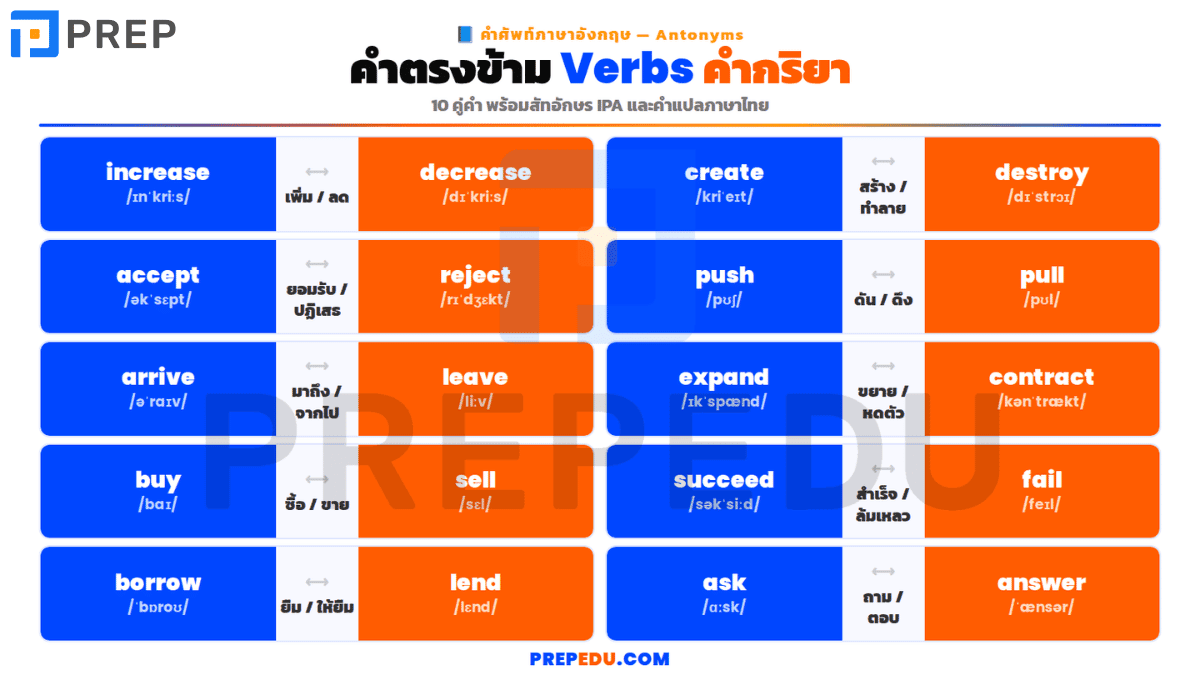
1. Complementary Antonyms (คำคู่สมบูรณ์)
Complementary Antonym คือคำคู่ที่อยู่ตรงข้ามแบบสองขั้ว ไม่มีจุดกึ่งกลาง ไม่มีระดับ หากไม่ใช่อย่างหนึ่งย่อมเป็นอีกอย่างหนึ่งโดยอัตโนมัติ ตัวอย่างเช่น alive/dead (มีชีวิต/ตาย), present/absent (อยู่/ไม่อยู่), married/single (แต่งงานแล้ว/โสด), true/false (จริง/เท็จ), win/lose (ชนะ/แพ้) สิ่งที่ต้องระวัง คือ ห้ามใช้ตัวขยายระดับ เช่น "very alive" หรือ "a little dead" เพราะคำคู่นี้ไม่รับการขยายระดับ Complementary Antonym เหมาะกับการเขียนเชิงเด็ดขาด เช่น ในข้อกฎหมาย ข้อสอบจริง/เท็จ และคำอธิบายเชิงตรรกะ
2. Gradable Antonyms (คำคู่ที่มีระดับ)
Gradable Antonym คือคำคู่ที่มีระดับและจุดกึ่งกลาง สามารถใช้คำขยายระดับ เช่น very, quite, extremely, rather, slightly ได้ ตัวอย่าง 5 คู่ที่พบบ่อย ได้แก่ hot/cold (โดยมี warm, lukewarm, cool อยู่ตรงกลาง), big/small, fast/slow, happy/sad, easy/difficult Gradable Antonym มักใช้ในประโยคเปรียบเทียบ เช่น "This room is hotter than that one" หรือ "She is happier today than yesterday" คำขยายระดับช่วยทำให้ประโยคสะท้อนความจริงได้ละเอียดขึ้น ในการเขียน IELTS Writing band 7+ ผู้ตรวจมองหาการใช้ Gradable Antonym หลากหลายระดับ ไม่ใช่แค่ขั้วใดขั้วหนึ่ง
3. Relational Antonyms (คำคู่เชิงสัมพันธ์)
Relational Antonym หรือ Converse Antonym คือคำคู่ที่ต้องอาศัยอีกฝ่ายจึงจะมีความหมาย เช่น ถ้ามี teacher ต้องมี student ถ้ามี buyer ต้องมี seller ตัวอย่าง 5 คู่ ได้แก่ teacher/student, buy/sell, parent/child, doctor/patient, employer/employee คำคู่กลุ่มนี้ไม่ได้ตรงข้ามแบบ "ดี vs ไม่ดี" แต่บรรยายความสัมพันธ์ที่กลับด้านกัน "If A buys from B, then B sells to A" ในข้อสอบ Reading ระดับสูง คำถามมักทดสอบ Relational Antonym ผ่านบริบทธุรกิจ ครอบครัว หรือสถาบัน คุณที่เข้าใจประเภทนี้จะตีความความสัมพันธ์ในประโยคได้รวดเร็วขึ้น
III. กฎสร้างคำตรงข้ามด้วย Prefix
การสร้าง Antonym ด้วย Prefix คือการเติมคำนำหน้าเชิงลบหน้าคำต้นเพื่อพลิกความหมาย หลักการตรงไปตรงมา: รู้จัก Prefix → เดาคำตรงข้ามได้ทันที ในภาษาอังกฤษมี 5 Prefix หลัก ได้แก่ Un- (ใช้บ่อยที่สุด ราว 40% ของ negative prefix ส่วนใหญ่กับ adjective
ตารางสรุป 5 Prefix หลัก
|
Prefix |
ใช้กับ POS หลัก |
ความถี่โดยประมาณ |
ตัวอย่าง 3 คู่ |
|
Un- |
Adjective (และบาง verb) |
~40% |
happy/unhappy, fair/unfair, lock/unlock |
|
In-/Im-/Il-/Ir- |
Adjective |
~25% |
complete/incomplete, possible/impossible, legal/illegal |
|
Dis- |
Verb + Adjective |
~15% |
agree/disagree, honest/dishonest, like/dislike |
|
Mis- |
Verb |
~10% |
understand/misunderstand, behave/misbehave, lead/mislead |
|
Non- |
Noun |
~10% |
sense/nonsense, fiction/nonfiction, smoker/nonsmoker |
1. Prefix Un-
Un- คือ Prefix ที่พบบ่อยที่สุดในการสร้าง Antonym ส่วนใหญ่เติมหน้าคำคุณศัพท์ (adjective) เช่น happy/unhappy, fair/unfair, safe/unsafe, lucky/unlucky, comfortable/uncomfortable, fortunate/unfortunate ในบางกรณี Un- ใช้กับคำกริยา (verb) เพื่อสื่อการยกเลิกการกระทำ เช่น tie/untie (ผูก/แก้), lock/unlock (ล็อก/ปลดล็อก), do/undo (ทำ/ลบ) เมื่อเจอคำใหม่ที่ขึ้นต้นด้วย un- ให้ตัดออกก่อนเพื่อเดาความหมายต้น
2. Prefix In- / Im- / Il- / Ir-
Prefix กลุ่มนี้คือกลุ่มเดียวกันที่เปลี่ยนรูปตามพยัญชนะตัวแรกของคำต้น มีกฎ 4 ข้อ ดังนี้
-
Im- ใช้ก่อนพยัญชนะ b, m, p เช่น possible → impossible, balance → imbalance, mature → immature
-
Il- ใช้ก่อนพยัญชนะ l เช่น legal → illegal, literate → illiterate, logical → illogical
-
Ir- ใช้ก่อนพยัญชนะ r เช่น regular → irregular, responsible → irresponsible, relevant → irrelevant
-
In- ใช้ก่อนพยัญชนะอื่น ๆ เช่น complete → incomplete, decent → indecent, correct → incorrect, visible → invisible
ข้อผิดพลาดที่พบบ่อย: ผู้เรียนเขียน "inpossible" หรือ "inlegal" ซึ่งไม่ถูกต้องตามกฎพยัญชนะ การเรียนกฎจาก consonant ตัวแรกช่วยลดความผิดพลาดประเภทนี้ได้เกือบทั้งหมด
3. Prefix Dis-
Dis- ใช้สร้างคำตรงข้ามทั้งกับ verb และ adjective สื่อความหมาย "ไม่" หรือ "ตรงข้าม" ตัวอย่าง 5 คู่ ได้แก่ agree/disagree (เห็นด้วย/ไม่เห็นด้วย), connect/disconnect (เชื่อมต่อ/ตัดการเชื่อมต่อ), honest/dishonest (ซื่อสัตย์/ไม่ซื่อสัตย์), appear/disappear (ปรากฏ/หายไป), like/dislike (ชอบ/ไม่ชอบ) Dis- มักมีความหมายเชิงลบที่หนักกว่า Un- เมื่อใช้กับคำเดียวกัน เช่น "dislike" หนักกว่า "not like"
4. Prefix Mis-
Mis- ใช้กับ verb เป็นหลัก สื่อความหมาย "ทำผิด" หรือ "เข้าใจผิด" ตัวอย่าง 5 คู่ ได้แก่ understand/misunderstand (เข้าใจ/เข้าใจผิด), behave/misbehave (ประพฤติดี/ประพฤติผิด), lead/mislead (นำ/นำผิดทาง), trust/mistrust (เชื่อใจ/ไม่เชื่อใจ), judge/misjudge (ตัดสิน/ตัดสินผิด) ความแตกต่างจาก Dis- คือ Mis- เน้นว่า "ทำแล้วแต่ทำผิด" ส่วน Dis- เน้น "ไม่ทำ" หรือ "ตรงข้าม"
5. Prefix Non-
Non- ใช้กับ noun เป็นส่วนใหญ่ สื่อความหมาย "ไม่ใช่" หรือ "ปราศจาก" ตัวอย่าง 5 คู่ ได้แก่ sense/nonsense (เหตุผล/เรื่องเหลวไหล), fiction/nonfiction (นวนิยาย/สารคดี), profit/nonprofit (กำไร/ไม่แสวงกำไร), smoker/nonsmoker (คนสูบบุหรี่/คนไม่สูบบุหรี่), violence/nonviolence (ความรุนแรง/อหิงสา) Non- มักใช้ในบริบทเป็นทางการ เช่น เอกสารราชการ ข่าวสาร หรือศัพท์ทางวิชาการ มากกว่า Un- หรือ Dis-
เข้าใจกฎ Prefix แล้ว ขั้นต่อไปคือสะสมคลังคำคู่ตรงข้ามให้ครบ ต่อไปนี้คือรายการ 155 คำตรงข้ามภาษาอังกฤษที่ใช้บ่อยที่สุด แบ่งเป็น 7 หมวด
บทความแนะนำอ่านต่อ:
IV. รวม 150+ คำตรงข้ามภาษาอังกฤษที่ใช้บ่อย - แยกตามหมวด
ต่อไปนี้คือ 155 คำตรงข้ามภาษาอังกฤษที่ใช้บ่อยในชีวิตประจำวันและในข้อสอบมาตรฐาน แบ่งเป็น 7 หมวด ได้แก่ ลักษณะทางกายภาพ (25 คู่), อารมณ์ (25 คู่), เวลาและทิศทาง (20 คู่), คำกริยา (30 คู่), คำนาม (25 คู่), คุณภาพและสภาพ (20 คู่), และ Phrasal Verbs (10 คู่) คำแต่ละคู่มาพร้อม IPA (คำอ่าน), ความหมายภาษาไทย, และตัวอย่างประโยคพร้อมคำแปล
1. คำตรงข้ามบอกลักษณะทางกายภาพ (Physical)
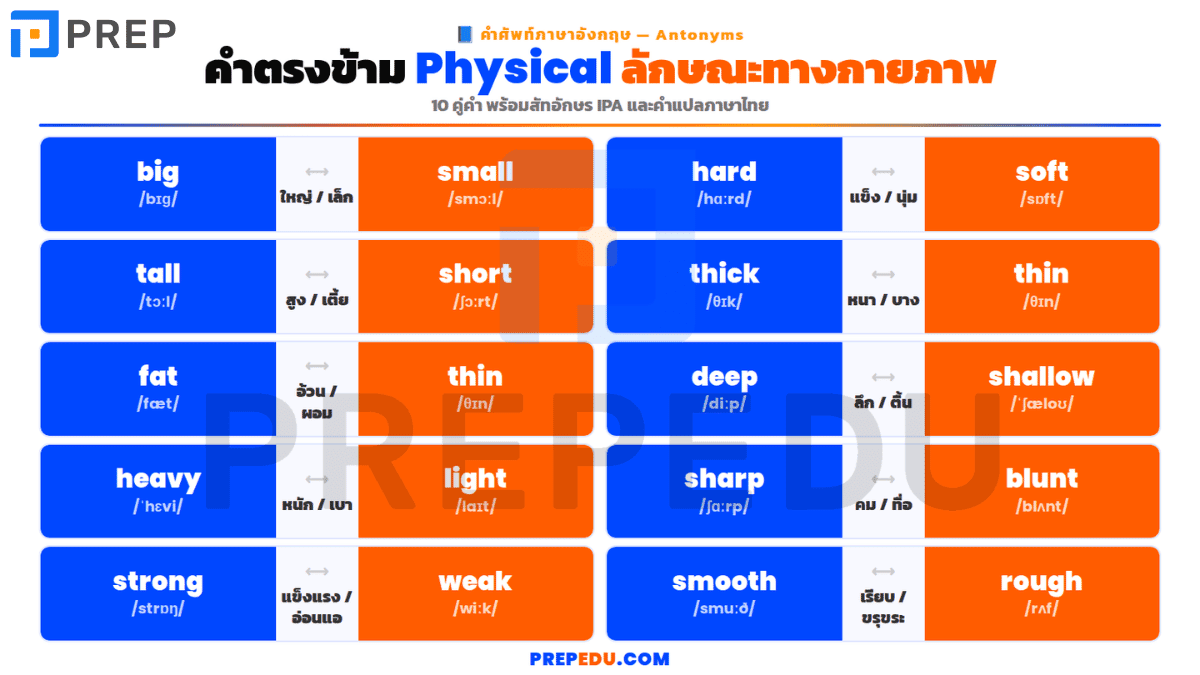
|
คำที่ 1 (IPA) |
คำที่ 2 (IPA) |
ความหมาย |
ตัวอย่างประโยค |
|
big /bɪɡ/ |
small /smɔːl/ |
ใหญ่ / เล็ก |
The elephant is big, but the mouse is small. (ช้างตัวใหญ่ แต่หนูตัวเล็ก)) |
|
tall /tɔːl/ |
short /ʃɔːrt/ |
สูง / เตี้ย |
He is tall, but his brother is short. (เขาตัวสูง แต่น้องชายตัวเตี้ย)) |
|
fat /fæt/ |
thin /θɪn/ |
อ้วน / ผอม |
The cat is fat, the dog is thin. (แมวอ้วน หมาผอม)) |
|
heavy /ˈhɛvi/ |
light /laɪt/ |
หนัก / เบา |
This box is heavy; that one is light. (กล่องนี้หนัก กล่องนั้นเบา)) |
|
strong /strɒŋ/ |
weak /wiːk/ |
แข็งแรง / อ่อนแอ |
A strong wind blew the weak branches down. (ลมแรงพัดกิ่งที่อ่อนแอลงมา) |
|
hard /hɑːrd/ |
soft /sɒft/ |
แข็ง / นุ่ม |
The bread is hard; the bun is soft. (ขนมปังแข็ง ขนมปังก้อนนุ่ม) |
|
thick /θɪk/ |
thin /θɪn/ |
หนา / บาง |
He cut a thick slice and a thin slice. (เขาตัดชิ้นหนาและชิ้นบาง) |
|
deep /diːp/ |
shallow /ˈʃæloʊ/ |
ลึก / ตื้น |
The pool is deep here, shallow there. (สระลึกตรงนี้ ตื้นตรงนั้น) |
|
sharp /ʃɑːrp/ |
blunt /blʌnt/ |
คม / ทื่อ |
A sharp knife cuts; a blunt knife tears. (มีดคมจะตัด มีดทื่อจะฉีก) |
|
smooth /smuːð/ |
rough /rʌf/ |
เรียบ / ขรุขระ |
The marble is smooth, the stone is rough. (หินอ่อนเรียบ หินก้อนนั้นขรุขระ) |
|
wide /waɪd/ |
narrow /ˈnæroʊ/ |
กว้าง / แคบ |
The river is wide here and narrow there. (แม่น้ำกว้างตรงนี้และแคบตรงนั้น) |
|
long /lɒŋ/ |
short /ʃɔːrt/ |
ยาว / สั้น |
She wore a long dress; he wore a short shirt. (เธอใส่ชุดยาว เขาใส่เสื้อสั้น) |
|
high /haɪ/ |
low /loʊ/ |
สูง / ต่ำ |
The shelf is high; the chair is low. (ชั้นวางสูง เก้าอี้ต่ำ) |
|
tight /taɪt/ |
loose /luːs/ |
คับ / หลวม |
These shoes are tight, those are loose. (รองเท้าคู่นี้คับ คู่นั้นหลวม) |
|
flexible /ˈflɛksəbl/ |
rigid /ˈrɪdʒɪd/ |
ยืดหยุ่น / แข็งทื่อ |
Rubber is flexible; steel is rigid. (ยางยืดหยุ่น เหล็กแข็งทื่อ) |
|
enormous /ɪˈnɔːrməs/ |
tiny /ˈtaɪni/ |
มหึมา / จิ๋ว |
The whale is enormous; the ant is tiny. (วาฬมหึมา มดจิ๋ว) |
|
straight /streɪt/ |
curly /ˈkɜːrli/ |
ตรง / หยิก |
Her hair is straight; his is curly. (ผมเธอตรง ผมเขาหยิก) |
|
clean /kliːn/ |
dirty /ˈdɜːrti/ |
สะอาด / สกปรก |
The plate is clean, the cup is dirty. (จานสะอาด ถ้วยสกปรก) |
|
dry /draɪ/ |
wet /wɛt/ |
แห้ง / เปียก |
My towel is dry; yours is wet. (ผ้าเช็ดตัวผมแห้ง ของคุณเปียก) |
|
cold /koʊld/ |
hot /hɒt/ |
เย็น / ร้อน |
The coffee is cold; the soup is hot. (กาแฟเย็น ซุปร้อน) |
|
bright /braɪt/ |
dim /dɪm/ |
สว่าง / สลัว |
The kitchen is bright, the hall is dim. (ครัวสว่าง ห้องโถงสลัว) |
|
near /nɪər/ |
far /fɑːr/ |
ใกล้ / ไกล |
The shop is near; the school is far. (ร้านอยู่ใกล้ โรงเรียนอยู่ไกล) |
|
fast /fæst/ |
slow /sloʊ/ |
เร็ว / ช้า |
A cheetah is fast; a turtle is slow. (เสือชีต้าเร็ว เต่าช้า) |
|
young /jʌŋ/ |
old /oʊld/ |
เด็ก / แก่ |
The young man helped the old lady. (ชายหนุ่มช่วยหญิงชรา) |
|
empty /ˈɛmpti/ |
full /fʊl/ |
ว่าง / เต็ม |
My glass is empty; hers is full. (แก้วของผมว่าง ของเธอเต็ม) |
2. คำตรงข้ามบอกอารมณ์ ความรู้สึก (Emotion)
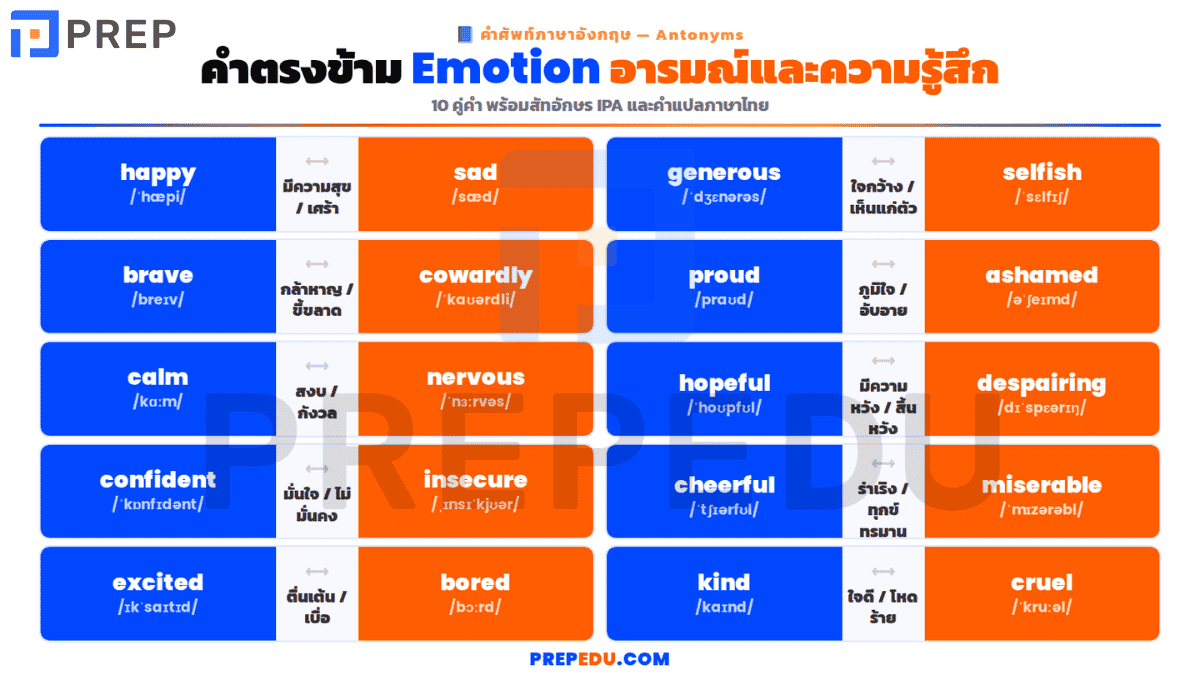
|
คำที่ 1 (IPA) |
คำที่ 2 (IPA) |
ความหมาย |
ตัวอย่างประโยค |
|
happy /ˈhæpi/ |
sad /sæd/ |
ใหญ่ / เล็ก |
She felt happy on her birthday but sad the next day. (เธอมีความสุขในวันเกิด แต่เศร้าในวันรุ่งขึ้น) |
|
brave /breɪv/ |
cowardly /ˈkaʊərdli/ |
สูง / เตี้ย |
A brave soldier stood while the cowardly ones ran. (ทหารกล้ายืนหยัด ส่วนคนขี้ขลาดวิ่งหนี) |
|
calm /kɑːm/ |
nervous /ˈnɜːrvəs/ |
อ้วน / ผอม |
He stayed calm; she felt nervous. (เขาสงบ เธอกระวนกระวาย) |
|
confident /ˈkɒnfɪdənt/ |
insecure /ˌɪnsɪˈkjʊər/ |
หนัก / เบา |
Confident speakers attract listeners; insecure ones lose them. (ผู้พูดที่มั่นใจดึงดูดผู้ฟัง ส่วนคนขาดความมั่นใจสูญเสียพวกเขา) |
|
excited /ɪkˈsaɪtɪd/ |
bored /bɔːrd/ |
แข็งแรง / อ่อนแอ |
The kids were excited; the adults looked bored. (เด็ก ๆ ตื่นเต้น ผู้ใหญ่ดูเบื่อ) |
|
generous /ˈdʒɛnərəs/ |
selfish /ˈsɛlfɪʃ/ |
แข็ง / นุ่ม |
A generous host shares; a selfish one hides. (เจ้าภาพใจกว้างแบ่งปัน คนเห็นแก่ตัวซ่อน) |
|
proud /praʊd/ |
ashamed /əˈʃeɪmd/ |
หนา / บาง |
He felt proud of his daughter and ashamed of his mistake. (เขาภูมิใจในลูกสาวและละอายในความผิดของตัวเอง) |
|
hopeful /ˈhoʊpfʊl/ |
despairing /dɪˈspɛərɪŋ/ |
ลึก / ตื้น |
She remained hopeful while others grew despairing. (เธอมีความหวังขณะที่คนอื่นเริ่มสิ้นหวัง) |
|
cheerful /ˈtʃɪərfʊl/ |
miserable /ˈmɪzərəbl/ |
คม / ทื่อ |
Her cheerful smile cheered up the miserable patient. (รอยยิ้มร่าเริงของเธอปลอบใจคนไข้ที่ทุกข์) |
|
kind /kaɪnd/ |
cruel /ˈkruːəl/ |
เรียบ / ขรุขระ |
Be kind to animals, never cruel. (จงใจดีกับสัตว์ อย่าโหดร้าย) |
|
gentle /ˈdʒɛntl/ |
harsh /hɑːrʃ/ |
กว้าง / แคบ |
A gentle tone works better than a harsh one. (น้ำเสียงนุ่มนวลใช้ได้ดีกว่าน้ำเสียงรุนแรง) |
|
optimistic /ˌɒptɪˈmɪstɪk/ |
pessimistic /ˌpɛsɪˈmɪstɪk/ |
ยาว / สั้น |
She is optimistic about exams; he is pessimistic. (เธอมองโลกในแง่ดีเรื่องสอบ เขามองในแง่ร้าย) |
|
enthusiastic /ɪnˌθuːziˈæstɪk/ |
apathetic /ˌæpəˈθɛtɪk/ |
สูง / ต่ำ |
Enthusiastic students learn fast; apathetic ones lag. (นักเรียนกระตือรือร้นเรียนเร็ว คนเฉยเมยตามไม่ทัน) |
|
friendly /ˈfrɛndli/ |
hostile /ˈhɒstaɪl/ |
คับ / หลวม |
The neighbors are friendly; the dogs look hostile. (เพื่อนบ้านเป็นมิตร สุนัขดูเป็นศัตรู) |
|
sympathetic /ˌsɪmpəˈθɛtɪk/ |
indifferent /ɪnˈdɪfərənt/ |
ยืดหยุ่น / แข็งทื่อ |
He was sympathetic to her loss; others stayed indifferent. (เขาเห็นใจการสูญเสียของเธอ คนอื่นยังเฉย) |
|
honest /ˈɒnɪst/ |
dishonest /dɪsˈɒnɪst/ |
มหึมา / จิ๋ว |
Honest employees earn trust; dishonest ones lose jobs. (พนักงานซื่อสัตย์ได้รับความไว้วางใจ คนไม่ซื่อสัตย์ตกงาน) |
|
humorous /ˈhjuːmərəs/ |
serious /ˈsɪəriəs/ |
ตรง / หยิก |
His humorous speech turned serious at the end. (สุนทรพจน์ขบขันของเขากลายเป็นจริงจังตอนจบ) |
|
patient /ˈpeɪʃənt/ |
impatient /ɪmˈpeɪʃənt/ |
สะอาด / สกปรก |
Patient teachers help shy kids; impatient ones scare them. (ครูที่อดทนช่วยเด็กขี้อาย ครูที่ไม่อดทนทำให้พวกเขากลัว) |
|
relaxed /rɪˈlækst/ |
stressed /strɛst/ |
แห้ง / เปียก |
She felt relaxed at home but stressed at work. (เธอผ่อนคลายที่บ้านแต่เครียดที่ทำงาน) |
|
comfortable /ˈkʌmftəbl/ |
uncomfortable /ʌnˈkʌmftəbl/ |
เย็น / ร้อน |
The chair is comfortable; the bench is uncomfortable. (เก้าอี้สบาย ม้านั่งไม่สบาย) |
|
satisfied /ˈsætɪsfaɪd/ |
dissatisfied /dɪsˈsætɪsfaɪd/ |
สว่าง / สลัว |
Customers are satisfied with the food, dissatisfied with the service. (ลูกค้าพอใจอาหาร ไม่พอใจการบริการ) |
|
polite /pəˈlaɪt/ |
rude /ruːd/ |
ใกล้ / ไกล |
A polite greeting beats a rude reply. (คำทักทายสุภาพดีกว่าคำตอบหยาบคาย) |
|
modest /ˈmɒdɪst/ |
arrogant /ˈærəɡənt/ |
เร็ว / ช้า |
Champions are often modest; runners-up sometimes arrogant. (แชมป์มักถ่อมตน รองแชมป์บางทีหยิ่ง) |
|
encouraging /ɪnˈkʌrɪdʒɪŋ/ |
discouraging /dɪsˈkʌrɪdʒɪŋ/ |
เด็ก / แก่ |
The coach gave encouraging words after a discouraging match. (โค้ชพูดให้กำลังใจหลังการแข่งขันที่บั่นทอน) |
|
mature /məˈtjʊər/ |
immature /ˌɪməˈtjʊər/ |
ว่าง / เต็ม |
Mature decisions outweigh immature reactions. (การตัดสินใจอย่างผู้ใหญ่หนักแน่นกว่าการตอบสนองแบบยังไม่โต) |
3. คำตรงข้ามบอกเวลา ทิศทาง ตำแหน่ง (Time & Direction)
|
คำที่ 1 (IPA) |
คำที่ 2 (IPA) |
ความหมาย |
ตัวอย่างประโยค |
|
early /ˈɜːrli/ |
late /leɪt/ |
ใหญ่ / เล็ก |
She arrived early; he came late. (เธอมาแต่เช้า เขามาสาย) |
|
dawn /dɔːn/ |
dusk /dʌsk/ |
สูง / เตี้ย |
Birds sing at dawn and rest at dusk. (นกร้องตอนรุ่งอรุณและพักตอนพลบค่ำ) |
|
morning /ˈmɔːrnɪŋ/ |
evening /ˈiːvnɪŋ/ |
อ้วน / ผอม |
We jog in the morning and read in the evening. (เราวิ่งตอนเช้าและอ่านหนังสือตอนเย็น) |
|
day /deɪ/ |
night /naɪt/ |
หนัก / เบา |
Owls hunt at night and sleep by day. (นกฮูกล่าตอนกลางคืนและนอนตอนกลางวัน) |
|
ancient /ˈeɪnʃənt/ |
modern /ˈmɒdərn/ |
แข็งแรง / อ่อนแอ |
Ancient temples sit beside modern offices. (วัดโบราณตั้งอยู่ข้างสำนักงานทันสมัย) |
|
past /pɑːst/ |
future /ˈfjuːtʃər/ |
แข็ง / นุ่ม |
Learn from the past, prepare for the future. (เรียนรู้จากอดีต เตรียมตัวสู่อนาคต) |
|
beginning /bɪˈɡɪnɪŋ/ |
end /ɛnd/ |
หนา / บาง |
The beginning was easy; the end was hard. (จุดเริ่มง่าย จุดจบยาก) |
|
first /fɜːrst/ |
last /lɑːst/ |
ลึก / ตื้น |
He was first in line, she was last. (เขาอยู่คนแรกในแถว เธออยู่คนสุดท้าย) |
|
before /bɪˈfɔːr/ |
after /ˈɑːftər/ |
คม / ทื่อ |
Wash hands before meals and after work. (ล้างมือก่อนกินอาหารและหลังทำงาน) |
|
north /nɔːrθ/ |
south /saʊθ/ |
เรียบ / ขรุขระ |
Chiang Mai is in the north; Phuket is in the south. (เชียงใหม่อยู่ทางเหนือ ภูเก็ตอยู่ทางใต้) |
|
east /iːst/ |
west /wɛst/ |
กว้าง / แคบ |
The sun rises in the east and sets in the west. (ดวงอาทิตย์ขึ้นทางตะวันออกและตกทางตะวันตก) |
|
up /ʌp/ |
down /daʊn/ |
ยาว / สั้น |
Prices went up, then down. (ราคาขึ้นแล้วลง) |
|
front /frʌnt/ |
back /bæk/ |
สูง / ต่ำ |
Sit at the front, not at the back. (นั่งหน้า ไม่ใช่หลัง) |
|
inside /ɪnˈsaɪd/ |
outside /ˌaʊtˈsaɪd/ |
คับ / หลวม |
The cat is inside; the dog is outside. (แมวอยู่ข้างใน หมาอยู่ข้างนอก) |
|
top /tɒp/ |
bottom /ˈbɒtəm/ |
ยืดหยุ่น / แข็งทื่อ |
Her name is at the top; mine is at the bottom. (ชื่อเธออยู่บนสุด ชื่อผมอยู่ล่างสุด) |
|
left /lɛft/ |
right /raɪt/ |
มหึมา / จิ๋ว |
Turn left here, then right at the lights. (เลี้ยวซ้ายตรงนี้ แล้วเลี้ยวขวาที่ไฟแดง) |
|
above /əˈbʌv/ |
below /bɪˈloʊ/ |
ตรง / หยิก |
Clouds float above; oceans lie below. (เมฆลอยอยู่ข้างบน มหาสมุทรอยู่ข้างล่าง) |
|
here /hɪər/ |
there /ðɛər/ |
สะอาด / สกปรก |
I live here; my sister lives there. (ผมอยู่ที่นี่ พี่สาวอยู่ที่นั่น) |
|
near /nɪər/ |
far /fɑːr/ |
แห้ง / เปียก |
The market is near; the airport is far. (ตลาดอยู่ใกล้ สนามบินอยู่ไกล) |
|
arrive /əˈraɪv/ |
depart /dɪˈpɑːrt/ |
เย็น / ร้อน |
The train arrives at 8 and departs at 9. (รถไฟมาถึงเวลา 8 และออกเวลา 9) |
|
satisfied /ˈsætɪsfaɪd/ |
dissatisfied /dɪsˈsætɪsfaɪd/ |
สว่าง / สลัว |
Customers are satisfied with the food, dissatisfied with the service. (ลูกค้าพอใจอาหาร ไม่พอใจการบริการ) |
|
polite /pəˈlaɪt/ |
rude /ruːd/ |
ใกล้ / ไกล |
A polite greeting beats a rude reply. (คำทักทายสุภาพดีกว่าคำตอบหยาบคาย) |
|
modest /ˈmɒdɪst/ |
arrogant /ˈærəɡənt/ |
เร็ว / ช้า |
Champions are often modest; runners-up sometimes arrogant. (แชมป์มักถ่อมตน รองแชมป์บางทีหยิ่ง) |
|
encouraging /ɪnˈkʌrɪdʒɪŋ/ |
discouraging /dɪsˈkʌrɪdʒɪŋ/ |
เด็ก / แก่ |
The coach gave encouraging words after a discouraging match. (โค้ชพูดให้กำลังใจหลังการแข่งขันที่บั่นทอน) |
|
mature /məˈtjʊər/ |
immature /ˌɪməˈtjʊər/ |
ว่าง / เต็ม |
Mature decisions outweigh immature reactions. (การตัดสินใจอย่างผู้ใหญ่หนักแน่นกว่าการตอบสนองแบบยังไม่โต) |
4. คำตรงข้ามเป็นคำกริยา (Verbs)
|
คำที่ 1 (IPA) |
คำที่ 2 (IPA) |
ความหมาย |
ตัวอย่างประโยค |
|
increase /ɪnˈkriːs/ |
decrease /dɪˈkriːs/ |
สูง / เตี้ย |
Sales increased in summer and decreased in winter. (ยอดขายเพิ่มในฤดูร้อนและลดในฤดูหนาว) |
|
accept /əkˈsɛpt/ |
reject /rɪˈdʒɛkt/ |
อ้วน / ผอม |
The university accepted Mali but rejected John. (มหาวิทยาลัยรับมาลี แต่ปฏิเสธจอห์น) |
|
arrive /əˈraɪv/ |
leave /liːv/ |
หนัก / เบา |
Guests arrived early and left late. (แขกมาแต่เช้าและออกไปดึก) |
|
buy /baɪ/ |
sell /sɛl/ |
แข็งแรง / อ่อนแอ |
Farmers buy seeds in spring and sell crops in autumn. (เกษตรกรซื้อเมล็ดในฤดูใบไม้ผลิและขายผลผลิตในฤดูใบไม้ร่วง) |
|
borrow /ˈbɒroʊ/ |
lend /lɛnd/ |
แข็ง / นุ่ม |
I borrowed a book and lent her my pen. (ผมยืมหนังสือและให้เธอยืมปากกา) |
|
create /kriˈeɪt/ |
destroy /dɪˈstrɔɪ/ |
หนา / บาง |
War destroys what peace creates. (สงครามทำลายสิ่งที่สันติภาพสร้าง) |
|
push /pʊʃ/ |
pull /pʊl/ |
ลึก / ตื้น |
Push the door, then pull the handle. (ดันประตู แล้วดึงด้ามจับ) |
|
expand /ɪkˈspænd/ |
contract /kənˈtrækt/ |
คม / ทื่อ |
Metal expands when hot and contracts when cold. (โลหะขยายเมื่อร้อนและหดเมื่อเย็น) |
|
succeed /səkˈsiːd/ |
fail /feɪl/ |
เรียบ / ขรุขระ |
He succeeded after he had failed twice. (เขาสำเร็จหลังจากล้มเหลวมาแล้วสองครั้ง) |
|
ask /ɑːsk/ |
answer /ˈænsər/ |
กว้าง / แคบ |
Students ask; teachers answer. (นักเรียนถาม ครูตอบ) |
|
give /ɡɪv/ |
take /teɪk/ |
ยาว / สั้น |
He gave a gift and took a hug. (เขาให้ของขวัญและรับกอด) |
|
win /wɪn/ |
lose /luːz/ |
สูง / ต่ำ |
One team wins, the other loses. (ทีมหนึ่งชนะ อีกทีมแพ้) |
|
love /lʌv/ |
hate /heɪt/ |
คับ / หลวม |
She loves chocolate but hates onions. (เธอรักช็อกโกแลตแต่เกลียดหัวหอม) |
|
include /ɪnˈkluːd/ |
exclude /ɪkˈskluːd/ |
ยืดหยุ่น / แข็งทื่อ |
The price includes tax but excludes tip. (ราคารวมภาษีแต่ไม่รวมทิป) |
|
remember /rɪˈmɛmbər/ |
forget /fərˈɡɛt/ |
มหึมา / จิ๋ว |
I remember her name but forget his. (ผมจำชื่อเธอได้ แต่ลืมชื่อเขา) |
|
find /faɪnd/ |
lose /luːz/ |
ตรง / หยิก |
I found my keys but lost my phone. (ผมเจอกุญแจ แต่ทำโทรศัพท์หาย) |
|
open /ˈoʊpən/ |
close /kloʊz/ |
สะอาด / สกปรก |
Shops open at 9 and close at 9. (ร้านเปิด 9 โมงและปิด 3 ทุ่ม) |
|
start /stɑːrt/ |
finish /ˈfɪnɪʃ/ |
แห้ง / เปียก |
Start with introduction and finish with conclusion. (เริ่มด้วยบทนำและจบด้วยบทสรุป) |
|
build /bɪld/ |
destroy /dɪˈstrɔɪ/ |
เย็น / ร้อน |
It takes years to build trust and seconds to destroy it. (ต้องใช้หลายปีในการสร้างความไว้วางใจและไม่กี่วินาทีในการทำลาย) |
|
save /seɪv/ |
spend /spɛnd/ |
สว่าง / สลัว |
She saves half her salary and spends the rest. (เธอเก็บครึ่งหนึ่งของเงินเดือนและใช้ที่เหลือ) |
|
raise /reɪz/ |
lower /ˈloʊər/ |
ใกล้ / ไกล |
Please raise your hand and then lower it. (กรุณายกมือขึ้น แล้วลดลง) |
|
defend /dɪˈfɛnd/ |
attack /əˈtæk/ |
เร็ว / ช้า |
One team defends the goal while the other attacks. (ทีมหนึ่งป้องกันประตู อีกทีมโจมตี) |
|
agree /əˈɡriː/ |
disagree /ˌdɪsəˈɡriː/ |
เด็ก / แก่ |
Parents agreed; children disagreed. (พ่อแม่เห็นด้วย ลูกไม่เห็นด้วย) |
|
allow /əˈlaʊ/ |
forbid /fərˈbɪd/ |
ว่าง / เต็ม |
The school allows phones but forbids smoking. (โรงเรียนอนุญาตให้ใช้โทรศัพท์แต่ห้ามสูบบุหรี่) |
|
hire /ˈhaɪər/ |
fire /ˈfaɪər/ |
ว่าง / เต็ม |
The company hired ten and fired two. (บริษัทจ้างสิบคนและไล่ออกสองคน) |
|
support /səˈpɔːrt/ |
oppose /əˈpoʊz/ |
ว่าง / เต็ม |
Most members support the plan; a few oppose it. (สมาชิกส่วนใหญ่สนับสนุนแผน ไม่กี่คนคัดค้าน) |
|
advance /ədˈvɑːns/ |
retreat /rɪˈtriːt/ |
ว่าง / เต็ม |
The army advanced in the morning and retreated at night. (กองทัพรุกตอนเช้าและถอยตอนกลางคืน) |
|
float /floʊt/ |
sink /sɪŋk/ |
ว่าง / เต็ม |
Wood floats; stones sink. (ไม้ลอย หินจม) |
|
import /ɪmˈpɔːrt/ |
export /ɪkˈspɔːrt/ |
ว่าง / เต็ม |
Thailand imports oil and exports rice. (ไทยนำเข้าน้ำมันและส่งออกข้าว) |
|
reveal /rɪˈviːl/ |
conceal /kənˈsiːl/ |
ว่าง / เต็ม |
He revealed the secret she had concealed. (เขาเปิดเผยความลับที่เธอปกปิด) |
5. คำตรงข้ามเป็นคำนาม (Nouns)
|
คำที่ 1 (IPA) |
คำที่ 2 (IPA) |
ความหมาย |
ตัวอย่างประโยค |
|
victory /ˈvɪktəri/ |
defeat /dɪˈfiːt/ |
ชัยชนะ / ความพ่ายแพ้ |
Victory tastes sweet; defeat teaches lessons. - ชัยชนะมีรสหวาน ความพ่ายแพ้สอนบทเรียน |
|
advantage /ədˈvæntɪdʒ/ |
disadvantage /ˌdɪsədˈvæntɪdʒ/ |
ข้อได้เปรียบ / ข้อเสียเปรียบ |
Each plan has advantages and disadvantages. - ทุกแผนมีข้อได้เปรียบและข้อเสียเปรียบ |
|
success /səkˈsɛs/ |
failure /ˈfeɪljər/ |
ความสำเร็จ / ความล้มเหลว |
Success follows failure for most students. - ความสำเร็จตามมาหลังความล้มเหลวสำหรับผู้เรียนส่วนใหญ่ |
|
strength /strɛŋθ/ |
weakness /ˈwiːknəs/ |
จุดแข็ง / จุดอ่อน |
Know your strengths and accept your weaknesses. - รู้จักจุดแข็งของตนและยอมรับจุดอ่อน |
|
cause /kɔːz/ |
effect /ɪˈfɛkt/ |
สาเหตุ / ผลกระทบ |
The report describes the cause and the effect. - รายงานอธิบายสาเหตุและผลกระทบ |
|
friend /frɛnd/ |
enemy /ˈɛnəmi/ |
เพื่อน / ศัตรู |
True friends help; real enemies hurt. - เพื่อนแท้ช่วย ศัตรูที่แท้จริงทำร้าย |
|
leader /ˈliːdər/ |
follower /ˈfɒloʊər/ |
ผู้นำ / ผู้ตาม |
Every leader was once a follower. - ผู้นำทุกคนเคยเป็นผู้ตาม |
|
hero /ˈhɪəroʊ/ |
villain /ˈvɪlən/ |
วีรบุรุษ / คนร้าย |
The hero defeats the villain in most films. - วีรบุรุษเอาชนะคนร้ายในหนังส่วนใหญ่ |
|
truth /truːθ/ |
lie /laɪ/ |
ความจริง / คำโกหก |
One truth outweighs many lies. - ความจริงข้อหนึ่งหนักกว่าคำโกหกหลายคำ |
|
peace /piːs/ |
war /wɔːr/ |
สันติภาพ / สงคราม |
Diplomats prefer peace to war. - นักการทูตเลือกสันติภาพมากกว่าสงคราม |
|
love /lʌv/ |
hate /heɪt/ |
ความรัก / ความเกลียด |
Love builds homes; hate burns them. - ความรักสร้างบ้าน ความเกลียดเผามัน |
|
joy /dʒɔɪ/ |
sorrow /ˈsɒroʊ/ |
ความสุข / ความเศร้า |
Joy and sorrow take turns in life. - ความสุขและความเศร้าผลัดกันในชีวิต |
|
knowledge /ˈnɒlɪdʒ/ |
ignorance /ˈɪɡnərəns/ |
ความรู้ / ความไม่รู้ |
Knowledge cures ignorance. - ความรู้รักษาความไม่รู้ |
|
wealth /wɛlθ/ |
poverty /ˈpɒvərti/ |
ความมั่งมี / ความยากจน |
The country fights poverty and shares wealth. - ประเทศต่อสู้กับความยากจนและแบ่งปันความมั่งมี |
|
majority /məˈdʒɒrəti/ |
minority /maɪˈnɒrəti/ |
เสียงข้างมาก / เสียงข้างน้อย |
The majority voted yes; the minority voted no. - เสียงข้างมากโหวตเห็นชอบ เสียงข้างน้อยไม่เห็นชอบ |
|
ally /ˈælaɪ/ |
enemy /ˈɛnəmi/ |
พันธมิตร / ศัตรู |
An ally today may be an enemy tomorrow. - พันธมิตรวันนี้อาจเป็นศัตรูในวันพรุ่งนี้ |
|
comedy /ˈkɒmədi/ |
tragedy /ˈtrædʒədi/ |
ตลก / โศกนาฏกรรม |
Some films mix comedy and tragedy. - บางเรื่องผสมตลกและโศกนาฏกรรม |
|
demand /dɪˈmɑːnd/ |
supply /səˈplaɪ/ |
อุปสงค์ / อุปทาน |
Demand rose while supply fell. - อุปสงค์เพิ่มขณะที่อุปทานลด |
|
entrance /ˈɛntrəns/ |
exit /ˈɛksɪt/ |
ทางเข้า / ทางออก |
The entrance is in front; the exit is at the back. - ทางเข้าอยู่ด้านหน้า ทางออกอยู่ด้านหลัง |
|
presence /ˈprɛzəns/ |
absence /ˈæbsəns/ |
การปรากฏตัว / การไม่อยู่ |
Her presence calmed the room; his absence worried us. - การมีเธออยู่ทำให้ห้องสงบ การที่เขาไม่อยู่ทำให้เรากังวล |
|
day /deɪ/ |
night /naɪt/ |
กลางวัน / กลางคืน |
Day brings work; night brings rest. - กลางวันนำมาซึ่งงาน กลางคืนนำมาซึ่งการพักผ่อน |
|
theory /ˈθɪəri/ |
practice /ˈpræktɪs/ |
ทฤษฎี / การปฏิบัติ |
Theory guides, practice proves. - ทฤษฎีชี้แนะ การปฏิบัติพิสูจน์ |
|
tradition /trəˈdɪʃən/ |
innovation /ˌɪnəˈveɪʃən/ |
ประเพณี / นวัตกรรม |
Tradition meets innovation in modern Thai design. - ประเพณีพบนวัตกรรมในงานออกแบบไทยสมัยใหม่ |
|
junior /ˈdʒuːniər/ |
senior /ˈsiːniər/ |
รุ่นน้อง / รุ่นพี่ |
Junior staff learn from senior staff. - พนักงานรุ่นน้องเรียนรู้จากรุ่นพี่ |
|
amateur /ˈæmətər/ |
professional /prəˈfɛʃənl/ |
มือสมัครเล่น / มืออาชีพ |
Amateurs play for fun; professionals play for pay. - มือสมัครเล่นเล่นเพื่อสนุก มืออาชีพเล่นเพื่อเงิน |
6. คำตรงข้ามคุณภาพและสภาพ (Quality & Condition)
|
คำที่ 1 (IPA) |
คำที่ 2 (IPA) |
ความหมาย |
ตัวอย่างประโยค |
|
victory /ˈvɪktəri/ |
defeat /dɪˈfiːt/ |
ใหญ่ / เล็ก |
Victory tastes sweet; defeat teaches lessons. (ชัยชนะมีรสหวาน ความพ่ายแพ้สอนบทเรียน) |
|
advantage /ədˈvæntɪdʒ/ |
disadvantage /ˌdɪsədˈvæntɪdʒ/ |
สูง / เตี้ย |
Each plan has advantages and disadvantages. (ทุกแผนมีข้อได้เปรียบและข้อเสียเปรียบ) |
|
success /səkˈsɛs/ |
failure /ˈfeɪljər/ |
อ้วน / ผอม |
Success follows failure for most students. (ความสำเร็จตามมาหลังความล้มเหลวสำหรับผู้เรียนส่วนใหญ่) |
|
strength /strɛŋθ/ |
weakness /ˈwiːknəs/ |
หนัก / เบา |
Know your strengths and accept your weaknesses. (รู้จักจุดแข็งของตนและยอมรับจุดอ่อน) |
|
cause /kɔːz/ |
effect /ɪˈfɛkt/ |
แข็งแรง / อ่อนแอ |
The report describes the cause and the effect. (รายงานอธิบายสาเหตุและผลกระทบ) |
|
friend /frɛnd/ |
enemy /ˈɛnəmi/ |
แข็ง / นุ่ม |
True friends help; real enemies hurt. (เพื่อนแท้ช่วย ศัตรูที่แท้จริงทำร้าย) |
|
leader /ˈliːdər/ |
follower /ˈfɒloʊər/ |
หนา / บาง |
Every leader was once a follower. (ผู้นำทุกคนเคยเป็นผู้ตาม) |
|
hero /ˈhɪəroʊ/ |
villain /ˈvɪlən/ |
ลึก / ตื้น |
The hero defeats the villain in most films. (วีรบุรุษเอาชนะคนร้ายในหนังส่วนใหญ่) |
|
truth /truːθ/ |
lie /laɪ/ |
คม / ทื่อ |
One truth outweighs many lies. (ความจริงข้อหนึ่งหนักกว่าคำโกหกหลายคำ) |
|
peace /piːs/ |
war /wɔːr/ |
เรียบ / ขรุขระ |
Diplomats prefer peace to war. (นักการทูตเลือกสันติภาพมากกว่าสงคราม) |
|
love /lʌv/ |
hate /heɪt/ |
กว้าง / แคบ |
Love builds homes; hate burns them. (ความรักสร้างบ้าน ความเกลียดเผามัน) |
|
joy /dʒɔɪ/ |
sorrow /ˈsɒroʊ/ |
ยาว / สั้น |
Joy and sorrow take turns in life. (ความสุขและความเศร้าผลัดกันในชีวิต) |
|
knowledge /ˈnɒlɪdʒ/ |
ignorance /ˈɪɡnərəns/ |
สูง / ต่ำ |
Knowledge cures ignorance. (ความรู้รักษาความไม่รู้) |
|
wealth /wɛlθ/ |
poverty /ˈpɒvərti/ |
คับ / หลวม |
The country fights poverty and shares wealth. (ประเทศต่อสู้กับความยากจนและแบ่งปันความมั่งมี) |
|
majority /məˈdʒɒrəti/ |
minority /maɪˈnɒrəti/ |
ยืดหยุ่น / แข็งทื่อ |
The majority voted yes; the minority voted no. (เสียงข้างมากโหวตเห็นชอบ เสียงข้างน้อยไม่เห็นชอบ) |
|
ally /ˈælaɪ/ |
enemy /ˈɛnəmi/ |
มหึมา / จิ๋ว |
An ally today may be an enemy tomorrow. (พันธมิตรวันนี้อาจเป็นศัตรูในวันพรุ่งนี้) |
|
comedy /ˈkɒmədi/ |
tragedy /ˈtrædʒədi/ |
ตรง / หยิก |
Some films mix comedy and tragedy. (บางเรื่องผสมตลกและโศกนาฏกรรม) |
|
demand /dɪˈmɑːnd/ |
supply /səˈplaɪ/ |
สะอาด / สกปรก |
Demand rose while supply fell. (อุปสงค์เพิ่มขณะที่อุปทานลด) |
|
entrance /ˈɛntrəns/ |
exit /ˈɛksɪt/ |
แห้ง / เปียก |
The entrance is in front; the exit is at the back. (ทางเข้าอยู่ด้านหน้า ทางออกอยู่ด้านหลัง) |
|
presence /ˈprɛzəns/ |
absence /ˈæbsəns/ |
เย็น / ร้อน |
Her presence calmed the room; his absence worried us. (การมีเธออยู่ทำให้ห้องสงบ การที่เขาไม่อยู่ทำให้เรากังวล) |
|
day /deɪ/ |
night /naɪt/ |
สว่าง / สลัว |
Day brings work; night brings rest. (กลางวันนำมาซึ่งงาน กลางคืนนำมาซึ่งการพักผ่อน) |
|
theory /ˈθɪəri/ |
practice /ˈpræktɪs/ |
ใกล้ / ไกล |
Theory guides, practice proves. (ทฤษฎีชี้แนะ การปฏิบัติพิสูจน์) |
|
tradition /trəˈdɪʃən/ |
innovation /ˌɪnəˈveɪʃən/ |
เร็ว / ช้า |
Tradition meets innovation in modern Thai design. (ประเพณีพบนวัตกรรมในงานออกแบบไทยสมัยใหม่) |
|
junior /ˈdʒuːniər/ |
senior /ˈsiːniər/ |
เด็ก / แก่ |
Junior staff learn from senior staff. (พนักงานรุ่นน้องเรียนรู้จากรุ่นพี่) |
|
amateur /ˈæmətər/ |
professional /prəˈfɛʃənl/ |
ว่าง / เต็ม |
Amateurs play for fun; professionals play for pay. (มือสมัครเล่นเล่นเพื่อสนุก มืออาชีพเล่นเพื่อเงิน) |
|
hire /ˈhaɪər/ |
fire /ˈfaɪər/ |
ว่าง / เต็ม |
The company hired ten and fired two. (บริษัทจ้างสิบคนและไล่ออกสองคน) |
|
support /səˈpɔːrt/ |
oppose /əˈpoʊz/ |
ว่าง / เต็ม |
Most members support the plan; a few oppose it. (สมาชิกส่วนใหญ่สนับสนุนแผน ไม่กี่คนคัดค้าน) |
|
advance /ədˈvɑːns/ |
retreat /rɪˈtriːt/ |
ว่าง / เต็ม |
The army advanced in the morning and retreated at night. (กองทัพรุกตอนเช้าและถอยตอนกลางคืน) |
|
float /floʊt/ |
sink /sɪŋk/ |
ว่าง / เต็ม |
Wood floats; stones sink. (ไม้ลอย หินจม) |
|
import /ɪmˈpɔːrt/ |
export /ɪkˈspɔːrt/ |
ว่าง / เต็ม |
Thailand imports oil and exports rice. (ไทยนำเข้าน้ำมันและส่งออกข้าว) |
|
reveal /rɪˈviːl/ |
conceal /kənˈsiːl/ |
ว่าง / เต็ม |
He revealed the secret she had concealed. (เขาเปิดเผยความลับที่เธอปกปิด) |
7. คำตรงข้ามที่เป็น Phrasal Verbs - 10 คู่
|
คำที่ 1 (IPA) |
คำที่ 2 (IPA) |
ความหมาย |
ตัวอย่างประโยค |
|
break down /breɪk daʊn/ |
fix up /fɪks ʌp/ |
สูง / เตี้ย |
The car broke down on Monday; the mechanic fixed it up by Friday. (รถพังในวันจันทร์ ช่างซ่อมเสร็จในวันศุกร์) |
|
catch up /kætʃ ʌp/ |
fall behind /fɔːl bɪˈhaɪnd/ |
อ้วน / ผอม |
She caught up with her classmates after she had fallen behind. (เธอตามทันเพื่อนร่วมชั้นหลังจากที่เคยตามไม่ทัน) |
|
give in /ɡɪv ɪn/ |
stand up /stænd ʌp/ |
หนัก / เบา |
Do not give in; stand up for your rights. (อย่ายอมแพ้ จงยืนหยัดเพื่อสิทธิของตน) |
|
give up /ɡɪv ʌp/ |
keep on /kiːp ɒn/ |
แข็งแรง / อ่อนแอ |
He gave up smoking but kept on exercising. (เขาเลิกสูบบุหรี่ แต่ออกกำลังกายต่อ) |
|
pick up /pɪk ʌp/ |
put down /pʊt daʊn/ |
แข็ง / นุ่ม |
Pick up the pen and put down the phone. (หยิบปากกาขึ้นและวางโทรศัพท์ลง) |
|
run out of /rʌn aʊt ɒv/ |
stock up /stɒk ʌp/ |
หนา / บาง |
We ran out of rice, so we stocked up before the storm. (ข้าวของเราหมด เราจึงตุนก่อนพายุ) |
|
take back /teɪk bæk/ |
give away /ɡɪv əˈweɪ/ |
ลึก / ตื้น |
She took back the gift and gave away her old toys. (เธอเอาของขวัญคืนและยกของเล่นเก่าให้) |
|
call off /kɔːl ɒf/ |
go ahead /ɡoʊ əˈhɛd/ |
คม / ทื่อ |
They called off the meeting, then went ahead with the workshop. (พวกเขายกเลิกการประชุม แล้วเดินหน้ากับเวิร์กชอป) |
|
get along /ɡɛt əˈlɒŋ/ |
fall out /fɔːl aʊt/ |
เรียบ / ขรุขระ |
The twins get along most days but fall out over toys. (ฝาแฝดเข้ากันได้ส่วนใหญ่ แต่ทะเลาะกันเรื่องของเล่น) |
|
come across /kʌm əˈkrɒs/ |
look for /lʊk fɔːr/ |
กว้าง / แคบ |
I came across this book while looking for another. (ผมบังเอิญพบหนังสือเล่มนี้ขณะกำลังตั้งใจหาเล่มอื่น) |
V. แบบฝึกหัด Antonym พร้อมเฉลย
แบบฝึกหัดต่อไปนี้แบ่งเป็น 3 ระดับยากตามลำดับ ได้แก่ เติมคำในช่องว่าง (ระดับ A2), Multiple Choice ใน context (ระดับ B1 มอกแบบ TGAT/TOEIC), และ Reading Comprehension (ระดับ B1-B2 มอกแบบ IELTS) การฝึก 10 ข้อ/วัน × 4 สัปดาห์ ทำให้คำคู่ตรงข้ามประมาณ 120 คู่ติดในความจำระยะยาว (Cepeda et al., 2008)
1. แบบฝึกหัดที่ 1 - เติมคำตรงข้ามในช่องว่าง (10 ข้อ)
เติมคำตรงข้ามของคำตัวหนาในช่องว่าง
1. The day was bright, but the night was _____.
2. She is patient with kids; he is _____.
3. The shop opens at 9 and _____ at 9.
4. The exam was difficult, but the homework was _____.
5. Ancient temples sit next to _____ offices.
6. Honest answers are short; _____ answers are long.
7. Wood floats; stones _____.
8. The cat is inside; the dog is _____.
9. Prices went up in March and _____ in April.
10. He was the first to arrive and the _____ to leave.
เฉลย:
[prep_collapse_expand open_text="View more" close_text="Show less"]
1. dark
2. impatient
3. closes
4. easy
5. modern
6. dishonest
7. sink
8. outside
9. down
10. last
[/prep_collapse_expand]
2. แบบฝึกหัดที่ 2 - Multiple Choice เลือก Antonym จาก context (10 ข้อ)
เลือกคำที่ตรงข้ามกับคำตัวหนา
1. The lecture was lucid.
(A) clear (B) confusing (C) short (D) loud
2. Her modest behavior won admiration.
(A) humble (B) shy (C) arrogant (D) kind
3. The river is shallow here.
(A) clear (B) deep (C) wide (D) muddy
4. He rejected the offer.
(A) refused (B) accepted (C) ignored (D) signed
5. The room felt spacious.
(A) wide (B) huge (C) cramped (D) airy
6. The witness gave an honest account.
(A) dishonest (B) brief (C) truthful (D) detailed
7. Wages will increase next month.
(A) rise (B) decrease (C) freeze (D) double
8. The medicine has a bitter taste.
(A) sweet (B) sour (C) strong (D) mild
9. The path is narrow.
(A) short (B) long (C) wide (D) steep
10. Sales were enormous in December.
(A) huge (B) tiny (C) steady (D) average
เฉลย:
[prep_collapse_expand open_text="View more" close_text="Show less"]
1. B
2. C
3. B
4. B
5. C
6. A
7. B
8. A
9. C
10. B
[/prep_collapse_expand]
VI. FAQ - คำถามที่พบบ่อยเกี่ยวกับ Antonym
คำถามเหล่านี้พบบ่อยที่สุด — ตอบตรง ไม่อ้อม
1. Antonym กับ Synonym ต่างกันอย่างไร?
Antonym (คำตรงข้าม) และ Synonym (คำเหมือน) เป็น 2 ทักษะคำศัพท์ที่ต่างกัน Antonym คือคำตรงข้าม Synonym คือคำเหมือนหรือใกล้เคียง
Antonym ใช้เน้นความต่างหรือสร้างความขัดแย้งในประโยค เช่น "From failure to success" ส่วน Synonym ใช้หลีกเลี่ยงการซ้ำคำและเพิ่มความหลากหลาย เช่น แทน "big" ด้วย "large, huge, enormous" ในข้อสอบ IELTS Reading ทักษะ Paraphrasing ต้องการ Synonym มากกว่า ในขณะที่ IELTS Writing Lexical Resource criterion ต้องการทั้งสอง
2. ทุกคำในภาษาอังกฤษมี Antonym ไหม?
ไม่ คำส่วนใหญ่ที่เป็น adjective, verb, และบาง noun มี Antonym แต่ noun ที่เป็นสิ่งของเฉพาะ เช่น chair, water, mountain มักไม่มี Antonym ตรง เพราะไม่มีคำที่ตรงข้ามเชิงตรรกะ การหาคำตรงข้ามจึงต้องพิจารณาประเภทของคำและบริบทเป็นหลัก
3. คำหนึ่งคำมี Antonym ได้หลายคำหรือไม่?
ได้ คำที่มีหลายความหมาย (polysemy) มี Antonym ต่างกันตามบริบท เช่น "light" ตรงข้าม "heavy" ในความหมายน้ำหนัก และตรงข้าม "dark" ในความหมายสี การตีความต้องดูประโยครอบและ part of speech ของคำ
4. ควรเรียนรู้คำตรงข้ามวันละกี่คู่?
10 คู่/วัน เป็นจำนวนที่งานวิจัยด้าน Spaced Repetition แนะนำ (Cepeda et al., 2008) ทบทวนซ้ำในวันที่ 1, 3, 7, 14, และ 30 จะช่วยให้คำติดในความจำระยะยาว ผู้เรียนที่เข้าใจ Prefix และ Suffix จะลดเวลาท่องได้ครึ่งหนึ่ง เพราะเดาคำใหม่จากรากศัพท์ได้
คำตรงข้าม ภาษาอังกฤษ เป็นเครื่องมือสำคัญที่จะช่วยเพิ่มพูนคำศัพท์และยกระดับทักษะภาษาอังกฤษของคุณ การเรียนรู้คำตรงข้าม อย่างเป็นระบบผ่านการจัดกลุ่ม การใช้ prefix และการฝึกฝนสม่ำเสมอจะช่วยให้คุณจำและใช้งานได้อย่างมีประสิทธิภาพ ไม่ว่าจะเป็นการสื่อสารในชีวิตประจำวันหรือการสอบวัดระดับภาษาอังกฤษ
พัฒนาคำศัพท์และทักษะภาษาอังกฤษกับ PREP English หากคุณต้องการเสริมสร้างคำศัพท์และเตรียมสอบ IELTS อย่างครบวงจร PREP มีคอร์สเรียน IELTS ออนไลน์ ที่ครอบคลุมทั้ง 4 ทักษะพร้อมระบบสอนคำศัพท์อย่างเป็นระบบ ด้วย Virtual Speaking Room และ Virtual Writing Room คุณจะได้ฝึกใช้คำศัพท์ในบริบทที่เหมาะสมและรับฟีดแบ็กแบบเรียลไทม์ นอกจากนี้ยังมี Teacher Bee AI ที่พร้อมช่วยอธิบายคำศัพท์และตอบคำถามตลอด 24 ชั่วโมง ช่วยให้คุณเรียนรู้อย่างมีประสิทธิภาพและบรรลุเป้าหมายคะแนน IELTS ที่ต้องการ เริ่มต้นพัฒนาทักษะภาษาอังกฤษของคุณกับ IELTS ออนไลน์ ที่ PREP วันนี้

สวัสดีค่ะ ฉันชื่อมุก ปัจจุบันดูแลด้านเนื้อหาผลิตภัณฑ์ของ Prep Education ค่ะ
ด้วยประสบการณ์มากกว่า 5 ปีในการเรียน IELTS ออนไลน์ด้วยตนเอง ฉันเข้าใจดีถึงความท้าทายที่ผู้เรียนต้องเผชิญ แล้วก็รู้ว่าอะไรที่มันเวิร์ก
มุกอยากเอาประสบการณ์ตรงนี้มาช่วยแชร์ แล้วก็ซัพพอร์ตเพื่อน ๆ ให้ได้คะแนนที่ดีที่สุดค่ะ
ความคิดเห็น
เนื้อหาแบบพรีเมียม
ดูทั้งหมด



แผนการเรียนรู้ส่วนบุคคล


อ่านมากที่สุด




ติดต่อ Prep ผ่านโซเชียล





Address: ตึก C.P. Tower 2 (ฟอร์จูนทาวน์) ชั้น 21 ถนนรัชดาภิเษก แขวงดินแดง เขตดินแดง กรุงเทพฯ 10400
Hotline: +66 25 44 0068
Email: sawatdee@prepedu.com