全部英文是什麽?從文法辨析、面試實戰到數位環境的無痛轉換
當我們想表達「全部」時,全部英文究竟該用 All、Whole、Entire 還是 Total 呢?這個看似簡單的中文詞彙,在英語世界中卻被區分為多個層次,每個單字都帶有其精確的語義和文法規則。答案是:這些詞彙的選擇,取決於您關注的究竟是「數量的總和(All)」、「形態的完整性(Whole)」或是「範圍的連續性(Entire)」。精準掌握這些差異,是您從基礎英語邁向專業流利的关键一步。
事實上,除了常見的 All 和 Whole,還有 Total(總數)、Gross(毛額)、甚至像 lock, stock, and barrel(完完全全)這類具文化底蘊的表達,它們在財經、專業寫作和日常口語中各有專精。許多學習者常因限定詞的位置混淆 All 和 Whole 的用法,這不僅影響語意,更可能造成溝通誤解。PREPEDU.COM 深知此痛點,我們將透過本篇指南,從基礎文法辨析、面試實戰對話,到數位環境中的專業應用,為您建構一套完整的「全部英文」知識系統,實現無痛轉換,讓您的英文表達精確到位。

I. 全部英文怎麽説?「全部」的 All, Whole, Entire 的精準用法
全部英文可以怎麽説?在探討全部英文單字的使用之前,我們需要先建立一個清晰的認知框架。中文的「全部」是一個相對模糊的概念,但英文卻將這個意思拆解成多個單字,每個都有其精確的適用情境。這不是英文刻意刁難學習者,而是因為英文在表達「整體性」時,會區分你關注的是「數量的總和」還是「完整的狀態」。
1. All
All 這個全部英文詞彙在英語中如何使用?All /ɔːl/ (限定詞、前置限定詞、代名詞英文)強調的是集合中「每一個單位」的完整性,關注的是數量上沒有任何遺漏。當你使用 all 時,你看到的是一個可以被拆解、計算的個體集合。這個詞彙適合用來描述多個獨立單位的總和,或是可以被量化的整體概念。例如:
-
All students passed the exam.(所有學生都通過了考試。)
-
I've read all the books on this shelf.(我讀完了這個書架上所有的書。)
-
All the cookies have been eaten.(所有的餅乾都被吃完了。)
-
She answered all my questions patiently.(她耐心地回答了我所有的問題。)

2. Whole
全部英文單字 Whole /həʊl/ (英文形容詞)強調的是「形態的完整性」,關注的是某個事物作為一個不可分割的整體存在。當你說 the whole 時,你看到的是一個未被切割、未被破壞的完整單位。這個概念特別適用於描述單一物體的完整狀態,或是需要被視為統一整體的概念。例如:
-
I ate the whole pizza by myself.(我一個人吃完了整個披薩。)
-
She spent the whole day studying for the exam.(她花了一整天準備考試。)
-
The whole team celebrated the victory together.(全隊一起慶祝勝利。)
-
He told me the whole story from beginning to end.(他從頭到尾把整個故事告訴了我。)

3. Entire
全部英文單字 "Entire" 可以怎麽用?"Entire" /ɪnˈtaɪər/ 是比 "whole" 更正式的表達,特別強調時間或空間上的「連續性」和「完整範圍」。這個詞彙常出現在書面語或正式場合中,用來強調某個過程或範圍沒有任何間斷或遺漏,展現出更強的專業性和精確度。例如:
-
I spent the entire weekend working on this project.(我花了整個週末處理這個專案。)
-
The entire process took three months to complete.(整個流程花了三個月才完成。)
-
She read the entire book in one sitting.(她一口氣讀完了整本書。)
-
The entire building was evacuated during the fire drill.(整棟大樓在消防演習期間被疏散。)
4. Total
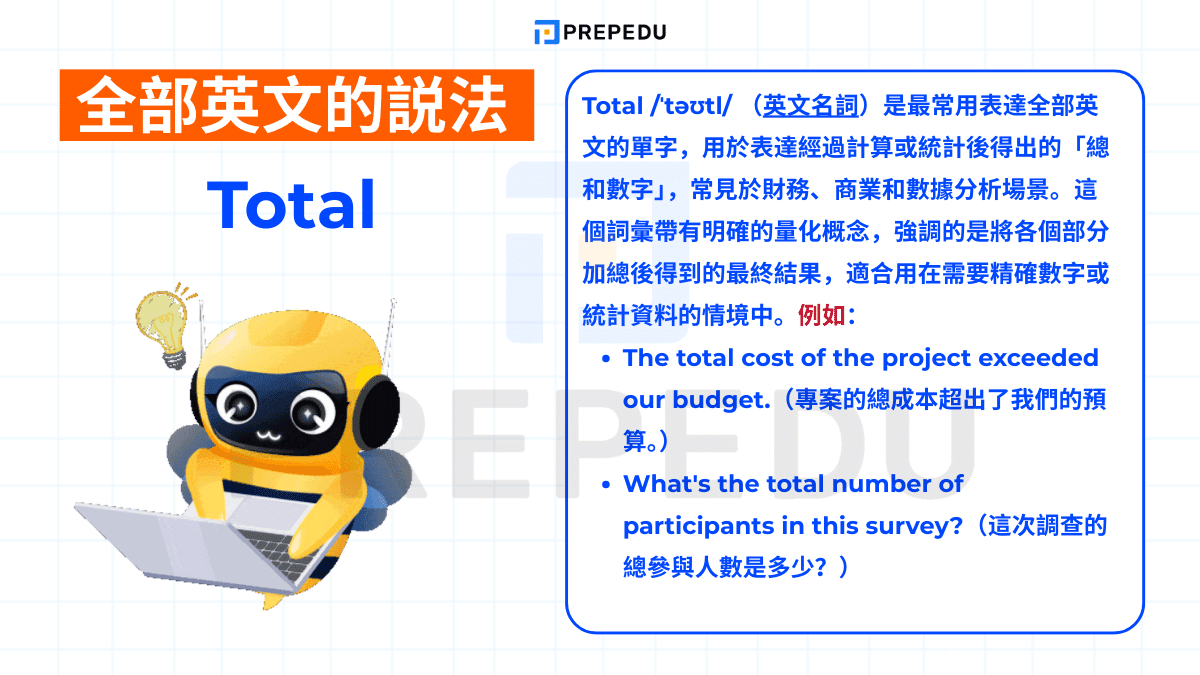
在英文中,Total /ˈtəʊtl/ (英文名詞)是最常用表達全部英文的單字,用於表達經過計算或統計後得出的「總和數字」,常見於財務、商業和數據分析場景。這個詞彙帶有明確的量化概念,強調的是將各個部分加總後得到的最終結果,適合用在需要精確數字或統計資料的情境中。例如:
-
The total cost of the project exceeded our budget.(專案的總成本超出了我們的預算。)
-
What's the total number of participants in this survey?(這次調查的總參與人數是多少?)
-
Total revenue increased by 15% this quarter.(本季總收益增長了 15%。)
-
The total distance from Taipei to Kaohsiung is approximately 350 kilometers or 217 miles.(從台北到高雄的總距離約為 350 公里或 217 英里。)
5. Gross
"Gross" /ɡrəʊs/ 是專業財經術語,特指「未經扣除」的總數,相對於 "net"(淨額)而言。這個詞彙主要出現在會計、貿易和薪資計算中,用來區分扣除成本、稅金或其他項目前後的差異,是商業專業人士必須掌握的精確用語。例如:
-
My gross salary is NT$50,000, but after tax it's NT$43,000.(我的稅前薪資是新台幣 50,000 元,但稅後是 43,000 元。)
-
The gross weight includes the packaging.(毛重包含了包裝的重量。)
-
Gross profit margin improved significantly this year.(今年的毛利率顯著提升。)
-
We need to report gross income before deductions.(我們需要申報扣除前的總收入。)

6. The whole lot
"The whole lot" 是一個非常口語化的表達,用來強調「全部東西一次性地」被處理或消耗。這個片語帶有一種「毫無保留」的語氣,常用在描述食物被吃光、物品被清空,或是事情被一次性完成的情境。這是母語者在日常對話中經常使用的自然表達方式,能讓你的英文聽起來更加道地。例如:
-
I offered him some chocolate, and he ate the whole lot.(我請他吃巧克力,結果他全吃了。)
-
We sold the whole lot in just two hours.(我們在短短兩小時內就把全部賣光了。)
-
She threw out the whole lot of old magazines.(她把全部的舊雜誌都扔了。)
-
The whole lot of them arrived late to the meeting.(他們所有人開會都遲到了。)

7. Every inch
表達全部英文的字 "Every inch" 字面意思是「每一英寸」,用來強調「完全沒有遺漏任何細小部分」。這個表達方式特別適合描述空間的完整覆蓋,或是某人全然具備某種特質。這種說法帶有強烈的視覺感,能讓聽眾清楚感受到「徹底」和「全面」的程度。例如:
-
Every inch of her bedroom wall is covered with photos of pop stars.(她臥室牆上貼滿了流行歌星的照片。)
-
The detective examined every inch of the crime scene.(偵探仔細檢查了犯罪現場的每一處。)
-
He's every inch a gentleman.(他完完全全是個紳士。)
-
We need to utilize every inch of available space.(我們需要利用每一寸可用的空間。)

8. In its totality
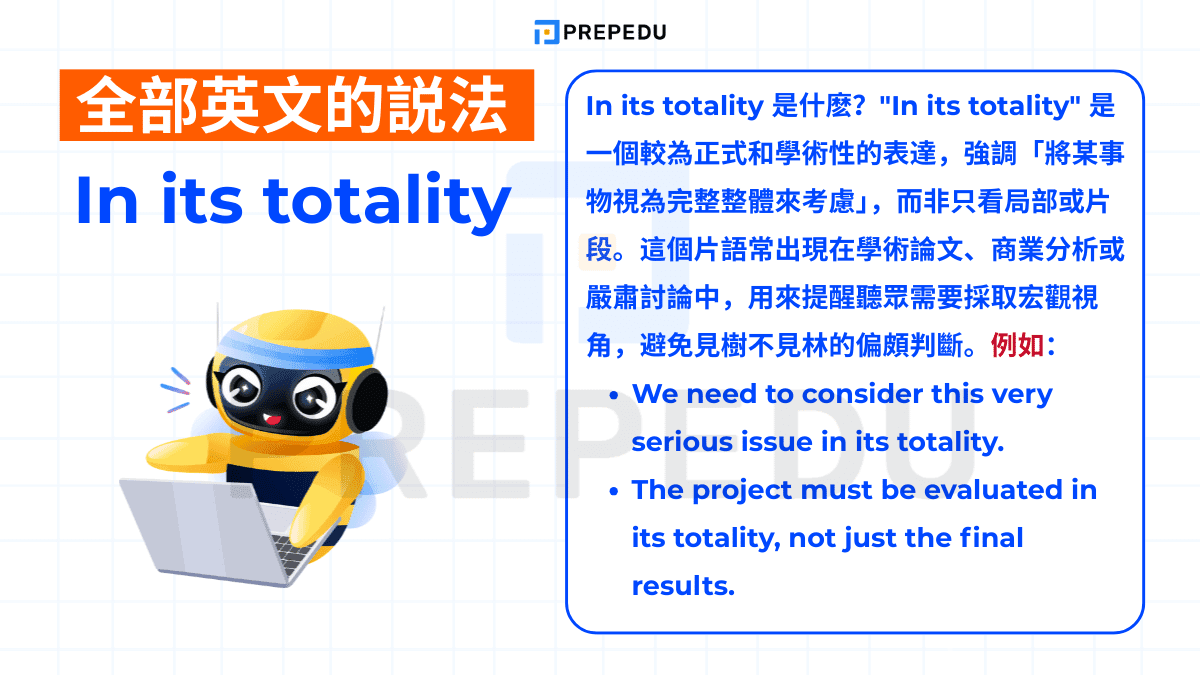
In its totality 是什麽?"In its totality" 是一個較為正式和學術性的表達,強調「將某事物視為完整整體來考慮」,而非只看局部或片段。這個片語常出現在學術論文、商業分析或嚴肅討論中,用來提醒聽眾需要採取宏觀視角,避免見樹不見林的偏頗判斷。例如:
-
We need to consider this very serious issue in its totality.(我們需要綜合考慮這個非常嚴肅的問題。)
-
The project must be evaluated in its totality, not just the final results.(這個專案必須被整體評估,而不僅僅是最終結果。)
-
Understanding the theory in its totality requires years of study.(要完全理解這個理論需要多年的研究。)
-
The impact of climate change should be examined in its totality.(氣候變遷的影響應該被全面檢視。)
9. The whole gamut
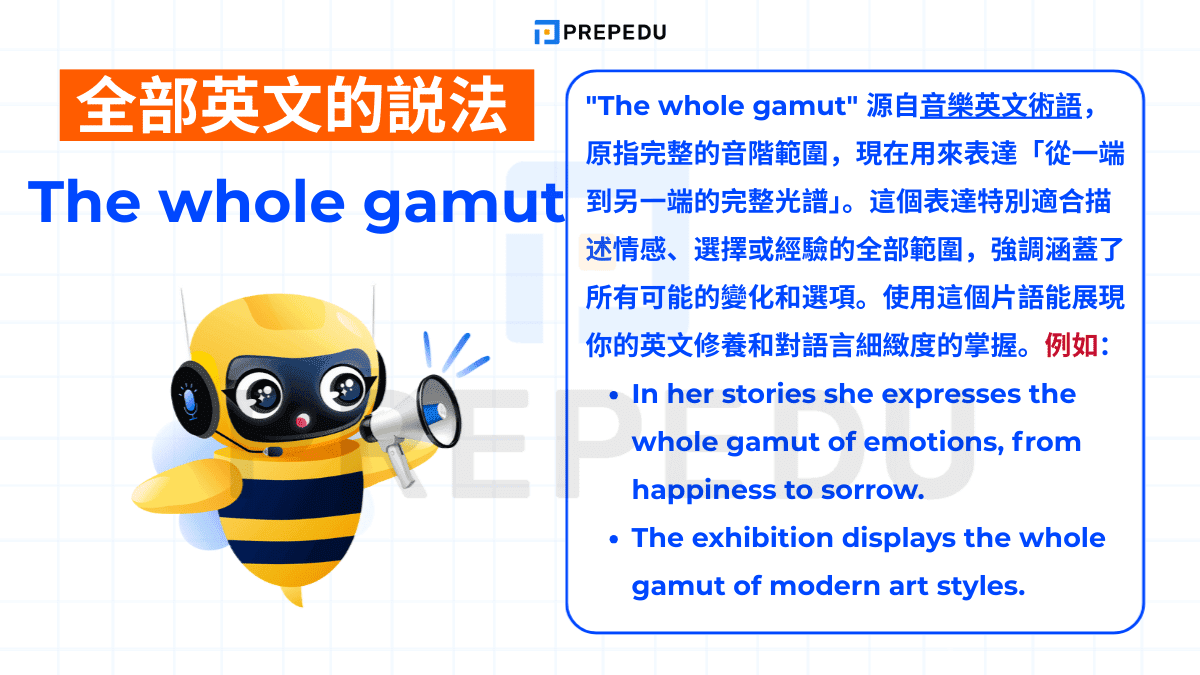
"The whole gamut" 源自音樂英文術語,原指完整的音階範圍,現在用來表達「從一端到另一端的完整光譜」。這個表達特別適合描述情感、選擇或經驗的全部範圍,強調涵蓋了所有可能的變化和選項。使用這個片語能展現你的英文修養和對語言細緻度的掌握。例如:
-
In her stories she expresses the whole gamut of emotions, from happiness to sorrow.(她的短篇小說呈現了喜怒哀樂等千情百感。)
-
The exhibition displays the whole gamut of modern art styles.(這個展覽展示了現代藝術風格的全貌。)
-
He's experienced the whole gamut of corporate life, from intern to CEO.(他經歷了從實習生到執行長的完整企業生涯。)
-
The course covers the whole gamut of digital marketing techniques.(這門課程涵蓋了數位行銷技巧的全部範圍。)
10. Sum total
表達全部英文的字 "Sum total" 強調「所有部分加起來的最終總數」,常用在需要統計或計算的情境中。與 "total" 相比,"sum total" 更強調「累積」的過程,暗示這個總數是經過逐一相加得出的結果。這個表達在討論長期累積的效果或整體影響時特別有用。例如:
-
It's the sum total of what you eat over a long period that matters and not what you consume in a day.(重要的是你長期所吃的食物總和,而不是你某一天所吃的東西。)
-
The sum total of his achievements is truly impressive.(他成就的總和真的令人印象深刻。)
-
That's the sum total of what I know about the incident.(這就是我對這件事所知道的全部。)
-
The sum total of our efforts has led to this breakthrough.(我們所有努力的總和導致了這個突破。)

11. Lock, stock, and barrel
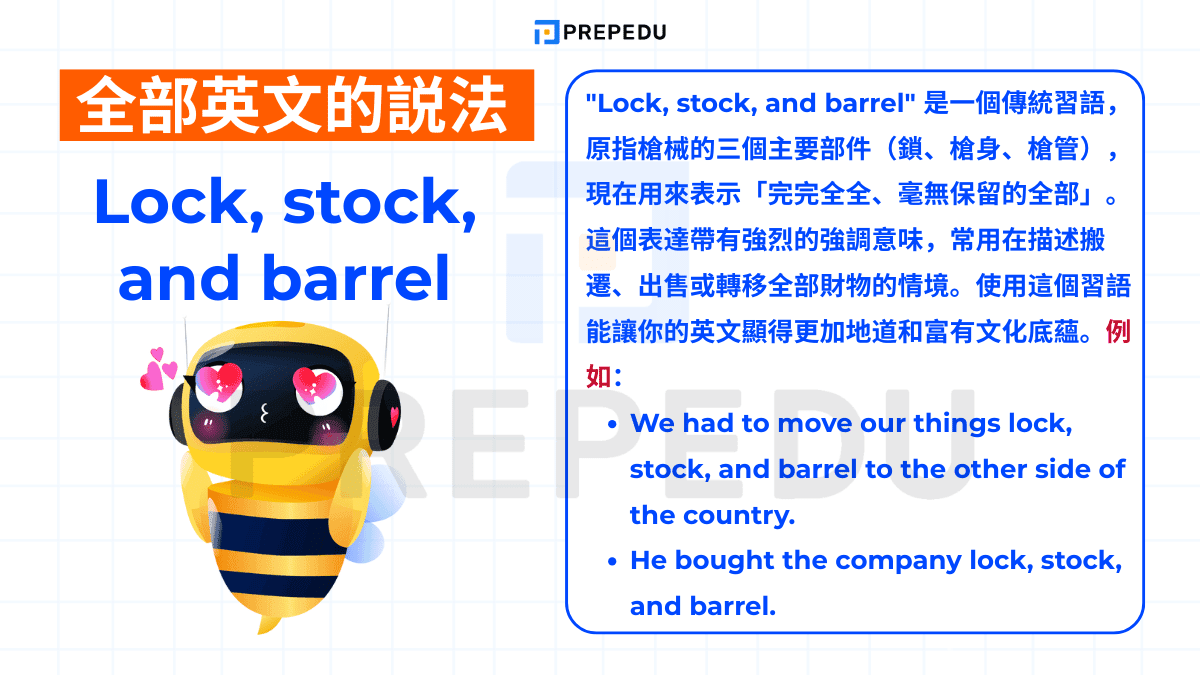
Lock, stock, and barrel 是什麽意思?"Lock, stock, and barrel" 是一個傳統習語,原指槍械的三個主要部件(鎖、槍身、槍管),現在用來表示「完完全全、毫無保留的全部」。這個表達帶有強烈的強調意味,常用在描述搬遷、出售或轉移全部財物的情境。使用這個習語能讓你的英文顯得更加地道和富有文化底蘊。例如:
-
We had to move our things lock, stock, and barrel to the other side of the country.(我們不得不把全部家當都搬到郊外的另一個地方。)
-
He bought the company lock, stock, and barrel.(他整個公司全部買下來了。)
-
They're moving to Australia lock, stock, and barrel next month.(他們下個月要把全部家當搬到澳洲。)
-
The business was sold lock, stock, and barrel for $2 million.(整個企業以 200 萬美元的價格全部出售。)
12. Repertoire
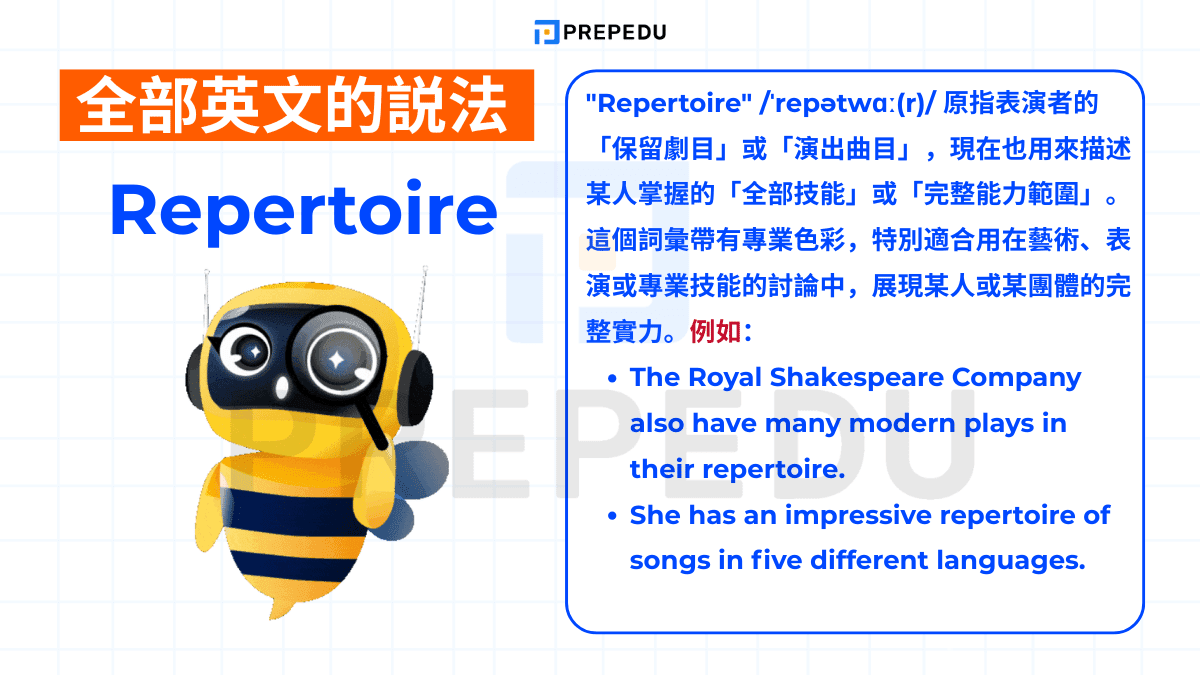
"Repertoire" /ˈrepətwɑː(r)/ 原指表演者的「保留劇目」或「演出曲目」,現在也用來描述某人掌握的「全部技能」或「完整能力範圍」。這個詞彙帶有專業色彩,特別適合用在藝術、表演或專業技能的討論中,展現某人或某團體的完整實力。例如:
-
The Royal Shakespeare Company also have many modern plays in their repertoire.(皇家莎士比亞劇團的演出劇目中也包括很多現代戲劇。)
-
She has an impressive repertoire of songs in five different languages.(她擁有五種不同語言的豐富曲目。)
-
His repertoire of skills includes coding, design, and project management.(他的技能範圍包括程式設計、設計和專案管理。)
-
The restaurant's repertoire extends from traditional to fusion cuisine.(這家餐廳的菜單範圍從傳統料理延伸到融合料理。)
文法關鍵:限定詞的正確順序 → 英文的限定詞有嚴格的排列順序,而全部的英文 "all" 和 "whole" 在這個順序中的位置完全不同。"All" 必須放在限定詞(the, my, these)之前,並且通常搭配複數名詞;而 "whole" 則放在限定詞之後,搭配單數名詞。掌握這個規則是避免常見錯誤的關鍵。
|
正確 |
錯誤 |
|
❌ All the book was damaged. |
✅ The whole book was damaged.(整本書都損壞了。) |
|
❌ All my time. |
✅ All of my time. 或 All my free time.(我所有的時間。) |
|
❌ I read whole book. |
✅ I read the whole book.(我讀完了整本書。) |
|
❌ The entire of students came. |
✅ All the students came. 或 The entire class came.(所有學生都來了。) |
II. 如何用『全部英文』表達『全部』概念的情境對話示例?
在學習英語時,全部英文的表達方式常讓許多學習者感到困惑。其實在不同的情境中,表示「全部、整個、全體」的英文說法會因語氣與場合而有所不同,例如 all、the whole、the entire、all of the… 等等。理解每一種用法並在真實對話中靈活運用,能讓溝通更加自然順暢。以下三段延伸對話英文將帶你在工作、日常生活與學習環境中,完整掌握全部英文的多種使用方式。
1. 情境一:在辦公室確認是否已完成「全部」文件
|
全部英文對話 |
中文翻譯 |
|
A: Have you gone through all of these documents? The manager needs them this afternoon. |
A:這些文件你全部都看過了嗎?主管今天下午就要用。 |
|
B: Yes, I spent two hours organizing all of the content, including the notes and summaries. |
B:我剛剛花了兩個小時把全部內容都整理好了,包括註記跟摘要。 |
|
A: Perfect. That means the whole reporting process should be fine now. |
A:太好了,那整個報告流程應該就沒問題了。 |
|
B: If you want, I can double-check everything again. |
B:如果你願意,我可以再全部檢查一次。 |
2. 情境二:在餐廳確認是否要「全部加料」
|
全部英文對話 |
中文翻譯 |
|
A: Do you want all the toppings on your burger? Like lettuce, onions, pickles, all of that. |
A:你的漢堡要全部配料都加嗎?像是生菜、洋蔥、酸黃瓜那些。 |
|
B: Yes, please add all of them. I feel like having something more filling today. |
B:嗯,全部都加吧,我今天想吃豐富一點的。 |
|
A: Sure! Just letting you know, with all the toppings, the flavor will be a bit stronger. Is that okay? |
A:好啊,不過全部加的話味道會比較重,你可以接受嗎? |
|
B: No problem. I actually want to try the whole combination. |
B:沒問題,我就是想試看看整個組合的味道。 |
3. 情境三:在學校討論是否已完成「全部」課程內容
|
全部英文對話 |
中文翻譯 |
|
A: Have we finished the entire syllabus for this semester? I’m preparing for finals and don’t want to miss anything. |
A:這學期的內容我們全部都學完了嗎?我在準備期末考,不想漏掉。 |
|
B: Not the whole thing yet. The teacher said we still have one last chapter to cover next week. |
B:還沒全部結束,老師說剩下最後一章,下週會上完。 |
|
A: So I should probably review all the other chapters, right? |
A:那其他內容我是不是全部都應該複習一遍? |
|
B: Yes. I organized the entire handout into notes yesterday. Do you want me to share it with you? |
B:對啊,我昨天已經把整份講義全部整理成筆記,要不要分享給你? |
結語
綜上所述,中文一個「全部」字,在英語世界中卻細分成多種面向,從強調數量的 All 到側重形態完整的 Whole,再到正式且強調連續性的 Entire,乃至於專業領域的 Total、Gross 和 Repertoire。這些詞彙並非隨意替換,它們精確地反映了講者所關注的焦點——是集合中的每一個個體,是未經切割的單一整體,抑或是某個過程的全部範圍。
透過本文的詳細辨析與情境對話練習,您現在已經能夠理解並運用這些微妙的差異,特別是掌握了 All 和 Whole 在限定詞位置上的關鍵文法規則。這份對「全部英文」的深度理解,將幫助您在職場溝通、學術寫作或日常交流中,實現更為精準、專業且道地的表達。
記住,語言的精髓在於選擇的精確性。 運用這些詞彙,您不僅是翻譯了「全部」,更是傳達了您對事物完整性的細膩洞察。現在,請將這些知識融入您的英文Repertoire (全部技能),開始在下一次對話中,自信且準確地表達您的「全部」想法吧!
對 IELTS 或 TOEIC 考試結構感到陌生?考試當天的不確定感會影響你的表現。PREPEDU 的 Test Practice 提供真實模擬環境,讓你在實戰前熟悉題型和時間限制。
系統收錄超過 1,000 道練習題,定期更新以反映最新考試趨勢。AI 引擎分析你的錯誤,針對弱點提供改進方案。進度追蹤系統將你的成長數據化,讓進步一目了然。
現在開始練習,在考試中展現實力。立即體驗 PREPEDU 的雅思真題和多益測驗試題。

你好!我叫黃秋賢,現在在 prepedu.com 擔任內容企劃。我有超過5年的英語與韓語自學經歷,親身備考 IELTS、TOEIC 與 TOPIK,累積了大量第一手的學習者視角——包括哪些語法規則最讓台灣與香港學習者混淆,以及如何在有限的備考時間內最有效地修正這些錯誤。目前已在 prepedu.com 撰寫超過 1000 篇英語學習文章,內容涵蓋語法、詞彙與考試策略,累積協助數千位學習者解決自學過程中的語法疑問。
評論












統一企業編號:202227322W
地址:114 LAVENDER STREET, #11-83 CT HUB 2, SINGAPORE (338729)