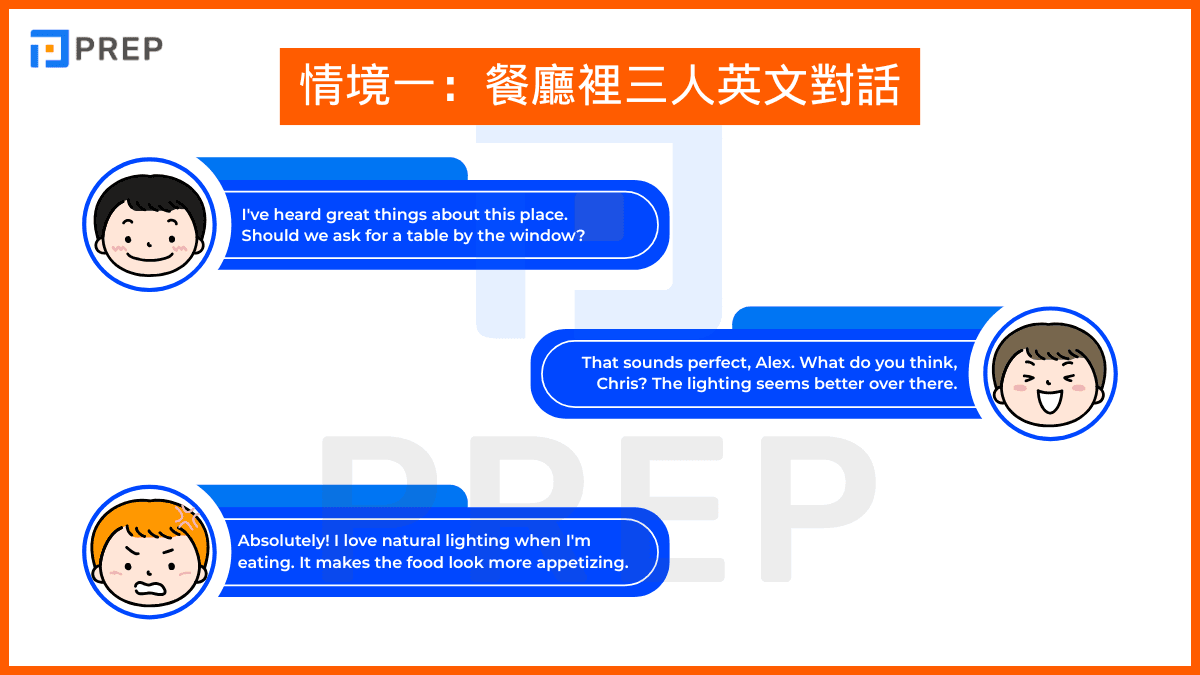
Alex: I've heard great things about this place. Should we ask for a table by the window?
Beth: That sounds perfect, Alex. What do you think, Chris? The lighting seems better over there.
Chris: Absolutely! I love natural lighting when I'm eating. It makes the food look more appetizing.
Waiter: Good evening! Table for three?
Alex: Yes, please. We'd prefer a window seat if possible.
Beth: Alex, have you decided what you're ordering? The seafood pasta looks interesting.
Chris: I'm torn between the grilled salmon and the chicken teriyaki. Beth, what catches your eye?
Beth: I'm leaning towards the vegetarian option today. Chris, the salmon here is supposed to be excellent – my colleague recommended it last week.
Alex: Let's order a variety so we can share. Chris, go with the salmon. Beth, try the vegetarian dish, and I'll get the pasta. We can taste each other's choices.
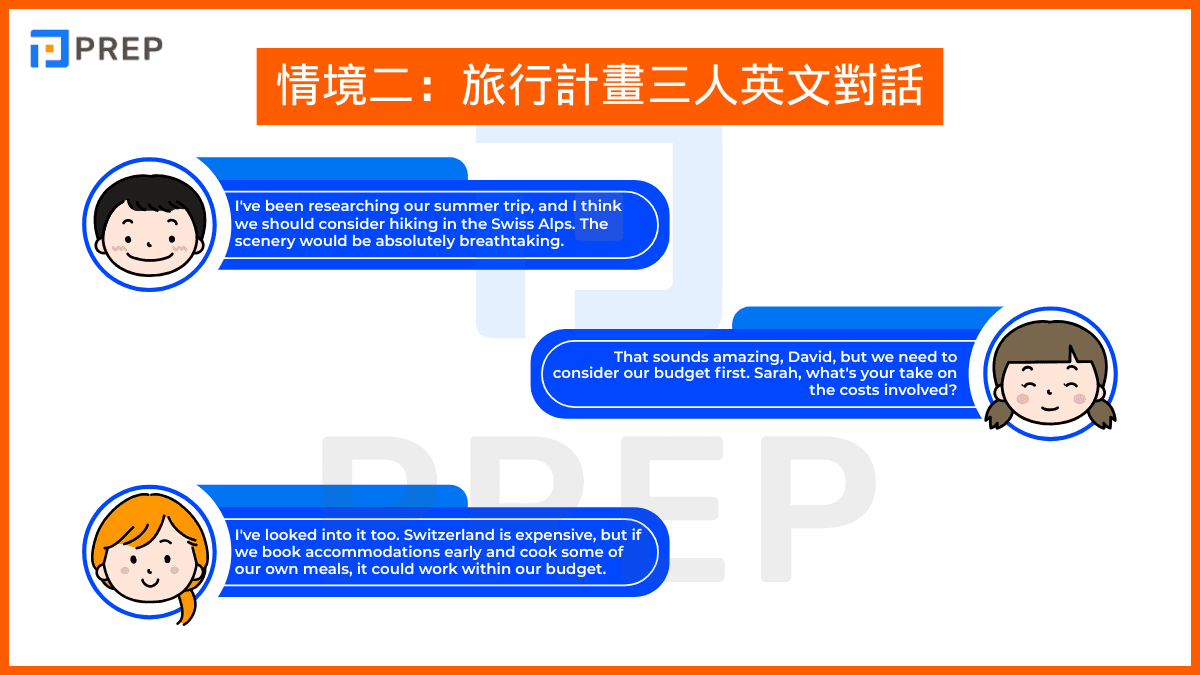
David: I've been researching our summer trip, and I think we should consider hiking in the Swiss Alps. The scenery would be absolutely breathtaking.
Emma: That sounds amazing, David, but we need to consider our budget first. Sarah, what's your take on the costs involved?
Sarah: I've looked into it too. Switzerland is expensive, but if we book accommodations early and cook some of our own meals, it could work within our budget.
David: Emma, I understand your concerns about money. What if we compromise and spend three days in Switzerland and then move to a more budget-friendly destination?
Emma: That's a reasonable approach, David. Sarah, where would you suggest for the remaining part of our trip?
Sarah: How about Austria? It's geographically close, culturally similar, but significantly more affordable. We could experience mountain culture without breaking the bank.
David: I love that idea! Emma, does this plan address your budget concerns while still giving us the adventure we're looking for?
Emma: Perfect compromise! Let's start researching specific locations in both countries. Should we divide the research tasks among the three of us?
語言學習者應特別注意幾個關鍵的表達技巧:使用條件句表達妥協和假設("What if we compromise..."、"Have you considered...")、運用同理心語言承認他人觀點("I understand your concerns"、"I share your concern")、以及透過開放式問題引導建設性討論("What would you recommend?"、"What do you think?")。這些技巧在商務環境、學術討論、家庭溝通,以及日常社交中都極為實用,是提升英語溝通能力的重要工具。
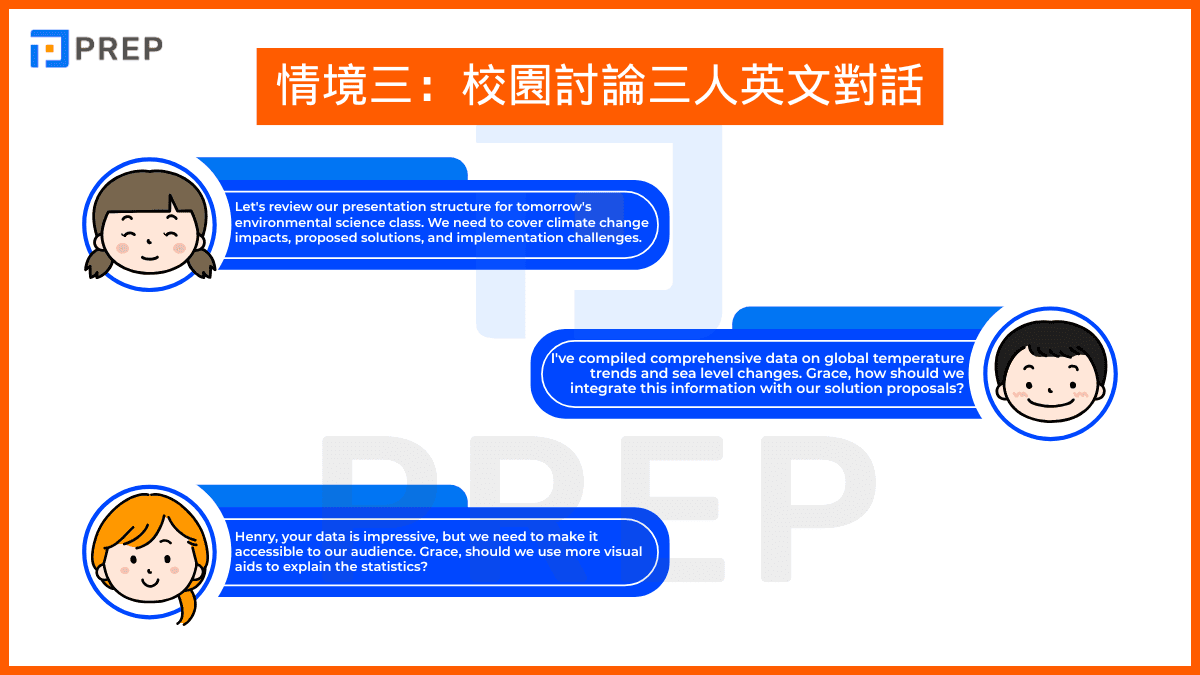
Grace: Let's review our presentation structure for tomorrow's environmental science class. We need to cover climate change impacts, proposed solutions, and implementation challenges.
Henry: I've compiled comprehensive data on global temperature trends and sea level changes. Grace, how should we integrate this information with our solution proposals?
Iris: Henry, your data is impressive, but we need to make it accessible to our audience. Grace, should we use more visual aids to explain the statistics?
Grace: Excellent point, Iris. Henry, can you create two or three key graphs that highlight the most critical trends? Iris, you're great at explaining complex concepts simply.
Henry: Absolutely! I'll focus on the most dramatic temperature changes and the correlation with extreme weather events. Should I prepare backup slides with more detailed data?
Iris: That's wise, Henry. Grace, for the solutions section, should we present them in order of feasibility or potential impact?
Grace: Let's organize by feasibility first, then discuss potential impact for each solution. This approach will help our classmates understand what's actually achievable.
Henry: I agree with that structure. Iris, how should we handle the Q&A session? Some of our classmates might challenge our renewable energy recommendations.
Iris: Great question, Henry. Let's anticipate three potential objections and prepare evidence-based responses. Grace, should we rehearse these scenarios?
Grace: Definitely! Let's practice our transitions between sections too. Henry, you'll present the data, Iris will explain the solutions, and I'll handle the implementation discussion and moderate Q&A.
Jessica: I'm looking for a new laptop for my graphic design work. I need something powerful but portable. What do you two think about the MacBook Pro?
Kevin: MacBooks are great for design work, Jessica. The color accuracy is excellent. But Michael, didn't you mention that PC alternatives might offer better value for money?
Michael: Kevin's right about the color accuracy, but Jessica, have you considered the new Dell XPS series? It's significantly cheaper and the specs are comparable for your needs.
Jessica: I've heard mixed reviews about Dell's customer service though. Kevin, what's your experience with Apple's support?
Kevin: Apple's support is generally reliable, but Michael has a point about the price difference. Jessica, what's your budget range? That might help us narrow down the options.
Jessica: I'm willing to spend up to $2,000, but I'd prefer to stay under $1,500 if possible. Michael, can the Dell handle professional design software smoothly?
Michael: Absolutely! I've used similar specs for video editing, which is even more demanding. Kevin, what about the battery life comparison?
Kevin: MacBooks typically have better battery optimization, but the Dell isn't far behind. Jessica, since you'll be working on the go, battery life might be crucial for your workflow.
Jessica: That's a great point, Kevin. I think I need to see both models in person. Would you two mind coming with me to the store this weekend?
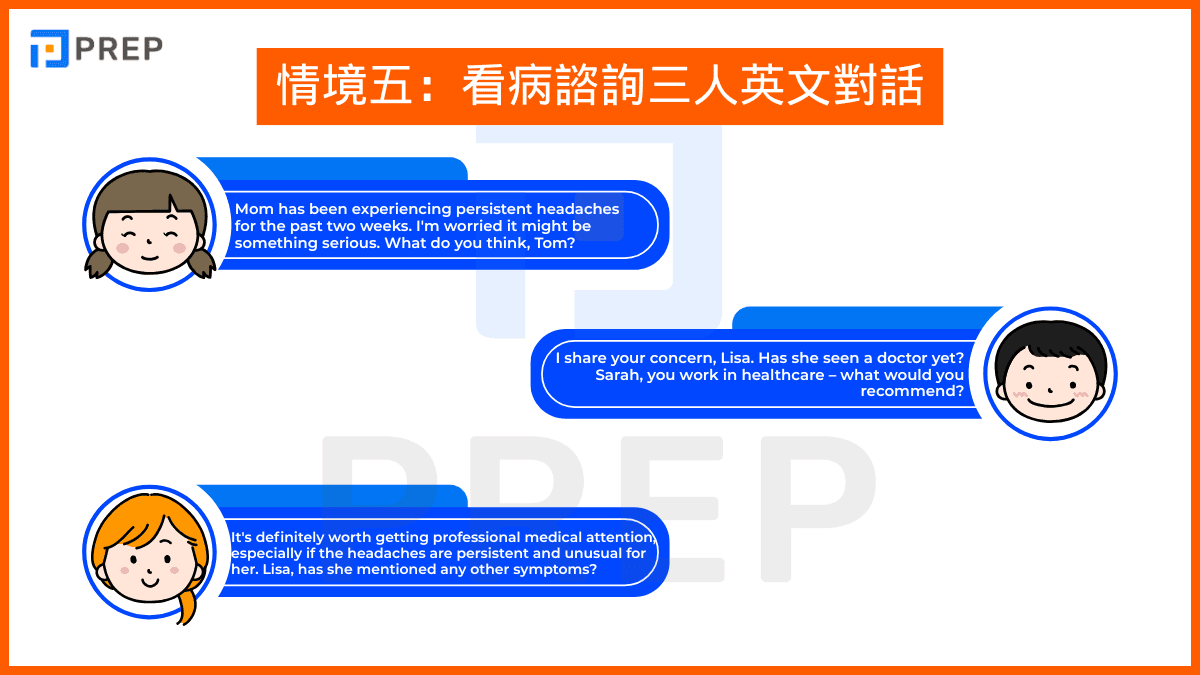
Lisa: Mom has been experiencing persistent headaches for the past two weeks. I'm worried it might be something serious. What do you think, Tom?
Tom: I share your concern, Lisa. Has she seen a doctor yet? Sarah, you work in healthcare – what would you recommend?
Sarah: It's definitely worth getting professional medical attention, especially if the headaches are persistent and unusual for her. Lisa, has she mentioned any other symptoms?
Lisa: She's also been feeling more tired than usual and occasionally dizzy. Sarah, could these be related to her blood pressure medication?
Sarah: Those symptoms could be medication-related, but I'd strongly recommend she sees her doctor for a proper evaluation. Tom, has she been under any unusual stress lately?
Tom: Actually, yes. She's been worried about Dad's upcoming surgery. The stress could definitely be a contributing factor. Sarah, should we encourage her to see her doctor this week?
Sarah: Absolutely. Stress-related headaches are common, but it's important to rule out other causes. Lisa, would you like me to help you find a convenient appointment time?
Lisa: That would be wonderful, Sarah. Tom, can you stay with her during the appointment? I know she sometimes forgets to mention important details.
Tom: Of course, Lisa. I'll make sure to write down all her symptoms beforehand. Sarah, is there anything specific we should ask the doctor?