換位思考英文:最常用表達方式、例句與情境用法一次掌握
換位思考英文怎麼說?最常見的表達方式是 put yourself in someone's shoes,意思是設身處地為他人著想,是英語母語者在日常溝通中最自然的說法。除此之外,英文還有十多種方式可以表達這個概念,從口語慣用語到正式書面用語,語氣與適用情境各有不同。
同理心不只是一種美德,更是職場溝通、人際關係與跨文化理解的核心技能。研究顯示,能夠有效表達換位思考的人,在團隊合作與衝突化解上往往表現更出色。然而,許多英語學習者在面對這類情緒與思維相關的表達時,往往只會一句 I understand,錯過了更豐富、更精準的語言層次。
「換位思考英文」的學習難點,不在記住12個說法,而在理解它們的三個語意層次:「感受他人」(empathize、show empathy——情感共鳴)、「理解觀點」(see from their perspective、understand where coming from——理智理解)、「代入處境」(put yourself in their shoes、walk in their shoes——體驗式代入)。三個層次各有其語境,選對了,你的英文才能真正表達出超越「I understand」的深度。
PREPEDU 整理了 12 種換位思考英文的核心表達方式,涵蓋慣用語、正式說法與口語用法,並附上真實例句與情境對話,幫助你在不同場合都能自然開口。無論你正在備考 IELTS 口說、提升職場英語,還是想讓日常英語更有溫度,這篇文章都能給你紮實且實用的語言工具。

- I. 換位思考英文怎麼說?最常見的基本說法
- 1. Put yourself in someone's shoes
- 2. Empathize with someone
- 3. See things from another person's perspective
- 4. Take someone else's point of view
- 5. Walk in someone else's shoes
- 6. Be in someone else's position
- 7. Understand where someone is coming from
- 8. Look at it from their side
- 9. Be considerate of others
- 10. Show empathy
- 11. Take others into account
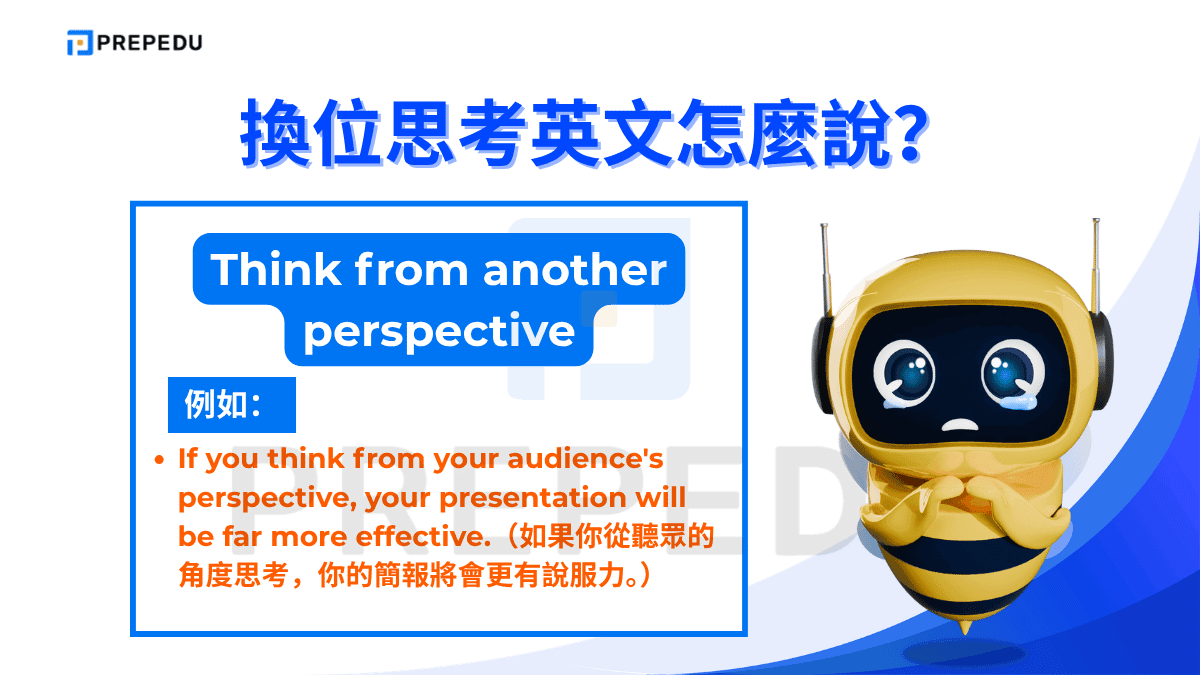
- 12. Think from another perspective
- II. 換位思考英文對話
- III. 換位思考英文常見問題(FAQ)
- 結論
I. 換位思考英文怎麼說?最常見的基本說法
換位思考英文的12個說法,按語意層次分為三類:「體驗式代入」(put yourself in someone's shoes、walk in someone's shoes、be in someone's position)、「視角轉換」(see from perspective、think from perspective、take someone's point of view、look at it from their side)、「情感與態度」(empathize with、show empathy、understand where coming from、be considerate of others、take others into account)。
「換位思考」是人際溝通中最核心的能力之一。當你能站在對方的立場理解問題,不僅能化解衝突,還能讓對話更有溫度。英文裡表達這個概念的方式非常多元,從慣用語到正式說法都有,掌握這些表達,能讓你的英語溝通更精準、更有說服力。使用前先看這張語境對比表:
|
換位思考英文說法 |
語意層次 |
正式程度 |
最適合場合 |
|
Put yourself in someone's shoes |
體驗式代入 |
通用 |
日常、職場、學術皆宜 |
|
Walk in someone else's shoes |
體驗式代入(深入) |
中等 |
深度理解、長期體驗 |
|
Be in someone else's position |
體驗式代入 |
中性 |
假設性討論、勸說 |
|
See from another's perspective |
視角轉換 |
中偏正式 |
討論、分析、說服 |
|
Take someone's point of view |
視角轉換(採納) |
中性 |
辯論、談判、學術 |
|
Look at it from their side |
視角轉換(口語) |
口語 |
日常對話、輕鬆場合 |
|
Think from another perspective |
視角轉換(主動) |
中等 |
創意問題解決 |
|
Empathize with someone |
情感共鳴 |
中偏正式 |
心理學、教育、職場 |
|
Show empathy |
情感(外顯行為) |
中等 |
諮詢、領導力、人際 |
|
Understand where someone is coming from |
理解動機 |
口語中性 |
溝通分歧、表達包容 |
|
Be considerate of others |
行為態度 |
中等 |
教育、職場規範 |
|
Take others into account |
決策考量 |
中偏正式 |
職場、學術、決策 |
以下逐一解析,幫你掌握最道地的用法。
1. Put yourself in someone's shoes
Put yourself in someone's shoes 是英文中表達換位思考英文最經典的慣用語,字面意思是「把自己放進別人的鞋子裡」,引申為設身處地為他人著想。這個說法適用於各種情境,無論是英文日常對話、職場討論還是學術寫作,都非常自然。例如:
-
Before you judge her decision, try to put yourself in her shoes — she had no other choice.(在你評斷她的決定之前,試著站在她的立場想想——她別無選擇。)
-
It's easy to criticize, but can you put yourself in his shoes for a moment?(批評很容易,但你能暫時站在他的角度思考嗎?)
-
Putting yourself in your customer's shoes is the first step to better service.(站在顧客的立場思考,是提升服務品質的第一步。)

慣用語由來與 IELTS 加分點:Put yourself in someone's shoes 這個慣用語,源自 19 世紀北美原住民的諺語「Don't judge a man until you have walked a mile in his moccasins.」(在你走過對方的鹿皮鞋一英里之前,不要評斷他。)英文後來簡化為 put yourself in his shoes。了解這個背景有兩個好處:第一,在 IELTS Speaking Part 3 討論「empathy」相關話題時,引用這個諺語能展示詞彙深度;第二,記住「a mile」的意象,能幫助你更深刻理解這個慣用語不只是「想一想」,而是「走一段距離」——真正的換位思考,是需要時間與投入的。
2. Empathize with someone
Empathize 是一個英語動詞,意思是「對某人產生同理心」,帶有情感共鳴的意涵,比單純的理性分析更深一層。這個說法常見於心理學、教育和職場領域,語氣誠懇、具體。例如:
-
A good leader knows how to empathize with team members during difficult times.(一位好的領導者懂得在困難時期對團隊成員產生同理心。)
-
She really empathized with the students who struggled with the new curriculum.(她真心理解那些在新課程中掙扎的學生。)
-
Learning to empathize with others can transform the way you communicate.(學會對他人感同身受,能從根本改變你的溝通方式。)
3. See things from another person's perspective
換位思考英文可以説 See things from another person's perspective。這個説法強調「視角的轉換」,語氣較為正式,適合用在討論、分析或說服性的語境中。Perspective 一詞點出了觀點的差異性,讓表達更有深度。例如:
-
To resolve this conflict, we need to see things from another person's perspective.(要化解這場衝突,我們需要從對方的角度來看待問題。)
-
The workshop helped employees see things from their clients' perspective.(這場工作坊幫助員工從客戶的角度來思考問題。)
-
Can you try to see things from her perspective before making a decision?(在做決定之前,你能試著從她的角度思考嗎?)
4. Take someone else's point of view
Take someone's point of view 意思是「採納或考量他人的觀點」,強調主動去理解、接受另一種看法的行為。這個說法語氣中立,適合辯論、討論或學術寫作。例如:
-
In negotiation, taking the other side's point of view often leads to better outcomes.(在談判中,考量對方的觀點往往能帶來更好的結果。)
-
He found it difficult to take his colleague's point of view, but he tried.(他發現要理解同事的觀點並不容易,但他仍努力嘗試。)
-
Taking your partner's point of view is essential in any healthy relationship.(在任何健康的關係中,理解伴侶的觀點都是不可或缺的。)
5. Walk in someone else's shoes
若果想説換位思考英文,可以使用 Walk in someone's shoes 與 put yourself in someone's shoes。整兩個説法的意思相近,同樣源自英語慣用語傳統,但 walk 這個動詞帶有「經歷一段旅程」的意味,暗示更長時間、更深入的理解過程。例如:
-
You can't truly understand a teacher's job until you walk in their shoes.(在你真正走進老師的處境之前,你無法完全理解這份工作。)
-
Walking in someone else's shoes builds compassion and reduces judgment.(站在他人的立場去體驗,能培養同情心、減少評斷。)
-
I walked in her shoes for a week and realized how much she handles every day.(我用她的方式生活了一週,才意識到她每天承擔了多少。)
6. Be in someone else's position
Be in someone's position 是較為直接的說法,強調「身處他人的處境」,語氣中性,常用於假設性的討論或勸說語境。這個說法簡潔有力,容易融入日常對話。例如:
-
If you were in her position, what would you have done differently?(如果你身處她的處境,你會做出什麼不同的選擇?)
-
Being in someone else's position helps you make fairer decisions.(設身處地為他人著想,有助於做出更公平的判斷。)
-
Try being in his position before you say it was the wrong call.(在你說那是錯誤決定之前,先試著站在他的立場想想。)
7. Understand where someone is coming from
Understand where someone is coming from 著重於理解對方觀點背後的「出發點」或「動機」,語氣帶有包容與理解,常用於溝通出現分歧時,表達你願意傾聽對方的立場。例如:
-
I don't agree with his decision, but I understand where he's coming from.(我不認同他的決定,但我理解他的出發點。)
-
Understanding where your customers are coming from helps you serve them better.(理解顧客的出發點,能幫助你提供更好的服務。)
-
She listened carefully and said, I understand where you're coming from.(她仔細傾聽後說:「我理解你的出發點。」)
8. Look at it from their side
換位思考英文可以説 Look at it from their side。這個説法是一種輕鬆、口語化的換位思考表達方式,帶有邀請對方一起反思的語氣,適合日常對話和非正式溝通場合。例如:
-
Before you get upset, look at it from their side — they didn't mean any harm.(在你生氣之前,試著從他們的角度來看——他們並無惡意。)
-
If we look at it from the other side, their request actually makes sense.(如果我們從另一邊來看,他們的要求其實是合理的。)
-
Look at it from their side: they've been working under pressure for months.(從他們的角度來看:他們已經在壓力下工作了好幾個月。)
9. Be considerate of others
Be considerate of others 強調「體貼他人、為他人設想」的行為態度,帶有道德與禮儀的層面,語氣溫和,常見於教育、職場規範和親子溝通中。例如:
-
Being considerate of others means thinking about how your actions affect them.(體貼他人,意味著思考你的行為如何影響到對方。)
-
We teach children to be considerate of others from a very young age.(我們從很小的時候就教導孩子要體貼他人。)
-
In a shared workspace, being considerate of others is a basic professional standard.(在共用工作空間中,體貼他人是基本的職業素養。)
10. Show empathy
Show empathy 是最直接表達「展現同理心」的說法,動詞 show 強調這是一種外顯的行為,而非僅限於內心的感受。這個說法常見於心理諮詢、領導力訓練和人際關係討論。例如:
-
A good counselor knows how to show empathy without losing professional boundaries.(一位好的輔導員知道如何展現同理心,同時維持專業界限。)
-
Showing empathy in customer service can turn a frustrated client into a loyal one.(在客戶服務中展現同理心,能將一位沮喪的客戶轉化為忠實顧客。)
-
He showed empathy by simply listening without offering any advice.(他僅僅是傾聽,不給任何建議,這本身就是一種同理心的展現。)
Empathy 與 Sympathy 關鍵區分:許多學習者會混淆 empathy(同理心)與 sympathy(同情)。Empathy 是「感受到對方的感受」——你彷彿也經歷了他們的情緒;Sympathy 則是「為對方感到難過」——你站在外面,對他們的處境表達關心。簡單比喻:看到朋友摔倒,sympathy 是「我看到你摔倒了,好心疼你」;empathy 是「我彷彿也感受到那份痛」。在 IELTS Writing 或 TOEIC 的高級商業英語中,正確使用 show empathy 比 show sympathy 更能展示情感層次的掌握——empathy 是連結,sympathy 是距離。
11. Take others into account
如果想說換位思考英文,可以表達 Take others into account。這個説法的意思是「將他人納入考量」,強調在做決策或行動時,有意識地顧慮到他人的需求與感受。這個說法語氣正式,適合職場或學術環境。例如:
-
A thoughtful manager always takes others into account when planning team schedules.(一位用心的主管在安排團隊日程時,總是會考量到每位成員的狀況。)
-
When designing a new product, it's essential to take end users into account.(在設計新產品時,將終端用戶納入考量是不可或缺的環節。)
-
She revised her proposal after taking her partner's concerns into account.(她在考量夥伴的疑慮後,修改了自己的提案。)
12. Think from another perspective
Think from another perspective 是最直白的換位思考英文表達之一,強調思考角度的主動轉換,適合鼓勵他人突破慣性思維、拓展視野。例如:
-
Creative problem-solving requires you to think from another perspective.(有創意的問題解決方式,需要你從不同角度來思考。)
-
Thinking from another perspective helped the team find a solution no one had considered.(從另一個角度思考,幫助團隊找到了一個沒有人想到的解決方案。)
-
If you think from your audience's perspective, your presentation will be far more effective.(如果你從聽眾的角度思考,你的簡報將會更有說服力。)
十二個說法的語境邏輯已全部解析完畢。接下來觀察它們在真實對話中的搭配邏輯——職場對話中「put yourself in」與「take into account」搭配展現專業度;朋友之間「think from perspective」與「show empathy」連用傳遞溫度;家庭溝通中「see from my perspective」與「be considerate of」呈現世代理解的橋樑。
II. 換位思考英文對話
掌握詞彙後,更重要的是理解這些表達在真實對話中如何運作。以下三段對話示範了換位思考英文在不同情境中的自然用法,涵蓋職場、友誼與家庭場景。
1. 對話一:職場衝突化解
|
說話者 |
換位思考英文對話 |
中文翻譯 |
|
Manager |
I know you're frustrated with the new policy, but try to put yourself in the company's shoes. We're managing risk for everyone. |
我知道你對新政策感到不滿,但試著站在公司的立場想想。我們是在為所有人管控風險。 |
|
Employee |
I understand where you're coming from, but I think if you look at it from our side, the workload has become unsustainable. |
我理解你的出發點,但如果從我們的角度來看,工作量已經變得難以為繼。 |
|
Manager |
That's a fair point. Let's take everyone's concerns into account and revisit the schedule. |
這是個合理的觀點。讓我們將所有人的疑慮納入考量,重新審視這份排程。 |
語用提示:職場衝突場景中,主管先用 put yourself in the company's shoes(慣用語、有溫度)破冰,員工用 understand where you're coming from(表達包容但不退讓)回應,再用 look at it from our side(口語、具邀請感)提出自己的立場。最後主管用 take into account(正式決策動詞)收尾,展現願意調整的專業度。三個說法層層遞進,從情感到邏輯再到行動,是職場衝突化解的黃金語言節奏。
2. 對話二:朋友誤解化解
|
說話者 |
換位思考英文對話 |
中文翻譯 |
|
Alex |
I can't believe Mia didn't show up to my birthday party in Causeway Bay. |
我不敢相信 Mia 沒有出席我在銅鑼灣的生日派對。 |
|
Jordan |
Before you get upset, try to think from her perspective. She's been dealing with a family crisis all week. |
在你生氣之前,試著從她的角度思考。她這整週都在處理家庭危機。 |
|
Alex |
You're right. I should show more empathy instead of jumping to conclusions. |
你說得對。我應該展現更多同理心,而不是急著下結論。 |
語用提示:朋友之間的誤解場景中,Jordan 用 think from her perspective(中等語氣)引導 Alex 停下來思考,而非直接說「You're wrong」。Alex 用 show more empathy(行為導向)承認自己的反應過快。兩個說法一個是「思考」層面的建議,一個是「行為」層面的反思,呈現了從認知到行動的完整轉變。
3. 對話三:親子溝通
|
說話者 |
換位思考英文對話 |
中文翻譯 |
|
Parent |
You never listen to what I say. |
你從來不聽我說話。 |
|
Teen |
I do listen, but can you try to see things from my perspective? I'm not a child anymore. |
我有在聽,但你能試著從我的角度來看這件事嗎?我不再是小孩了。 |
|
Parent |
You're right. I need to be more considerate of where you're coming from. Let's talk this through. |
你說得對。我需要更體貼地去理解你的出發點。讓我們好好談談。 |
語用提示:親子溝通中,青少年用 see things from my perspective(正式語氣)而非口語的 look at it from my side——這個選擇反映出孩子想被「平等對待」的語言訴求。家長用 be more considerate of where you're coming from(combining be considerate + understand where coming from)回應,展現成年人的語言深度與放下身段的誠意。這是跨世代溝通中最有療癒力的英語對話結構之一。
III. 換位思考英文常見問題(FAQ)
1. Put yourself in someone's shoes 和 Walk in someone's shoes 有什麼不同?
兩者都源自同一個英語慣用語傳統,意思相近,但時間維度完全不同。Put yourself in someone's shoes 是「瞬間的代入」——你暫時在腦中模擬一下對方的處境,這是最常用的說法。Walk in someone's shoes 則帶有「一段時間的深入體驗」——你不只是想像,而是真正經歷了一段對方的生活。舉例:你幫同事代班一天 → I walked in his shoes for a day and realized how demanding his job is.;你聽朋友描述困境並理解 → I put myself in her shoes and understood her decision.。在 IELTS Speaking 中,能區分使用兩者,會展示詞彙深度的細膩。
2.「Empathy」和「Sympathy」哪個更適合表達換位思考?
表達「換位思考」的核心概念,empathy 遠比 sympathy 貼切。Empathy(同理心)= 感受到對方的感受,彷彿你也經歷了他們的情緒;Sympathy(同情)= 為對方感到遺憾,但保持情感距離。換位思考的本質是「站在對方立場感受」,因此使用 empathy 才是精準的。常見錯誤是學習者寫「I have sympathy for your situation」,當原意是「我站在你的立場思考你的感受」——這應該是 I empathize with your situation. 在職場英語、IELTS Writing、TOEIC 閱讀中,正確區分兩者是語言精準度的關鍵指標。
3. 這些換位思考英文表達在 IELTS 考試中哪些最適合使用?
IELTS Speaking Part 3 討論「empathy」、「conflict resolution」或「teamwork」時,推薦三個核心表達:Put yourself in someone's shoes(最自然的口語慣用語)、Understand where someone is coming from(表達包容度)、Think from another perspective(理性討論語氣)。在 IELTS Writing Task 2 論述社會、教育或職場話題時,建議選用更書面化的 See things from another person's perspective、Take others into account、Show empathy——這些表達語域更正式,符合學術寫作要求。避免在書面作文中使用 look at it from their side(太口語)。靈活在 Task 2 中用 It is essential to see things from another perspective before drawing conclusions,能有效提升 Lexical Resource 評分。
結論
「換位思考英文」的12個說法,沿著三個語意層次展開:體驗式代入(put yourself in someone's shoes)、視角轉換(see from another perspective)、情感與態度(empathize with、show empathy)。三個層次對應了換位思考的三個面向——用身體去代入、用頭腦去理解、用心去感受。選對層次,你的英文才能真正傳達出超越「I understand」的情感深度。
本文整理了12個核心說法、一張語意層次對比表、三組本地化情境對話與語用提示,以及三個常見問題解析。每一個說法都有它最適合的場合——職場衝突用 take into account,朋友誤解用 think from her perspective,親子溝通用 see from my perspective,創意工作用 think from another perspective。
接下來的練習方向很具體:這週當你遇到任何一個意見不合的場景——和同事、朋友、家人——嘗試用本文中的一個說法,真誠地邀請對方「換個角度想想」。語言的力量,不只在於說出來,更在於它真的改變了對話的走向。PREPEDU 提供豐富的 IELTS 與 TOEIC 口說及寫作練習資源,幫助你在每一次需要同理心的時刻,都能自然說出最有深度的英文。

你好!我叫黃秋賢,現在在 prepedu.com 擔任內容企劃。我有超過5年的英語與韓語自學經歷,親身備考 IELTS、TOEIC 與 TOPIK,累積了大量第一手的學習者視角——包括哪些語法規則最讓台灣與香港學習者混淆,以及如何在有限的備考時間內最有效地修正這些錯誤。目前已在 prepedu.com 撰寫超過 1000 篇英語學習文章,內容涵蓋語法、詞彙與考試策略,累積協助數千位學習者解決自學過程中的語法疑問。
評論












統一企業編號:202227322W
地址:114 LAVENDER STREET, #11-83 CT HUB 2, SINGAPORE (338729)