Irregular Verbs คืออะไร พร้อมตัวอย่างใช้จริง
"ทำไม go ถึงเปลี่ยนเป็น went? แล้วทำไม cut ถึงยังเป็น cut เหมือนเดิมล่ะ?" หากคุณกำลังปวดหัวกับการผันกริยาในภาษาอังกฤษที่ดูไม่มีกฎเกณฑ์เอาเสียเลย ยินดีด้วยครับ คุณได้เดินทางมาพบกับหนึ่งในหัวใจสำคัญของไวยากรณ์ภาษาอังกฤษที่เรียกว่า irregular verbs แล้ว!
กริยาอปกติเหล่านี้มักจะทำให้ผู้เรียนสับสน เพราะพวกมันไม่ยอมเติม -ed เหมือนชาวบ้านเขา บทความนี้จะพาคุณไปเจาะลึกว่า irregular verbs คือ อะไร มีกลุ่มคำแบบไหนบ้าง พร้อมแจกเทคนิคการจำที่จะช่วยให้คุณนำไปใช้สอบและสื่อสารได้อย่างถูกต้องและเป็นธรรมชาติครับ
Key Takeaways
- Irregular verbs คืออะไร: คำกริยาอปกติที่ไม่ผันตามกฎมาตรฐาน (ไม่เติม -ed ในช่อง 2 และ 3) แต่จะเปลี่ยนรูปไปเลย หรือคงรูปเดิมไว้
- กลุ่มการจำที่ง่ายขึ้น: แม้จะดูไร้ระเบียบ แต่เราสามารถแบ่งกลุ่มพวกมันตามลักษณะการเปลี่ยนรูปได้ เช่น กลุ่มที่รูปเหมือนกันหมด หรือกลุ่มที่สลับสระ
I. Irregular Verbs คืออะไร?
หากจะอธิบายให้เข้าใจง่ายที่สุด irregular verbs คืออะไร? ในภาษาอังกฤษ คำกริยาจะถูกแบ่งออกเป็น 2 กลุ่มใหญ่ๆ ตามวิธีการผันกริยา 3 ช่อง คือ:
-
Regular Verbs (กริยาปกติ): กลุ่มนี้ใจดีและว่าง่ายมาก เมื่อต้องการเปลี่ยนเป็นอดีต (ช่อง 2) หรือ Perfect Tense (ช่อง 3) ก็แค่เติม -ed ต่อท้าย เช่น walk ➔ walked ➔ walked
-
Irregular Verbs (กริยาอปกติ): กลุ่มนี้คือเด็กดื้อประจำห้อง เพราะพวกมันไม่ยอมเติม -ed แต่จะใช้วิธี "เปลี่ยนรูปคำ" ไปเลย หรือบางคำก็ "คงรูปเดิม" ไว้จนน่าประหลาดใจ เช่น go ➔ went ➔ gone หรือ put ➔ put ➔ put
ดังนั้น การเข้าใจว่า irregular verbs คือ อะไร และจดจำคำที่พบบ่อยได้ จึงเป็นรากฐานที่สำคัญมากในการสร้างประโยคภาษาอังกฤษให้ถูกต้องตามหลักไวยากรณ์ (Grammar) และลดความสับสนเวลาสื่อสารครับ
II. จัดกลุ่ม Irregular Verbs
หลายคนพอเห็น irregular verbs list ยาวเป็นหางว่าวก็ถอดใจ แต่เชื่อไหมครับว่า ถ้าเรานำพวกมันมาจัดหมวดหมู่ตามพฤติกรรมการเปลี่ยนรูป เราจะจำพวกมันได้ง่ายขึ้นเยอะเลยครับ! เรามาดูการแบ่งกลุ่มหลักๆ 4 รูปแบบกันครับ
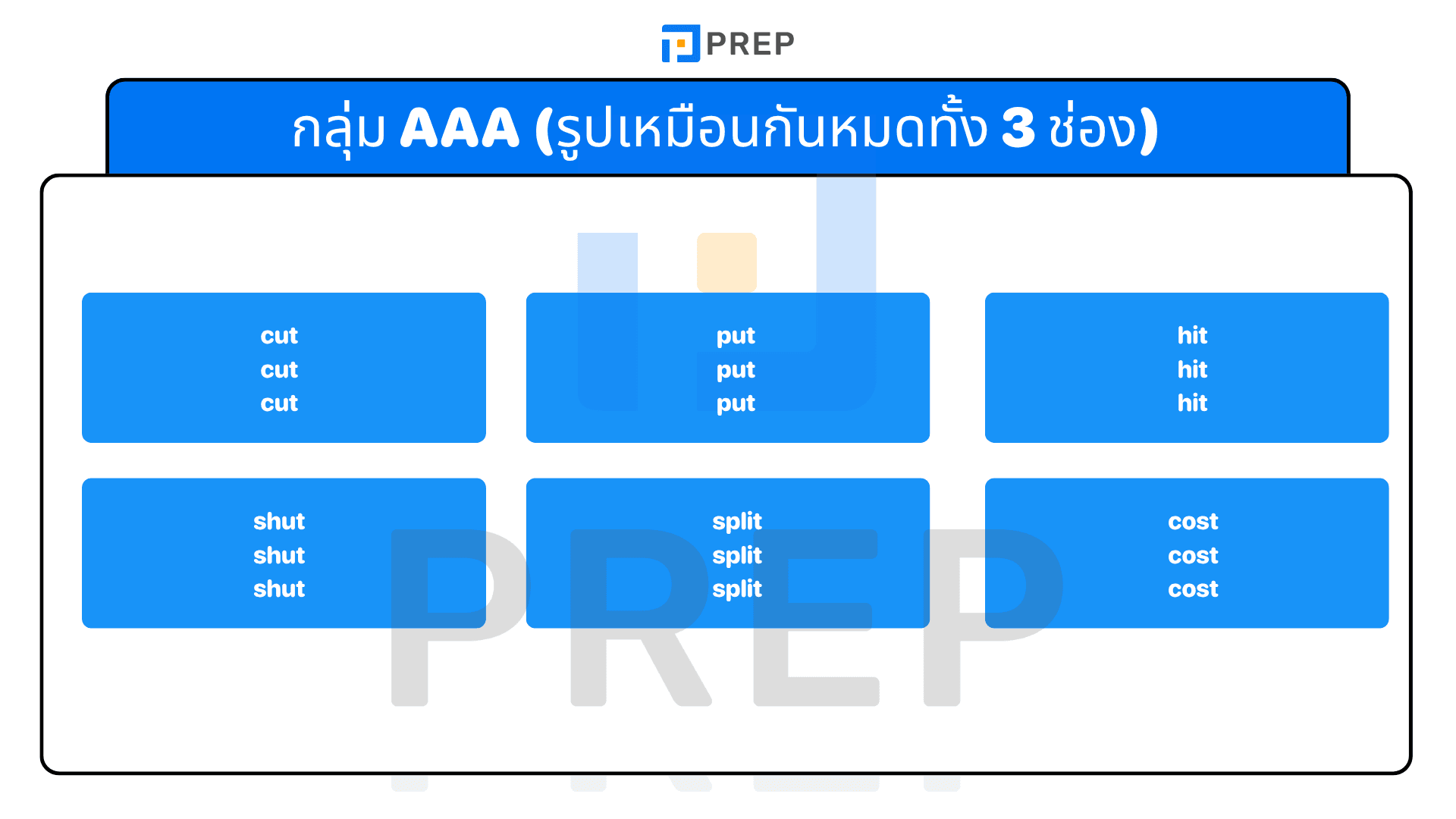
1. กลุ่ม AAA (รูปเหมือนกันหมดทั้ง 3 ช่อง)
กลุ่มนี้ง่ายที่สุด เพราะไม่ว่าจะอยู่ในรูปปัจจุบัน อดีต หรือสมบูรณ์ หน้าตาของคำก็ยังคงเดิมเป๊ะ!
|
V1 |
V2 |
V3 |
ความหมาย |
ตัวอย่างประโยค |
|
cut |
cut |
cut |
ตัด |
I cut the paper with scissors. (ฉันตัดกระดาษด้วยกรรไกร) |
|
put |
put |
put |
วาง |
She put the book on the table. (เธอวางหนังสือบนโต๊ะ) |
|
hit |
hit |
hit |
ตี |
The ball hit the window. (ลูกบอลกระแทกหน้าต่าง) |
|
shut |
shut |
shut |
ปิด |
Please shut the door. (กรุณาปิดประตู) |
|
split |
split |
split |
แยก |
We split the bill at the restaurant. (เราแบ่งจ่ายค่าอาหารที่ร้าน) |
|
cost |
cost |
cost |
ราคา |
This shirt cost 500 baht. (เสื้อตัวนี้ราคา 500 บาท) |
|
hurt |
hurt |
hurt |
ทำร้าย |
My back hurt after exercise. (หลังฉันเจ็บหลังออกกำลังกาย) |
|
let |
let |
let |
ให้ |
My parents let me go to the party. (พ่อแม่ให้ฉันไปงานปาร์ตี้) |
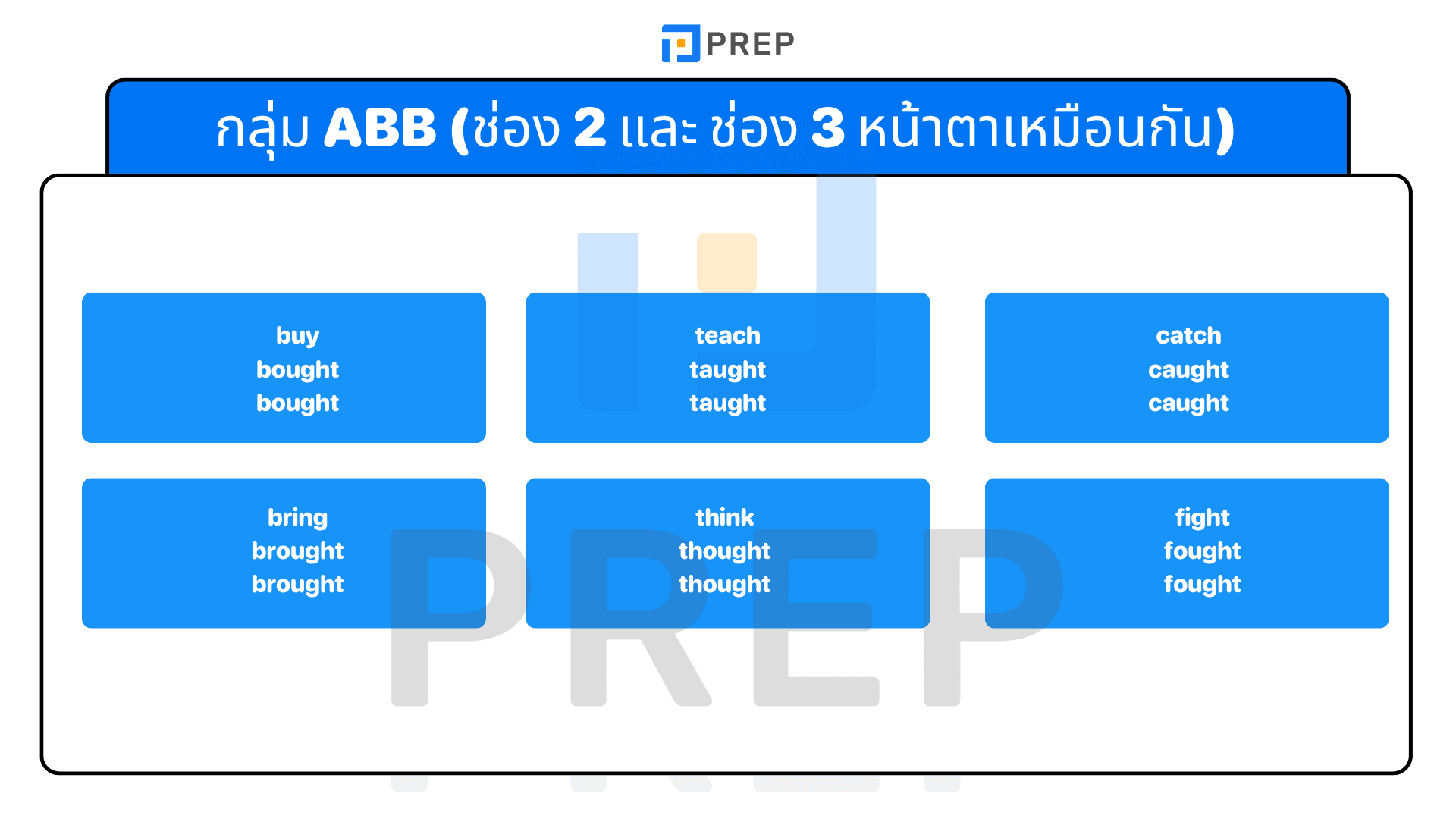
2. กลุ่ม ABB (ช่อง 2 และ ช่อง 3 หน้าตาเหมือนกัน)
กลุ่มนี้เป็นกลุ่มที่ใหญ่และพบบ่อยมาก โดยช่อง 2 และ 3 จะผันเปลี่ยนรูปไปเป็นคำเดียวกัน
|
V1 |
V2 |
V3 |
ความหมาย |
ตัวอย่างประโยค |
|
buy |
bought |
bought |
ซื้อ |
I bought a new car last week. (ฉันซื้อรถใหม่เมื่อสัปดาห์ที่แล้ว) |
|
teach |
taught |
taught |
สอน |
My father taught me how to drive. (พ่อสอนฉันขับรถ) |
|
catch |
caught |
caught |
จับ |
The cat caught a mouse. (แมวจับหนู) |
|
bring |
brought |
brought |
นำมา |
She brought lunch to work. (เธอนำอาหารกลางวันไปที่ทำงาน) |
|
think |
thought |
thought |
คิด |
I thought about you yesterday. (ฉันคิดถึงเธอเมื่อวาน) |
|
fight |
fought |
fought |
ต่อสู้ |
The soldiers fought bravely. (ทหารต่อสู้อย่างกล้าหาญ) |
|
build |
built |
built |
สร้าง |
They built a new house. (พวกเขาสร้างบ้านใหม่) |
|
send |
sent |
sent |
ส่ง |
I sent an email to my boss. (ฉันส่งอีเมลให้หัวหน้า) |
|
spend |
spent |
spent |
ใช้จ่าย |
We spent all day at the beach. (เราใช้เวลาทั้งวันที่ชายหาด) |
|
find |
found |
found |
พบ |
I found my keys in the bag. (ฉันพบกุญแจในกระเป๋า) |
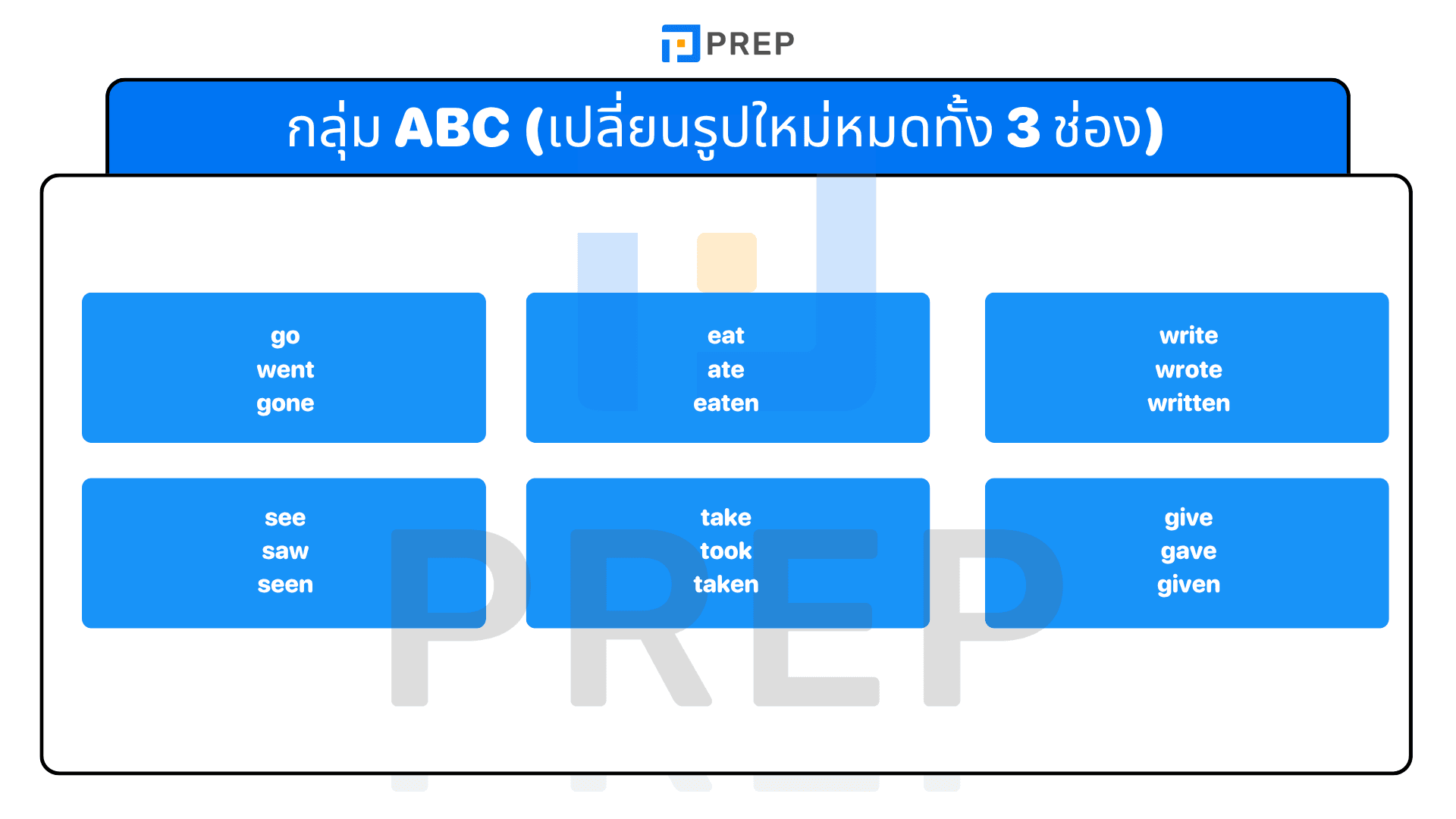
3. กลุ่ม ABC (เปลี่ยนรูปใหม่หมดทั้ง 3 ช่อง)
กลุ่มนี้คือกลุ่มมหาหินที่ท้าทายความจำมากที่สุด เพราะหน้าตาของคำทั้ง 3 ช่องจะไม่ซ้ำกันเลย แต่มีจุดสังเกตคือมักจะเปลี่ยนเสียงสระตรงกลาง หรือลงท้ายด้วย -en ในช่องที่ 3
|
V1 |
V2 |
V3 |
ความหมาย |
ตัวอย่างประโยค |
|
go |
went |
gone |
ไป |
We have gone to many countries. (เราไปหลายประเทศแล้ว) |
|
eat |
ate |
eaten |
กิน |
The food was eaten by the guests. (อาหารถูกแขกกิน) |
|
write |
wrote |
written |
เขียน |
The letter was written in English. (จดหมายถูกเขียนเป็นภาษาอังกฤษ) |
|
see |
saw |
seen |
เห็น |
I have seen this movie before. (ฉันเคยดูหนังเรื่องนี้แล้ว) |
|
take |
took |
taken |
เอา |
My wallet was taken from my bag. (กระเป๋าเงินถูกเอาออกจากกระเป๋า) |
|
give |
gave |
given |
ให้ |
The prize was given to the winner. (รางวัลถูกมอบให้ผู้ชนะ) |
|
know |
knew |
known |
รู้ |
This place has been known for its food. (สถานที่นี้ขึ้นชื่อเรื่องอาหาร) |
|
break |
broke |
broken |
หัก/แตก |
The window was broken by the ball. (หน้าต่างถูกลูกบอลทำให้แตก) |
|
speak |
spoke |
spoken |
พูด |
English is spoken worldwide. (ภาษาอังกฤษถูกพูดทั่วโลก) |
|
choose |
chose |
chosen |
เลือก |
The winner was chosen by the judges. (ผู้ชนะถูกเลือกโดยกรรมการ) |
4. กลุ่ม ABA (ช่อง 1 และ ช่อง 3 หน้าตาเหมือนกัน)
กลุ่มนี้จะเปลี่ยนรูปเฉพาะแค่ในช่องที่ 2 เท่านั้น ส่วนช่อง 1 และ 3 จะกลับมาใช้คำเดิม
|
V1 |
V2 |
V3 |
ความหมาย |
ตัวอย่างประโยค |
|
come |
came |
come |
มา |
They have come back home. (พวกเขากลับบ้านแล้ว) |
|
run |
ran |
run |
วิ่ง |
I have run 5 kilometers today. (ฉันวิ่ง 5 กิโลเมตรวันนี้) |
|
become |
became |
become |
กลายเป็น |
She has become a doctor. (เธอกลายเป็นหมอแล้ว) |
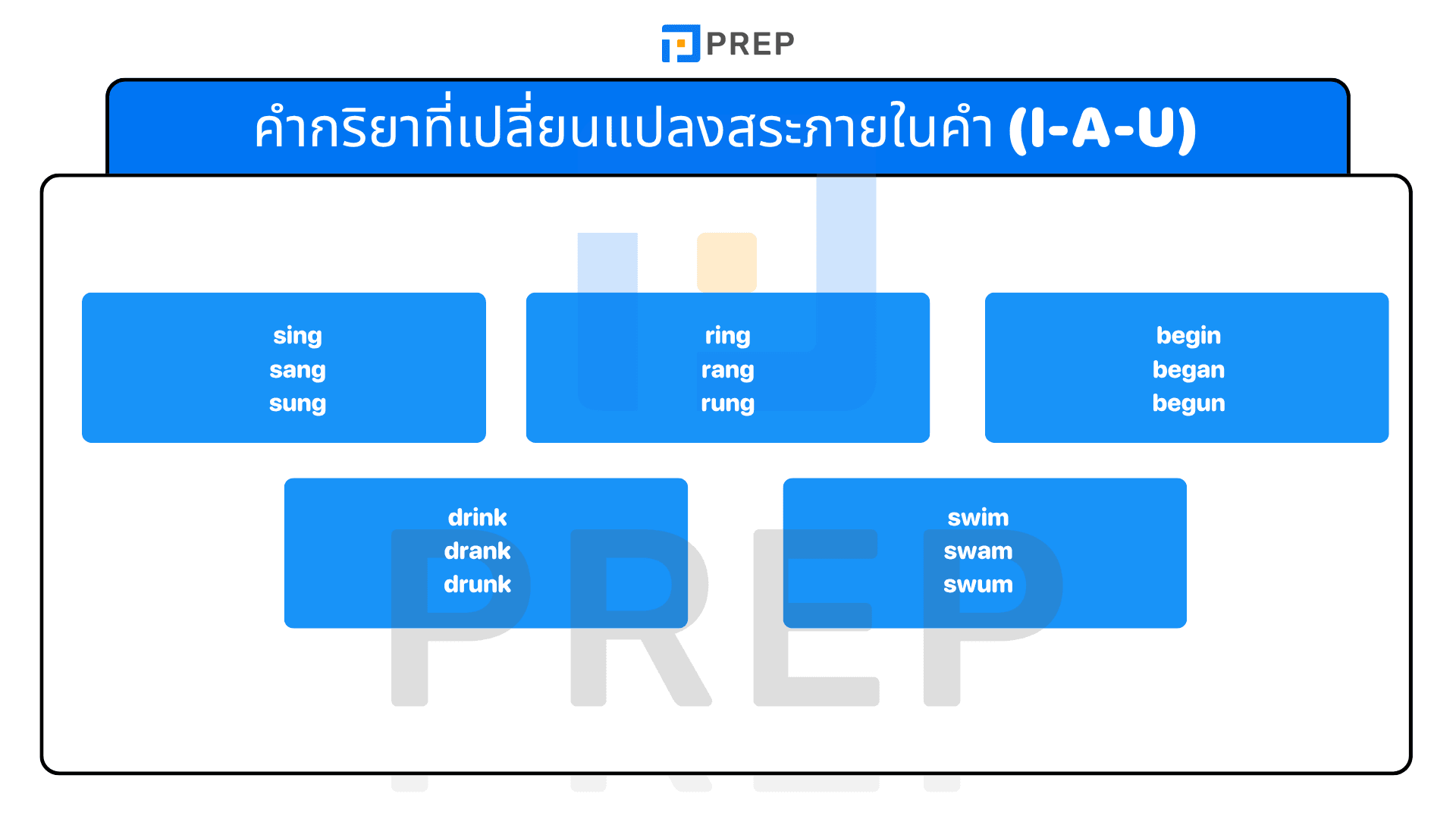
5. กลุ่มพิเศษ: คำกริยาที่เปลี่ยนแปลงสระภายในคำ (i-a-u)
กลุ่มนี้มีรูปแบบการกริยา เปลี่ยน รูปที่เป็นเอกลักษณ์ โดยเปลี่ยนสระตัวกลางตามลำดับ i → a → u
|
V1 |
V2 |
V3 |
ความหมาย |
ตัวอย่างประโยค |
|
sing |
sang |
sung |
ร้องเพลง |
The song was sung beautifully. (เพลงถูกร้องอย่างไพเราะ) |
|
ring |
rang |
rung |
ดัง |
The bell has rung three times. (ระฆังดังสามครั้งแล้ว) |
|
begin |
began |
begun |
เริ่มต้น |
The meeting has begun. (การประชุมเริ่มต้นแล้ว) |
|
drink |
drank |
drunk |
ดื่ม |
All the water has been drunk. (น้ำถูกดื่มหมดแล้ว) |
|
swim |
swam |
swum |
ว่ายน้ำ |
She has swum across the lake. (เธอว่ายน้ำข้ามทะเลสาบแล้ว) |
บทความแนะนำอ่านเพิ่มเติม:
- รวมการใช้ Modal Verbs เข้าใจง่าย ใช้เป็นทันที
- Stative Verbs กริยาบอกสภาวะ ไม่ใช่การกระทำ
- Irregular Adjectives รวมคำคุณศัพท์เปลี่ยนรูปไม่ตามกฎ
III. แบบฝึกหัดกริยา 3 ช่อง
มาลองทดสอบความจำและความแม่นยำกันหน่อยดีกว่า! ด้านล่างนี้คือแบบฝึกหัด 3 สไตล์ที่จะช่วยให้คุณจำการผันกริยาอปกติได้ดียิ่งขึ้นครับ
Exercise 1: Multiple Choice Questions
คำชี้แจง: จงเลือกคำตอบที่ถูกต้องที่สุดเพียงข้อเดียว (ข้อ 1-10)
-
I __________ a beautiful song on the radio yesterday. a) hear b) heared c) heard d) hoars
-
She has already __________ three cups of coffee this morning. a) drink b) drank c) drunk d) drinked
-
The birds __________ south for the winter last month. a) fly b) flied c) flown d) flew
-
I have __________ this book three times; it's my favorite. a) read (ออกเสียง เรด) b) readed c) reads d) red
-
He __________ his keys on the kitchen table before leaving. a) leave b) left c) leaved d) laved
-
The company __________ a new branch in Tokyo last year. a) build b) builded c) built d) builts
-
Have you ever __________ a famous person in real life? a) meet b) met c) meets d) meeted
-
(Advanced) The value of the property has __________ significantly since 2020. a) rose b) rised c) risen d) raise
-
(Advanced) I was so tired that I __________ for ten hours straight. a) sleep b) slept c) sleeped d) slope
-
(Advanced) He __________ the truth to the police during the investigation. a) speak b) spoke c) spoken d) speaked
เฉลย:
[prep_collapse_expand open_text="View more" close_text="Show less"]
-
c) heard
-
c) drunk
-
d) flew
-
a) read (เขียนเหมือนเดิมแต่ออกเสียงเปลี่ยนเป็น 'เรด' ในช่อง 2 และ 3)
-
b) left
-
c) built
-
b) met
-
c) risen (ผันจาก Rise ➔ Rose ➔ Risen)
-
b) slept
-
b) spoke
[/prep_collapse_expand]
Exercise 2: Fill in the Blanks
คำชี้แจง: จงเติมคำในช่องว่างโดยผันคำกริยาในวงเล็บให้ถูกต้องตาม Tense ในประโยค (ข้อ 1-10)
-
I _______________ (buy) a new laptop last week.
-
The thief _______________ (steal) the painting and ran away.
-
She _______________ (sing) beautifully at the concert yesterday.
-
We have _______________ (know) each other for five years.
-
He _______________ (forget) to lock the door when he left.
-
The river has _______________ (freeze) solid due to the extreme cold.
-
I would have helped you if you had _______________ (tell) me earlier.
-
She has _______________ (forgive) him for his past mistakes.
-
They _______________ (spend) all their savings on the new project last year.
-
The bell _______________ (ring) loudly at 8 o'clock.
เฉลย:
[prep_collapse_expand open_text="View more" close_text="Show less"]
-
bought (Past Simple ของ buy)
-
stole (Past Simple ของ steal)
-
sang (Past Simple ของ sing)
-
known (Present Perfect ต้องใช้ V.3 ผันจาก know ➔ knew ➔ known)
-
forgot (Past Simple ของ forget)
-
frozen (Present Perfect ต้องใช้ V.3 ผันจาก freeze ➔ froze ➔ frozen)
-
told (Past Perfect ในประโยค If Clause Type 3 ต้องใช้ V.3 ผันจาก tell ➔ told ➔ told)
-
forgiven (Present Perfect ต้องใช้ V.3 ผันจาก forgive ➔ forgave ➔ forgiven)
-
spent (Past Simple ของ spend ที่เปลี่ยนจากตัว d เป็นตัว t)
-
rang (Past Simple ของ ring)
[/prep_collapse_expand]
Exercise 3: Error Identification and Sentence Correction
คำชี้แจง: จงหาจุดที่ใช้กริยาอปกติ (Irregular Verbs) ผิดในประโยค (มี 1 จุดต่อข้อ) และแก้ไขให้ถูกต้อง (ข้อ 1-10)
-
I goed to the cinema with my friends last night.
-
She has wrote a very touching letter to her grandmother.
-
The baseball player throwed the ball as hard as he could.
-
I have gave him all the information he needs.
-
The little boy felled off his bicycle and scraped his knee.
-
The cost of living has shooted up in the past few months.
-
I have became much more confident since I started this job.
-
He bit into the apple and discovered it was rotten. (Hint: check the past participle vs past simple if it's used in present perfect!) ➔ โจทย์หลอก: "I have bit it." ประโยคนี้คือ "He bit it."
-
The sun has shined brightly all day today.
-
She choosed the red dress for the gala dinner.
เฉลย:
[prep_collapse_expand open_text="View more" close_text="Show less"]
-
ผิดที่ goed ➔ แก้เป็น went (Past Simple ของ go คือ went)
-
ผิดที่ wrote ➔ แก้เป็น written (Present Perfect ต้องใช้ V.3 ซึ่งผันจาก write ➔ wrote ➔ written)
-
ผิดที่ throwed ➔ แก้เป็น threw (Past Simple ของ throw คือ threw)
-
ผิดที่ gave ➔ แก้เป็น given (Present Perfect ต้องใช้ V.3 ซึ่งผันจาก give ➔ gave ➔ given)
-
ผิดที่ felled ➔ แก้เป็น fell (Past Simple ของ fall คือ fell)
-
ผิดที่ shooted ➔ แก้เป็น shot (ผันจาก shoot ➔ shot ➔ shot)
-
ผิดที่ became ➔ แก้เป็น become (Present Perfect ต้องใช้ V.3 ซึ่งกลุ่มนี้กลับมาหน้าตาเหมือนช่อง 1 คือ become ➔ became ➔ become)
-
ประโยคนี้ ถูกต้องแล้ว (ประโยคนี้เป็น Past Simple ธรรมดา 'bit' คือช่อง 2 ของ bite ถูกต้องแล้วครับ)
-
ผิดที่ shined ➔ แก้เป็น shone (ผันจาก shine ➔ shone ➔ shone)
-
ผิดที่ choosed ➔ แก้เป็น chose (Past Simple ของ choose คือ chose)
[/prep_collapse_expand]
การทำความเข้าใจว่า irregular verbs คืออะไรและนำไปใช้อย่างแม่นยำ จะช่วยอัปเกรดทักษะภาษาอังกฤษของคุณให้ดูโปรขึ้นอย่างก้าวกระโดดแน่นอน!
อัปเกรดทักษะภาษาอังกฤษให้เป๊ะทุกพาร์ทและคว้าคะแนนในฝันไปกับ PREP! หากคุณกำลังวางแผนเพื่อ เตรียมสอบ IELTS หรือต้องการเสริมสร้างความมั่นใจในเรื่องไวยากรณ์ คอร์สเรียนของ PREP Edu พร้อมตอบโจทย์คุณด้วยเทคโนโลยี AI อัจฉริยะที่จะจำลองห้องสอบเสมือนจริง ทั้งช่วยตรวจพาร์ทการเขียนและประเมินพาร์ทการพูดแบบเรียลไทม์ราวกับมีติวเตอร์ส่วนตัวมานั่งประกบ เราเข้าใจดีว่าแต่ละคนมีเวลาไม่เท่ากัน เราจึงมี แผนตารางเรียน IELTS ออนไลน์ ที่มีความยืดหยุ่นสูง ให้คุณสามารถจัดสรรเวลาเรียนได้ตามสไตล์ของตัวเอง คอร์สของเราอัดแน่นไปด้วยเทคนิคการทำข้อสอบครบทุกทักษะ เจาะลึกแกรมม่าที่มักจะทำให้เสียคะแนนโดยใช่เหตุ และคลังข้อสอบอัปเดตใหม่ให้ได้ตะลุยกันอย่างจุใจ มาร่วม ฝึก ielts เพื่อปลดล็อกคะแนนแบนด์สูงๆ และก้าวสู่อนาคตระดับสากลไปด้วยกันกับ PREP วันนี้ได้เลยครับ!

สวัสดีค่ะ ฉันชื่อมุก ปัจจุบันดูแลด้านเนื้อหาผลิตภัณฑ์ของ Prep Education ค่ะ
ด้วยประสบการณ์มากกว่า 5 ปีในการเรียน IELTS ออนไลน์ด้วยตนเอง ฉันเข้าใจดีถึงความท้าทายที่ผู้เรียนต้องเผชิญ แล้วก็รู้ว่าอะไรที่มันเวิร์ก
มุกอยากเอาประสบการณ์ตรงนี้มาช่วยแชร์ แล้วก็ซัพพอร์ตเพื่อน ๆ ให้ได้คะแนนที่ดีที่สุดค่ะ
ความคิดเห็น
เนื้อหาแบบพรีเมียม
ดูทั้งหมด



แผนการเรียนรู้ส่วนบุคคล


อ่านมากที่สุด




ติดต่อ Prep ผ่านโซเชียล





Address: ตึก C.P. Tower 2 (ฟอร์จูนทาวน์) ชั้น 21 ถนนรัชดาภิเษก แขวงดินแดง เขตดินแดง กรุงเทพฯ 10400
Hotline: +66 25 44 0068
Email: sawatdee@prepedu.com