Pay Attention To in English Explained with Examples
“Pay attention to in English” is a useful idiomatic expression that means focusing on something or someone. This article explains its meaning, grammar structure, and common examples so you can understand and use it confidently in daily English conversations.

I. What is Pay attention to in English?
“Pay attention to” is a common English phrase that means to focus on something carefully, listen consciously, or observe closely. It is often used to suggest that someone should be more aware or mindful of what is happening around them, or of what someone is saying or doing.
In this expression:
- "Pay" is used metaphorically, like spending effort or concentration.
- "Attention" refers to mental focus or awareness.
- "To" is a preposition that connects the action with the object being focused on.
So when someone says, “Please pay attention to the instructions,” they mean “Listen carefully and follow what I'm saying”. In daily communication, “pay attention to” can be applied in a range of contexts:
- In class: “Students, please pay attention to the lesson.”
- At work: “You should pay attention to the details in this report.”
- In conversations: “You never pay attention to what I’m saying!”
It's a highly versatile phrase used across spoken and written English, from casual dialogue to formal communication, especially in education, work, and customer service settings.
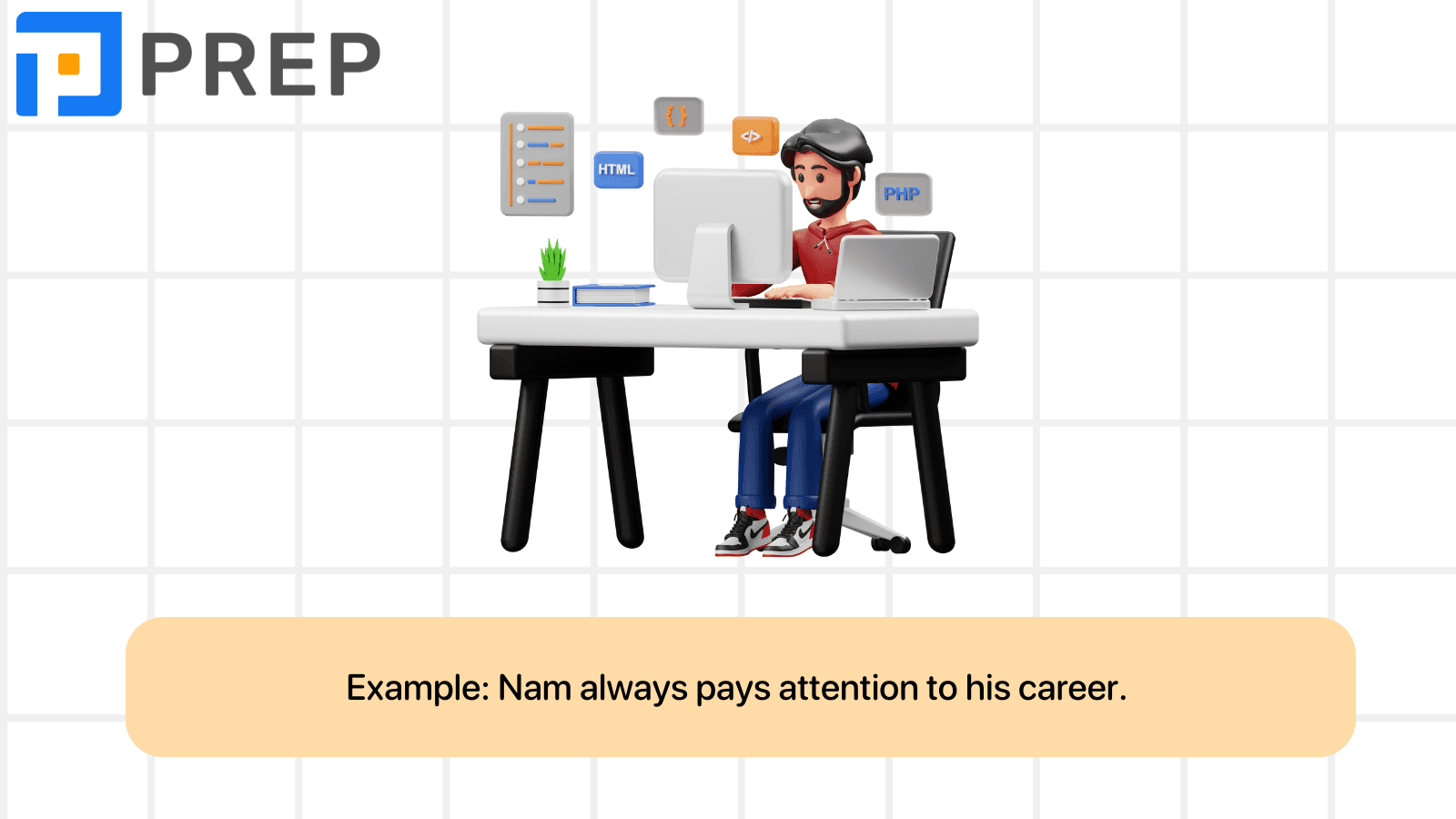
- You can also review prepositions in English to better understand how ‘to’ functions in this phrase.
1. Common Structures and Grammar Rules
To use “pay attention to” correctly in English, it’s important to understand how the expression fits into a sentence — both grammatically and logically. This section will guide you through common structures, how to use different subjects and tenses, and typical forms you'll see in writing or speaking.
Typical Sentence Patterns with “Pay Attention to”
“Pay attention to” is a verb phrase that’s usually followed by a noun, pronoun, or a verb in the -ing form (gerund). Here are the most common patterns:
|
Structure Format |
Example Sentence |
Explanation |
|
Subject + pay(s) attention to + noun |
He pays attention to the lecture. |
Focus is directed to a thing or event |
|
Subject + pay(s) attention to + pronoun |
Can you pay attention to her? |
Refers to a specific person |
|
Subject + pay(s) attention to + verb-ing (gerund) |
We should pay attention to following instructions. |
Action being focused on (more formal tone) |
|
Imperative (command form) |
Pay attention to the signs! |
Direct command used in spoken English |
|
Passive (rare/formal) |
Attention was paid to every detail. |
Used in written, formal business or academic settings |
Tense and Subject Variations
“Pay attention to” is a regular verb phrase, so it can be used in various tenses and with different subjects easily:
|
Tense/Form |
Example |
Usage Context |
|
Present Simple |
I pay attention to my teacher. |
General or repeated habits |
|
Past Simple |
She paid attention during class. |
Completed action in the past |
|
Present Perfect |
They have paid attention to recent updates. |
Action with present relevance |
|
Future |
You will need to pay attention tomorrow. |
Upcoming obligation or requirement |
|
Passive Voice |
Attention is paid to every mistake. |
Formal, used when subject is not important |
|
Imperative Mood |
Pay attention! |
Command, direct instruction in speaking |
Understanding how flexible this phrase is will help you use it naturally in everyday conversation and exams like IELTS. Learning common English collocations will further improve your fluency.
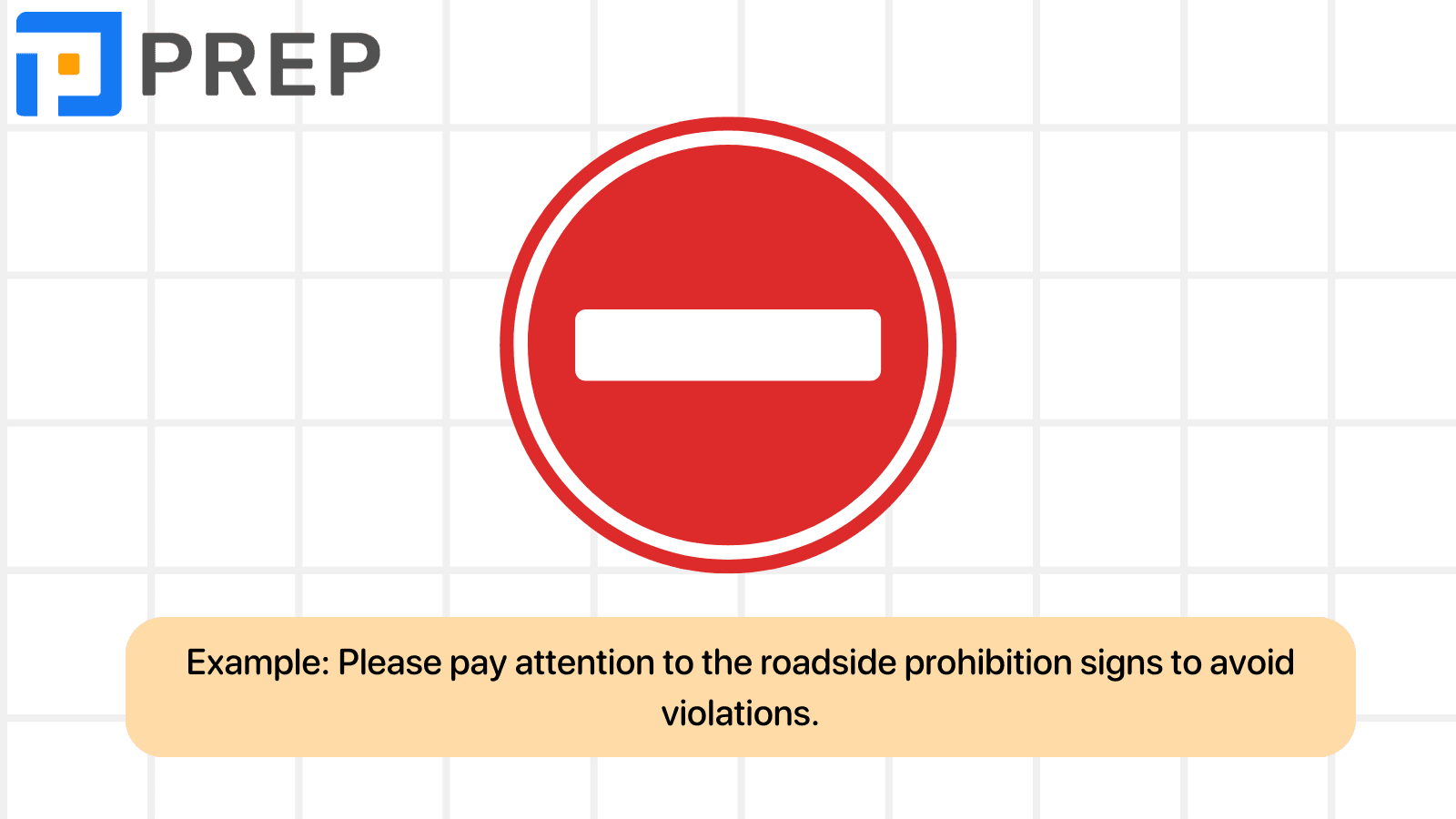
2. Synonyms and Alternative Expressions
In English, there are several expressions that convey a similar idea to “pay attention to”, but each has slightly different tones, levels of formality, or preferred usage in context. Learning these variations helps make your speech and writing more fluent and natural.
Common Synonyms of “Pay Attention to”
|
Alternative Expression |
Meaning / Use Case |
Example Sentence |
|
Focus on |
Concentrating mental effort; common in both academic and casual settings |
You should focus on your goals. |
|
Take notice of |
Noticing something clearly, often something subtle or easily missed; slightly more formal |
She took notice of his reaction. |
|
Be mindful of |
Being aware or considerate, often used in professional or respectful communication |
Be mindful of your language in meetings. |
|
Heed |
To pay serious attention, usually used in warnings or advice; formal |
He failed to heed the doctor’s advice. |
|
Watch closely / carefully |
Observing visual details with care; used in instructions or teaching |
Watch the demonstration closely, please. |
Each of these expressions can sometimes replace “pay attention to” depending on the sentence structure, context, and tone required.
-
For more practice, check our IELTS vocabulary list
“Pay Attention To” vs “Notice”: What’s the Difference?
Although “notice” and “pay attention to” can both relate to observation or awareness, they often differ in intent and timing.
|
Phrase |
Type of Attention |
Voluntary? |
Example |
|
Pay attention to |
Ongoing, intentional focus |
Yes |
Please pay attention to the instructions. |
|
Notice |
Sudden realization or observation |
Often involuntary |
He noticed a strange noise. |
-
“Pay attention to” typically refers to a conscious, deliberate effort over a period of time, often guided by external instruction.
-
“Notice” refers to momentary or immediate awareness, without necessarily intending to observe something.
II. Examples of “Pay Attention to” in Real-life Contexts
Understanding grammar rules is important, but seeing how expressions are used in real-life communication makes it easier to apply them naturally. Below are practical examples of how “pay attention to” appears in daily conversations, work-related communication, and language exams like TOEIC or IELTS.
Daily Conversations
In everyday English, “pay attention to” is often used in casual settings such as between friends, family members, or teachers and students.
Examples:
- Can you pay attention to what I’m saying for once?
- My mom told me to pay attention to the road while driving.
- Kids, please pay attention to the story I’m reading.
Contextual use:
- Used to express frustration, urgency, or to signal that something important is being missed.
- Common in spoken English.
2. Workplace and Business Communication
In professional settings, this phrase is used to encourage concentration, accuracy, and attention to tasks or guidelines.
Examples:
- Please pay attention to the details in this contract.
- The team needs to pay attention to the client’s feedback.
- You should pay attention to how your tone comes across in emails.
Contextual use:
-
Often used in performance reviews, training sessions, or meetings.
-
Can sound formal, depending on phrasing and tone of voice.
Academic and Exam Contexts (TOEIC, IELTS, APTIS, etc.)
In test scenarios, candidates are expected to understand and respond appropriately to instructions, which often include this phrase.
Examples:
- Pay attention to the speaker’s opinion in Part 3 of the listening test.
- Pay attention to the keywords in the question.
- In IELTS Speaking, paying attention to the question structure can help your fluency.
Contextual use:
-
Appears in instructions, listening tasks, or training materials.
-
Students are evaluated on their ability to follow verbal or written guidance.
These examples show why mastering “pay attention to” is not only helpful for learning English, but also critical for navigating work, study, and everyday situations. If needed, you can create your own example sentences using different tenses and scenarios to practice.
III. Learn More English Idioms Like “Pay Attention To”
After mastering “pay attention to,” one of the best ways to sound more fluent and natural in English is by learning similar idiomatic expressions. Many of these idioms are commonly used in both spoken and written English — especially when emphasizing the need to listen, stay alert, or focus.
Here are some idioms and expressions that share a similar meaning to “pay attention to,” along with explanation and usage examples.
|
Idiom |
Meaning |
Example Sentence |
Typical Context |
|
Keep an eye on |
To watch something or someone carefully |
Keep an eye on the kids while I’m in the kitchen. |
Daily life, responsible observation |
|
Be all ears |
To listen attentively and with interest |
Go ahead, I’m all ears. |
Informal conversation, listening eagerly |
|
Take note of |
To pay attention to and remember something important |
Take note of the professor’s instructions for the exam. |
Academic, workplace, notes and memory |
|
Zero in on |
To concentrate closely on a specific thing |
The discussion zeroed in on budget issues. |
Business meetings, analysis, problem-solving |
|
Tune in to |
To become more aware or focused emotionally or mentally |
Try to tune in to how your teammates are feeling. |
Emotional intelligence, communication |
|
Keep your eyes peeled |
To stay alert and watch carefully for something unexpected |
Keep your eyes peeled for the delivery truck. |
Informal, warnings or instructions |
These idioms not only add variety and depth to your English but also make your communication more fluent and expressive. To explore related expressions, check phrasal verbs with pay.
IV. Your Partner for IELTS Success: PREP
This article has provided complete knowledge about the definition, structure, usage, and examples of Pay attention to in English. Practice extensively to apply it effectively in solving exams as well as in daily communication.
-
IELTS online course: Unlock Your IELTS Success Story.

Hi I'm Chloe, and I am currently serving as an Product Content Administrator at Prep Education. With over five years of experience in independent online IELTS study and exam preparation, I am confident in my ability to support learners in achieving their highest possible scores.
Comment
Premium content
View all




Personalized roadmap


Most read




UEN: 202227322W
Address: 114 LAVENDER STREET, #11-83 CT HUB 2, SINGAPORE (338729)