Scared vs Scary – Meaning, Grammar, and Examples
The words “scared” and “scary” often confuse English learners, but their meanings are quite different. In this guide, you’ll learn how to use each word correctly, understand key grammar rules, avoid common mistakes, and master them through real-life examples and exercises.
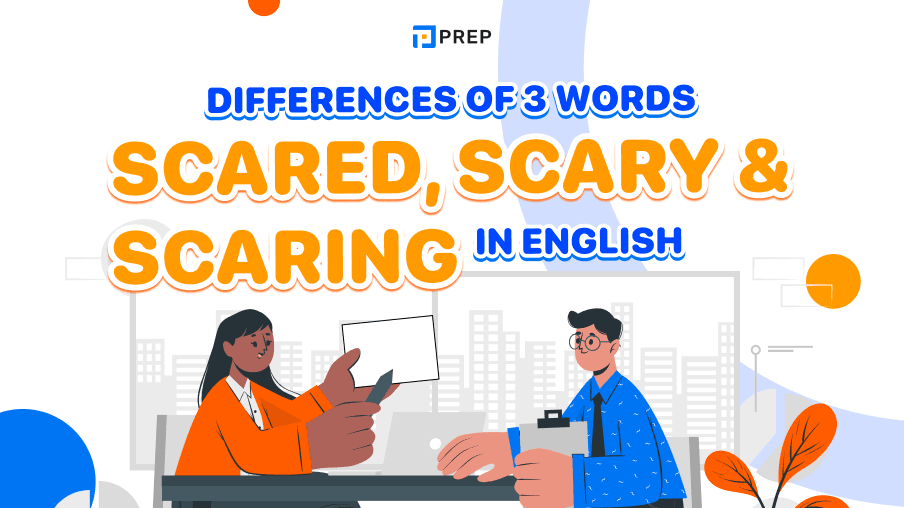
I. What Do “Scared” and “Scary” Mean?
At first glance, “scared” and “scary” may seem similar because both relate to fear. However, these two words serve different functions in a sentence and describe different aspects of an experience. Understanding their meanings is key to using them correctly in speaking and writing.
Scared - A Feeling Someone Experiences
“Scared” is used to describe a person (or sometimes an animal) who feels fear. It refers to an emotional state — how someone feels in response to something frightening.
- Type of word: adjective (specifically a past participle adjective derived from the verb scare)
- Focus: the emotion or reaction someone has
Examples:
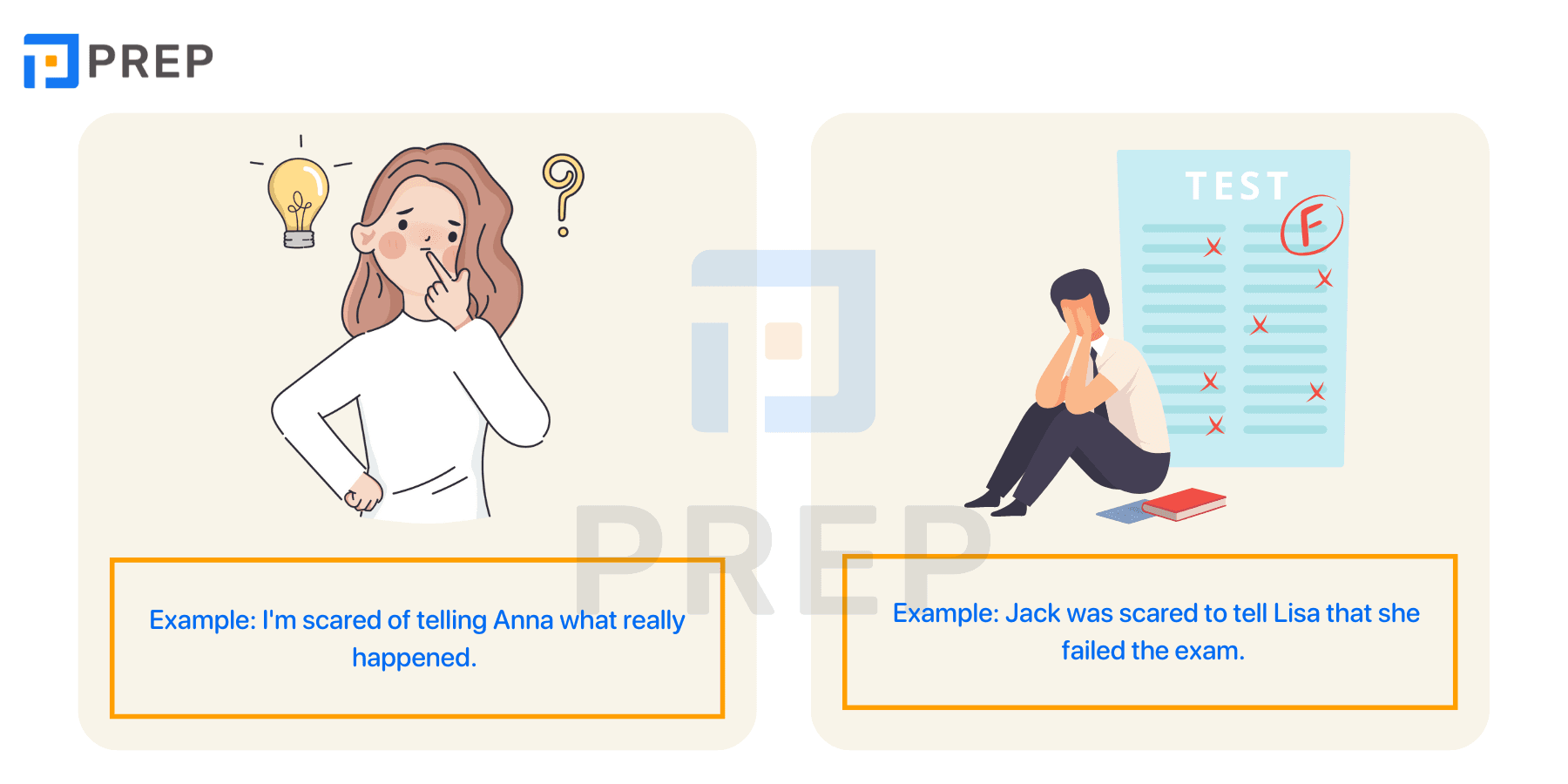
I’m scared of spiders.
She looked scared when the thunder roared.
The children were scared by the loud noise.
In each case, “scared” describes the emotional response of the person.
Scary - Something That Causes Fear
“Scary” is used to describe things, situations, or people that cause fear — not those who feel it. It explains the source or trigger of a fearful reaction.
- Type of word: adjective (regular adjective ending in -y)
- Focus: the thing or situation that makes someone scared
Examples:
That was a scary movie.
The forest at night feels scary.
He told me a scary story before bed.
Here, “scary” is attached to the cause of fear, not the person feeling it.
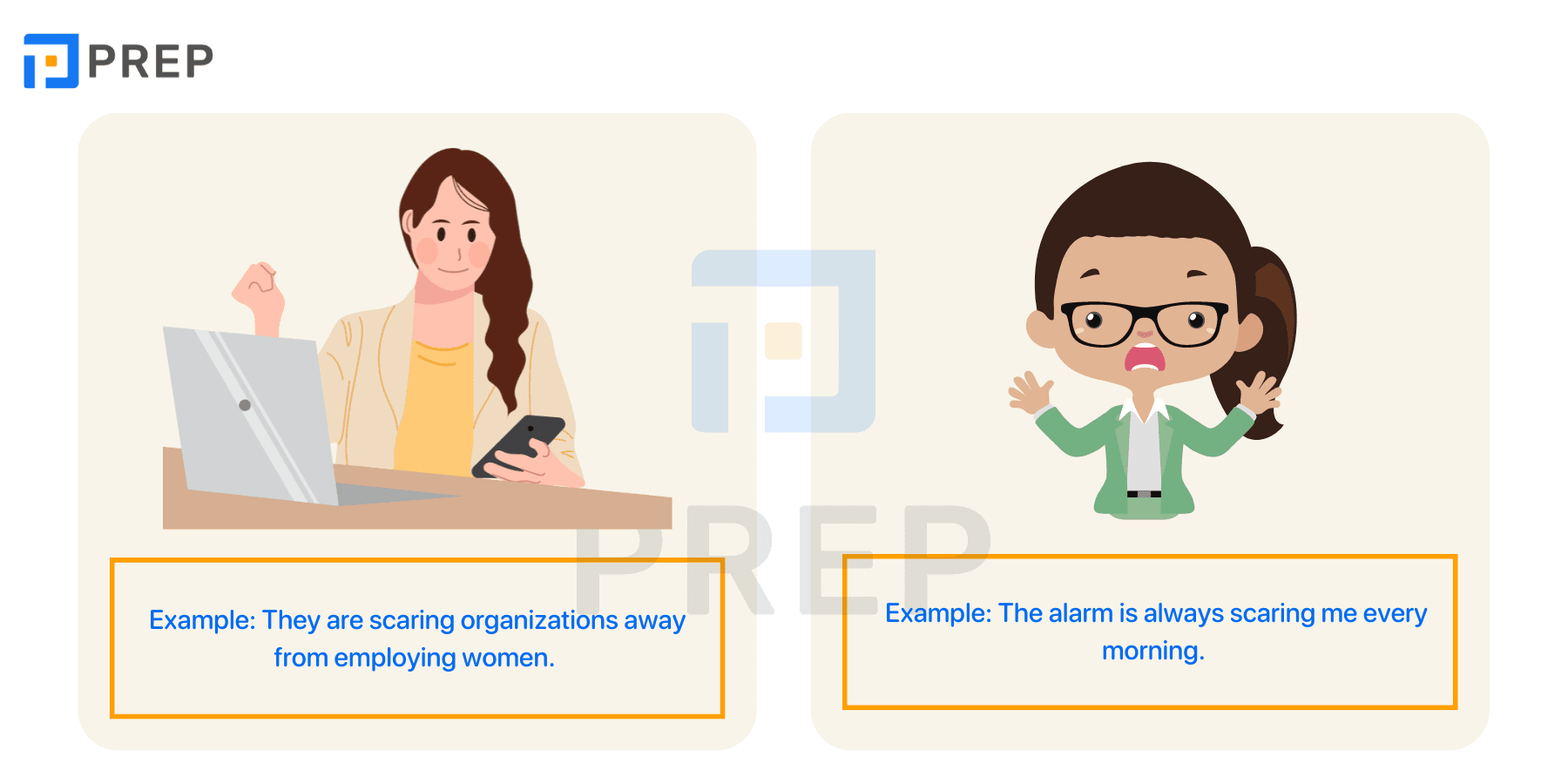
By mastering this distinction, you’ll avoid one of the most common adjective mistakes — and sound more natural and confident when you speak or write in English.
- To learn another emotion-related adjective, check afraid of in English.
1. Grammar Rules for Scared vs Scary
Although both “scared” and “scary” are adjectives, they follow different grammatical rules and are used in different sentence patterns depending on whether you're describing the feeling (scared) or the cause of that feeling (scary). Understanding this distinction is essential for using each word correctly.
Sentence Structure with “Scared”
“Scared” is typically used to describe how someone feels. It is often followed by prepositions like of, by, or about, and usually placed after a linking verb (e.g. be, feel, look, seem).
Common patterns:
Subject + linking verb + scared + of/by/about + [noun/verb-ing]
Subject + was/were + scared + by + [noun/thing]
Examples:
- She is scared of spiders.
- The children were scared by the loud thunder.
- I feel scared about moving to a new city.
- He looked scared when he heard the noise.
Notes:
- "Scared" is often used in passive constructions.
- It can also be used with verbs like "feel" or "seem" to describe emotional states.
Sentence Structure with “Scary”
“Scary” is used to describe something that causes fear. It typically comes before a noun, or follows a linking verb like be, seem, look when used predicatively.
Common patterns:
Scary + noun
The + noun + is/was/seems + scary
Examples:
- That was a scary movie.
- He told me a scary story.
- The haunted house looks scary.
- It’s scary to drive in a snowstorm.
Notes: “Scary” never describes humans in the emotional sense. Saying “I am scary” is grammatically correct but changes the meaning to “I cause fear in others,” which is usually not intended.
How to Choose Between “Scared” and “Scary”
- Choose “scared” when talking about someone who feels afraid.
- Choose “scary” when talking about something that causes fear.
Ask yourself:
- Is the subject feeling fear? Use scared.
- Is the subject creating fear? Use scary.
Incorrect: That girl is scary of dogs.
Correct: That girl is scared of dogs.
Incorrect: It was a scared movie.
Correct: It was a scary movie.
By learning and practicing these sentence patterns, you can avoid common grammar mistakes and use both adjectives correctly in all types of English communication.
2. Scared vs Scary – Key Differences Explained
While “scared” and “scary” are both adjectives related to fear, they differ in meaning, focus, and grammatical use. Understanding these differences helps learners use them naturally and accurately.
Meaning and Focus
- Scared describes the emotional state of a person or animal. It tells us how someone feels.
- Scary describes the cause of fear. It tells us what makes someone feel afraid.
In other words:
- Use scared to talk about the reaction.
- Use scary to talk about the thing or situation that causes that reaction.
Grammar Role and Word Form
|
Feature |
Scared |
Scary |
|
Type of adjective |
Past participle (emotion-focused) |
Descriptive adjective (cause-focused) |
|
Describes |
People or animals (the ones who feel afraid) |
Things, situations, or people that cause fear |
|
Typical structure |
Subject + be + scared + of/by/about |
Scary + noun, or noun + be/look/seem + scary |
|
Example |
He is scared of snakes. |
Snakes are scary. |
Special Usage Note
Be careful not to confuse the two in everyday speech or academic settings:
- Saying “I am scary” means you cause fear to others, not that you are afraid.
- Saying “this story is scared” is incorrect because a story cannot feel emotion. It should be “this story is scary.”
Correct usage shows your awareness of emotional context and grammar structure—especially important in exams like IELTS or TOEFL.
-
To link ideas smoothly, study in order to vs so as to in English.
II. Practice – Exercises to Master “Scared vs Scary”
Now that you’ve learned the meanings, grammar rules, and differences between “scared” and “scary”, it’s time to test your understanding through practice. The exercises below are designed to help you apply what you’ve learned and recognize common usage patterns and mistakes.
Exercise 1. Fill in the Blank
Choose the correct word: scared or scary.
- That movie was really ______.
- She was ______ when she heard a strange noise outside.
- Why do you look so ______?
- I don’t want to read that book – the cover looks ______.
- He felt ______ during the thunderstorm.
Exercise 2. Correct the Mistakes
Each sentence below contains an error. Rewrite the sentence using the correct adjective.
- I am scary of spiders.
- That story made me feel scary.
- The children are scary of the dark.
- It was a scared film.
- He is a scared man — don’t go near him.
Exercise 3. Sentence Completion
Complete the sentences with your own ideas using either “scared” or “scary”:
- I usually feel scared when...
- The scariest thing I’ve ever seen is...
- My younger brother gets scared when...
- Some people think flying is scary because...
- I was so scared that...
Use this exercise to practice your fluency skills in speaking or writing. Try to answer out loud or write a short paragraph using both words correctly.
Answer:
[prep_collapse_expand open_text="View more" close_text="Show less"]
|
Exercise 1 |
Exercise 2 |
Exercise 3 |
|
|
|
[/prep_collapse_expand]
Practice makes perfect. Through regular drills and reflection, you’ll build confidence and accuracy when using "scared" and "scary" in everyday and exam contexts.
-
Learn how to use contrast connectors like in spite of in English to expand your grammar range.
III. How to Use “Scared” and “Scary” in English Exams
In English proficiency exams such as IELTS, TOEIC, or TOEFL, proper use of adjectives like “scared” and “scary” can help you demonstrate a strong grasp of emotional language, sentence variety, and tone. While these words are relatively simple, using them correctly — in the right context and structure — can make your speaking and writing more natural and dynamic.
In IELTS Speaking
The IELTS Speaking test values vocabulary range and how well you express opinions, past experiences, and emotional reactions. Both “scared” and “scary” can appear naturally in:
- Describing past experiences
- Telling stories
- Expressing feelings or opinions
Examples:
- I was really scared during my first flight.
- It was a scary experience, but I learned a lot from it.
- Many people find horror films scary, but I actually enjoy them.
- I get scared easily, even by loud noises.
Tips:
- Use “scared” to show how you felt in a moment — great for Speaking Part 2 (cue cards).
- Use “scary” to describe things – events, movies, places – especially in Part 1 and 3 when giving opinions or talking about general topics.
- Combine with adverbs for stronger impact (really scared, kind of scary, a bit scary).
In IELTS Writing or Formal Contexts
In Writing Task 1 (General) or Task 2 (Essay), clarity and tone are essential. While “scared” and “scary” are more informal and emotional in tone, they can still be used appropriately — particularly in General Training Writing, narrative letters, or descriptive essays.
Examples:
- Some workplaces can be scary for new employees who lack confidence.
- Children often feel scared when separated from their parents in unfamiliar places.
- The onboarding process for new staff should not be a scary experience.
However, in more formal essays (Task 2 Academic), consider using more academic synonyms if appropriate:
- frightening instead of scary
- anxious, nervous, or afraid instead of scared
Tips:
- In academic writing, reserve “scared” and “scary” for examples or quotations.
- For a higher score in lexical resource, replace them with stronger academic vocabulary when discussing serious topics (e.g. psychology, workplace anxiety).
TOEIC and Other Grammar-Focused Tests
In TOEIC or grammar-based test sections, “scared” vs “scary” may appear in:
- Sentence completion
- Error correction
- Reading comprehension or vocabulary-in-context questions
Example question:
The students were ______ when the fire alarm suddenly rang.
A. scary
B. scared
→ Correct Answer: B. scared
Such questions often test your understanding of who feels fear versus what causes fear, so always identify the subject of the sentence to choose the right word.
-
You can also review quantity expressions like a lot of lots of allot vs plenty of in English.
IV. Learn the Secrets of IELTS Success
PREP hopes that through this article, you have gained a clear understanding of the concepts, usage, and distinctions between Scared, Scary, and Scaring.
-
IELTS preparation online: Join Our Program and learn Smarter, Not Harder!

Hi I'm Chloe, and I am currently serving as an Product Content Administrator at Prep Education. With over five years of experience in independent online IELTS study and exam preparation, I am confident in my ability to support learners in achieving their highest possible scores.
Comment
Premium content
View all
Personalized roadmap


Most read



UEN: 202227322W
Address: 114 LAVENDER STREET, #11-83 CT HUB 2, SINGAPORE (338729)