Difference Between Band 6 and Band 7 Grammar in IELTS
Many IELTS candidates remain stuck at Band 6 because the grammar gap to Band 7 is often misunderstood. This article explains the real grammatical differences examiners look for, compares Band 6 and Band 7 sentence control, and shows how accuracy and flexibility—not advanced grammar—determine higher scores.
I. Why Grammar Is the Key Factor Separating Band 6 and Band 7
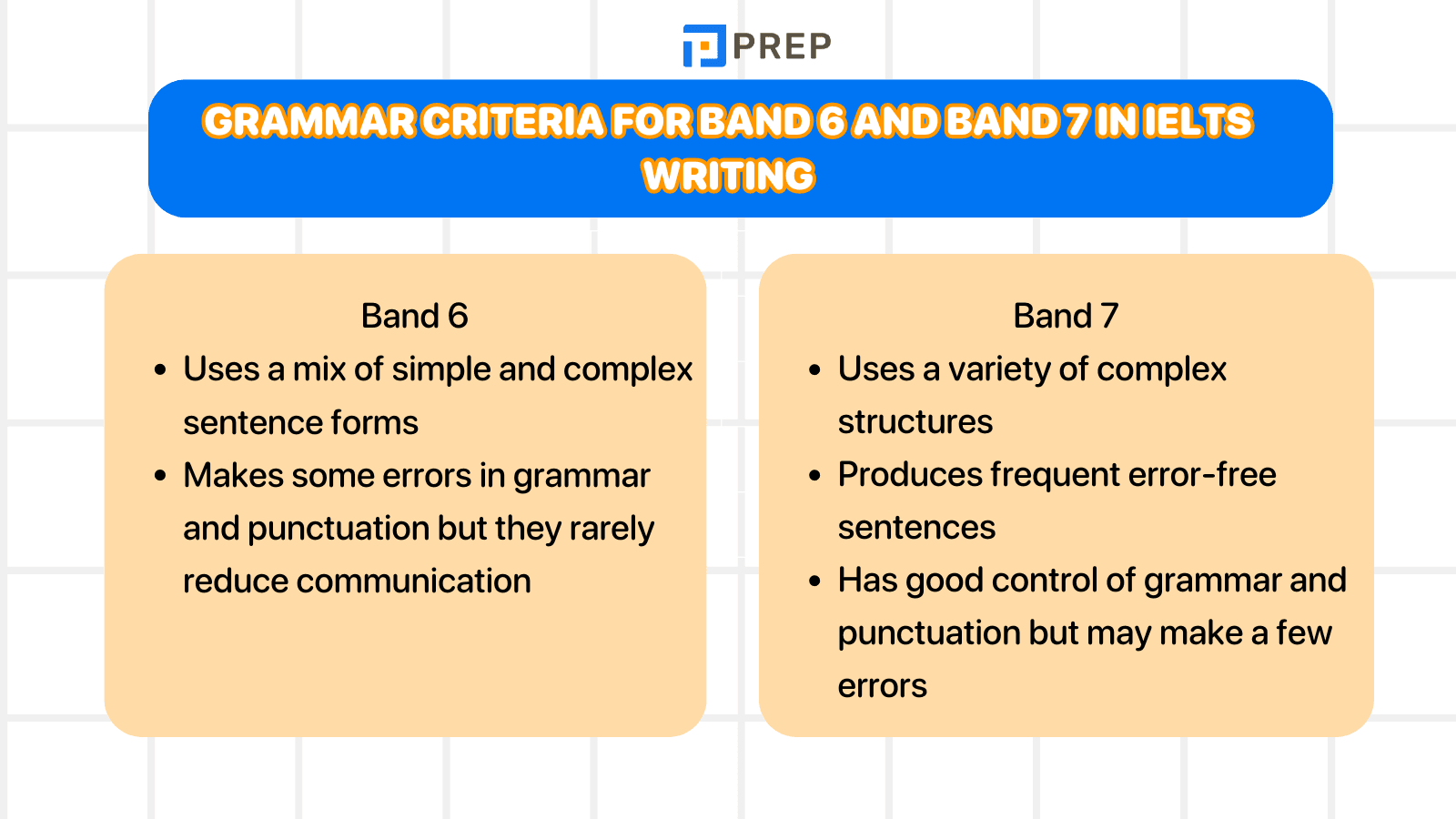
One of the most significant differences between a Band 6 and a Band 7 IELTS Writing score lies in grammar—specifically, how well a candidate controls and varies their sentence structures. According to the official IELTS Writing Band Descriptors, grammar is evaluated through two key lenses in IELTS writing band scores.
At Band 6, candidates typically demonstrate a reasonable level of control, but their sentences often rely on basic structures, and noticeable errors may persist, even if meaning is not obscured. In contrast, Band 7 writers show a much stronger command of grammar. Their sentences are more varied, more precise, and errors, if any, occur only occasionally.
Importantly, achieving a Band 7 does not require using overly complex or obscure grammar (as shown in formula for IELTS writing band 7). What examiners truly look for is control—being able to select and apply a range of structures naturally and accurately. Flexibility, variety, and consistency are far more valuable than attempting to use “advanced” grammar blindly.
Here is a direct comparison of how grammar differs between Band 6 and Band 7 IELTS Writing candidates:
|
Band |
Grammatical Range |
Grammatical Accuracy |
Typical Issues |
|
6 |
Mix of simple and limited complex structures |
Some errors that may affect clarity |
Overuse of basic patterns, verb tense inconsistencies |
|
7 |
A variety of complex structures used flexibly |
Frequent control with minimal intrusive errors |
Minor slips, but overall clear and precise |
Understanding this distinction is the first step to improve IELTS writing and reading skills.
II. 5 types of grammar for Band 6 and Band 7 in IELTS Writing
Not all grammar structures are created equal in the IELTS Writing test. While both Band 6 and Band 7 candidates may use similar types of grammar, the level of control, flexibility, and accuracy they demonstrate is what sets them apart.
To effectively move from Band 6 to Band 7, it's essential to master—and control—a variety of grammatical structures that show range without sacrificing clarity. Below are five key grammar types commonly found in Band 6 and Band 7 writing. The difference lies not just in using these structures, but in how well you use them.
Each of the following sections explores both the Band 6-level usage and Band 7-level upgrades for these grammar types:
1. Relative clauses
Relative clauses are used to add extra information to a sentence without starting a new one. They are introduced by words like who, which, that, whose, and help make your writing more cohesive and precise.
Band 6 writers often rely on simple or overused relative clause patterns, and may make mistakes such as missing relative pronouns, incorrect verb agreement, or awkward sentence flow.
Band 7 writers, on the other hand, use relative clauses more flexibly and accurately. They demonstrate better control by:
-
Varying the type of relative clauses used (defining vs. non-defining)
-
Combining ideas smoothly
-
Avoiding repetition by embedding information naturally
Example (Band 6): There are many students who do not understand grammar, which makes their writing unclear.
Example (Band 7): Many students, whose understanding of grammar is limited, produce writing that lacks clarity.
The Band 7 version integrates the clause more elegantly and avoids repetitive structure, showing a more advanced command of sentence construction.
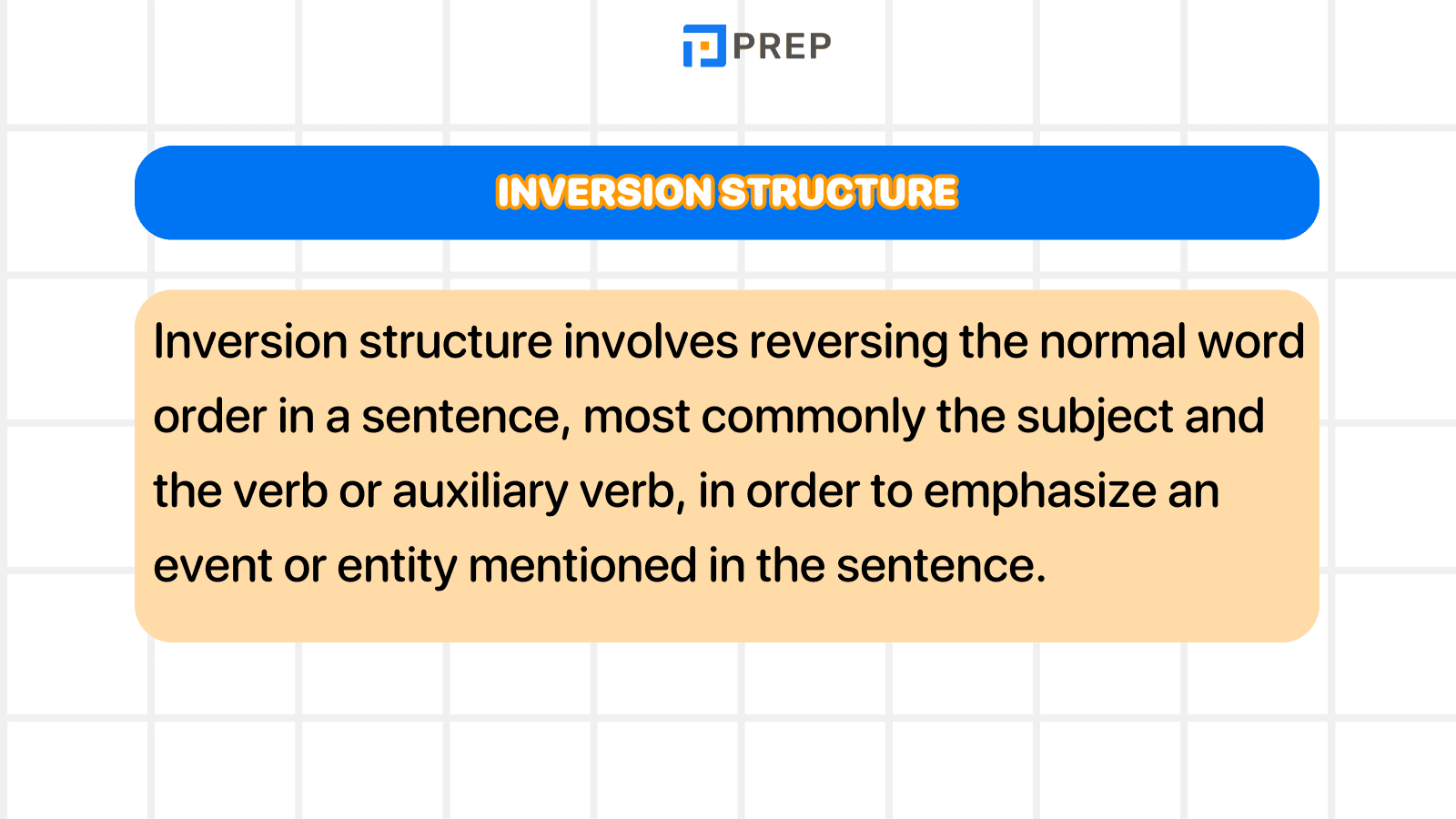
2. Inversion structure
Inversion in English occurs when the normal word order is reversed, typically for emphasis or in more formal contexts. It often involves placing the auxiliary verb before the subject, and is common after negative adverbials such as Not only, Rarely, Never, Hardly, Seldom, and Little.
Band 6 writers usually avoid inversion structures altogether, either because they are unfamiliar or unsure how to use them correctly. Their writing tends to stick to basic sentence forms that, while grammatically acceptable, may lack stylistic variety and complexity.
Band 7 writers use inversion structures occasionally and appropriately. When used well, inversion can signal advanced control of grammar and add emphasis or rhetorical impact to writing.
Example (Band 6): Technology is not only changing how we live, but it is also affecting how we work.
Example (Band 7): Not only is technology changing how we live, but it is also affecting how we work.
The second version demonstrates emphasis and variety through inversion after a negative adverbial (Not only), making the sentence feel more sophisticated and formal—qualities valued in higher band scores.
To move from Band 6 to Band 7, candidates don’t need to overuse inversion, but incorporating it where appropriate shows grammatical range and flexibility that impresses examiners.
3. Conditional sentences
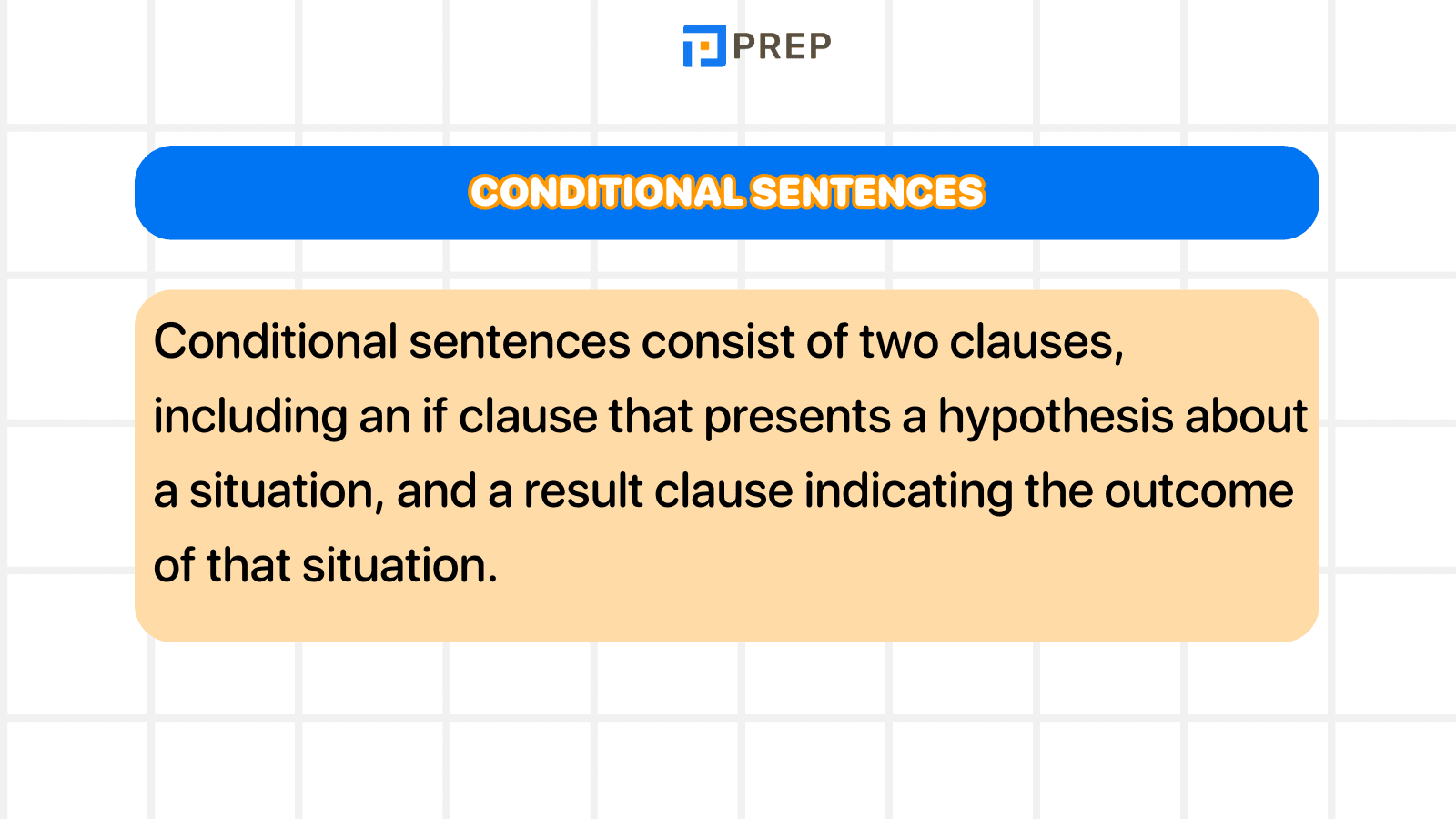
Conditional sentences are essential for expressing hypothetical situations, consequences, and logical reasoning—functions frequently used in Task 2 essays. They include zero, first, second, third, and mixed conditionals, and can reflect a range of grammatical control.
Band 6 writers often use only basic conditionals or misuse verb tenses (e.g., mixing present with past forms incorrectly). Their conditionals may sound formulaic and lack variation.
Band 7 writers demonstrate greater grammatical flexibility by:
-
Using a wider range of conditionals (especially second, third, and mixed)
-
Maintaining accurate tense control across clauses
-
Adapting conditionals to fit formal, academic contexts
Example (Band 6): If people exercise regularly, they will be healthier.
Example (Band 7): If governments had invested earlier in public health education, the rise in chronic diseases might have been prevented.
The Band 7 version reflects more advanced thinking and uses complex tense structures correctly, showing the writer's ability to express nuanced ideas through logical reasoning in presenting ideas in writing task 2.
4. Participle clauses
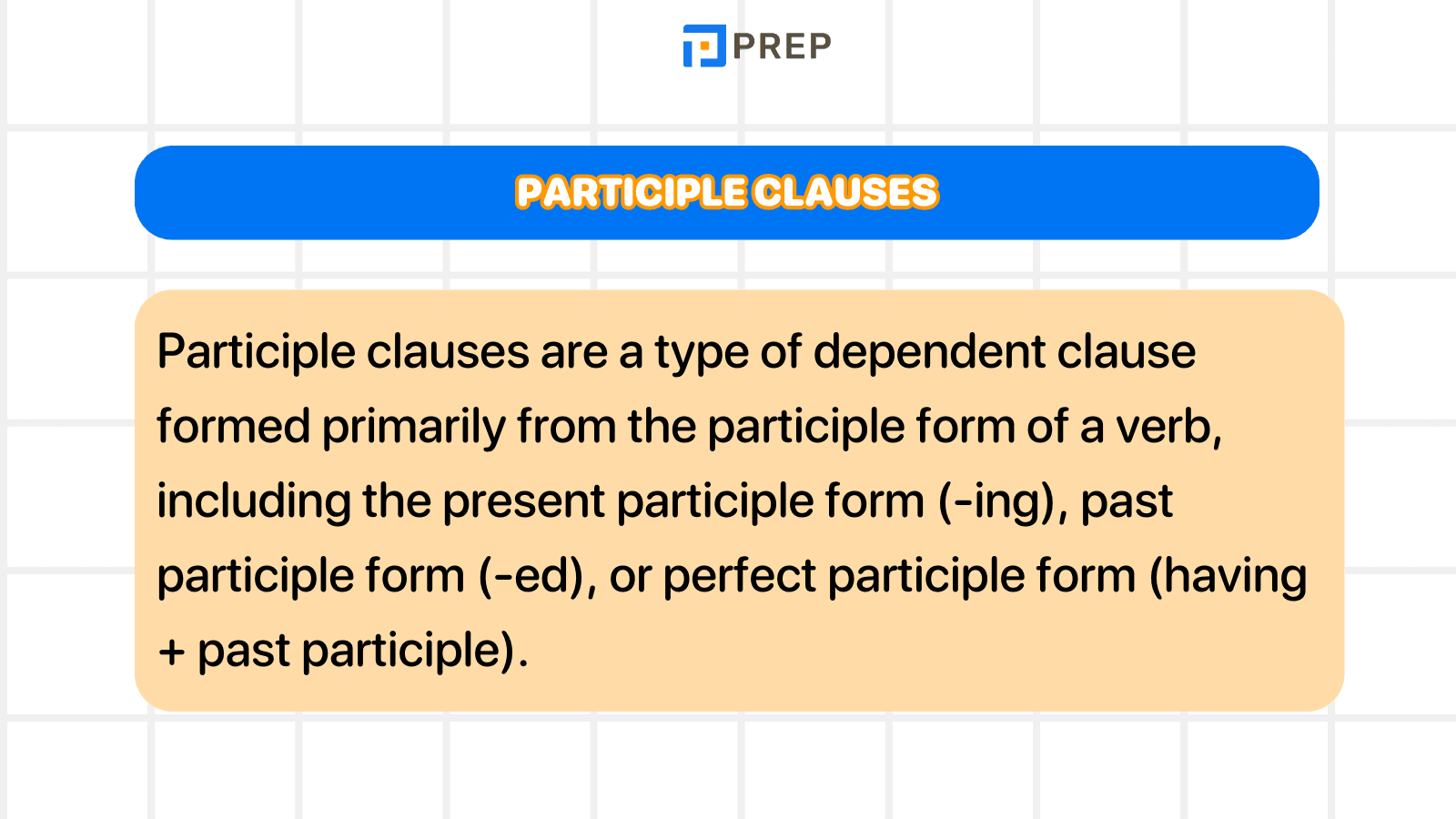
Participle clauses are used to add information in a concise, formal way by reducing full clauses into shorter forms. They often begin with present participles (V-ing), past participles (V3/ed), or perfect participles (having + V3) and are common in academic writing due to their efficiency and formality.
Band 6 writers rarely use participle clauses, or they may attempt to use them but with awkward structures or tense errors. Their writing often relies on basic clause combinations, leading to repetition or wordiness.
Band 7 writers use participle clauses effectively to:
-
Combine information smoothly
-
Vary sentence openings
-
Demonstrate control of more complex grammar structures
Example (Band 6): People who want to succeed work hard every day.
Example (Band 7): Wanting to succeed, people work hard every day.
Another example (past participle):
Band 6: The company was influenced by global trends, and it changed its marketing strategy.
Band 7: Influenced by global trends, the company changed its marketing strategy.
When used correctly, participle clauses reduce redundancy and add a formal tone—both of which are characteristics of higher-band writing.
5. Noun clauses
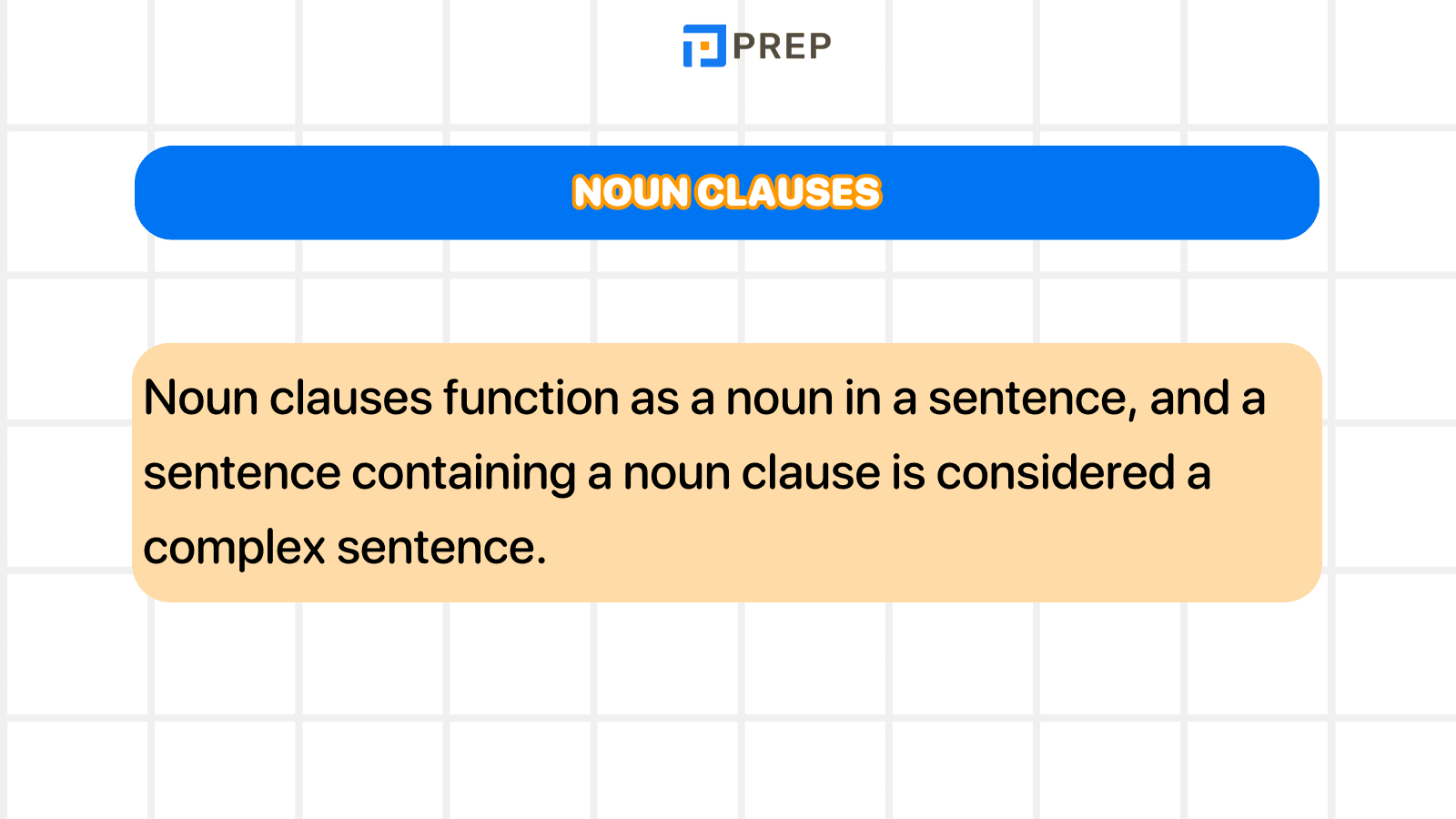
Noun clauses function as a subject, object, or complement in a sentence. They are often introduced by words such as that, what, how, why, whether, and if, and are commonly used to express opinions, arguments, and reported ideas—all essential in IELTS Writing Task 2.
Band 6 writers often avoid noun clauses or use only the most basic forms (I think that..., It is true that...). These forms are grammatically correct but tend to be repetitive and superficial in expression.
Band 7 writers use noun clauses more flexibly and in a wider range of sentence positions. They integrate them naturally to:
-
Build complex arguments
-
Add depth to ideas
-
Avoid overusing fixed templates like “I believe that…”
Example (Band 6): I believe that education is important for everyone.
Example (Band 7): What many people fail to realize is that education plays a crucial role in long-term economic stability.
The Band 7 version positions the noun clause more dynamically and introduces layered meaning with better sentence variety.
Accurate and varied use of noun clauses reflects stronger control over complex grammar. For a higher band score, it’s important not just to know this structure but to use it strategically in arguments to sound logical, precise, and formal.
III. Sample Comparison: Band 6 vs Band 7 IELTS Writing Sentences
One of the clearest ways to see the difference between Band 6 and Band 7 grammar in IELTS Writing Task 2 is to compare full writing samples written in response to the exact same prompt. In the following example, two essays are presented—one at Band 6 level and one at Band 7—followed by a breakdown that highlights the main grammatical distinctions that affect scoring under the IELTS descriptors for Grammatical Range and Accuracy.
Essay Question (Task 2 – Opinion Essay)
Some people think that governments should invest more in public transportation instead of building new roads. To what extent do you agree or disagree?
Band 6 Sample Essay
Governments around the world often face the question of whether to invest in public transportation or improve roads. I think both are important, but public transportation needs more attention these days.
First of all, public transport like buses and trains help reduce traffic jam in big cities. When people take buses or trains, there are fewer cars on the road, and this makes the traffic better. Also, buses and trains are cheaper than buying a car, so poor people can travel more easily. These are good reasons for the government to spend more money on them.
On the other hand, some roads are old and damaged. People who travel by car still need safe and smooth roads. If the government don’t fix the roads, there could be more accidents. Also, more new roads can help connect different cities or towns, which is good for the economy.
In conclusion, I believe that public transportation is more useful these days, but new roads are needed too. So the government should invest in both areas, maybe give more focus to public transit systems in busy cities.
Band 7 Sample Essay
Whether governments should prioritize investment in public transportation over the construction of new roads remains a significant policy debate. In my view, while both are essential, greater emphasis should be placed on enhancing public transit systems, particularly in urban areas.
Public transportation offers a long-term solution to several urban challenges. Efficient transit systems not only alleviate traffic congestion by reducing the number of private vehicles but also contribute to environmental sustainability. For example, cities such as Tokyo and Singapore provide high-quality public transit, leading to fewer emissions and improved air quality. Moreover, investments in buses and trains make transportation more accessible for lower-income citizens, promoting social equity.
However, it is also important to acknowledge the necessity of road maintenance and development. In certain regions, deteriorating roads pose serious safety risks, and well-connected road networks remain vital for regional trade and emergency access. That said, building entirely new roads can encourage car dependency and urban sprawl, which counteracts efforts to create more sustainable cities.
In conclusion, although there is a need to maintain and upgrade existing roads, I believe governments should devote greater resources to expanding and modernizing public transportation. Not only does this approach address current urban challenges, but it also fosters more livable and environmentally conscious cities in the future.
Grammar criteria for Band 6 and Band 7 in IELTS Writing
|
Feature |
Band 6 |
Band 7 |
|
Sentence variety |
Simple and repetitive sentence forms; relies on "and", "but" to join ideas. |
Complex and compound-complex sentences with varied clause types (e.g., relative clauses, participle clauses). |
|
Grammatical range |
Limited structures: basic conditionals and linking phrases. |
Broad range including relative clauses (which counteracts...), participle clauses (promoting social equity), and inversion (Not only does this...). |
|
Accuracy |
Noticeable errors: subject-verb agreement (“government don’t fix...”), article misuse (“traffic jam”). |
Mostly error-free; minimal grammatical slips that do not reduce clarity. |
|
Cohesion and clarity |
Ideas understandable, but transitions and phrasing are basic. |
Grammar enhances cohesion and fluency, enabling smoother flow of ideas. |
|
Tone and control |
Informal, sometimes conversational. |
Formal, academic, and controlled throughout. |
By analyzing both examples, it's clear that Band 7 performance is not just about using “harder” grammar—but about using a range of sentence types accurately and appropriately, while maintaining clarity and fluency. Precision, control, and variation are the defining factors that move a candidate from Band 6 to Band 7 in the grammar criterion.
IV. Achieve Your Dream IELTS Band Score
The above are the differences about grammar between Band 6 and Band 7 in IELTS Writing and five crucial grammar topics that you need to pay attention to in order to achieve a high Writing band score. If you want to master IELTS writing. Explore our advanced IELTS prep programs below:
-
IELTS preparation online: Score Big in IELTS With Our Expert Tips!

Hi I'm Chloe, and I am currently serving as an Product Content Administrator at Prep Education. With over five years of experience in independent online IELTS study and exam preparation, I am confident in my ability to support learners in achieving their highest possible scores.
Comment
Premium content
View all



Personalized roadmap


Most read





UEN: 202227322W
Address: 114 LAVENDER STREET, #11-83 CT HUB 2, SINGAPORE (338729)