Tendon in Chinese: Meaning and Usage Guide
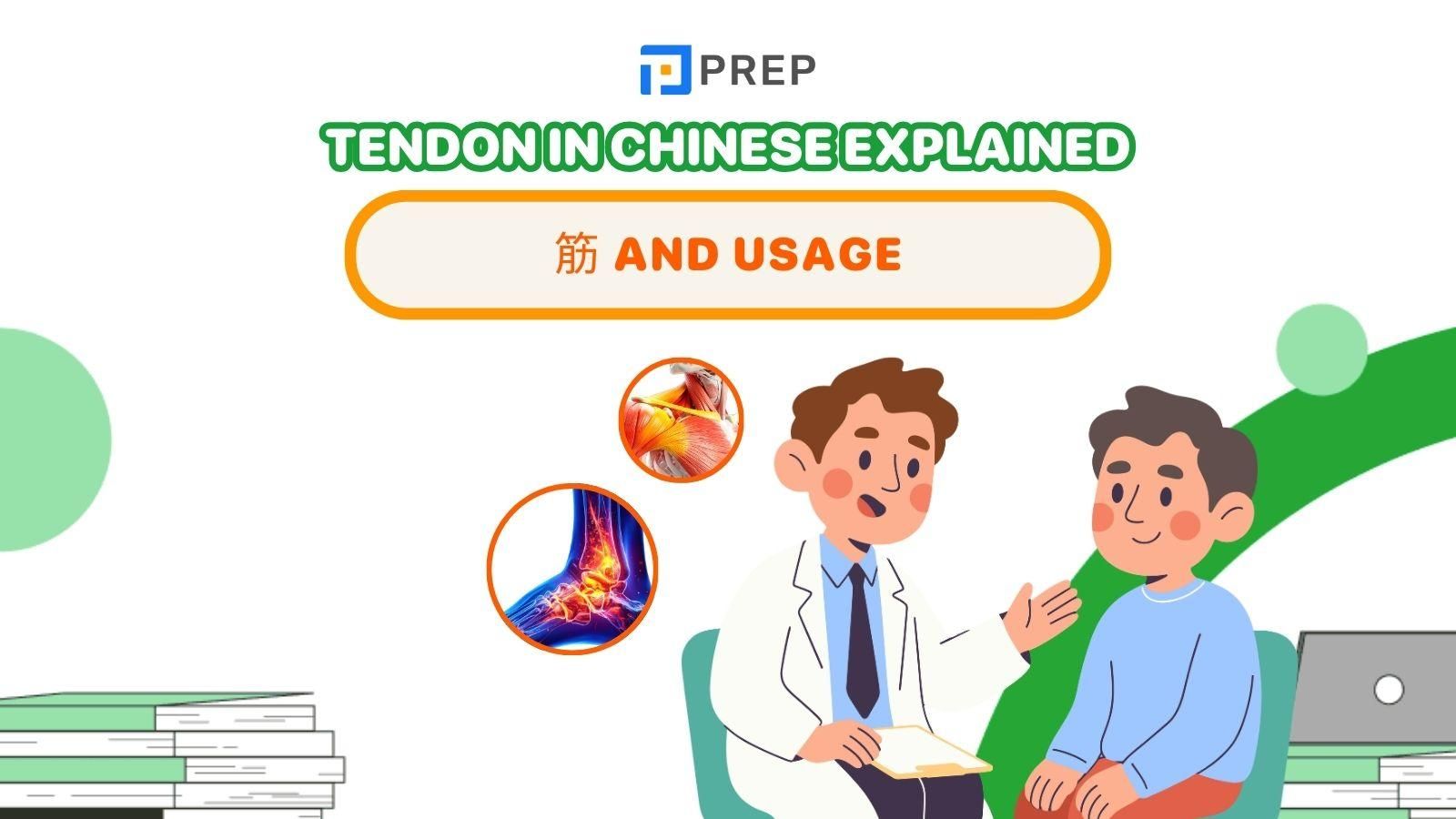
Tendon in Chinese is commonly translated as 筋 (jīn) or 肌腱 (jījiàn) in medical contexts. This guide explains the correct vocabulary for tendon in Chinese, differences between everyday and medical terms, pronunciation tips, and how related body vocabulary appears in HSK exams and practical communication.
I. What Does “Tendon” Mean in Chinese?
In English, “tendon” refers both to a part of the body that connects muscle to bone and to various popular foods (like beef tendon) in Asian cuisine. In Chinese, its translation and usage depend heavily on context—whether you are talking about anatomy, food, or even idiomatic phrases.
Core Words for Tendon in Chinese
|
Chinese Term |
Pinyin |
English Meaning |
Usage / Notes |
|
肌腱 |
jījiàn |
tendon (anatomy/science) |
The standard word in medicine and biology textbooks |
|
筋 |
jīn |
sinew, tendon (general) |
Used widely for both anatomy and food; also in idioms |
|
牛筋 |
niújīn |
beef tendon (food) |
Describing dishes, Chinese cuisine |
|
阿胶 |
ējiāo |
donkey-hide gelatin |
Traditional medicine; not a tendon, but sometimes confused as such |
Why Context Matters for Tendon in Chinese
-
Use 肌腱 (jījiàn) for medical, anatomical, or injury-related context.
-
Use 筋 (jīn) or food-specific terms (like 牛筋) in menus, markets, or when talking about texture in dishes.
-
Idioms and set expressions may use 筋 for metaphorical meanings, such as describing strength, stubbornness, or flexibility.
1. Common Uses of Tendon in Chinese: Anatomy, Cuisine, and Idioms
Tendon in Chinese appears in medical contexts, on restaurant menus, and in colorful idiomatic expressions. Mastering these usages helps you understand both formal and everyday conversation.
“Tendon” in Anatomy and Medicine
|
Scenario / Context |
Chinese Phrase & Pinyin |
English Translation |
Usage Notes |
|
Describing a body part |
肌腱发炎 (jījiàn fāyán) |
tendon inflammation (tendinitis) |
Medical diagnosis |
|
Sports/injury context |
他拉伤了肌腱。 (tā lāshāng le jījiàn) |
He strained a tendon. |
Sports, injury discussions |
|
General description |
人体有很多肌腱。 (réntǐ yǒu hěn duō jījiàn) |
The human body has many tendons. |
Biology, science |
Tendon in Chinese Cuisine
|
Scenario / Dish |
Chinese Phrase & Pinyin |
English Translation |
Usage Notes |
|
On restaurant menus |
牛筋面 (niújīn miàn) |
beef tendon noodles |
Common dish in northern China |
|
Texture description |
这个牛肉很有筋。(zhè ge niúròu hěn yǒu jīn) |
This beef is very “tendony” (chewy, springy) |
Used to describe food texture |
|
Ordering dishes |
我想点红烧牛筋。 (wǒ xiǎng diǎn hóngshāo niújīn) |
I'd like to order braised beef tendon. |
Restaurant conversation |
“Tendon” in Idioms or Colloquial Expressions
|
Idiom / Colloquial |
Chinese Phrase & Pinyin |
Literal Meaning / English Equivalent |
Usage / Context |
|
筋疲力尽 (exhausted) |
jīn pí lì jìn |
tendon and strength—both exhausted (“worn out”) |
Describing extreme tiredness |
|
尽心尽力,筋骨俱废 (extremely hard-working) |
jìnxīn jìnlì, jīngǔ jù fèi |
all effort, even bones/tendons failing |
Literary/expressing exhaustion |
|
打通任督二脉、舒筋活络 (improve health) |
shū jīn huó luò |
relax the tendons and activate the network (health idiom) |
Traditional medicine/massage phrases |
|
脑筋急转弯 (brain teaser) |
nǎojīn jí zhuǎn wān |
“brain tendon twists” (puzzle, riddle) |
Jokes, quiz contexts |
2. "Tendon" in Traditional Chinese Medicine, Health, and Chinese Culture
In China, the word "tendon" means much more than just a part of human anatomy. It carries important associations with health, traditional medicine, resilience, and even artistic values.
In Traditional Chinese Medicine (TCM) and Health:
-
Tendons (筋, jīn) are seen as critical for flexibility, strength, and smooth movement. Keeping the tendons supple is essential for overall vitality.
-
Many herbal formulas and therapies in TCM aim to "nourish the tendons" (养筋, yǎng jīn) or “relax tendons and activate blood” (活血舒筋, huóxuè shūjīn), believed to improve circulation and relieve pain or stiffness.
-
Practices like tai chi and qigong often emphasize stretching and caring for your tendons and bones (筋骨, jīngǔ) as part of long-term health.
-
Remedies such as Ejiao (阿胶, ējiāo)—a gelatin made from donkey hide—are traditionally taken not only for "blood tonifying" but also with a reputation for strengthening tendons, though its direct effect on tendons is debated.
-
In both Western and TCM discussions, conditions like tendonitis (肌腱炎, jījiànyán* or 筋膜炎, jīnmóyán) are recognized and addressed through a mix of herbal medicine, acupuncture, and massage.
In Chinese Culture, Art, and Literature:
-
In Chinese calligraphy, calligraphers often describe beautiful writing as having "muscle and bone" (筋骨, jīngǔ), symbolizing structure, power, and liveliness within each stroke.
-
The phrase 筋疲力尽 (jīnpí lìjìn) means “completely exhausted” or “every sinew and bit of strength spent.” It’s found in literature, conversation, and even news headlines to express utter fatigue.
-
The texture word 筋道 (jīndào) describes food (like noodles or tendon) that is perfectly springy and chewy, but figuratively it can also praise a person for being tough, resilient, or full of inner strength.
-
Traditional sayings, like “宁断筋骨,不伤心志” (nìng duàn jīngǔ, bù shāng xīnzhì—"Better to break bones and tendons than to break your spirit"), reflect the cultural admiration for perseverance, willpower, and endurance.
-
Throughout poetry and classical stories, tendons are sometimes used as a metaphor for backbone, strength of character, or the will to overcome hardship.
In Chinese society, the concept of “tendon” bridges the physical and the symbolic—it is a part of health, a standard in the arts, and a metaphor for emotional and spiritual endurance.
II. “Tendon” in HSK and Chinese Exams
If you’re studying Chinese with HSK or other formal tests in mind, it’s helpful to know how the word “tendon” and its related terms appear in exam content.
-
HSK Levels:
-
The word 肌腱 (jījiàn, tendon) is usually seen in intermediate to advanced HSK readings or listening exercises, especially in passages about health, anatomy, or sports injuries.
-
The character 筋 (jīn) can also appear in vocabulary related to food (like 牛筋, beef tendon) or idiomatic expressions.
-
For lower HSK levels, you’re more likely to see 筋 in simple food vocabulary or descriptive phrases about texture.
-
-
Typical Exam Contexts:
-
Reading comprehension may test your ability to distinguish 筋 (“tendon/sinew”) from other body parts such as 骨头 (gǔtou, bone) or 肌肉 (jīròu, muscle).
-
Listening sections could include dialogues at a restaurant, where you hear 牛筋 as a menu item, or sports/health situations mentioning tendon injuries.
-
In written tasks or cloze passages, tendon-related terms might appear in short texts about traditional Chinese medicine, diet, or exercise.
-
-
Idioms and Collocations:
-
Higher level HSK passages or advanced exams might feature idiomatic or set phrases with 筋 for expressing exhaustion (筋疲力尽), describing character, or summarizing health tips.
-
Tips for Exams:
-
Practice distinguishing between 筋, 肌腱, and related anatomy or food words in both reading and listening.
-
Be aware of tendon’s appearance in idioms or as a metaphor, especially in reading comprehension sections.
-
Learn to recognize 筋 and 肌腱 in both simplified and traditional forms, as some exams (and real life materials) use both.
Above is the full article by PREP on how to say, understand, and use Tendon in Chinese—from anatomy and cuisine to idioms, culture, and exam success. With this knowledge, you’ll be able to read menus, understand medical or wellness discussions, and appreciate unique expressions in Chinese. Keep exploring with PREP, and every new word will add strength and flexibility to your Mandarin journey.

Hi I'm Chloe, and I am currently serving as an Product Content Administrator at Prep Education. With over five years of experience in independent online IELTS study and exam preparation, I am confident in my ability to support learners in achieving their highest possible scores.
Comment
Premium content
View all



Personalized roadmap


Most read


UEN: 202227322W
Address: 114 LAVENDER STREET, #11-83 CT HUB 2, SINGAPORE (338729)