W 開頭的英文單字完整指南:150+ 個 water、walk、want 等常用詞彙分類與例句
W 開頭的英文單字有哪些?如何有效記憶這些詞彙?W 開頭的英文單字涵蓋超過 150 個常用詞彙,從日常基礎單字如 water(水)、walk(走)、want(想要),到進階詞彙如 wisdom(智慧)、witness(見證)、worship(崇拜)。這些單字橫跨名詞、動詞、形容詞、副詞等各類詞性,其中動詞包括 wake(醒來)、wash(清洗)、wait(等待);名詞涵蓋 wall(牆)、wallet(錢包)、war(戰爭);形容詞則有 warm(溫暖的)、weak(虛弱的)、wise(明智的)等,構成英語溝通的重要基石。
掌握 W 字母開頭的單字不僅能擴充詞彙量,更能在 IELTS、TOEIC 等國際英語檢定中展現語言實力。許多考生忽略了系統化學習字母分類詞彙的重要性,導致在考試中遇到熟悉卻記不清楚的單字。
本文由 PREPEDU 專業教學團隊精心整理,完整收錄 150+ 個 W 開頭英文單字,按詞性分類並提供 IPA 音標、繁體中文釋義、實用例句,以及常用短語動詞和慣用語。無論您是準備英語檢定、提升職場溝通能力,或是建立扎實的英語基礎,這份完整指南都將成為您最實用的學習資源。

I. W 開頭的常用英文單字總覽
以 W 開頭的英文單字非常多,涵蓋各類詞性,在日常溝通與學術考試中扮演重要角色。例如常見的動詞有 wake(醒來)、walk(走)、want(想要);名詞有 wall(牆)、water(水)、wallet(錢包)、war(戰爭);形容詞有 warm(溫暖的)、weak(虛弱的)、wacky(古怪的)。透過系統化地學習這些 w 開頭的英文單字,您將能更自信地運用於各種情境。
|
W 開頭的英文單字 |
中文意思 |
例句 |
|
wall(n.) /wɔːl/ |
牆壁 |
The ancient city wall has stood for over 500 years.(這座古城牆已經屹立超過 500 年。) |
|
water(n.) /ˈwɔːtər/ |
水 |
Clean water is essential for human survival.(乾淨的水對人類生存至關重要。) |
|
wagon(n.) /ˈwæɡən/ |
貨車、四輪馬車 |
Farmers used wagons to transport crops to the market.(農民使用貨車將農作物運送到市場。) |
|
wallet(n.) /ˈwɑːlət/ |
錢包 |
He keeps his credit cards and cash in a leather wallet.(他把信用卡和現金放在皮革錢包裡。) |
|
wardrobe(n.) /ˈwɔːrdroʊb/ |
衣櫃、衣櫥 |
She organized her wardrobe by season and color.(她按季節和顏色整理衣櫃。) |
|
wave(n.) /weɪv/ |
波浪 |
Surfers waited for the perfect wave to ride.(衝浪者等待完美的波浪來衝浪。) |
|
weapon(n.) /ˈwepən/ |
武器、兵器 |
Ancient warriors carried various weapons into battle.(古代戰士攜帶各種武器進入戰場。) |
|
world(n.) /wɜːrld/ |
世界 |
Globalization has made the world more interconnected than ever.(全球化使世界比以往任何時候都更加相互聯繫。) |
|
window(n.) /ˈwɪndoʊ/ |
窗戶、窗子 |
Fresh air flows through the open window.(新鮮空氣從開著的窗戶流進來。) |
|
work(n.) /wɜːrk/ |
工作、作品 |
His artistic work has been displayed in galleries worldwide.(他的藝術作品已在全球的畫廊展出。) |
|
wait(v.) /weɪt/ |
等待、等候 |
Passengers wait at the bus stop for the next arrival.(乘客在公車站等待下一班車。) |
|
wake(v.) /weɪk/ |
醒來、喚醒 |
Birds wake up early and start singing at dawn.(鳥兒早早醒來,在黎明時分開始唱歌。) |
|
walk(v.) /wɔːk/ |
走路、散步 |
Daily walking improves cardiovascular health.(每天散步能改善心血管健康。) |
|
wander(v.) /ˈwɑːndər/ |
漫步、閒逛 |
Tourists wander through the historic streets admiring architecture.(遊客漫步在歷史街區,欣賞建築。) |
|
want(v.) /wɑːnt/ |
想要、需要 |
Children want attention and love from their parents.(孩子想要父母的關注和愛。) |
|
wash(v.) /wɑːʃ/ |
洗滌、清洗 |
You should wash your hands frequently to prevent illness.(你應該經常洗手以預防疾病。) |
|
wear(v.) /wer/ |
穿、戴 |
Office workers wear business attire to maintain professionalism.(辦公室員工穿商務服裝以保持專業形象。) |
|
win(v.) /wɪn/ |
贏得、獲勝 |
Athletes train hard to win medals at competitions.(運動員努力訓練以在比賽中贏得獎牌。) |
|
wish(v.) /wɪʃ/ |
希望、祝願 |
People wish for happiness and success in life.(人們希望生活中有幸福和成功。) |
|
write(v.) /raɪt/ |
寫、書寫 |
Authors write stories to entertain and inspire readers.(作家寫故事來娛樂和啟發讀者。) |
|
warm(adj.) /wɔːrm/ |
溫暖的、熱心的 |
Spring brings warm sunshine after the cold winter.(春天在寒冷的冬天後帶來溫暖的陽光。) |
|
weak(adj.) /wiːk/ |
虛弱的、弱的 |
The patient felt weak after the long illness.(病人在長期患病後感到虛弱。) |
|
white(adj.) /waɪt/ |
白色的 |
Snow-covered mountains shine with white peaks.(白雪覆蓋的山峰閃耀著白色的山頂。) |
|
wild(adj.) /waɪld/ |
野生的、狂野的 |
National parks protect wild animals in their natural habitat.(國家公園保護野生動物的自然棲息地。) |
|
wise(adj.) /waɪz/ |
明智的、有智慧的 |
Experienced leaders make wise decisions for their organizations.(有經驗的領導者為其組織做出明智的決定。) |
|
wonderful(adj.) /ˈwʌndərfl/ |
精彩的、美好的 |
Vacations create wonderful memories with family and friends.(假期與家人和朋友創造美好回憶。) |
|
wet(adj.) /wet/ |
濕的、潮濕的 |
Rainy days leave the ground wet and muddy.(雨天讓地面變得濕潤和泥濘。) |
|
wrong(adj.) /rɔːŋ/ |
錯誤的、不對的 |
Admitting when you are wrong shows maturity and honesty.(承認錯誤顯示成熟和誠實。) |
|
wacky(adj.) /ˈwæki/ |
古怪的、滑稽的 |
The comedian's wacky jokes made everyone laugh loudly.(喜劇演員古怪的笑話讓每個人都大笑。) |
|
wary(adj.) /ˈweri/ |
謹慎的、小心的 |
Experienced investors remain wary of risky financial schemes.(有經驗的投資者對高風險的金融計劃保持謹慎。) |
|
well(adv.) /wel/ |
好地、充分地 |
Prepared students perform well on examinations.(準備充分的學生在考試中表現良好。) |
|
when(adv./conj.) /wen/ |
當...時、何時 |
Knowing when to speak and when to listen is important.(知道何時說話何時傾聽很重要。) |
|
where(adv.) /wer/ |
在哪裡、哪裡 |
Travelers research where to stay before booking accommodation.(旅客在預訂住宿前研究住在哪裡。) |
|
which(pron.) /wɪtʃ/ |
哪個、哪些 |
Students must decide which courses to take each semester.(學生必須決定每學期選修哪些課程。) |
|
who(pron.) /huː/ |
誰、什麼人 |
Employers want to know who the most qualified candidates are.(雇主想知道誰是最合格的候選人。) |
|
why(adv.) /waɪ/ |
為什麼、為何 |
Understanding why things happen helps us learn from experiences.(理解為什麼事情發生幫助我們從經驗中學習。) |
|
with(prep.) /wɪð/ |
和...一起、用 |
Teamwork with colleagues leads to better project outcomes.(與同事的團隊合作帶來更好的項目成果。) |
|
without(prep.) /wɪˈðaʊt/ |
沒有、缺乏 |
Success without hard work and dedication is rare.(沒有努力和奉獻的成功是罕見的。) |
|
weekly(adj./adv.) /ˈwiːkli/ |
每週的、每週地 |
The team holds weekly meetings every Monday morning.(團隊每週一早上舉行週會。) |
|
widely(adv.) /ˈwaɪdli/ |
廣泛地、普遍地 |
English is widely spoken as an international language.(英語作為國際語言被廣泛使用。) |
以上這 30 個 W 開頭單字涵蓋了名詞、動詞、形容詞、副詞與其他常用詞類,是學習 W 英文單字的絕佳起點。掌握這些基礎的 W 開頭英文單字後,接下來我們將更深入地探討各個詞類中更多的 w 開頭的英文單字。
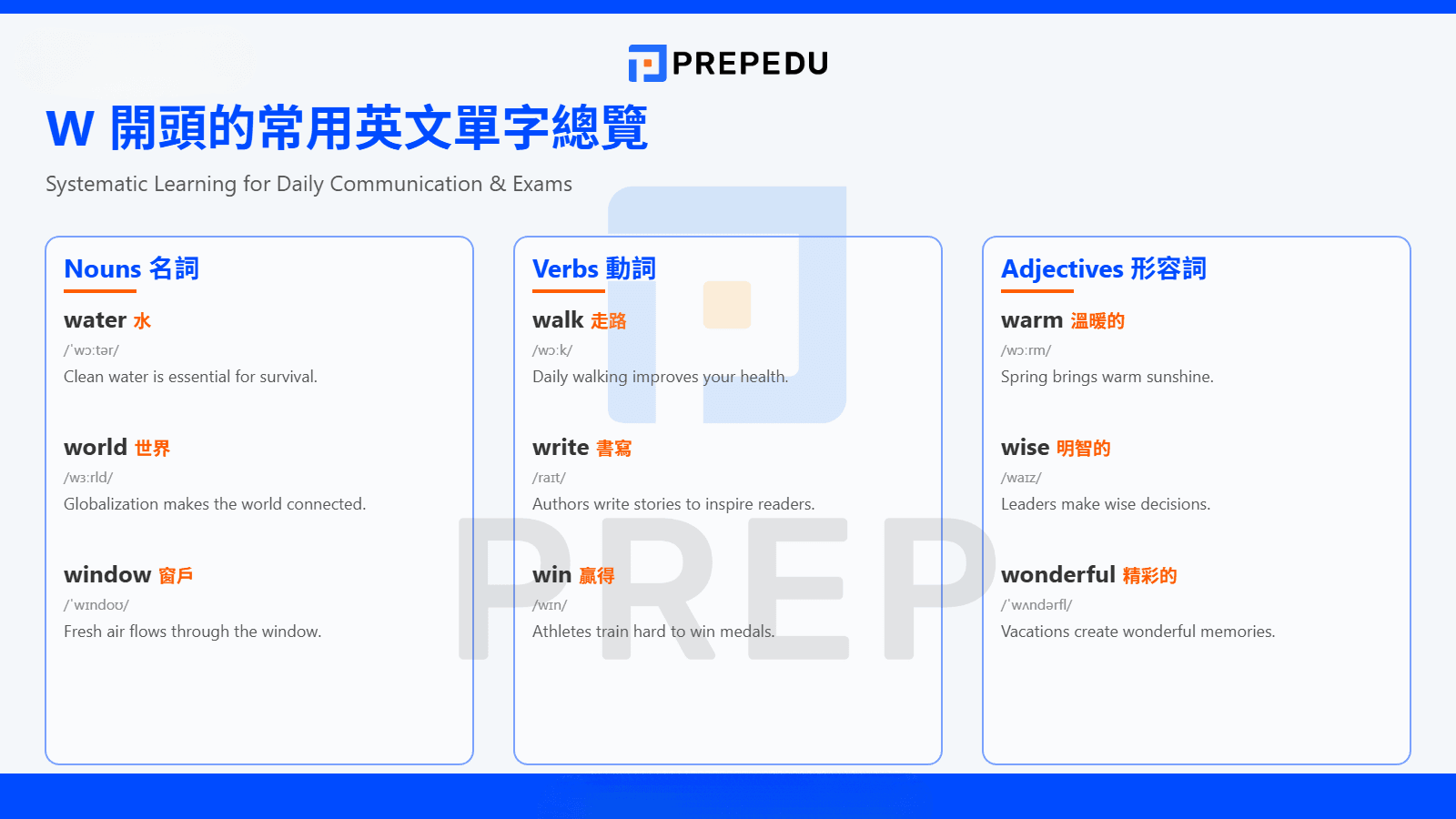
II. W 開頭的英文單字一詞類分類總結
學習 W 單字時,了解它們的詞性分類至關重要。每個 W 英文單字都有其特定的用法和搭配,透過分類學習,您能更有效地記憶和應用這些 W 的單字。以下 PREP 將詳細介紹名詞、動詞、形容詞和副詞四大類別的 W 開頭英文單字。
1. W 開頭的英文單字名詞(Noun)
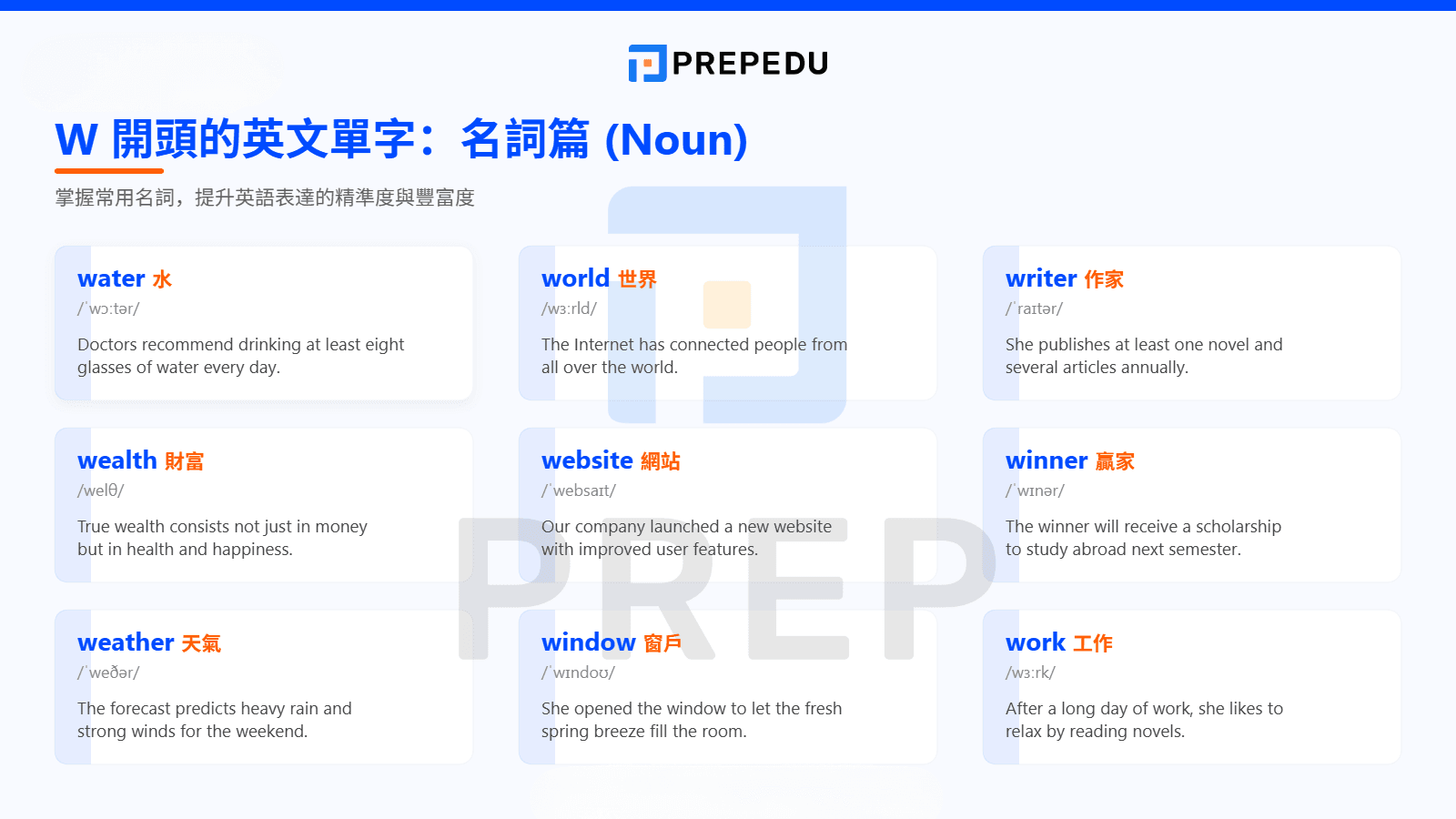
名詞是 W 開頭的英文單字中最為豐富的詞類之一,涵蓋了人物、地點、事物和抽象概念。以下整理的 W 開頭的英文單字名詞表,包含日常生活中常用的具體名詞如 water(水)、window(窗戶),以及抽象名詞如 wealth(財富)、wisdom(智慧)。熟練掌握這些 W 開頭單字名詞,將大幅提升您的英語表達能力。
|
W 開頭的英文單字 |
音標 |
中文意思 |
例句 |
|
water (n.) |
/ˈwɔːtər/ |
水 |
Doctors recommend drinking at least eight glasses of water every day. (醫生建議每天至少喝八杯水。) |
|
world (n.) |
/wɜːrld/ |
世界 |
The Internet has connected people from all over the world in unprecedented ways. (網際網路以前所未有的方式將全世界的人連接起來。) |
|
woman (n.) |
/ˈwʊmən/ |
女人 |
The woman in the blue dress gave an inspiring speech about climate change yesterday. (那位穿藍色洋裝的女士昨天發表了一篇關於氣候變化的鼓舞人心的演講。) |
|
work (n.) |
/wɜːrk/ |
工作 |
After a long day of work, she likes to relax by reading her favorite novels. (經過一整天的工作後,她喜歡透過閱讀自己喜愛的小說來放鬆。) |
|
way (n.) |
/weɪ/ |
方式、道路 |
Finding the most efficient way to solve this problem will save us valuable time. (找到解決這個問題的最有效方法將為我們節省寶貴的時間。) |
|
week (n.) |
/wiːk/ |
星期、週 |
They have scheduled the important business meeting for next week on Tuesday. (他們已經將重要的商務會議安排在下週二。) |
|
word (n.) |
/wɜːrd/ |
單字、詞 |
She carefully chose her words when explaining the complicated situation to her boss. (在向老闆解釋複雜情況時,她謹慎地選擇自己的用詞。) |
|
war (n.) |
/wɔːr/ |
戰爭 |
The consequences of war can be felt by generations long after it ends. (戰爭的後果可能會在結束很久後仍被幾代人感受到。) |
|
window (n.) |
/ˈwɪndoʊ/ |
窗戶 |
She opened the window to let the fresh spring breeze fill the room. (她打開窗戶,讓清新的春風充滿房間。) |
|
wood (n.) |
/wʊd/ |
木頭、木材 |
The carpenter selected the finest wood for crafting the custom dining table. (木匠挑選了最好的木材來製作定制的餐桌。) |
|
wife (n.) |
/waɪf/ |
妻子 |
His wife surprised him with tickets to his favorite band's concert for his birthday. (他的妻子送了他最喜歡的樂隊演唱會門票作為生日禮物,讓他驚喜不已。) |
|
weather (n.) |
/ˈweðər/ |
天氣 |
The weather forecast predicts heavy rain and strong winds for the coming weekend. (天氣預報預測即將到來的週末將有大雨和強風。) |
|
worker (n.) |
/ˈwɜːrkər/ |
工人、工作者 |
Every construction worker on the site must wear a helmet for safety reasons. (工地上的每位建築工人都必須戴安全帽以確保安全。) |
|
writer (n.) |
/ˈraɪtər/ |
作家 |
As a professional writer, she publishes at least one novel and several articles annually. (作為一名專業作家,她每年至少出版一本小說和數篇文章。) |
|
wall (n.) |
/wɔːl/ |
牆壁 |
They painted the wall a bright yellow to make the living room feel warmer. (他們把牆壁漆成明亮的黃色,使客廳感覺更溫暖。) |
|
weight (n.) |
/weɪt/ |
重量 |
The doctor advised him to monitor his weight and exercise regularly for better health. (醫生建議他監控體重並定期鍛煉以保持更好的健康。) |
|
wheel (n.) |
/wiːl/ |
輪子 |
The front wheel of his bicycle needs to be replaced after the accident. (他的自行車前輪在事故後需要更換。) |
|
wine (n.) |
/waɪn/ |
葡萄酒 |
This red wine pairs perfectly with the grilled steak and roasted vegetables. (這款紅酒與烤牛排和烤蔬菜完美搭配。) |
|
wing (n.) |
/wɪŋ/ |
翅膀 |
The bird spread its wings and soared high above the mountain peaks. (那隻鳥展開翅膀,高飛越過山頂。) |
|
winner (n.) |
/ˈwɪnər/ |
贏家、優勝者 |
The winner of the competition will receive a scholarship to study abroad next semester. (比賽的優勝者將獲得下學期出國留學的獎學金。) |
|
winter (n.) |
/ˈwɪntər/ |
冬天 |
During winter in Taiwan, temperatures rarely drop below ten degrees Celsius in most cities. (在台灣的冬季,大多數城市的溫度很少降到攝氏十度以下。) |
|
wish (n.) |
/wɪʃ/ |
願望 |
Her greatest wish is to travel around the world before she turns thirty. (她最大的願望是在三十歲之前環遊世界。) |
|
witness (n.) |
/ˈwɪtnəs/ |
證人、見證者 |
The police interviewed every witness who was present at the scene of the accident. (警方採訪了所有在事故現場的證人。) |
|
wolf (n.) |
/wʊlf/ |
狼 |
The wolf howled mournfully under the full moon from deep within the forest. (狼在滿月下從森林深處悲哀地嚎叫。) |
|
woman (n.) |
/ˈwʊmən/ |
女人 |
The young woman graduated with honors and received multiple job offers immediately. (這位年輕女性以優異成績畢業,並立即收到多個工作機會。) |
|
wonder (n.) |
/ˈwʌndər/ |
驚奇、奇蹟 |
Children look at the world with a sense of wonder that adults often lose. (孩子們帶著成年人常常失去的好奇心看待這個世界。) |
|
word (n.) |
/wɜːrd/ |
單字、詞 |
He couldn't find the right words to express how grateful he felt. (他找不到合適的詞來表達他有多麼感激。) |
|
work (n.) |
/wɜːrk/ |
工作、作品 |
Her recent work as an artist has been receiving international recognition and praise. (她最近作為藝術家的作品已經獲得國際認可和讚譽。) |
|
worker (n.) |
/ˈwɜːrkər/ |
工人、工作者 |
Factory workers often have to adapt to changing technologies and production methods. (工廠工人常常必須適應不斷變化的技術和生產方法。) |
|
workshop (n.) |
/ˈwɜːrkʃɒp/ |
工作坊、研討會 |
The university is hosting a three-day workshop on creative writing next month. (大學將在下個月舉辦為期三天的創意寫作工作坊。) |
|
world (n.) |
/wɜːrld/ |
世界 |
Social media has fundamentally changed the way people across the world communicate. (社交媒體從根本上改變了全世界人們的溝通方式。) |
|
wound (n.) |
/wuːnd/ |
傷口 |
The doctor carefully cleaned and bandaged the wound to prevent infection. (醫生仔細清潔並包紮了傷口以防止感染。) |
|
wrist (n.) |
/rɪst/ |
手腕 |
She wore a beautiful silver bracelet around her wrist for the special occasion. (她在特殊場合的手腕上戴著一個漂亮的銀手鐲。) |
|
writer (n.) |
/ˈraɪtər/ |
作家 |
The famous writer spends at least four hours every morning working on his novels. (這位著名作家每天早上至少花四個小時寫他的小說。) |
|
writing (n.) |
/ˈraɪtɪŋ/ |
寫作、著作 |
Her writing style combines elegant prose with deep insights into human psychology. (她的寫作風格將優雅的散文與對人類心理的深刻見解結合起來。) |
|
waist (n.) |
/weɪst/ |
腰 |
She tied the apron around her waist before starting to bake the birthday cake. (她在開始烘焙生日蛋糕前將圍裙繫在腰間。) |
|
wealth (n.) |
/welθ/ |
財富 |
True wealth consists not just in money but in health, happiness, and relationships. (真正的財富不僅僅在於金錢,還在於健康、幸福和人際關係。) |
|
web (n.) |
/web/ |
網絡、蜘蛛網 |
The spider carefully constructed its web between two branches of the old tree. (蜘蛛小心地在老樹的兩個樹枝之間構建了它的網。) |
|
website (n.) |
/ˈwebsaɪt/ |
網站 |
Our company launched a new website with improved features and user experience yesterday. (我們公司昨天推出了一個具有改進功能和用戶體驗的新網站。) |
2. W 開頭的英文單字動詞(Verb)
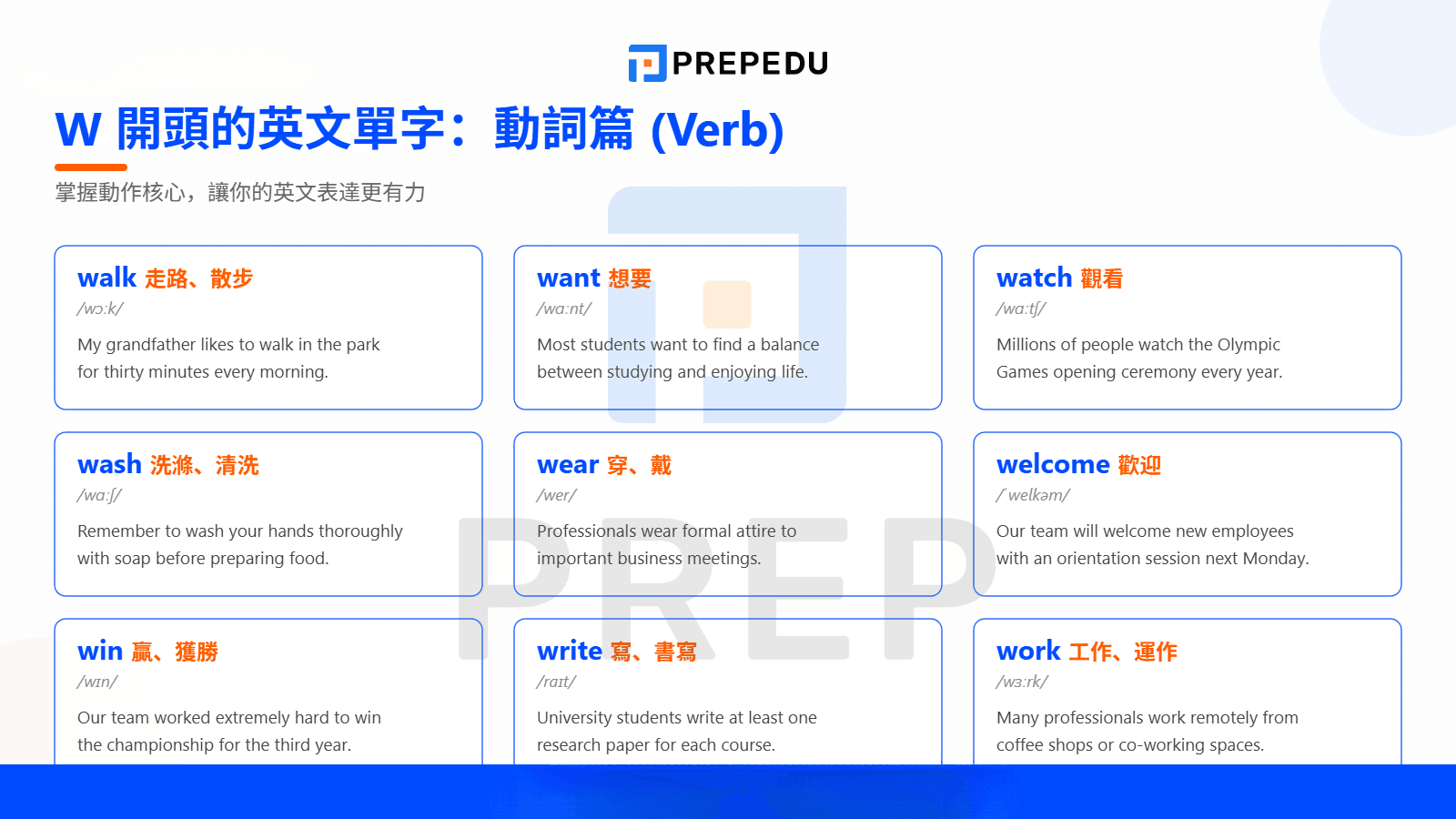
動詞在 W 開頭的英文單字中扮演著表達行為和狀態的關鍵角色。以下列出的 W 開頭的英文單字動詞涵蓋各種日常動作、思維活動和狀態變化。從基礎動詞如 walk(走)、want(想要)到進階動詞如 withdraw(撤回)、witness(見證),這些 w 開頭單字動詞都是英語溝通中不可或缺的表達工具。
|
W 開頭的英文單字 |
音標 |
中文意思 |
例句 |
|
walk (v.) |
/wɔːk/ |
走路、散步 |
My grandfather likes to walk in the park for at least thirty minutes every morning. (我祖父喜歡每天早上在公園裡至少散步三十分鐘。) |
|
want (v.) |
/wɑːnt/ |
想要 |
Most students want to find a balance between studying hard and enjoying their free time. (大多數學生想要在努力學習和享受空閒時間之間找到平衡。) |
|
wash (v.) |
/wɑːʃ/ |
洗滌 |
Remember to wash your hands thoroughly with soap before preparing any food. (記得在準備任何食物前用肥皂徹底洗手。) |
|
watch (v.) |
/wɑːtʃ/ |
觀看 |
Millions of people around the world watch the Olympic Games opening ceremony every four years. (全世界數百萬人每四年觀看一次奧運會開幕式。) |
|
water (v.) |
/ˈwɔːtər/ |
澆水 |
Don't forget to water the plants while I'm away on my business trip. (別忘了在我出差期間給植物澆水。) |
|
wave (v.) |
/weɪv/ |
揮手、波動 |
The little girl stood on the platform and waved goodbye to her grandparents. (小女孩站在月台上向她的祖父母揮手告別。) |
|
wear (v.) |
/wer/ |
穿戴 |
Most professionals wear formal attire to important business meetings and conferences. (大多數專業人士在重要的商務會議和會議上穿正式服裝。) |
|
weigh (v.) |
/weɪ/ |
稱重 |
The customs officer asked me to weigh my luggage before checking in for the flight. (海關人員要求我在辦理登機手續前稱一下行李的重量。) |
|
welcome (v.) |
/ˈwelkəm/ |
歡迎 |
Our team will welcome the new employees with an orientation session next Monday. (我們的團隊將在下週一以迎新會歡迎新員工。) |
|
whisper (v.) |
/ˈwɪspər/ |
低語、耳語 |
Please whisper if you need to talk during the performance to avoid disturbing others. (如果您在表演期間需要交談,請低聲細語以避免打擾他人。) |
|
win (v.) |
/wɪn/ |
贏、獲勝 |
Our team worked extremely hard to win the championship for the third consecutive year. (我們的團隊非常努力地工作,連續第三年贏得了冠軍。) |
|
wish (v.) |
/wɪʃ/ |
希望、祝願 |
Many people wish upon a star or make a wish when blowing out birthday candles. (許多人對著星星許願或在吹滅生日蠟燭時許願。) |
|
withdraw (v.) |
/wɪðˈdrɔː/ |
撤回、提款 |
You can withdraw cash from any ATM using your bank card and personal PIN. (您可以使用銀行卡和個人密碼從任何自動提款機提取現金。) |
|
wonder (v.) |
/ˈwʌndər/ |
想知道、好奇 |
I often wonder how different my life would be if I had studied abroad. (我經常想知道如果我出國留學,我的生活會有多麼不同。) |
|
work (v.) |
/wɜːrk/ |
工作、運作 |
Many young professionals work remotely from coffee shops or co-working spaces these days. (如今,許多年輕專業人士從咖啡館或共享工作空間遠程工作。) |
|
worry (v.) |
/ˈwʌri/ |
擔心 |
Try not to worry too much about things that are beyond your control. (盡量不要太擔心那些超出你控制範圍的事情。) |
|
wrap (v.) |
/ræp/ |
包裹 |
She carefully wrapped the delicate glass ornament in tissue paper before packing it. (她在包裝前用薄紙小心地包裹著易碎的玻璃裝飾品。) |
|
wrestle (v.) |
/ˈresəl/ |
摔跤、搏鬥 |
The two opponents will wrestle for the championship title this Saturday evening. (這兩位對手將在本週六晚上為冠軍頭銜進行摔跤比賽。) |
|
write (v.) |
/raɪt/ |
寫 |
Most university students write at least one research paper for each course they take. (大多數大學生為他們所修的每門課程至少寫一篇研究論文。) |
|
wait (v.) |
/weɪt/ |
等待 |
We had to wait for nearly two hours before the delayed flight finally departed. (我們不得不等待將近兩個小時,延誤的航班才最終起飛。) |
|
wake (v.) |
/weɪk/ |
醒來 |
Most people wake up feeling refreshed after getting seven to eight hours of sleep. (大多數人在睡了七到八個小時後醒來感到神清氣爽。) |
|
wander (v.) |
/ˈwɑːndər/ |
漫遊、閒逛 |
Tourists often wander through the narrow streets of the old town district. (遊客經常在老城區的狹窄街道上漫遊。) |
|
warn (v.) |
/wɔːrn/ |
警告 |
The teacher warned the students about the consequences of plagiarism in academic work. (老師警告學生學術工作中抄襲的後果。) |
|
waste (v.) |
/weɪst/ |
浪費 |
We should not waste food when so many people around the world go hungry. (當世界上有這麼多人忍飢挨餓時,我們不應該浪費食物。) |
|
wax (v.) |
/wæks/ |
打蠟 |
Car owners often wax their vehicles to protect the paint and maintain a glossy finish. (車主經常給他們的車輛打蠟以保護漆面並保持光亮的外觀。) |
|
weaken (v.) |
/ˈwiːkən/ |
削弱 |
Extended periods without exercise can weaken your muscles and overall fitness level. (長時間不運動會削弱你的肌肉和整體健康水平。) |
|
weave (v.) |
/wiːv/ |
編織 |
Some indigenous communities still weave traditional baskets using ancient techniques. (一些原住民社區仍然使用古老技術編織傳統籃子。) |
|
weed (v.) |
/wiːd/ |
除草 |
I need to weed the garden this weekend before the unwanted plants take over. (我需要在這個週末給花園除草,以防雜草占據優勢。) |
|
weep (v.) |
/wiːp/ |
哭泣 |
Many people weep during emotional scenes in movies even when they know it's fiction. (許多人在電影中的情感場景中哭泣,即使他們知道這是虛構的。) |
|
welcome (v.) |
/ˈwelkəm/ |
歡迎 |
The local community will welcome international students with a special cultural exchange event. (當地社區將以特別的文化交流活動歡迎國際學生。) |
|
whistle (v.) |
/ˈwɪsəl/ |
吹口哨 |
The referee will whistle to signal the end of the first half of the match. (裁判將吹哨示意比賽上半場結束。) |
|
widen (v.) |
/ˈwaɪdən/ |
拓寬 |
The city plans to widen the main road to accommodate increasing traffic volumes. (該市計劃拓寬主幹道以適應不斷增加的交通流量。) |
|
wiggle (v.) |
/ˈwɪɡəl/ |
扭動、擺動 |
The little puppy would wiggle his tail excitedly whenever his owner came home. (每當主人回家時,小狗都會興奮地擺動尾巴。) |
|
will (v.) |
/wɪl/ |
將會、意願 |
Scientists predict that sea levels will continue to rise due to global warming. (科學家預測,由於全球變暖,海平面將繼續上升。) |
|
wind (v.) |
/waɪnd/ |
纏繞、彎曲 |
The narrow road winds through the mountains, offering spectacular views. (狹窄的道路在山間蜿蜒,提供壯觀的景色。) |
|
wink (v.) |
/wɪŋk/ |
眨眼 |
The grandfather would often wink at his grandchildren when telling funny stories. (祖父在講有趣的故事時常常對他的孫子們眨眼。) |
|
wipe (v.) |
/waɪp/ |
擦拭 |
Always wipe the table clean after meals to prevent attracting ants and other insects. (飯後一定要把桌子擦乾淨,以免招惹螞蟻和其他昆蟲。) |
|
withdraw (v.) |
/wɪðˈdrɔː/ |
撤退、提取 |
The company decided to withdraw its products from the market after safety concerns emerged. (在出現安全顧慮後,該公司決定從市場上撤回其產品。) |
|
wither (v.) |
/ˈwɪðər/ |
枯萎 |
Plants will wither quickly if they don't receive adequate water and sunlight. (如果植物得不到足夠的水和陽光,它們會很快枯萎。) |
|
witness (v.) |
/ˈwɪtnəs/ |
目睹、見證 |
Many people gathered to witness the historic signing of the peace agreement. (許多人聚集在一起見證歷史性和平協議的簽署。) |
|
wobble (v.) |
/ˈwɑːbəl/ |
搖晃、動搖 |
The table will wobble unless you adjust the legs to make it stable. (除非你調整桌腿使其穩定,否則桌子會搖晃。) |
3. W 開頭的英文單字形容詞(Adjective)
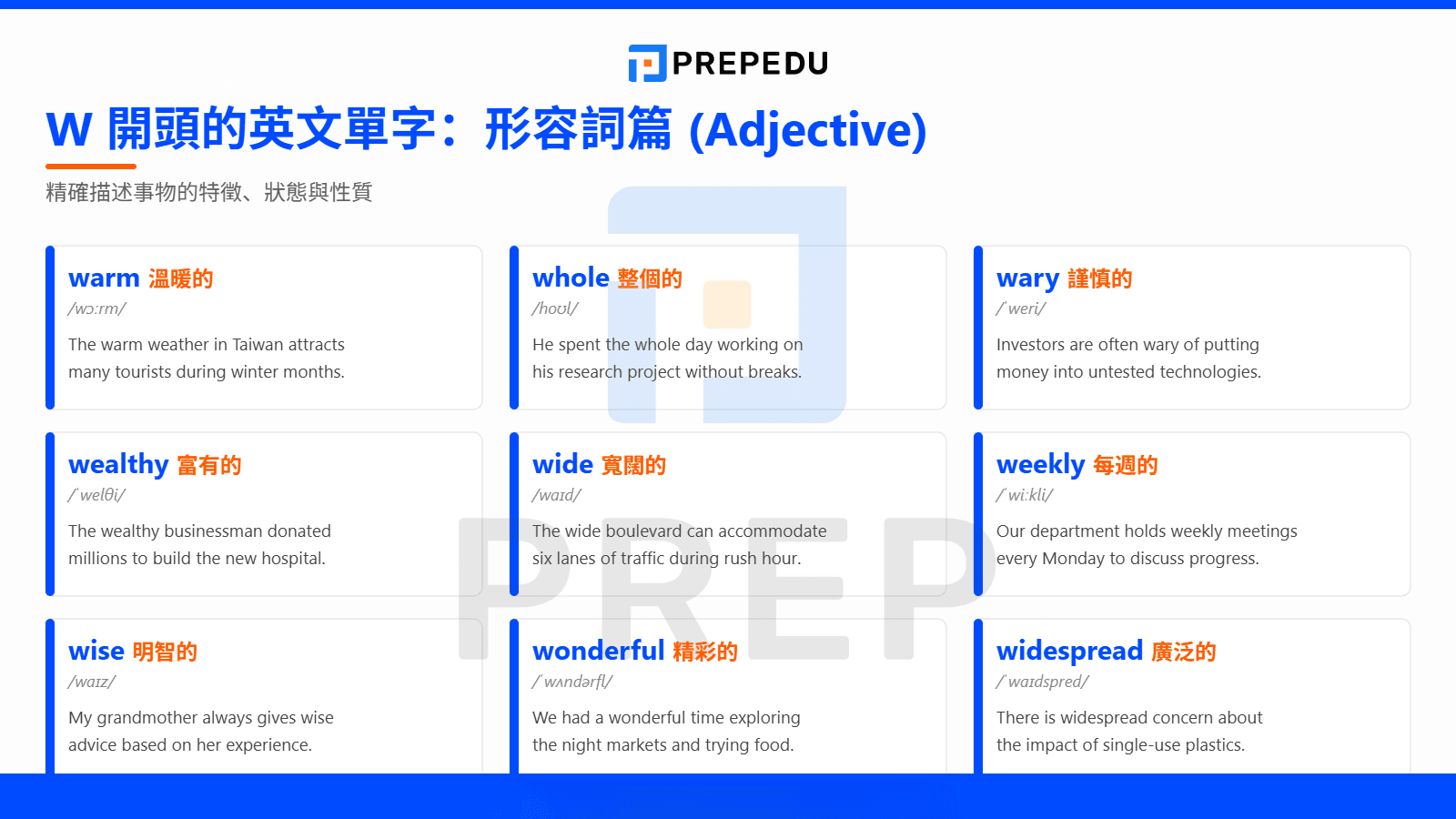
形容詞類的 W 開頭的英文單字能夠豐富您的英語描述能力,幫助您更精確地表達事物的特徵、狀態和性質。以下整理的 W 開頭的英文單字形容詞,從描述溫度的 warm(溫暖的)、顏色的 white(白色的),到描述性格特質的 wise(明智的)、worthy(值得的),這些 W 開頭單字形容詞覆蓋了描述物理特徵、情感狀態和價值判斷等多個層面。
|
W 開頭的英文單字 |
音標 |
中文意思 |
例句 |
|
warm (adj.) |
/wɔːrm/ |
溫暖的 |
The warm weather in southern Taiwan attracts many tourists during winter months. (台灣南部的溫暖天氣在冬季吸引了許多遊客。) |
|
weak (adj.) |
/wiːk/ |
虛弱的、薄弱的 |
His argument was too weak to convince the skeptical audience members. (他的論點太薄弱,無法說服持懷疑態度的聽眾。) |
|
wealthy (adj.) |
/ˈwelθi/ |
富有的 |
The wealthy businessman donated millions to build the new children's hospital. (這位富有的商人捐贈了數百萬來建造新的兒童醫院。) |
|
weary (adj.) |
/ˈwɪri/ |
疲倦的 |
After hiking for six hours, the weary travelers finally reached their campsite. (經過六個小時的徒步旅行,疲倦的旅客終於到達了他們的營地。) |
|
wet (adj.) |
/wet/ |
濕的 |
Be careful not to slip on the wet floor that has just been mopped. (小心不要在剛拖過的濕地板上滑倒。) |
|
white (adj.) |
/waɪt/ |
白色的 |
She wore a beautiful white dress to her graduation ceremony last week. (她上週在畢業典禮上穿了一件漂亮的白色禮服。) |
|
whole (adj.) |
/hoʊl/ |
整個的、完整的 |
He spent the whole day working on his research project without taking breaks. (他花了整整一天的時間研究他的研究項目,沒有休息。) |
|
wicked (adj.) |
/ˈwɪkɪd/ |
邪惡的、淘氣的 |
In the fairy tale, the wicked witch cast a spell on the beautiful princess. (在童話故事中,邪惡的女巫對美麗的公主施了魔法。) |
|
wide (adj.) |
/waɪd/ |
寬的 |
The wide boulevard can accommodate six lanes of traffic during rush hour. (這條寬闊的大道在繁忙時段可以容納六車道的交通。) |
|
wild (adj.) |
/waɪld/ |
野生的、狂野的 |
While hiking in the national park, we spotted several wild deer grazing peacefully. (在國家公園徒步旅行時,我們發現了幾隻野生鹿在和平地吃草。) |
|
willing (adj.) |
/ˈwɪlɪŋ/ |
願意的 |
The company is looking for willing volunteers to participate in the charity event. (公司正在尋找願意參加慈善活動的志願者。) |
|
wise (adj.) |
/waɪz/ |
明智的、聰明的 |
My grandmother always gives wise advice based on her many years of experience. (我的祖母總是根據她多年的經驗給出明智的建議。) |
|
wonderful (adj.) |
/ˈwʌndərfl/ |
精彩的、絕妙的 |
We had a wonderful time exploring the night markets and trying local foods. (我們在探索夜市和嘗試當地美食時度過了美好的時光。) |
|
wooden (adj.) |
/ˈwʊdn/ |
木製的 |
Traditional wooden furniture often lasts longer than modern mass-produced pieces. (傳統木製家具通常比現代大量生產的家具更耐用。) |
|
worldly (adj.) |
/ˈwɜːrldli/ |
世俗的、老練的 |
After years of international travel, she developed a worldly perspective on cultural differences. (經過多年的國際旅行,她對文化差異形成了一種世俗的觀點。) |
|
worthy (adj.) |
/ˈwɜːrði/ |
值得的、配得上的 |
The medical research was deemed worthy of substantial government funding. (這項醫學研究被認為值得獲得大量政府資助。) |
|
wrong (adj.) |
/rɔːŋ/ |
錯誤的 |
He realized that he had made the wrong decision after considering all the facts. (在考慮了所有事實後,他意識到自己做了錯誤的決定。) |
|
wary (adj.) |
/ˈweri/ |
謹慎的、小心的 |
Investors are often wary of putting money into untested new technologies. (投資者通常對將資金投入未經測試的新技術持謹慎態度。) |
|
wasteful (adj.) |
/ˈweɪstfəl/ |
浪費的 |
Using disposable plastic bags is wasteful and harmful to the environment. (使用一次性塑料袋既浪費又對環境有害。) |
|
watertight (adj.) |
/ˈwɔːtərtaɪt/ |
不透水的、無懈可擊的 |
The submarine's hull must be completely watertight to function safely underwater. (潛艇的船體必須完全不透水才能在水下安全運行。) |
|
wavy (adj.) |
/ˈweɪvi/ |
波浪形的 |
Her naturally wavy hair looked especially beautiful in the evening light. (她天然的波浪形頭髮在傍晚的光線下看起來特別漂亮。) |
|
weak (adj.) |
/wiːk/ |
弱的、微弱的 |
The weak signal made it difficult to maintain a clear phone connection. (微弱的信號使得保持清晰的電話連接變得困難。) |
|
wealthy (adj.) |
/ˈwelθi/ |
富裕的 |
The wealthy neighborhood features large houses with beautifully landscaped gardens. (這個富裕的社區有大型房屋和美麗的景觀花園。) |
|
wearable (adj.) |
/ˈwerəbəl/ |
可穿戴的 |
Wearable technology like smart watches has become increasingly popular recently. (智能手錶等可穿戴技術最近變得越來越流行。) |
|
wearisome (adj.) |
/ˈwɪrisəm/ |
令人厭倦的 |
The long and wearisome journey took more than twenty hours by bus. (這段漫長而令人厭倦的旅程乘坐巴士需要二十多個小時。) |
|
weekly (adj.) |
/ˈwiːkli/ |
每週的 |
Our department holds weekly meetings every Monday morning to discuss progress. (我們部門每週一早上舉行週會,討論進展情況。) |
|
weird (adj.) |
/wɪrd/ |
怪異的、不可思議的 |
The house made weird creaking noises at night that frightened the new tenants. (這房子在晚上發出怪異的吱吱聲,嚇壞了新房客。) |
|
welcome (adj.) |
/ˈwelkəm/ |
受歡迎的 |
Your suggestions for improving our service are always welcome and carefully considered. (您對改進我們服務的建議總是受歡迎並認真考慮。) |
|
west (adj.) |
/west/ |
西方的、西部的 |
The west coast of Taiwan offers spectacular sunset views over the Taiwan Strait. (台灣西海岸提供了台灣海峽上壯觀的日落景色。) |
|
western (adj.) |
/ˈwestərn/ |
西方的、西部的 |
Many young people in Asia are influenced by western fashion and music trends. (亞洲許多年輕人受到西方時尚和音樂潮流的影響。) |
|
wet (adj.) |
/wet/ |
潮濕的 |
Remember to bring an umbrella during Taiwan's wet season from May to September. (記得在台灣五月到九月的雨季帶傘。) |
|
whimsical (adj.) |
/ˈwɪmzɪkəl/ |
古怪的、異想天開的 |
The artist's whimsical illustrations captured the imagination of children and adults alike. (這位藝術家古怪的插圖捕捉了兒童和成人的想像力。) |
|
whispering (adj.) |
/ˈwɪspərɪŋ/ |
低語的、耳語的 |
We could hear the whispering voices of tourists in the ancient temple's quiet halls. (我們能聽到遊客在古廟寧靜的大廳裡低語的聲音。) |
|
white (adj.) |
/waɪt/ |
白色的 |
The bride wore a traditional white dress with delicate lace and pearl details. (新娘穿著一件傳統的白色禮服,上面有精緻的蕾絲和珍珠細節。) |
|
whole (adj.) |
/hoʊl/ |
整個的、完整的 |
He read the whole book in one sitting because the story was so engaging. (他一口氣讀完了整本書,因為故事太吸引人了。) |
|
wholesale (adj.) |
/ˈhoʊlseɪl/ |
批發的 |
Many small businesses buy their inventory from wholesale suppliers to save money. (許多小企業從批發供應商處購買庫存以節省資金。) |
|
wholesome (adj.) |
/ˈhoʊlsəm/ |
有益健康的 |
Parents prefer their children to watch wholesome programs with positive messages. (父母更喜歡他們的孩子觀看帶有積極信息的有益健康的節目。) |
|
wicked (adj.) |
/ˈwɪkɪd/ |
邪惡的、淘氣的 |
The wicked character in the movie had a mysterious past and complex motivations. (電影中的邪惡角色有著神秘的過去和複雜的動機。) |
|
wide (adj.) |
/waɪd/ |
寬的 |
The engineers designed a wide bridge to accommodate both vehicles and pedestrians. (工程師設計了一座寬橋,可同時容納車輛和行人。) |
|
widespread (adj.) |
/ˈwaɪdspred/ |
廣泛的 |
There is widespread concern about the environmental impact of single-use plastics. (人們普遍關注一次性塑料對環境的影響。) |
|
wild (adj.) |
/waɪld/ |
野生的、狂野的 |
The photographer spent three weeks tracking wild tigers in their natural habitat. (攝影師花了三週時間在自然棲息地追蹤野生老虎。) |
|
willing (adj.) |
/ˈwɪlɪŋ/ |
願意的 |
She is always willing to help her colleagues even when she has her own deadlines. (即使她有自己的截止日期,她也總是願意幫助同事。) |
|
winding (adj.) |
/ˈwaɪndɪŋ/ |
彎曲的 |
We drove along the winding mountain road to reach the secluded hot springs. (我們沿著彎曲的山路行駛,到達了隱蔽的溫泉。) |
|
windy (adj.) |
/ˈwɪndi/ |
多風的 |
The northeastern coast of Taiwan can be particularly windy during the winter months. (台灣東北部海岸在冬季幾個月可能特別多風。) |
|
wise (adj.) |
/waɪz/ |
明智的 |
Making a detailed budget before traveling is a wise decision for any tourist. (在旅行前做詳細預算對任何遊客來說都是明智的決定。) |
|
wishful (adj.) |
/ˈwɪʃfəl/ |
渴望的 |
Her wishful thinking about winning the lottery led her to buy tickets weekly. (她對贏得彩票的渴望思考導致她每週購買彩票。) |
|
witty (adj.) |
/ˈwɪti/ |
機智的 |
The stand-up comedian kept the audience laughing with his witty observations about daily life. (這位單口相聲演員用他對日常生活的機智觀察逗得觀眾大笑。) |
|
woeful (adj.) |
/ˈwoʊfəl/ |
悲慘的 |
The team's woeful performance led to their elimination from the tournament. (球隊悲慘的表現導致他們被淘汰出比賽。) |
|
wonderful (adj.) |
/ˈwʌndərfl/ |
精彩的、絕妙的 |
Taiwan's night markets offer wonderful opportunities to taste authentic local cuisine. (台灣的夜市提供了品嚐正宗當地美食的絕佳機會。) |
|
wooden (adj.) |
/ˈwʊdn/ |
木製的 |
Traditional wooden temples can still be found in many parts of rural Taiwan. (在台灣鄉村的許多地方仍然可以找到傳統的木製寺廟。) |
|
worldly (adj.) |
/ˈwɜːrldli/ |
世俗的、老練的 |
His worldly perspective comes from living in six different countries before age thirty. (他的世俗觀點來自於三十歲前在六個不同國家的生活經歷。) |
|
worried (adj.) |
/ˈwʌrid/ |
擔心的 |
Parents are often worried about their children's safety when they first travel alone. (當孩子第一次獨自旅行時,父母常常感到擔心他們的安全。) |
|
worrisome (adj.) |
/ˈwʌrisəm/ |
令人擔憂的 |
The doctor explained that the symptoms were not worrisome and would pass soon. (醫生解釋說這些症狀並不令人擔憂,很快就會過去。) |
|
worthy (adj.) |
/ˈwɜːrði/ |
值得的 |
The charity was deemed worthy of support by several major international organizations. (這個慈善機構被幾個主要國際組織認為值得支持。) |
|
wrinkled (adj.) |
/ˈrɪŋkəld/ |
有皺紋的 |
The wrinkled shirt needed to be ironed before the important job interview. (這件皺巴巴的襯衫在重要的工作面試前需要熨燙。) |
|
written (adj.) |
/ˈrɪtn/ |
書面的 |
Most universities require a written application including a personal statement. (大多數大學要求書面申請,包括個人陳述。) |
|
wrong (adj.) |
/rɔːŋ/ |
錯誤的 |
She realized she had taken the wrong train when she saw unfamiliar stations passing by. (當她看到陌生的車站經過時,她意識到自己坐錯了火車。) |
4. W 開頭的英文單字副詞(Adverb)
副詞是 W 開頭的英文單字中用來修飾動詞、形容詞或其他副詞的重要詞類。以下收錄的 W 開頭的英文單字副詞,能夠幫助您更精確地描述動作的方式、程度、時間和頻率。從表達方式的 well(好地)、widely(廣泛地),到表達程度的 wholly(完全地)、worryingly(令人擔憂地),這些 w 開頭單字副詞是提升英語表達細膩度的關鍵要素。
|
W 開頭的英文單字 |
音標 |
中文意思 |
例句 |
|
warmly (adv.) |
/ˈwɔːrmli/ |
溫暖地 |
The host greeted all the international guests warmly at the conference opening ceremony. (主持人在會議開幕式上熱情地迎接所有國際嘉賓。) |
|
weekly (adv.) |
/ˈwiːkli/ |
每週地 |
Many students review their course materials weekly to ensure better retention of information. (許多學生每週複習他們的課程材料,以確保更好地保留信息。) |
|
well (adv.) |
/wel/ |
好地、充分地 |
The company performed well in the last quarter despite challenging market conditions. (儘管市場條件充滿挑戰,該公司在上一季度表現良好。) |
|
westward (adv.) |
/ˈwestwərd/ |
向西 |
The pioneers traveled westward across the continent in search of new opportunities. (先驅者們向西穿越大陸,尋找新的機會。) |
|
wetly (adv.) |
/ˈwetli/ |
濕漉漉地 |
Tears ran wetly down her cheeks as she watched the emotional reunion scene. (當她觀看情感重聚的場景時,眼淚濕漉漉地順著她的臉頰流下。) |
|
wholeheartedly (adv.) |
/ˌhoʊlˈhɑːrtɪdli/ |
全心全意地 |
The community wholeheartedly supported the new environmental protection initiative. (社區全心全意地支持新的環保倡議。) |
|
wholly (adv.) |
/ˈhoʊlli/ |
完全地 |
I am wholly convinced that this approach will solve our current problems. (我完全相信這種方法將解決我們目前的問題。) |
|
wickedly (adv.) |
/ˈwɪkɪdli/ |
邪惡地、淘氣地 |
The child grinned wickedly before playing the harmless prank on his sister. (孩子在對他妹妹惡作劇之前淘氣地咧嘴笑了。) |
|
widely (adv.) |
/ˈwaɪdli/ |
廣泛地 |
Traditional Chinese medicine is widely practiced throughout Taiwan and other Asian countries. (傳統中醫在台灣和其他亞洲國家被廣泛實踐。) |
|
wildly (adv.) |
/ˈwaɪldli/ |
瘋狂地、極度地 |
The stock market fluctuated wildly following the unexpected economic announcement. (在意外的經濟公告之後,股市瘋狂波動。) |
|
willfully (adv.) |
/ˈwɪlfəli/ |
故意地 |
He was accused of willfully ignoring safety regulations that led to the accident. (他被指控故意忽視導致事故的安全規定。) |
|
willingly (adv.) |
/ˈwɪlɪŋli/ |
自願地 |
Most students willingly participated in the beach cleanup environmental activity. (大多數學生自願參加海灘清理環保活動。) |
|
winsomely (adv.) |
/ˈwɪnsəmli/ |
迷人地 |
The young actress smiled winsomely during her first major television interview. (這位年輕女演員在她的第一次重要電視採訪中迷人地微笑。) |
|
wisely (adv.) |
/ˈwaɪzli/ |
明智地 |
The company wisely invested in renewable energy technologies before they became mainstream. (該公司在可再生能源技術成為主流之前明智地投資了這些技術。) |
|
wistfully (adv.) |
/ˈwɪstfəli/ |
渴望地、懷念地 |
The elderly man looked wistfully at the photos from his youth in rural Taiwan. (這位老人渴望地看著他在台灣鄉村度過的青年時期的照片。) |
|
wonderfully (adv.) |
/ˈwʌndərfəli/ |
精彩地、絕妙地 |
The chef had wonderfully combined traditional flavors with modern cooking techniques. (廚師精彩地將傳統風味與現代烹飪技術結合在一起。) |
|
worriedly (adv.) |
/ˈwʌridli/ |
擔憂地 |
The mother looked worriedly at her child's high temperature on the thermometer. (母親擔憂地看著溫度計上孩子的高溫。) |
|
worryingly (adv.) |
/ˈwʌriɪŋli/ |
令人擔憂地 |
The pollution levels in some industrial areas are worryingly high despite regulations. (儘管有法規,一些工業區的污染水平仍然高得令人擔憂。) |
|
worse (adv.) |
/wɜːrs/ |
更糟地 |
The patient's condition was worse affected by the delay in receiving proper treatment. (患者的情況因延遲接受適當治療而變得更糟。) |
|
wrongfully (adv.) |
/ˈrɔːŋfəli/ |
錯誤地、不公正地 |
He was wrongfully accused of the crime and spent ten years in prison. (他被錯誤地指控犯罪,並在監獄中度過了十年。) |
|
wrongly (adv.) |
/ˈrɔːŋli/ |
錯誤地 |
The student wrongly assumed that the exam would be multiple choice format. (學生錯誤地認為考試將是多項選擇題形式。) |
|
warily (adv.) |
/ˈwerəli/ |
謹慎地 |
The hiker approached the unfamiliar trail warily after hearing about recent bear sightings. (徒步旅行者在聽到最近有熊出沒的消息後謹慎地接近不熟悉的小徑。) |
|
wastefully (adv.) |
/ˈweɪstfəli/ |
浪費地 |
Some restaurants wastefully throw away large amounts of unsold food every day. (一些餐廳每天浪費地丟棄大量未售出的食物。) |
|
weakly (adv.) |
/ˈwiːkli/ |
虛弱地 |
After his long illness, he could only weakly respond to the doctor's questions. (在長期生病後,他只能虛弱地回應醫生的問題。) |
|
wealthily (adv.) |
/ˈwelθəli/ |
富有地 |
The family lived wealthily in a mansion with a private swimming pool and tennis court. (這家人住在一座有私人游泳池和網球場的豪宅里,生活富裕。) |
|
wearily (adv.) |
/ˈwɪrəli/ |
疲倦地 |
After working overtime for the fifth day, she wearily dragged herself home. (連續第五天加班後,她疲倦地拖著自己回家。) |
|
weekly (adv.) |
/ˈwiːkli/ |
每週 |
The community newspaper is published weekly and distributed every Friday morning. (社區報紙每週出版,每週五早上發行。) |
|
weightily (adv.) |
/ˈweɪtəli/ |
沉重地 |
The judge spoke weightily about the serious nature of the criminal charges. (法官沉重地談到了刑事指控的嚴重性質。) |
|
weirdly (adv.) |
/ˈwɪrdli/ |
怪異地 |
The abandoned house was weirdly silent despite being in the center of the busy city. (這座廢棄的房子怪異地寂靜,儘管位於繁忙城市的中心。) |
|
welcomingly (adv.) |
/ˈwelkəmɪŋli/ |
歡迎地 |
The international students were welcomingly received by their Taiwanese host families. (國際學生受到台灣寄宿家庭的熱情歡迎。) |
|
wetly (adv.) |
/ˈwetli/ |
潮濕地 |
The autumn leaves glistened wetly in the morning sunlight after the overnight rain. (經過一夜的雨後,秋葉在晨光中潮濕地閃爍。) |
|
wholly (adv.) |
/ˈhoʊlli/ |
完全地 |
The scientific community is not wholly convinced by the results of this single study. (科學界並不完全相信這項單一研究的結果。) |
|
wickedly (adv.) |
/ˈwɪkɪdli/ |
邪惡地 |
The villain in the movie laughed wickedly as he revealed his elaborate plan. (電影中的反派在揭示他精心設計的計劃時邪惡地大笑。) |
|
widely (adv.) |
/ˈwaɪdli/ |
廣泛地 |
English is widely spoken in Taiwan, especially in major cities and tourist areas. (英語在台灣被廣泛使用,特別是在主要城市和旅遊區。) |
|
wildly (adv.) |
/ˈwaɪldli/ |
瘋狂地 |
The crowd cheered wildly when the home team scored the winning goal. (當主隊進入制勝球時,人群瘋狂地歡呼。) |
|
willfully (adv.) |
/ˈwɪlfəli/ |
任性地、故意地 |
The teenager willfully disregarded his parents' advice about staying out late. (這位青少年故意無視他父母關於晚歸的建議。) |
|
willingly (adv.) |
/ˈwɪlɪŋli/ |
自願地 |
The experienced teacher willingly mentored new colleagues joining the school. (這位有經驗的老師自願指導加入學校的新同事。) |
|
wistfully (adv.) |
/ˈwɪstfəli/ |
渴望地 |
The elderly couple looked wistfully at young families playing in the park. (這對老夫婦渴望地看著年輕家庭在公園裡玩耍。) |
|
wonderfully (adv.) |
/ˈwʌndərfəli/ |
極好地 |
The choir performed wonderfully at the international music competition last weekend. (合唱團上週末在國際音樂比賽中表現極好。) |
|
wordily (adv.) |
/ˈwɜːrdəli/ |
冗長地 |
The professor explained the simple concept wordily, confusing many students. (教授冗長地解釋了這個簡單的概念,使許多學生感到困惑。) |
|
workmanlike (adv.) |
/ˈwɜːrkmənlaɪk/ |
熟練地 |
The carpenter workmanlike completed the cabinet construction ahead of schedule. (木匠熟練地完成了櫃子的建造,比預定時間提前。) |
閱讀更多相關文章:
III. 以 W 開頭的英語短語動詞
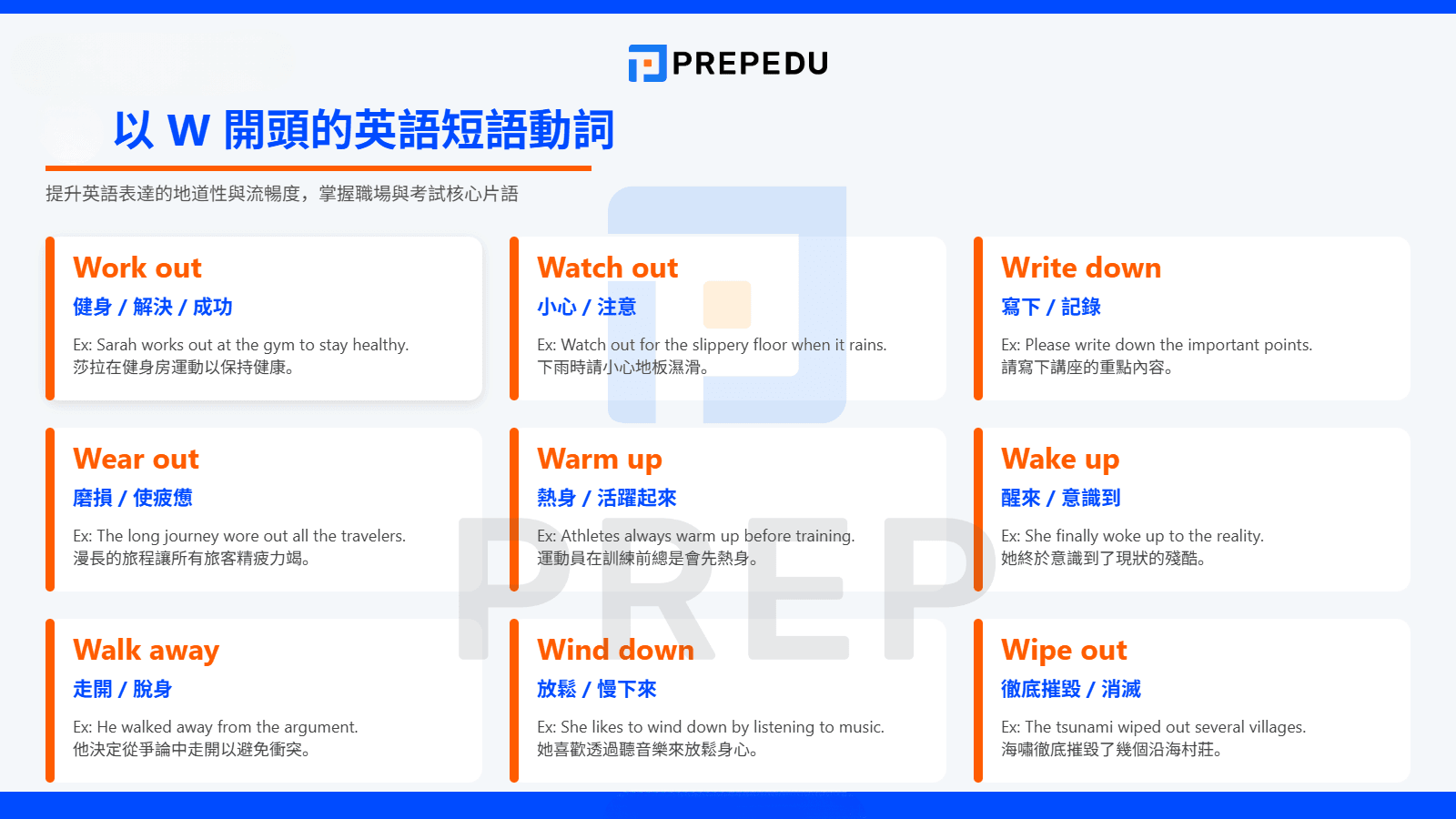
片語動詞是英語中極為重要的語言現象,由動詞與介系詞或副詞組合而成,往往具有獨特的意義,無法從單個單字直接推斷。掌握 W 開頭的英文單字組成的短語動詞,對於提升英語表達的地道性和流暢度至關重要。這些短語動詞廣泛應用於日常會話、商務溝通和學術寫作中,是 IELTS、TOEIC 等英語考試的重點考查內容。
以下為您整理最實用的 W 開頭單字短語動詞,這些都是港台職場與學術考試中最具辨識度的表達方式。每個短語動詞都附有詳細的中文解釋和情境例句,幫助您在實際應用中準確運用這些 W 單字片語。學習這些 W 開頭的單字組成的短語動詞,能讓您的英語表達更加自然流暢,展現母語者般的語感。
|
短語動詞 |
中文意思 |
例句與解釋 |
|
Work out |
健身;解決;成功;計算出 |
|
|
Watch out |
小心;注意 |
|
|
Write down |
寫下;記錄 |
|
|
Wear out |
磨損;使疲憊;耗盡 |
|
|
Wait on |
侍奉;服務;伺候 |
|
|
Warm up |
熱身;變暖;活躍起來 |
|
|
Wake up |
醒來;喚醒;意識到 |
|
|
Walk away |
走開;輕易獲勝;脫身 |
|
|
Wash away |
沖走;消除 |
|
|
Wash up |
洗餐具;沖上岸;洗臉洗手 |
|
|
Weigh in |
稱重;發表意見;介入 |
|
|
Wind down |
放鬆;逐漸結束;慢下來 |
|
|
Wind up |
結束;使緊張;上發條;以...告終 |
|
|
Wipe out |
徹底摧毀;消滅;使筋疲力盡 |
|
|
Work on |
從事;努力改善;對...起作用 |
|
這些 W 開頭的英文單字組成的短語動詞是英語學習者必須掌握的核心表達。在日常對話、職場溝通和考試寫作中,靈活運用這些短語動詞能讓您的英語表達更加自然流暢。建議您將這些 w 單字片語融入日常練習,透過造句和情境對話來加深記憶和理解。
IV. 以字母 W 開頭的英語慣用語
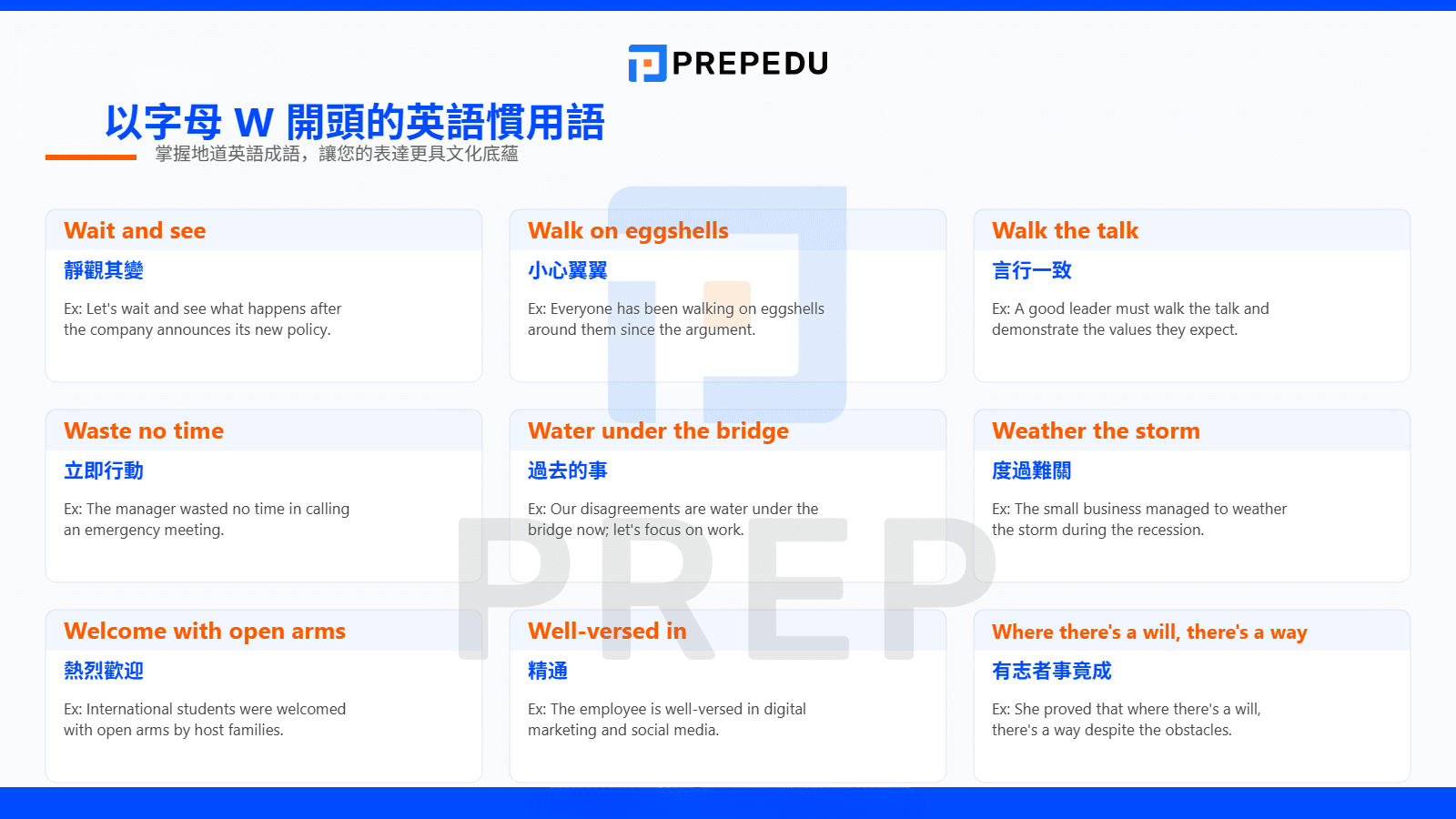
以 W 開頭的英文單字除了可以單獨使用外,也常常組成一些實用的成語英文和短語。這些表達方式在日常交流和寫作中可以增添語言的豐富性和地道感。掌握這些 W 開頭英文單字組成的慣用語,能夠讓您的英語表達更具文化底蘊和母語者的語感。
以下是一些常見且實用的以 W 開頭單字組成的英語慣用語,每個慣用語都配有詳細的中文解釋和實用例句。這些 W 的單字慣用表達在 IELTS 口語、TOEIC 聽力等考試中經常出現,也是職場溝通中不可或缺的表達工具。
|
慣用語 |
中文意思 |
例句 |
|
Wait and see |
靜觀其變 |
Let's wait and see what happens after the company announces its new policy.(讓我們靜觀其變,看看公司宣布新政策後會發生什麼。) |
|
Walk on eggshells |
小心翼翼 |
Since their argument last week,everyone has been walking on eggshells around them.(自從上週他們爭吵以來,每個人在他們周圍都小心翼翼。) |
|
Walk the talk |
言行一致 |
A good leader must walk the talk and demonstrate the values they expect from others.(好的領導者必須言行一致,展示他們期望別人具備的價值觀。) |
|
Warm up to someone/something |
逐漸喜歡上某人/某事 |
She was hesitant at first,but she's warming up to the idea of studying abroad.(她一開始很猶豫,但她正逐漸喜歡上出國留學的想法。) |
|
Wash one's hands of something |
撒手不管 |
After multiple failed attempts to help,the mentor washed his hands of the project.(在多次嘗試幫助失敗後,導師撒手不管這個項目了。) |
|
Waste no time |
立即行動 |
Upon receiving the urgent email,the manager wasted no time in calling an emergency meeting.(收到緊急電子郵件後,經理立即召開了緊急會議。) |
|
Water under the bridge |
過去的事 |
Our previous disagreements are water under the bridge now; let's focus on working together.(我們以前的分歧現在都是過去的事了;讓我們專注於一起工作。) |
|
Weather the storm |
度過難關 |
The small business managed to weather the storm during the economic recession.(這家小企業設法在經濟衰退期間度過難關。) |
|
Weigh one's options |
權衡選擇 |
Before making such an important decision,you should weigh your options carefully.(在做這麼重要的決定之前,你應該仔細權衡你的選擇。) |
|
Welcome with open arms |
熱烈歡迎 |
The international students were welcomed with open arms by their host families.(國際學生被寄宿家庭熱烈歡迎。) |
|
Well-versed in |
精通 |
The new employee is well-versed in digital marketing strategies and social media management.(新員工精通數位行銷策略和社交媒體管理。) |
|
What goes around comes around |
種瓜得瓜,種豆得豆 |
Don't worry about his unfair treatment; what goes around comes around eventually.(不要擔心他的不公平待遇;善惡終有報。) |
|
When it rains,it pours |
禍不單行 |
First her car broke down,then she lost her phone — when it rains,it pours!(先是她的車壞了,然後她又丟了手機——禍不單行啊!) |
|
Where there's a will,there's a way |
有志者事竟成 |
Despite facing many obstacles,she proved that where there's a will,there's a way.(儘管面臨許多障礙,她證明了有志者事竟成。) |
|
While the cat's away,the mice will play |
山中無老虎,猴子稱大王 |
The office became quite relaxed when the strict manager was on vacation — while the cat's away,the mice will play.(當嚴格的經理休假時,辦公室變得相當輕鬆——山中無老虎,猴子稱大王。) |
V. 以 W 開頭的英文單字練習
學習單字不僅需要記憶,還需要通過實際練習來鞏固。以下提供一些有效的練習方法,幫助您更好地掌握以 W 開頭的英文單字。
1. 填空練習
嘗試在以下句子中填入適當的 W 單字:
|
weather |
walks |
wrote |
work |
wonderful |
|
windows |
wisely |
water |
willing |
world |
-
The doctor advised him to drink more _______ to stay hydrated during hot summer days.
-
After graduating from university, she found a good _______ at an international company.
-
The _______ forecast predicts heavy rain tomorrow, so remember to bring an umbrella.
-
She likes to take long _______ in the park every evening after dinner.
-
The students _______ essays about their summer vacation experiences.
-
Taiwan is known for its _______ night markets and delicious street food.
-
Everyone in the team is _______ to work overtime to complete the project before the deadline.
-
The building has large _______ that allow plenty of natural light to enter.
-
The company has employees from all over the _______, creating a diverse workplace environment.
-
He spoke _______ about the importance of saving money for future emergencies.
2. 單字配對練習
將以下 W 開頭的單字與其定義配對:
|
單字 |
意義 |
|
|
3. 答案
-
1 - water, 2 - work, 3 - weather, 4 - walks, 5 - wrote, 6 - wonderful, 7 - willing, 8 - windows, 9 - world, 10 - wisely
-
1-e, 2-d, 3-a, 4-f, 5-g, 6-h, 7-c, 8-b, 9-j, 10-i
掌握 W 開頭的英文單字不僅能擴充您的詞彙量,還能提升您的英語表達能力,使您的英語交流更加流暢和自然。無論是在學習、工作還是生活中,這些詞彙都將成為您寶貴的語言資產。PREP 希望本文的內容能夠幫助您更好地學習和記憶這些 W 開頭的英文單字。
對 IELTS 或 TOEIC 考試結構感到陌生?考試當天的不確定感會影響你的表現。PREPEDU 的 Test Practice 提供真實模擬環境,讓你在實戰前熟悉題型和時間限制。
系統收錄超過 1,000 道練習題,定期更新以反映最新考試趨勢。AI 引擎分析你的錯誤,針對弱點提供改進方案。進度追蹤系統將你的成長數據化,讓進步一目了然。

你好!我叫黃秋賢,現在在 prepedu.com 擔任內容企劃。我有超過5年的英語與韓語自學經歷,親身備考 IELTS、TOEIC 與 TOPIK,累積了大量第一手的學習者視角——包括哪些語法規則最讓台灣與香港學習者混淆,以及如何在有限的備考時間內最有效地修正這些錯誤。目前已在 prepedu.com 撰寫超過 1000 篇英語學習文章,內容涵蓋語法、詞彙與考試策略,累積協助數千位學習者解決自學過程中的語法疑問。
評論












統一企業編號:202227322W
地址:114 LAVENDER STREET, #11-83 CT HUB 2, SINGAPORE (338729)