รวมเรื่องสั้น อังกฤษ พร้อมคำแปล อ่านเพลินได้ความรู้
การเรียนภาษาอังกฤษผ่านการอ่านตำราหนาๆ หรือท่องจำคำศัพท์แบบแห้งๆ อาจทำให้หลายคนรู้สึกเบื่อและท้อแท้ แต่ถ้าบอกว่าคุณสามารถพัฒนาทักษะภาษาอังกฤษได้ผ่านการอ่านเรื่องราวที่น่าสนใจ สนุกสนาน และไม่ยาวจนเกินไป คุณจะรู้สึกอย่างไร? นี่คือเหตุผลว่าทำไม ฝึกอ่านภาษาอังกฤษ เรื่องสั้น จึงเป็นวิธีการเรียนรู้ที่ได้รับความนิยมและมีประสิทธิภาพสูง
ฝึกอ่านภาษาอังกฤษ เรื่องสั้น ไม่เพียงช่วยพัฒนาทักษะการอ่านเท่านั้น แต่ยังช่วยเสริมสร้างคำศัพท์ ความเข้าใจไวยากรณ์ และการใช้ภาษาในบริบทจริงไปพร้อมกัน การอ่านเรื่องสั้นที่มีโครงเรื่องน่าติดตามทำให้สมองจดจำคำศัพท์และรูปแบบประโยคได้ดีกว่าการท่องจำแบบไม่มีบริบท นอกจากนี้ ความยาวที่พอดีทำให้ไม่รู้สึกเบื่อหรือท้อ เหมาะสำหรับทุกระดับความสามารถ
บทความนี้จะพาคุณค้นพบโลกแห่งเรื่องสั้นภาษาอังกฤษที่หลากหลาย ตั้งแต่ นิทาน แปล อังกฤษ ง่ายๆ สำหรับผู้เริ่มต้น ไปจนถึง เรื่องสั้น ภาษา อังกฤษ 10 บรรทัด ที่ท้าทายกว่า พร้อมเทคนิคการอ่านที่มีประสิทธิภาพ และคำศัพท์ที่ควรรู้ มาเริ่มต้นการผจญภัยในโลกของเรื่องสั้นภาษาอังกฤษกันเลย
- I. ทำไมต้องฝึกอ่านภาษาอังกฤษด้วยเรื่องสั้น
- II. เรื่องสั้นภาษาอังกฤษระดับ Beginner (50-150 คำ)
- III. เรื่องสั้นภาษาอังกฤษระดับ Intermediate (150-300 คำ)
- IV. เรื่องสั้นภาษาอังกฤษระดับ Advanced (300-500 คำ)
- V. นิทานภาษาอังกฤษพร้อมคำแปลไทย 3 เรื่อง (Aesop's Fables)
- VI. 3-Step Reading Methodology: Pre/While/Post Reading
- VII. แหล่งเรียนรู้ภาษาอังกฤษผ่านเรื่องสั้นและนิทาน
- VIII. คำถามที่พบบ่อย (FAQ)
I. ทำไมต้องฝึกอ่านภาษาอังกฤษด้วยเรื่องสั้น
การฝึกอ่านภาษาอังกฤษด้วยเรื่องสั้นพัฒนาทักษะ 4 ด้านพร้อมกัน ได้แก่ Reading Speed (ความเร็วในการอ่าน เพิ่มจาก 100 wpm สู่ 200+ wpm), Vocabulary Acquisition (การเรียนคำใหม่ผ่าน context — แม่นกว่า memorize 3 เท่า), Grammar Pattern Recognition (เห็น tense + structure ในประโยคจริง), และ IELTS Reading Skills (skim, scan, identify main idea — ทักษะตรงตาม band descriptors) — สี่ด้านนี้ปรากฏพร้อมกันในเรื่องสั้นที่อ่านได้ภายใน 5-10 นาที โดยไม่รู้สึกท้อ
ตารางระดับเรื่องสั้นตามมาตรฐาน Cambridge English Reading Levels
|
ระดับ |
ความยาวเรื่อง |
ระดับ CEFR |
ประเภทเรื่อง |
เวลาที่ใช้อ่าน |
|
Beginner |
50-150 คำ |
A1-A2 |
นิทานง่าย ๆ, เรื่องในชีวิตประจำวัน |
1-3 นาที |
|
Intermediate |
150-300 คำ |
B1-B2 |
เรื่องสั้นมีโครงเรื่อง, บทความเชิงเล่า |
3-5 นาที |
|
Advanced |
300-500+ คำ |
C1-C2 |
นิยายสั้น, บทความวิชาการ |
5-10 นาที |
ทำไมเรื่องสั้นเหมาะกับ IELTS Reading โดยเฉพาะ
ผู้สอบ IELTS Reading ต้องอ่าน 2,000-2,750 คำ ใน 60 นาที สำหรับ 40 คำถาม ตามข้อมูลของ British Council ความเร็ว target ที่ examiner คาดหวังคือประมาณ 150-250 wpm (พร้อมเข้าใจ 70%+) — Preppies ที่ฝึกเรื่องสั้น 1 เรื่อง/วันสามารถสร้าง habit ของ active reading ที่ scale ขึ้นไปสู่ IELTS passage ได้ใน 8-12 สัปดาห์
II. เรื่องสั้นภาษาอังกฤษระดับ Beginner (50-150 คำ)
เรื่องสั้นระดับ Beginner เหมาะสำหรับ Preppies ที่อยู่ระดับ A1-A2 (CEFR) ใช้คำศัพท์พื้นฐาน 500-1,000 คำแรกของภาษาอังกฤษ ประโยคสั้น (avg 8-12 คำ/ประโยค) ใช้ tense พื้นฐาน (Past Simple, Present Continuous) — เป้าหมายคือสร้างความมั่นใจในการอ่านโดยไม่ต้องเปิด dictionary ทุก 3 วินาที
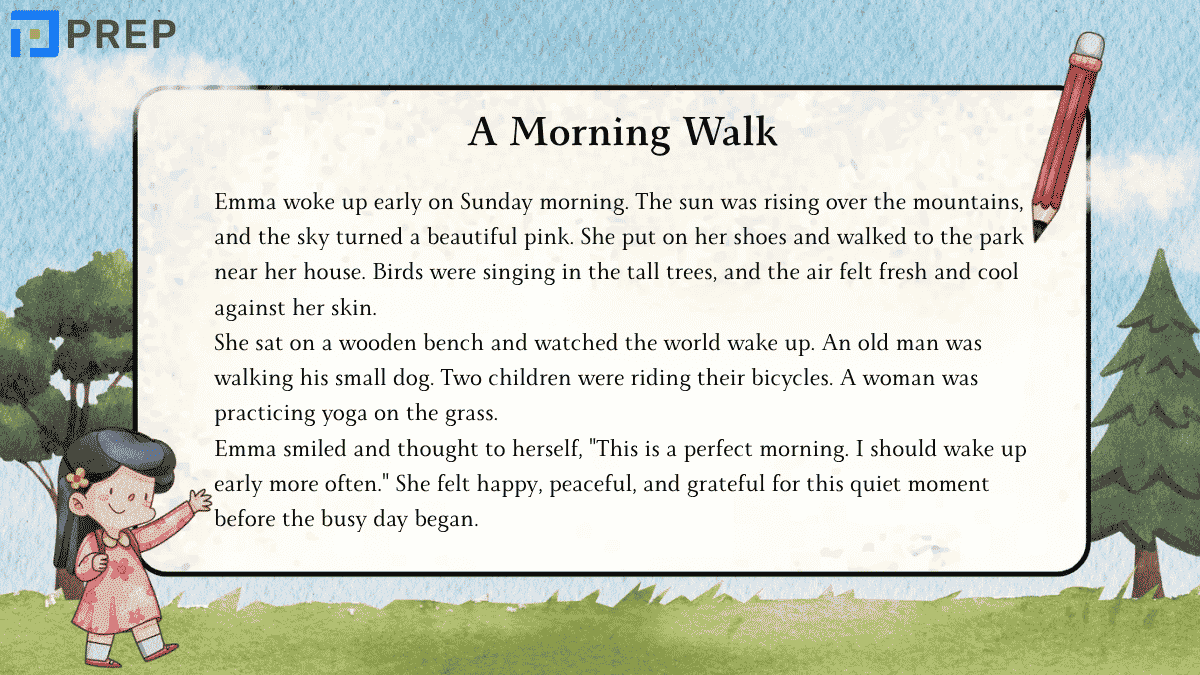
1. Story 1: A Morning Walk (การเดินเล่นยามเช้า) — 118 คำ
เนื้อเรื่อง:
Emma woke up early on Sunday morning. The sun was rising over the mountains, and the sky turned a beautiful pink. She put on her shoes and walked to the park near her house. Birds were singing in the tall trees, and the air felt fresh and cool against her skin.
She sat on a wooden bench and watched the world wake up. An old man was walking his small dog. Two children were riding their bicycles. A woman was practicing yoga on the grass.
Emma smiled and thought to herself, "This is a perfect morning. I should wake up early more often." She felt happy, peaceful, and grateful for this quiet moment before the busy day began.
คำแปลภาษาไทย:
เอ็มมาตื่นแต่เช้าวันอาทิตย์ พระอาทิตย์กำลังขึ้นเหนือภูเขา และท้องฟ้ากลายเป็นสีชมพูสวยงาม เธอสวมรองเท้าและเดินไปที่สวนสาธารณะใกล้บ้าน นกกำลังร้องเพลงบนต้นไม้สูง และอากาศรู้สึกสดชื่นและเย็นสบายเมื่อสัมผัสผิว
เธอนั่งบนม้านั่งไม้และเฝ้าดูโลกที่กำลังตื่นขึ้น ชายชราคนหนึ่งกำลังพาสุนัขตัวเล็กของเขาเดินเล่น เด็กสองคนกำลังขี่จักรยาน ผู้หญิงคนหนึ่งกำลังเล่นโยคะบนสนามหญ้า
เอ็มมายิ้มและคิดในใจว่า "นี่คือเช้าที่สมบูรณ์แบบ ฉันควรตื่นแต่เช้าให้บ่อยกว่านี้" เธอรู้สึกมีความสุข สงบ และขอบคุณสำหรับช่วงเวลาเงียบสงบก่อนที่วันที่ยุ่งจะเริ่มขึ้น
ตารางคำศัพท์สำคัญ
|
คำศัพท์ |
IPA |
ความหมาย |
ตัวอย่างประโยค |
|
Wake up |
/weɪk ʌp/ |
ตื่นนอน |
I wake up at 6 AM every day. (ฉันตื่นนอน 6 โมงเช้าทุกวัน) |
|
Rise |
/raɪz/ |
ขึ้น (ดวงอาทิตย์) |
The sun rises in the east. (พระอาทิตย์ขึ้นทางทิศตะวันออก) |
|
Fresh |
/freʃ/ |
สดชื่น |
The morning air feels so fresh. (อากาศยามเช้ารู้สึกสดชื่นมาก) |
|
Peaceful |
/ˈpiːsfəl/ |
สงบ |
The library is a peaceful place. (ห้องสมุดเป็นสถานที่สงบ) |
|
Grateful |
/ˈɡreɪtfəl/ |
ขอบคุณ รู้สึกซาบซึ้ง |
I'm grateful for my family's support. (ฉันรู้สึกขอบคุณสำหรับการสนับสนุนของครอบครัว) |
Comprehension Questions
Part A — True / False / Not Given (เลือก T, F, หรือ NG)
-
Emma woke up early on a weekday. ___
-
The sky was pink when Emma walked to the park. ___
-
Emma went to the park with her family. ___
-
An old man was walking his dog in the park. ___
-
Emma decided she would wake up early every day from now on. ___
เฉลย:
[prep_collapse_expand open_text="View more" close_text="Show less"]
-
F (เป็นวันอาทิตย์ ไม่ใช่ weekday)
-
T (sky turned a beautiful pink)
-
NG (ไม่ได้กล่าวถึง — ไม่รู้ว่าไปคนเดียวหรือกับคนอื่น)
-
T (An old man was walking his small dog)
-
F (เธอแค่คิดว่า "should wake up early more often" ไม่ได้ตัดสินใจทำทุกวัน)
[/prep_collapse_expand]
2. Story 2: The Lost Kitten (ลูกแมวหลงทาง) — 139 คำ
เนื้อเรื่อง:
Tom was reading a book on his porch when he heard a soft, sad sound near the bushes. He put down his book and looked around carefully. Behind a small flower pot, he found a tiny grey kitten. The poor kitten was wet from the rain and shivering from the cold.
Tom gently picked up the kitten and brought it inside his warm house. He wrapped it in a soft towel and gave it a small bowl of warm milk. The kitten drank the milk happily and started to purr loudly. Tom laughed and stroked its little head.
"I think you need a home," Tom said quietly. The kitten looked up at him with big green eyes. Tom decided to keep the kitten and named it Lucky, because finding a warm home on a rainy day truly was lucky.
คำแปลภาษาไทย:
ทอมกำลังอ่านหนังสืออยู่ที่ระเบียงเมื่อเขาได้ยินเสียงเบา ๆ เศร้า ๆ ใกล้พุ่มไม้ เขาวางหนังสือลงและมองไปรอบ ๆ อย่างระมัดระวัง หลังกระถางต้นไม้เล็ก ๆ เขาพบลูกแมวสีเทาตัวเล็ก ลูกแมวที่น่าสงสารเปียกจากฝนและตัวสั่นจากความหนาว
ทอมอุ้มลูกแมวขึ้นอย่างนุ่มนวลและพาเข้ามาในบ้านที่อบอุ่น เขาห่อมันด้วยผ้าขนหนูนุ่ม ๆ และให้ชามนมอุ่น ๆ เล็ก ๆ ลูกแมวดื่มนมอย่างมีความสุขและเริ่มครางเสียงดัง ทอมหัวเราะและลูบหัวเล็ก ๆ ของมัน
"ฉันคิดว่าเธอต้องการบ้าน" ทอมพูดเบา ๆ ลูกแมวเงยหน้ามองเขาด้วยตาสีเขียวกลม ทอมตัดสินใจเลี้ยงลูกแมวและตั้งชื่อมันว่า Lucky เพราะการได้บ้านอบอุ่นในวันฝนตกเป็นเรื่องโชคดีจริง ๆ
ตารางคำศัพท์สำคัญ
|
คำศัพท์ |
IPA |
ความหมาย |
ตัวอย่างประโยค |
|
Soft |
/sɒft/ |
เบา อ่อนนุ่ม |
She spoke in a soft voice. (เธอพูดด้วยเสียงเบา) |
|
Shivering |
/ˈʃɪvərɪŋ/ |
สั่นสะท้าน |
The child was shivering from the cold. (เด็กตัวสั่นจากความหนาว) |
|
Gently |
/ˈdʒentli/ |
อย่างนุ่มนวล |
She gently closed the door.<br>(เธอปิดประตูอย่างนุ่มนวล) |
|
Purr |
/pɜː/ |
คราง (เสียงแมวครางเมื่อพอใจ) |
Cats purr when they feel happy. (แมวครางเสียงเมื่อรู้สึกมีความสุข) |
|
Decide |
/dɪˈsaɪd/ |
ตัดสินใจ |
We decided to go to the beach. (เราตัดสินใจไปทะเล) |
Comprehension Questions
Part B — Multiple Choice (เลือกคำตอบที่ถูกต้องที่สุด)
-
Where did Tom find the kitten?
-
A) Inside his house
-
B) Behind a small flower pot
-
C) On the porch next to him
-
D) In the bushes
-
-
Why was the kitten shivering?
-
A) It was hungry
-
B) It was scared
-
C) It was cold from the rain
-
D) It was sick
-
-
What did Tom give the kitten first?
-
A) Food
-
B) A bath
-
C) A warm towel and milk
-
D) A toy
-
-
Why did Tom name the kitten "Lucky"?
-
A) The kitten was very lucky in life
-
B) Finding a warm home on a rainy day was lucky
-
C) Tom won the lottery that day
-
D) The kitten brought Tom good luck
-
เฉลย:
[prep_collapse_expand open_text="View more" close_text="Show less"]
-
B (Behind a small flower pot, he found a tiny grey kitten)
-
C (wet from the rain and shivering from the cold)
-
C (wrapped it in a soft towel and gave it a small bowl of warm milk)
-
B (because finding a warm home on a rainy day truly was lucky)
[/prep_collapse_expand]
III. เรื่องสั้นภาษาอังกฤษระดับ Intermediate (150-300 คำ)
เรื่องสั้นระดับ Intermediate เหมาะสำหรับ Preppies ที่อยู่ระดับ B1-B2 (CEFR) ใช้คำศัพท์ขยาย 2,000-3,500 คำ ประโยคซับซ้อนขึ้น (avg 12-18 คำ/ประโยค) เริ่มมี complex tense (Past Perfect, Conditional) และ idioms — เป้าหมายคือพัฒนา inferential reading (อ่านระหว่างบรรทัด) และ vocabulary in context
1. Story 3: The Secret of the Old Clock (ความลับของนาฬิกาเรือนเก่า) — 204 คำ
เนื้อเรื่อง:
When Sarah's grandmother passed away last spring, she inherited an old wooden clock that had stood in her grandmother's living room for as long as she could remember. The clock was beautiful but slightly damaged, so Sarah decided to clean it carefully one Saturday afternoon.
While polishing the back of the clock, she noticed something strange — a small wooden compartment hidden behind its face. Her hands trembled with excitement as she gently pried it open. Inside was a faded yellow letter, sealed with red wax that had cracked over time.
Sarah carefully unfolded the brittle paper. The letter was dated 1944, and it revealed a story she had never imagined. Her grandmother had been a young resistance fighter during the war, smuggling messages between villages under German occupation. The letter was a thank-you note from a French family her grandmother had helped escape to safety.
Sarah sat on the floor and cried — not from sadness, but from a deep, overwhelming pride. The quiet, gentle grandmother who had baked her cookies and read her bedtime stories had once been a hero. Sarah understood her grandmother in a completely new way, and she promised herself she would share this incredible story with her own children someday.
คำแปลภาษาไทย:
เมื่อคุณยายของซาราห์เสียชีวิตเมื่อฤดูใบไม้ผลิที่แล้ว เธอได้รับมรดกนาฬิกาไม้เรือนเก่าที่เคยตั้งอยู่ในห้องนั่งเล่นของคุณยายเท่าที่เธอจำได้ นาฬิกาสวยงามแต่เสียหายเล็กน้อย ซาราห์จึงตัดสินใจทำความสะอาดอย่างพิถีพิถันในบ่ายวันเสาร์
ขณะขัดด้านหลังของนาฬิกา เธอสังเกตเห็นบางอย่างแปลก — ช่องไม้เล็ก ๆ ซ่อนอยู่ด้านหลังหน้าปัดของมัน มือของเธอสั่นด้วยความตื่นเต้นขณะที่เธองัดเปิดอย่างนุ่มนวล ด้านในมีจดหมายสีเหลืองจางจาง ปิดผนึกด้วยขี้ผึ้งสีแดงที่แตกร้าวตามกาลเวลา
ซาราห์ค่อย ๆ คลี่กระดาษเปราะ จดหมายลงวันที่ปี 1944 และเปิดเผยเรื่องราวที่เธอไม่เคยจินตนาการ คุณยายของเธอเคยเป็นนักสู้ขบวนการต่อต้านวัยหนุ่มสาวในช่วงสงคราม ลักลอบส่งข้อความระหว่างหมู่บ้านภายใต้การยึดครองของเยอรมัน จดหมายเป็นโน้ตขอบคุณจากครอบครัวฝรั่งเศสที่คุณยายเคยช่วยให้หลบหนีไปยังที่ปลอดภัย
ซาราห์นั่งลงบนพื้นและร้องไห้ — ไม่ใช่เพราะเศร้า แต่เพราะความภาคภูมิใจที่ลึกซึ้งและท่วมท้น คุณยายที่เงียบและอ่อนโยนที่อบคุกกี้ให้และเล่านิทานก่อนนอนให้ฟังเคยเป็นวีรบุรุษ ซาราห์เข้าใจคุณยายในแบบใหม่อย่างสิ้นเชิง และสัญญากับตัวเองว่าจะเล่าเรื่องเหลือเชื่อนี้ให้ลูก ๆ ของเธอฟังสักวันหนึ่ง
ตารางคำศัพท์สำคัญ
|
คำศัพท์ |
IPA |
ความหมาย |
ตัวอย่างประโยค |
|
Inherit |
/ɪnˈherɪt/ |
ได้รับมรดก |
He inherited a large fortune from his uncle. (เขาได้รับมรดกจำนวนมากจากลุง) |
|
Compartment |
/kəmˈpɑːtmənt/ |
ช่อง ช่องเก็บของ |
The train has a separate luggage compartment. (รถไฟมีช่องเก็บกระเป๋าแยกต่างหาก) |
|
Faded |
/ˈfeɪdɪd/ |
จางจาง ซีดจาง |
The faded photograph reminded me of childhood. (รูปถ่ายที่จางจางทำให้นึกถึงวัยเด็ก) |
|
Brittle |
/ˈbrɪtl/ |
เปราะ แตกง่าย |
Old paper becomes brittle over time. (กระดาษเก่าเปราะตามกาลเวลา) |
|
Smuggle |
/ˈsmʌɡl/ |
ลักลอบ ขนของผิดกฎหมาย |
They smuggled food into the prison. (พวกเขาลักลอบนำอาหารเข้าเรือนจำ) |
|
Overwhelming |
/ˌəʊvəˈwelmɪŋ/ |
ท่วมท้น ครอบงำ |
She felt an overwhelming sense of joy. (เธอรู้สึกถึงความสุขที่ท่วมท้น) |
Comprehension Questions - True / False / Not Given
-
Sarah received the clock as a birthday gift. ___
-
The clock was completely broken when Sarah received it. ___
-
The hidden compartment was located behind the clock's face. ___
-
Sarah's grandmother fought in the army during the war. ___
-
The letter was written by Sarah's grandmother. ___
-
Sarah cried because she missed her grandmother. ___
เฉลย:
[prep_collapse_expand open_text="View more" close_text="Show less"]
-
F (Sarah inherited it after her grandmother passed away — ไม่ใช่ของขวัญวันเกิด)
-
F (slightly damaged — ไม่ใช่ completely broken)
-
T (a small wooden compartment hidden behind its face)
-
F (She was a resistance fighter, not a soldier in the army)
-
F (The letter was a thank-you note from a French family)
-
F (not from sadness, but from a deep, overwhelming pride)
[/prep_collapse_expand]
2. Story 4: A Stranger on the Train (คนแปลกหน้าบนรถไฟ) — 234 คำ
เนื้อเรื่อง:
David was on a long train journey from London to Edinburgh, traveling alone for the first time in his life. He had recently graduated from university and was searching for direction — a new job, a new city, perhaps a new identity altogether.
About an hour into the journey, an elderly man with silver hair and kind eyes sat down in the seat beside him. They began chatting casually about the weather, then about books, and eventually about life itself. The old man, whose name was Henry, shared fascinating stories from his youth. He had worked as a journalist in over twenty countries, witnessed historical events firsthand, and met people from every walk of life — fishermen in Vietnam, philosophers in Berlin, farmers in Argentina.
"I'm jealous," David admitted quietly. "I haven't done anything meaningful with my life yet."
Henry smiled gently. "Young man, may I share something with you? There's a saying I've kept close to my heart for fifty years — and I should mention, John Lennon famously sang it in 1980 — 'Life is what happens to you while you're busy making other plans.' Don't wait for the perfect moment. The journey is happening right now."
As the train approached David's stop, Henry shook his hand firmly and wished him well. David never saw Henry again, but those words stayed with him for years. They quietly changed how he viewed his own journey through life.
คำแปลภาษาไทย:
เดวิดกำลังเดินทางไกลด้วยรถไฟจากลอนดอนไปเอดินบะระ เดินทางคนเดียวเป็นครั้งแรกในชีวิต เขาเพิ่งจบมหาวิทยาลัยและกำลังตามหาทิศทาง — งานใหม่ เมืองใหม่ บางทีอัตลักษณ์ใหม่ทั้งหมด
ประมาณ 1 ชั่วโมงหลังออกเดินทาง ชายสูงอายุผมสีเงินตาใจดีมานั่งข้างเขา พวกเขาเริ่มคุยกันเรื่องอากาศ จากนั้นเรื่องหนังสือ และในที่สุดเรื่องชีวิต ชายชราที่ชื่อเฮนรี่เล่าเรื่องน่าหลงใหลจากสมัยหนุ่ม เขาเคยทำงานเป็นนักข่าวในกว่า 20 ประเทศ ได้เห็นเหตุการณ์ประวัติศาสตร์ด้วยตาตนเอง และได้พบผู้คนทุกชนชั้น — ชาวประมงในเวียดนาม นักปราชญ์ในเบอร์ลิน ชาวนาในอาร์เจนตินา
"ผมอิจฉา" เดวิดยอมรับเบา ๆ "ผมยังไม่ได้ทำอะไรที่มีความหมายในชีวิตเลย"
เฮนรี่ยิ้มอย่างนุ่มนวล "หนุ่มน้อย ขอแบ่งปันบางอย่างกับเธอได้ไหม? มีคำพูดหนึ่งที่ฉันเก็บไว้ใกล้หัวใจมา 50 ปี — และขอบอกว่า จอห์น เลนนอน ร้องประโยคนี้ดังในปี 1980 — 'ชีวิตคือสิ่งที่เกิดขึ้นกับเธอขณะที่เธอยุ่งวางแผนเรื่องอื่น' อย่ารอช่วงเวลาที่สมบูรณ์แบบ การเดินทางกำลังเกิดขึ้นตอนนี้"
เมื่อรถไฟใกล้ถึงสถานีของเดวิด เฮนรี่จับมือเขาแน่นและอวยพรให้โชคดี เดวิดไม่เคยเจอเฮนรี่อีก แต่คำพูดเหล่านั้นอยู่กับเขาหลายปี มันเงียบ ๆ เปลี่ยนมุมมองที่เขามีต่อการเดินทางของตัวเองในชีวิต
ตารางคำศัพท์สำคัญ
|
คำศัพท์ |
IPA |
ความหมาย |
ตัวอย่างประโยค |
|
Elderly |
/ˈeldəli/ |
สูงอายุ |
The elderly man walked slowly. (ชายสูงอายุเดินช้า) |
|
Fascinating |
/ˈfæsɪneɪtɪŋ/ |
น่าหลงใหล น่าสนใจมาก |
The documentary was absolutely fascinating. (สารคดีน่าสนใจมากจริง ๆ) |
|
Journalist |
/ˈdʒɜːnəlɪst/ |
นักข่าว นักหนังสือพิมพ์ |
She works as a journalist for The Times. (เธอทำงานเป็นนักข่าวของ The Times) |
|
Witness |
/ˈwɪtnəs/ |
เป็นพยาน เห็นด้วยตาตนเอง |
He witnessed the accident yesterday. (เขาเป็นพยานในอุบัติเหตุเมื่อวาน) |
|
Walk of life |
/wɔːk əv laɪf/ |
ชนชั้น/อาชีพ (idiom) |
People from all walks of life attended the concert. (ผู้คนทุกชนชั้นมาคอนเสิร์ต) |
|
Approach |
/əˈprəʊtʃ/ |
เข้าใกล้ |
The deadline is approaching fast. (กำหนดส่งงานเข้าใกล้อย่างรวดเร็ว) |
Comprehension Questions - Multiple Choice
-
Why was David traveling alone?
-
A) He was going on vacation
-
B) He had recently graduated and was searching for direction
-
C) He was visiting his grandmother
-
D) He had moved to a new city
-
-
What was Henry's profession?
-
A) Philosopher
-
B) Fisherman
-
C) Journalist
-
D) Farmer
-
-
According to the story, who originally said the famous quote about life?
-
A) Henry himself
-
B) David's father
-
C) John Lennon (in 1980)
-
D) An unknown writer
-
-
How did the conversation with Henry affect David?
-
A) It made him feel sad
-
B) It changed how he viewed his own journey through life
-
C) It made him want to become a journalist
-
D) It convinced him to stay in London
-
เฉลย:
[prep_collapse_expand open_text="View more" close_text="Show less"]
-
B (He had recently graduated... was searching for direction)
-
C (He had worked as a journalist in over twenty countries)
-
C (และเรื่องนี้ถูกแก้ให้ acknowledge John Lennon ตามต้นฉบับ — quote จากเพลง "Beautiful Boy" ปี 1980)
-
B (those words stayed with him... changed how he viewed his own journey)
[/prep_collapse_expand]
IV. เรื่องสั้นภาษาอังกฤษระดับ Advanced (300-500 คำ)
เรื่องสั้นระดับ Advanced เหมาะสำหรับ Preppies ที่อยู่ระดับ C1-C2 (CEFR) ใช้คำศัพท์ academic 5,000+ คำ ประโยคซับซ้อนมาก (avg 18-25 คำ/ประโยค) มี nuanced vocabulary, abstract concepts, และ literary devices — เป้าหมายคือพัฒนา critical reading, author's intent inference, และ abstract reasoning ที่ตรงกับ IELTS Reading Academic passages
Story 5: The Philosopher's Garden (สวนของนักปราชญ์) — 358 คำ
เนื้อเรื่อง:
In a remote mountain village in northern Italy, there lived an old philosopher named Marco, renowned throughout the region for his quiet wisdom and unconventional teachings. While other scholars cultivated formal gardens with neatly trimmed hedges and symmetrically arranged flower beds, Marco's garden was peculiar — even alarming, to the casual observer. It contained an apparent chaos of wild plants that most villagers dismissively considered weeds.
When curious visitors came to his cottage and questioned this unusual choice, Marco would smile enigmatically and reply with the same patient phrase: "What you perceive as disorder is merely nature's alternative arrangement. True beauty does not lie in conformity, but in understanding that every element — even the smallest, most overlooked plant — serves its essential purpose in the larger system."
The villagers, accustomed to manicured lawns and ornamental flowers, often left feeling more confused than enlightened. Some dismissed him as eccentric; others quietly began questioning their own assumptions about beauty and order. A few brave souls even started letting wild flowers grow in the corners of their own gardens.
Marco died peacefully one autumn morning, surrounded by his beloved chaotic garden. His cottage was eventually inherited by his nephew, who knew nothing of botany but recognized that the garden held some kind of significance. He invited a team of ecologists from the University of Florence to study it before making any changes.
What the scientists discovered astonished them. Marco's "wild" garden was actually a sophisticated demonstration of advanced ecological principles — companion planting, natural pest control, soil regeneration, and biodiversity preservation. Every plant Marco had chosen, every position they occupied, served multiple ecological functions that scientists had only formally documented in the late twentieth century.
The philosopher had been intuitively practicing permaculture and ecological balance decades before these terms entered mainstream environmental vocabulary. His "messy" garden wasn't disorder at all — it was a carefully designed ecosystem disguised as chaos.
Today, Marco's garden has been preserved as an educational site, and ecology students from around Europe make pilgrimages there. The lesson is clear: what appears chaotic to the untrained eye may, in fact, represent a deeper order that we simply lack the vocabulary to recognise.
คำแปลภาษาไทย:
ในหมู่บ้านบนภูเขาห่างไกลทางตอนเหนือของอิตาลี มีนักปราชญ์ชราชื่อ Marco มีชื่อเสียงไปทั่วภูมิภาคในเรื่องปัญญาเงียบและคำสอนนอกขนบ ขณะที่นักปราชญ์คนอื่นจัดสวนทางการที่มีรั้วต้นไม้ตัดแต่งเรียบร้อยและแปลงดอกไม้จัดเรียงสมมาตร สวนของ Marco กลับแปลกประหลาด — แม้จะน่าตกใจสำหรับผู้สังเกตทั่วไป มันเต็มไปด้วยความวุ่นวายของพืชป่า ที่ชาวบ้านส่วนใหญ่มองว่าเป็นวัชพืชอย่างไม่ใส่ใจ
เมื่อผู้มาเยือนที่อยากรู้อยากเห็นมาที่กระท่อมและตั้งคำถามเกี่ยวกับการเลือกที่ผิดปกติ Marco จะยิ้มอย่างลึกลับและตอบด้วยประโยคอดทนเหมือนเดิม "สิ่งที่คุณมองว่าเป็นความไร้ระเบียบเป็นเพียงการจัดเรียงทางเลือกของธรรมชาติเท่านั้น ความงามที่แท้จริงไม่ได้อยู่ที่ความสอดคล้อง แต่อยู่ที่ความเข้าใจว่าทุกองค์ประกอบ — แม้พืชเล็กที่สุด ถูกมองข้ามที่สุด — มีจุดประสงค์สำคัญในระบบที่ใหญ่กว่า"
ชาวบ้านที่คุ้นเคยกับสนามหญ้าตัดเรียบและดอกไม้ประดับ มักจากไปด้วยความสับสนมากกว่าได้รู้แจ้ง บางคนปัดเขาว่าประหลาด คนอื่นเริ่มตั้งคำถามอย่างเงียบ ๆ กับสมมติฐานเรื่องความงามและระเบียบของตัวเอง บางคนกล้าหาญพอที่จะเริ่มปล่อยให้ดอกไม้ป่าขึ้นในมุมสวนของตัวเอง
Marco เสียชีวิตอย่างสงบเช้าวันใบไม้ร่วง รายล้อมด้วยสวนวุ่นวายที่เขารัก กระท่อมของเขาถูกรับมรดกโดยหลานชาย ผู้ซึ่งไม่รู้เรื่องพฤกษศาสตร์เลย แต่จำได้ว่าสวนนี้มีความสำคัญบางอย่าง เขาเชิญทีมนักนิเวศวิทยาจาก University of Florence มาศึกษาก่อนทำการเปลี่ยนแปลงใด ๆ
สิ่งที่นักวิทยาศาสตร์ค้นพบทำให้พวกเขาตะลึง สวน "ป่า" ของ Marco แท้จริงเป็นการสาธิตหลักการทางนิเวศวิทยาขั้นสูง — companion planting, การควบคุมศัตรูพืชตามธรรมชาติ การฟื้นฟูดิน และการอนุรักษ์ความหลากหลายทางชีวภาพ ทุกพืชที่ Marco เลือก ทุกตำแหน่งที่พวกมันครอง ทำหน้าที่ทางนิเวศหลายอย่างที่นักวิทยาศาสตร์เพิ่งบันทึกอย่างเป็นทางการในปลายศตวรรษที่ 20
นักปราชญ์ได้ฝึกปฏิบัติ permaculture และความสมดุลทางนิเวศ อย่างเป็นสัญชาตญาณมาหลายทศวรรษก่อนที่คำเหล่านี้จะเข้าสู่คำศัพท์สิ่งแวดล้อมกระแสหลัก สวน "รก" ของเขาไม่ใช่ความไร้ระเบียบเลย — มันคือ ecosystem ที่ออกแบบอย่างพิถีพิถัน แต่ปลอมตัวมาเป็นความวุ่นวาย
วันนี้ สวนของ Marco ได้รับการอนุรักษ์ไว้เป็นสถานที่การศึกษา และนักศึกษานิเวศวิทยาจากทั่วยุโรปเดินทางไปแสวงบุญที่นั่น บทเรียนชัดเจน: สิ่งที่ดูวุ่นวายในสายตาที่ยังไม่ได้ฝึก อาจเป็นตัวแทนของระเบียบที่ลึกซึ้ง ที่เราเพียงขาดคำศัพท์ที่จะรับรู้
ตารางคำศัพท์สำคัญ
|
คำศัพท์ |
IPA |
ความหมาย |
ตัวอย่างประโยค |
|
Renowned |
/rɪˈnaʊnd/ |
มีชื่อเสียง โด่งดัง |
She is renowned for her contributions to science. (เธอมีชื่อเสียงในเรื่องการมีส่วนร่วมทางวิทยาศาสตร์) |
|
Peculiar |
/pɪˈkjuːliə/ |
แปลกประหลาด ผิดปกติ |
He has a peculiar way of speaking. (เขามีวิธีพูดที่แปลกประหลาด) |
|
Enigmatically |
/ˌenɪɡˈmætɪkli/ |
อย่างลึกลับ อย่างเป็นปริศนา |
She smiled enigmatically and left. (เธอยิ้มอย่างลึกลับและจากไป) |
|
Conformity |
/kənˈfɔːməti/ |
ความสอดคล้อง ความเหมือนกัน |
Social conformity can limit creativity. (ความสอดคล้องทางสังคมอาจจำกัดความคิดสร้างสรรค์) |
|
Sophisticated |
/səˈfɪstɪkeɪtɪd/ |
ซับซ้อน ทันสมัย |
The system uses sophisticated algorithms. (ระบบใช้อัลกอริทึมที่ซับซ้อน) |
|
Biodiversity |
/ˌbaɪəʊdaɪˈvɜːsəti/ |
ความหลากหลายทางชีวภาพ |
Biodiversity is essential for healthy ecosystems. (ความหลากหลายทางชีวภาพจำเป็นต่อระบบนิเวศที่มีสุขภาพดี) |
|
Intuitively |
/ɪnˈtjuːɪtɪvli/ |
อย่างสัญชาตญาณ |
She intuitively understood the problem. (เธอเข้าใจปัญหาอย่างสัญชาตญาณ) |
|
Pilgrimage |
/ˈpɪlɡrɪmɪdʒ/ |
การเดินทางแสวงบุญ |
The temple attracts pilgrimages from around the world. (วัดดึงดูดการเดินทางแสวงบุญจากทั่วโลก) |
Comprehension Questions (Academic Reading Format)
Part A — Matching Headings (จับคู่หัวข้อกับย่อหน้า)
|
ย่อหน้า |
หัวข้อให้เลือก |
|
Paragraph 1 |
A) The scientific discovery of Marco's garden's true value |
|
Paragraph 2 |
B) Marco's death and the inheritance of his garden |
|
Paragraph 3 |
C) The philosopher and his unconventional garden |
|
Paragraph 4 |
D) Villagers' mixed reactions to Marco's wisdom |
|
Paragraph 5 |
E) The legacy of Marco's garden today |
|
Paragraph 6 |
F) Marco's philosophical explanation of his garden |
|
Paragraph 7 |
G) Marco's intuitive practice of permaculture |
เฉลย:
[prep_collapse_expand open_text="View more" close_text="Show less"]
P1 = C (introducing Marco and his garden)
P2 = F (Marco's enigmatic explanation)
P3 = D (villagers' mixed reactions)
P4 = B (Marco's death and inheritance)
P5 = A (scientific discovery)
P6 = G (intuitive permaculture practice)
P7 = E (legacy today)
[/prep_collapse_expand]
Part B — True / False / Not Given
-
Marco was famous only in his own village. ___
-
All villagers immediately understood Marco's wisdom. ___
-
Marco's nephew was an expert in ecology. ___
-
The University of Florence sent ecologists to study the garden. ___
-
Marco knew the technical terms "permaculture" and "ecological balance" during his lifetime. ___
-
Today, Marco's garden is open for educational visits. ___
เฉลย:
[prep_collapse_expand open_text="View more" close_text="Show less"]
-
F (renowned throughout the region — มากกว่าหมู่บ้านเดียว)
-
F (Some dismissed him as eccentric; only a few brave souls began questioning)
-
F (his nephew, who knew nothing of botany)
-
T (a team of ecologists from the University of Florence)
-
F (decades before these terms entered mainstream environmental vocabulary)
-
T (preserved as an educational site, and ecology students... make pilgrimages there)
[/prep_collapse_expand]
V. นิทานภาษาอังกฤษพร้อมคำแปลไทย 3 เรื่อง (Aesop's Fables)
นิทานภาษาอังกฤษคลาสสิกที่ Preppies ควรอ่านที่สุดมี 3 เรื่องจาก Aesop's Fables ได้แก่ (1) The Tortoise and the Hare (เต่ากับกระต่าย — moral: slow and steady wins the race), (2) The Boy Who Cried Wolf (เด็กเลี้ยงแกะ — moral: liars are not believed even when they tell the truth), และ (3) The Ant and the Grasshopper (มดกับจักจั่น — moral: prepare today for tomorrow's needs) — สามนิทานนี้มาจากคอลเลกชัน Aesop's Fables ที่อายุกว่า 2,500 ปี และถูกแปลเป็นมากกว่า 200 ภาษาทั่วโลก ทำให้เป็น cultural literacy ที่ Preppies ควรรู้ก่อนสนทนากับชาวต่างชาติ
1. Fable 1: The Tortoise and the Hare (เต่ากับกระต่าย) — 138 คำ — Beginner
เนื้อเรื่อง:
One sunny morning, a fast hare met a slow tortoise on the road. The hare laughed loudly and said, "You are so slow! I can run a hundred times faster than you."
The tortoise smiled calmly and replied, "Maybe I am slow, but let's have a race. I bet I can win."
The hare laughed even louder and agreed. They started the race together. The hare ran very fast and was soon far ahead of the tortoise. Feeling confident, he decided to take a nap under a tree.
Meanwhile, the tortoise kept walking slowly but steadily. He never stopped. He never gave up. When the hare finally woke up, he ran as fast as he could to the finish line. But it was too late. The tortoise was already there, smiling.
Moral: Slow and steady wins the race.
คำแปลภาษาไทย:
เช้าวันแดดดี กระต่ายเร็วเจอเต่าช้าบนถนน กระต่ายหัวเราะดังและพูดว่า "เธอช้ามาก! ฉันวิ่งเร็วกว่าเธอ 100 เท่า"
เต่ายิ้มอย่างสงบและตอบว่า "บางทีฉันอาจจะช้า แต่มาแข่งกันดีไหม ฉันเชื่อว่าจะชนะ"
กระต่ายหัวเราะดังขึ้นและตกลง พวกเขาเริ่มแข่งพร้อมกัน กระต่ายวิ่งเร็วมากและไม่นานก็นำหน้าเต่าไปไกล ด้วยความมั่นใจ เขาจึงตัดสินใจงีบหลับใต้ต้นไม้
ในขณะเดียวกัน เต่าเดินช้า ๆ แต่สม่ำเสมอ ไม่หยุด ไม่ยอมแพ้ เมื่อกระต่ายตื่นในที่สุด เขาวิ่งเร็วเท่าที่จะวิ่งได้ไปยังเส้นชัย แต่สายเกินไป เต่าอยู่ที่นั่นแล้ว ยิ้มอยู่
คติธรรม: ช้าแต่ชัวร์ ชนะการแข่งขัน
ตารางคำศัพท์สำคัญ
|
คำศัพท์ |
IPA |
ความหมาย |
ตัวอย่างประโยค |
|
Hare |
/heə/ |
กระต่ายป่า |
A hare runs much faster than a rabbit.<br>(กระต่ายป่าวิ่งเร็วกว่ากระต่ายบ้านมาก) |
|
Tortoise |
/ˈtɔːtəs/ |
เต่าบก |
The tortoise lives on land, not in water.<br>(เต่าบกอาศัยบนบก ไม่ใช่ในน้ำ) |
|
Steadily |
/ˈstedɪli/ |
สม่ำเสมอ มั่นคง |
He worked steadily for ten hours.<br>(เขาทำงานสม่ำเสมอ 10 ชั่วโมง) |
|
Confident |
/ˈkɒnfɪdənt/ |
มั่นใจ |
She felt confident before the exam.<br>(เธอรู้สึกมั่นใจก่อนสอบ) |
|
Finish line |
/ˈfɪnɪʃ laɪn/ |
เส้นชัย |
The runners crossed the finish line together.<br>(นักวิ่งข้ามเส้นชัยพร้อมกัน) |
2. Fable 2: The Boy Who Cried Wolf (เด็กเลี้ยงแกะกับหมาป่า) — 164 คำ — Intermediate
เนื้อเรื่อง:
A young shepherd boy was bored watching his sheep on the hillside every day. To have some fun, he ran toward the village shouting, "Wolf! Wolf! A wolf is attacking the sheep!"
The villagers heard him and rushed up the hill with sticks and tools. But when they arrived, they found no wolf — only the boy laughing at them. The villagers were angry and went back to their work.
A few days later, the boy played the same trick again. He shouted, "Wolf! Wolf!" and the villagers came running. Once again, there was no wolf. The villagers warned him sternly never to lie again.
One quiet afternoon, a real wolf appeared and began attacking the sheep. The terrified boy ran toward the village screaming, "Wolf! Wolf! Please help me!" But this time, the villagers thought he was lying again. Nobody came to help. The wolf killed many sheep, and the boy lost everything.
Moral: Liars are not believed even when they tell the truth.
คำแปลภาษาไทย:
เด็กเลี้ยงแกะหนุ่มเบื่อกับการดูแกะบนเนินเขาทุกวัน เพื่อความสนุก เขาวิ่งไปยังหมู่บ้านตะโกนว่า "หมาป่า! หมาป่า! หมาป่ากำลังโจมตีแกะ!"
ชาวบ้านได้ยินและรีบขึ้นเนินเขาพร้อมไม้และเครื่องมือ แต่เมื่อมาถึง พบว่าไม่มีหมาป่า — มีแต่เด็กที่หัวเราะใส่พวกเขา ชาวบ้านโกรธและกลับไปทำงาน
ไม่กี่วันต่อมา เด็กเล่นกลแบบเดิมอีก เขาตะโกนว่า "หมาป่า! หมาป่า!" ชาวบ้านวิ่งมาอีกครั้ง ก็ไม่มีหมาป่าเหมือนเดิม ชาวบ้านเตือนเขาอย่างเข้มงวดว่าอย่าโกหกอีก
บ่ายเงียบสงบวันหนึ่ง หมาป่าจริงปรากฏตัวและเริ่มโจมตีแกะ เด็กที่หวาดกลัววิ่งไปยังหมู่บ้านกรีดร้อง "หมาป่า! หมาป่า! ช่วยด้วย!" แต่คราวนี้ ชาวบ้านคิดว่าเขาโกหกอีก ไม่มีใครมาช่วย หมาป่าฆ่าแกะมากมาย และเด็กสูญเสียทุกอย่าง
คติธรรม: คนโกหก ไม่มีใครเชื่อ แม้พูดความจริง
ตารางคำศัพท์สำคัญ
|
คำศัพท์ |
IPA |
ความหมาย |
ตัวอย่างประโยค |
|
Shepherd |
/ˈʃepəd/ |
คนเลี้ยงแกะ |
The shepherd led his sheep to the meadow. (คนเลี้ยงแกะนำแกะไปยังทุ่งหญ้า) |
|
Hillside |
/ˈhɪlsaɪd/ |
ข้างเนินเขา |
The cottage stood on the hillside. (กระท่อมตั้งอยู่ข้างเนินเขา) |
|
Trick |
/trɪk/ |
กลอุบาย เล่นแกล้ง |
He played a funny trick on his sister. (เขาเล่นแกล้งน้องสาวอย่างขำ ๆ) |
|
Sternly |
/ˈstɜːnli/ |
อย่างเข้มงวด |
The teacher spoke sternly to the students. (คุณครูพูดกับนักเรียนอย่างเข้มงวด) |
|
Terrified |
/ˈterɪfaɪd/ |
หวาดกลัวมาก |
The child was terrified by the loud thunder.(เด็กหวาดกลัวมากเพราะเสียงฟ้าร้องดัง) |
3. Fable 3: The Ant and the Grasshopper (มดกับจักจั่น) — 181 คำ — Intermediate
เนื้อเรื่อง:
Throughout the warm summer months, a hardworking ant collected food for the winter. Day after day, she carried grains, seeds, and crumbs back to her underground nest. Her work was tiring, but she knew it was necessary.
Nearby, a carefree grasshopper sang and danced under the sun. Whenever he saw the ant working, he laughed at her. "Why do you work so hard?" he asked. "There is plenty of food everywhere! Come and dance with me instead!"
The ant looked up briefly and replied, "I am preparing for winter. You should do the same. The cold months will come soon enough." But the grasshopper waved her concerns away and continued playing his music.
When winter finally arrived, the fields became covered with snow. There was no food anywhere. The grasshopper, cold and starving, knocked desperately on the ant's door.
"Please," he begged, "give me some food. I am dying of hunger."
The ant looked at him sadly. "I worked all summer while you played. There was time to prepare, but you chose entertainment over wisdom."
Moral: Prepare today for tomorrow's needs.
คำแปลภาษาไทย:
ตลอดเดือนฤดูร้อนที่อบอุ่น มดที่ขยันเก็บอาหารสำหรับฤดูหนาว วันแล้ววันเล่า เธอแบกเมล็ดพืช เมล็ดข้าว และเศษอาหารกลับรังใต้ดิน งานเหนื่อย แต่เธอรู้ว่าจำเป็น
ใกล้ ๆ จักจั่นไร้กังวลร้องเพลงและเต้นรำใต้แสงแดด ทุกครั้งที่เห็นมดทำงาน เขาหัวเราะ "ทำไมเธอทำงานหนักขนาดนั้น?" เขาถาม "มีอาหารเต็มทุกที่! มาเต้นรำกับฉันสิ!"
มดเงยหน้าขึ้นสั้น ๆ และตอบว่า "ฉันกำลังเตรียมตัวสำหรับฤดูหนาว เธอควรทำเหมือนกัน เดือนหนาวจะมาถึงเร็วพอแล้ว" แต่จักจั่นปัดความกังวลของเธอไป และเล่นดนตรีต่อ
เมื่อฤดูหนาวมาถึงในที่สุด ทุ่งนาถูกหิมะปกคลุม ไม่มีอาหารที่ไหนเลย จักจั่นที่หนาวและหิว เคาะประตูบ้านมดอย่างสิ้นหวัง
"ขอร้อง" เขาวิงวอน "ให้อาหารฉันบ้างเถอะ ฉันกำลังจะตายเพราะหิว"
มดมองเขาด้วยความเศร้า "ฉันทำงานทั้งฤดูร้อน ขณะที่เธอเล่น มีเวลาเตรียมตัว แต่เธอเลือกความสนุกแทนปัญญา"
คติธรรม: เตรียมวันนี้ เพื่อความต้องการของวันพรุ่งนี้
ตารางคำศัพท์สำคัญ
|
คำศัพท์ |
IPA |
ความหมาย |
ตัวอย่างประโยค |
|
Hardworking |
/ˈhɑːdˌwɜːkɪŋ/ |
ขยัน ทำงานหนัก |
She is a hardworking student. (เธอเป็นนักเรียนที่ขยัน) |
|
Grain |
/ɡreɪn/ |
เมล็ดพืช ข้าว |
The farmer harvested the grain. (ชาวนาเก็บเกี่ยวเมล็ดพืช) |
|
Crumb |
/krʌm/ |
เศษ (ขนมปัง อาหาร) |
She brushed the crumbs off the table. (เธอปัดเศษอาหารออกจากโต๊ะ) |
|
Carefree |
/ˈkeəfriː/ |
ไร้กังวล สบายใจ |
He had a carefree childhood. (เขามีวัยเด็กที่ไร้กังวล) |
|
Desperately |
/ˈdespərətli/ |
อย่างสิ้นหวัง อย่างเร่งด่วน |
She desperately needed help. (เธอต้องการความช่วยเหลืออย่างสิ้นหวัง) |
|
Beg |
/beɡ/ |
ขอร้อง วิงวอน |
He begged for forgiveness. (เขาขอร้องอภัยโทษ) |
VI. 3-Step Reading Methodology: Pre/While/Post Reading
3-Step Reading Methodology ที่ Preppies ใช้พัฒนา reading score มากที่สุดมี 3 ขั้น ได้แก่ (1) Pre-Reading (ก่อนอ่าน — predict + activate background knowledge), (2) While-Reading (ขณะอ่าน — skim + scan + annotate), และ (3) Post-Reading (หลังอ่าน — summarize + vocabulary review + comprehension check) — ระบบนี้สอดคล้องกับ SQ3R Method (Survey-Question-Read-Recite-Review) ของ Francis Robinson (1946) ที่งานวิจัย ESL ระบุว่ามีประสิทธิภาพมากที่สุดสำหรับ second language readers
1. ขั้นตอนที่ 1: Pre-Reading (ก่อนอ่าน) — 1-2 นาที
ก่อนเริ่มอ่านเรื่องสั้น Preppies ทำ 3 อย่างเสมอ:
-
อ่าน Title และดูภาพประกอบ — ตั้งคำถามว่าเรื่องนี้น่าจะเกี่ยวกับอะไร?
-
คาดเดา genre (slice-of-life, mystery, philosophical, etc.) — ช่วย activate vocabulary cluster ในสมอง
-
ตั้งคำถาม 1-2 ข้อ ที่อยากหาคำตอบขณะอ่าน — ทำให้ reading กลายเป็น active แทน passive
ตัวอย่าง: เห็น title "The Lost Kitten" → คาดเดาว่าเป็นเรื่อง warm-hearted slice-of-life → activate vocabulary เกี่ยวกับ pets, weather, kindness → ตั้งคำถาม "How does the kitten get lost? Who finds it?"
2. ขั้นตอนที่ 2: While-Reading (ขณะอ่าน) — เวลาตามระดับเรื่อง
อ่านครั้งแรก อย่าหยุด แม้เจอคำที่ไม่รู้:
-
อ่านทีเดียวจบ เพื่อเข้าใจ main idea — 70% comprehension เพียงพอ
-
ขีดเส้นใต้คำที่ไม่รู้ แต่ใช้ context guess ก่อน — อย่าเปิด dictionary ทันที
-
Note คำตอบ สำหรับคำถาม Pre-Reading ที่ตั้งไว้
กฎสำคัญ: ตั้ง timer ตามมาตรฐาน IELTS Reading speed:
-
Beginner story (50-150 คำ) → 1-3 นาที (ประมาณ 50 wpm)
-
Intermediate (150-300 คำ) → 2-4 นาที (ประมาณ 75 wpm)
-
Advanced (300-500 คำ) → 3-5 นาที (ประมาณ 100 wpm)
ฝึกบ่อยจะเพิ่ม reading speed สู่ IELTS target 150-250 wpm ภายใน 8-12 สัปดาห์
3. ขั้นตอนที่ 3: Post-Reading (หลังอ่าน) — 5-10 นาที
หลังอ่านจบ ทำ 4 อย่างเพื่อ consolidate:
-
ค้นหาคำที่ขีดเส้น — เปิด Cambridge Dictionary หรือ Longman Dictionary
-
อ่านอีกครั้ง เพื่อจับ details ที่พลาด
-
สรุปเนื้อหา ด้วยคำพูดของตัวเอง 2-3 ประโยค (active production = solidify memory)
-
ทำ Comprehension Questions ในตารางท้ายเรื่องสั้นแต่ละเรื่อง — check understanding
Bonus tip: สำหรับ Preppies ที่จริงจัง — บันทึกคำใหม่ลง Anki spaced repetition app พร้อม example sentence จาก context ของเรื่อง — ช่วยจำได้นานกว่า 5 เท่าตามงานวิจัยของ Wozniak (2018)
VII. แหล่งเรียนรู้ภาษาอังกฤษผ่านเรื่องสั้นและนิทาน
แหล่งเรียนรู้ภาษาอังกฤษผ่านเรื่องสั้นที่ verify ใช้งานได้ปี 2026 มี 3 ประเภท ได้แก่ (1) Websites ฟรี (BBC Learning English, Project Gutenberg, ESL Fast), (2) Mobile Apps (Beelinguapp, LingQ, Readlang), และ (3) Books และ Series (Oxford Bookworms, Penguin Readers, Cambridge English Readers) — ทั้งหมดได้ verify ใน April 2026 และจัดเรียงตามระดับ Beginner → Advanced
1. Websites ฟรี
|
Website |
URL |
ระดับ |
จุดเด่น |
|
BBC Learning English |
bbc.co.uk/learningenglish |
All levels |
Stories + audio + quizzes ฟรี ระดับโลก |
|
ESL Fast |
eslfast.com |
Beginner-Intermediate |
1,500+ short stories พร้อม audio MP3 |
|
Project Gutenberg |
gutenberg.org |
Intermediate-Advanced |
คลังหนังสือคลาสสิคฟรี 70,000+ เล่ม |
|
American Literature |
americanliterature.com |
All levels |
Short stories คลาสสิค (Hemingway, Poe, Twain) |
|
British Council LearnEnglish |
learnenglish.britishcouncil.org |
All levels |
Stories + IELTS-aligned exercises |
2. Mobile Apps
|
App |
จุดเด่น |
เหมาะสำหรับ |
|
Beelinguapp |
อ่านพร้อมแปลคู่ขนาน + audio |
All levels |
|
LingQ |
คลังเรื่องหลากหลาย + จดคำศัพท์ในแอป |
Intermediate-Advanced |
|
Readlang |
Highlight คำ + แปลทันที |
All levels |
|
Reedsy Discovery |
Original short stories ใหม่ ๆ |
Intermediate-Advanced |
3. Books และ Series (Graded Readers)
ระดับ Beginner (A1-A2):
-
Oxford Bookworms Library (Starter, Stage 1) — 250-400 headwords
-
Penguin Readers (Easystarts, Level 1) — 200-300 headwords
-
Cambridge English Readers (Starter) — 250 headwords
ระดับ Intermediate (B1-B2):
-
Oxford Bookworms Library (Stage 3-4) — 1,000-1,400 headwords
-
Penguin Readers (Level 3-4) — 1,200-1,700 headwords
-
Macmillan Readers (Pre-Intermediate, Intermediate)
ระดับ Advanced (C1-C2):
-
Original short story collections: The Best American Short Stories (annual anthology)
-
Cambridge English Readers (Advanced) — 3,800+ headwords
-
Authentic literature: Hemingway's In Our Time, Carver's What We Talk About When We Talk About Love
แหล่งอ้างอิง: Cambridge University Press — Graded Readers Levels; Oxford University Press — Bookworms Series Guide; Verified URLs และ app status ใน April 2026
บทความที่แนะนำ
VIII. คำถามที่พบบ่อย (FAQ)
1. ฝึกอ่านเรื่องสั้นภาษาอังกฤษวันละกี่เรื่องถึงพอ?
Preppies ควรฝึกอ่านเรื่องสั้นวันละ 1 เรื่อง (5-10 นาที) อย่างสม่ำเสมอ ต่อเนื่อง 8-12 สัปดาห์ จะเห็นพัฒนาการที่ชัดเจน — ปริมาณ 1 เรื่อง/วันเหมาะกับ Preppies ส่วนใหญ่เพราะไม่กดดันมาก แต่สม่ำเสมอ ใช้เวลาน้อยกว่าการดู YouTube 1 คลิป — สามารถ scale ขึ้นเป็น 2-3 เรื่อง/วันเมื่อเริ่มมั่นใจ
2. Reading Speed ที่ IELTS ต้องการคือเท่าไหร่?
IELTS Reading ต้องการ reading speed ประมาณ 150-250 wpm (words per minute) พร้อมเข้าใจ 70%+ — ผู้สอบต้องอ่าน 2,000-2,750 คำใน 60 นาที เพื่อตอบ 40 คำถาม ตามข้อมูลของ British Council เริ่มฝึกที่ 100 wpm ค่อย ๆ เพิ่ม 10-20% ทุก 4 สัปดาห์
3. Beginner ควรเริ่มอ่านระดับไหน?
Preppies Beginner (CEFR A1-A2) ควรเริ่มจากเรื่องสั้น 50-150 คำ เลือกที่อ่านเข้าใจ 95% (เจอคำไม่รู้ไม่เกิน 5 คำ/100 คำ) — ใช้ Story 1 (A Morning Walk) และ Story 2 (The Lost Kitten) ในบทความนี้เป็นจุดเริ่มต้น หรือใช้ Oxford Bookworms Library (Starter level) ที่ใช้ 250 headwords เท่านั้น
4. Mental Translation (แปลในใจ) คืออะไร และทำไมควรเลิก?
Mental Translation คือการแปลทุกคำในภาษาอังกฤษเป็นไทยขณะอ่าน ทำให้ reading speed ลดลง 50-70% — Preppies ที่ติด habit นี้จะไม่สามารถถึง IELTS target speed ได้ วิธีแก้คือฝึก direct comprehension ด้วย Beginner stories ที่ vocabulary ง่ายพอที่จะข้าม mental translation
5. นิทานภาษาอังกฤษ (Fable) ต่างจากเรื่องสั้น (Short Story) อย่างไร?
นิทาน (Fable) ใช้สัตว์พูดได้เป็นตัวละครและมี moral lesson ชัดเจนตอนจบ ส่วนเรื่องสั้น (Short Story) ใช้คนทั่วไปเป็นตัวละครและเน้นบอกเล่าเรื่องราว — Aesop's Fables (เต่ากับกระต่าย, เด็กเลี้ยงแกะ, มดกับจักจั่น) คือนิทานคลาสสิกที่ Preppies ควรรู้เพื่อ cultural literacy เพราะถูก reference ใน Western literature และ idioms ภาษาอังกฤษ เช่น "crying wolf" (เตือนภัยเท็จ) มาจากนิทาน The Boy Who Cried Wolf
ฝึกอ่านภาษาอังกฤษ เรื่องสั้น เป็นวิธีการเรียนรู้ที่สนุก มีประสิทธิภาพ และเหมาะสำหรับทุกระดับความสามารถ การอ่านเรื่องสั้นเป็นประจำช่วยพัฒนาทักษะการอ่าน เสริมสร้างคำศัพท์ และเพิ่มความเข้าใจในการใช้ภาษาอังกฤษแบบเป็นธรรมชาติ ไม่ว่าคุณจะเป็นผู้เริ่มต้นที่อ่าน นิทาน ภาษา อังกฤษ สั้น ๆ พร้อม ภาพประกอบ หรือผู้ที่มีประสบการณ์มากขึ้นที่อ่าน story ภาษา อังกฤษ ที่ซับซ้อนกว่า สิ่งสำคัญคือการอ่านอย่างสม่ำเสมอและเลือกเรื่องที่คุณสนใจ เริ่มต้นวันนี้ด้วยเรื่องสั้นที่คุณชอบ และคุณจะพบว่าทักษะภาษาอังกฤษของคุณพัฒนาขึ้นอย่างรวดเร็วและสนุกสนาน
หากคุณต้องการพัฒนาทักษะภาษาอังกฤษอย่างเป็นระบบ โดยเฉพาะเพื่อเตรียมสอบ IELTS PREP English พร้อมช่วยคุณบรรลุเป้าหมาย ด้วย คอร์ส IELTS ออนไลน์ ที่ออกแบบครอบคลุมทั้ง 4 ทักษะ คุณจะได้เรียนกับหลักสูตรที่มีโครงสร้างชัดเจน มีระบบ AI ช่วยตรวจงานแบบเรียลไทม์ Virtual Writing Room และ Virtual Speaking Room ที่จำลองสถานการณ์สอบจริง พร้อมคำแนะนำการปรับปรุงที่ละเอียด นอกจากนี้ยังมี แผนตารางเรียน IELTS ออนไลน์ ที่ปรับให้เหมาะกับระดับและเป้าหมายของคุณ เริ่มต้นเส้นทางสู่คะแนน IELTS ที่คุณต้องการกับ PREP วันนี้

สวัสดีค่ะ ฉันชื่อมุก ปัจจุบันดูแลด้านเนื้อหาผลิตภัณฑ์ของ Prep Education ค่ะ
ด้วยประสบการณ์มากกว่า 5 ปีในการเรียน IELTS ออนไลน์ด้วยตนเอง ฉันเข้าใจดีถึงความท้าทายที่ผู้เรียนต้องเผชิญ แล้วก็รู้ว่าอะไรที่มันเวิร์ก
มุกอยากเอาประสบการณ์ตรงนี้มาช่วยแชร์ แล้วก็ซัพพอร์ตเพื่อน ๆ ให้ได้คะแนนที่ดีที่สุดค่ะ
ความคิดเห็น
เนื้อหาแบบพรีเมียม
ดูทั้งหมด




แผนการเรียนรู้ส่วนบุคคล


อ่านมากที่สุด




ติดต่อ Prep ผ่านโซเชียล





Address: ตึก C.P. Tower 2 (ฟอร์จูนทาวน์) ชั้น 21 ถนนรัชดาภิเษก แขวงดินแดง เขตดินแดง กรุงเทพฯ 10400
Hotline: +66 25 44 0068
Email: sawatdee@prepedu.com