Seasons in China: Weather, Vocabulary and Festivals
Understanding the seasons in China is essential for Mandarin learners who want to master seasonal vocabulary, describe weather naturally, and connect with cultural traditions. This guide covers Chinese names for each season, regional climate differences, practical sentence patterns, and key festivals throughout the year.
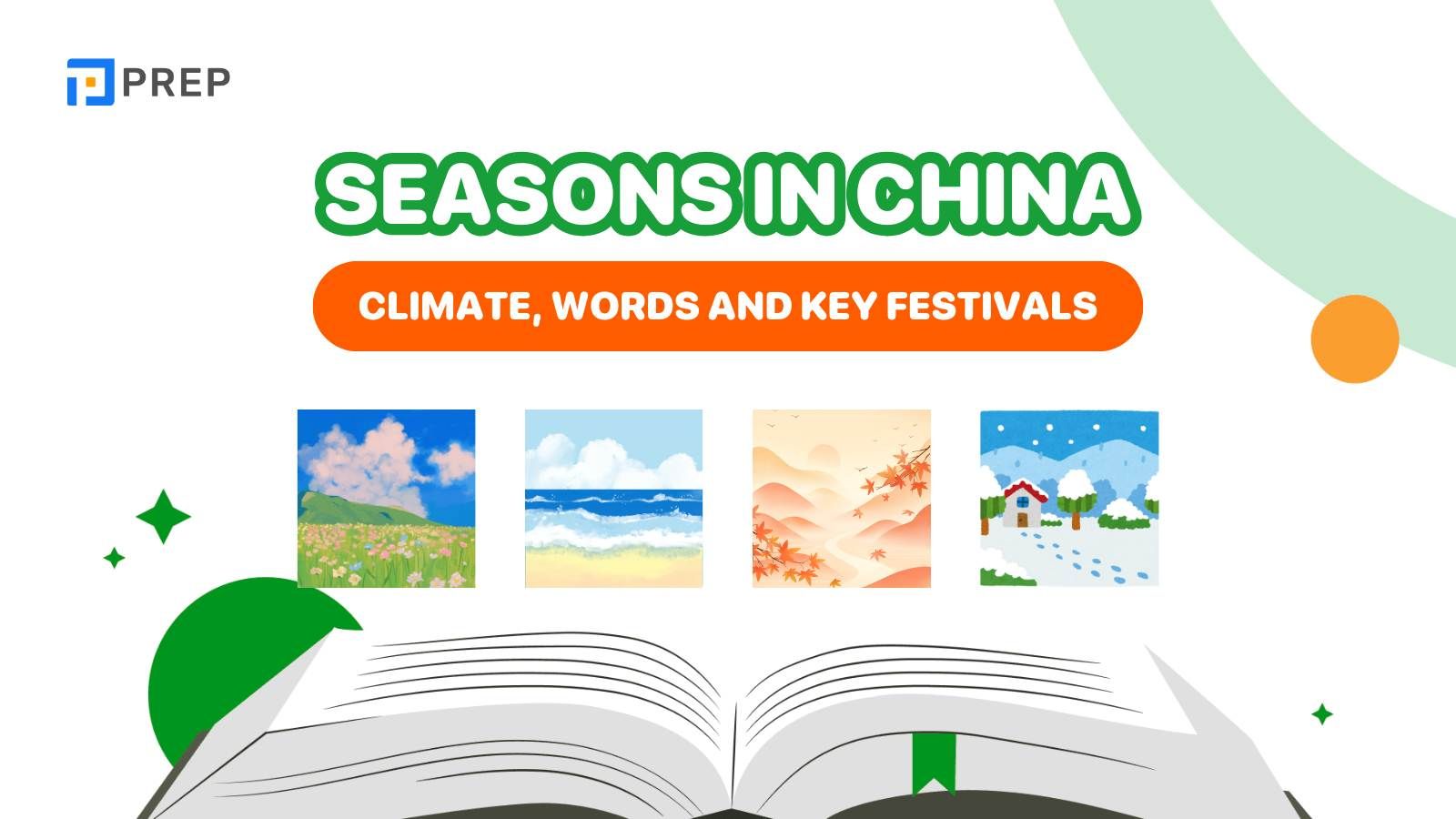
I. What Are the Four Seasons in China?
China experiences four distinct seasons throughout the year: spring, summer, autumn, and winter. These seasons are not only significant in daily life but also play a major role in Chinese culture, festivals, agriculture, and language learning. Understanding the names, pronunciation, and time frames of each season is essential for learners of Mandarin, especially those preparing for standardized exams like HSK.
Season Names in Chinese
|
Season |
Chinese |
Pinyin |
English Meaning |
|
Spring |
春天 |
chūn tiān |
spring |
|
Summer |
夏天 |
xià tiān |
summer |
|
Autumn |
秋天 |
qiū tiān |
autumn (fall) |
|
Winter |
冬天 |
dōng tiān |
winter |
Each seasonal word is made up of two characters: one for the season (春, 夏, 秋, 冬) and the word 天 (tiān), meaning “sky” or “day,” often used to indicate “season” in casual expressions. These words are typically introduced at the HSK 1–2 level, making them great foundational vocabulary for beginners.
Although the four seasons are generally divided similarly to Western calendars, there are slight variations in regional perception and in the traditional lunar calendar system.
According to the Gregorian calendar, the approximate divisions are:
-
Spring: March to May
-
Summer: June to August
-
Autumn: September to November
-
Winter: December to February
However, in traditional Chinese culture, particularly based on the solar terms (节气, jiéqì) used in the lunar calendar, seasons may begin slightly earlier—for example, spring may start as early as early February during Lìchūn (立春).
These seasonal distinctions are reflected in language, literature, and festivals. For instance, Spring Festival (Chinese New Year) celebrates the arrival of spring, even if the weather still feels wintry in northern China.
II. Seasonal Vocabulary and Sentence Patterns in Chinese
Learning how to talk about the seasons in Mandarin Chinese is not only useful for daily conversations but also an effective way to build vocabulary for topics like weather, clothing, food, and cultural customs. Whether you’re just beginning Mandarin or preparing for HSK exams, seasonal words often appear in textbooks and real-world discussions.
Core Seasonal Vocabulary by Season (HSK-Aligned)
Below is a breakdown of common words associated with each season, categorized by HSK level to help guide focused study.
Spring (春天 – chūn tiān):
|
Word |
Pinyin |
English |
HSK |
|
春天 |
chūntiān |
spring |
2 |
|
花 |
huā |
flower |
1 |
|
暖和 |
nuǎnhuo |
warm |
2 |
|
春风 |
chūnfēng |
spring breeze |
3 |
Summer (夏天 – xià tiān):
|
Word |
Pinyin |
English |
HSK |
|
夏天 |
xiàtiān |
summer |
2 |
|
热 |
rè |
hot |
1 |
|
游泳 |
yóuyǒng |
to swim |
2 |
|
空调 |
kōngtiáo |
air conditioning |
3 |
Autumn (秋天 – qiū tiān):
|
Word |
Pinyin |
English |
HSK |
|
秋天 |
qiūtiān |
autumn/fall |
2 |
|
凉快 |
liángkuai |
cool (weather) |
3 |
|
树叶 |
shùyè |
leaves |
4 |
|
收获 |
shōuhuò |
harvest |
4 |
Winter (冬天 – dōng tiān):
|
Word |
Pinyin |
English |
HSK |
|
冬天 |
dōngtiān |
winter |
2 |
|
下雪 |
xiàxuě |
to snow |
3 |
|
冷 |
lěng |
cold |
1 |
|
手套 |
shǒutào |
gloves |
4 |
You can introduce additional synonyms or variations (e.g. 暴雨, 雪人, 春游) depending on the learner’s level.
Useful Sentence Structures Involving Seasons
Here are some practical sentence patterns and examples that incorporate seasonal vocabulary. These are especially helpful for improving speaking and writing ability at beginner to intermediate levels.
Describing the weather:
-
春天来了,天气变暖和了。
(Spring has come, and the weather is getting warmer.) -
今天很热,你要多喝水。
(It's very hot today, you should drink more water.)
Stating preferences:
-
我最喜欢秋天,因为天气不冷也不热。
(I like autumn the most because it’s neither hot nor cold.) -
你喜欢夏天还是冬天?
(Do you prefer summer or winter?)
Talking about seasonal activities:
-
冬天的时候,我们去滑雪。
(We go skiing in the winter.) -
春天到了,很多人去公园赏花。
(In spring, many people go to the park to admire the flowers.)
Incorporating seasonal words into full sentence patterns builds learner fluency, especially when used with present-tense sentence structures, comparisons, or simple conjunctions (因为…所以, 虽然…但是…).
III. Weather and Climate Differences by Region in China
China is vast and geographically diverse, which means its seasonal weather can vary significantly across regions. Understanding these regional climate differences not only gives language learners useful real-world context, but also helps you apply seasonal vocabulary more accurately in everyday speech or when traveling in China.
Northern vs Southern China: Clear Seasonal Contrasts
Northern China – including cities like Beijing, Xi’an, and Harbin – experiences four distinct seasons with dramatic temperature shifts.
-
Spring (春天): Brief and windy, with frequent dust storms
-
Summer (夏天): Hot and dry, especially in inland areas
-
Autumn (秋天): Cool, crisp, comfortable — favored for sightseeing
-
Winter (冬天): Extremely cold, dry, with snow in many places (下雪)
Southern China – cities such as Guangzhou, Shenzhen, and Kunming – has a subtropical monsoon climate.
-
Spring: Longer and more humid, often with rain (下雨)
-
Summer: Very hot and humid, frequent thunderstorms
-
Autumn: Starts later, but still warm and relatively pleasant
-
Winter: Mild or even warm in places, snow is rare
The difference is especially important when learning expressions about clothing, weather, and local activities. For example, “wearing a scarf” (戴围巾) is common in the north during winter but almost irrelevant in the south.
Mountainous and Plateau Regions (e.g., Tibet, Yunnan)
Western provinces like Tibet (西藏), Yunnan (云南), and parts of Sichuan (四川) have highly varied climates due to high elevation and diverse geography.
-
Tibet’s Tibetan Plateau: Short summers, long and cold winters, strong UV exposure — even summer days can feel brisk
-
Yunnan Province: Known for its “Four seasons in one day” — mornings can feel like spring, afternoons like summer, evenings like autumn, and nights like winter
-
Popular seasonal phrase in Kunming:
“一年无四季,一天有四季。”
(There are no four seasons in one year, but all four in a day.)
Because climate varies by geography, learning region-specific vocabulary and usage is a powerful way to deepen your interaction with Mandarin.
Tip for learners: When studying weather-related vocabulary (like 温度 – temperature, 刮风 – windy, 潮湿 – humid), always practice them with regional place names or context sentences. This makes your usage more natural and accurate.
IV. Chinese Festivals and Cultural Events by Season
Each season in China brings not only changes in weather but also iconic festivals and culturally significant events. Learning about traditional festivals helps Mandarin learners deepen their understanding of Chinese society, practice seasonal vocabulary, and recognize how language is used in real cultural contexts.
Spring – Chinese New Year (春节) and Lantern Festival (元宵节)
春节 (Chūn Jié) – Chinese New Year:
-
Usually falls between late January and mid-February
-
Celebrates family reunions, good fortune, and a fresh start
-
Common vocabulary:
-
过年 (guònián) – to celebrate the New Year
-
红包 (hóngbāo) – red envelope (with money)
-
年夜饭 (niányèfàn) – New Year’s Eve dinner
-
拜年 (bàinián) – to give New Year greetings
-
Sentence Example:
-
新年快乐!祝你身体健康!
(Happy New Year! Wishing you good health!)
元宵节 (Yuánxiāo Jié) – Lantern Festival:
-
Celebrated on the 15th day of the Lunar New Year
-
Activities include lantern displays and eating glutinous rice balls (汤圆 – tāngyuán)
-
Culturally symbolizes family unity and the end of New Year celebrations
Summer – Dragon Boat Festival (端午节) and Summer Solstice
端午节 (Duānwǔ Jié) – Dragon Boat Festival:
-
Usually in June
-
Honors the poet Qu Yuan and promotes patriotism
-
Activities: dragon boat races, eating sticky rice dumplings (粽子 – zòngzi)
-
Key vocabulary: 龙舟 (lóngzhōu) – dragon boat, 粽子, 离骚 (Lísāo – a famous poem)
Sentence Example:
-
我们每年端午节都会吃粽子。
(We eat zongzi every year during the Dragon Boat Festival.)
夏至 (Xiàzhì) – Summer Solstice:
-
Occurs in late June
-
While not a major public festival, it's noted in traditional calendars; associated with seasonal food and wellness routines
Autumn – Mid-Autumn Festival (中秋节) and Harvest Expressions
中秋节 (Zhōngqiū Jié) – Mid-Autumn Festival:
-
Celebrated in September or October (15th day of the 8th lunar month)
-
Themes: reunion, the full moon, gratitude
-
Common items: mooncakes (月饼 – yuèbǐng), lanterns
-
Vocabulary: 团圆 (tuányuán – reunion), 赏月 (shǎng yuè – admire the moon)
Sentence Example:
-
中秋节快乐!祝你和家人团团圆圆。
(Happy Mid-Autumn Festival! Wishing you and your family a joyful reunion.)
Harvest Phrases and Culture:
-
秋收 (qiūshōu – autumn harvest), 农忙 (nóngmáng – busy farming season)
Winter – Dongzhi Festival (冬至) and New Year Blessings
冬至 (Dōngzhì) – Winter Solstice:
-
Falls around December 21–23
-
Celebrating the return of longer daylight
-
Northern China often eats dumplings (饺子 – jiǎozi), southern regions prefer glutinous rice balls
-
Culturally symbolic of warmth, family, and final transition into deep winter
Sentence Example:
-
冬至吃饺子,不冻耳朵。
(Eat dumplings during Dongzhi to keep your ears from freezing.)
– A northern proverb
Year-End and New Year Phrases:
-
新年快乐 (xīnnián kuàilè – Happy New Year)
-
万事如意 (wànshì rúyì – May all go as you wish)
Tip for language learners: Try grouping seasonal vocabulary with related festival expressions. When learning 春天 (spring), pair it with 春节 customs. This method improves vocabulary retention and builds cultural fluency at the same time.
Above is the full article by PREP on the four seasons in China and how they connect with Mandarin vocabulary, real-life weather patterns, and cultural festivals. We hope this guide helps you not only expand your Chinese language knowledge, but also gives you deeper insight into how language and culture are linked across the seasons. Keep exploring with PREP to strengthen your Chinese, step by step.

Hi I'm Chloe, and I am currently serving as an Product Content Administrator at Prep Education. With over five years of experience in independent online IELTS study and exam preparation, I am confident in my ability to support learners in achieving their highest possible scores.
Comment
Premium content
View all



Personalized roadmap


Most read

UEN: 202227322W
Address: 114 LAVENDER STREET, #11-83 CT HUB 2, SINGAPORE (338729)