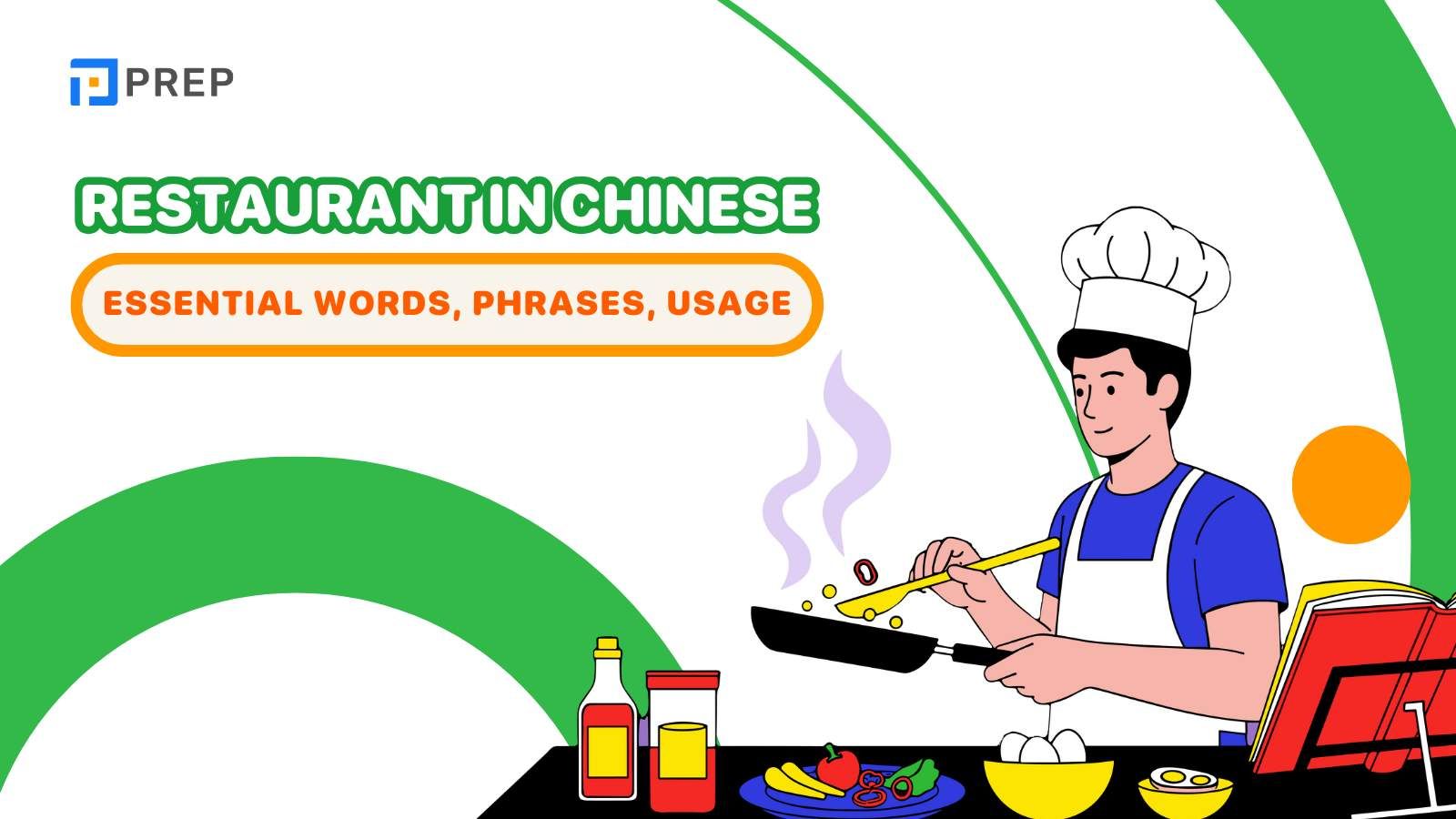
Restaurant in Chinese: Essential Words, Phrases, Usage
Understanding how to say “restaurant” in Chinese and using the right phrases can help learners communicate smoothly in real dining situations. This guide provides essential vocabulary, practical sentence patterns, and cultural insights so you can order food, request help, and navigate Chinese menus with confidence.
I. Must-Know Restaurant in Chinese Vocabulary for Daily Life
Navigating a Chinese restaurant can be challenging if you're unfamiliar with the language. Whether you're dining in China or simply learning themed vocabulary, mastering key restaurant words will greatly enhance your confidence and fluency. Below are the most important terms and structures you’ll encounter.
Common Ways to Say "Restaurant" in Chinese
There are a few different ways to translate the English word "restaurant" into Chinese, depending on context and register:
|
Chinese Word |
Pinyin |
Meaning / Usage |
|
餐厅 |
cāntīng |
General term for "restaurant", often used in hotels, institutions, and formal settings |
|
饭馆 |
fànguǎn |
Common phrase in spoken Chinese, casual or family-run restaurants |
|
饭店 |
fàndiàn |
Can mean both "hotel" and "restaurant"; often refers to large or formal establishments |
|
餐馆 |
cānguǎn |
Neutral term, also used interchangeably with 饭馆 |
Understanding the differences helps you choose the most appropriate word when traveling or speaking with native speakers.
Essential Nouns You’ll Encounter in a Restaurant
Here’s a list of practical nouns used in almost any Chinese dining situation:
|
English |
Chinese |
Pinyin |
|
Menu |
菜单 |
càidān |
|
Table |
桌子 |
zhuōzi |
|
Chair |
椅子 |
yǐzi |
|
Waiter / Waitress |
服务员 |
fúwùyuán |
|
Dish (a plate of food) |
菜 |
cài |
|
Chopsticks |
筷子 |
kuàizi |
|
Bowl |
碗 |
wǎn |
|
Cup / Glass |
杯子 |
bēizi |
|
Rice |
米饭 |
mǐfàn |
|
Soup |
汤 |
tāng |
Learning these high-frequency words can help you read menus, make requests, and understand your surroundings during meals.
Key Verbs for Ordering Food
These are powerful action words that will help you interact with restaurant staff and express your needs clearly:
|
English |
Chinese |
Pinyin |
|
To order dishes |
点菜 |
diǎn cài |
|
To want |
要 |
yào |
|
To eat |
吃 |
chī |
|
To drink |
喝 |
hē |
|
To recommend |
推荐 |
tuījiàn |
|
To serve |
上菜 |
shàng cài |
|
To pay the bill |
结账 |
jié zhàng |
Try putting these verbs into short phrases as you study:
-
我要点菜 – I want to order food
-
请推荐一个菜 – Please recommend a dish
Delicious Adjectives and Food Compliments
When enjoying a good meal, knowing how to compliment the food in Chinese leaves a great impression. Here are useful describing words you can use:
|
English |
Chinese |
Pinyin |
|
Tasty / Delicious |
好吃 |
hǎochī |
|
Very spicy |
很辣 |
hěn là |
|
A bit salty |
有点咸 |
yǒudiǎn xián |
|
Sweet |
甜 |
tián |
|
Fresh |
新鲜 |
xīnxiān |
|
Not bad / pretty good |
不错 |
bú cuò |
|
Very fragrant |
很香 |
hěn xiāng |
Complimenting the meal is a good way to engage politely in Chinese culture:
-
这个菜很好吃! (Zhège cài hěn hǎochī!) – This dish is delicious!
-
汤很香,不错! (Tāng hěn xiāng, bú cuò!) – The soup smells great, not bad at all!
To retain this vocabulary, try grouping and practicing them by category. Use flashcards, simulations, or try speaking them aloud at your next dine-out experience. The more context you give these words, the faster they’ll stick.
II. Real-World Phrases Using Restaurant in Chinese
Knowing vocabulary is great, but being able to confidently use it in real situations is even better. Here are practical, real-world phrases that will help you handle a typical restaurant experience in Chinese — from walking in, to ordering, and paying the bill. These phrases are especially useful if you're dining in China or speaking with native speakers.
Asking for a Table
When you arrive at a restaurant, it’s helpful to know how to request a table or ask specific questions about where to sit. These expressions will help you get started smoothly:
|
English |
Chinese |
Pinyin |
|
A table for two, please. |
请给我们一张两个人的桌子。 |
Qǐng gěi wǒmen yì zhāng liǎng gèrén de zhuōzi. |
|
Do you have a menu in English? |
有英文菜单吗? |
Yǒu yīngwén càidān ma? |
|
We'd like to sit near the window. |
我们想坐窗边。 |
Wǒmen xiǎng zuò chuāngbiān. |
You may also hear questions from the staff such as:
-
几位?(Jǐ wèi?) – How many people?
Be prepared to answer concisely by stating the number and adding “位” (measure word for people).
Ordering Like a Local
Ordering food in Chinese can be an engaging and fun cultural experience. Here are some powerful and natural phrases to express your preferences or ask for suggestions:
|
English |
Chinese |
Pinyin |
|
I’d like to order this dish. |
我想点这个菜。 |
Wǒ xiǎng diǎn zhège cài. |
|
What’s your most popular dish? |
什么是你们的招牌菜? |
Shénme shì nǐmen de zhāopái cài? |
|
No spicy, please. |
请不要太辣。 |
Qǐng bú yào tài là. |
|
I’m allergic to peanuts. |
我对花生过敏。 |
Wǒ duì huāshēng guòmǐn. |
|
I don’t eat pork. |
我不吃猪肉。 |
Wǒ bù chī zhūròu. |
You can also confirm your order with:
-
可以点菜了吗?(Kěyǐ diǎn cài le ma?) – Are we ready to order?
Learning these phrases makes the dining experience smoother and more enjoyable, and it often impresses local staff.
Asking for the Bill and Making Payment
When you’re done eating, here’s how to request the check and discuss how you’d like to pay:
|
English |
Chinese |
Pinyin |
|
Can we get the bill? |
可以结账吗? |
Kěyǐ jiézhàng ma? |
|
Is WeChat Pay accepted here? |
可以用微信支付吗? |
Kěyǐ yòng Wēixìn zhīfù ma? |
|
Can we split the bill? |
我们可以分开付吗? |
Wǒmen kěyǐ fēnkāi fù ma? |
|
This is for takeout. |
这是外带。 |
Zhè shì wàidài. |
Be aware that in many restaurants in China, customers may go directly to the counter to pay instead of waiting at the table.
Final Phrase Practice Tips
-
Practice each phrase out loud, especially the tones.
-
Memorize basic structures, then swap in key nouns/verbs you've learned.
-
Don’t worry about being perfect — showing effort in the local language goes a long way.
III. Cultural Insights When Using Restaurant in Chinese
Understanding how to say “restaurant” in Chinese and use related vocabulary is just part of the experience. To truly navigate a dining setting in a Chinese-speaking environment, it’s essential to understand the cultural norms and behaviors that shape how locals eat, order, and interact with others. Here's what to know beyond the menu.
Basic Dining Etiquette in China
Chinese dining culture revolves around community, hierarchy, and indirect communication. These unwritten rules are essential if you want to make a good impression when dining with locals.
Key etiquette points to keep in mind:
-
Sharing is standard: Dishes are usually placed in the center of the table and shared by everyone. There’s no individual plating as in Western settings. Don’t dig for your favorites.
-
Who orders and pays?: Traditionally, the host orders food and pays the bill, especially in a business context. Splitting the bill is less common and may be seen as impolite in formal settings.
-
Wait for others before eating: It’s courteous to wait for elders or guests of honor to start eating first, particularly at formal meals.
-
Chopstick etiquette: Never stick chopsticks upright in rice (resembles funeral rites), and avoid pointing with them. Use serving utensils when available.
-
Toasting culture: Saying “干杯” (gān bēi, meaning “bottoms up”) is common in both business and social meals. Toast leaders or elders first.
Showing respect, humility, and patience is as important as speaking correct Chinese. Learning these customs helps avoid unintentional misunderstandings.
Understanding a Chinese Menu
If you're entering a restaurant with no English menu, it may feel overwhelming — but there are some strategies and expectations that will help:
Things to expect:
-
Language & layout: Most local Chinese menus are text-heavy, with limited images. Dishes may be named poetically (e.g., "Fish Fragrant Eggplant" is not actually fish-flavored) or listed by cooking method and region.
-
Regional specialization: Restaurants often focus on specific cuisines (e.g., Sichuan, Cantonese, Hunan). Understanding regional differences can help adjust your expectations.
-
Common surprises: You may encounter items unfamiliar to Western dining, such as duck tongue, pig intestine, or lotus root. These are delicacies, not trick items — be open-minded or ask politely.
-
Seasonal dishes: Availability of some menu items depends on the time of year. Ask the staff: “今天的特色菜是什么?” (Jīntiān de tèsè cài shì shénme?) – What’s today’s special?
Try to ask concise questions, point to items if needed, and use the vocabulary and phrases from earlier sections to reinforce your experience.
Cultural fluency — the ability to act appropriately within the social norms — is a powerful complement to language skills. By respecting dining traditions and showing curiosity, you’ll unlock more than just vocabulary: you’ll earn connection and respect.’
Above is the full article by PREP on how to say and use “restaurant” in Chinese in both language and cultural contexts. We hope this guide helps you understand key vocabulary, use practical phrases with confidence, and feel more prepared when communicating in real dining situations. Keep exploring with PREP to strengthen your Chinese, step by step.

Hi I'm Chloe, and I am currently serving as an Product Content Administrator at Prep Education. With over five years of experience in independent online IELTS study and exam preparation, I am confident in my ability to support learners in achieving their highest possible scores.
Comment
Premium content
View all


Personalized roadmap


Most read


UEN: 202227322W
Address: 114 LAVENDER STREET, #11-83 CT HUB 2, SINGAPORE (338729)