Chinese Pointing Explained: Meaning, Culture, Usage
Chinese pointing is more than a simple gesture—it reflects cultural norms and non-verbal communication rules in China. This article explains why pointing may be considered impolite, how Chinese people indicate objects or people instead, and how learners can use gestures appropriately in daily, academic, and professional contexts.
I. What Does "Pointing" Mean in Chinese Culture?
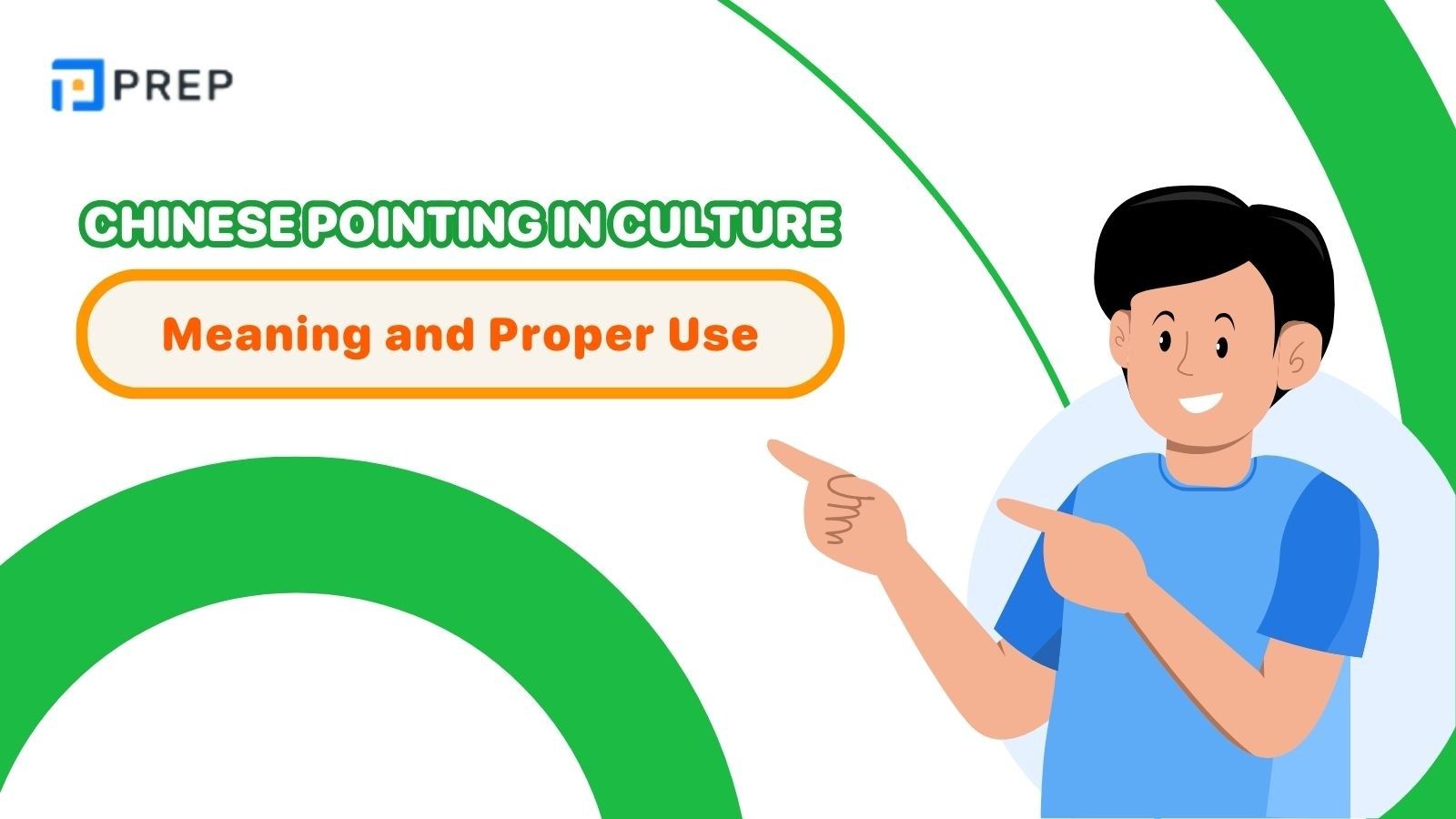
In Western cultures, pointing with one finger—particularly your index finger—is often a neutral or even helpful gesture. In contrast, in Chinese culture, pointing directly at people or objects can be perceived as disrespectful or aggressive, especially in formal or public settings.
The act of pointing, especially at someone's face or body, violates social norms related to politeness and honor. It may be interpreted as confrontational, accusatory, or even degrading, especially when used toward:
-
Elderly people or authority figures (like teachers or supervisors)
-
Sacred images and objects, such as altars or offerings
-
Strangers in public spaces, like subways or markets
For example, pointing directly at someone when calling their attention in a restaurant may make them feel embarrassed or scolded. In a classroom, even teachers may avoid pointing at students and instead call names gently or use indirect gestures.
Chinese people often use more graceful and indirect ways to indicate direction or objects, especially in formal contexts. These include:
-
An open palm: Rather than extending one finger, using the whole hand (palm facing upward) feels neutral and respectful.
-
Nodding or shifting eyes: Non-verbal hints such as eye direction or slight head nods are common.
-
Gesturing with the thumb or multiple fingers: Some opt for an inclusive gesture using several fingers or the thumb pointed sideways for added politeness.
These nuances often go unspoken, but they play a crucial role in non-verbal communication and intercultural interaction in Chinese-speaking environments.
II. How to Say “Pointing” in Chinese?
In Chinese, the most common verb for “pointing” is 指 (zhǐ), which literally means to indicate or to point at. It's a highly versatile character used in many everyday phrases and expressions.
Basic Meaning: 指 (zhǐ)
The character 指 is used as both a standalone verb and part of compound words. It's commonly paired with prepositions or objects to describe pointing actions.
-
指着 + object → "to point at something/someone"
Example: 她指着地图给我看。
(She pointed at the map to show me.) -
用手指 + object → "to use one’s finger to point at..."
Example: 他用手指那本书。
(He pointed at that book with his finger.)
Note: In Chinese syntax, the verb is often followed by 着 (zhe) to emphasize that the action is ongoing or visible.

Other Useful Phrases with 指
The verb 指 also appears in multiple daily expressions:
-
指路 (zhǐ lù) – to give directions
-
指名道姓 (zhǐ míng dào xìng) – to call someone out by name (often criticizing)
-
指教 (zhǐ jiào) – to give advice or guidance, usually said humbly
These variations help learners grasp not only the literal act of pointing but also its figurative applications in both spoken and written Chinese.
III. Pointing and Non-Verbal Communication in Chinese
Chinese speakers often rely on subtle and context-based non-verbal cues. Here are gestures involving the hands, face, and body that are widely used (and accepted):
-
Waving palm downward to beckon someone (instead of curling the finger toward oneself, which can seem rude)
-
Slight head nod as a polite, silent acknowledgment.
-
Two-handed offering when giving or receiving something—this signals respect.
-
Palm-open pointing instead of finger-pointing, especially when giving directions.
These gestures emphasize humility, indirectness, and group harmony—core values in traditional Chinese contexts.

Cultural Misunderstandings: What NOT to Do
If you're visiting or living in a Chinese-speaking region, using Western-style gestures without adaptation may lead to discomfort or offense. Here are a few don’ts and why they matter:
-
Don’t point at elders or authority figures with your finger. Use an open hand or nod instead.
-
Don’t point at religious or ancestral objects (like altars or incense). It may be seen as deeply disrespectful.
-
Avoid abrupt gestures or sudden movement toward someone's face, which can seem aggressive.
Real-Life Example: You’re at a museum in Beijing with a local guide. You excitedly point at an artifact with your finger and ask, “What’s that?” Your guide gently smiles and says, “Use your whole hand—looks better in pictures too.” It’s not just style—it’s about respect.
Pro Tips for Travelers and Learners
-
In professional or academic settings, keep gestures minimal and body language neutral unless you know local norms well.
-
Observe before acting: Watch how locals gesture in different contexts. Mimicking respectfully is a great way to learn.
-
If unsure, ask your teacher/local friend whether a gesture is acceptable—chances are, they’ll appreciate your effort.
Mastering these silent messages—just as much as grammar or vocabulary—can truly elevate your fluency and build cross-cultural trust.
IV. Bonus: Chinese Idioms and Phrases Using 指 (zhǐ)
Beyond its basic meaning of “to point,” the character 指 (zhǐ) is a building block for various Chinese idioms and expressions—many of which reveal deeper cultural values related to guidance, direction, and clarity. Learning these can enrich your Mandarin and make your language use sound more native and expressive.
Common Expressions and Compound Words with 指
These phrases appear frequently in media, professional settings, and academic texts:
|
Phrase (Chinese + Pinyin) |
Meaning |
Example + Translation |
|
指南针 (zhǐ nán zhēn) |
Compass (often metaphorical) |
诚信是我们的价值指南针。 “Integrity is the compass that guides our values.” |
|
指日可待 (zhǐ rì kě dài) |
Expected to happen soon / just around the corner |
胜利指日可待。 “Victory is just around the corner.” |
|
指教 (zhǐ jiào) |
To give guidance or advice (humble tone) |
欢迎批评指教! “Your feedback is welcome!” |
|
手指 (shǒu zhǐ) |
Finger (literal meaning) |
Commonly appears with 指着 in daily speech. (No full sentence needed.) |
Idioms for Practical Use in Daily Conversation
Using 成语 (chéngyǔ – four-character idioms) fluently takes time, but even intermediate learners can recognize and occasionally use simpler ones like:
-
直指核心 (zhí zhǐ hé xīn) – go straight to the core (of an issue)
-
指桑骂槐 (zhǐ sāng mà huái) – point at the mulberry tree while scolding the locust tree
→ Meaning: Indirect criticism or passive-aggressive behavior.
Tip: Use idioms sparingly but meaningfully. Even inserting one into an email or presentation can show cultural awareness and linguistic depth.
In Chinese culture, words involving “pointing” often symbolize intention, insight, and direction—not just physical motion. Whether you're describing actual gestures or abstract concepts, the character 指 reflects a fundamental idea: helping others find their way.
Above is the full article by PREP on what “pointing” means in Chinese—both in terms of language and cultural practice. We hope this guide has helped you learn useful vocabulary, avoid common cross-cultural mistakes, and feel more confident when communicating in real-life Chinese environments. Keep exploring with PREP to deepen your understanding, refine your gestures, and grow your fluency step by step.

Hi I'm Chloe, and I am currently serving as an Product Content Administrator at Prep Education. With over five years of experience in independent online IELTS study and exam preparation, I am confident in my ability to support learners in achieving their highest possible scores.
Comment
Premium content
View all


Personalized roadmap


Most read


UEN: 202227322W
Address: 114 LAVENDER STREET, #11-83 CT HUB 2, SINGAPORE (338729)