Hun in Chinese: Tones, Characters, and HSK Usage
“Hun” in Chinese is not a single word, but a sound that appears across multiple tones and characters, each with different meanings and usage. This article explains common hun-based characters, tone differences, real examples, and shows which words are tested in the HSK exam system.
I. What Does “Hun” Mean in Chinese?
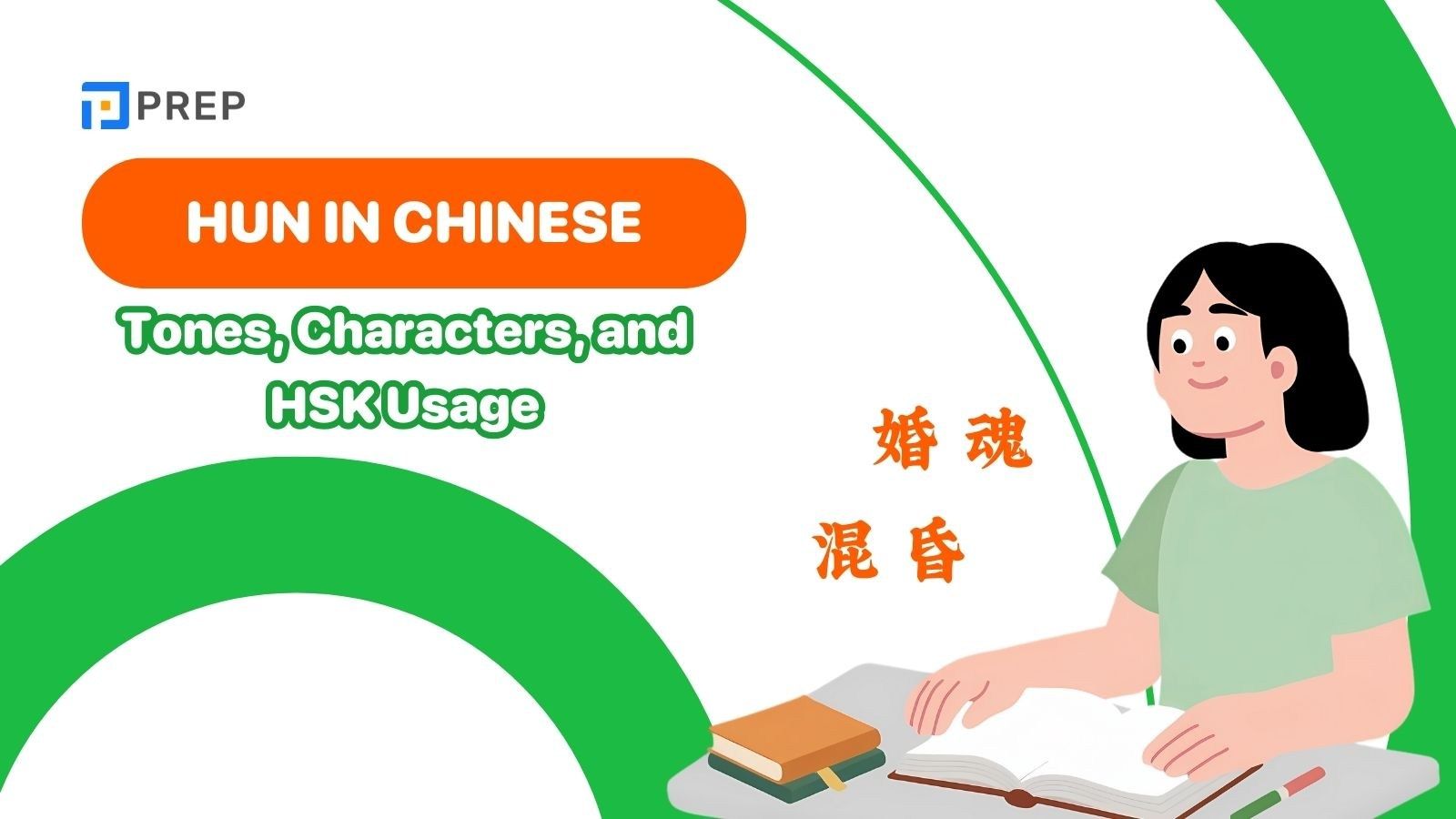
The pinyin “hun” does not refer to a single Chinese word or character. In Mandarin, tones are essential to understanding any syllable correctly. The syllable “hun” can occur in at least four tonal categories: hūn (first tone), hún (second tone), hǔn (third tone), and hùn (fourth tone).
Each tonal variation points to a different character — and often, a different grammatical function or emotional nuance.
For example:
-
hūn (婚) means “marriage”
-
hún (魂) means “soul”
-
hùn (混) means “to mix” or “confused”
-
hūn (昏) means “dizzy” or “faint"

Below is a list of commonly used Chinese characters with the pinyin “hun,” along with their meanings:
|
Character |
Pinyin |
Meaning |
Notes |
|
婚 |
hūn |
marriage |
Frequently used in words like 婚礼 (wedding), 婚姻 (marriage system) |
|
混 |
hùn / hún |
to mix; confused |
Often appears in 混合 (to blend), 混乱 (chaos) |
|
昏 |
hūn |
dim; faint; unconscious |
Used in literary or descriptive writing (e.g. 昏迷 – coma) |
|
魂 |
hún |
soul; spirit |
Appears in classical or spiritual contexts (e.g. 魂魄 – soul and vital essence) |
1. Hun-Based Vocabulary in Chinese: Useful Words and Phrases
The following are common two-character words and phrases that include characters pronounced as “hun.” Learning these words helps reinforce the core meanings introduced earlier and shows how they’re used in everyday communication, literature, or formal settings.
|
Word |
Pinyin |
Meaning |
Example Sentence |
|
婚礼 |
hūnlǐ |
wedding ceremony |
他们的婚礼非常浪漫。 Their wedding was very romantic. |
|
婚姻 |
hūnyīn |
marriage (institution) |
她相信婚姻应该建立在信任之上。 She believes marriage should be based on trust. |
|
昏迷 |
hūnmí |
coma; unconsciousness |
他因事故而昏迷了两天。 He was in a coma for two days due to the accident. |
|
昏暗 |
hūn'àn |
dim, gloomy |
房间里很昏暗,看不清东西。 The room is dim and hard to see in. |
|
魂魄 |
húnpò |
soul and spirit |
中国传统文化重视人的魂魄。 Traditional Chinese culture values the human soul. |
|
魂不守舍 |
hún bù shǒu shè |
absent-minded; soul-less |
他今天一直魂不守舍,可能有心事。 He seems absent-minded today—something may be bothering him. |
|
混乱 |
hùnluàn |
chaos; disorder |
比赛现场出现了短暂的混乱。 There was a brief moment of chaos at the competition venue. |
|
混合 |
hùnhé |
to mix, to combine |
请把两种颜色混合一下。 Please mix the two colors together. |
|
混日子 |
hùn rìzi |
to idle away one's time |
他工作不努力,只是在混日子。 He doesn’t work hard—he’s just killing time. |
2. Difference Between Similar “Hun” Characters in Chinese
Because several Chinese characters share the same pinyin "hun" but have entirely different meanings, learners often confuse them—especially when listening or writing quickly.\

婚 vs. 昏
|
Character |
Meaning |
Tone |
Usage Context |
|
婚 |
marriage (as a concept or status) |
hūn |
Everyday situations, legal, wedding vocabulary (e.g. 婚礼, 结婚) |
|
昏 |
dim, faint, unconscious |
hūn |
Descriptive language, often literary or medical (昏迷, 昏暗) |
-
婚 always relates to human relationships, formal or cultural
-
昏 is never about relationships—it’s about light, mind, or health
魂 vs. 混
|
Character |
Meaning |
Tone |
Usage Context |
|
魂 |
soul, spirit |
hún |
Cultural, spiritual, or poetic usage (e.g. 魂魄, 魂不守舍) |
|
混 |
to mix, to confuse |
hùn / hún |
General vocabulary, used in everyday speech and writing (e.g. 混合, 混乱) |
-
魂 is more abstract or symbolic
-
混 is practical, and has both physical (混合) and metaphorical (混日子) uses
-
Note: 混 has multiple tone readings depending on the word
Understanding these distinctions is critical for clear communication and avoiding low-key but costly mistakes on exams like HSK.
II. Do “Hun” Characters Appear in the HSK Exam?
If you're preparing for an HSK exam, it's helpful to know whether certain “hun” characters are included in official vocabulary lists. Some “hun” characters are tested in HSK Level 3 and above, while others are more literary or advanced and may not appear until HSK 5—or at all.
|
Character |
Common Word(s) |
HSK Level |
Example Sentence |
|
婚 |
结婚 (to get married), 婚礼 (wedding) |
HSK 3 |
他们打算下个月结婚。 They plan to get married next month. |
|
混 |
混合 (to mix), 混乱 (chaos), 混日子 (to kill time) |
HSK 5 |
请把这些颜色混合在一起。 Please mix these colors together. |
|
昏 |
昏迷 (to be unconscious), 昏暗 (dim) |
Not in standard HSK list |
病人已经昏迷两天了。 The patient has been unconscious for two days. |
|
魂 |
魂魄 (soul and spirit), 魂不守舍 (absent-minded) |
Not in standard HSK list |
他吓得魂都飞了。 He was so scared his soul nearly left his body. |
Key Takeaways:
-
婚 is the most common and practical for exam use, especially in HSK 3 reading and writing sections.
-
混 appears in more advanced contexts like HSK 5 and is used with verbs and abstract nouns.
-
昏 and 魂 are rarely included in HSK vocabulary lists, but may appear in readings outside the test or in advanced academic/literary contexts.
-
Even for words not formally covered within test vocab, understanding them enriches comprehension—especially in listening or reading beyond textbooks.
Knowing which “hun” characters are tested helps you prioritize study time and prepare strategically for upcoming HSK levels.
Above is the full guide by PREP on what “hun” means in Chinese—from tone differences to character meanings and their usage in real examples and HSK exams. We hope this helped you gain clarity and confidence in using these look-alike words. Keep practicing with PREP to turn pinyin into precise understanding, one character at a time.

Hi I'm Chloe, and I am currently serving as an Product Content Administrator at Prep Education. With over five years of experience in independent online IELTS study and exam preparation, I am confident in my ability to support learners in achieving their highest possible scores.
Comment
Premium content
View all


Personalized roadmap


Most read

UEN: 202227322W
Address: 114 LAVENDER STREET, #11-83 CT HUB 2, SINGAPORE (338729)