IELTS Writing Step by Step Book: Review and Use Guide
IELTS Writing Step by Step is a popular self-study book written by a former IELTS examiner. This article provides a detailed review of the book’s content, strengths, and limitations, explains who it is best suited for, and shows how learners can use it effectively to improve their IELTS Writing score.
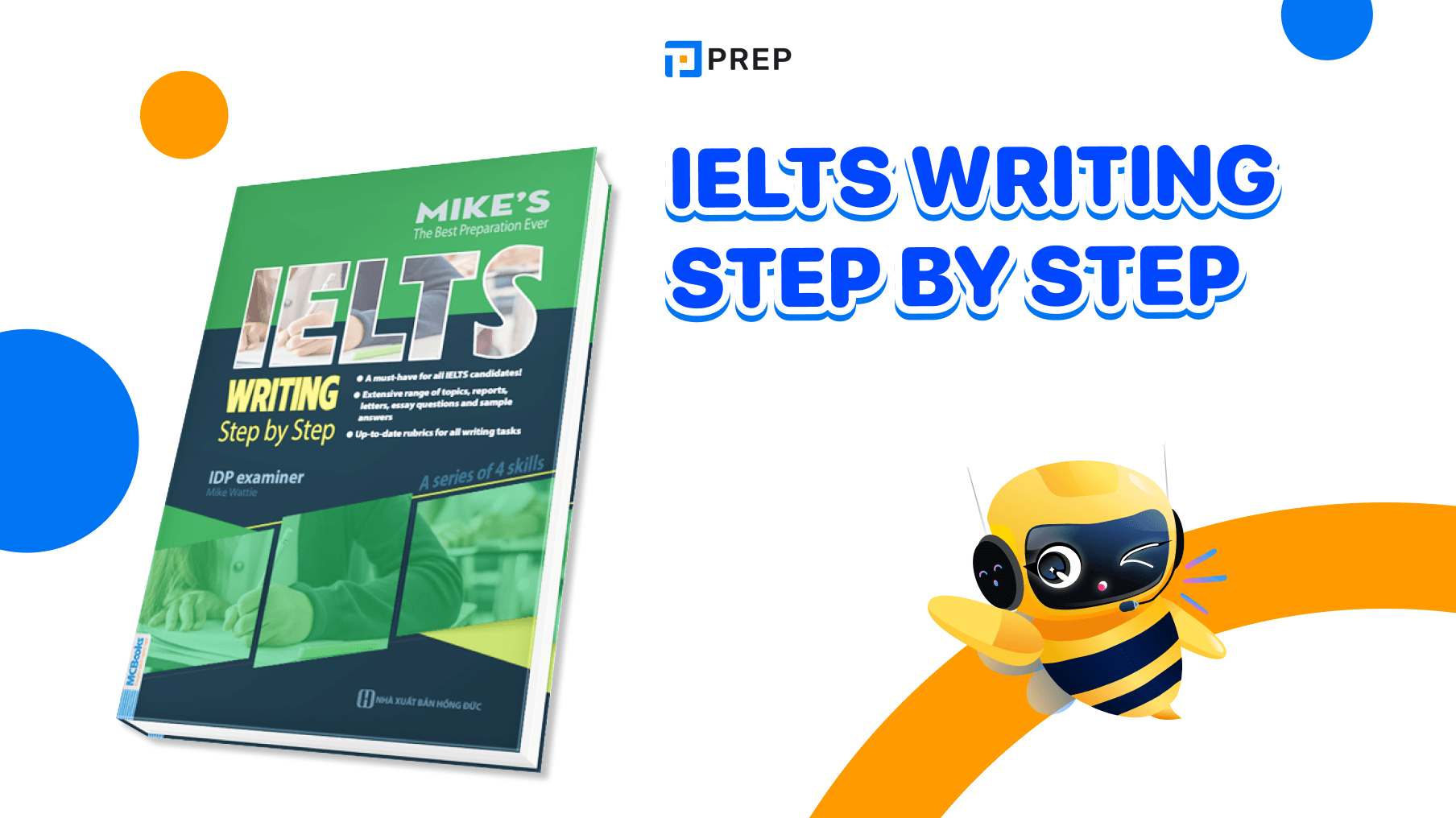
I. Overview of the IELTS Writing Step by Step Book
IELTS Writing Step by Step is a practical guidebook designed for IELTS learners who want a systematic and structured approach to improving their writing skills. Written by Mike Wattie, a former IELTS examiner, this book provides learners with detailed, step-by-step instruction to master both Task 1 and Task 2 of the IELTS Writing test, for both the Academic and General Training formats.
-
Author: Mike Wattie
-
Language: English
-
Format: PDF
-
Pages: 172
-
Dimensions (Physical copy): 17 x 24 cm
This book is specifically designed for learners who prefer clear explanations, model answers, and a layout that guides them from basic structure to full essay writing. Each chapter focuses on one aspect of writing, making it easy to follow, even for learners starting with a lower band score.
If you are exploring more IELTS writing books, this guide is a great starting point.
1. Content Breakdown of the IELTS Writing Step by Step Book
The IELTS Writing Step by Step book is divided into four main sections, each designed to help learners approach the IELTS Writing test methodically. The structure follows the actual exam format and focuses on both Academic and General Training modules.
Part 1: Introduction to the IELTS Writing Test
-
Overview of the IELTS Writing module
-
Explanation of scoring criteria
-
Common problems learners face when writing
-
The importance of developing ideas and answering the question directly
-
Insight into the logic of the examiner and how tasks are evaluated
This section equips learners with a solid foundation before moving into actual task types.
Part 2: Task 1 – Academic Writing (Report Writing)
-
How to describe visual data: bar charts, pie charts, line graphs, tables, and processes
-
Key phrases and grammar structures for describing trends, comparisons, and stages
-
Multiple model answers with step-by-step breakdowns
-
Techniques for organizing information in a clear and concise way
-
Common mistakes and how to avoid them in academic reports
This section is especially useful for Academic IELTS test-takers targeting Band 6.0+.
You can also refer to academic writing practice for IELTS book for more structured exercises.
Part 3: Task 1 – General Training Writing (Letter Writing)
-
Covers formal, semi-formal, and informal letter styles
-
Teaches tone, structure, and vocabulary suitable for each letter type
-
Provides templates, paragraph guides, and model answers
-
Lists useful expressions and closing lines
-
Step-by-step explanation of common letter tasks (e.g. complaints, requests, invitations)
Perfect for General Training candidates or anyone needing to improve their real-world writing tone.
Part 4: Task 2 – Essay Writing (Both Academic & General)
-
Covers all Task 2 essay types:
-
Opinion
-
Discussion
-
Advantages/Disadvantages
-
Problem/Solution
-
-
Structured guidance on planning, organizing paragraphs, and refining ideas
-
Sample essays annotated with examiner-style comments
-
Techniques for developing arguments, paraphrasing the question, and writing clear conclusions
-
Lists of linking words, topic-specific vocabulary, and grammar notes for coherence
This final section helps learners gain control over their writing process and build confidence when tackling essay questions. To improve faster, you should also learn IELTS writing task 2 tips.
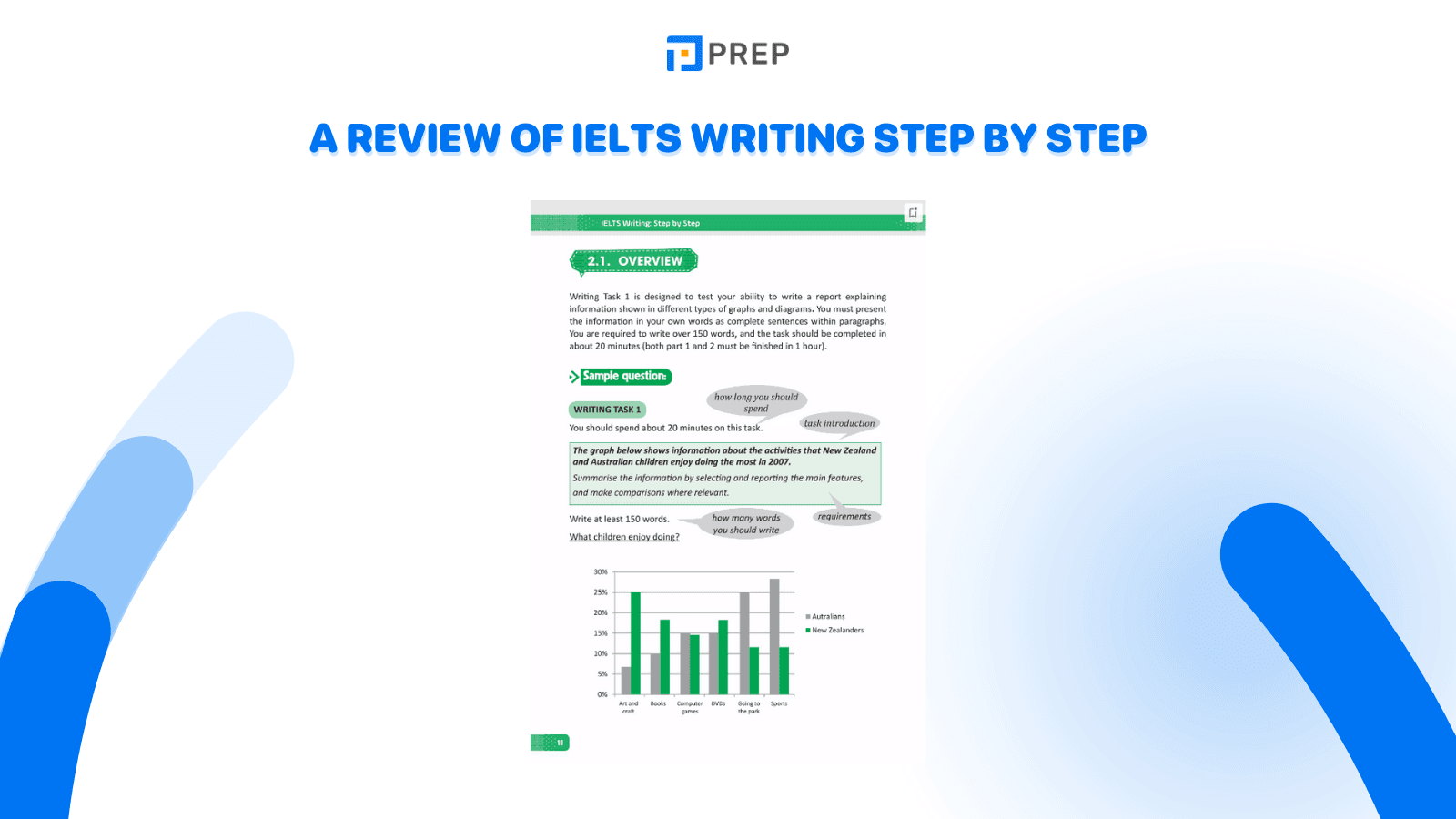
In addition, throughout the book, author Mike Wattie—a former IELTS examiner—offers:
-
Clear tips based on official band score descriptors
-
Step-by-step strategies that mirror real exam performance
-
Common candidate mistakes ("classic traps") and actionable fixes
Overall, this content structure makes the book ideal for self-study learners who want a comprehensive, logical pathway from understanding the test to producing high-quality answers in both Writing Task 1 and Task 2.
To understand one of the most common formats, you can review advantages and disadvantages essay IELTS writing task 2.
2. Strengths and Limitations of the Book
Before choosing any study material, it’s essential to weigh the pros and cons. The IELTS Writing Step by Step Book by Mike Wattie has helped many learners improve their writing scores, but like any book, it comes with its own set of strengths and areas for improvement.
Strengths
1. Clear and easy-to-follow structure
-
Each section is divided logically based on task type: Introduction → Task 1 Academic → Task 1 General → Task 2 Essay.
-
The step-by-step approach makes it beginner-friendly, especially for learners aiming for Band 5.0–6.5.
2. Focused guidance from an experienced IELTS examiner
-
Author Mike Wattie provides highly practical insights, particularly based on band score criteria.
-
Common mistakes are highlighted with corrective examples.
3. Includes model answers with breakdowns
-
By analyzing sample responses, readers can see how to move from idea generation to polished paragraph writing.
-
Explanations are provided line-by-line, making it easier to apply strategies immediately.
4. Visual and design clarity (for print/PDF version)
-
Headings, fonts, and color-coded highlights help learners find key content quickly.
-
Good use of bolding, italicizing, and boxed text to emphasize takeaway points.
5. Suitable for both Academic and General Training
-
Few writing books cover both modules comprehensively.
-
Clear separation between task types allows learners to focus on what they need most.
Limitations
1. All-English content may be challenging for some learners
-
There is no bilingual explanation (e.g. English–Vietnamese), which may be a barrier for lower-level learners.
-
Learners with weak reading comprehension may struggle with initial theory sections.
2. Limited personalization or example-based feedback
-
While strategies are strong, there are few interactive exercises.
-
There are no “plug-and-play” sentence templates for absolute beginners.
3. Visual issues with charts and diagrams (in the digital version)
-
Some users reported overlapping text and unclear colors in diagrams, especially in the data-reporting Task 1 Academic section.
4. Emphasis on natural expression may lack detailed phrasing techniques
-
The book encourages learners to avoid over-relying on templates—but doesn't always offer substitute structures or exact word-for-word phrasing learners often expect.
5. Inconsistent formatting in some parts
-
Some sections use different header fonts and layout conventions, which can feel slightly disjointed.
Who is this book for?
-
Ideal for: ELTS learners from Band 4.5 to 6.5; Self-study learners looking for an examiner’s point of view; Learners who prefer step-by-step guidance rather than dense academic theory
-
Not recommended for: Complete beginners who need translation or visual vocabulary; Learners looking for book-based correction, interactive practice, or a course-like experience
II. How to Use the IELTS Writing Step by Step Book Effectively
The IELTS Writing Step by Step Book is designed to guide learners through every stage of the IELTS Writing test—from understanding task requirements to producing structured, high-scoring responses. However, to make the most of this resource, you need a practical study strategy and a clear understanding of common pitfalls.
Follow a Weekly Step-by-Step Study Plan
Because the book is already divided into logical sections, you can combine it with a clear roadmap like IELTS study plan for beginners.
|
Week |
Focus Area |
Action Steps |
|
Week 1 |
Part 1 – Introduction + Task Overview |
Read carefully about test format, band criteria, and examiner insight. |
|
Week 2 |
Task 1 (Academic or General – choose your format) |
Learn structure + analyze 2–3 sample answers provided |
|
Week 3 |
Task 1 Writing Practice |
Complete practice questions on your own → compare with model answers |
|
Week 4 |
Task 2 Overview + Essay Structure |
Study body paragraph strategy, linkers, thesis building |
|
Week 5 |
Task 2 Practice |
Write 2–3 full essays → self-review using key tips from the book |
|
Week 6 |
Combine Tasks and Timed Practice |
Do mixed timed writing → simulate real exam conditions |
Pro tip: Use a separate notebook or digital doc to build your own phrasebank based on the book’s sample sentences, and expand it with learn IELTS writing vocabulary.
Since this book doesn’t give personalized feedback:
-
Join online forums (e.g. r/IELTS, Facebook IELTS groups) and post your essays
-
Use Grammarly, QuillBot, or free AI tools for preliminary checks
-
If possible, find a tutor (or a study partner) who can give honest feedback
Remember: even the most detailed guide can’t replace external evaluation. Use the book to build core skills—and feedback to refine them.
III. Where to Buy or Download IELTS Writing Step-by-Step Books
Whether you’re looking for a PDF version or a printed copy, getting access to the IELTS Writing Step by Step Book by Mike Wattie is relatively simple—if you know where to look. In this section, we’ll guide you through the available formats, where you can buy or download the book safely, and what to watch out for when searching online to avoid pirated or unofficial content.
Available Formats of the IELTS Writing Step-by-Step Book
Depending on your study style and device preferences, the book is available in several formats:
-
Printed Paperback: Ideal for learners who prefer taking notes directly on the page or studying offline.
-
PDF / eBook (Official): Suitable for learners who want instant access and flexibility across devices.
-
Bundle Option: Some platforms offer both print and digital access as a combined package.
Note: Ensure any downloaded version is legal and respects the copyright of the author and publisher.
Where to Purchase the Book Safely (Print or PDF)
Here are trusted sources to get the official book:
Amazon
-
One of the easiest and most accessible platforms.
-
Search for: “IELTS Writing Task 2 Step-by-Step Guide by Mike Wattie”
-
Available in multiple regions (US, UK, Canada, Australia, etc.)
Author’s Official Website – Test IELTS Online
-
Website: www.testIELTSonline.com
-
Offers PDF version with author updates.
-
Sometimes includes bonus materials like practice questions and extra tips.
Other Book Retailers
-
Fahasa, Tiki, Shopee (Vietnam) – Available as localized physical copies
-
Book Depository (worldwide free shipping)
-
eBay – Used copies (ensure seller credibility)
Free PDF Sample or Official Downloads (If Available)
If you're looking for a sample before committing to the full version:
-
Some educational blogs or course platforms may offer:
-
A sample PDF (5–10 pages)
-
Preview of a chapter (usually Task 2 introduction)
-
Annotated sample answers or writing checklists
-
To ensure you’re using the right book version:
-
Check the author’s name: Mike Wattie is the official author of the Step-by-Step IELTS Writing series.
-
Avoid links on file-sharing forums that have no publishing information.
-
Do not use unofficial “Google Drive” links—especially with shortened URLs.
-
Pirated materials may contain:
-
Outdated band criteria
-
Wrong or misleading sample answers
-
Broken formatting or missing sections
-
This article has provided a detailed review about the content and pros and cons of the book "IELTS Writing Step by Step" by Mike in PDF format. Hopefully, it will help you decide whether you should use the book for IELTS preparation and how to use it effectively!

Hi I'm Chloe, and I am currently serving as an Product Content Administrator at Prep Education. With over five years of experience in independent online IELTS study and exam preparation, I am confident in my ability to support learners in achieving their highest possible scores.
Comment


Premium content
View all
Personalized roadmap


Most read


UEN: 202227322W
Address: 114 LAVENDER STREET, #11-83 CT HUB 2, SINGAPORE (338729)