HSK 5 Complete Guide: Vocabulary, Grammar, and Exam Skills Overview
The HSK 5 exam represents a critical milestone in your Chinese language journey, marking the transition from intermediate competence to advanced proficiency that opens doors to academic programs, professional opportunities, and authentic cultural engagement in Chinese-speaking environments.
You stand at a level where basic survival communication evolves into sophisticated discourse about abstract topics, nuanced opinions, and complex social situations that require cultural awareness alongside linguistic skill. This comprehensive guide provides you with the strategic knowledge you need to understand the hsk 5 exam structure, master its vocabulary and grammar requirements, and develop the study approach that leads to success on test day and meaningful fluency in real-world Chinese contexts.

I. What is HSK 5?
HSK 5 is the fifth level in the standardized Chinese language proficiency test system officially designed by Hanban/Confucius Institute Headquarters. It is targeted at learners who have mastered approximately 2,500 Chinese words and can read newspapers, watch films, and conduct professional conversations.
For reference, HSK 5 learners are generally considered at an upper-intermediate to advanced level in Mandarin. The test includes listening, reading, and writing components across 120 minutes and acts as a bridge to both academic and professional Chinese environments.
|
Syllables |
Characters |
Vocabulary |
Grammar |
Handwritten Characters |
|
|
Total |
822 |
1500 |
4316 |
357 |
250 |
|
New in HSK 5 |
98 |
300 |
1071 |
71 |
|
|
Skills |
|||||
|
Listening |
- Enables learners to accurately comprehend core information during real-life conversations. |
||||
|
Speaking |
- Helps learners speak fluently on a variety of topics using complex sentence structures to describe events, express opinions, and convey emotions logically and appropriately. |
||||
|
Reading |
- Develops strong comprehension strategies such as skimming, predicting meaning, scanning for details, and inferencing ideas from context. |
||||
|
Writing |
- Solidifies control over 250 required characters from the handwritten characters list. |
||||
|
Translation |
- Supports learners in basic translation. - Fully translates content across assigned HSK 5 themes. - Performs fluent oral interpretation. - Accurately translates textual explanations and narrative content. |
||||
If you are preparing for the IELTS Speaking Test, HSK 5 supports your speaking fluency in Chinese by building structure, vocabulary range, and real-world expression.
II. Benefits of the HSK 5 Certificate
Earning an HSK 5 certificate is highly recognized by Chinese universities, businesses, and government-sponsored programs. It demonstrates strong command of Mandarin in work, academic, and daily communication settings.
You can use the certificate to apply for:
-
Admission to postgraduate programs at Chinese universities (non-language majors)
-
Professional roles requiring intermediate-to-high Chinese proficiency
-
Scholarships and exchange programs funded by Hanban
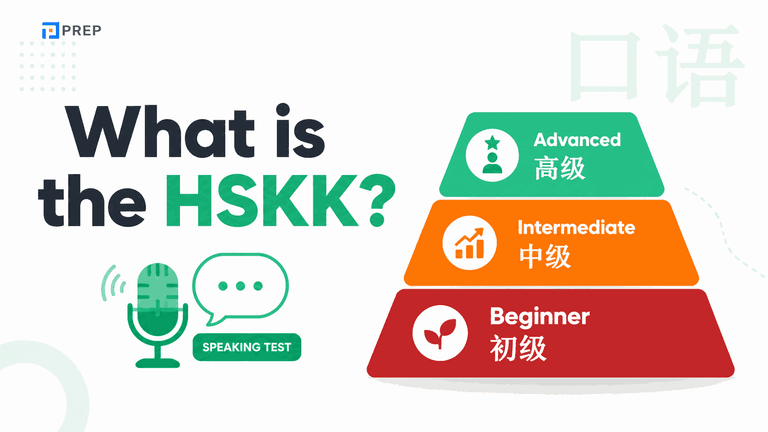
It also provides solid grounding for the HSKK 5 speaking exam, which is often taken together with HSK 5 to validate oral fluency.
III. Structure of the HSK 5 Exam
The HSK 5 exam is structured into three main sections: Listening, Reading, and Writing.
|
Section |
Part |
Number of Questions |
Requirements |
|
Listening Comprehension (30 minutes) |
Part 1 |
20 |
The test provides a short 2-sentence dialogue between two speakers. Candidates must select the most appropriate question based on the dialogue. Four answer options are given on the test paper. Choose the best one based on what you hear. |
|
Part 2 |
25 |
The test includes 4–5 dialogues or short passages. Several questions are asked in relation to each passage. Four answer options are provided. Choose the correct answer based on what you hear. |
|
|
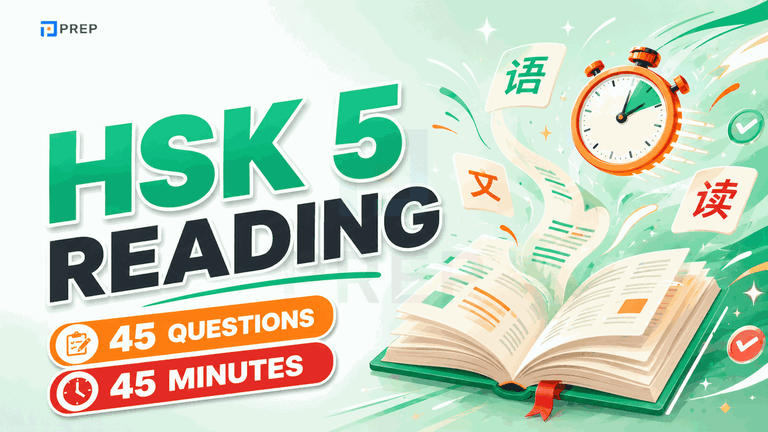
Reading Comprehension (45 minutes) |
Part 1 |
15 |
Fill in the blanks with the correct words. |
|
Part 2 |
10 |
Each item presents a short passage and four possible answers. Choose the answer that best matches the passage content. |
|
|
Part 3 |
20 |
Several reading passages are provided. Each passage has one question with four options. Read carefully and choose the most suitable answer. |
|
|
Writing (40 minutes) |
Part 1 |
8 |
Rearrange the given words into grammatically correct and complete sentences. |
|
Part 2 |
2 |
Question 1: You're given a list of words. Write an 80-word essay using those words. Question 2: You're given a picture. Write an 80-word essay based on the given image. |
The total test time is approximately 125 minutes including 5 minutes for filling in personal information.
IV. HSK 5 Scoring System

The HSK 5 score is based on a total of 300 points, divided equally across the three sections:
|
Section |
Listening |
Reading |
Writing |
Total Score |
Passing Score |
|
Maximum Score |
100 |
100 |
100 |
300 |
180 |
|
Number of Questions |
45 |
45 |
10 |
||
|
Points per Question |
2.2 |
2.2 |
10 |
||
|
Test Duration |
35 minutes |
45 minutes |
40 minutes |
Each section is scored independently and then combined into your overall result.
V. What Score is Considered a Pass for HSK 5?
To officially pass the HSK 5 exam, you must achieve a minimum total score of 180 out of 300. However, note that high-ranking universities often require 220+ or even 250+ for graduate admission.
A strong score demonstrates not just your test-taking ability, but also your long-term reading, writing, and active communication skills, which are essential for IELTS-level speaking as well.
VI. HSK 5 Exam Fee
HSK 5 exam fees vary by location. As of recent updates:
-
In China: typically ¥450–¥500 RMB
-
International test centers: prices range from $60–$80 USD
Always check with your local Confucius Institute or official test center for current pricing, currency adjustments, and payment deadlines.
VII. HSK 5 Vocabulary List
The official HSK 5 vocabulary consists of approximately 2,500 words, which builds directly upon the 1,200+ from HSK 4. These words cover high-frequency nouns, verbs, idiomatic expressions, and formal structures used in news, business, and academic writing.

|
No. |
Word |
Pinyin |
Meaning (English) |
Example Sentence |
|
1 |
哎 |
āi |
Ah! (surprise or sigh) |
哎! 真是想不到的事。 Āi! Zhēnshi xiǎngbúdào de shì. Whoa! That was really unexpected. |
|
2 |
唉 |
āi |
Okay. / Alright. (reluctantly or softly) |
唉,我这就来! Āi, wǒ zhè jiù lái! Alright, I’m coming now! |
|
3 |
爱护 |
àihù |
To care for, to protect |
我们要懂得爱护自己。 Wǒmen yào dǒngde àihù zìjǐ. We should know how to care for ourselves. |
|
4 |
爱惜 |
àixī |
To value, to cherish |
他很爱惜他的书。 Tā hěn àixī tā de shū. He really cherishes his books. |
|
5 |
爱心 |
àixīn |
Loving heart, compassion |
她是一个有爱心的人。 Tā shì yí ge yǒu àixīn de rén. She is a caring person. |
|
6 |
安慰 |
ānwèi |
To comfort, to console |
我们互相安慰。 Wǒmen hùxiāng ānwèi. We comforted each other. |
|
7 |
安装 |
ānzhuāng |
To install, to set up |
他正在安装附件。 Tā zhèngzài ānzhuāng fùjiàn. He is installing the accessories. |
|
8 |
岸 |
àn |
Shore, bank (of a river) |
他上岸了。 Tā shàng'àn le. He came ashore. |
|
9 |
暗 |
àn |
Dark, dim |
房间里太暗了。 Fángjiān lǐ tài àn le. The room is too dark. |
|
10 |
熬夜 |
áoyè |
To stay up late |
熬夜对皮肤不好。 Áoyè duì pífū bù hǎo. Staying up late is bad for your skin. |
|
11 |
把握 |
bǎwò |
To grasp, to seize |
我把握住了这个机会。 Wǒ bǎwò zhùle zhège jīhuì. I seized this opportunity. |
|
12 |
摆 |
bǎi |
To place, to display |
桌子上摆着很多水果。 Zhuōzi shàng bǎi zhe hěnduō shuǐguǒ. There are many fruits displayed on the table. |
|
13 |
办理 |
bànlǐ |
To handle (formalities) |
我要办理出境手续。 Wǒ yào bànlǐ chūjìng shǒuxù. I need to go through the exit procedures. |
|
14 |
傍晚 |
bàngwǎn |
Evening, dusk |
傍晚的空气很清新。 Bàngwǎn de kōngqì hěn qīngxīn. The evening air is very fresh. |
|
15 |
包裹 |
bāoguǒ |
Parcel, package |
这个包裹有多重? Zhège bāoguǒ yǒu duō zhòng? How heavy is this package? |
|
16 |
包含 |
bāohán |
To include, to contain |
价格包含附加费用吗? Jiàgé bāohán fùjiā fèiyòng ma? Does the price include additional fees? |
|
17 |
包括 |
bāokuò |
To include, to cover |
我说“大家”,自然包括你。 Wǒ shuō "dàjiā", zìrán bāokuò nǐ. When I said "everyone", I of course included you. |
|
18 |
薄 |
báo |
Thin |
这种纸很薄。 Zhè zhǒng zhǐ hěn báo. This type of paper is very thin. |
|
19 |
宝贝 |
bǎobèi |
Treasure, darling |
这件宝贝非常珍贵。 Zhè jiàn bǎobèi fēicháng zhēnguì. This treasure is extremely valuable. |
|
20 |
宝贵 |
bǎoguì |
Precious, valuable |
水是宝贵的资源。 Shuǐ shì bǎoguì de zīyuán. Water is a valuable resource. |
Having an HSK 5 book will help you organize your daily learning sessions more effectively, with vocabulary lists and usage examples categorized by theme.
VIII. HSK 5 Grammar Topics
The HSK 5 grammar syllabus covers both intermediate rules and advanced sentence structures. Below are core syntax categories you need to master:
1. Pronouns
You must distinguish between demonstrative, personal, and reflexive pronouns. Usage includes formal register and object clauses.
|
Pronoun |
Usage |
Example |
|
某 /mǒu/ |
Refers to an unspecified person or object, usually placed before a noun. |
某人 /mǒu rén/: someone |
|
各自 /gèzì/ |
Each one individually; doing something on one's own |
大家要认真完成各自的工作。 Dàjiā yào rènzhēn wánchéng gèzì de gōngzuò. Everyone must finish their own work carefully. |
2. Prepositions
Master complex prepositional patterns such as 对于 (in regard to), 关于 (about), and 在……方面 (in the aspect of).
|
Preposition |
Usage |
Example |
|
朝 /cháo/ |
Indicates the direction of an action |
朝前走 /cháo qián zǒu/: head/move forward |
|
自 /zì/ ("from") |
Used after verbs like 来 (come), 发 (send), 寄 (mail), etc. |
我来自中国。/Wǒ lái zì Zhōngguó. I come from China. |
|
自从 /zìcóng/ ("since") |
Indicates a point in time, often placed before the subject |
自从我到北京以后,身体越来越好了。 /Zì cóng wǒ dào Běijīng yǐhòu, shēntǐ yuèláiyuè hǎo le./ Since I arrived in Beijing, my health has been improving. |
3. Numerals
Numerals are not just for counting. HSK 5 often uses estimated or abstract quantities like 上千 (thousands of), along with measure words and frequency expressions.
|
Decimal and Percent Expressions |
Example |
|
Structure: "……分之 /fēn zhī/……" |
• 9%: 百分之九 /bǎi fēn zhī jiǔ/ • ⅓: 三分之一 /sān fēn zhī yī/ |
4. Conjunctions
You must correctly use conjunctions to structure argument and sequence: 尽管 (although), 要么……要么 (either...or), 不仅……还 (not only...but also).
|
Conjunction |
Usage |
Example |
|
总之 /zǒngzhī/ |
Used to summarize or conclude a statement |
总之一切都按照市场规律来办。 /Zǒngzhī yīqiè dōu àn zhào shìchǎng guīlǜ lái bàn./ In short, everything follows market rules. |
|
于是 /yúshì/ |
So, hence, thus |
张玲很喜欢读书,于是她办了张图书卡。 /Zhāng Líng hěn xǐhuān dúshū, yú shì tā bàn le zhāng túshūkǎ./ Zhang Ling loves reading, so she got a library card. |
|
究竟 /jiūjìng/ |
Used in questions for emphasis; "what on earth", "after all" |
你究竟怎么了? /Nǐ jiūjìng zěnme le?/ What’s the matter with you after all? |
|
何况 /hékuàng/ |
Let alone, not to mention |
八年级的同学都不会做这道题,何况七年级的呀! /Bā niánjí de tóngxué dōu bú huì zuò zhè dào tí, hékuàng qī niánjí de ya!/ Even 8th graders can’t solve this problem, let alone the 7th graders! |
5. Common Sentence Patterns
Includes 是……的 for past emphasis, 把/被 sentence focus, 连……都/也 for inclusion and exception, such as:
|
Structure |
Usage |
Example |
|
再…, 也… /zài..., yě.../ |
Even if..., still... |
天气再冷,我也要坚持锻炼。 Tiānqì zài lěng, wǒ yě yào jiānchí duànliàn. No matter how cold it gets, I’ll keep exercising. |
|
与其…, 不如… /yǔqí..., bùrú.../ |
Rather than..., it’s better to... |
与其麻烦别人,不如自己想办法。 Yǔqí máfan biérén, bùrú zìjǐ xiǎng bànfǎ. Rather than bothering others, it’s better to think of a solution yourself. 与其浪费时间,不如做些有意义的事。 Yǔqí làngfèi shíjiān, bùrú zuò xiē yǒuyìyì de shì. Instead of wasting time, do something meaningful. |
|
不但不…, 反而… /búdànbù..., fǎn'ér.../ |
Not only not..., but on the contrary... |
我帮助他,他不但不知道感恩,反而出卖我。 Wǒ bāngzhù tā, tā búdànbù zhīdào gǎn'ēn, fǎn'ér chūmài wǒ. I helped him, but instead of being grateful, he betrayed me. |
|
宁可…, 也不… /nìngkě..., yě bù.../ |
Would rather..., than... |
我宁可离婚,也不这样度过日子。 Wǒ nìngkě líhūn, yě bù zhèyàng dùguò rìzi. I’d rather divorce than live like this. 我宁可单身一辈子,也不想跟他结婚。 Wǒ nìngkě dānshēn yībèizi, yě bù xiǎng gēn tā jiéhūn. I’d rather stay single for life than marry him. |
|
宁可…, 也要… /nìngkě..., yě yào.../ |
Would rather (endure something), just to... |
小孩子宁可不吃饭,也要继续玩。 Xiǎo háizi nìngkě bù chīfàn, yě yào jìxù wán. Children would rather skip meals just to keep playing. |
Building fluency with these structures enables natural transitions in IELTS-style interviews and structured arguments.
IX. Tips to Achieve a High Score in the HSK 5 Exam
Reaching a strong score in HSK 5 depends on consistency, efficient review, and output-focused practice. Use these strategies:
-
Expand Your Vocabulary and Learn More Idioms: Commit to daily review of 20 new words and revise old ones weekly. Use apps, flashcards, and the official HSK 5 book to build word families and collocations. Idioms such as 熟能生巧 (practice makes perfect) add sophistication to your writing and speaking.
-
Improve Writing Through Regular Practice: Practice both sentence transformation and free composition every week. Focus on writing logically structured short essays using question prompts from past papers. Get feedback from native speakers if possible.
-
Practice with Official Mock Exams: Download mock papers and simulate real timing conditions. Analyze where you lose points—especially in multiple-choice reading or monologue listening—and re-train those areas. Combine with HSKK 5 mock speaking questions for comprehensive preparation.
X. Final Thoughts
Whether your goal is academic entry, professional advancement, or enhancing fluency for the IELTS speaking test, mastering HSK 5 gives you verified proof of real-life competence in reading, writing, and structured expression.
Focus on vocabulary building, grammar accuracy, and consistent testing practice, and the score you aim for will not be far out of reach.
Hi I'm Chloe, and I am currently serving as an Product Content Administrator at Prep Education. With over five years of experience in independent online IELTS study and exam preparation, I am confident in my ability to support learners in achieving their highest possible scores.
Comment
Premium content
View all


Personalized roadmap


Most read

UEN: 202227322W
Address: 114 LAVENDER STREET, #11-83 CT HUB 2, SINGAPORE (338729)