Flowers Vocabulary: Names, Meanings and Descriptions
Discover the most common flowers vocabulary in English — from rose to wisteria. Learn their meanings, parts, and how to describe flowers naturally in speaking or writing. Includes adjectives, collocations, idioms, and cultural meanings to help you sound more fluent and expressive.
I. Common Flower Names in English
“Flowers vocabulary” refers to the group of words we use to name, describe, and talk about flowers in English. Whether you're learning English for daily communication, academic purposes, or professional use, mastering flower-related vocabulary can add richness and precision to your language.
Learning the names of common flowers is more than just about plants — it’s about grasping the imagery and emotion that flowers often evoke in English-speaking contexts. Flowers frequently appear in:
-
Daily conversations (e.g. giving flowers as gifts, describing gardens or nature scenes)
-
Literature, poetry, and song lyrics
-
Visual art and graphic design
-
Standardized English tests such as IELTS or TOEFL
-
Cultural celebrations, weddings, and public holidays
By expanding your knowledge of flower-related vocabulary, you also develop your ability to describe feelings, nature, color, seasons, beauty, and even personality. This makes your English more expressive and descriptive — a crucial skill for both speaking and writing.
-
Explore English vocabulary by topics for organized topic lists.
1. Popular Flowers Vocabulary for Beginners
The following list features 40 of the most common flower names in English. These are the types of flowers you’re likely to encounter in daily conversation, when shopping, reading, or during holidays and celebrations. Each entry includes the pronunciation and a brief description to help you remember and recognize them more easily.
|
Flower Name |
Pronunciation (IPA) |
Description |
|
Rose |
/rəʊz/ |
A symbol of love, often red; used on Valentine’s Day and at weddings. |
|
Tulip |
/ˈtjuː.lɪp/ |
A bright, cup-shaped flower blooming in spring. |
|
Sunflower |
/ˈsʌnˌflaʊə/ |
A tall yellow flower that turns toward the sun. |
|
Lily |
/ˈlɪ.li/ |
Elegant flower, common in weddings and funerals. |
|
Daisy |
/ˈdeɪ.zi/ |
White with a yellow center; symbolizes innocence. |
|
Orchid |
/ˈɔː.kɪd/ |
Exotic and elegant; often used as decorative plants. |
|
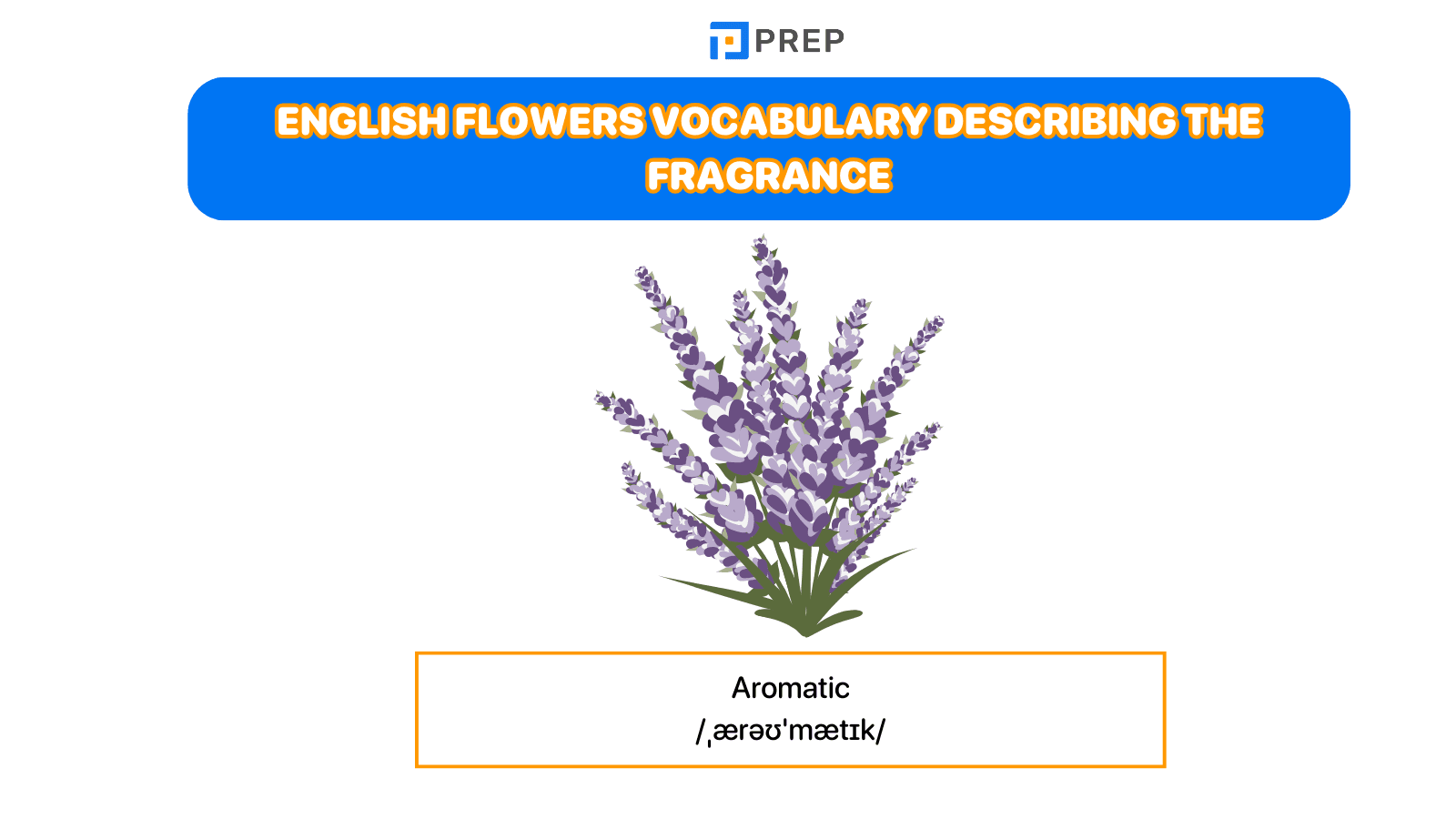
Lavender |
/ˈlæv.ən.də/ |
Purple flowering herb, known for its calming scent. |
|
Jasmine |
/ˈdʒæz.mɪn/ |
Small white flowers with a strong, sweet fragrance. |
|
Peony |
/ˈpiː.ə.ni/ |
Large, fluffy bloom often used in spring bouquets. |
|
Chrysanthemum |
/krəˈsæn.θə.məm/ |
Popular in Asia; means longevity or grief depending on culture. |
|
Marigold |
/ˈmær.ɪ.ɡəʊld/ |
Bright yellow or orange; often seen in festivals. |
|
Gardenia |
/ɡɑːˈdiː.ni.ə/ |
Creamy white flowers with a rich aroma. |
|
Violet |
/ˈvaɪə.lət/ |
Small purple or blue flowers; delicate and fragrant. |
|
Poppy |
/ˈpɒp.i/ |
Red flower that symbolizes remembrance, especially in war memorials. |
|
Carnation |
/kɑːˈneɪ.ʃən/ |
Ruffled petals; comes in many colors with different meanings. |
|
Hyacinth |
/ˈhaɪ.ə.sɪnθ/ |
Dense flower clusters; sweet scent and a spring bloomer. |
|
Magnolia |
/mæɡˈnəʊ.li.ə/ |
Large white or pink flowers on a tree; fragrant and symbolic of southern charm. |
|
Iris |
/ˈaɪ.rɪs/ |
Tall purple or blue flowers; named after the Greek goddess. |
|
Camellia |
/kəˈmiː.li.ə/ |
Rose-like blooms; very popular in East Asia. |
|
Hollyhock |
/ˈhɒl.i.hɒk/ |
Tall flowering plant with multiple layers of petals. |
|
Bluebell |
/ˈbluː.bel/ |
Bell-shaped flowers blooming in blue clusters. |
|
Foxglove |
/ˈfɒks.ɡlʌv/ |
Purple tubular flowers; beautiful but toxic. |
|
Daffodil |
/ˈdæf.ə.dɪl/ |
Yellow trumpet-like flower; a symbol of spring and renewal. |
|
Anemone |
/əˈnem.ə.ni/ |
Brightly colored with dark centers; delicate appearance. |
|
Zinnia |
/ˈzɪn.i.ə/ |
Hardy flowers that bloom in various colors. |
|
Snapdragon |
/ˈsnæpˌdræɡ.ən/ |
Fun flower that "snaps" open when squeezed. |
|
Geranium |
/dʒəˈreɪ.ni.əm/ |
Often used in pots and window boxes for bright blooms. |
|
Aster |
/ˈæs.tə/ |
Star-shaped flower; blooms in late summer. |
|
Lotus |
/ˈləʊ.təs/ |
Sacred flower in many cultures; floats on water. |
|
Freesia |
/ˈfriː.ʒə/ |
Bell-shaped flowers known for strong fragrance. |
|
Cosmos |
/ˈkɒz.mɒs/ |
Light-looking flowers with delicate petals. |
|
Lilac |
/ˈlaɪ.lək/ |
Pale purple flowers on trees or shrubs with sweet aroma. |
|
Wisteria |
/wɪˈstɪə.ri.ə/ |
Hanging clusters of purple flowers; often seen on archways. |
|
Begonia |
/bɪˈɡəʊ.ni.ə/ |
Colorful leaves and flowers; popular in warm climates. |
|
Dandelion |
/ˈdæn.də.laɪ.ən/ |
Yellow flower that turns into fluffy seed balls. |
|
Alstroemeria |
/ˌæl.strəʊˈmɪə.ri.ə/ |
Often called the Peruvian lily; long-lasting cut flowers. |
|
Buttercup |
/ˈbʌt.ə.kʌp/ |
Shiny yellow petals; common in meadows. |
|
Cyclamen |
/ˈsɪk.lə.mən/ |
Pink or white blooms that grow upside-down. |
|
Baby’s breath |
/ˌbeɪ.biz ˈbreθ/ |
Tiny white flowers used as fillers in bouquets. |
|
Morning glory |
/ˈmɔː.nɪŋ ˌɡlɔː.ri/ |
Vines that bloom early in the morning with trumpet-shaped flowers. |
This foundational vocabulary helps you describe scenes, write better essays, or simply recognize more words when reading or listening in English. You can explore flashcards, matching games, and worksheet-based exercises to reinforce your learning.
-
Strengthen these words with the IELTS Vocabulary Booster.
2. Rare and Exotic Flowers Vocabulary
In addition to common flowers, English vocabulary also includes a rich array of rare and exotic blooms. These flowers are often found in tropical climates, botanical gardens, or used symbolically in literature, art, and ceremonial settings. Learning these words not only enhances your descriptive skills but also brings more nuance and cultural depth to your English usage.
Here are some advanced flower names that are less common but highly expressive in writing and speaking:
|
Flower Name |
Pronunciation (IPA) |
Description |
|
Wisteria |
/wɪˈstɪə.ri.ə/ |
A cascading flower with long hanging clusters, usually in purple; symbolizes elegance and love. |
|
Chrysanthemum |
/krɪˈsæn.θə.məm/ |
Popular in East Asia, often represents longevity or mourning depending on culture. |
|
Hibiscus |
/hɪˈbɪs.kəs/ |
A large, bright flower common in tropical regions; often used in tea and skincare. |
|
Magnolia |
/mæɡˈnəʊ.li.ə/ |
Large, fragrant flowers found on trees; symbolic of nobility and grace. |
|
Peony |
/ˈpiː.ə.ni/ |
Lush, layered flower associated with prosperity and romance, especially in Chinese culture. |
|
Bird of Paradise |
/ˌbɜːd əv ˈpær.ə.daɪs/ |
Uniquely shaped flower resembling a bird in flight; native to South Africa. |
|
Protea |
/ˈprəʊ.ti.ə/ |
A symbol of diversity and transformation; known for bold appearance and found primarily in South Africa. |
|
Blue Lotus |
/bluː ˈləʊ.təs/ |
Sacred in ancient Egyptian culture; represents wisdom and spiritual awakening. |
|
Passionflower |
/ˈpæʃ.ənˌflaʊə/ |
An intricate flower symbolizing faith and sacrifice; native to the Americas. |
|
Amaryllis |
/ˌæm.əˈrɪl.ɪs/ |
Trumpet-shaped flower that blooms indoors; often seen around Christmas. |
|
Calla Lily |
/ˈkælə ˈlɪli/ |
Sleek, elegant white flower used in weddings and funerals; symbolizes purity. |
|
Camellia |
/kəˈmiː.li.ə/ |
Glossy evergreen with rose-like blooms; associated with admiration and perfection. |
|
Edelweiss |
/ˈeɪ.dəl.vaɪs/ |
A white alpine flower found in Europe; symbolizes devotion and rugged beauty. |
|
Frangipani |
/ˌfræn.dʒɪˈpæ.ni/ |
Strongly fragrant tropical flower also known as plumeria; often worn in the hair. |
|
Heliconia |
/ˌhel.ɪˈkəʊ.ni.ə/ |
Brightly colored, bird-shaped flower common in rainforests. |
|
Monkey Orchid |
/ˈmʌŋ.ki ˈɔː.kɪd/ |
Rare orchid species with a center resembling a monkey’s face; native to Ecuador. |
|
Queen of the Night |
/kwiːn əv ðə naɪt/ |
A cactus flower that blooms only at night for a few hours; highly fragrant and symbolic of rarity. |
|
Corpse Flower |
/kɔːps ˈflaʊə/ |
One of the largest and rarest flowers; known for its strong unpleasant smell. |
|
Lily of the Valley |
/ˈlɪl.i əv ðə ˈvæl.i/ |
Delicate bell-shaped flowers representing sweetness and purity. |
|
Torch Ginger |
/tɔːtʃ ˈdʒɪn.dʒə/ |
A striking red flower native to Southeast Asia; used in cooking and ceremonies. |
These rare and exotic flower names are particularly useful in storytelling, academic writing, advanced description, or even when traveling and visiting botanical gardens. They also commonly appear in literature, myths, and cultural festivals across different regions.
-
Consolidate these terms with the 1500 common english words list.
3. Vocabulary for Parts of a Flower
Understanding the parts of a flower in English not only helps you describe plants more accurately but also enriches your vocabulary in topics like biology, gardening, nature, and even exam contexts such as IELTS or TOEFL.
Below is a list of essential vocabulary used to describe the different parts of a flower. You’ll find these words useful when reading texts related to nature or when participating in discussions about plants.
|
Part of the Flower |
Pronunciation (IPA) |
Description |
|
Petal |
/ˈpɛtl/ |
The colorful part of a flower that attracts pollinators like bees and butterflies. |
|
Stem |
/stɛm/ |
The main support of the flower that holds it upright and transports water and nutrients. |
|
Leaf |
/liːf/ |
The flat green part attached to the stem that helps with photosynthesis. |
|
Bud |
/bʌd/ |
A small undeveloped flower; it blooms into a full flower over time. |
|
Thorn |
/θɔːn/ |
A sharp, pointed part of some plants used for protection. |
|
Pollen |
/ˈpɒlən/ |
Fine dust produced by the male part of a flower; carried to other flowers to allow reproduction. |
|
Stamen |
/ˈsteɪ.mən/ |
The male reproductive part of a flower; it produces and spreads pollen. |
|
Pistil |
/ˈpɪs.təl/ |
The female reproductive part of a flower where seeds are formed. |
|
Sepal |
/ˈsiː.pəl/ |
The small leaves under a flower that protect it before it blooms. |
|
Receptacle |
/rɪˈsep.tə.kəl/ |
The thick part of the stem that holds the flower and connects it to the plant. |
|
Ovary |
/ˈəʊ.vər.i/ |
The base of the pistil where seeds begin to develop. |
|
Anther |
/ˈæn.θə/ |
A part of the stamen that contains the pollen. |
|
Filament |
/ˈfɪl.ə.mənt/ |
A thin stalk that holds up the anther. |
|
Style |
/staɪl/ |
The slender part of the pistil that connects the stigma to the ovary. |
|
Stigma |
/ˈstɪɡ.mə/ |
The top of the pistil where pollen lands to begin fertilization. |
To visualize and better understand these parts, it’s highly effective to use labeled diagrams, flashcards, or 3D animations. Many of these terms are frequently taught in school science classes or used during botanical tours and nature discussions.
II. Useful Adjectives and Collocations to Describe Flowers
Knowing how to describe flowers not only helps you speak more naturally but also makes your language more expressive and detailed. Whether you’re talking about a bouquet writing a descriptive piece, or preparing for an English exam, using the right adjectives and collocations will elevate your vocabulary.
Descriptive Adjectives for Flowers
These adjectives help describe a flower’s appearance, color, condition, and fragrance.
|
Adjective |
Meaning |
Example Sentence |
|
Blooming |
In full flower |
The garden is full of blooming roses. |
|
Fragrant |
Smelling pleasant |
Jasmine is a small but fragrant flower. |
|
Delicate |
Soft and fragile |
Lily of the valley has small, delicate petals. |
|
Vibrant |
Bright and full of energy |
Sunflowers have vibrant yellow petals. |
|
Wilted |
Drooping from age/lack of water |
The flowers looked wilted after a week. |
|
Fresh |
Recently picked or newly bloomed |
She gave me a bunch of fresh tulips. |
|
Elegant |
Graceful in form and appearance |
Calla lilies are simple but elegant. |
|
Exotic |
Rare or from a faraway place |
Orchids are known for their exotic beauty. |
|
Lush |
Rich in color or form |
The bush was covered in lush pink blossoms. |
|
Colorful |
Containing many colors |
The bouquet was colorful and cheerful. |
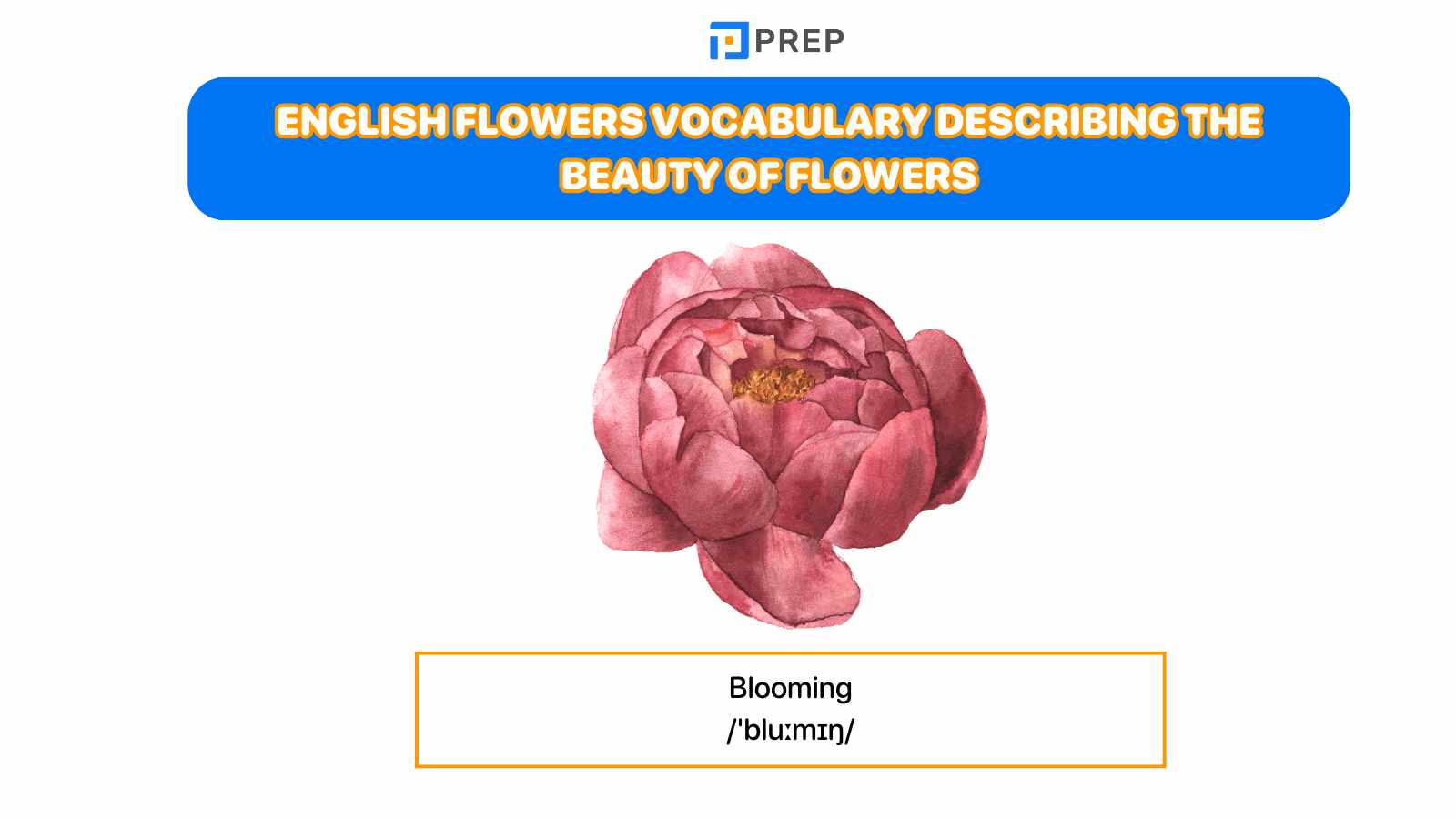
Descriptive Adjectives for Flowers
These adjectives help describe a flower’s appearance, color, condition, and fragrance.
|
Adjective |
Meaning |
Example Sentence |
|
Blooming |
In full flower |
The garden is full of blooming roses. |
|
Fragrant |
Smelling pleasant |
Jasmine is a small but fragrant flower. |
|
Delicate |
Soft and fragile |
Lily of the valley has small, delicate petals. |
|
Vibrant |
Bright and full of energy |
Sunflowers have vibrant yellow petals. |
|
Wilted |
Drooping from age/lack of water |
The flowers looked wilted after a week. |
|
Fresh |
Recently picked or newly bloomed |
She gave me a bunch of fresh tulips. |
|
Elegant |
Graceful in form and appearance |
Calla lilies are simple but elegant. |
|
Exotic |
Rare or from a faraway place |
Orchids are known for their exotic beauty. |
|
Lush |
Rich in color or form |
The bush was covered in lush pink blossoms. |
|
Colorful |
Containing many colors |
The bouquet was colorful and cheerful. |
Phrasal Verbs and Idioms Related to Flowers
Using idiomatic language can make your English sound more fluent and expressive.
|
Phrase / Idiom |
Meaning |
Example |
|
To blossom (emotionally/personally) |
To grow or develop beautifully |
She has really blossomed this year at work. |
|
To flower (creative ideas) |
To reach full potential |
His creativity began to flower after college. |
|
Pushing up daisies |
A humorous way to say “dead” |
That old car is finally pushing up daisies. |
|
Fresh as a daisy |
Energetic and healthy |
After a long nap, I feel fresh as a daisy. |
|
A late bloomer |
Someone who develops later than others |
He was a late bloomer but now he's thriving. |
By combining the right adjectives, collocations, and idioms, you can describe flowers not only in appearance but also symbolically in emotions and culture — a great skill for both daily and academic English.
III. Flowers Vocabulary for IELTS and English Exams
Flowers vocabulary can be surprisingly useful in a variety of English exams — especially in IELTS Speaking Part 1 and Part 2, as well as in writing descriptive texts or essays about nature, traditions, and emotions. Even though “flowers” is not always a major topic, it frequently appears as a supporting theme in questions about seasons, celebrations, environment, or personal preferences.
IELTS Speaking Part 1 – Common Questions About Flowers
These are simple, personal-style questions that require short yet detailed responses.
Common questions:
-
Do you like flowers?
-
What flowers do you know?
-
Do you grow flowers at home?
-
When was the last time someone gave you flowers?
Useful vocabulary: bouquet, fragrance, fresh-cut flowers, roses, tulips, vibrant colors, seasonal flowers, blooming in spring, gift-wrapped
Example response:
Q: Do you like flowers?
A: Yes, I do. I find flowers very refreshing and uplifting. My favorite is the lavender flower because of its calming fragrance and beautiful purple color. I often buy a small bunch to decorate my study desk.
IELTS Speaking Part 2 – Sample Cue Card: "Describe a Flower You Like"
Cue Card Example: Describe a flower you like. You should say:
-
what it is
-
where it usually grows
-
when you first saw it
-
and explain why you like it
Sample notes & keywords to use:
-
Peony / orchid / lily
-
Wedding bouquet / childhood memory / botanical garden
-
Delicate petals, subtle scent, symbol of love or peace
-
Makes me feel relaxed / reminds me of someone
Model Answer (Shortened):
I’d like to describe the lotus flower, which is not only my favorite flower but also the national flower of my country. It usually grows in ponds and lakes and is especially common during the summer. I first noticed it during a school trip to a lake. What I love about the lotus is its symbolic meaning — purity and growth even from muddy water. It also has a unique fragrance and an elegant appearance, which makes it really special to me.
Flower Vocabulary in Writing Tasks
Whether you're writing a descriptive paragraph, an essay on nature and the environment, or even a letter (in IELTS General), flower vocabulary can make your writing more colorful and precise.
Useful phrases:
-
“A field of brightly colored wildflowers”
-
“Fragrant roses lined the garden path”
-
“Symbolizing peace and remembrance”
-
“Gifted a bouquet for her graduation”
-
“Floral decorations enhanced the ceremony”
In Writing Task 1 (IELTS):
You may need to describe a diagram or process that includes flowering plants (e.g., the life cycle of a flower), requiring use of words like: petal, stem, pollen, germinate, bud, bloom.
In Writing Task 2:Useful when discussing topics like environmental conservation, urban greenery, nature tourism, or traditional customs involving flowers.
By practicing how to incorporate flower-related vocabulary into your answers with correct grammar, pronunciation, and context, you’ll improve not only your lexical resource but also your fluency, coherence, and precision — all key marking criteria in the IELTS test.
IV. Achieve Your Dream IELTS Band Score
PREP has helped you grasp 50 English flowers vocabulary describing beauty, fragrance, and the meanings of some flowers. If you’re ready to boost your IELTS band score, check out our expert-led courses below:
-
IELTS online course: Break Barriers, Achieve Band 7

Hi I'm Chloe, and I am currently serving as an Product Content Administrator at Prep Education. With over five years of experience in independent online IELTS study and exam preparation, I am confident in my ability to support learners in achieving their highest possible scores.
Comment
Premium content
View all



Personalized roadmap


Most read



UEN: 202227322W
Address: 114 LAVENDER STREET, #11-83 CT HUB 2, SINGAPORE (338729)