Exit vs Exist: Meaning, Differences, and Common Mistakes
Exit and exist are two commonly confused English words with very different meanings. This guide clearly explains how each word is used, highlights key differences, points out frequent learner mistakes, and provides easy memory tips and practice to help you use them correctly with confidence.

I. What is Exit and Exits?
When learning English, it's common for learners to get confused between similar-looking words like exit and exist. Although they appear almost identical at a glance, they have completely different meanings, pronunciations, and uses in grammar.
According to the Cambridge and Oxford Learner's Dictionaries:
Exit is pronounced as /ˈek.sɪt/, this word acts as a noun and a verb.
-
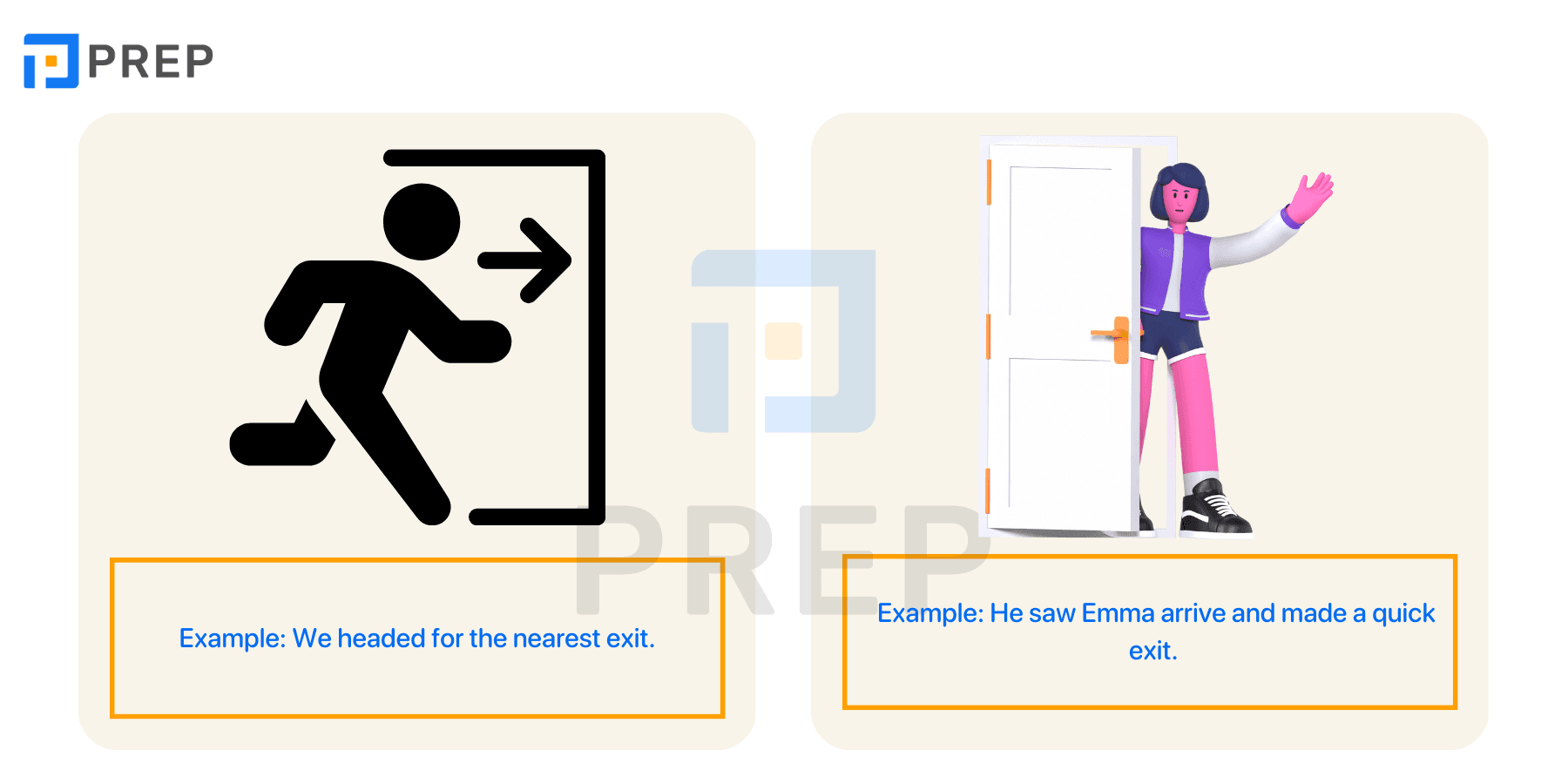
Exit acts as a noun, meaning: the door through which you might leave a building or large vehicle/ the act of leaving a place, especially a theater stage. For example:
-
We headed for the nearest exit.
-
He saw Emma arrive and made a quick exit.
-
-
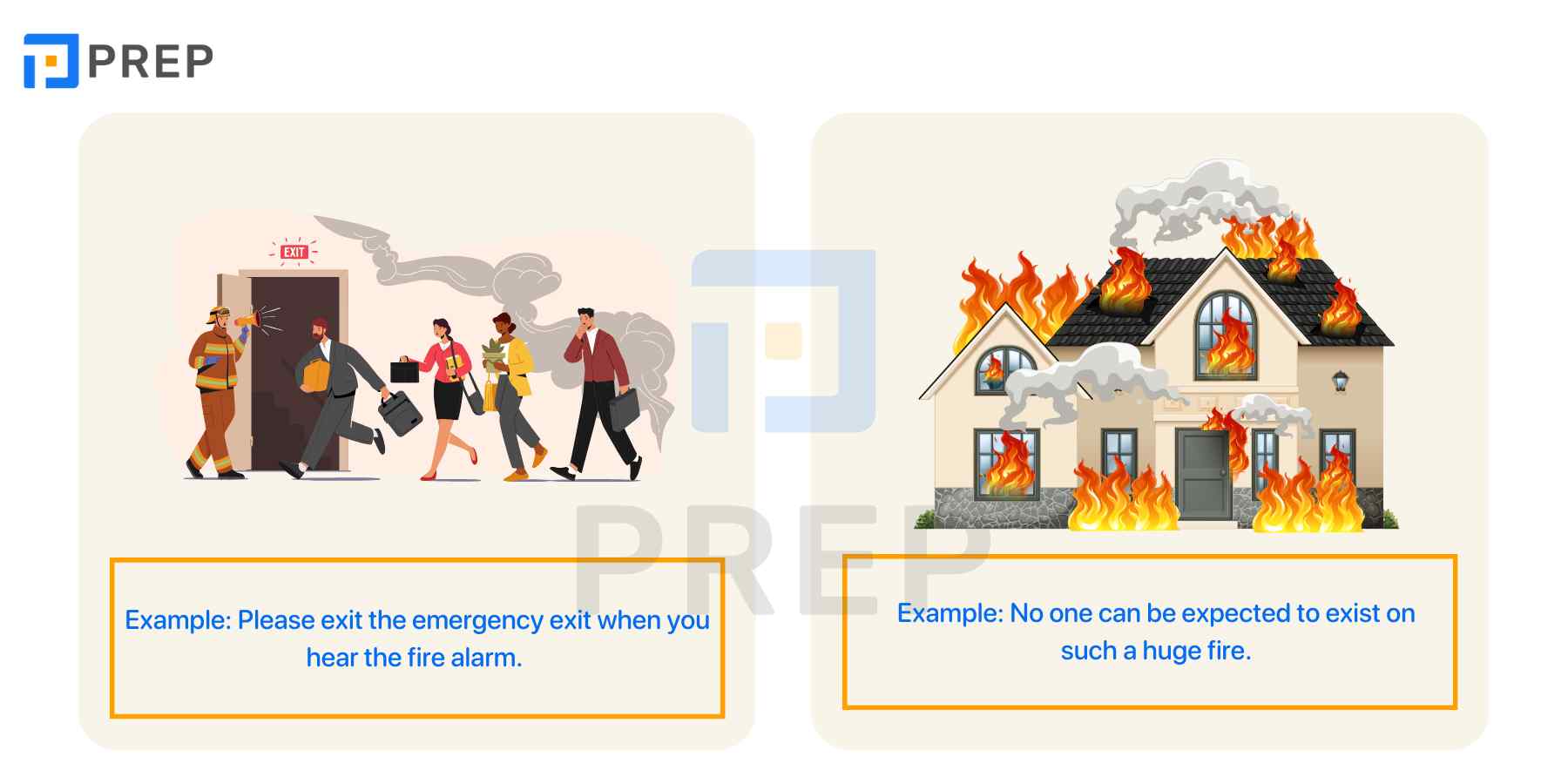
Exit acts as a verb, meaning: to leave a place such as a building, room, or large vehicle. For example: Please exit the theater by the side doors.
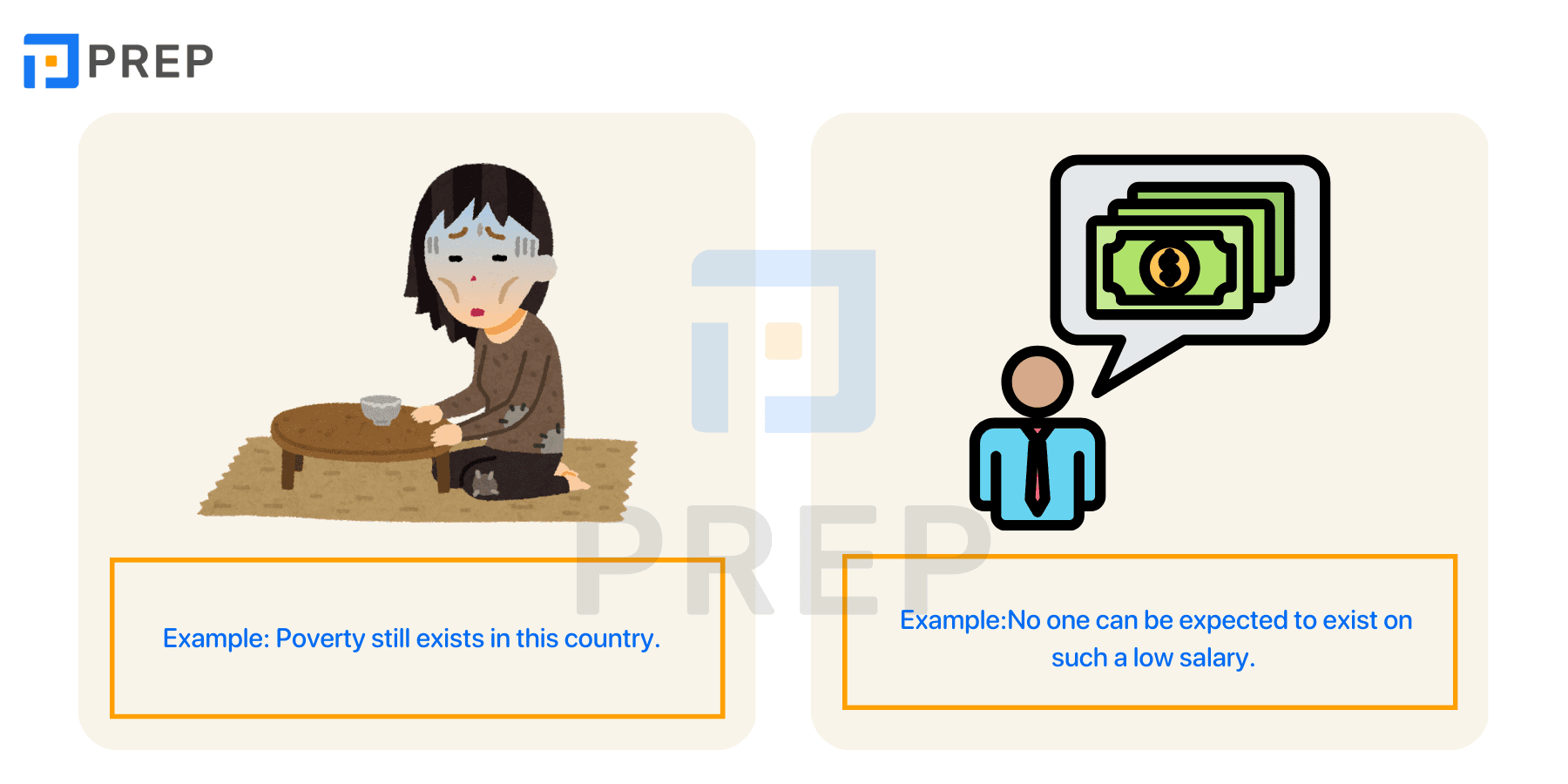
Exist is pronounced as/ɪɡˈzɪst/. Exist acts as a verb, meaning: to be, to be real, to live in difficult conditions. For example:
-
I don't think ghosts exist.
-
Poverty still exists in this country.
-
No one can be expected to exist on such a low salary.
Many English learners confuse the two due to their spelling and pronunciation similarities, but they function differently in sentences. One is about leaving, while the other is about being. This difference in meaning is essential for clear, correct communication.
This type of confusion is similar to other commonly mixed words such as assure ensure and insure, where meaning and usage matter more than spelling.
II. Exit vs Exist – Key Differences Explained
At first glance, "exit" and "exist" may seem similar because they share many of the same letters. However, their meanings, grammar roles, and usage in real-life situations are entirely different. Understanding these key differences can help prevent common mistakes in writing, speaking, and test-taking.
|
Feature |
Exit |
Exist |
|
Part of Speech |
Noun and Verb |
Verb only |
|
Meaning |
To go out, to leave; a way out of a place |
To be real, to be alive, to be present |
|
Function |
Describes an action of leaving or a place to leave through |
Describes a state of being or presence |
|
Common Usage (context) |
Buildings, transport, events (e.g., "emergency exit", "exit the program") |
Philosophy, science, life, existence (e.g., "Do aliens exist?") |
|
Pronunciation (IPA) |
/ˈɛk.sɪt/ or /ˈɛɡ.zɪt/ |
/ɪɡˈzɪst/ |
|
Spelling Difference |
Ends with “-it” (short and sharp) |
Ends with “-ist” (longer sound) |
|
Example Sentence 1 |
Please use the nearest exit during an emergency. |
Some people believe that ghosts exist. |
|
Example Sentence 2 |
He exited the meeting early. |
Dinosaurs no longer exist. |
|
Common Errors |
Confusing the verb form "exit" with "exist" when writing fast |
Mispronunciation due to overlapping sounds with "exit" |
|
Memory Tip |
Think of “Exit = Ex-it → Ex-it = going out” |
Think of “Exist = Is still → something still is or is present” |
How to Remember the Difference Between Exit and Exist?
-
Use Word Association - One of the easiest ways to remember the difference is by breaking the words down:
-
Exit = Ex + It
Imagine you're saying “Ex-it” — like you're telling someone (an ex-employee, for example) to leave. This aligns with the idea of going out or leaving. -
Exist = Is Still
The word “exist” contains the sound “is,” which relates to something that still is, or still exists in the world. This helps remind you that "exist" is about being or presence, not motion.
-
-
Visual Memory Trick - Picture this:
-
Exit = Think of a green EXIT sign above a door. It signals movement out of a place.
-
Exist = Imagine a floating ghost or philosopher saying, “I exist!” — emphasizing presence or reality.
-
Creating mental images can make the difference between the two much easier to recall, especially during conversations or in exams.
-
Focus on Function - Ask yourself:
-
Am I talking about leaving (movement)? → Use exit.
-
Am I talking about being alive, present, or real? → Use exist.
-
-
Practice with Contextual Sentences - Repeating short, clear sentences with both words used correctly helps lock in the difference. For example:
“He found the exit but questioned if he should exist beyond it.”
This helps you reinforce the contrast in meaning through rhythm and context.
By combining these techniques—word breakdown, visuals, logic questions, and practice—you’ll be able to confidently use exit and exist without second-guessing.
Learners often face the same issue with prepositions like near to near and next to, which look similar but are used differently in context.
III. Exercises to distinguish Exit and Exist
Now that you understand the differences between exit and exist, it's time to practice using them correctly. The following exercises will help you test your understanding and apply both words in real-life contexts.
Exercise 1: Fill in the Blank
Choose the correct word: exit or exist.
-
Dinosaurs no longer __________.
-
Please look for the nearest emergency __________.
-
Some people believe ghosts still __________ in the world.
-
He quickly __________ the building after the fire drill.
-
The idea that we __________ in multiple dimensions is a popular theory.
Exercise 2: Identify the Error
Each sentence below contains either the correct usage or a mistake. Identify if the sentence is Correct or Incorrect, and fix any mistake.
-
He found the exist and used it quickly.
-
Some scientists think life may exist on Mars.
-
She exited the hall after the presentation.
-
They don’t know where the humans exit before civilization.
Answers
[prep_collapse_expand open_text="View more" close_text="Show less"]
|
Exercise 1 |
Exercise 2 |
|
|
[/prep_collapse_expand]
Regular practice like this not only builds accuracy but also helps improve IELTS writing and reading skills over time.
IV. Start Your IELTS Journey
PREP hopes that through this article, you have understood the definitions, usages, and differentiation between Exit and Exist. Looking to break through your IELTS plateau? Discover our advanced coaching programs below:
-
IELTS preparation course: Master Every Section of IELTS

Hi I'm Chloe, and I am currently serving as an Product Content Administrator at Prep Education. With over five years of experience in independent online IELTS study and exam preparation, I am confident in my ability to support learners in achieving their highest possible scores.
Comment
Premium content
View all



Personalized roadmap


Most read





UEN: 202227322W
Address: 114 LAVENDER STREET, #11-83 CT HUB 2, SINGAPORE (338729)