Personality Vocabulary List with Meanings and Examples
Master how to describe people confidently with this complete guide to personality vocabulary. Discover positive and negative adjectives, idioms, and advanced traits for IELTS, job interviews, and daily conversations—with examples, meanings, and practice exercises.
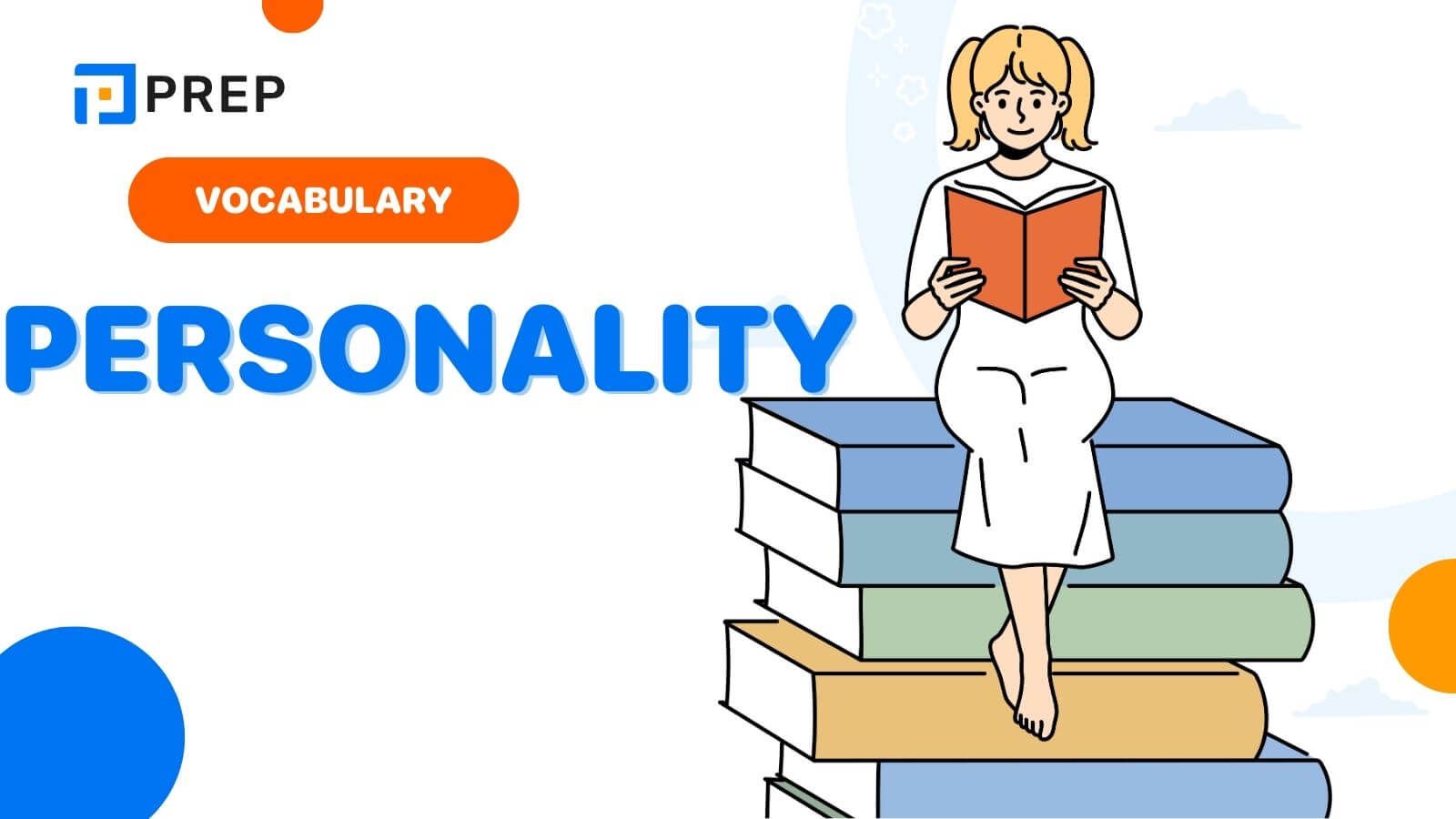
I. Common Personality Vocabulary for Beginners
When learning English, one of the most useful areas of vocabulary is how to describe people — especially their personality. Whether you’re talking about yourself in an interview or describing a friend in daily conversation, personality vocabulary allows you to express your thoughts more clearly and personally.
In this section, we will look at the most common personality adjectives that beginners can start using right away — grouped into positive and negative traits.
1. Vocabulary List of Positive Traits
When describing someone’s good personality, we use positive adjectives. These words help you talk about people you admire, describe yourself in a job interview, or write about friends and family. Positive traits show that someone is kind, polite, responsible, or fun to be around. Below is a list of commonly used adjectives that are easy to learn and use.
|
Adjective |
Meaning |
Example sentence |
|
kind |
caring and nice to others |
She is very kind to animals. |
|
friendly |
easy to talk to; warm and open |
Everyone likes him because he is friendly. |
|
polite |
well-mannered and respectful |
He is always polite and says "please" and "thank you." |
|
helpful |
ready and willing to help others |
The staff at the school were very helpful. |
|
honest |
tells the truth |
I trust her because she is honest. |
|
patient |
calm and does not get angry easily |
A good teacher is always patient with students. |
|
responsible |
does tasks well and on time |
She is responsible and finishes her work early. |
|
generous |
gives and shares with others |
He is generous and often gives gifts to his friends. |
|
hardworking |
puts a lot of effort into work |
My mother is hardworking and never gives up. |
|
creative |
has new and interesting ideas |
She is creative and loves painting and writing. |
|
cheerful |
happy and in a good mood |
He is cheerful and makes people laugh. |
|
confident |
sure of oneself |
Alice is confident when she speaks in public. |
|
funny |
makes people laugh |
My uncle is funny and tells great jokes. |
|
optimistic |
always sees the good side of things |
Even in bad situations, she stays optimistic. |
|
loyal |
always supports friends/family |
A loyal friend will always be there for you. |
How to Use These Words
-
Describe someone you know: "My best friend is friendly, honest, and hardworking."
-
Use in job interviews or introductions: "I am a responsible and polite person who works well in a team."
To study more topic-based vocabulary, see english vocabulary by topics.
2. Vocabulary List of Negative Traits
Not all personality traits are positive. Sometimes, we need to describe people who are difficult to work with, impolite, or dishonest. Knowing how to express these negative traits in English can help you describe characters in stories, express honest opinions, or understand people better in real-life situations.
|
Adjective |
Meaning |
Example sentence |
|
lazy |
does not like to work or make effort |
He is lazy and never finishes his homework. |
|
rude |
not polite; disrespectful |
It’s rude to talk while someone else is speaking. |
|
selfish |
only cares about oneself |
She is selfish and doesn’t share with others. |
|
impatient |
gets annoyed when things take time |
He becomes impatient when he has to wait. |
|
dishonest |
does not tell the truth |
A dishonest person often lies to get what they want. |
|
arrogant |
thinks they are better than others |
He’s arrogant and never listens to other opinions. |
|
stubborn |
refuses to change ideas or behavior |
My brother is stubborn and never admits when he’s wrong. |
|
moody |
changes mood often and suddenly |
She is moody—happy one moment, angry the next. |
|
aggressive |
often angry and ready to fight |
His aggressive behavior scares people around him. |
|
unreliable |
cannot be trusted to do what is needed |
Don’t count on him—he’s very unreliable. |
|
jealous |
angry or upset because of envy |
She gets jealous when others succeed. |
|
messy |
not tidy or organized |
His room is always messy and full of clothes. |
|
grumpy |
easily annoyed or always in a bad mood |
Jack is grumpy in the mornings before coffee. |
|
bossy |
likes to tell others what to do |
Her bossy attitude makes teamwork difficult. |
How to Use These Words Carefully
-
It’s important to use negative words politely and only when appropriate, especially in professional or formal situations.
-
In writing or speaking exams, these adjectives can be used to describe character flaws in a realistic or balanced way.
Example Sentences
-
"My old roommate was a bit messy and unreliable, but also very funny."
-
"Don't be so impatient — good things take time."
II. Intermediate & Advanced Personality Vocabulary
As you move beyond beginner English, it’s important to upgrade your vocabulary to describe people more accurately and thoughtfully. Instead of using only simple adjectives like "nice" or "good," more advanced learners can use richer, more precise words that convey specific characteristics, emotions, and social behaviors.
1. Descriptive Adjectives for Complex Personalities
As your English improves, you’ll need more precise words to describe people who do not fit basic labels like “nice” or “mean.” Many personality types are multifaceted, subtle, or situation-dependent, and using advanced adjectives allows you to express these differences more clearly.
|
Adjective |
Meaning |
Example sentence |
|
ambitious |
strongly motivated to succeed or achieve goals |
He’s ambitious and hopes to become a CEO by the age of 30. |
|
assertive |
confident in expressing opinions respectfully |
A good leader needs to be assertive, not aggressive. |
|
charismatic |
naturally charming and able to influence others |
The speaker was charismatic and held everyone's attention. |
|
empathetic |
able to understand and share others’ emotions |
Nurses must be empathetic and caring toward patients. |
|
introverted |
quiet and inward-focused; gets energy from alone time |
She’s introverted and enjoys reading more than going to parties. |
|
extroverted |
outgoing and energized by being around people |
He’s extroverted and loves being the center of attention. |
|
resilient |
able to recover from stress or difficulty |
She’s resilient and never gives up, even after failure. |
|
insecure |
lacking self-confidence |
He’s insecure about his appearance, especially in public. |
|
critical |
often pointing out flaws or mistakes |
She can be a bit critical, but her feedback is usually helpful. |
|
idealistic |
guided by strong moral values or dreams |
He’s idealistic and believes he can change the world. |
|
pragmatic |
realistic and practical, focused on outcomes |
She prefers a pragmatic approach to solving problems. |
|
spontaneous |
acting without planning, often in a fun or risky way |
He’s spontaneous and loves random weekend road trips. |
Tips for Using Complex Descriptive Adjectives
-
Match the word to context: “Resilient” may be appreciated in a job setting, while “spontaneous” fits casual conversations.
-
Balance strengths and weaknesses: Use both positive and neutral terms to keep descriptions realistic.
-
Use these words in combination: “She is charismatic but sometimes overly assertive.”
By using more descriptive and specific vocabulary, you will sound more natural and expressive—especially when writing essays, describing people in exams (like IELTS), or having nuanced conversations in English.
-
To describe ongoing personality change, review present perfect continuous tense.
2. Contrasting Vocabulary: Synonyms & Opposites
To describe people more accurately in English, it’s not enough to only know a few common adjectives. You should also learn synonyms (words with similar meanings) and opposites (antonyms). This helps you:
-
Avoid repeating the same words
-
Choose the right tone for different situations
-
Build more precise and interesting sentences
Knowing how to compare and contrast personality traits will also improve your writing, especially in essays, stories, or speaking exams like IELTS and TOEFL.
Examples of Synonyms: Expand Your Range
|
Basic Word |
Stronger/Milder Synonym |
Usage Example |
|
nice |
kind, friendly |
Everyone says she’s kind and easy to talk to. |
|
smart |
intelligent, clever |
He’s clever with solving technical problems. |
|
shy |
quiet, reserved |
She's quite reserved in social situations. |
|
confident |
self-assured, bold |
He’s confident when giving presentations. |
|
mean |
rude, unkind |
That comment was very unkind. |
These alternatives help you adjust your tone and make the description more accurate. For example, “clever” is often more positive than “smart,” and “reserved” can sound more neutral than “shy.”
-
For guidance on noun use when describing people, see common nouns and proper nouns.
Examples of Opposites: Create Contrast
|
Positive Trait |
Opposite (Negative) |
Example Sentence with Contrast |
|
generous |
selfish |
She’s generous, unlike her brother who is selfish. |
|
confident |
insecure |
Tom looks confident, but he often feels insecure inside. |
|
humble |
arrogant |
True leaders are humble, not arrogant. |
|
patient |
impatient |
Be patient — don’t act impatient when things go wrong. |
|
optimistic |
pessimistic |
She’s optimistic, while her coworker sees only the worst. |
Using contrast makes your language more dynamic and realistic. It's especially useful for highlighting personality differences between people.
3. Idiomatic Expressions to Describe People
In everyday English, especially in spoken language and informal writing, native speakers don’t always describe people with single adjectives like kind or friendly. Instead, they often use idiomatic expressions—phrases whose meanings aren’t always obvious from the individual words.
Learning idioms allows you to:
-
Sound more natural and fluent
-
Better understand TV shows, conversations, and internet content
-
Add personality and nuance to your speech and writing
|
Idiomatic Expression |
Meaning |
Example Sentence |
|
a people person |
someone who enjoys being around others |
She's a people person and thrives in team settings. |
|
a go-getter |
someone who is ambitious and proactive |
He’s a real go-getter who never waits for things to happen. |
|
a social butterfly |
someone who is very sociable and enjoys group events |
At any party, you’ll find her — she’s a social butterfly. |
|
a control freak |
someone who needs to be in charge of everything |
My roommate is a control freak when it comes to keeping things tidy. |
|
a worrywart |
someone who worries all the time |
Don’t be such a worrywart — everything will be fine. |
|
set in their ways |
resistant to change or new ideas |
My grandfather is very set in his ways and avoids new technology. |
|
the life of the party |
someone who brings energy and fun to social events |
Jake is always the life of the party at work events. |
|
a lone wolf |
someone who prefers to be alone |
He works best as a lone wolf, focused and independent. |
Tips for Learning and Using Idioms
-
Use idioms appropriately: Some expressions are playful or casual and may not suit formal writing.
-
Pair with traits: Idioms often work well alongside traditional adjectives for style and detail.
Example: "She's confident and a real go-getter." -
Practice with role-play or dialogue writing: Use these idioms in a mock introduction or character description.
The more you hear and use idiomatic expressions, the more fluent and relatable your English will sound—especially in speaking exams or casual conversation.
III. How to Use Personality Vocabulary in Real Life
Learning new vocabulary is only useful if you can apply it naturally in real situations. Personality adjectives and expressions are especially important because they help you talk about yourself and others comfortably, both in formal and informal settings.
In IELTS and Other English Exams
In exams like IELTS Speaking or Writing, describing people is a common task. You may be asked to talk about:
-
A person you admire
-
A friend or family member
-
Your ideal colleague or teacher
Using varied personality vocabulary helps you express ideas more precisely and achieve higher scores for lexical resource.
Examples:
-
“My father is very hardworking and supportive. He always encourages me to do my best.”
-
“She’s not only friendly but also ambitious. She has big plans for her future.”
Tip: Combine adjectives and idiomatic expressions to make your speaking more natural. For example: “She’s very down-to-earth and a real people person.”
-
For additional grammar support, see learn english grammar.
In Job Interviews and Self-Introductions
When talking about yourself in professional settings, personality vocabulary helps you describe your strengths, work style, and values.
Useful adjectives for interviews:
-
Responsible
-
Reliable
-
Adaptable
-
Detail-oriented
-
Confident
-
Honest
Example introduction:
“Hi, my name is Linh, and I would describe myself as reliable, organized, and a strong team player. I enjoy working in fast-paced environments and solving problems creatively.”
Tip: Avoid repeating the word “good.” Use more specific vocabulary to be clear and memorable.
In Everyday Conversations
Describing people comes up all the time in casual conversations — when you're:
-
Telling a story
-
Talking about a friend or coworker
-
Sharing your opinion about someone’s behavior
Example sentences:
-
“She’s really easygoing. Everyone loves working with her.”
-
“He’s a bit moody in the morning but always helpful once he’s awake.”
-
“My new classmate is super outgoing — she made friends with everyone on the first day.”
Tip: In informal settings, you can also use idioms and exaggeration for fun, such as:
"He’s the life of the party!" or "I’m a total worrywart before exams."
Understanding when and how to use personality vocabulary in different contexts will help you speak naturally, write clearly, and connect better with others in English.
-
For targeted exam practice, try IELTS Vocabulary Booster.
This article provides some detailed English vocabulary words related to personality compiled by PREP. I hope that you Preppies will skillfully apply this vocabulary in your exams as well as in your daily communication!

Hi I'm Chloe, and I am currently serving as an Product Content Administrator at Prep Education. With over five years of experience in independent online IELTS study and exam preparation, I am confident in my ability to support learners in achieving their highest possible scores.
Comment
Premium content
View all
Personalized roadmap


Most read


UEN: 202227322W
Address: 114 LAVENDER STREET, #11-83 CT HUB 2, SINGAPORE (338729)