Useful Collocations with Tip You Should Know
This guide explains common collocations with the word “tip” in English. You will learn useful phrases, meanings, and example sentences that help you use “tip” naturally in conversations, academic writing, and English exams such as IELTS.
Keynote – Collocations with Tip
Collocations with “tip” are essential for giving advice, making recommendations, and discussing gratuities in both everyday and professional English. Choosing the right combinations allows you to sound fluent, clear, and helpful in a variety of situations.
-
Key combinations: give a tip, share a tip, leave a tip, helpful tip, valuable tip, quick tip, tips for success, tip on (doing something).
-
Main contexts: daily conversation, education, business communication, service industry, self-help articles, and IELTS tasks.
-
Common mistakes: using unnatural combinations (e.g., “do a tip” instead of “give a tip”) or misusing expressions. Mastering these collocations helps your English sound natural, practical, and precise.
I. What Is a Collocation with Tip?
In English, a collocation is a natural pairing of words that are frequently used together by native speakers. With the noun “tip,” there are specific verbs, adjectives, and phrases that regularly combine to express advice, guidance, or the act of giving a small payment for service in both informal and formal situations.
Key points about collocations with “tip”:
-
A collocation with “tip” is a commonly used phrase where “tip” pairs with verbs, adjectives, or prepositions, such as “give a tip,” “helpful tip,” “tip for success,” or “leave a tip.”
-
These combinations are essential for discussing advice, best practices, service industry etiquette, and practical recommendations in daily conversation, business, or academic writing.
-
Using natural collocations with “tip” helps you sound more fluent when advising, recommending, or talking about payment for service.
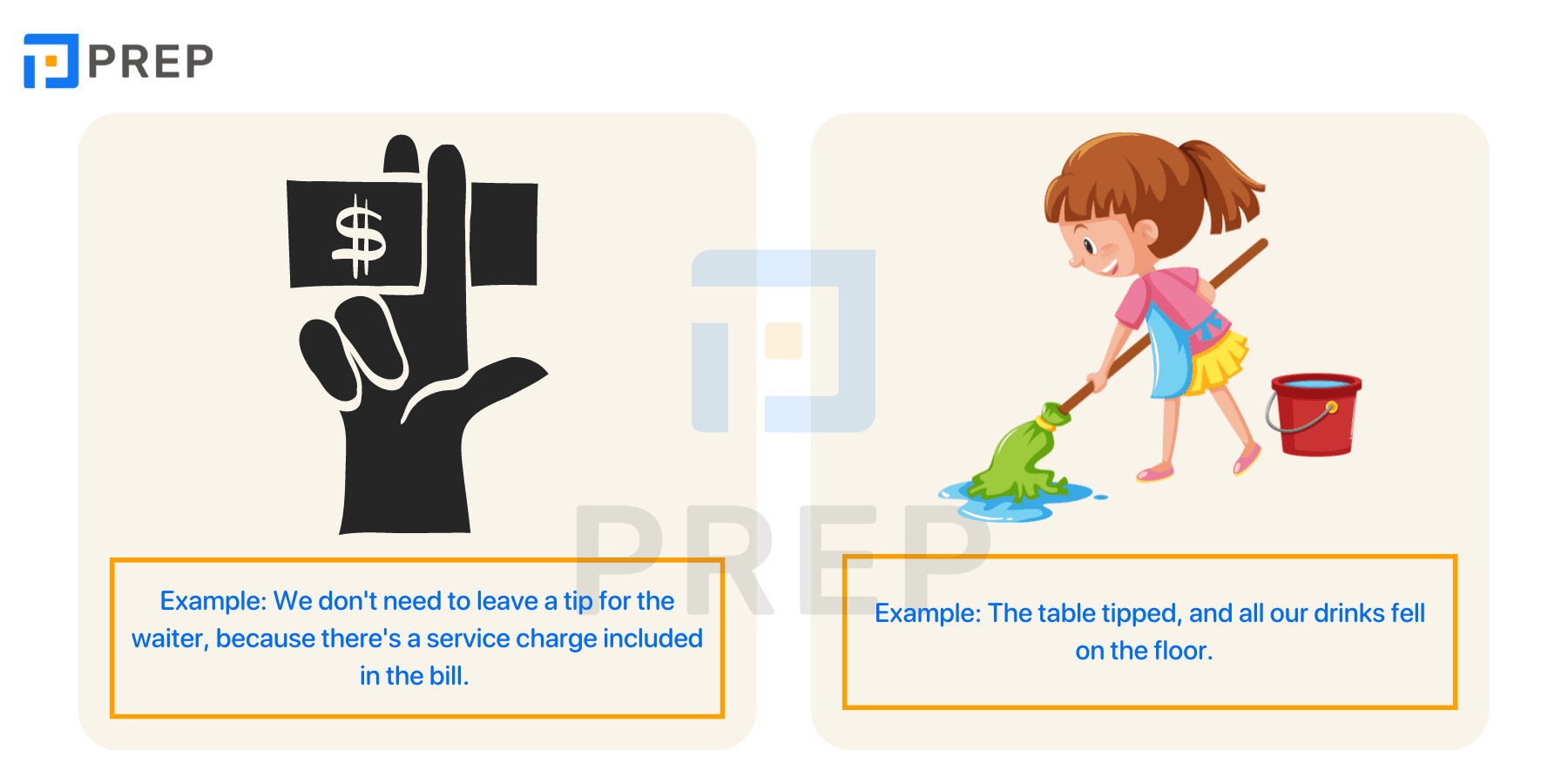
You can explore collocations with have to understand similar patterns.
For example:
-
We say “give a tip” (not “do a tip”) when offering advice or leaving money for good service.
-
“Helpful tip” and “quick tip” are natural and positive ways to recommend practical suggestions.
-
“Tip for success” is a standard phrase in education and self-improvement contexts.
-
Using inaccurate phrases like “take tip” or “make a tip” often sounds awkward.
You can also review collocations with solution to develop problem-solving ideas.
II. Common Collocation Patterns with Tip
Collocations with “tip” often appear in fixed patterns that help you express advice, recommendations, and gratuities naturally in English.
Verb + Tip Collocations
-
give a tip
-
offer a tip
-
share a tip
-
leave a tip
-
receive a tip
-
ask for a tip
-
follow a tip
-
provide a tip
-
get a tip
-
accept a tip
Example: “The waiter was friendly, so we decided to leave a tip.”
Adjective + Tip Collocations
-
helpful tip
-
useful tip
-
practical tip
-
great tip
-
quick tip
-
valuable tip
-
best tip
-
simple tip
Example: “Here’s a helpful tip for learning new vocabulary.”
Tip + Prepositional Phrase/Set Expression
-
tip for (something): tip for success, tip for beginners
-
tip on (doing something): tip on saving money, tip on pronunciation
-
tip about (a topic): tip about healthy eating
-
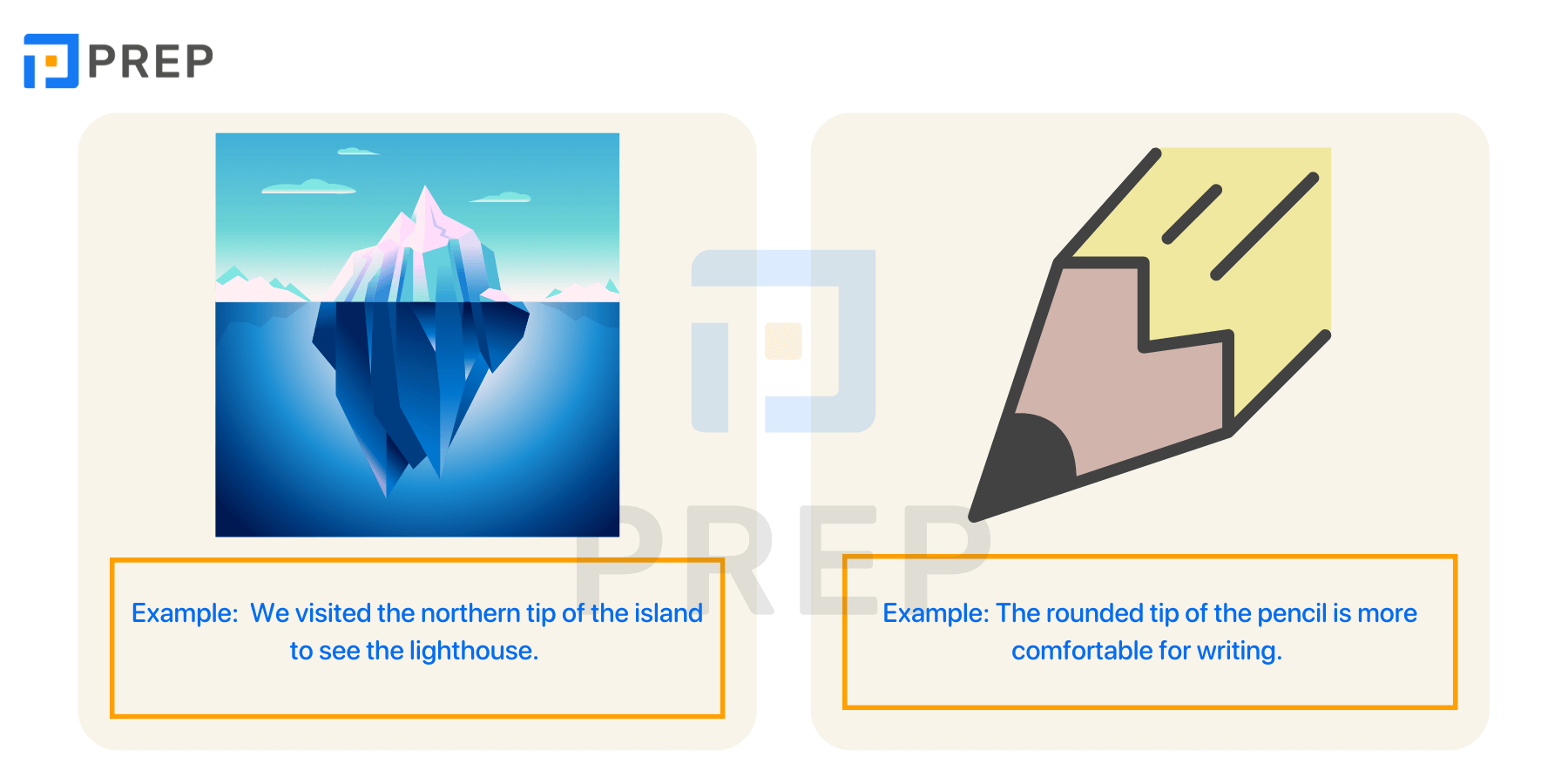
tip of the iceberg (idiomatic, means a small part of something bigger)
Example: “She gave me some tips on how to prepare for the interview.”
III. Collocations by Usage Context
Collocations with “tip” can be used in everyday conversation as well as formal writing or business contexts. Choosing the right collocation for each situation helps you sound both clear and natural.
Everyday Communication
These collocations are used when giving advice, offering suggestions, or discussing gratuities.
|
Collocation |
Example Sentence |
|
give a tip |
Can you give me a tip for cooking rice perfectly? |
|
helpful tip |
That was a really helpful tip for staying organized. |
|
leave a tip |
Don’t forget to leave a tip for the waiter. |
|
share a tip |
She loves to share tips about gardening online. |
|
follow a tip |
I followed your tip and saved a lot of money. |
Neutral & Written Contexts
These collocations are common in articles, business emails, presentations, and self-help materials.
|
Collocation |
Example Sentence |
|
provide a tip |
The expert provided a tip on handling stressful situations. |
|
tips for success |
Here are five tips for success in your new job. |
|
quick tip |
Quick tip: Review your notes daily for better retention. |
|
valuable tip |
That was a valuable tip shared during the workshop. |
|
tip of the iceberg |
The issue we found is just the tip of the iceberg. |
|
tip on pronunciation |
The teacher offered a useful tip on pronunciation. |
IV. Applying Collocations in IELTS Contexts
Using “tip” collocations accurately in IELTS Speaking and Writing helps you give advice, share experiences, and present practical recommendations—skills that enhance both fluency and lexical resource scores.
In IELTS Speaking
Common topics include giving advice to friends, describing learning experiences, or recommending ways to solve problems.
-
For giving advice:
“I’d like to share a useful tip for improving your spoken English.”
“One helpful tip is to practice a little bit every day.” -
For talking about experiences:
“A friend gave me a great tip on how to save money at the supermarket.”
“I always leave a tip when I eat at restaurants.”
Tips for IELTS Speaking:
-
Use collocations like “give a tip,” “helpful tip,” or “leave a tip” naturally in context.
-
Support your answers with specific examples for clarity and detail.
You can expand further with english vocabulary by topics.
In IELTS Writing
In Writing Task 2 (essays), you may be asked to suggest solutions or offer advice on problems, while letters (General Training Task 1) often involve making recommendations.
-
For recommendations and advice:
“Here are some practical tips for managing exam stress.”
“One valuable tip is to set clear goals before you start studying.” -
In formal or semi-formal letters:
“I hope these tips will help you prepare for your interview.”
“You asked for tips on finding accommodation in London—here are a few.”
Tips for IELTS Writing:
-
Use collocations such as “provide a tip,” “tips for success,” “offer a useful tip,” or “tips on improving your writing.”
-
Organize your advice clearly and use collocations to sound more natural and authoritative.
You can strengthen this by using big words in IELTS effectively.
V. Practice Exercises
Practicing collocations with “tip” will help you give advice, recommendations, and discuss gratuities more naturally in both spoken and written English. Complete the following exercises to check your understanding.
Exercise 1: Choose the correct collocation to complete each sentence.
-
The teacher gave us a _________ tip for remembering new vocabulary.
A. slow
B. helpful
C. useless -
Don’t forget to _________ a tip for the delivery driver.
A. send
B. keep
C. leave -
She likes to _________ tips about travel destinations on her blog.
A. share
B. talk
C. tell -
He asked his colleague to _________ a tip on managing time better.
A. provide
B. do
C. allow -
The suggestions offered were just the _________ of the iceberg.
A. tip
B. top
C. topmost
Exercise 2: Fill in the blank with a suitable collocation.
-
Can you _________ me a tip on how to cook perfect rice?
-
This is a _________ tip that I use to remember people’s names.
-
Did you _________ any tips from the workshop you attended?
-
She followed my _________ and got the job she wanted.
-
The article provided several _________ for success in job interviews.
Answer Key
[prep_collapse_expand open_text="View more" close_text="Show less"]
|
Exercise 1 |
Exercise 2 |
|
1. B |
6. give |
|
2. C |
7. quick/helpful |
|
3. A |
8. get/receive |
|
4. A |
9. tip |
|
5. A |
10. tips |
[/prep_collapse_expand]
After reading this article, PREP hopes you have gained many common collocations with Tip. Understanding and using collocations correctly is an important factor in helping you speak and write English naturally and accurately. Don't hesitate to apply these collocations in practice and enhance your skills through exercises. Please make an effort to complete the practical exercise at the end of the article to enhance your knowledge. Wishing you effective knowledge enhancement and success in achieving high scores in English exams such as IELTS, TOEIC, etc.

Hi I'm Chloe, and I am currently serving as an Product Content Administrator at Prep Education. With over five years of experience in independent online IELTS study and exam preparation, I am confident in my ability to support learners in achieving their highest possible scores.
Comment
Premium content
View all

Personalized roadmap


Most read


UEN: 202227322W
Address: 114 LAVENDER STREET, #11-83 CT HUB 2, SINGAPORE (338729)