Useful Collocations About Family You Should Know
This guide introduces common collocations about family in English. You will learn useful phrases related to family relationships, daily life, and family roles, along with meanings and example sentences to help you use them naturally in speaking, writing, and English exams.

Keynote – Collocations About Family
Collocations about family are used to describe relationships, roles, and activities in ways that sound natural to native speakers. These word pairings help you express family dynamics, backgrounds, and traditions both in daily life and academic situations.
-
Key combinations: close-knit family, raise a family, extended family, family gathering, family ties, support a family, nuclear family.
-
Main contexts: daily conversations, essays, oral exams, and cultural discussions.
-
Common mistakes: translating directly from your first language (e.g., saying “do a family” instead of “start a family”) or mixing up established phrases. Using correct family collocations makes your English clear, fluent, and authentic.
I. What Is a Collocation about Family?
In English, a collocation is a natural combination of words that are frequently used together by native speakers. When it comes to the topic of “family,” certain words and phrases commonly form set expressions or collocations to describe relationships, roles, and everyday activities.
Key points about family collocations:
-
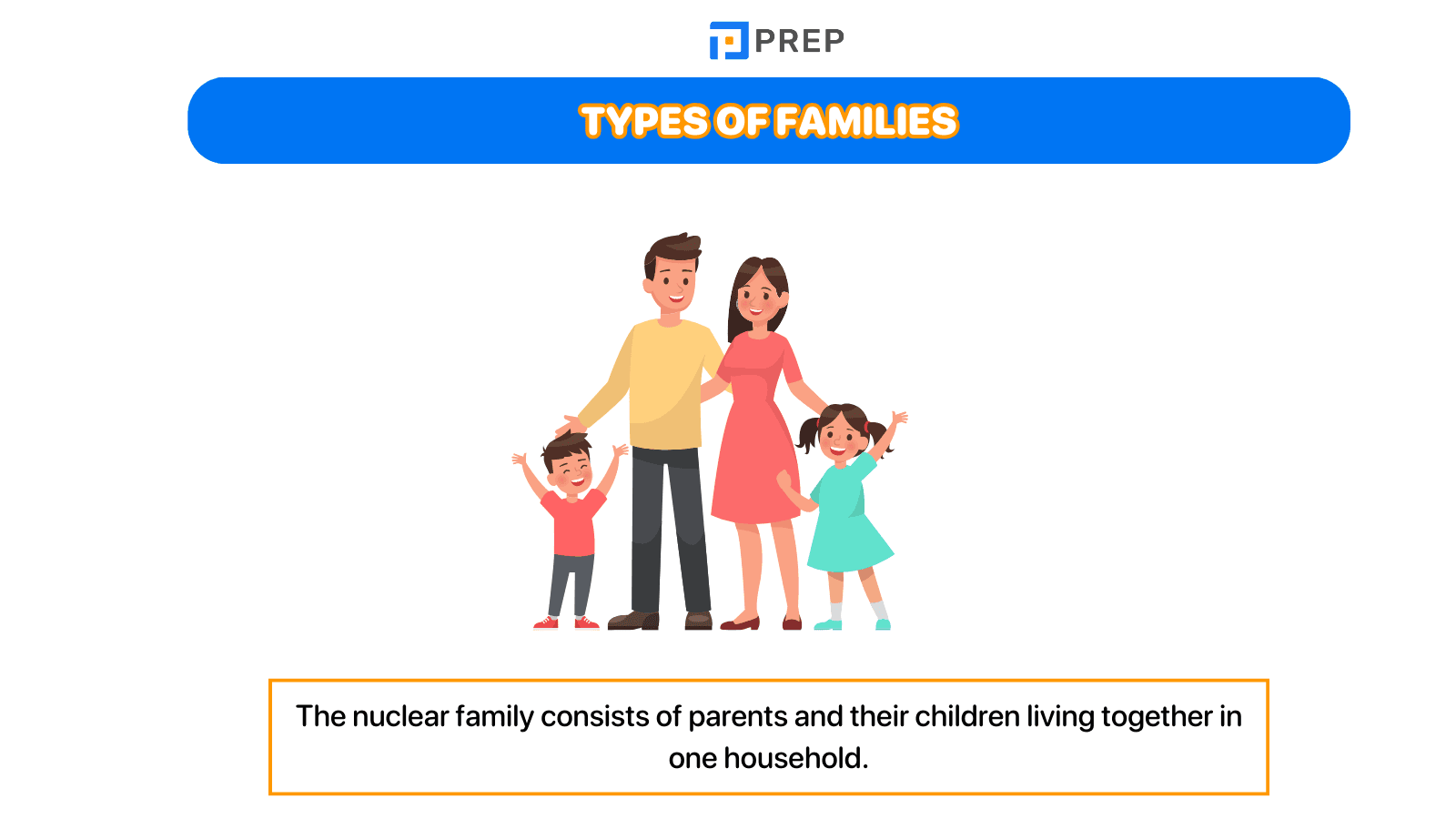
A family-related collocation is a phrase where “family” or family-related words (such as father, mother, child, relative) regularly combine with specific verbs, adjectives, or nouns. Examples include “close-knit family,” “raise a family,” or “nuclear family.”
-
These combinations sound natural and are widely used in both spoken and written English. If you use other word pairings, your English may sound awkward or unclear.
-
Learning collocations about family enables you to express your ideas more precisely, talk about your personal life, and discuss family-related topics in exams and real-life situations.
You can explore collocations with have to see more common patterns.
For example:
-
We say “start a family” (not “make a family” or “build a family” in most contexts).
-
Native speakers use “immediate family” for close members living together, while “extended family” refers to a broader group of relatives.
-
Using uncommon or incorrect expressions, such as “do a family” or “strong family tie” (instead of “strong family ties”), can lead to unnatural English.
II. Common Collocation Patterns with Family
Collocations with “family” appear in a variety of familiar structures. Recognizing these patterns will help you use “family” and related terms more fluently, both in casual conversation and formal writing.
Adjective + Family Collocations
These combinations describe the type or quality of family relationships:
-
close-knit family
-
extended family
-
immediate family
-
single-parent family
-
nuclear family
-
large/small family
-
dysfunctional family
-
loving family
-
supportive family
Example: “She comes from a close-knit family that always supports each other.”
You can expand your vocabulary with collocations with education for related topics.
Verb + Family Collocations
These collocations illustrate actions related to family life and relationships:
-
start a family
-
raise a family
-
provide for a family
-
support (a) family
-
come from a (type of) family
-
belong to a (type of) family
-
reunite with family
-
bring up a family
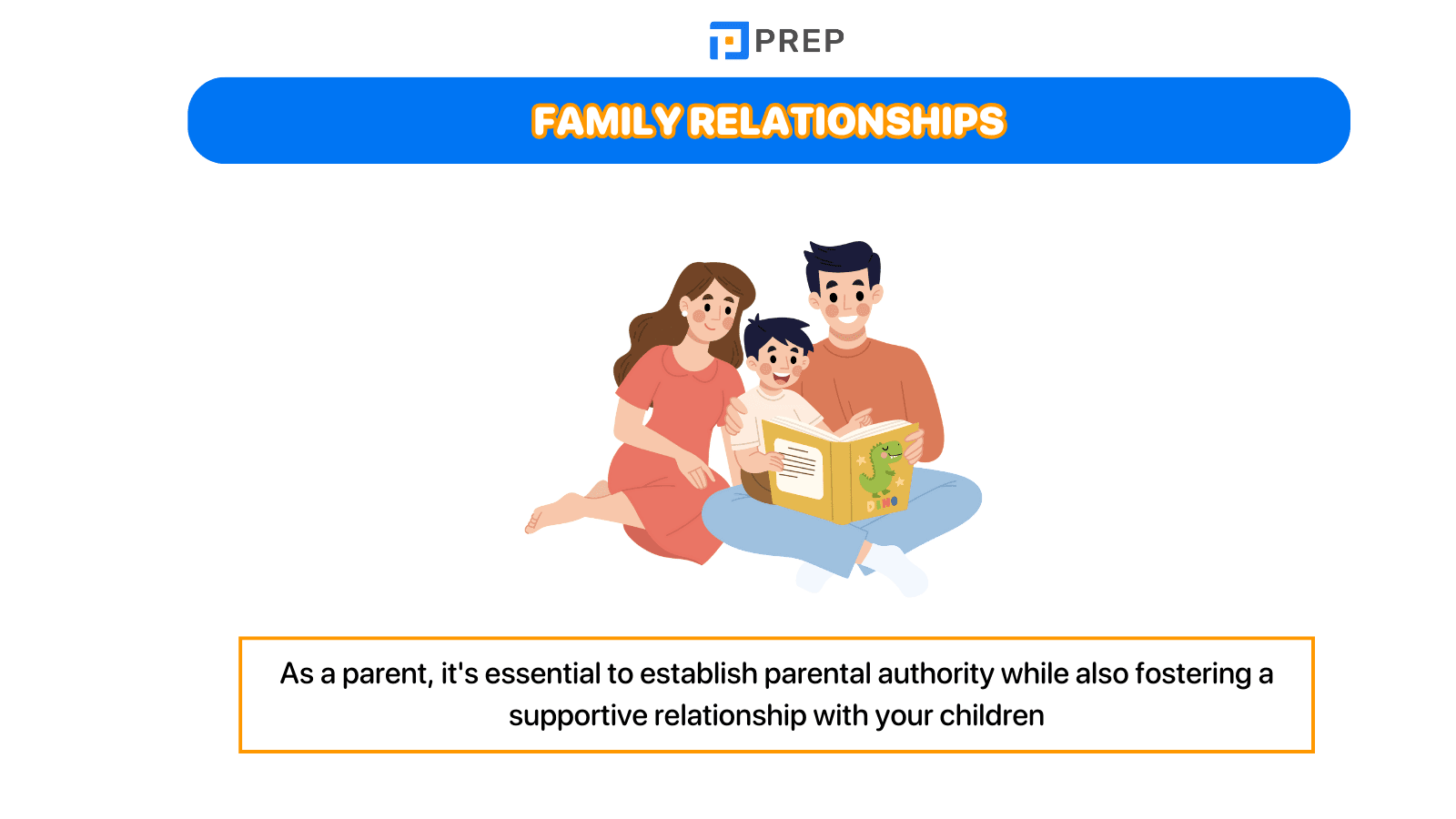
Example: “They decided to start a family after getting married.”
Noun + Family/Possessive Collocations
These are fixed phrases involving family members, relationships, or status:
-
family background
-
family tradition(s)
-
family gathering/reunion
-
family member(s)
-
family ties
-
family history
-
family values
-
family bond(s)
Example: “We have a family reunion every summer.”
You can explore collocations with people for broader usage.
III. Collocations by Usage Context
Collocations related to family vary depending on whether you are communicating informally in everyday life or using more formal, written English. Understanding these contexts helps you choose the most natural expressions for any situation.
Everyday Communication
|
Collocation |
Example Sentence |
|
close-knit family |
I’m lucky to have a close-knit family. |
|
raise a family |
They moved to the countryside to raise a family. |
|
family gathering |
We had a big family gathering last weekend. |
|
support my family |
He works two jobs to support his family. |
|
family tradition |
Sunday dinners are a family tradition for us. |
|
immediate family |
Only immediate family members attended the party. |
Neutral & Written Contexts
|
Collocation |
Example Sentence |
|
extended family |
In many cultures, the extended family lives together. |
|
family background |
The scholarship is open to students of any family background. |
|
nuclear family |
The nuclear family has become more common in urban areas. |
|
family values |
Schools help to reinforce positive family values. |
|
family bonds |
Strong family bonds are linked to children’s well-being. |
|
dysfunctional family |
The story is about a boy growing up in a dysfunctional family. |
Selecting the right collocation for each context not only improves clarity and precision but also makes your spoken and written English sound much more native-like.
IV. Applying Collocations in IELTS Contexts
Using family collocations accurately in your IELTS Speaking and Writing responses demonstrates a strong command of natural English and helps you achieve a higher score for lexical resource.
In IELTS Speaking
In the Speaking test, you are often asked questions about family, relationships, or your background. Using appropriate collocations will make your answers sound fluent and authentic.
-
Everyday topics:
“I come from a supportive family that always encourages me.”
“We have a family gathering every month to stay connected.” -
Expanding ideas:
“Growing up in a close-knit family taught me to value relationships.”
“My parents work hard to provide for our family.”
Tips for IELTS Speaking:
-
Use collocations you are comfortable with; avoid memorized or forced phrases.
-
Give detailed, relevant examples: “In my family, Sunday lunch is a long-standing tradition.”
To improve further, you should improve english vocabulary consistently.
In IELTS Writing
In Writing Task 2, topics about family, upbringing, or childhood are common. Correct use of family collocations can help you answer the question more precisely and naturally.
-
For formal or academic writing:
“Some believe that family bonds are weakening in modern society.”
“Governments should help parents balance work and family responsibilities.” -
Defining or discussing concepts:
“The notion of the nuclear family has changed significantly in recent years.”
Tips for IELTS Writing:
-
Incorporate family collocations naturally into supporting sentences and topic statements.
-
Use a range of collocations to show vocabulary variety and topic control.
You can strengthen your writing with big words in IELTS.
Accurately using family collocations will help your IELTS responses sound more natural, increase your lexical range, and avoid common candidate mistakes with awkward phrases.
V. Practice Exercises
Practicing family-related collocations ensures you can recognize and use them comfortably in both speaking and writing. Complete the following exercises to check your understanding.
Exercise 1: Choose the correct collocation to complete each sentence.
-
She comes from a very _________ family that always helps each other.
A. close-knit
B. rich
C. single-parent -
They decided to _________ a family after buying a house.
A. make
B. start
C. build -
My father works hard to _________ for our family.
A. provide
B. cook
C. bring -
Our _________ family meets every year for a big reunion.
A. nuclear
B. extended
C. single -
Strong _________ bonds can support children’s mental health.
A. familiar
B. family
C. families
Exercise 2: Fill in the blank with the most suitable collocation.
-
In many cultures, respecting _________ traditions is very important.
-
Only immediate _________ members were invited to the ceremony.
-
She takes pride in her strong _________ background.
-
Family _________ help maintain connections even when people live far apart.
-
Sunday lunch is our family’s favorite _________.
Answer Key
[prep_collapse_expand open_text="View more" close_text="Show less"]
|
Exercise 1 |
Exercise 2 |
|
1. A |
6. family traditions |
|
2. B |
7. family |
|
3. A |
8. family |
|
4. B |
9. bonds |
|
5. B |
10. tradition |
[/prep_collapse_expand]
Practicing these exercises will help you become more familiar with common family collocations and improve your ability to use them naturally in both conversation and exam settings.
You can further improve through improve vocabulary and pronunciation in english through reading.
After reading the article, don't forget to take note of important collocations about family and regularly review your knowledge through exercises. Good luck, Preppies!

Hi I'm Chloe, and I am currently serving as an Product Content Administrator at Prep Education. With over five years of experience in independent online IELTS study and exam preparation, I am confident in my ability to support learners in achieving their highest possible scores.
Comment
Premium content
View all



Personalized roadmap


Most read




UEN: 202227322W
Address: 114 LAVENDER STREET, #11-83 CT HUB 2, SINGAPORE (338729)