12 Chinese Zodiac in Chinese: Names and Meanings
Understanding the 12 Chinese zodiac in Chinese helps learners build vocabulary, cultural awareness, and confidence in real communication. This guide explains each zodiac sign with Chinese characters and pinyin, explores cultural symbolism, and shows how to use zodiac terms in daily learning and conversation.
I. What Are the 12 Chinese Zodiac Signs in Chinese?
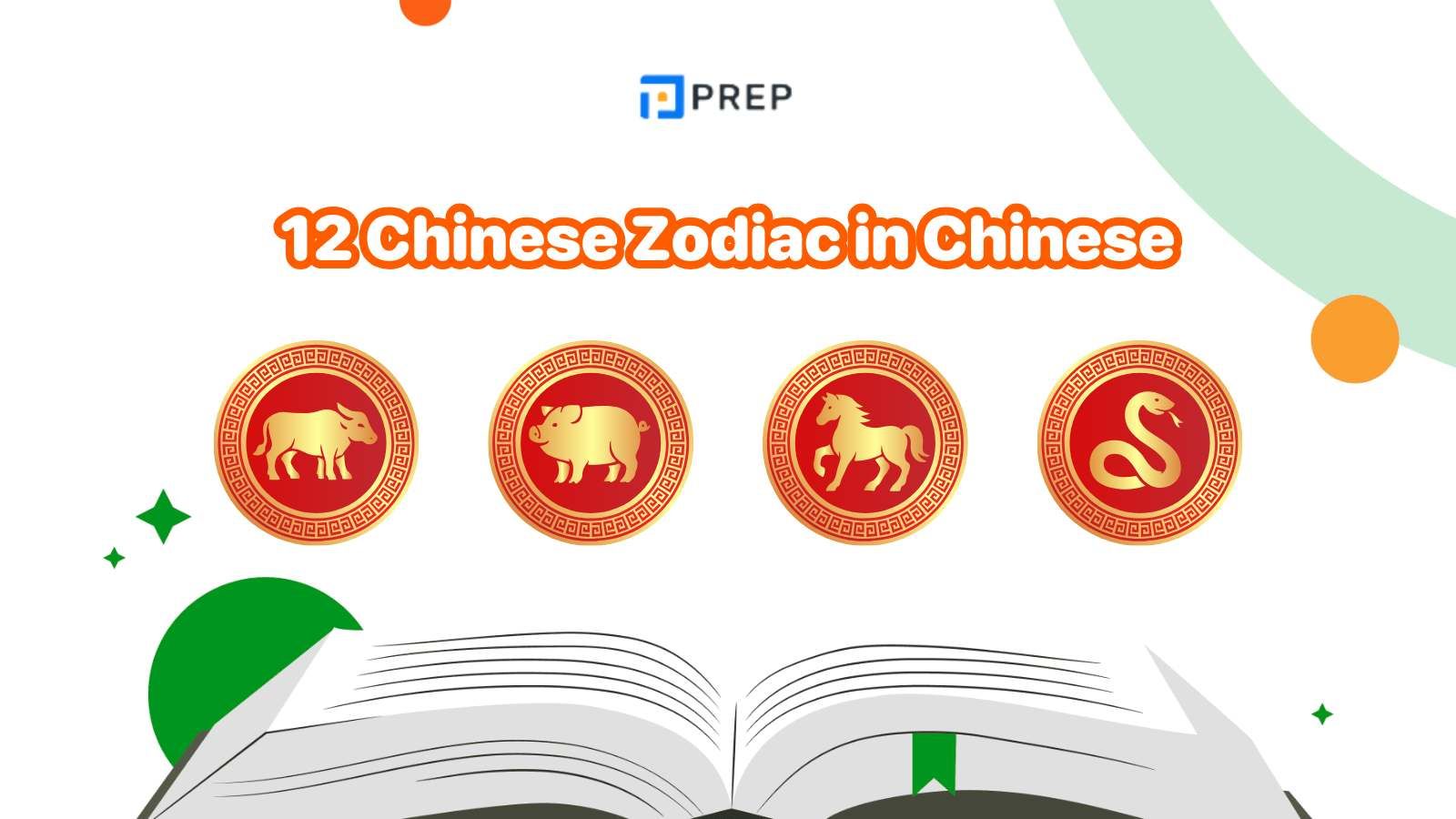
The 12 Chinese zodiac signs, or 十二生肖 (shí’èr shēngxiào), form a repeating cycle of twelve years, with each year associated with a specific animal sign. This traditional system is deeply embedded in Chinese language, culture, and calendar systems, and is still widely used today for stating age, marking years, and even predicting compatibility in relationships.
Each year in the Chinese lunar calendar corresponds to one of twelve animals. The cycle resets every twelve years and follows this order:
|
Order |
Chinese Character |
Pinyin |
English |
|
1 |
鼠 |
shǔ |
Rat |
|
2 |
牛 |
niú |
Ox |
|
3 |
虎 |
hǔ |
Tiger |
|
4 |
兔 |
tù |
Rabbit |
|
5 |
龙 |
lóng |
Dragon |
|
6 |
蛇 |
shé |
Snake |
|
7 |
马 |
mǎ |
Horse |
|
8 |
羊 |
yáng |
Goat (or Sheep) |
|
9 |
猴 |
hóu |
Monkey |
|
10 |
鸡 |
jī |
Rooster (or Chicken) |
|
11 |
狗 |
gǒu |
Dog |
|
12 |
猪 |
zhū |
Pig |
This order is not random—it comes from an ancient folk legend often known as the "Great Race", in which the Jade Emperor summoned all animals to a race to determine the order of the zodiac. The outcome of the race explains why each animal earned its place in the cycle. For example:
-
The rat used its cleverness to ride on the ox’s back and jumped ahead at the finish line, earning the first position.
-
The dragon, despite being powerful, came in fifth because it stopped to help bring rain to a village along the way.
These stories are told to children across Chinese-speaking communities and form an important part of cultural literacy.
You may notice multiple English variants for some of the animals. For example, 羊 (yáng) is sometimes translated as goat, ram, or sheep, depending on region and interpretation. Likewise, 鸡 (jī) is often translated as rooster, though it literally means chicken.
To help students of Chinese language remember the order and vocabulary:
-
Practice chanting the list aloud, following the traditional sequence.
-
Create flashcards with the Hanzi, pinyin, and a picture for each animal.
-
Note which animals share phonetic or semantic components in their characters (for example, many animal characters include the radical 犭, a variant of “dog” used in animal-related words).
Learning the 12 Chinese zodiac animals not only builds useful vocabulary, but also opens a window into cultural beliefs, idioms, and expressions—many of which are derived directly from this ancient system.
1. Cultural Meaning Behind the 12 Zodiac Animals
Each of the 12 Chinese zodiac animals carries cultural symbolism that goes far beyond its literal meaning. In Chinese tradition, these animal signs are believed to influence personal characteristics, social compatibility, and even one’s destiny. Understanding the cultural meanings behind each zodiac not only enhances language learning, but also provides deeper insight into Chinese values, mythology, and worldview.
Symbolism of Each Zodiac Sign
|
Animal |
Character Traits in Chinese Culture |
|
Rat (鼠) |
Smart, resourceful, quick-witted |
|
Ox (牛) |
Honest, hardworking, dependable |
|
Tiger (虎) |
Brave, independent, competitive |
|
Rabbit (兔) |
Gentle, elegant, cautious |
|
Dragon (龙) |
Powerful, noble, ambitious |
|
Snake (蛇) |
Wise, mysterious, strategic |
|
Horse (马) |
Energetic, free-spirited, adventurous |
|
Goat (羊) |
Calm, empathetic, artistic |
|
Monkey (猴) |
Clever, curious, mischievous |
|
Rooster (鸡) |
Observant, confident, punctual |
|
Dog (狗) |
Loyal, sincere, protective |
|
Pig (猪) |
Generous, social, peace-loving |
How the 12-Year Zodiac Cycle Works
The Chinese zodiac operates on a repeating 12-year cycle, where each year is governed by a specific animal. Your zodiac sign is based on your birth year according to the Chinese lunar calendar.
For example, someone born in early February 2000 may be a Rabbit, while someone born a few days later in mid-February (after Lunar New Year) could fall under the Dragon sign of the new cycle.
Additional layers of complexity include:
-
Five Elements (五行 / wǔ xíng): Wood, Fire, Earth, Metal, Water – Each year’s animal is associated with one of these elements.
-
Yin and Yang (阴阳 / yīnyáng): Each animal is also classified as yin or yang, balancing the cycle energetically.
-
Heavenly Stems and Earthly Branches (天干地支 / tiāngān dìzhī): A traditional calendrical system combining 10 heavenly stems and 12 earthly branches, creating a full 60-year cycle.
This 12-year rhythm is deeply rooted in Chinese cosmology and date-keeping.
Zodiac Compatibility and Cultural Beliefs
One of the most prominent uses of the zodiac in daily life is exploring compatibility—whether in friendship, romance, business partnerships, or family relations. Traditional beliefs identify "compatible trios" (三合 / sānhé) and "conflicting pairs" (相冲 / xiāngchōng) based on zodiac relationships.
-
Compatible groups often form harmonious bonds. Example: Rat–Dragon–Monkey.
-
Conflicting signs may bring tension. Example: Tiger vs. Monkey, Rabbit vs. Rooster.
While these ideas are largely symbolic and traditional, they are still referenced today, especially during the Lunar New Year, wedding planning, or personality-based discussions. Awareness of such beliefs can help learners and travelers engage respectfully and meaningfully with Chinese-speaking communities.
2. How to Use the 12 Chinese Zodiac in Daily Chinese Learning
The 12 Chinese zodiac animals are more than just cultural symbols—they are also practical tools for language learners. Because they are deeply woven into daily conversations, proverbs, festivals, and identity, zodiac vocabulary offers meaningful context and memorable associations. By actively using zodiac-related terms, learners can improve vocabulary retention, reinforce pronunciation, and understand how tradition shapes modern language.
Useful Zodiac Vocabulary and Idioms in Chinese
Learning just the animal names is only the beginning. Many Chinese words, expressions, and idioms are based on the qualities or imagery of the twelve zodiac animals. Below is a table of practical vocabulary that combines the zodiac with daily usage:
|
Chinese |
Pinyin |
Meaning |
Usage |
|
属相 |
shǔxiàng |
Chinese zodiac sign |
你的属相是什么?(What's your zodiac sign?) |
|
属鼠的 |
shǔ shǔ de |
someone born in the year of the Rat |
她属鼠的。(She was born in the year of the Rat.) |
|
本命年 |
běnmìngnián |
one's zodiac year (every 12 years) |
他今年本命年。(This is his zodiac year.) |
|
龙马精神 |
lóng mǎ jīngshén |
vitality of dragon and horse |
Meaning: energetic, full of life |
|
狐假虎威 |
hú jiǎ hǔ wēi |
"a fox using the tiger’s power" |
Idiom: relying on others’ power to bully |
|
对鸡弹琴 |
duì jī tán qín |
"playing zither to a chicken" |
Idiom: talking to someone who doesn't get it |
These expressions illustrate why integrating the zodiac into your learning can deepen your grasp of tone, metaphors, and sentence flow.
Using Zodiac Themes in the Classroom or Conversation
Whether you're a student or a teacher, zodiac signs offer rich opportunities for interactive language practice:
-
Conversation starters: Asking someone “你属什么?” is both culturally engaging and personally relevant.
-
Writing prompts: Describe your personality based on your zodiac sign. Use adjectives and examples.
-
Role-play activities: Act out short skits based on the mythology of the zodiac animals (e.g., The Great Race).
-
Holiday learning: Around Lunar New Year, study the zodiac sign for the new year and its cultural meaning.
Teachers can build lesson plans with tiered tasks—matching animals to traits, discussing superstitions, or comparing Eastern and Western astrology.
In daily life, learners will often hear zodiac signs used in casual conversation, jokes, horoscopes, and festival greetings. Recognizing and using these terms is a powerful way to connect more naturally with Chinese speakers and culture.
II. Cross-Cultural Variations of the Zodiac in East Asia
While the 12-animal zodiac originated in ancient China, its influence has spread widely across East Asia, shaping the cultural and linguistic traditions of countries such as Vietnam, Japan, and Korea. Although these regions share the foundational concept of a 12-year cycle based on animal signs, their interpretations and adaptations vary in naming, symbolism, ordering, and usage. Understanding these cross-cultural differences can help learners develop not only better language skills, but also deeper cultural empathy and comparative insight.
Similarities and Differences Across China, Vietnam, Japan, Korea
|
Country/Region |
Name for Zodiac |
Notable Differences |
|
China |
十二生肖 (shí'èr shēngxiào) |
Original system; used for age, astrology, festivals |
|
Vietnam |
12 con giáp |
Replaces Rabbit (兔) with Cat (Mèo); strong folk beliefs |
|
Japan |
干支 (eto) |
Similar sequence; incorporates Buddhist and seasonal views |
|
Korea |
십이지신 (Sip-i Jisin) |
Replaces Sheep with Ram; stress on harmony & family traditions |
For example:
-
The Vietnamese zodiac swaps the Rabbit with the Cat, which is attributed to linguistic influence (the Chinese word “mão” for rabbit is similar to “mèo” meaning cat in Vietnamese).
-
In Japan, the zodiac is often associated with New Year decorations and temple visits.
-
In Korea, zodiac signs are used heavily in evaluating marriage compatibility and naming decisions.
Changing Meanings Across Borders
Beyond animal substitutions, the traits and symbolism associated with each animal can vary. For instance:
-
The Dragon, seen as an auspicious imperial symbol in China, carries a more mythical or decorative meaning in Japan.
-
The Monkey, often symbolizing cleverness in China, may be viewed differently in folk stories from Korea or Vietnam.
-
Compatibility beliefs, such as “zodiac trios” or “opposing signs,” might change entirely in astrology-guided matchmaking traditions among regions.
Even birthday zodiac lookup apps or compatibility charts developed in one region may reflect embedded cultural perspectives that differ from another.
Why It Matters for Language and Culture Learners
For learners of Chinese—or East Asian languages in general—grasping cross-cultural variations in the zodiac system:
-
Enhances their vocabulary range when discussing birthdays, horoscopes, or cultural roots
-
Makes conversations during holidays (e.g., Lunar New Year) more insightful and inclusive
-
Helps avoid translation pitfalls, as one animal may map to different words or meanings depending on the country
-
Builds bridges between learners from Chinese, Vietnamese, Japanese, and Korean backgrounds
Recognizing how a single zodiac framework can evolve uniquely in different cultures is not just fascinating—it’s a practical step toward a more nuanced, respectful approach to East Asian language education.
Follow PREP for structure, pronunciation tools, and cultural insight—so every zodiac word you learn in Chinese feels more personal, more memorable, and more authentically yours.

Hi I'm Chloe, and I am currently serving as an Product Content Administrator at Prep Education. With over five years of experience in independent online IELTS study and exam preparation, I am confident in my ability to support learners in achieving their highest possible scores.
Comment
Premium content
View all



Personalized roadmap


Most read




UEN: 202227322W
Address: 114 LAVENDER STREET, #11-83 CT HUB 2, SINGAPORE (338729)