최다 빈출 동물 영어로 된 어휘 150선: 발음, 의미 및 연어의 심층 분석
IELTS Writing과 Speaking 시험에서 동물 주제는 높은 빈출도를 자랑합니다. 단순히 동물 영어 로 이름을 외우는 것만으로는 부족합니다. 정확한 발음, 문맥 속 활용, 그리고 자연스러운 연어(Collocation) 표현까지 숙지해야 Band 7.0 이상의 점수를 확보할 수 있습니다. 이 가이드는 기초부터 심화까지 단계별 학습을 지원하며, 실전 에세이 적용 방법까지 다룹니다. 동물 영어 로 표현은 IELTS 필수 주제이며, 반려동물, 야생동물, 곤충, 파충류, 수생 생물, 조류를 망라한 동물 영어 로 필수 어휘를 지금 바로 마스터하세요.

I. 동물 영어 로: 일반적인 필수 어휘
생물학적 분류, 서식지, 특징별로 어휘를 범주화하면 기억 정착률이 높아집니다. 청킹(Chunking) 학습법을 적용하여 개별 단어가 아닌 의미 묶음으로 동물 영단어를 습득하세요. 동물 영어 로 기초 표현을 확실히 다지는 것이 영어 학습의 첫걸음입니다.
1. 동물 영어 로: 일반 생물학 용어
|
단어 |
발음 |
뜻 |
예문 및 해석 |
|
Mammal |
/ˈmæməl/ |
포유류 |
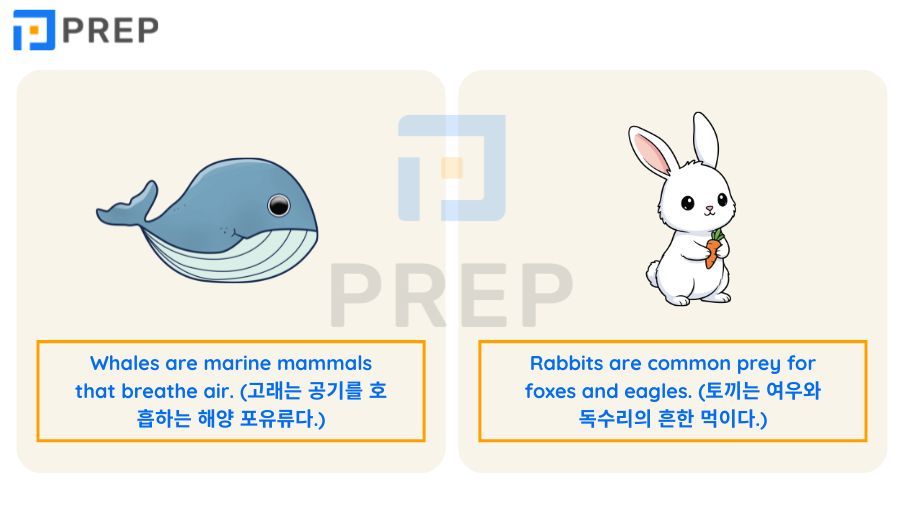
Whales are marine mammals that breathe air. (고래는 공기를 호흡하는 해양 포유류다.) |
|
Reptile |
/ˈreptaɪl/ |
파충류 |
Snakes and lizards are cold-blooded reptiles. (뱀과 도마뱀은 냉혈 파충류다.) |
|
Amphibian |
/æmˈfɪbiən/ |
양서류 |
Frogs are amphibians that live both in water and on land. (개구리는 물과 육지 모두에서 사는 양서류다.) |
|
Invertebrate |
/ɪnˈvɜːrtɪbrət/ |
무척추동물 |
Insects and spiders are invertebrates without backbones. (곤충과 거미는 척추가 없는 무척추동물이다.) |
|
Vertebrate |
/ˈvɜːrtɪbrət/ |
척추동물 |
Fish, birds, and mammals are all vertebrates. (물고기, 조류, 포유류는 모두 척추동물이다.) |
|
Habitat |
/ˈhæbɪtæt/ |
서식지 |
Polar bears' natural habitat is the Arctic ice. (북극곰의 자연 서식지는 북극 얼음이다.) |
|
Species |
/ˈspiːʃiːz/ |
종 |
Scientists have discovered over 8 million species on Earth. (과학자들은 지구상에서 800만 종 이상을 발견했다.) |
|
Predator |
/ˈpredətər/ |
포식자 |
Lions are apex predators in the African savanna. (사자는 아프리카 사바나의 정상 포식자다.) |
|
Prey |
/preɪ/ |
먹이, 피식자 |
Rabbits are common prey for foxes and eagles. (토끼는 여우와 독수리의 흔한 먹이다.) |
|
Carnivore |
/ˈkɑːrnɪvɔːr/ |
육식동물 |
Tigers are carnivores that hunt large mammals. (호랑이는 대형 포유류를 사냥하는 육식동물이다.) |
|
Herbivore |
/ˈhɜːrbɪvɔːr/ |
초식동물 |
Elephants are herbivores that consume up to 150 kg of plants daily. (코끼리는 하루 최대 150kg의 식물을 섭취하는 초식동물이다.) |
|
Omnivore |
/ˈɑːmnɪvɔːr/ |
잡식동물 |
Bears are omnivores that eat both plants and meat. (곰은 식물과 고기를 모두 먹는 잡식동물이다.) |
2. 동물 영어 로: 반려동물 (Pets)
|
단어 |
발음 |
뜻 |
예문 및 해석 |
|
Dog |
/dɔːɡ/ |
개 |
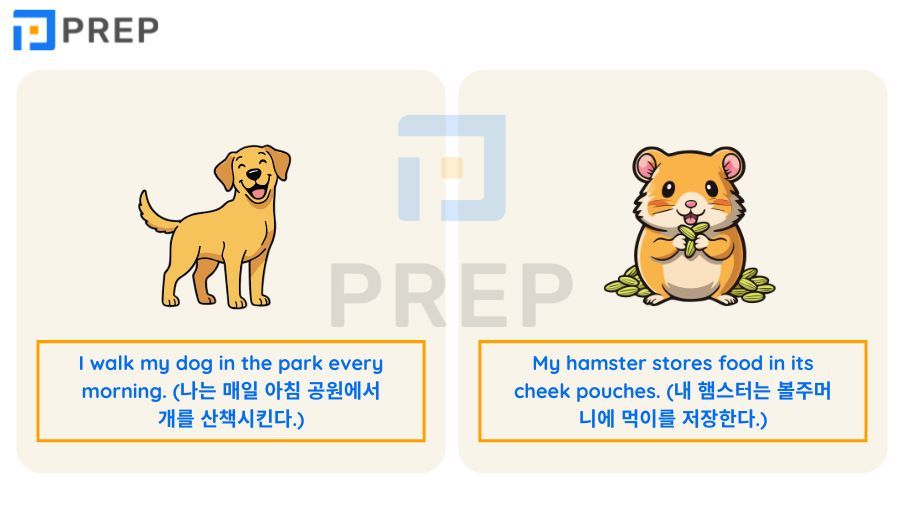
I walk my dog in the park every morning. (나는 매일 아침 공원에서 개를 산책시킨다.) |
|
Cat |
/kæt/ |
고양이 |
Cats are independent animals that groom themselves. (고양이는 스스로 털을 다듬는 독립적인 동물이다.) |
|
Hamster |
/ˈhæmstər/ |
햄스터 |
My hamster stores food in its cheek pouches. (내 햄스터는 볼주머니에 먹이를 저장한다.) |
|
Rabbit |
/ˈræbɪt/ |
토끼 |
Rabbits need plenty of hay and fresh vegetables. (토끼는 충분한 건초와 신선한 채소가 필요하다.) |
|
Guinea Pig |
/ˈɡɪni pɪɡ/ |
기니피그 |
Guinea pigs are social animals that live in groups. (기니피그는 무리를 지어 사는 사회적 동물이다.) |
|
Goldfish |
/ˈɡoʊldfɪʃ/ |
금붕어 |
Goldfish can live for over 10 years with proper care. (금붕어는 적절한 관리로 10년 이상 살 수 있다.) |
|
Parrot |
/ˈpærət/ |
앵무새 |
Parrots can mimic human speech and live for decades. (앵무새는 인간의 말을 흉내낼 수 있고 수십 년을 산다.) |
|
Turtle |
/ˈtɜːrtl/ |
거북이 |
Pet turtles require both water and a dry basking area. (애완 거북이는 물과 마른 일광욕 공간이 모두 필요하다.) |
3. 동물 영어 로: 야생 동물 (Wild Animals)
|
단어 |
발음 |
뜻 |
예문 및 해석 |
|
Lion |
/ˈlaɪən/ |
사자 |
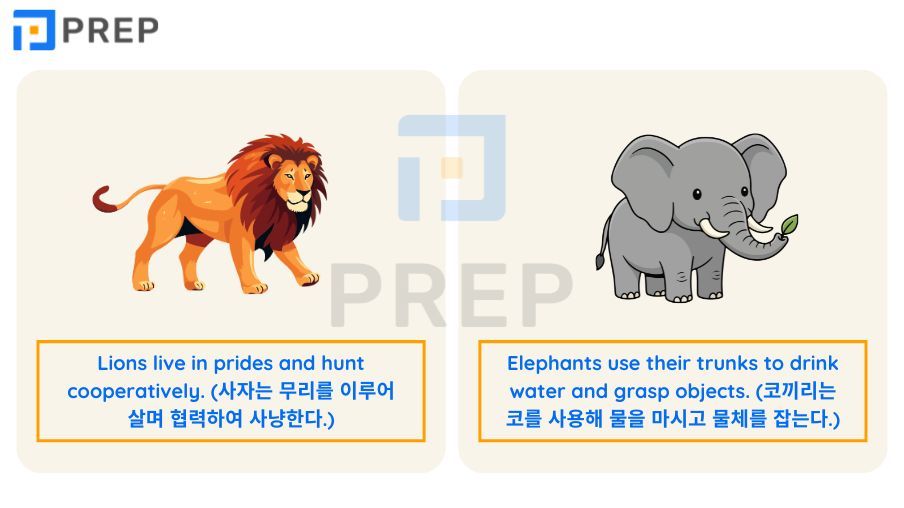
Lions live in prides and hunt cooperatively. (사자는 무리를 이루어 살며 협력하여 사냥한다.) |
|
Tiger |
/ˈtaɪɡər/ |
호랑이 |
Tigers are solitary hunters with distinctive orange stripes. (호랑이는 독특한 주황색 줄무늬를 가진 단독 사냥꾼이다.) |
|
Elephant |
/ˈelɪfənt/ |
코끼리 |
Elephants use their trunks to drink water and grasp objects. (코끼리는 코를 사용해 물을 마시고 물체를 잡는다.) |
|
Giraffe |
/dʒɪˈræf/ |
기린 |
Giraffes have long necks that help them reach tall trees. (기린은 높은 나무에 닿을 수 있도록 도와주는 긴 목을 가지고 있다.) |
|
Zebra |
/ˈziːbrə/ |
얼룩말 |
Each zebra has a unique pattern of black and white stripes. (각 얼룩말은 독특한 흑백 줄무늬 패턴을 가지고 있다.) |
|
Rhinoceros |
/raɪˈnɑːsərəs/ |
코뿔소 |
Rhinoceroses have thick skin and one or two horns. (코뿔소는 두꺼운 피부와 한두 개의 뿔을 가지고 있다.) |
|
Hippopotamus |
/ˌhɪpəˈpɑːtəməs/ |
하마 |
Hippopotamuses spend most of their day submerged in water. (하마는 하루 대부분을 물에 잠겨 보낸다.) |
|
Cheetah |
/ˈtʃiːtə/ |
치타 |
Cheetahs are the fastest land animals, reaching 110 km/h (68 mph). (치타는 시속 110km(68마일)에 달하는 가장 빠른 육상 동물이다.) |
|
Leopard |
/ˈlepərd/ |
표범 |
Leopards are skilled climbers that store prey in trees. (표범은 나무에 먹이를 저장하는 숙련된 등반가다.) |
|
Gorilla |
/ɡəˈrɪlə/ |
고릴라 |
Gorillas are intelligent primates that live in family groups. (고릴라는 가족 집단으로 사는 지능적인 영장류다.) |
|
Chimpanzee |
/ˌtʃɪmpænˈziː/ |
침팬지 |
Chimpanzees use tools and have complex social structures. (침팬지는 도구를 사용하며 복잡한 사회 구조를 가지고 있다.) |
|
Orangutan |
/əˈræŋətæn/ |
오랑우탄 |
Orangutans are arboreal apes that spend most time in trees. (오랑우탄은 대부분의 시간을 나무에서 보내는 수목형 유인원이다.) |
|
Kangaroo |
/ˌkæŋɡəˈruː/ |
캥거루 |
Kangaroos carry their young in pouches and hop on powerful legs. (캥거루는 새끼를 주머니에 넣고 강력한 다리로 뛴다.) |
|
Koala |
/koʊˈɑːlə/ |
코알라 |
Koalas are marsupials that feed exclusively on eucalyptus leaves. (코알라는 오로지 유칼립투스 잎만 먹는 유대류다.) |
|
Panda |
/ˈpændə/ |
판다 |
Giant pandas consume up to 38 kg (84 lbs) of bamboo daily. (자이언트 판다는 하루 최대 38kg(84파운드)의 대나무를 섭취한다.) |
|
Wolf |
/wʊlf/ |
늑대 |
Wolves hunt in packs and communicate through howling. (늑대는 무리를 지어 사냥하고 울부짖음으로 소통한다.) |
|
Fox |
/fɑːks/ |
여우 |
Foxes are cunning animals that adapt to various environments. (여우는 다양한 환경에 적응하는 교활한 동물이다.) |
|
Bear |
/ber/ |
곰 |
Bears hibernate during winter months in cold regions. (곰은 추운 지역에서 겨울철에 동면한다.) |
|
Deer |
/dɪr/ |
사슴 |
Male deer grow antlers that shed and regrow annually. (수컷 사슴은 매년 떨어지고 다시 자라는 뿔을 기른다.) |
|
Moose |
/muːs/ |
무스 |
Moose are the largest members of the deer family. (무스는 사슴과의 가장 큰 구성원이다.) |
4. 동물 영어 로: 곤충 (Insects)
|
단어 |
발음 |
뜻 |
예문 및 해석 |
|
Butterfly |
/ˈbʌtərflaɪ/ |
나비 |
Butterflies pollinate flowers while feeding on nectar. (나비는 꿀을 먹으면서 꽃가루를 옮긴다.) |
|
Bee |
/biː/ |
벌 |
Bees produce honey and play a crucial role in pollination. (벌은 꿀을 생산하고 수분에서 중요한 역할을 한다.) |
|
Ant |
/ænt/ |
개미 |
Ants live in highly organized colonies with distinct roles. (개미는 명확한 역할을 가진 고도로 조직된 군집에서 산다.) |
|
Mosquito |
/məˈskiːtoʊ/ |
모기 |
Mosquitoes transmit diseases like malaria and dengue fever. (모기는 말라리아와 뎅기열 같은 질병을 전염시킨다.) |
|
Spider |
/ˈspaɪdər/ |
거미 |
Spiders spin webs to catch insects for food. (거미는 먹이로 곤충을 잡기 위해 거미줄을 친다.) |
|
Beetle |
/ˈbiːtl/ |
딱정벌레 |
Beetles have hard wing covers that protect their bodies. (딱정벌레는 몸을 보호하는 단단한 날개 덮개를 가지고 있다.) |
|
Grasshopper |
/ˈɡræshɑːpər/ |
메뚜기 |
Grasshoppers jump using their powerful hind legs. (메뚜기는 강력한 뒷다리를 사용해 뛴다.) |
|
Dragonfly |
/ˈdræɡənflaɪ/ |
잠자리 |
Dragonflies are skilled fliers that hunt other insects. (잠자리는 다른 곤충을 사냥하는 숙련된 비행사다.) |
|
Ladybug |
/ˈleɪdiːbʌɡ/ |
무당벌레 |
Ladybugs eat aphids and help protect garden plants. (무당벌레는 진딧물을 먹고 정원 식물을 보호하는 데 도움을 준다.) |
|
Cockroach |
/ˈkɑːkroʊtʃ/ |
바퀴벌레 |
Cockroaches can survive in harsh conditions for weeks. (바퀴벌레는 가혹한 조건에서 몇 주 동안 생존할 수 있다.) |
5. 동물 영어 로: 파충류 및 양서류 (Reptiles & Amphibians)
|
단어 |
발음 |
뜻 |
예문 및 해석 |
|
Snake |
/sneɪk/ |
뱀 |
Snakes shed their skin several times a year. (뱀은 일 년에 여러 번 허물을 벗는다.) |
|
Lizard |
/ˈlɪzərd/ |
도마뱀 |
Lizards can detach their tails to escape predators. (도마뱀은 포식자로부터 도망치기 위해 꼬리를 떼어낼 수 있다.) |
|
Crocodile |
/ˈkrɑːkədaɪl/ |
악어 |
Crocodiles are ancient reptiles that can live over 70 years. (악어는 70년 이상 살 수 있는 고대 파충류다.) |
|
Alligator |
/ˈælɪɡeɪtər/ |
앨리게이터 |
Alligators have broader snouts than crocodiles. (앨리게이터는 악어보다 더 넓은 주둥이를 가지고 있다.) |
|
Iguana |
/ɪˈɡwɑːnə/ |
이구아나 |
Iguanas are herbivorous lizards found in tropical regions. (이구아나는 열대 지역에서 발견되는 초식성 도마뱀이다.) |
|
Chameleon |
/kəˈmiːliən/ |
카멜레온 |
Chameleons change color for camouflage and communication. (카멜레온은 위장과 의사소통을 위해 색을 바꾼다.) |
|
Frog |
/frɔːɡ/ |
개구리 |
Frogs undergo metamorphosis from tadpoles to adults. (개구리는 올챙이에서 성체로 변태를 겪는다.) |
|
Toad |
/toʊd/ |
두꺼비 |
Toads have drier, bumpier skin than frogs. (두꺼비는 개구리보다 더 건조하고 울퉁불퉁한 피부를 가지고 있다.) |
|
Salamander |
/ˈsæləmændər/ |
도롱뇽 |
Salamanders can regenerate lost limbs and tails. (도롱뇽은 잃어버린 사지와 꼬리를 재생할 수 있다.) |
|
Gecko |
/ˈɡekoʊ/ |
게코 |
Geckos can climb smooth vertical surfaces using toe pads. (게코는 발가락 패드를 사용해 매끈한 수직면을 기어오를 수 있다.) |
6. 동물 영어 로: 수생 동물 (Aquatic Animals)
|
단어 |
발음 |
뜻 |
예문 및 해석 |
|
Whale |
/weɪl/ |
고래 |
Blue whales are the largest animals ever to exist. (대왕고래는 지금까지 존재한 가장 큰 동물이다.) |
|
Dolphin |
/ˈdɑːlfɪn/ |
돌고래 |
Dolphins are highly intelligent marine mammals. (돌고래는 매우 지능적인 해양 포유류다.) |
|
Shark |
/ʃɑːrk/ |
상어 |
Sharks have existed for over 400 million years. (상어는 4억 년 이상 존재해왔다.) |
|
Octopus |
/ˈɑːktəpəs/ |
문어 |
Octopuses have eight arms and three hearts. (문어는 여덟 개의 팔과 세 개의 심장을 가지고 있다.) |
|
Jellyfish |
/ˈdʒelifɪʃ/ |
해파리 |
Jellyfish sting with venomous tentacles. (해파리는 독성이 있는 촉수로 쏜다.) |
|
Starfish |
/ˈstɑːrfɪʃ/ |
불가사리 |
Starfish can regenerate lost arms. (불가사리는 잃어버린 팔을 재생할 수 있다.) |
|
Crab |
/kræb/ |
게 |
Crabs walk sideways and have protective shells. (게는 옆으로 걸으며 보호용 껍질을 가지고 있다.) |
|
Lobster |
/ˈlɑːbstər/ |
랍스터 |
Lobsters have large claws and can live for decades. (랍스터는 큰 집게발을 가지고 있으며 수십 년을 살 수 있다.) |
|
Shrimp |
/ʃrɪmp/ |
새우 |
Shrimp are small crustaceans that swim backward. (새우는 뒤로 헤엄치는 작은 갑각류다.) |
|
Seahorse |
/ˈsiːhɔːrs/ |
해마 |
Male seahorses carry eggs in a brood pouch. (수컷 해마는 육아낭에 알을 운반한다.) |
|
Seal |
/siːl/ |
물개 |
Seals are marine mammals with streamlined bodies. (물개는 유선형 몸을 가진 해양 포유류다.) |
|
Otter |
/ˈɑːtər/ |
수달 |
Otters use tools to crack open shellfish. (수달은 조개를 열기 위해 도구를 사용한다.) |
|
Penguin |
/ˈpeŋɡwɪn/ |
펭귄 |
Penguins are flightless birds adapted for swimming. (펭귄은 수영에 적응한 날지 못하는 새다.) |
|
Salmon |
/ˈsæmən/ |
연어 |
Salmon swim upstream to spawn in freshwater. (연어는 민물에서 산란하기 위해 상류로 헤엄친다.) |
|
Tuna |
/ˈtuːnə/ |
참치 |
Tuna are fast-swimming fish prized for their meat. (참치는 고기로 귀중하게 여겨지는 빠르게 헤엄치는 물고기다.) |
7. 동물 영어 로: 조류 (Birds)
|
단어 |
발음 |
뜻 |
예문 및 해석 |
|
Eagle |
/ˈiːɡl/ |
독수리 |
Eagles have excellent vision and hunt from high altitudes. (독수리는 뛰어난 시력을 가지고 높은 고도에서 사냥한다.) |
|
Hawk |
/hɔːk/ |
매 |
Hawks are birds of prey with sharp talons. (매는 날카로운 발톱을 가진 맹금류다.) |
|
Owl |
/aʊl/ |
올빼미 |
Owls hunt at night using silent flight and keen hearing. (올빼미는 조용한 비행과 예리한 청력으로 밤에 사냥한다.) |
|
Sparrow |
/ˈspæroʊ/ |
참새 |
Sparrows are small songbirds common in urban areas. (참새는 도시 지역에 흔한 작은 명금류다.) |
|
Pigeon |
/ˈpɪdʒən/ |
비둘기 |
Pigeons have excellent navigation abilities. (비둘기는 뛰어난 항법 능력을 가지고 있다.) |
|
Crow |
/kroʊ/ |
까마귀 |
Crows are intelligent birds that use tools. (까마귀는 도구를 사용하는 지능적인 새다.) |
|
Swan |
/swɑːn/ |
백조 |
Swans are graceful waterbirds with long necks. (백조는 긴 목을 가진 우아한 물새다.) |
|
Duck |
/dʌk/ |
오리 |
Ducks have waterproof feathers and webbed feet. (오리는 방수 깃털과 물갈퀴 발을 가지고 있다.) |
|
Goose |
/ɡuːs/ |
거위 |
Geese migrate long distances in V-shaped formations. (거위는 V자 대형으로 장거리를 이동한다.) |
|
Pelican |
/ˈpelɪkən/ |
펠리컨 |
Pelicans have large throat pouches for catching fish. (펠리컨은 물고기를 잡기 위한 큰 목주머니를 가지고 있다.) |
|
Flamingo |
/fləˈmɪŋɡoʊ/ |
홍학 |
Flamingos get their pink color from their diet. (홍학은 식단으로부터 분홍색을 얻는다.) |
|
Peacock |
/ˈpiːkɑːk/ |
공작 |
Male peacocks display colorful tail feathers to attract mates. (수컷 공작은 짝을 유혹하기 위해 화려한 꼬리 깃털을 펼친다.) |
|
Woodpecker |
/ˈwʊdpekər/ |
딱따구리 |
Woodpeckers peck tree bark to find insects. (딱따구리는 곤충을 찾기 위해 나무 껍질을 쪼아댄다.) |
|
Hummingbird |
/ˈhʌmɪŋbɜːrd/ |
벌새 |
Hummingbirds can hover in place and fly backward. (벌새는 제자리에 떠 있고 뒤로 날 수 있다.) |
|
Ostrich |
/ˈɔːstrɪtʃ/ |
타조 |
Ostriches are the largest birds but cannot fly. (타조는 가장 큰 새지만 날 수 없다.) |
|
Penguin |
/ˈpeŋɡwɪn/ |
펭귄 |
Emperor penguins endure harsh Antarctic winters. (황제펭귄은 혹독한 남극 겨울을 견딘다.) |
|
Seagull |
/ˈsiːɡʌl/ |
갈매기 |
Seagulls are coastal birds that scavenge for food. (갈매기는 먹이를 찾아다니는 해안 조류다.) |
|
Vulture |
/ˈvʌltʃər/ |
독수리 (청소동물) |
Vultures feed on carrion and help prevent disease spread. (독수리는 썩은 고기를 먹고 질병 확산을 막는 데 도움을 준다.) |
II. 동물 영어 로: IELTS 고득점 심화 어휘
Band 7.0 이상을 목표로 하는 학습자는 추상적이고 학술적인 동물 영어 로 어휘를 숙지해야 합니다. 일반 동물 명사를 넘어 보존, 윤리, 생태계와 관련된 동물 영어 로 고급 표현을 학습하세요. 이러한 어휘는 Writing Task 2의 환경 주제 에세이에서 차별화된 점수를 받는 핵심 요소입니다.
|
단어 |
발음 |
뜻 |
예문 및 해석 |
|
Biodiversity |
/ˌbaɪoʊdaɪˈvɜːrsəti/ |
생물 다양성 |
Protecting biodiversity is crucial for ecosystem stability. (생물 다양성 보호는 생태계 안정성에 필수적이다.) |
|
Endangered |
/ɪnˈdeɪndʒərd/ |
멸종 위기의 |
Giant pandas were once critically endangered species. (자이언트 판다는 한때 심각한 멸종 위기 종이었다.) |
|
Conservation |
/ˌkɑːnsərˈveɪʃn/ |
보존 |
Wildlife conservation efforts have saved many species. (야생동물 보존 노력은 많은 종을 구했다.) |
|
Extinction |
/ɪkˈstɪŋkʃn/ |
멸종 |
The dodo bird suffered extinction in the 17th century. (도도새는 17세기에 멸종을 겪었다.) |
|
Habitat Loss |
/ˈhæbɪtæt lɔːs/ |
서식지 손실 |
Deforestation causes severe habitat loss for wildlife. (삼림 벌채는 야생동물에게 심각한 서식지 손실을 야기한다.) |
|
Captive Breeding |
/ˈkæptɪv ˈbriːdɪŋ/ |
사육 번식 |
Captive breeding programs help restore endangered populations. (사육 번식 프로그램은 멸종 위기 개체군 복원을 돕는다.) |
|
Poaching |
/ˈpoʊtʃɪŋ/ |
밀렵 |
Poaching threatens elephants and rhinos for their ivory and horns. (밀렵은 상아와 뿔 때문에 코끼리와 코뿔소를 위협한다.) |
|
Ecosystem |
/ˈiːkoʊsɪstəm/ |
생태계 |
Each species plays a vital role in its ecosystem. (각 종은 생태계에서 중요한 역할을 한다.) |
|
Food Chain |
/fuːd tʃeɪn/ |
먹이 사슬 |
Apex predators sit at the top of the food chain. (정상 포식자는 먹이 사슬의 최상위에 있다.) |
|
Migration |
/maɪˈɡreɪʃn/ |
이주, 이동 |
Seasonal migration allows animals to find food and breeding grounds. (계절 이주는 동물이 먹이와 번식지를 찾을 수 있게 한다.) |
|
Domestication |
/dəˌmestɪˈkeɪʃn/ |
가축화 |
Domestication of wolves led to modern dog breeds. (늑대의 가축화는 현대 개 품종으로 이어졌다.) |
|
Anthropomorphism |
/ˌænθrəpəˈmɔːrfɪzəm/ |
의인화 |
Anthropomorphism involves attributing human traits to animals. (의인화는 동물에게 인간 특성을 부여하는 것을 포함한다.) |
|
Vivisection |
/ˌvɪvɪˈsekʃn/ |
생체 해부 |
Animal rights activists oppose vivisection for research. (동물권 운동가들은 연구를 위한 생체 해부를 반대한다.) |
|
Symbiosis |
/ˌsɪmbaɪˈoʊsɪs/ |
공생 |
Symbiosis between clownfish and anemones benefits both species. (흰동가리와 말미잘 간의 공생은 두 종 모두에게 이롭다.) |
|
Apex Predator |
/ˈeɪpeks ˈpredətər/ |
정상 포식자 |
Apex predators regulate prey populations naturally. (정상 포식자는 먹이 개체군을 자연적으로 조절한다.) |
III. 동물 영어 로: IELTS 주제별 필수 연어 (Collocations)
연어는 단어의 자연스러운 결합을 의미합니다. Speaking과 Writing에서 유창성을 높이려면 개별 단어보다 덩어리 표현(Chunks)을 익혀야 합니다. 다음은 IELTS 시험에서 바로 활용 가능한 동물 영어 로 필수 연어입니다.
|
연어 표현 |
발음 |
뜻 |
예문 및 해석 |
|
On the brink of extinction |
/ɑːn ðə brɪŋk əv ɪkˈstɪŋkʃn/ |
멸종 직전에 |
Many species are on the brink of extinction due to climate change. (많은 종이 기후 변화로 인해 멸종 직전에 있다.) |
|
Natural habitat |
/ˈnætʃərəl ˈhæbɪtæt/ |
자연 서식지 |
Destroying natural habitat threatens wildlife survival. (자연 서식지를 파괴하는 것은 야생동물 생존을 위협한다.) |
|
Endangered species |
/ɪnˈdeɪndʒərd ˈspiːʃiːz/ |
멸종 위기종 |
Conservation programs protect endangered species. (보존 프로그램은 멸종 위기종을 보호한다.) |
|
Wildlife sanctuary |
/ˈwaɪldlaɪf ˈsæŋktʃueri/ |
야생동물 보호구역 |
Wildlife sanctuaries provide safe havens for animals. (야생동물 보호구역은 동물에게 안전한 피난처를 제공한다.) |
|
Animal welfare |
/ˈænɪməl ˈwelfer/ |
동물 복지 |
Animal welfare laws regulate how livestock are treated. (동물 복지법은 가축이 어떻게 대우받는지 규제한다.) |
|
Breed in captivity |
/briːd ɪn kæpˈtɪvəti/ |
사육 상태에서 번식하다 |
Zoos breed endangered animals in captivity. (동물원은 멸종 위기 동물을 사육 상태에서 번식시킨다.) |
|
Animal testing |
/ˈænɪməl ˈtestɪŋ/ |
동물 실험 |
Animal testing for cosmetics remains controversial. (화장품을 위한 동물 실험은 여전히 논란이 되고 있다.) |
|
Migratory patterns |
/ˈmaɪɡrətɔːri ˈpætərnz/ |
이주 패턴 |
Climate change disrupts migratory patterns of birds. (기후 변화는 조류의 이주 패턴을 방해한다.) |
|
Food web |
/fuːd web/ |
먹이 그물 |
Complex food webs maintain ecosystem balance. (복잡한 먹이 그물은 생태계 균형을 유지한다.) |
|
Predator-prey relationship |
/ˈpredətər preɪ rɪˈleɪʃnʃɪp/ |
포식자-피식자 관계 |
Predator-prey relationships control population dynamics. (포식자-피식자 관계는 개체군 역학을 통제한다.) |
|
Animal rights |
/ˈænɪməl raɪts/ |
동물권 |
Animal rights activists campaign against cruelty. (동물권 운동가들은 학대에 반대하는 캠페인을 벌인다.) |
|
Invasive species |
/ɪnˈveɪsɪv ˈspiːʃiːz/ |
침입 외래종 |
Invasive species threaten native wildlife populations. (침입 외래종은 토착 야생동물 개체군을 위협한다.) |
|
Genetic diversity |
/dʒəˈnetɪk daɪˈvɜːrsəti/ |
유전적 다양성 |
Genetic diversity strengthens species resilience. (유전적 다양성은 종의 회복력을 강화한다.) |
IV. 동물 영어 로: IELTS Writing Part 2 실전 에세이 예시
앞서 학습한 어휘와 연어를 실제 IELTS Writing Task 2 에세이에 어떻게 적용하는지 확인하세요. 다음은 동물 실험에 관한 찬반 논의 에세이입니다.
|
영어 에세이 |
한국어 해석 |
|
Topic: Some people believe that animal testing is necessary for medical advances, while others think it is cruel and should be banned. Discuss both views and give your opinion. |
주제: 어떤 사람들은 동물 실험이 의학 발전에 필요하다고 믿는 반면, 다른 사람들은 잔인하며 금지되어야 한다고 생각합니다. 양측 견해를 논의하고 자신의 의견을 제시하세요. |
|
Animal testing remains one of the most controversial ethical debates in modern society. While proponents argue it is essential for medical breakthroughs, opponents contend that it violates animal welfare principles. This essay will examine both perspectives before presenting my viewpoint. |
동물 실험은 현대 사회에서 가장 논쟁적인 윤리적 논쟁 중 하나로 남아 있습니다. 지지자들은 의학적 돌파구에 필수적이라고 주장하는 반면, 반대자들은 동물 복지 원칙을 위반한다고 주장합니다. 이 에세이는 제 관점을 제시하기 전에 양측 관점을 검토할 것입니다. |
|
Supporters of animal testing emphasize its role in developing life-saving treatments. Many vaccines and medications undergo rigorous testing on mammals such as mice and rabbits before human trials. Without this research, diseases like polio and diabetes would remain incurable. Furthermore, captive breeding programs in laboratories ensure controlled conditions that minimize suffering while maximizing scientific value. Advocates argue that human lives should take precedence over animal welfare when lives are at stake. |
동물 실험 지지자들은 생명을 구하는 치료법 개발에서의 역할을 강조합니다. 많은 백신과 약물은 인간 시험 전에 쥐와 토끼 같은 포유류에 대한 엄격한 시험을 거칩니다. 이러한 연구 없이는 소아마비와 당뇨병 같은 질병이 치료 불가능한 상태로 남아 있을 것입니다. 게다가, 실험실의 사육 번식 프로그램은 과학적 가치를 극대화하면서 고통을 최소화하는 통제된 조건을 보장합니다. 옹호자들은 생명이 걸려 있을 때 인간의 생명이 동물 복지보다 우선되어야 한다고 주장합니다. |
|
Conversely, animal rights activists highlight the ethical implications of vivisection. They argue that subjecting sentient beings to pain contradicts moral principles, regardless of potential benefits. Modern alternatives such as computer simulations and cell cultures can replicate biological responses without harming animals. Moreover, anthropomorphism reminds us that animals experience emotions and suffering similar to humans, making their exploitation morally indefensible. Critics also point out that many endangered species face extinction partly due to unethical research practices. |
반대로, 동물권 운동가들은 생체 해부의 윤리적 함의를 강조합니다. 그들은 감각이 있는 존재를 고통에 노출시키는 것이 잠재적 이익과 관계없이 도덕적 원칙에 위배된다고 주장합니다. 컴퓨터 시뮬레이션과 세포 배양 같은 현대적 대안은 동물에게 해를 끼치지 않고 생물학적 반응을 재현할 수 있습니다. 더욱이, 의인화는 우리에게 동물이 인간과 유사한 감정과 고통을 경험한다는 것을 상기시켜, 그들의 착취를 도덕적으로 변호할 수 없게 만듭니다. 비평가들은 또한 많은 멸종 위기종이 부분적으로 비윤리적인 연구 관행 때문에 멸종에 직면한다고 지적합니다. |
|
In my opinion, while animal testing has contributed to medical progress, we must prioritize developing humane alternatives. Investing in advanced technologies can reduce reliance on animal subjects while maintaining research quality. Stricter regulations on animal welfare in laboratories should be mandatory, ensuring that any necessary testing minimizes suffering. Ultimately, preserving biodiversity and respecting all life forms should guide our scientific endeavors. |
제 의견으로는, 동물 실험이 의학 발전에 기여했지만, 우리는 인도적 대안 개발을 우선시해야 합니다. 선진 기술에 투자하면 연구 품질을 유지하면서 동물 피험자에 대한 의존도를 줄일 수 있습니다. 실험실의 동물 복지에 대한 더 엄격한 규제가 의무화되어야 하며, 필요한 모든 실험이 고통을 최소화하도록 보장해야 합니다. 궁극적으로, 생물 다양성을 보존하고 모든 생명체를 존중하는 것이 우리의 과학적 노력을 인도해야 합니다. |
V. 동물 영어 로: 자주 묻는 질문 (FAQ)
1. "Fauna"와 "Wildlife"의 차이점은 무엇인가요?
Fauna는 특정 지역이나 시대의 동물 전체를 지칭하는 과학적 용어입니다(예: Arctic fauna). Wildlife는 야생에서 사는 동물을 의미하며, 일상 대화에서 더 자주 사용됩니다(예: wildlife conservation). IELTS Writing에서는 둘 다 사용 가능하지만, fauna는 더 학술적 톤을 제공합니다.
2. "Duck"과 "Drake"는 어떻게 구분하나요?
Duck은 오리 전체를 지칭하는 일반 명사입니다. Drake는 특별히 수컷 오리를 의미합니다. 마찬가지로 암컷 오리는 "hen" 또는 "duck"이라고 부릅니다. 이러한 세부 용어는 IELTS Speaking에서 정확성을 보여줄 수 있습니다.
3. "Fur"와 "Feather"를 혼동하지 않으려면?
Fur는 포유류의 털(mammal hair)을 의미하며, 고양이, 개, 곰 등이 가지고 있습니다. Feather는 조류의 깃털(bird plumage)을 의미하며, 참새, 독수리, 펭귄 등에서 발견됩니다. 간단히 기억하는 법: mammals have fur, birds have feathers.
4. IELTS에서 "동물 보호"를 주제로 다룰 때 어떤 어휘를 사용해야 하나요?
핵심 어휘는 conservation (보존), endangered species (멸종 위기종), habitat preservation (서식지 보존), wildlife sanctuary (야생동물 보호구역), biodiversity (생물 다양성) 등입니다. 연어 표현으로는 "on the brink of extinction", "protect natural habitat", "restore endangered populations"를 활용하세요.
5. "Sanctuary"와 "Zoo"의 차이는?
Sanctuary는 학대받거나 부상당한 동물을 보호하고 재활시키는 시설로, 번식보다 복지에 중점을 둡니다. Zoo는 동물을 전시하고 교육 목적으로 운영되며, 일부는 보존 프로그램도 진행합니다. IELTS Writing에서 이 차이를 아는 것은 논리적 정확성을 보여줍니다.
결론
이 가이드는 기초 반려동물 어휘부터 IELTS 고득점을 위한 심화 연어까지 체계적으로 다루었습니다. 단순 암기보다 발음, 문맥, 실전 적용을 통한 학습이 장기 기억과 유창성 향상에 효과적입니다. 동물 영어 로 표현을 꾸준히 연습하고, 제공된 예문을 자신의 문장으로 재구성하는 연습을 통해 실력을 향상시키세요. 동물 영어 로 어휘를 매일 10개씩 복습하며 실전 에세이 작성과 Speaking 연습을 병행하면, IELTS 목표 점수 달성에 한 걸음 더 가까워질 것입니다. 동물 영어 로 학습은 단순한 단어 암기를 넘어 실생활과 시험에서 활용 가능한 실용적 영어 능력을 키워줍니다.

안녕하세요! 저는 김소연이라고 합니다. 현재 prepedu.com 웹사이트의 블로그에서 콘텐츠 매니저로 일하고 있습니다.
5년 넘게 영어, 중국어 등 외국어를 독학하고 IELTS 및 TOEIC 시험을 준비해 온 경험을 바탕으로, 저는 많은 외국어 학습자들이 겪는 어려움을 이해하고 수천 명에게 도움을 드릴 수 있었습니다. 이 글이 여러분이 집에서 효율적으로 독학하는 데 도움이 되길 바랍니다!
댓글






UEN: 202227322W
주소: 114 LAVENDER STREET, #11-83 CT HUB 2, SINGAPORE (338729)